

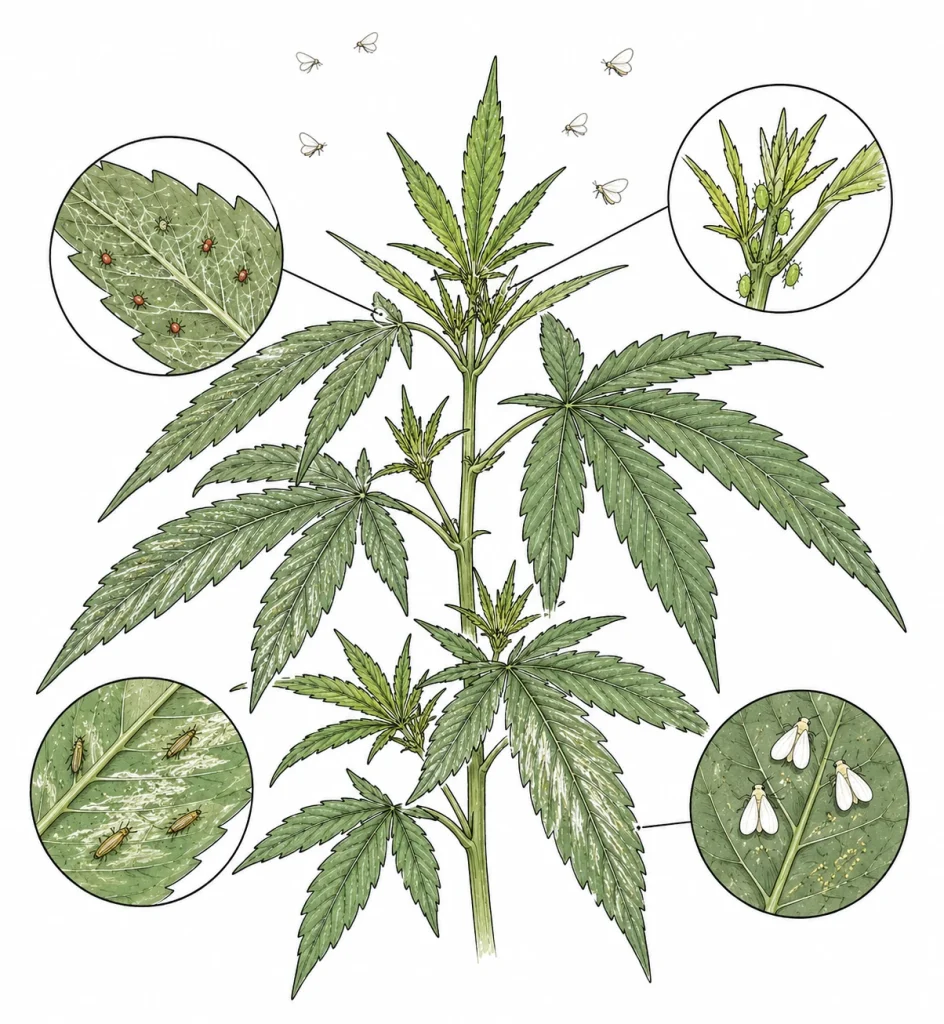
Cannabis pest control is step two, after you’ve already identified the pest. This article skips the identification details on purpose (for that, check out our big pest identification overview and our in-depth guides on spider mites, thrips, aphids and more). Here, it’s all about the control strategy itself: which method makes sense when, how to use beneficial insects and organic treatments the right way, and when you actually need chemical products at all.
The 3-Step Strategy: How to Tackle Pest Control Systematically
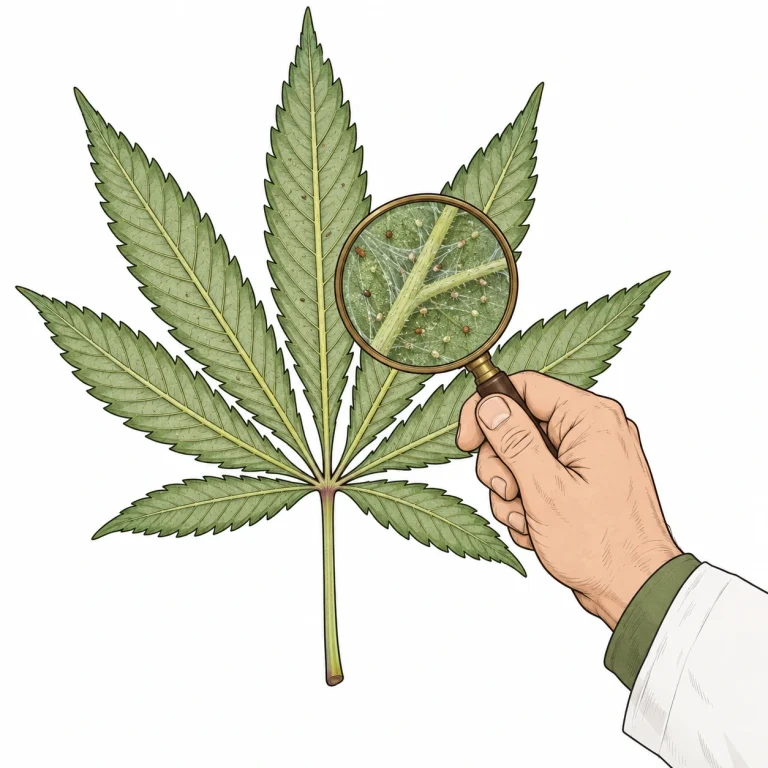
Professional cannabis pest control always follows the same logic, known as Integrated Pest Management (IPM): cultural measures first, then biological treatments, and chemicals only as a last resort. If you flip that order and reach for the strongest product right away, you risk resistant pests, dead beneficial insects and, if applied wrong, even residues in your final harvest.
- Step 1 — Cultural: remove infested plant parts, fix humidity and ventilation, quarantine new plants
- Step 2 — Biological: use neem oil, insecticidal soap and beneficial insects matched to the pest you’re dealing with
- Step 3 — Chemical: only for heavy infestations, with a strict waiting period before harvest
Quarantine and Prevention: The Most Important Step Many Growers Skip
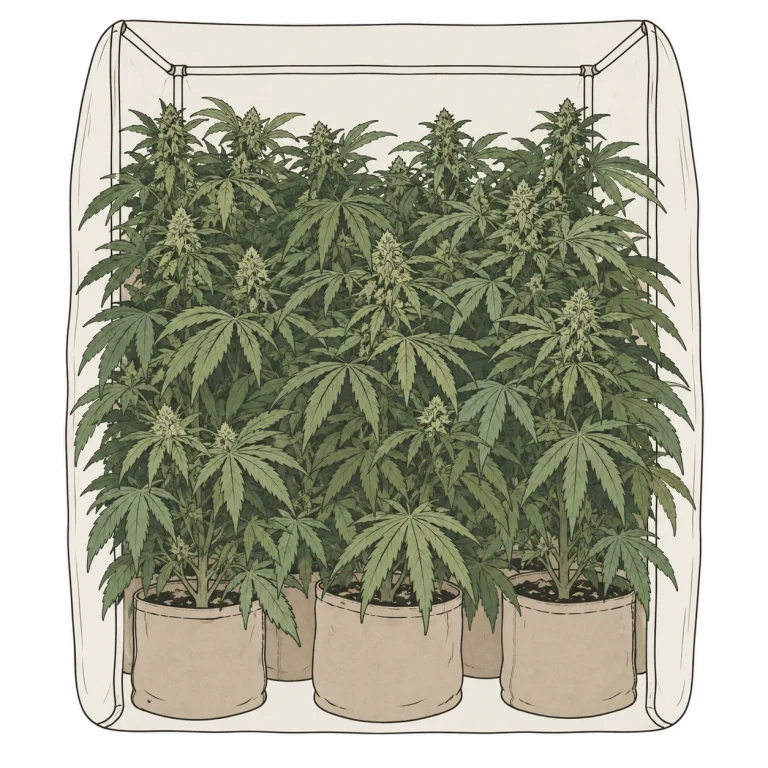
The best pest control is the kind you never need. Every new plant, every new clone and every piece of used gear that comes into your grow room is a potential way in for pests. So keep new plants physically separated from the rest of your garden for at least 7 to 10 days, and check them daily with a magnifying glass before you move them in with the others.
Your grow environment also decides how vulnerable your plants are. Humidity above 65% favors fungus gnats and other gnats, stagnant air with no circulation is perfect for spider mites, and stress from bad watering or nutrient deficiencies weakens your plants and makes them more susceptible overall. That means a solid ventilation setup is also active pest prevention.
- Quarantine new plants for 7–10 days and check them daily with a magnifying glass
- Match humidity to the growth stage and avoid stagnant air in your grow room
- Clean or disinfect used pots and tools before reusing them
- Make a weekly check of leaf undersides a fixed routine
Biological Control: How to Use Neem Oil, Insecticidal Soap and Beneficial Insects

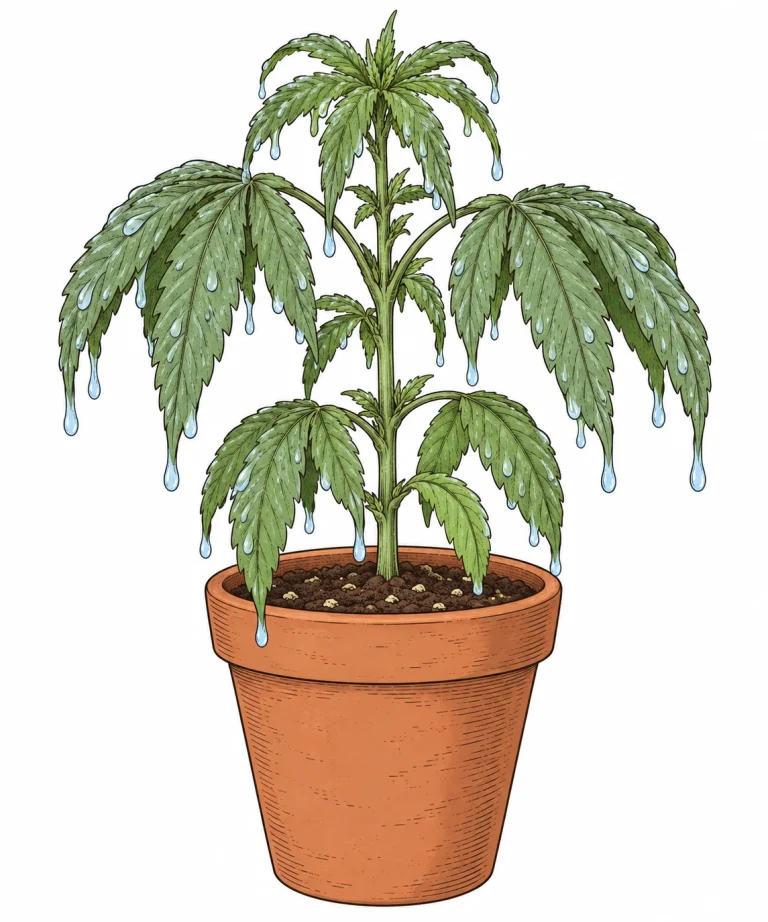
Neem oil is the most versatile organic treatment against almost every cannabis pest. It doesn’t just kill on contact, it also disrupts the insects’ hormones and breaks the infestation cycle. To use it, mix 19–38 ml of cold-pressed neem oil per gallon of water (5–10 ml per liter) with one or two drops of dish soap as an emulsifier so the oil disperses in the water. Spray both sides of the leaves early in the morning or in the evening, never under direct light or in high temperatures, since the oil can cause leaf damage.
Insecticidal soap (potassium soap) works purely mechanically: it dissolves the waxy coating of soft-bodied pests like aphids and young spider mites and dries them out. It’s gentler than neem oil and especially good for sensitive seedlings. Use 57–76 ml per gallon of water (15–20 ml per liter) and treat every 3 days, because insecticidal soap only works on direct contact and has no lasting effect.
Beneficial insects are the most elegant solution, because they reproduce on their own and keep patrolling your grow room as long as there’s food around. Biological pest control with beneficial insects has been standard in professional horticulture for decades, since it comes with no waiting periods and no residue risk. Which beneficial fits depends on the pest:
- Predatory mites (Phytoseiulus persimilis): against spider mites, release them directly onto infested leaves
- Lacewing larvae (German): against aphids, very hungry, also effective against thrips
- Amblyseius predatory mites: against thrips and whiteflies, can be used preventively
- Beneficial nematodes (Steinernema feltiae): against fungus gnat larvae, applied to the growing medium with your water
Important: beneficial insects and chemical sprays don’t mix. Wait at least 7 to 14 days after a chemical treatment before you release beneficials. Otherwise they can die right away, before they get a chance to work.
Quick Overview: Which Treatment for Which Pest
| Pest | First choice (organic) | Matching beneficial |
|---|---|---|
| Spider mites | Neem oil, insecticidal soap | Predatory mites (Phytoseiulus) |
| Aphids | Insecticidal soap | Lacewing larvae |
| Thrips | Neem oil | Amblyseius predatory mites |
| Fungus gnats (larvae) | Yellow sticky traps, let the growing medium dry out | Beneficial nematodes (Steinernema feltiae) |
When Chemical Pesticides Are Really Necessary — and the Waiting Period Before Harvest
With cannabis, chemical insecticides are your last resort, not your first move — not just because of your beneficial insects, but mostly because of your harvest. Many pesticides on the market are made for ornamental plants and aren’t suitable for buds you plan to consume, because you inhale any residue directly when you smoke or vape. Only reach for chemicals when an infestation is severe and organic methods can no longer keep it in check — and only during the vegetative stage. Never spray in flower, once the buds you’ll later consume have started forming.
If a chemical treatment can’t be avoided, keep a waiting period of at least 2 to 3 weeks before harvest. After that, switch back to plain water only, so no residue builds up in the bud tissue. Read the safety data sheet for every product and check whether it’s even labeled for use on edible or consumable plants.
Cannabis Pest Control Step by Step: Your Treatment Plan
- Identify the pest for sure with our pest overview before you treat anything
- Cut off heavily infested plant parts with clean scissors and dispose of them outside your grow room
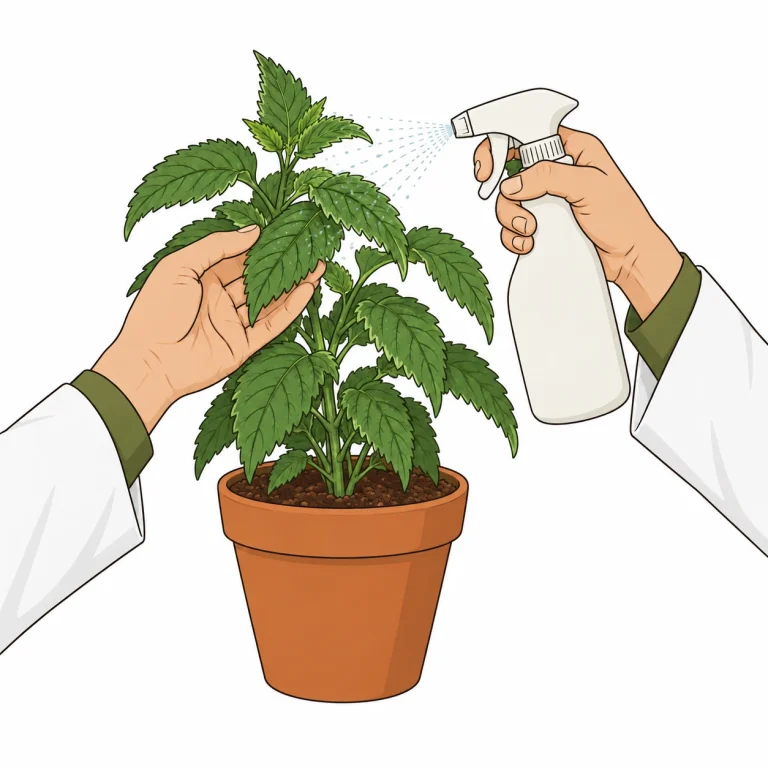
- Treat affected and neighboring plants with neem oil or insecticidal soap, spraying both sides of the leaves
- Repeat the treatment every 3 to 5 days to catch newly hatched generations too (at least 3 rounds)
- Once the acute phase is over, release beneficial insects for follow-up control
- Fix your grow room conditions (humidity, ventilation) to prevent a comeback
- Keep checking weekly, even when you no longer see any symptoms
Common Cannabis Pest Control Mistakes
- Going straight for the heavy chemicals: kills your beneficials and, if used wrong, can leave residue in your harvest — try organic options first
- Treating only once: eggs and larvae often survive the first round — without repeat treatments every 3 to 5 days, the infestation can come right back
- Spraying under the lights: neem oil and other oils can burn leaves when combined with sunlight or grow light
- Releasing beneficials right after chemicals: the beneficials can die right away, before they get a chance to work
- Treating only the plant that looks infested: pests spread quickly to neighboring plants — always treat your whole grow room
- Forgetting the leaf undersides: that’s where most pests hide, not on top of the leaves
Before you start treating, take a look at our pest overview so you can be sure you’ve got the right suspect.
Frequently Asked Questions
What works best for cannabis pest control?
Neem oil (about 20–40 ml per gallon, or 5–10 ml/L) and insecticidal soap (about 55–75 ml per gallon, or 15–20 ml/L) are the most effective organic starting points against most cannabis pests. For a lasting fix, follow up the acute treatment with matching beneficial insects like predatory mites or lacewing larvae.
How often do I need to treat until the infestation is really gone?
Plan on at least 3 treatment rounds, spaced 3 to 5 days apart. The first round kills the adult pests. The follow-ups catch the newly hatched generations from eggs that were already laid and that the first application couldn’t reach.
Can I use neem oil and beneficial insects at the same time?
No. Neem oil isn’t selective, so it kills beneficial insects too. After your last neem oil application, wait at least 7 days (14 is better) before you release predatory mites, lacewing larvae or other beneficial insects.
Is it safe to use chemical insecticides during the flowering stage?
No, you should avoid this at all costs. Chemical products used during flowering can leave residues right in the buds you’ll consume later. Keep chemical treatments strictly to the vegetative stage, with a waiting period of at least 2 to 3 weeks before harvest.
How can I tell if the treatment worked?
After every treatment, check the undersides of the leaves closely with a magnifying glass or jeweler’s loupe. If you find no live pests, eggs or fresh feeding damage over two checks in a row (each 3 to 5 days apart), the acute infestation is usually over. Still, keep up your weekly routine checks.
Are beneficial insects worth using preventively, without an active infestation?
Yes. With some species, like Amblyseius predatory mites, it’s actually the better strategy. They can survive for a while on pollen when there’s no prey and get to work the moment the first pests show up, often before you can even see the infestation.
The Bottom Line
Cannabis pest control isn’t rocket science. It follows a clear order: prevention first, with quarantine and stable growing conditions, then organic options like neem oil and beneficial insects, and chemical products only as a last resort and never during flowering. Stick to these steps and keep treating several times instead of stopping after the first spray, and you can beat most pest problems for good. Our pest overview helps you identify what you’re dealing with, and our Plant Diagnosis section covers general growth problems.
