

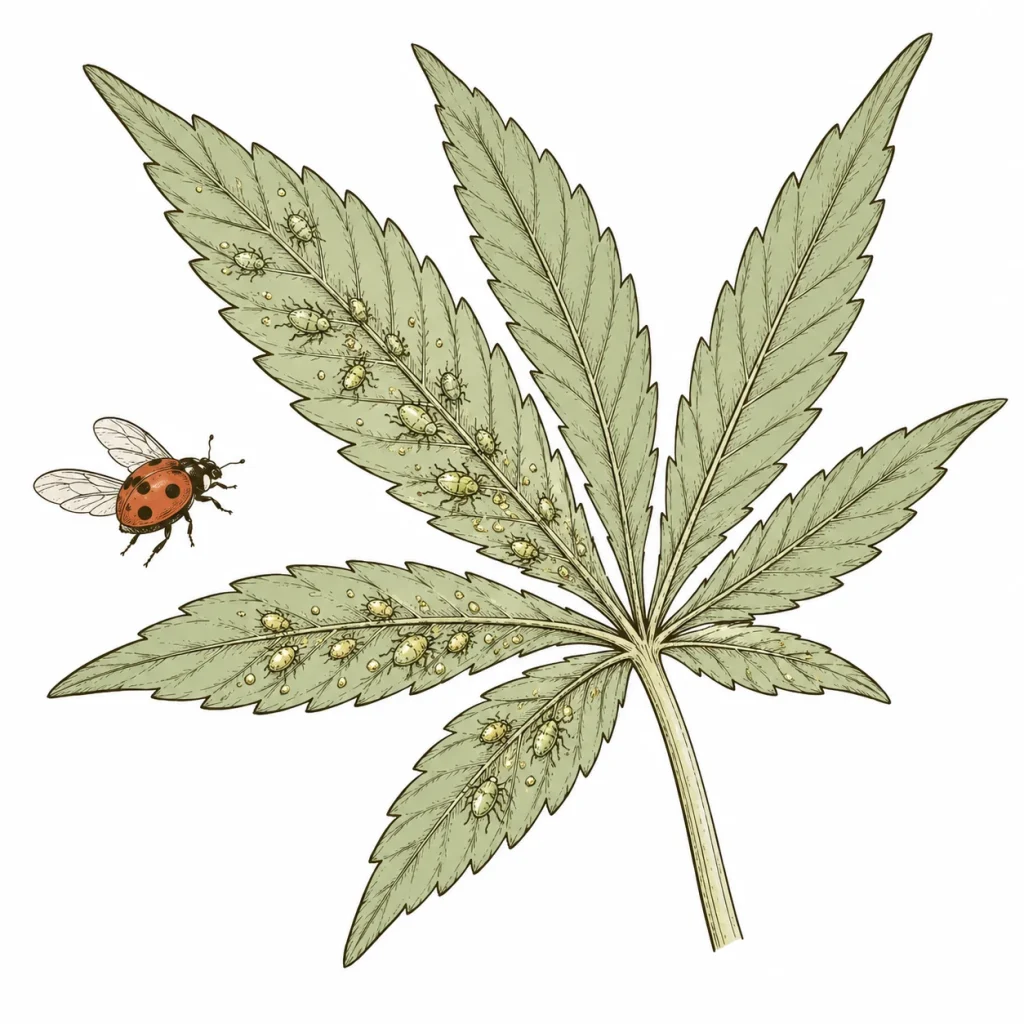
Dealing with aphids on cannabis is one of the most common challenges growers face, both indoors and outdoors. These tiny insects multiply incredibly fast and can seriously weaken a healthy plant within just a few days. If you act early, you can get an infestation under control — but you need to know what to look for. In this article, we’ll show you how to reliably identify aphids, understand what causes them and get rid of them effectively with the right methods.
How to Spot Aphids on Cannabis: What an Infestation and Its Symptoms Look Like
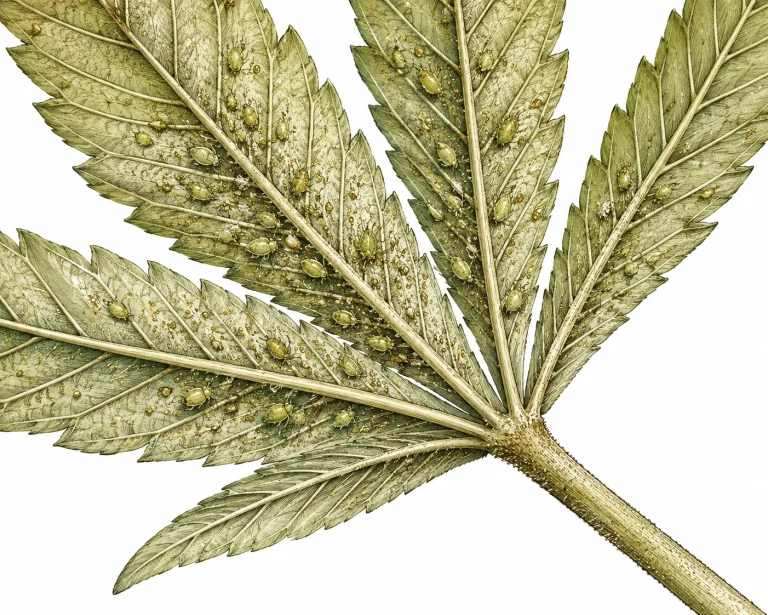
Aphids are small, soft-bodied insects that can be green, black, brown or yellowish depending on the species. They grow to between 0.04 and 0.12 in (1 and 3 mm) and are visible to the naked eye if you look for them carefully. They most often sit in colonies on the undersides of leaves, on young shoot tips or right on the flower stems. In an early infestation, a first glance at the top of the leaf often shows nothing — only when you flip the leaf over do you see them.
A typical sign of aphids is honeydew: a sticky, shiny coating the aphids excrete while feeding on sap. This honeydew attracts ants and encourages sooty mold, a black moldy coating on the leaves. Other symptoms include leaves that curl downward or wilt, deformed young shoots and generally slower growth. The longer the infestation lasts, the more obvious the discoloration becomes: leaves can turn yellowish, look blotchy and eventually die off.
It’s important to tell aphids apart from other pests. Spider mites leave fine webbing and tiny dots on the tops of the leaves. Thrips cause shiny, silvery feeding marks. Aphids, on the other hand, sit visibly in groups and excrete honeydew. If you’re unsure about the diagnosis, check out our complete pest overview — there you’ll find all common problems compared side by side.
- Aphids usually sit on the undersides of leaves or on young shoots
- Sticky, shiny honeydew on leaves is a sure giveaway
- Ants near your plant can point to an aphid infestation
- Deformed, curled or wilted leaves are caused by the aphids feeding on sap
- Yellowish discoloration looks like a nutrient deficiency — always check the undersides
- Sooty mold on sticky leaves points to an advanced infestation
Causes and Risk Factors: Why Do Aphids Attack Cannabis?
Aphids can reach your plants in several ways. Outdoor grows are naturally at the highest risk, since aphids get carried in by the wind, by ants or from neighboring plants. Contaminated soil, new plants from the garden center or garden and infested clones can also be the starting point of an infestation. Indoor growers often underestimate how easily aphids can get into the grow tent on clothing, hands or through open windows.
Certain conditions encourage explosive population growth. Aphids love warm temperatures between 68 and 82 °F (20 and 28 °C) — exactly the range in which cannabis thrives. When nitrogen levels are high, the plant produces especially tender, nutrient-rich tissue that aphids prefer to attack. Overfeeding nitrogen can therefore make an infestation worse; if you want to learn more, our article on cannabis nutrient burn is worth a read. Stress from underwatering or poor watering habits also weakens the plant’s natural defenses — also read how to water cannabis the right way.
Indoors, poor air circulation is another problem: when the air is stagnant, aphids can spread undisturbed. Plants spaced closely together with dense foliage offer ideal hiding places. Another risk factor is the lack of beneficial insects: outdoors, ladybugs, parasitic wasps and other natural enemies keep aphid populations in check. In an enclosed grow space, these natural regulators are completely missing.
- Brought in via clones, soil, clothing or open windows
- Warm temperatures (68–82 °F / 20–28 °C) promote rapid reproduction
- Excessive nitrogen feeding makes plant sap especially attractive to aphids
- Plants stressed by watering mistakes or nutrient deficiencies are more vulnerable
- Poor air circulation encourages spread in an indoor grow
- Outdoors: ants act as “herders” and protect aphids from natural enemies
How to Get Rid of Aphids on Cannabis: Immediate Steps and Proven Methods
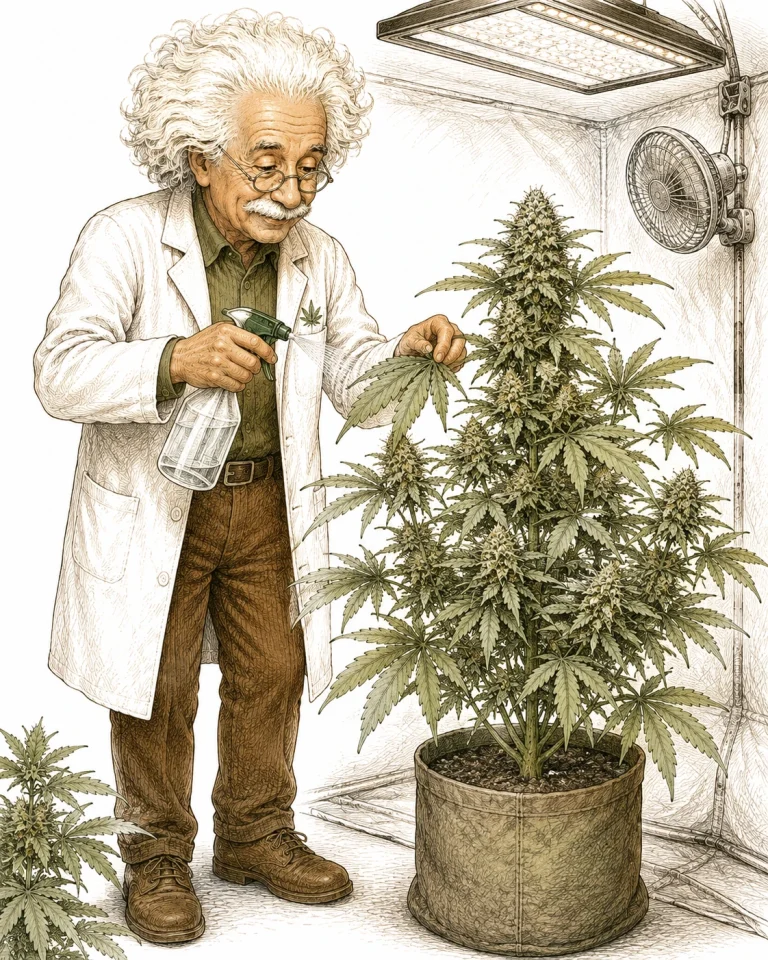
As soon as you spot aphids, the rule is: act immediately. Start by carefully removing heavily infested leaves and shoots and putting them straight into a sealed bag for disposal — never compost them. Then you can spray the plant with a strong jet of water to knock loose aphids off mechanically. This simple step noticeably reduces the population, but on its own it isn’t enough for a moderate or heavy infestation.
Treatment with neem oil or a neem-based product has proven effective. Neem contains the active ingredient azadirachtin, which disrupts the aphids’ hormone balance and interrupts their reproduction. Mix about 5 ml of cold-pressed neem oil with 1 quart (1 L) of water and a little biodegradable dish soap as an emulsifier, and spray the entire plant thoroughly — especially the undersides of the leaves. Repeat the treatment every three to four days, at least three times in a row, to also catch freshly hatched young. Only use neem oil outside the flowering stage, since residues in the buds can be a problem.
Another option is insecticidal soap sprays or special insect sprays based on fatty acids that are labeled for use on edible crops. These products work on contact and destroy the aphids’ waxy coating, which causes them to dry out. Garlic or nettle tea can also be used as home remedies: both have a repellent effect and strengthen the plant’s defenses at the same time. In advanced stages or with repeated infestations, using beneficial insects is recommended, such as lacewing larvae (German), ladybugs (Adalia bipunctata) or the aphid midge (Aphidoletes aphidimyza), which are available from specialty suppliers.
- Remove infested leaves right away and dispose of them in a sealed bag
- Spray the plant with a jet of water to knock aphids off mechanically
- Repeat neem oil spray every 3–4 days, at least three times in a row
- Insecticidal soap or fatty acid sprays work on contact and are gentle on plants
- Use nettle or garlic tea as supporting home remedies
- Release beneficial insects like ladybugs or aphid midges in your indoor grow
- Only use neem oil in the vegetative stage, not during flowering
Getting Rid of Aphids on Indoor Cannabis: What’s Different in a Grow Tent
In an indoor grow, special rules apply when fighting aphids. Since the grow tent is a closed system, pests spread faster and without natural regulation. At the same time, you have more control over the environment. Lower the temperature slightly during treatment, since aphids develop more slowly at cooler temperatures. Increase air circulation with an extra fan to distribute the spray evenly and make it harder for the aphids to spread.
If you have several plants in the tent, always treat all plants at the same time — including those that don’t show any visible symptoms yet. Aphids move quickly between plants, and a plant that looks healthy may already be infested without you noticing. If possible, quarantine infested plants before bringing them back into the tent. After each treatment, thoroughly clean the tent, the floor and all surfaces, since aphids and eggs can also survive on equipment and tent walls.
Also keep an eye on the pH of your nutrient solution: an incorrect pH weakens nutrient uptake, stresses the plant and makes it more vulnerable to pests. Read up on the right pH for cannabis to eliminate this stress factor. Also keep in mind that chemical sprays need to be applied especially carefully in an enclosed space — always wear a mask and gloves and ventilate well after treatment.
- Treat all plants in the tent at the same time, not just the visibly infested ones
- Lower the temperature and increase air circulation during treatment
- Thoroughly clean the tent and equipment after every treatment
- Quarantine infested plants until the infestation is completely gone
- Check the pH to rule out plant stress as a risk factor
- Wear protective gear (mask, gloves) when spraying in an enclosed space
Preventing Aphids on Cannabis: Prevention Beats Treatment
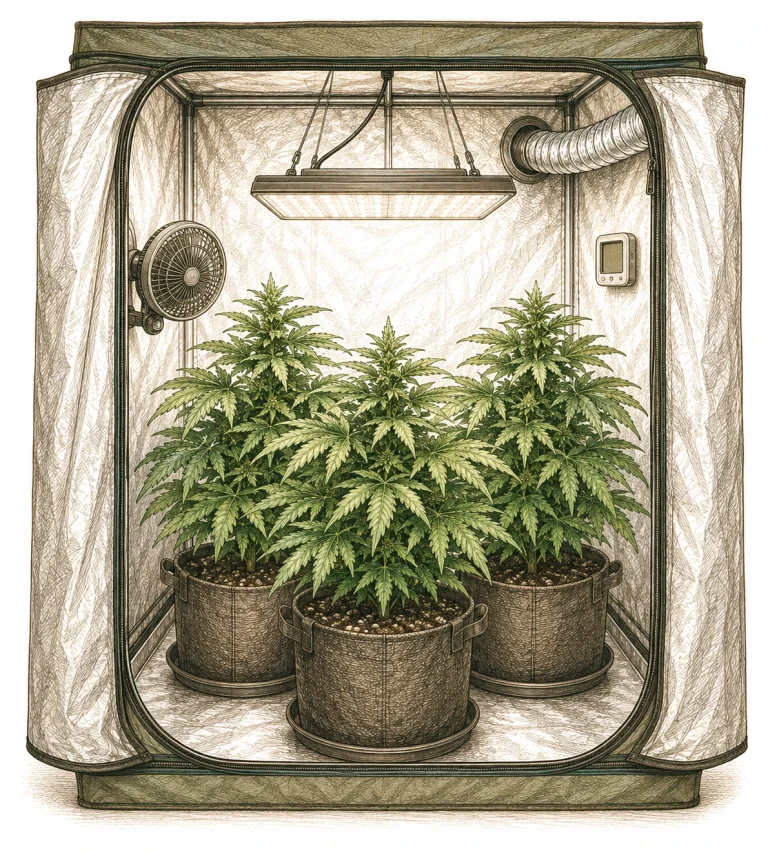
The most effective protection against aphids is consistent prevention. Start by always quarantining new plants before they enter your grow area. Check clones or young plants you’ve bought every day for at least a week for signs of pests. You should also inspect new soil or growing media for insects and eggs before use, or briefly sterilize them.
Regular visual checks are a grower’s most important tool: inspect your plants at least twice a week, flip the leaves over and take a close look at shoot tips and stems. Keep a grow journal in which you note anything unusual — that way you’ll notice early when something changes. Strong, healthy plants are much more resistant to aphids. So make sure you provide balanced nutrients without overfeeding nitrogen, keep the pH correct and give your plants stress-free growing conditions.
Outdoor growers can use companion plants that repel aphids or attract beneficial insects. Lavender, nasturtium and basil have proven to be natural deterrents. Nasturtium even actively attracts aphids and can serve as a trap crop that draws the pests away from your cannabis plant. If you want to look at your outdoor grow as a whole, our diagnosis guide for outdoor problems has more helpful information on all typical outdoor problems.
A foliar spray of fermented nettle tea or diluted neem oil every one to two weeks as a preventive measure has also proven itself in practice. Preventive treatments like these boost the plant’s defenses and make it less attractive to aphids. Combined with good hygiene in your grow area, regular checks and healthy growing conditions, the risk of a serious aphid infestation drops considerably.
- Always quarantine new plants for at least a week
- Check all leaves and shoot tips at least twice a week
- Balanced feeding without excess nitrogen reduces vulnerability
- Companion plants like nasturtium and lavender repel aphids (outdoors)
- Use a preventive neem oil spray every 1–2 weeks
- Keep your grow area clean: remove dead plant material, wipe the floor
- Keep a grow journal to spot changes early
Lasting Damage and What to Do if Your Plant Is Already Badly Weakened
A heavy aphid infestation can leave lasting damage, even after the aphids are finally gone. The plant suffers from the nutrients the aphids have sucked out, from the honeydew that encourages mold and from the viral diseases some aphid species can transmit. Yellowish, deformed leaves that resemble a nutrient deficiency can stay visible for weeks after an infestation, even when no aphids are left. If your plant shows yellow leaves, take a look at our article on the topic: yellow cannabis leaves helps you correctly classify follow-up problems.
If the plant has survived the infestation, actively support its recovery. A light dose of a balanced liquid nutrient helps replace lost nutrients. Avoid overfeeding during this phase — the weakened plant handles nutrient salts less well. Cleanly remove all dead or badly damaged leaves so they don’t become entry points for fungi. With a very heavy infestation, or if the plant doesn’t recover despite treatment, you should consider whether an earlier harvest makes sense to save at least part of the yield.
Also keep in mind that aphids often show up together with other stress factors. After the infestation, check all relevant growing parameters: is the pH right? Are you watering correctly? Is your feeding balanced? Taking a holistic look at your plant is the best way to get back to stable growing conditions after an infestation. You’ll find all key nutrient and diagnosis topics in one place in our Plant Diagnosis overview.
- Yellowish and deformed leaves can stay visible for weeks after the infestation
- A mild balanced feeding helps recovery — avoid overfeeding
- Cleanly remove all dead leaves to prevent fungal infections
- With a very heavy infestation, consider harvesting earlier to minimize losses
- After an infestation, recheck all growing parameters (pH, watering, feeding)
- Aphids are often a sign of other stress factors — a holistic diagnosis is needed
We explain how to deal with sap-sucking pests in general in our article on pest control. Sticky honeydew can also come from whiteflies — these mostly give themselves away by swarms flying up when you touch the plant.
Frequently Asked Questions
How do I spot aphids on my cannabis plant?
Aphids usually sit in colonies on the undersides of leaves or on young shoot tips. They’re 0.04 to 0.12 in (1 to 3 mm) long and can be green, black, brown or yellowish. Typical signs are sticky, shiny honeydew on the leaves, leaves that curl downward and slower growth. Ants near the plant can also point to aphids, since ants feed on the honeydew.
Can I get rid of aphids on cannabis with home remedies?
Yes, home remedies work well for a light infestation. Neem oil spray (5 ml neem oil + 1 quart, or 1 L, of water + a little dish soap) is the most effective home remedy and should be repeated every three to four days. Nettle tea, garlic spray or insecticidal soap solution also work well. As a first step, simply spray the plant with a jet of water to knock loose aphids off mechanically.
Are aphids especially dangerous during the cannabis flowering stage?
Yes, an aphid infestation during the flowering stage is a problem because it directly threatens your harvest and your treatment options are more limited. Don’t use neem oil during the flowering stage anymore, since residues can remain in the buds. Instead, you can use insecticidal soap sprays or beneficial insects like ladybugs. Spraying the aphids off with water and removing infested leaves are the safest immediate steps during flowering.
Where do aphids in an indoor grow come from?
Aphids also make it into the grow tent — on clones or young plants that are already infested, in soil and growing media, on the grower’s clothing and hands or through open windows and vents. That’s why quarantining new plants and checking regularly are especially important to catch an infestation early.
How fast do aphids multiply on cannabis?
Under optimal conditions (warm temperatures, nutrient-rich plant tissue), aphids multiply extremely fast. A single aphid can produce dozens of offspring in a week, and those can start reproducing themselves after just a few days. Within one to two weeks, a small infestation can turn into a massive population. That’s why acting fast as soon as you spot them is crucial.
Can an aphid infestation kill my cannabis plant?
With a light to moderate infestation, the plant is rarely in danger if you act quickly. However, a very heavy, long-lasting infestation can seriously weaken the plant, stop its growth and cut your harvest significantly. On top of that, some aphid species transmit plant viruses that cause permanent damage. In the worst case, with very young plants or badly weakened ones, an untreated infestation can actually kill the plant.
You’ll find more on natural beneficial insects in plant protection from the Bavarian State Institute for Viticulture and Horticulture (LWG) (German).
Learn more about other common cannabis pests in the Pests hub.
Can aphids completely destroy my cannabis harvest?
A single aphid infestation won’t kill your plant right away, but without countermeasures it can grow into a serious problem. The aphids keep sucking plant sap, which weakens growth, and their feeding punctures open entry points for fungi and viruses. If the infestation goes untreated for weeks, the plant can lose a lot of yield and bud quality, or in rare, severe cases even die. But if you spot the infestation early and respond with targeted countermeasures, you’ll save your plant completely in the vast majority of cases.
Conclusion
Getting rid of aphids on cannabis is very doable if you spot early what’s going on with your plants. What matters is that you check regularly, step in at the first signs and repeat the treatment consistently — spraying once is almost never enough. With neem oil, insecticidal soap and beneficial insects, you have effective tools at hand that are gentle on your plant and get rid of the infestation for good. If you also focus on prevention and create optimal growing conditions, you’ll make it hard for aphids to ever settle into your grow.
