Cannabis Growing Basics & Techniques
Understand what your plant needs — from the basics to advanced growing techniques.
What do you want to understand?
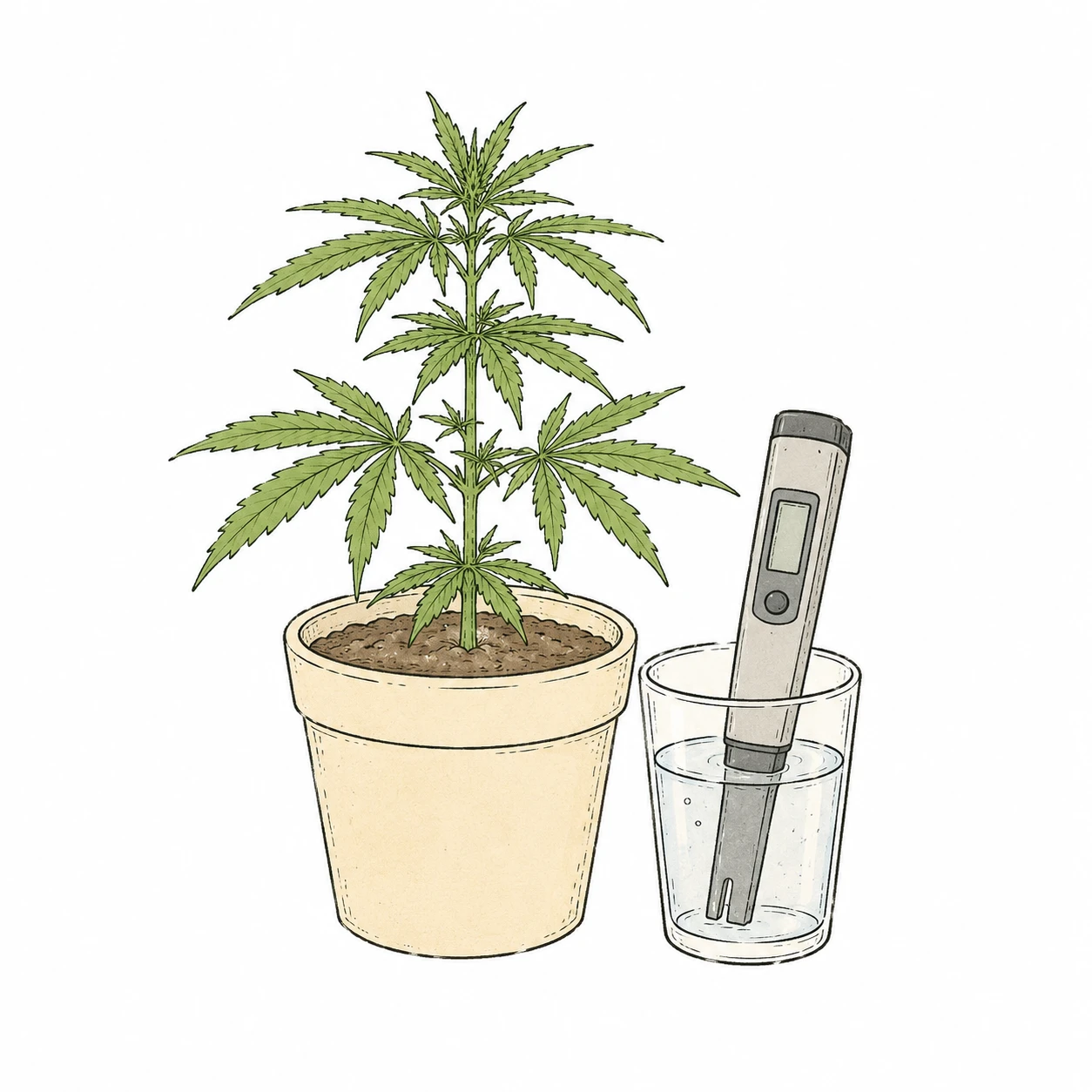
pH
- optimal range 5.8–6.8
- blocks nutrient uptake
- most common source of problems
- measurable with simple tools
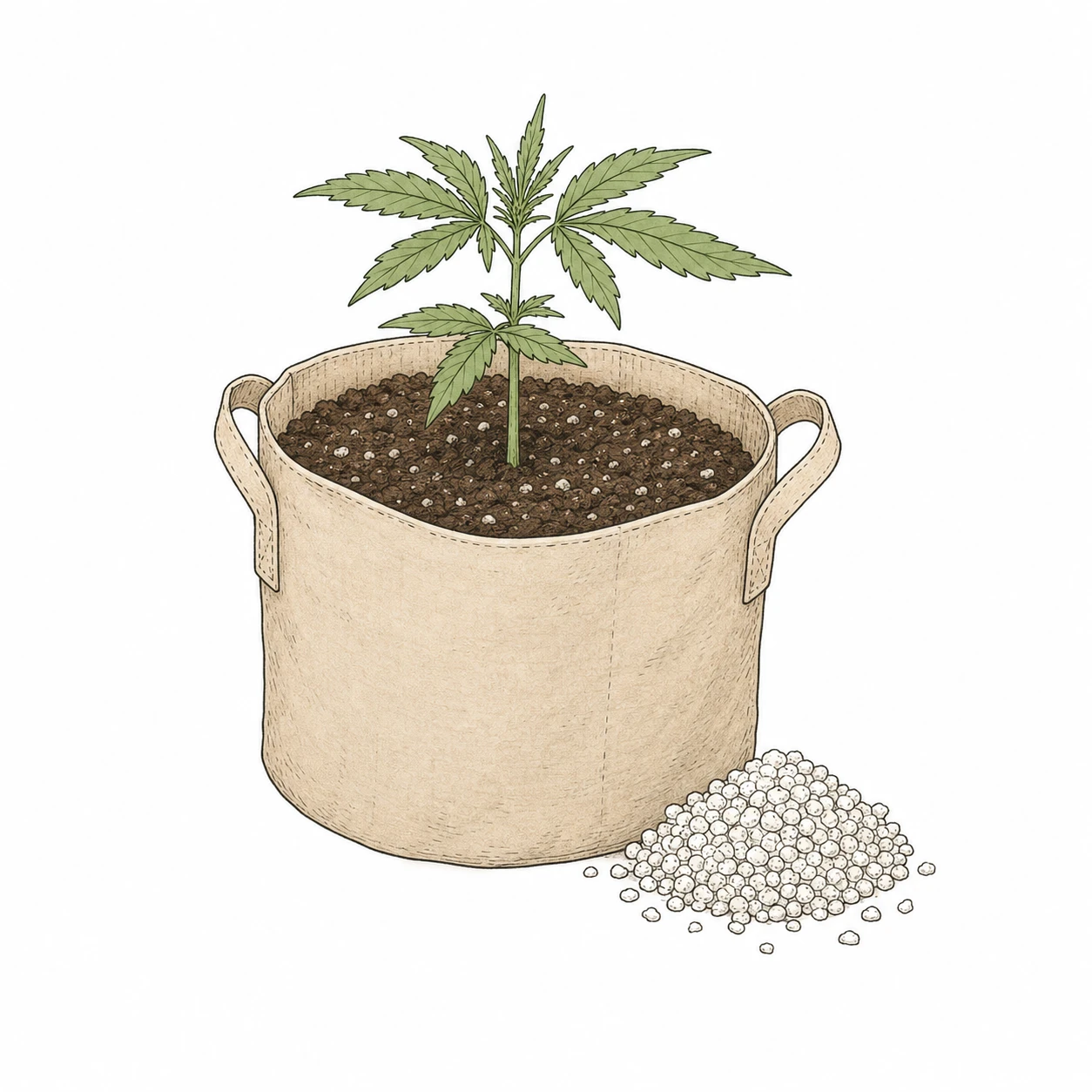
Soil
- structure & drainage
- air at the roots
- growing media compared
- bagged soil vs. mixing your own
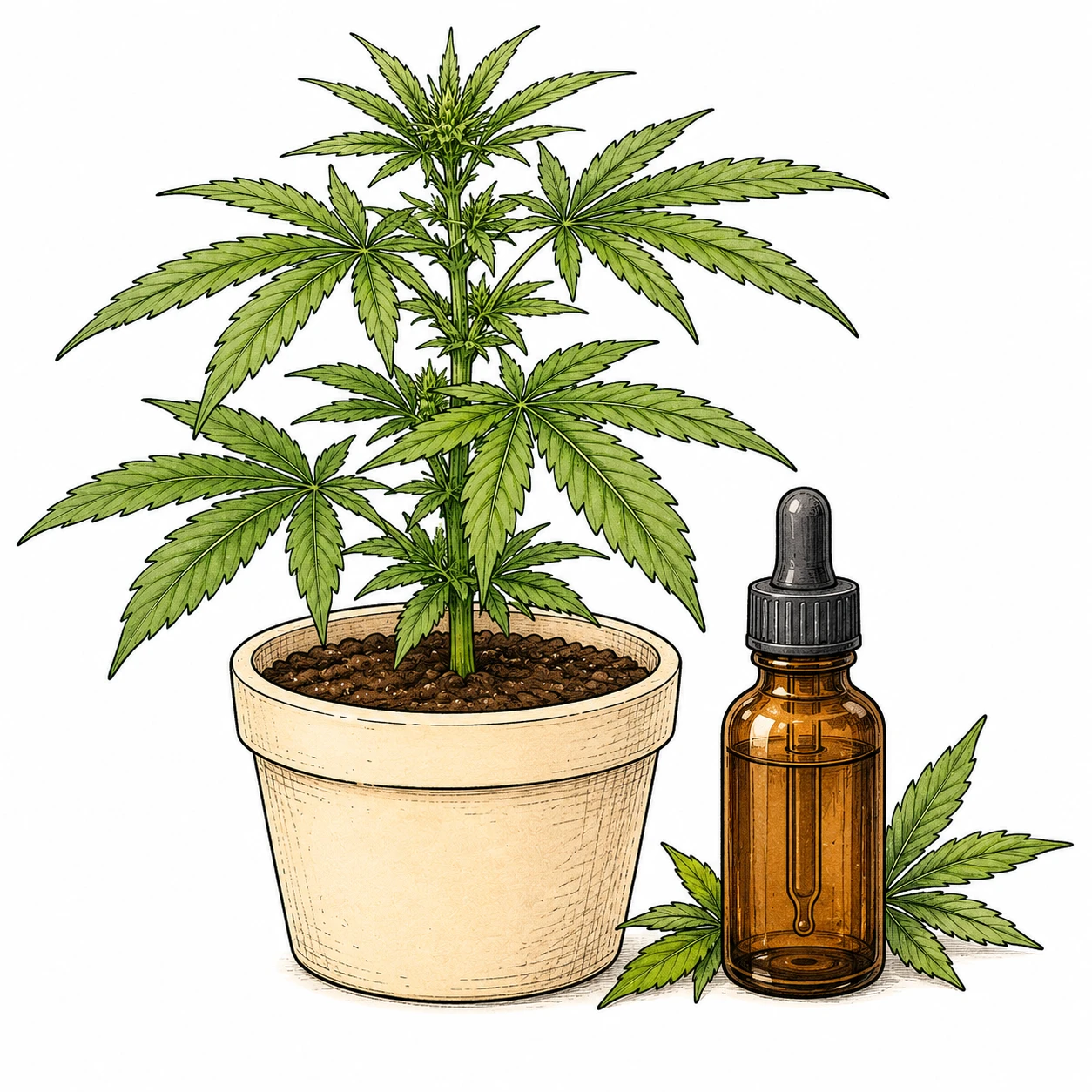
Nutrients
- NPK as the foundation
- macro- & micronutrients
- veg vs. flowering
- organic vs. mineral
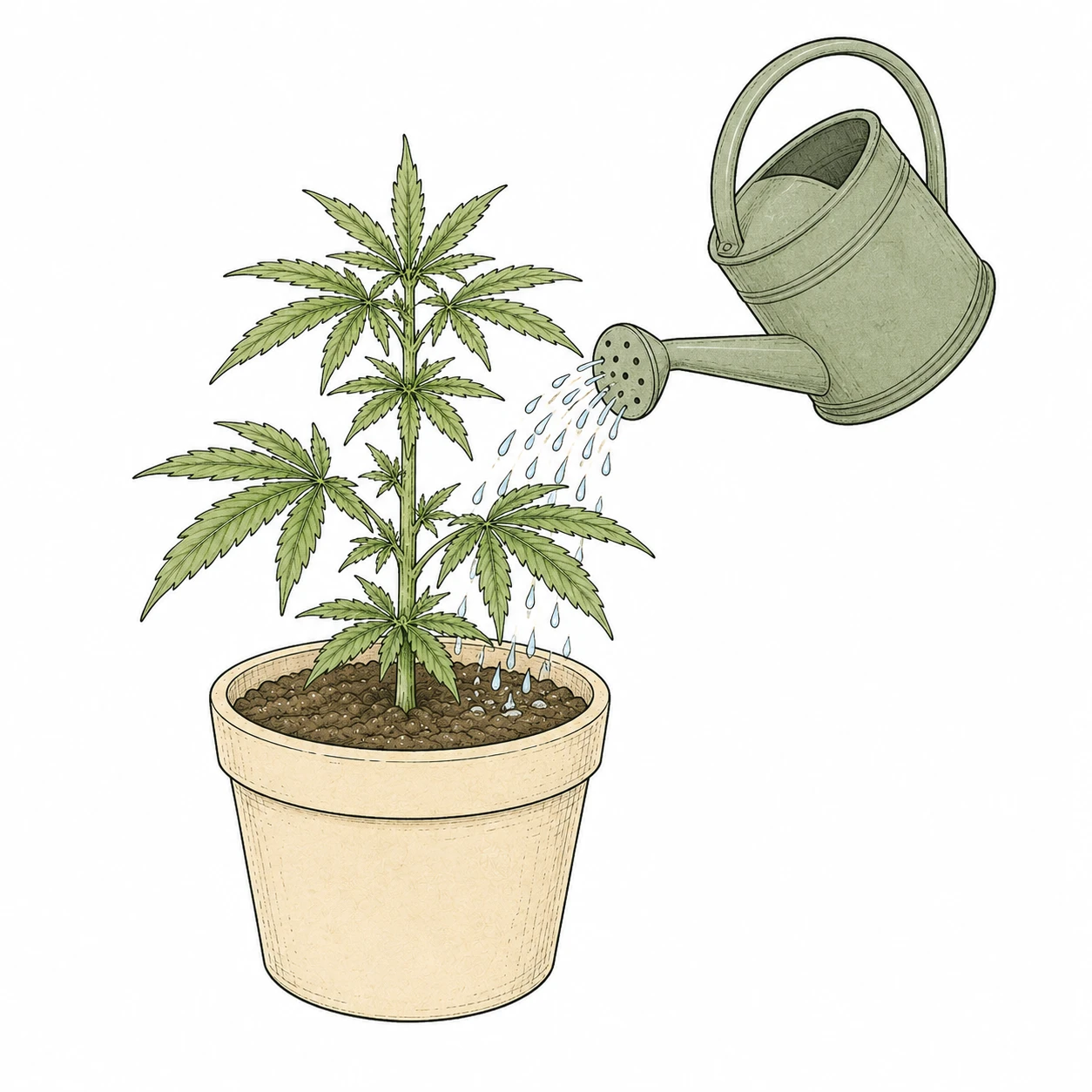
Watering
- when & how much to water
- spotting overwatering
- the finger test explained
- sticking to dry periods
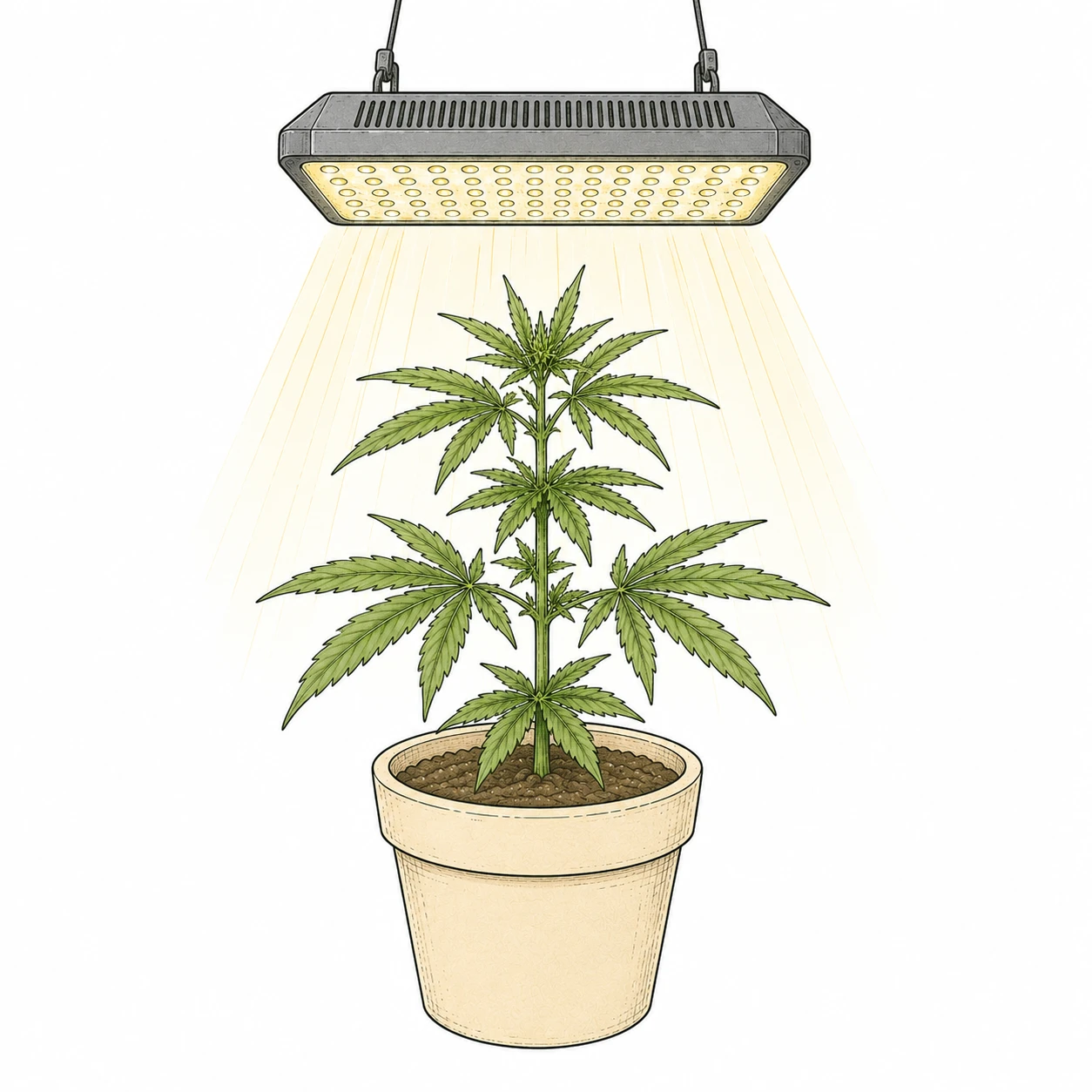
Lighting
- light spectrum explained
- distance to the plant
- light hours per stage
- LED vs. HPS
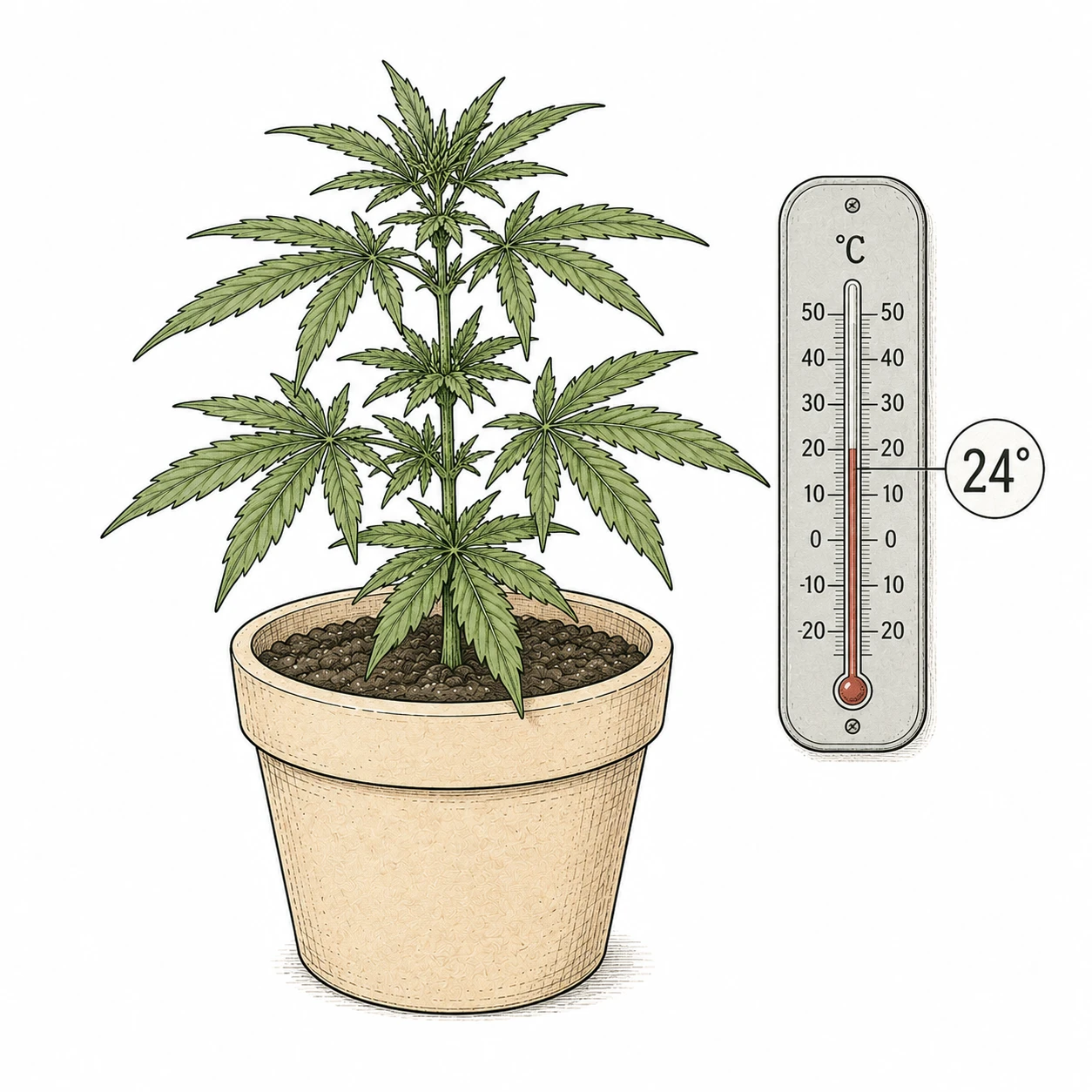
Temperature
- optimal growing temperature
- day/night difference
- avoiding heat stress
- growing in winter
Ready for the next level?
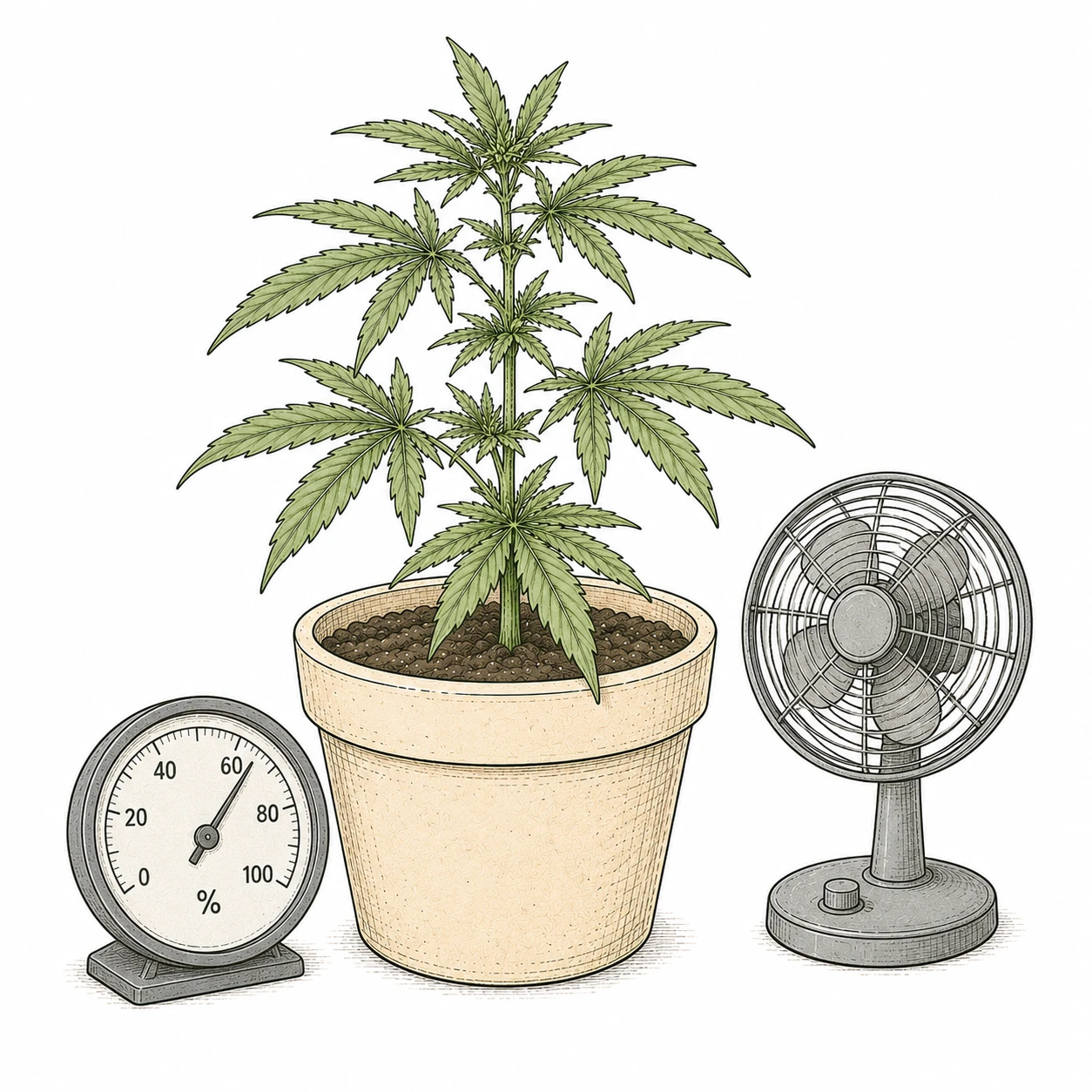
Humidity
- relative humidity per stage
- controlling the risk of mold
- hygrometer & ventilation
- critical in the flowering stage
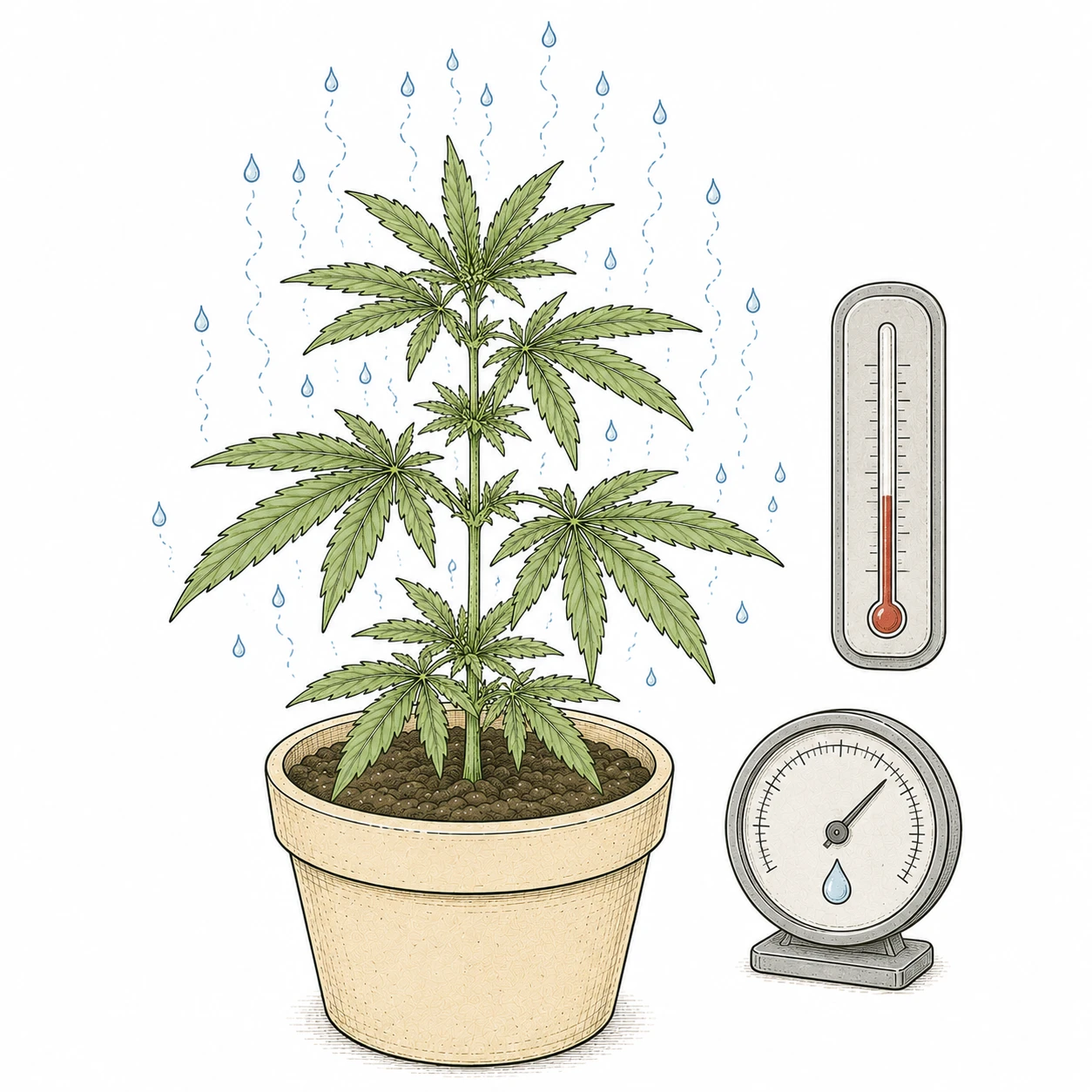
VPD
- vapor pressure deficit explained
- why VPD matters more than RH alone
- using a VPD chart
- effect on transpiration
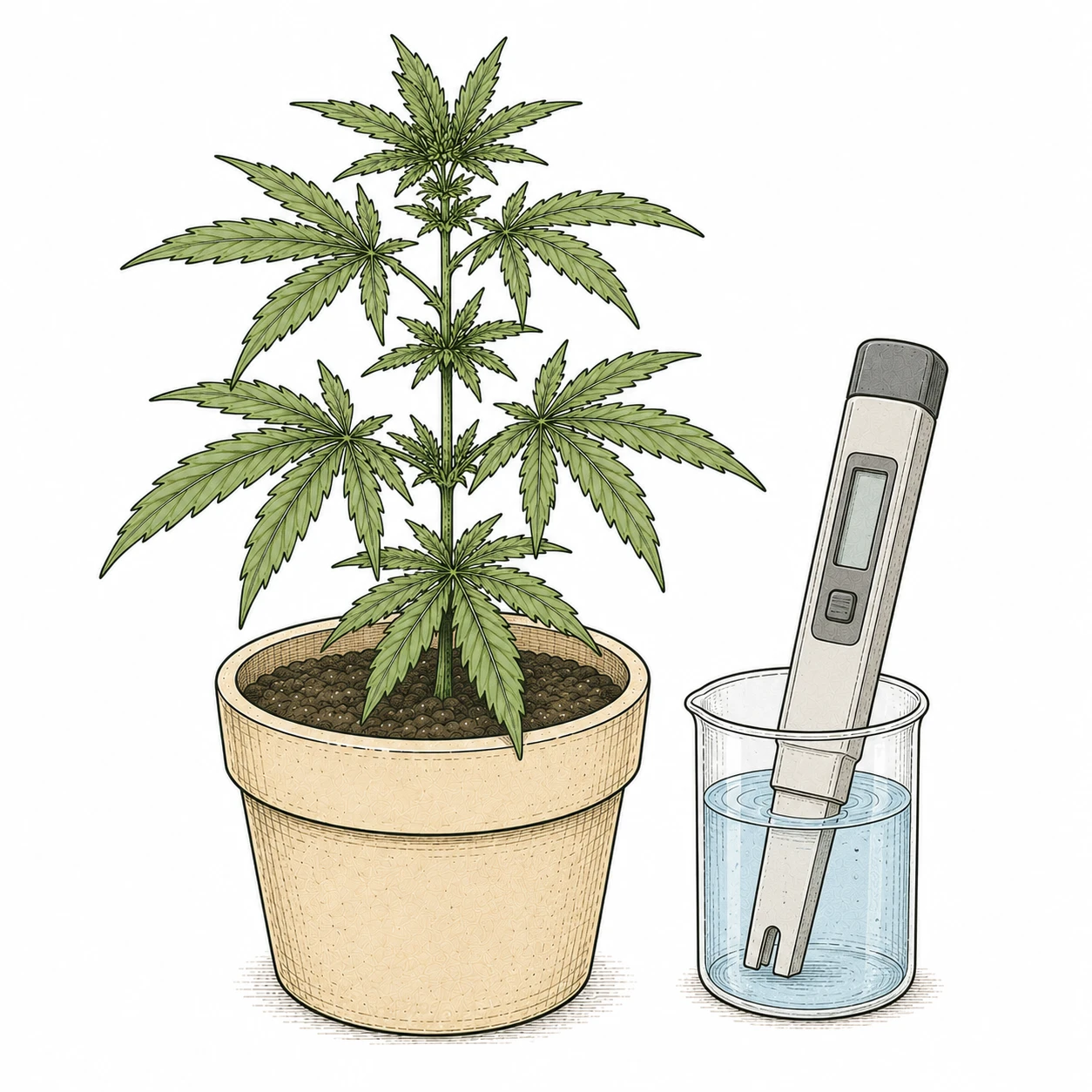
EC
- electrical conductivity
- measuring nutrient concentration
- spotting underfeeding & nutrient burn
- EC per growth stage
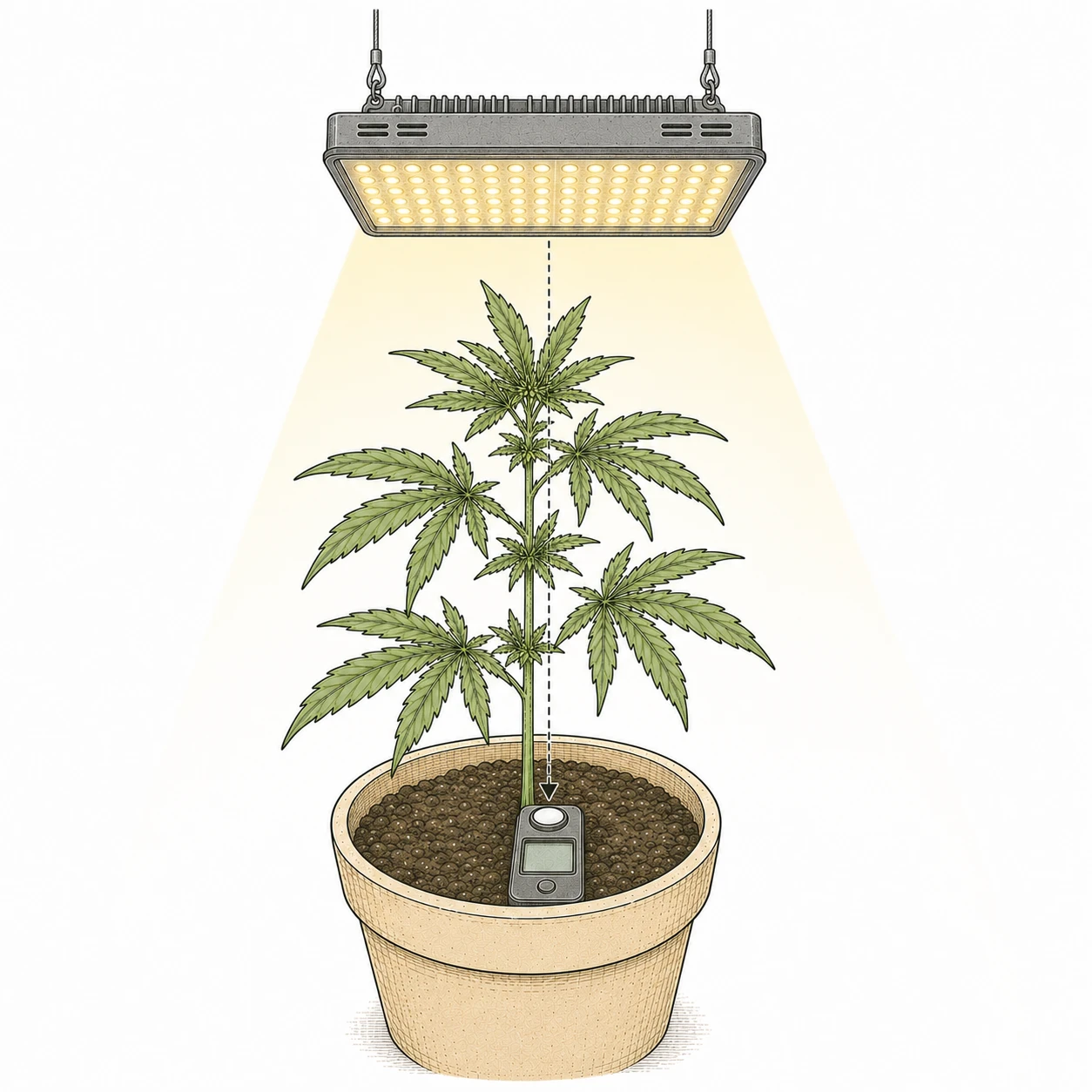
PPFD
- photosynthetic photon flux density explained
- PPFD vs. lux
- measuring light in your grow
- optimal values per stage
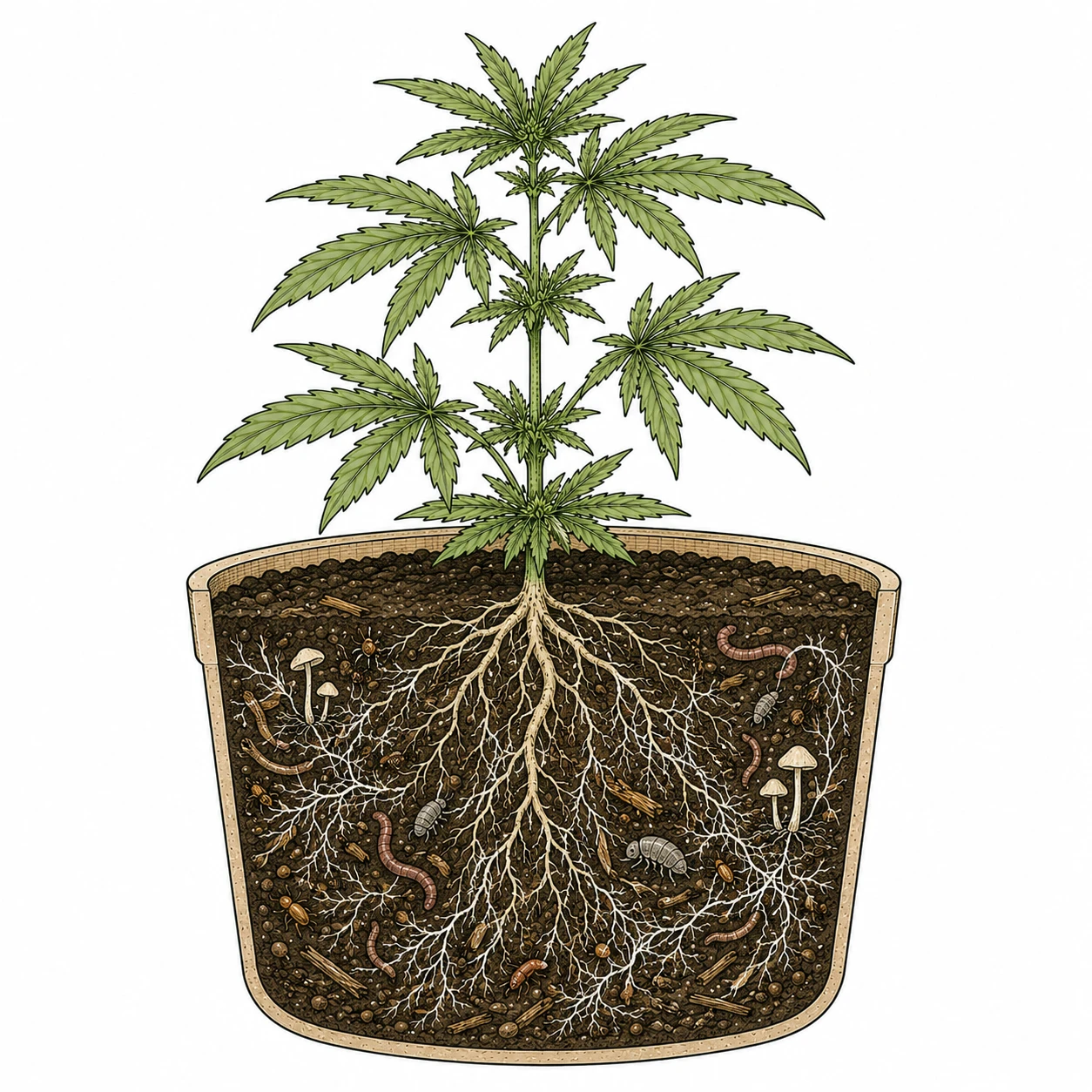
Living Soil
- what living soil is
- microorganisms & mycorrhizae
- no bottled nutrients needed
- building & maintaining it
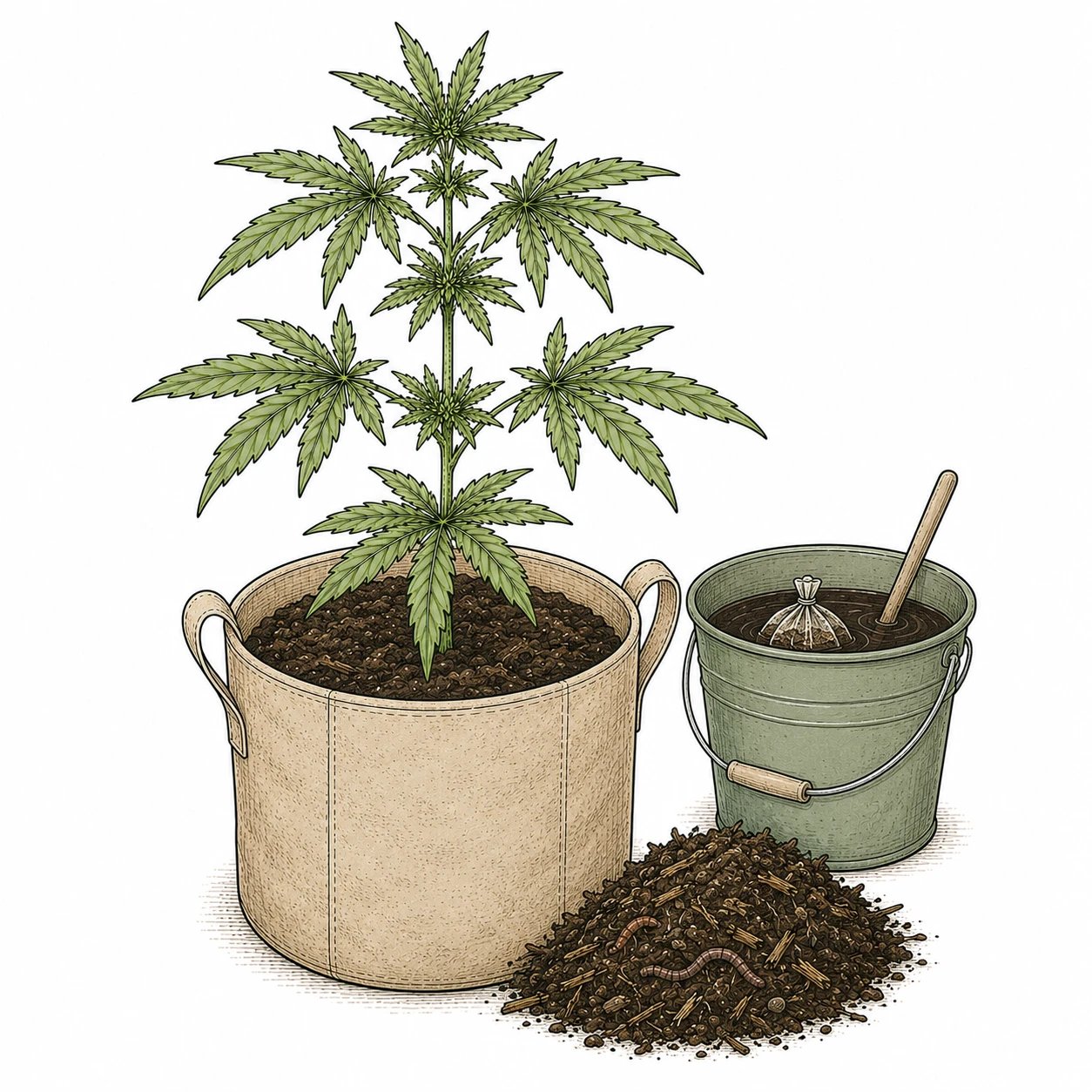
Organic Growing
- organic vs. mineral
- teas & mixes
- benefits for aroma
- slow nutrient release
Get more out of your grow
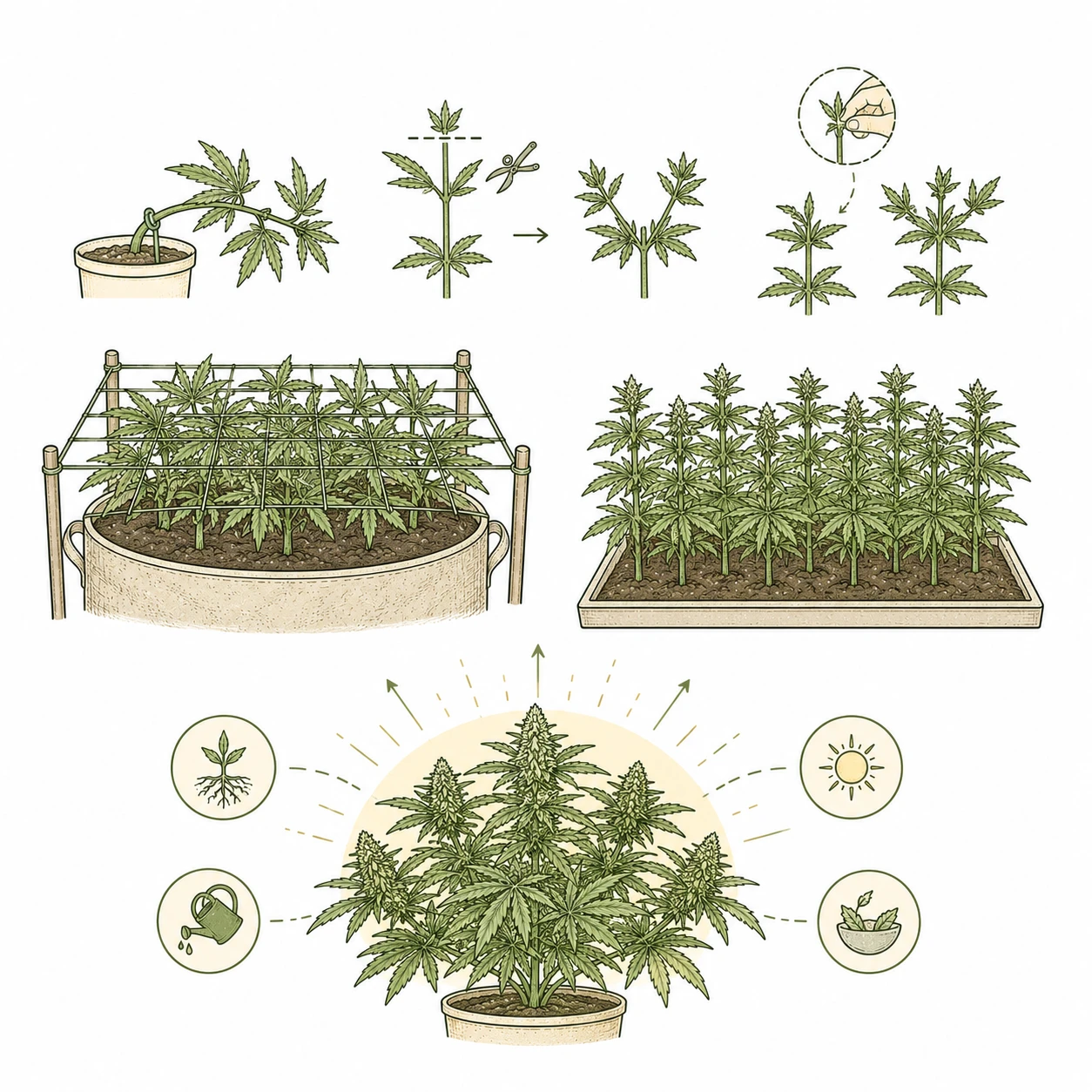
Growing Techniques
- LST, topping & FIMing
- SCROG & SOG explained
- steering growth on purpose
- maximizing yield
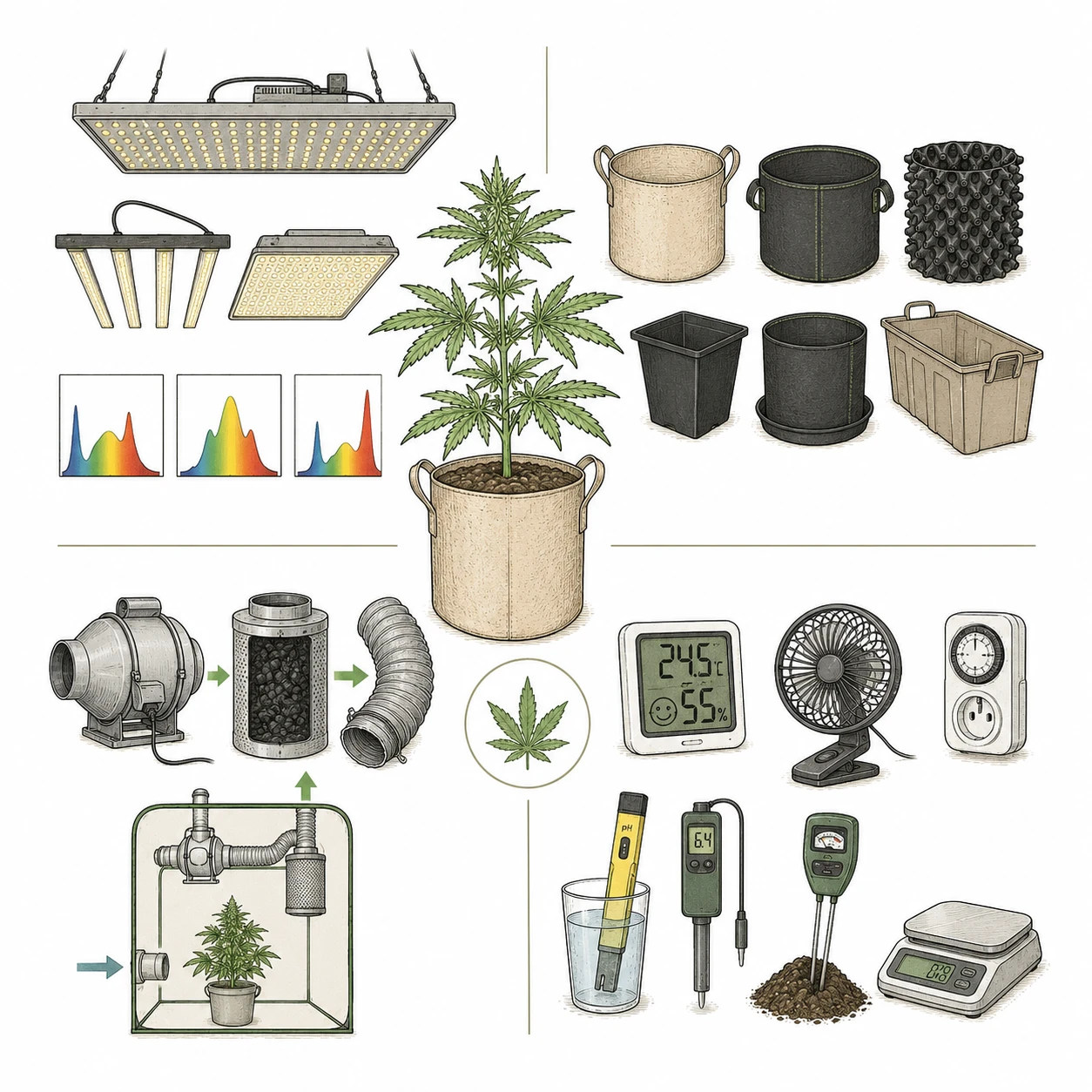
Equipment & Setup
- LED lights compared
- pots & containers
- ventilation & carbon filters
- measuring & monitoring gear
Why basic knowledge makes the difference
Most growing problems don’t come from bad luck — they come from gaps in knowledge. If you understand why the pH blocks nutrient uptake, you can solve a problem before it becomes visible. If you know VPD and EC, you optimize proactively instead of reactively.
Our cannabis knowledge base is deliberately split into two levels: the basics above — pH, soil, nutrients, watering, light and temperature — form the foundation every grower should master. The next level — VPD, EC, PPFD, living soil and organic growing — is for everyone who wants to fine-tune their grow on purpose instead of just reacting.
You’ll make the fastest progress if you read with a focus instead of at random: pick the topic that’s your biggest question mark right now and work your way to the related topics from there. If your plant is already showing specific symptoms, our Plant Diagnosis Tool will get you further, faster than just reading up.
Understand how things connect
Not just the what, but the why — so you can make your own decisions.
Prevent problems
If you know the basics, you spot mistakes before they do damage.
Grow step by step
From the basics to pro techniques — at your own pace.
Frequently asked questions about the basics
What should I learn first as a beginner?
Start with pH — it’s the most common source of problems, and when it’s off, it blocks the uptake of all other nutrients, no matter how well you feed otherwise. After that, soil/growing media and the basics of watering are worth your time.
What’s the difference between the basics and the next level?
The basics (pH, soil, nutrients, watering, light, temperature) are enough to grow successfully. The next level (VPD, EC, PPFD, living soil, organic growing) helps you fine-tune your grow on purpose once the foundation is in place.
Do I need to understand every topic before I start growing?
No. The basics help, but you’ll pick up a lot along the way during your grow. The most important thing is knowing where to look things up when a problem comes up — that’s what this knowledge base is for.
What is VPD and why does it matter?
VPD (vapor pressure deficit) describes the relationship between temperature and humidity and directly affects how well your plant takes up water and nutrients. An optimal VPD leads to faster, healthier growth than just guessing your climate settings.
Where can I find help if my plant is already showing problems?
Use our free Plant Diagnosis Tool or look up your symptom directly in the Plant Diagnosis overview — there you’ll get a specific assessment instead of general background knowledge.
Now you know what your plant needs.
Now you can take targeted action — decide where you want to go next.
