

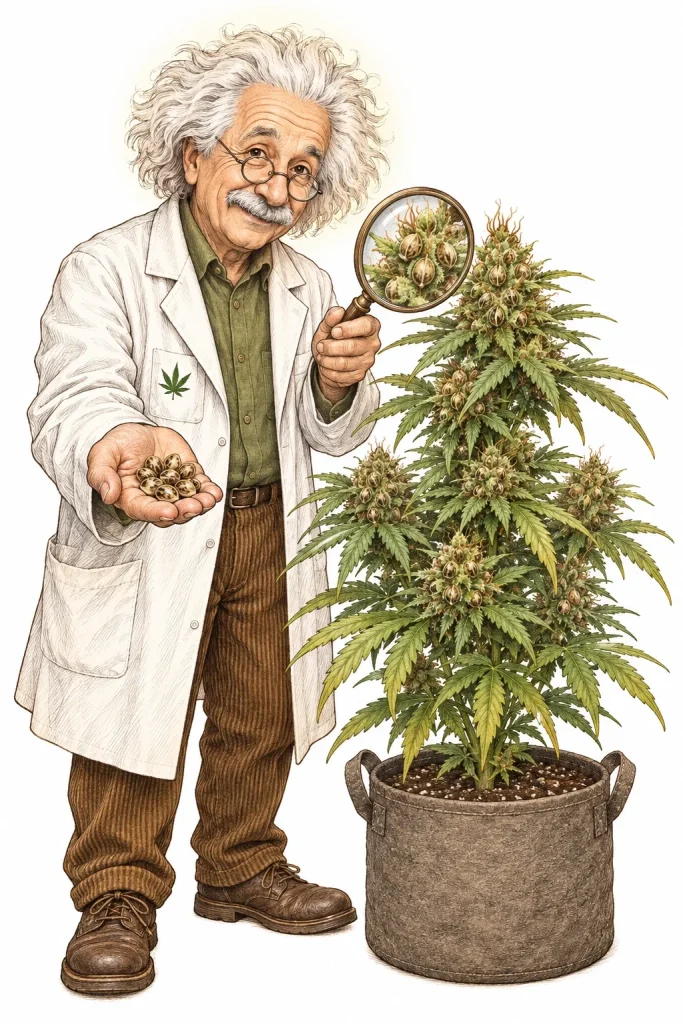
Making your own cannabis seeds frees you from seed banks and gives you your own one-of-a-kind genetics for next season. Pollinating a female plant with pollen from a male or a reversed female takes a bit of patience, but it’s very doable for home growers. In this guide, we’ll show you step by step how to collect pollen, pollinate on purpose, and end up with high-quality seeds that actually germinate. Check the cannabis laws where you live before growing or breeding your own seeds.
Why Making Your Own Cannabis Seeds Pays Off
There are plenty of good reasons why growers eventually start making their own cannabis seeds. For one, you save money on pricey seed packs in the long run. For another, you can lock in traits like flavor, yield or plant structure from your favorite plant for the next generation.
Breeding your own seeds really pays off with autoflowers or rare phenotypes you can’t buy anymore. You also decide whether you work with feminized or regular pollen, so you can cross parent plants with exactly the traits you want.
One thing first: check the cannabis laws where you live before growing, since rules on plant counts and seed production vary a lot. You’ll find more growing basics in our comprehensive Knowledge Base.
- Independence from seed banks and shipping times
- Preserve rare or exceptional phenotypes
- Save money if you grow regularly
- Full control over your genetic selection
The Basics: Understanding Male and Female Plants
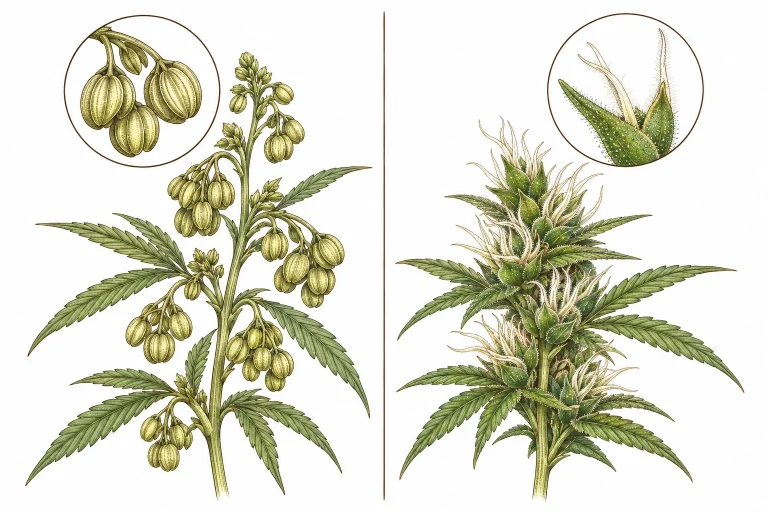
To make cannabis seeds, you absolutely need a male pollen source and a receptive female flower. Male plants form small, round pollen sacs at the nodes, while female plants show white, hairy pistils on their flower sites.
No male plant on hand? You can reverse a female plant with silver thiosulfate (STS) so it produces male pollen sacs. Rodelization is a bit less reliable: here you use pollen that a stressed female produces on her own late in flowering. Both methods give you feminized pollen, which produces almost exclusively female offspring.
Make sure you identify male plants early and keep them away from your flowering plants until you’re ready to use them for pollination. Otherwise, accidental pollination can quickly lead to seeds in your buds, which can seriously lower the quality of your harvest.
- Male plants: round pollen sacs instead of calyxes
- Female plants: white pistils on the calyxes
- Reversing with silver thiosulfate (STS) for feminized pollen
- Sexing your plants early saves you nasty surprises
How to Collect Pollen
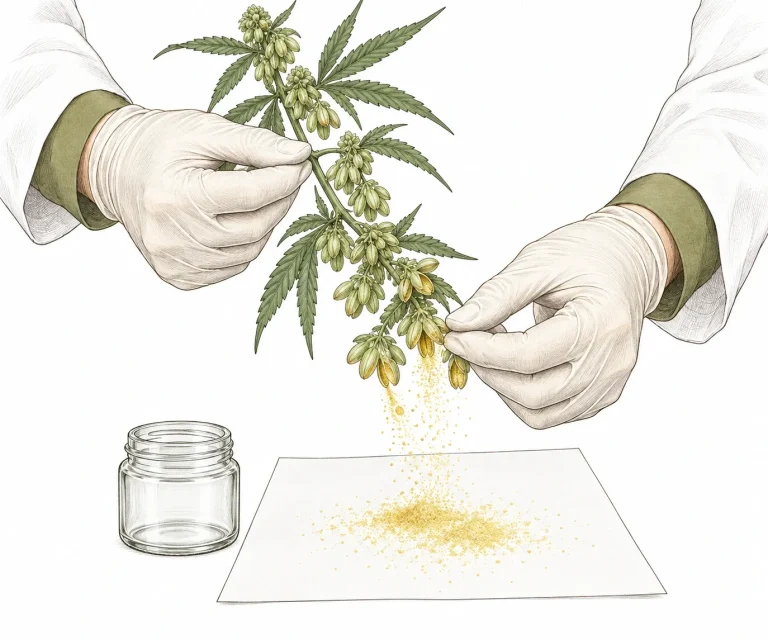
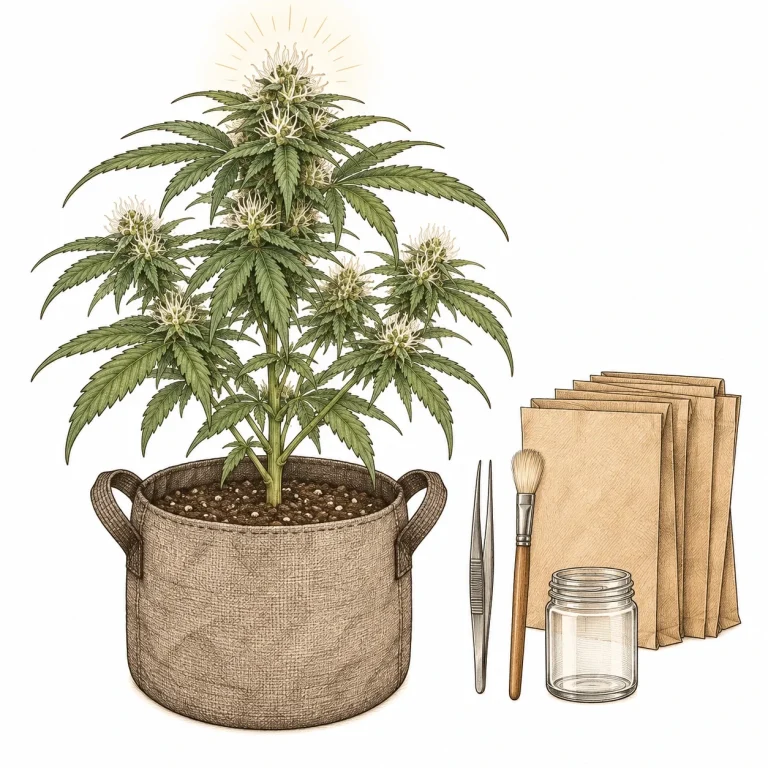
Once the pollen sacs on your male or reversed plant look plump and are just starting to open, it’s time to harvest the pollen. Cut off a whole branch with ripe pollen sacs and lay it over a clean white sheet of paper or a shallow tray.
After one to two days in a dry, warm room, the sacs open on their own and the fine yellow pollen drops out. You can speed things up by gently shaking the branch or brushing over the sacs with a small paintbrush.
Next, transfer the collected pollen into an airtight jar or a small bag and store it cool and dry, ideally in the fridge. In the fridge, pollen stays viable for a few weeks. Dried well and sealed airtight in the freezer, it can last several months, so you can use it for future grows, too.
- Only harvest pollen sacs once they’re fully ripe
- Let the branch dry over clean paper
- Store pollen cool in an airtight container
- Don’t forget to label it with the strain name and harvest date
Pollinating Step by Step
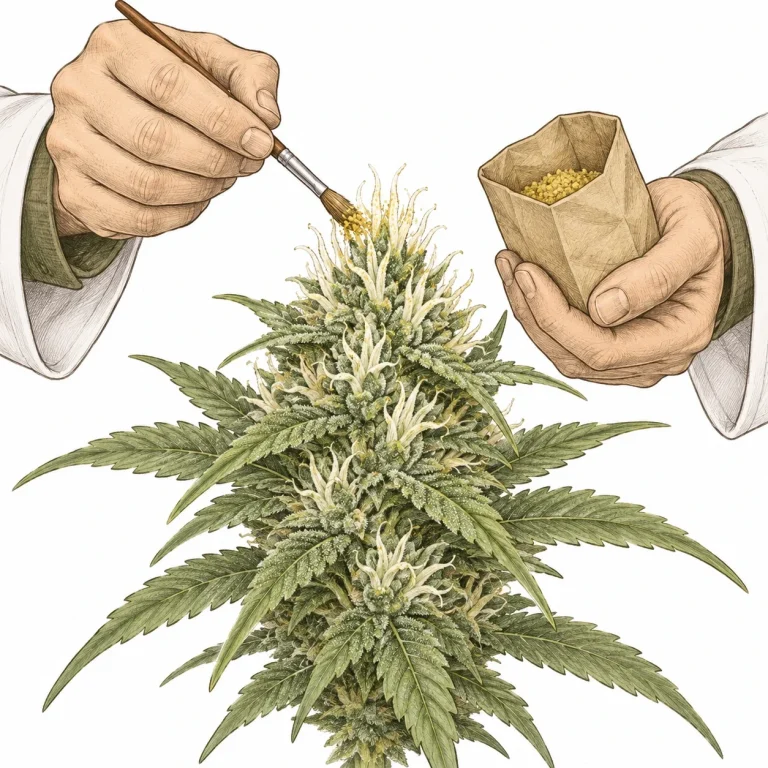
To pollinate, first pick a few bud sites on your female plant that you want to target. If you want to use the whole plant for seed production, you can treat several branches at once.
Carefully apply the collected pollen to the white pistils with a small, clean paintbrush or a cotton swab. The pistils should still be fresh and not already receding, because their receptiveness to pollen drops over time.
To keep pollen from drifting onto other plants in the same room, it’s a good idea to cover the pollinated bud sites with a plastic bag or a small pouch for 24 to 48 hours after treatment. Then remove the cover so the flowers can keep developing normally.
Repeat the process on the same spot after two to three days to boost your success rate. You can tell pollination worked when the pistils turn brown and recede while the calyx underneath starts to swell.
- Only pollinate fresh, white pistils
- Apply pollen precisely with a brush or cotton swab
- Cover pollinated areas for a short time
- Repeat pollination after a few days for better results
After Pollination: Seed Maturation and the Right Harvest Time
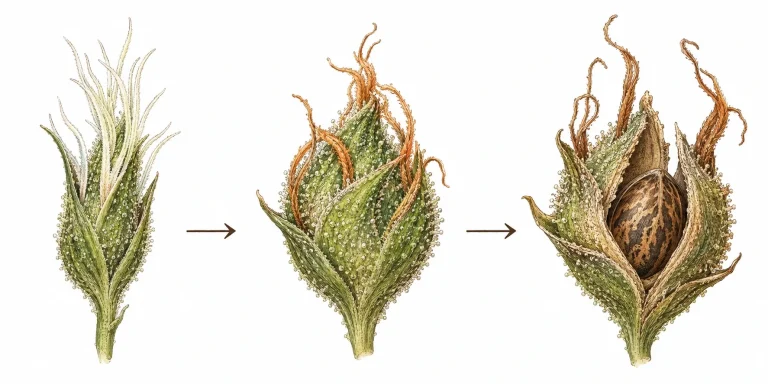
Once pollination and fertilization succeed, the plant starts putting its energy into making seeds instead of resin. The affected calyxes swell up visibly, and the seeds take four to six weeks to fully mature.
A mature cannabis seed has a hard shell, often marbled or striped, in brown to dark tones. Immature seeds are white or light green and soft. They usually don’t germinate reliably.
Hold off on harvesting until the seed pods start to crack open slightly or the surrounding leaves turn yellow and die back. Harvest too early and you can end up with duds. Patience is your biggest success factor here. To find the right harvest window for your unpollinated buds, check out our article on cannabis harvest time based on trichomes.
- Seed maturation time: 4 to 6 weeks after pollination
- Mature seeds: dark, hard, marbled
- Immature seeds: pale, soft, not viable
- Use yellowing, dying leaves as your harvest signal
Harvesting, Drying and Storing Seeds the Right Way
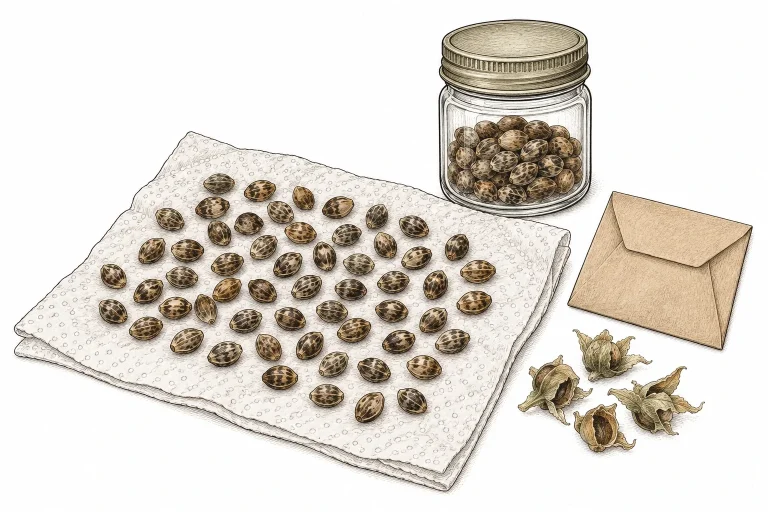
To harvest, cut off the seeded buds and gently break open the calyxes by hand to free the seeds. Wearing gloves is a good idea, since mature buds can still be sticky with resin even after seeding.
Then spread the seeds out in a dry, dark spot for one to two weeks to finish drying, much like regular cannabis drying. Seeds stored too damp can otherwise develop mold.
For long-term storage of your cannabis seeds, airtight jars or vacuum bags work great, ideally with a desiccant like silica gel. Stored cool and dark at 39–46 °F (4–8 °C), cannabis seeds stay viable for several years, sometimes much longer.
- Free the seeds from the calyxes by hand
- Let them finish drying for one to two weeks
- Store airtight with a desiccant
- Keep cool and dark at 39–46 °F (4–8 °C) for a long shelf life
Avoid These Common Seed-Making Mistakes
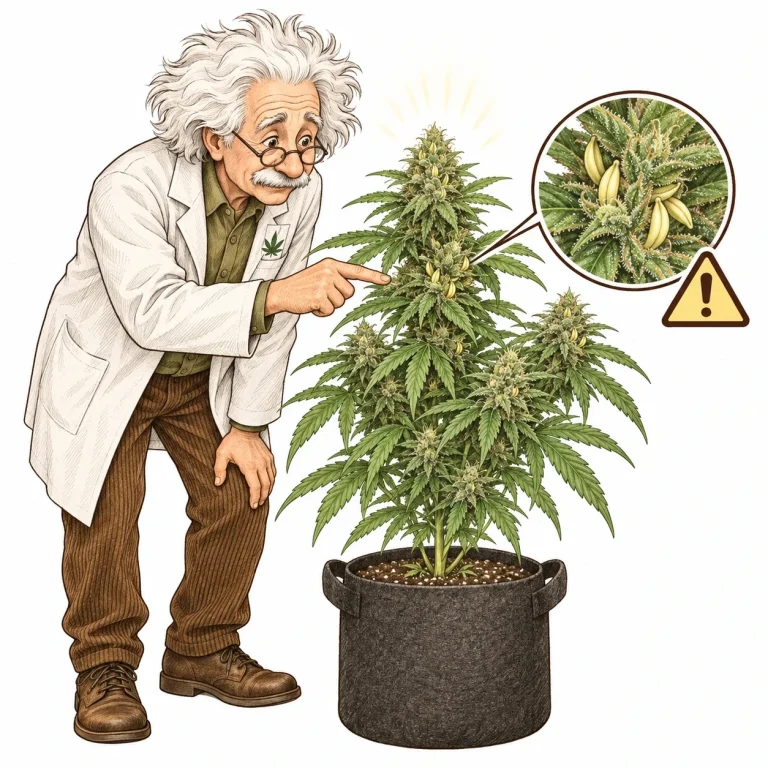
A classic beginner mistake is accidentally pollinating the whole harvest because male pollen sacs were missed or spotted too late. So check your plants regularly for the first signs of pollen sacs, especially early in the flowering stage.
Another risk is stress from heat, light leaks or irregular watering, which can trigger hermaphrodite flowers out of nowhere. You often notice this kind of unplanned self-pollination late, and it can ruin your entire harvest. Learn more in our article on how to spot cannabis hermaphrodites.
Too few pollination attempts or old, non-viable pollen can also lead to disappointing results with few seeds or duds. Test your pollen’s viability on a less important plant first, before you use it on your best genetics.
- Check regularly for male pollen sacs
- Minimize stress factors like heat and light leaks
- Test pollen viability before the main run
- Plan enough repeat pollinations
Frequently Asked Questions
How long does it take for cannabis seeds to mature after pollination?
Once pollination works, cannabis seeds usually need about four to six weeks to fully mature and become viable. The exact timing can vary with the strain and your growing conditions.
Can I make my own seeds with just one female plant?
Yes, with a technique called rodelization. Stress or a silver thiosulfate (STS) spray pushes a female plant to form male pollen sacs. The pollen they release is feminized.
How long do homemade cannabis seeds stay viable?
Store them cool, dry and dark at 39–46 °F (4–8 °C), and your homemade seeds can often stay viable for several years. Use airtight containers and add a desiccant pack to keep moisture out.
How can I tell if pollination worked?
A reliable sign: the white pistils turn brown and pull back, while the calyx underneath visibly swells as a seed forms inside.
Is it legal to collect my own cannabis seeds?
That depends on where you live. Check the cannabis laws in your state, province or country before growing or collecting seeds.
The Bottom Line
Making your own cannabis seeds is very doable for home growers – all it takes is the right know-how and a bit of patience. From sexing your plants and collecting pollen to targeted pollination and seed maturation, it comes down to a few clear steps. Store your seeds properly and you lock in your own unique genetics for many grows to come. Want to know the best way to germinate your homemade seeds? Our comparison of germination methods walks you through it. Follow this guide and you’ll not only save money – you’ll also keep your best phenotypes going for years.
