

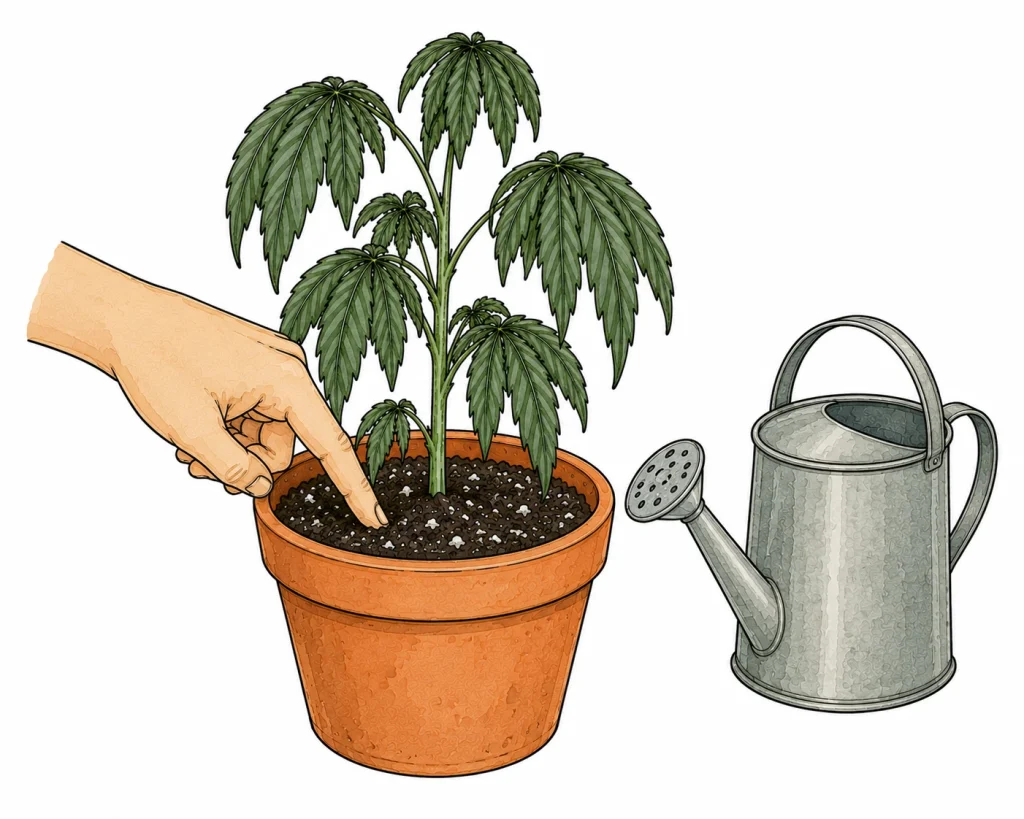
Overwatered cannabis – what can you do before it’s too late? It’s one of the most common questions home growers ask, and overwatering is also one of the most widespread mistakes in growing cannabis, period. Too much water harms the roots more than dryness, because their oxygen supply gets cut off and rot sets in. In this article, you’ll learn how to reliably spot overwatering, which immediate steps really help and how to find the right watering interval going forward – so your plant grows and flowers in good health.
Overwatered cannabis: how to spot the key symptoms
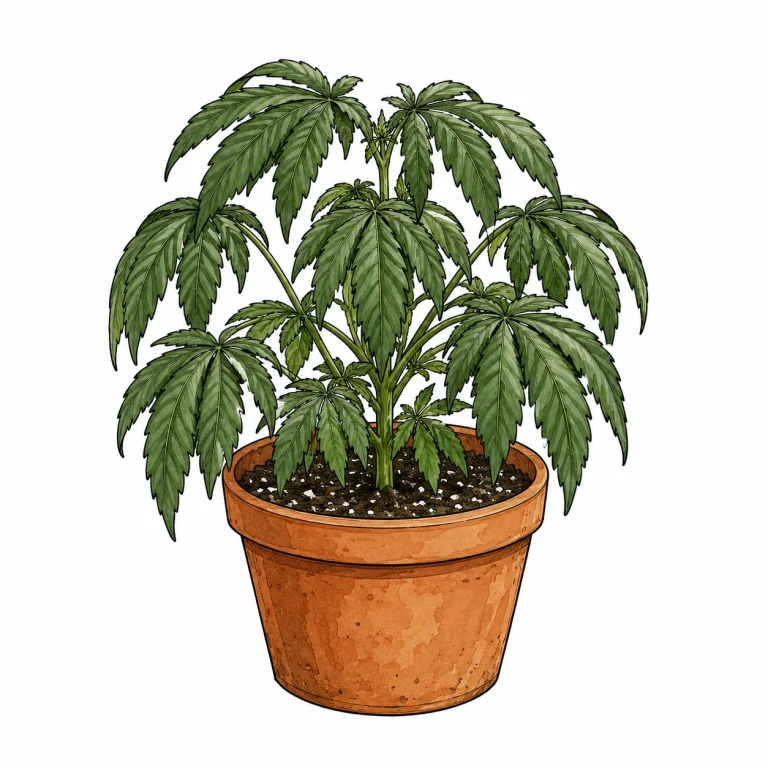
The tricky thing about overwatering is that, at first glance, it can look just like underwatering – both lead to drooping, limp leaves. But the key difference lies in the leaves themselves. With overwatering, the leaves stay plump and dark green; they hang down without looking wilted or leathery. With real underwatering, on the other hand, the leaves wilt, get thin and visibly lose their tension.
Another reliable sign is the condition of the soil. Push a finger 2–3 in (5–8 cm) deep into the growing medium: if it still feels moist or wet even though you watered two or three days ago, that’s a clear sign of excess moisture. You can also see it when the surface of the soil stays dark and no light-colored, dry patch forms. The weight of the pot tells you a lot, too: an overwatered pot is much heavier than a dry one.
Other symptoms to watch for are yellowish leaf edges, slight chlorosis of the lower leaves and a plant that seems sluggish overall. In the worst case, the roots start to rot, which you’ll notice from a musty, rotten smell coming from the growing medium. Once root rot has set in, you absolutely have to act fast. The plant then shows extreme stress symptoms despite moist soil, because it can no longer take up water – a vicious circle.
- Leaves droop but stay plump and dark green
- Soil is still moist or wet several days after watering
- Pot feels unusually heavy
- Lower leaves turn yellow or show signs of chlorosis
- Musty or rotten smell from the growing medium
- Growth slows down or stalls despite enough light and nutrients
- Leaf edges or tips turn yellowish to brownish
Immediate steps: how to save your overwatered cannabis plant
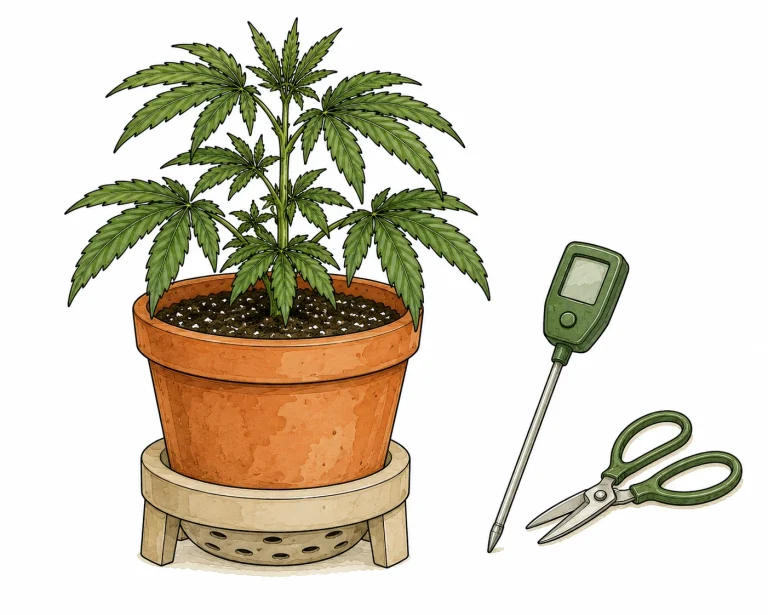
Once you’ve determined that your plant has gotten too much water, the most important thing is: stop watering immediately. It sounds simple, but it’s the most effective first step. Let the soil dry out completely before you water next time. How long that takes depends on the pot size, the type of growing medium and the room temperature – plan on at least three to seven days.
At the same time, you should improve ventilation around the plant. Make sure there’s enough airflow in the grow room so the soil dries faster. If possible, set the pot on a rack or a raised tray off the floor so excess water can drain and air can reach the bottom of the pot. If your pot has no drainage holes or they’re clogged, now is the time to fix that – either by carefully poking new holes or by repotting into a more suitable container.
Loosening the top layer of soil with a stick or a small fork can help as well: breaking up the growing medium greatly improves aeration in the root zone. Be careful not to poke too deep and injure the roots. With advanced damage and signs of root rot, repotting into fresh, well-draining growing medium is the way to go, combined with an organic root stimulant or a trichoderma product. While you’re at it, you can carefully remove the damaged, brownish or slimy roots.
Important: don’t feed the plant during the recovery phase, or only very sparingly. A stressed plant with damaged roots can barely take up nutrients, and extra feeding would only add to the stress. You can learn more in our article on cannabis nutrient burn. Give the plant time and space to recover – after a few days of properly drying out, you’ll see it perk up and start growing vigorously again.
- Stop watering immediately and let the soil dry out completely
- Improve ventilation in the grow room and increase air circulation
- Set the pot on a rack or spacers for better drainage
- Check the drainage holes and fix them or repot if needed
- Carefully loosen the top layer of soil for better oxygen supply
- With root rot: repot into fresh growing medium with added trichoderma
- Cut back heavily on feeding during recovery or pause it completely
Overwatered cannabis: understand the causes and prevent it for good
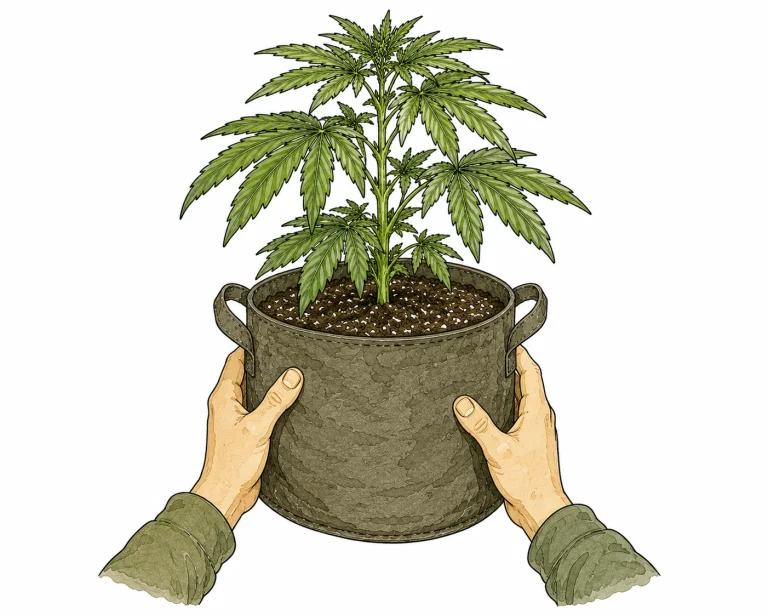
To avoid overwatering in the future, you first need to know the most common causes. The classic mistake is a pot that’s too big for the plant or drains poorly. If the root mass is too small in relation to the amount of soil, the plant doesn’t use up the water fast enough and the growing medium stays too wet all the time. So make sure pot size and plant size always match – pots that are too big are a common trap in cannabis growing.
Another common mistake is watering on a fixed schedule instead of based on what the plant actually needs. Cannabis doesn’t need water by the calendar, but when the soil is almost dry. The most reliable method is the so-called lift test: lift the pot and compare its weight with a freshly watered pot. A light pot means dry growing medium and therefore time to water. With a little practice, you’ll pick up this method very quickly, and it’s more precise than any schedule. Alternatively, you can use a moisture meter that shows you the water content right in the root zone.
The growing medium plays a central role, too. Heavy, compacted soils or mixes with a high peat content and no perlite or other drainage-improving materials tend toward waterlogging. Mix at least 20 to 30 percent perlite or pumice into your growing medium to clearly improve drainage and aeration in the root zone. Adding coco coir can also help make the mix airier. We’ve summed up everything about watering cannabis properly in our detailed watering guide.
Finally, the growth stage also has a big impact on how much water the plant needs. A seedling needs much less water than a fully developed plant in the flowering stage. Adjust your watering amount and interval to each growth stage. It’s often enough to moisten only the area right around the roots during the seedling and early vegetative stage – known as targeted spot watering. In flowering, water needs rise sharply, but the same rule applies here: better smaller amounts more often than too much at once.
- Pot too big for the current plant size – the soil doesn’t dry out
- Watering on a fixed schedule instead of based on actual need
- Growing medium without enough perlite or drainage materials
- No drainage holes in the pot, or clogged ones
- Temperatures that are too low or poor ventilation slow down drying
- Saucers or trays that let waterlogging set in
- Watering amount not matched to the growth stage
Overwatered cannabis: how it differs from other problems and common mix-ups
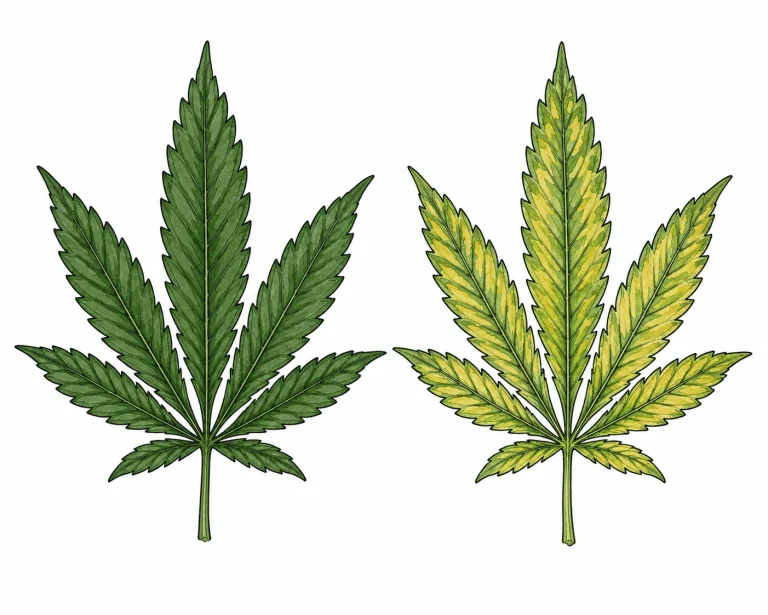
As mentioned, overwatering is often confused with underwatering. But there are other problems that can cause similar symptoms. A nitrogen or calcium deficiency also leads to yellowish leaves and slower growth. The difference here lies in the pattern of discoloration: nutrient deficiencies usually start on older, lower leaves with specific patterns, while overwatering damage often shows up more diffusely and goes along with drooping, plump leaves. Calcium deficiency also shows characteristic brown spots – more on this in our article on calcium deficiency in cannabis.
Heat stress can also cause drooping leaves, but it usually goes along with dried-out soil and a higher room temperature. With heat stress, the leaves tend to look wilted and thin, not plump and heavy as with overwatering. So always check the soil, temperature, humidity and the look of the leaves together before you make a diagnosis. That helps you take the right action and avoid making the damage worse with the wrong treatment.
Root rot is a direct result of chronic overwatering and often only becomes obvious when the plant looks extremely limp despite moist soil. The musty smell is a key giveaway here. Unlike simple overwatering, where the plant bounces back quickly once the soil dries out, a plant with advanced root rot recovers much more slowly. In this case, repotting and using hydrogen peroxide (3% solution) or biological antagonists such as trichoderma are the most effective countermeasures.
Another often overlooked factor is the pH of your water. Even if you water correctly, the wrong pH can keep nutrients from being taken up, and the plant then shows deficiency symptoms that resemble overwatering. So always check the pH of your water, too, and adjust it if needed. You’ll find everything you need to know in our comprehensive guide to cannabis pH levels.
- Underwatering: leaves wilted and thin instead of plump and dark green
- Nutrient deficiency: specific discoloration patterns instead of diffuse chlorosis
- Heat stress: dry soil and high room temperature as accompanying signs
- Root rot: musty smell, extreme limpness despite moist soil
- pH problems: similar symptoms, but caused by the wrong pH
- Nutrient burn: burnt leaf edges, soil often on the dry side
Finding the right watering interval for cannabis: step by step
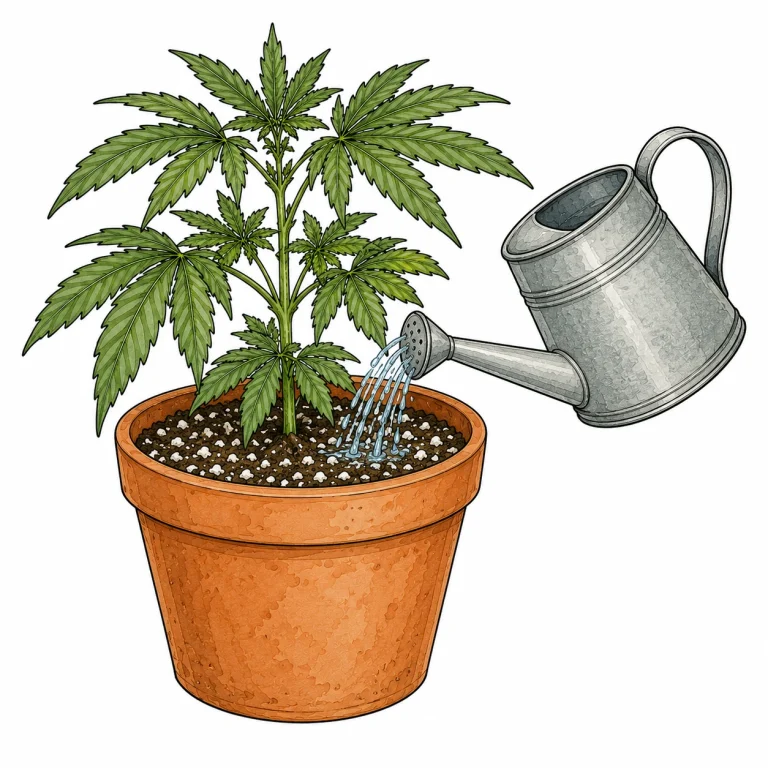
There’s no single perfect watering interval for cannabis – it’s always a combination of observation, experience and the specific conditions of your grow setup. As a rough guide: small amounts every two to three days for seedlings, every one to two days in the vegetative stage depending on pot size and room climate, and similar or slightly more often in flowering for larger plants.
The most reliable method is still the lift test mentioned above, combined with the finger test. Push your finger 2 in (5 cm) into the soil: if it still feels moist, wait. If it feels dry, it’s time to water. After a few weeks, you’ll develop a reliable feel for it. If you’re running several pots at once, mark a “reference pot” with a freshly watered plant and compare the weight regularly.
Always water until water runs out of the drainage holes – this makes sure the entire growing medium gets evenly moist and salts are flushed out. Then empty the runoff from the saucer so no waterlogging occurs. Choose the amount so that about 10 to 20 percent of the water you pour drains out as runoff. That way, you get even moisture without water pooling at the bottom of the pot.
Temperature and humidity in the grow room have a big effect on how long the growing medium takes to dry. At higher temperatures and lower humidity, the soil dries faster – and vice versa. Keep an eye on these parameters and adjust your watering interval accordingly. You’ll find an overview of all the important care steps and how they fit together in our comprehensive guide to growing cannabis indoors.
- Lift test: lift the pot and compare its weight with a freshly watered pot
- Finger test: push your finger 2 in (5 cm) into the soil and check the moisture
- Use a moisture meter for precise readings in the root zone
- Always water until you get runoff and empty the runoff right away
- Aim for 10–20 percent runoff per watering as a guideline
- Adjust your watering interval to temperature, humidity and growth stage
- Seedlings: every 2–3 days; veg/flowering: as needed, depending on the growing medium
Frequently Asked Questions
How can I tell if my cannabis plant is overwatered?
The most typical signs of overwatering are drooping leaves that stay plump and dark green. Unlike with underwatering, the leaves don’t look wilted or thin but heavy and full. On top of that, the soil still feels moist several days after watering, and the pot is unusually heavy. In advanced stages, a musty smell from the growing medium is added, which points to the start of root rot.
Overwatered cannabis – what should you do first?
First, stop watering immediately and let the soil dry out completely. Set the pot on a rack or a raised tray so air can reach the bottom of the pot. Improve ventilation in the grow room and carefully loosen the top layer of soil. Don’t feed during this phase, or only minimally, since the stressed roots can’t take up nutrients.
How long does it take for an overwatered cannabis plant to recover?
With mild overwatering and no root rot, the plant often recovers within 24 to 72 hours once the soil has dried out. With more advanced damage or the beginnings of root rot, recovery can take one to two weeks and often requires repotting into fresh growing medium. The sooner you step in, the faster and more completely the plant recovers.
Can I just repot an overwatered plant?
Yes, in many cases repotting makes sense, especially if root rot is present or the current growing medium stays too wet all the time. Use fresh, well-draining growing medium with 20 to 30 percent perlite. Carefully remove brown, slimy or damaged roots in the process, and optionally treat the healthy roots with an organic root stimulant. After repotting, let the plant settle in for one to two days without watering.
How do I prevent overwatering cannabis in the future?
The most important step is to water based on what the plant actually needs instead of on a fixed schedule. Use the lift test and the finger test to decide when to water. Mix enough perlite into your growing medium (20 to 30 percent), make sure your pot has working drainage holes, and choose a pot size that matches the current size of the plant. Don’t let runoff sit, and adjust the amount of water to the growth stage.
Does overwatering look like underwatering?
At first glance, yes – both lead to drooping leaves. The difference: with overwatering, the leaves stay plump, heavy and dark green. With underwatering, they turn thin and wilted and visibly lose turgor pressure. Also, with overwatering the soil is moist and the pot is heavy, while with underwatering the pot is light and the soil looks dry and pale.
Conclusion
Overwatered cannabis – what should you do? With the right immediate steps, you can save your plant completely in most cases: stop watering, improve ventilation, let the soil dry out and, if it’s serious, repot. What matters is that you spot the symptoms early and don’t confuse them with underwatering or nutrient problems. In the long run, consistently using the lift test and finger test together with a well-draining growing medium protects you from further overwatering problems. Once you’ve made proper watering second nature, you’ve laid the most important foundation for healthy, high-yielding cannabis plants.
