

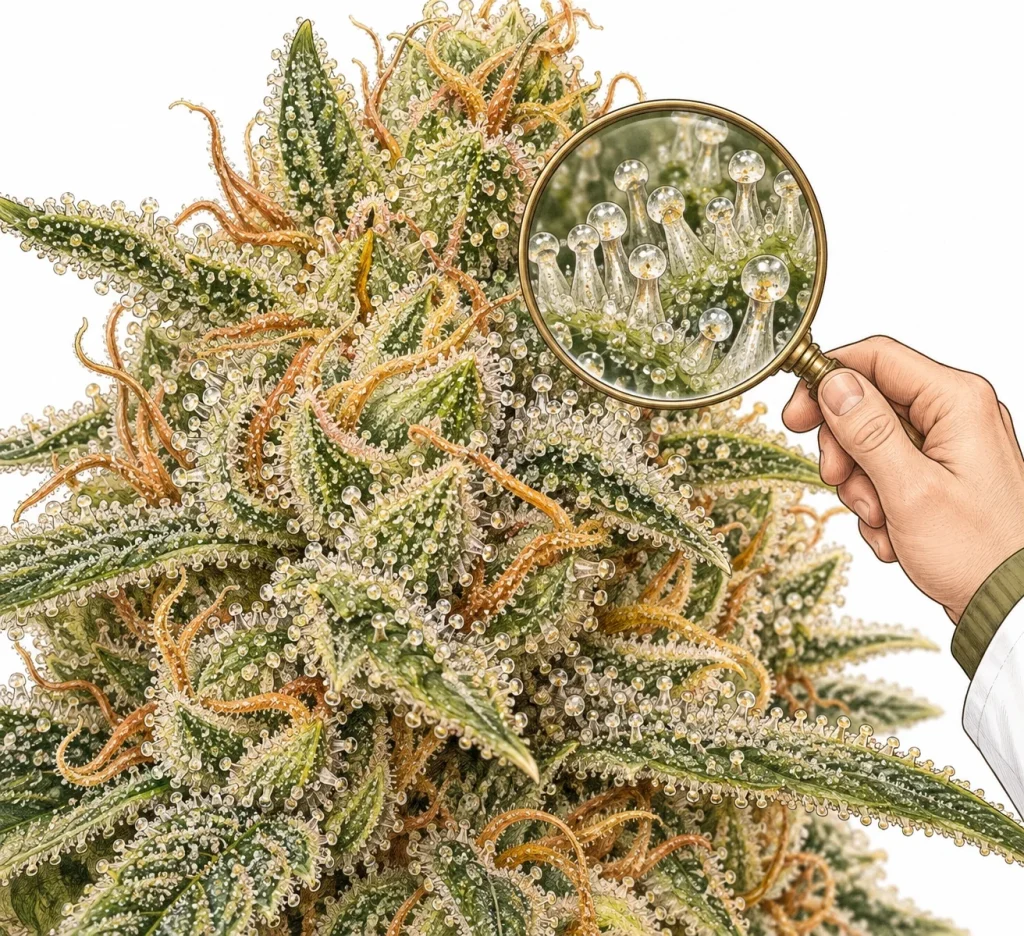
Cannabis terpenes are the aromatic oils behind the signature smell and taste of every strain. Like cannabinoids, they form in the trichomes of the buds, and together with THC and CBD they shape how a plant affects you. In this article, you’ll learn which terpenes exist, how they smell, what effects they’re linked to, and how you can boost them in your own grow. Once you understand the basics of cannabis terpenes, you can steer the aroma and effect of your harvest much more deliberately.
What Are Cannabis Terpenes and How Do They Form?
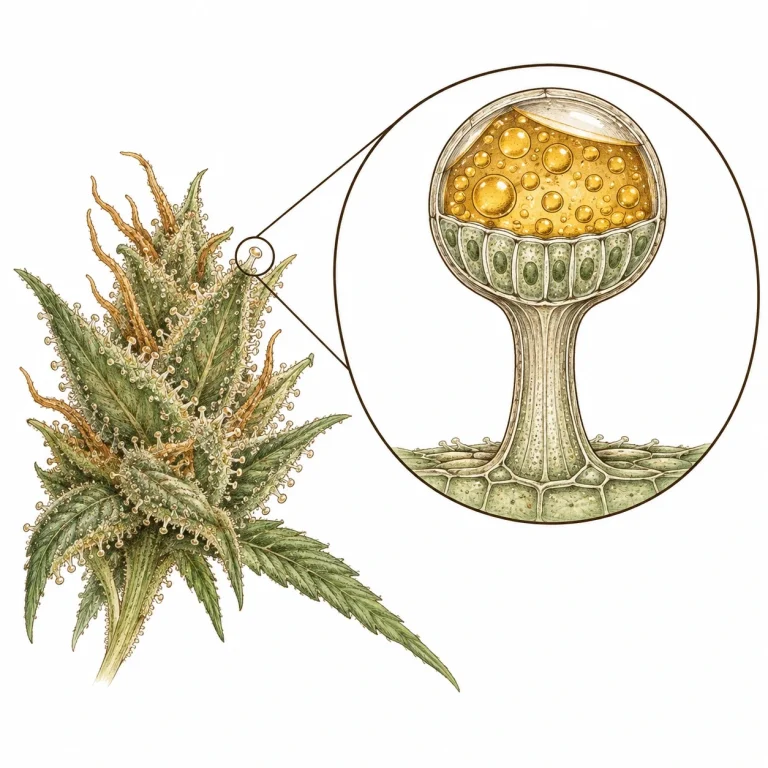
Terpenes are organic molecules found in many plants, herbs and fruits. They’re produced in the trichomes, the tiny resinous gland heads on buds and leaves. Originally, they help protect the plant against pests, UV radiation and pathogens.
More than 150 different terpenes have been identified in cannabis so far, but only a handful show up in meaningful amounts. These terpenes give every strain its unique smell and flavor profile, from citrusy and earthy to spicy or floral. Want to know which genetics bring which aroma? Check out the cannabis strains (German) section.
Terpene production depends heavily on genetics, but also on environmental conditions like light, temperature and nutrient supply. If you keep an eye on your plants with regular plant diagnosis, you can spot stress factors that may hold back terpene production.
- Terpenes are produced in the same trichomes as cannabinoids
- More than 150 different terpenes are known in cannabis
- Genetics set the basic terpene profile of a strain
- Environmental factors can noticeably change terpene levels
The Most Important Cannabis Terpenes at a Glance
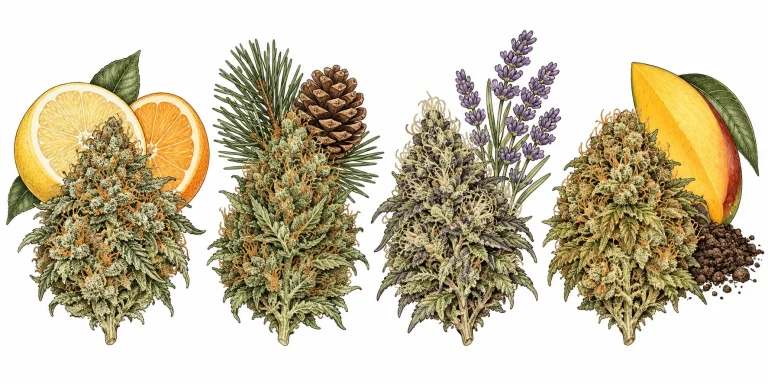
Every terpene has its own aroma profile and is linked to certain effects. Research on exactly how they work is still ongoing, but growers and users have plenty of hands-on experience to go by.
Myrcene is the most common terpene in cannabis. It brings an earthy, musky scent that’s often compared to mango. It’s commonly associated with relaxing, sedating effects and is typical of many indica-dominant strains.
Limonene gives a strain that classic citrus scent and is often linked to mood-lifting effects. Pinene smells like pine needles and fresh forest air. Caryophyllene brings a spicy, peppery note, and it’s the only known cannabis terpene so far that can bind directly to a cannabinoid receptor (CB2). Linalool smells like lavender and is often described as calming, while humulene adds a hoppy, earthy tone.
- Myrcene: earthy, musky, often relaxing
- Limonene: citrusy, mood-lifting
- Pinene: woodsy, piney, clear-headed
- Caryophyllene: spicy and peppery, binds to cannabinoid receptors
- Linalool: floral, lavender-like, calming
The Entourage Effect: How Terpenes Work Together with Cannabinoids
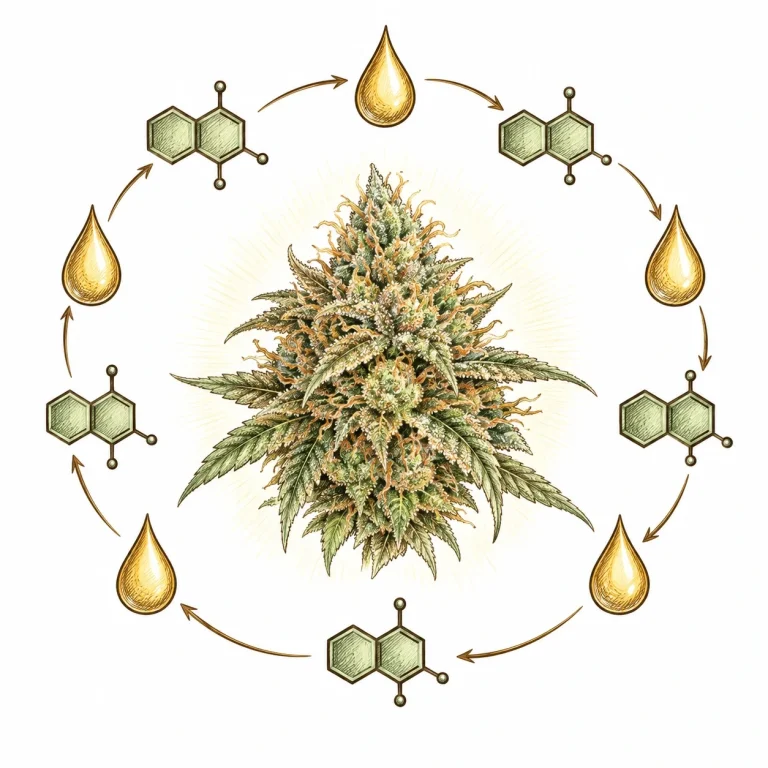
The entourage effect is the theory that cannabinoids like THC and CBD work together with terpenes and other plant compounds. This synergy may create a different overall experience than any single isolated compound.
This interplay could explain why two strains with the exact same THC content can feel completely different. The idea is that each strain’s terpene profile helps decide which effects come to the front. So far, though, science only partly backs this up.
Research on the entourage effect is still fairly young. Many people in the cannabis community believe full-spectrum products that keep their terpene profile offer a richer experience than isolated extracts. But that hasn’t been scientifically confirmed yet.
- Terpenes and cannabinoids work as a team, not in isolation
- The same THC level can feel different depending on the terpene profile
- Full-spectrum products are considered more effective than pure isolates
- Research on the entourage effect keeps evolving
How to Boost Terpene Production in Your Own Grow
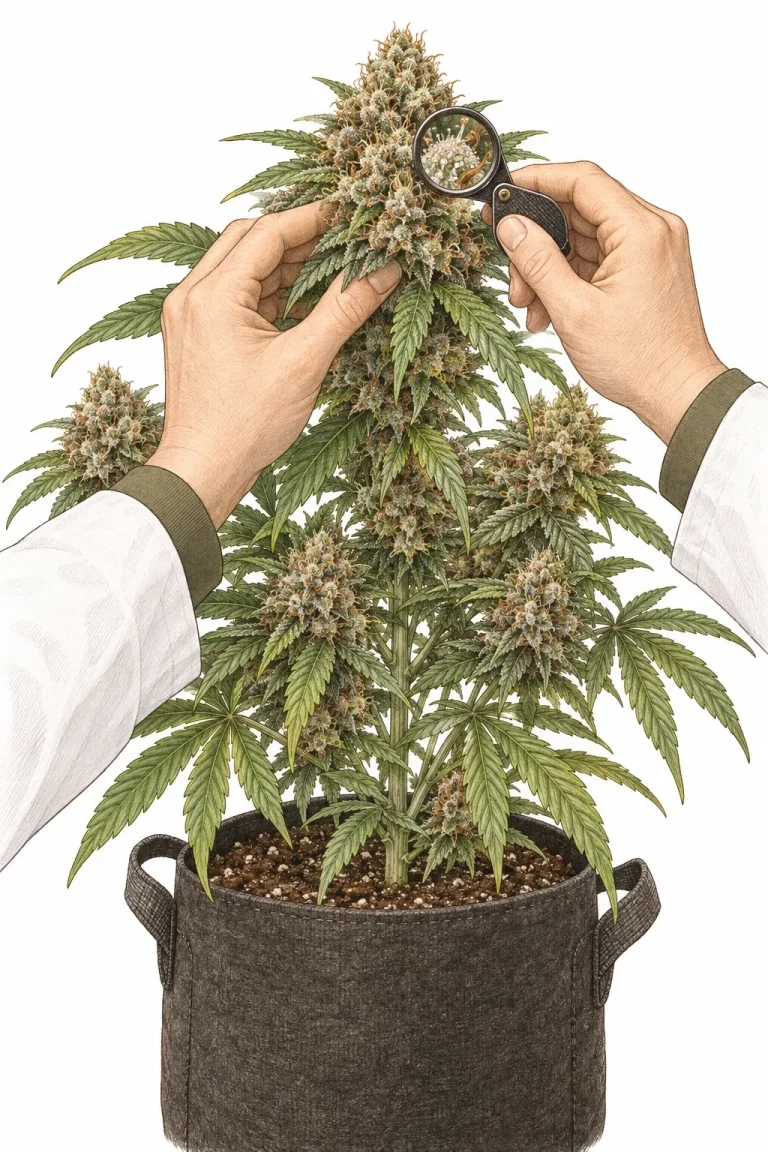
Want to harvest buds that are as aromatic and terpene-rich as possible? You can steer that with the right growing conditions – our Grow Guide covers all the basics. Light, temperature, humidity and the last few weeks before harvest matter most.
Temperatures above 82 °F (28 °C) can make volatile terpenes evaporate before they build up in the trichomes. A cooler environment in the late flowering stage, ideally between 64 and 75 °F (18–24 °C), helps preserve those aromas. Learn how to dial in the temperature in your grow in our guide How to Optimize Cannabis Temperature.
Mild stress can also kick up terpene and trichome production, because the plant makes more protective compounds. Examples are watering a little less in the final days or adding targeted UV-B light. Too much stress backfires, though, and can hurt your plant more than it helps.
Harvest, drying and curing play a big role too. Terpenes are sensitive to heat and light. That’s why gentle drying at low temperatures and careful curing are key to keeping the aroma. You’ll find the details in our guide to drying cannabis and our guide to curing cannabis.
- Keeping flower temps below 82 °F (28 °C) protects volatile terpenes
- Mild stress can give trichome production a slight boost
- Gentle drying at low temperatures preserves aroma
- Slow curing intensifies the terpene profile even more
- Too much stress or a nutrient deficiency can hurt terpene quality
Common Mistakes That Destroy Cannabis Terpenes
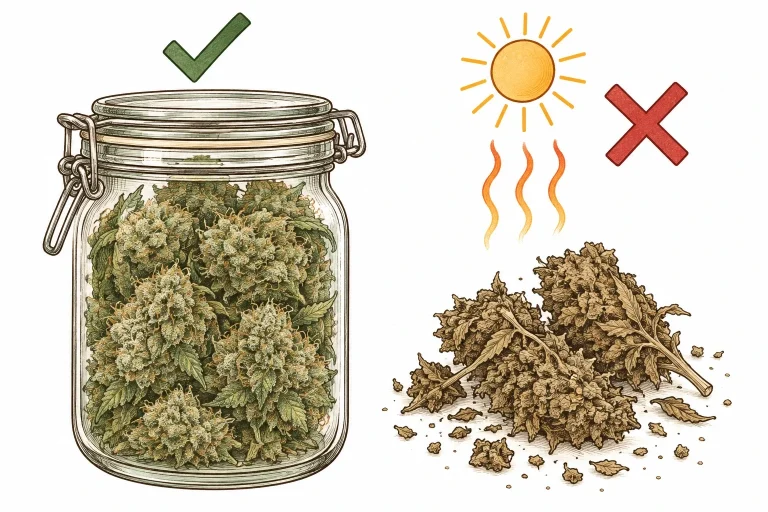
Lots of growers put serious effort into yield and bag appeal but overlook the factors that actually drive aroma. One common mistake is drying too fast and too hot. That way, a big chunk of your terpenes can be gone within just a few hours.
Poor storage after harvest also breaks down aroma compounds fast – for example, clear containers kept at room temperature in direct light. What matters here: airtight, dark containers and a cool, dry storage spot.
Nutrient imbalances during the flowering stage, like nutrient burn or deficiencies, can also hurt terpene production. The plant then puts its energy into repair instead of secondary metabolites. Balanced feeding based on the cannabis NPK chart can help you avoid these problems.
- Drying too fast at high heat can destroy terpenes within hours
- Light and oxygen break down terpenes during storage
- Unbalanced feeding pulls energy away from terpene production
- Trimming too early, before buds are fully dry, can reduce aroma
Frequently Asked Questions
What is the most common terpene in cannabis?
Myrcene is the dominant terpene in most cannabis strains and gives off an earthy, musky scent. It often makes up more than 50 percent of the total terpene content, especially in indica-dominant strains.
Do terpenes change during drying?
Yes. Terpenes are highly volatile and evaporate if temperatures are too high or drying goes too fast. A slow, controlled dry at lower temperatures preserves far more aroma compounds than a fast, hot dry.
Can you measure a plant’s terpene content?
The exact terpene content can only be determined by lab analysis using gas chromatography. For home growers, though, a rule of thumb applies: a strong, clear smell from the buds usually points to high terpene content.
Do terpenes affect the psychoactive effects of THC?
Yes. Through the entourage effect, terpenes can modulate how THC works – for example, by influencing absorption in the body or by boosting certain effects like relaxation or focus.
Why do some cannabis strains smell like citrus and others like diesel?
These differences come from each strain’s unique terpene profile. Limonene brings the citrus notes, while certain combinations of caryophyllene and other terpenes create the signature diesel smell of some strains.
The Bottom Line
Cannabis terpenes are much more than flavor carriers. They shape the whole experience of a strain and work hand in hand with cannabinoids in the entourage effect. With the right temperature control, gentle drying and careful curing, you can preserve far more of your harvest’s natural aroma. Understand these connections, put them to work in your grow, and you’ll be rewarded with noticeably more aromatic, more complex results.
