

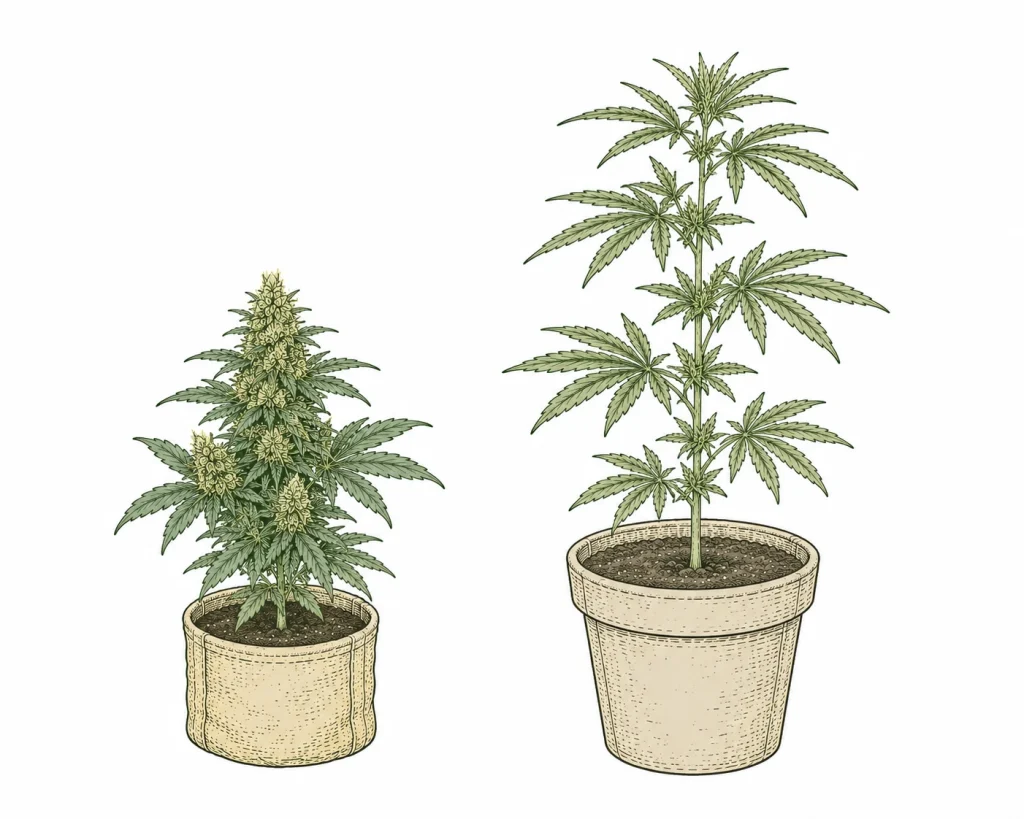
Autoflower vs. feminized: it’s one of the most common questions new growers ask, and for good reason. The seeds you pick can make or break your first grow. Both types have clear strengths and weaknesses, and how much each one matters depends on your situation. Growing indoors under LEDs or on your balcony over the summer shapes the decision just as much as your experience level and how much time you have. This article gives you an honest, hands-on overview with no marketing hype, just everything you really need to know about autoflowers and feminized seeds.
What Are Feminized Seeds and How Do They Work?
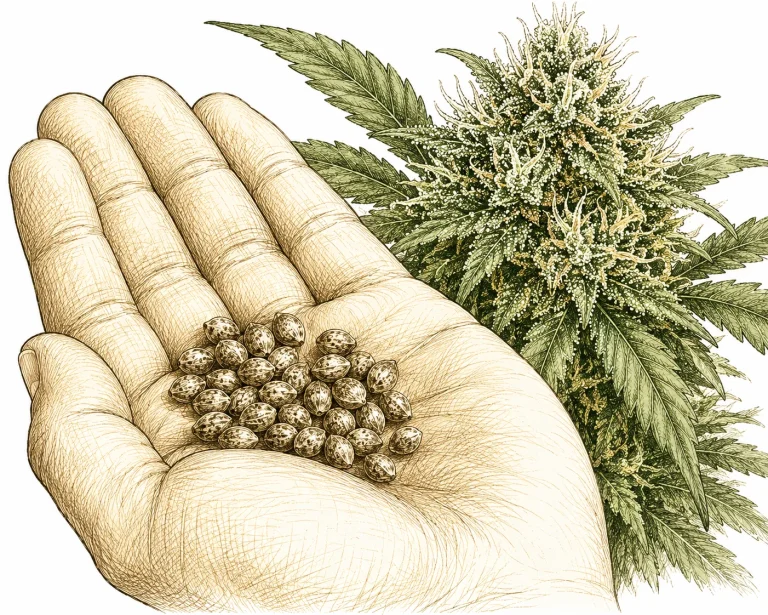
Feminized seeds are bred to produce close to 100 percent female plants. That matters because only females grow the resin-rich buds you’re after. If you’re working with regular seeds, our article on how to sex cannabis plants shows you how to tell them apart. Male plants produce pollen and can pollinate your females. The result: seedy buds with noticeably lower quality.
Feminized seeds follow the cannabis plant’s natural photoperiod. In other words, they only start flowering once the light cycle switches to roughly 12 hours of light and 12 hours of darkness. Outdoors, that happens on its own in late summer. Indoors, you trigger the switch yourself with a timer. That control gives you huge flexibility as a grower: you can stretch the vegetative stage as long as you like and directly shape your plant’s final size and yield. Bigger plants usually mean more buds. Under ideal conditions, yields of 1.6 oz per sq ft (500 g per m²) and more are realistic.
One important note: even feminized seeds can turn hermaphrodite under heavy stress, meaning the plant grows both male and female flowers. Common stress triggers include poor watering, pH swings and temperature swings. To avoid this, keep the basic conditions of your grow stable. If you’re not sure which mistakes to watch out for, our article on the most common growing mistakes can help.
- Close to 100% female plants
- Flowering is triggered by switching the lights to 12/12
- You control how long veg lasts – more time usually means more yield
- Higher yield potential than most autoflower strains
- Indoors, you need a timer and consistent light management
- More sensitive to stress than autoflowers
What Makes Autoflowering Seeds So Special?
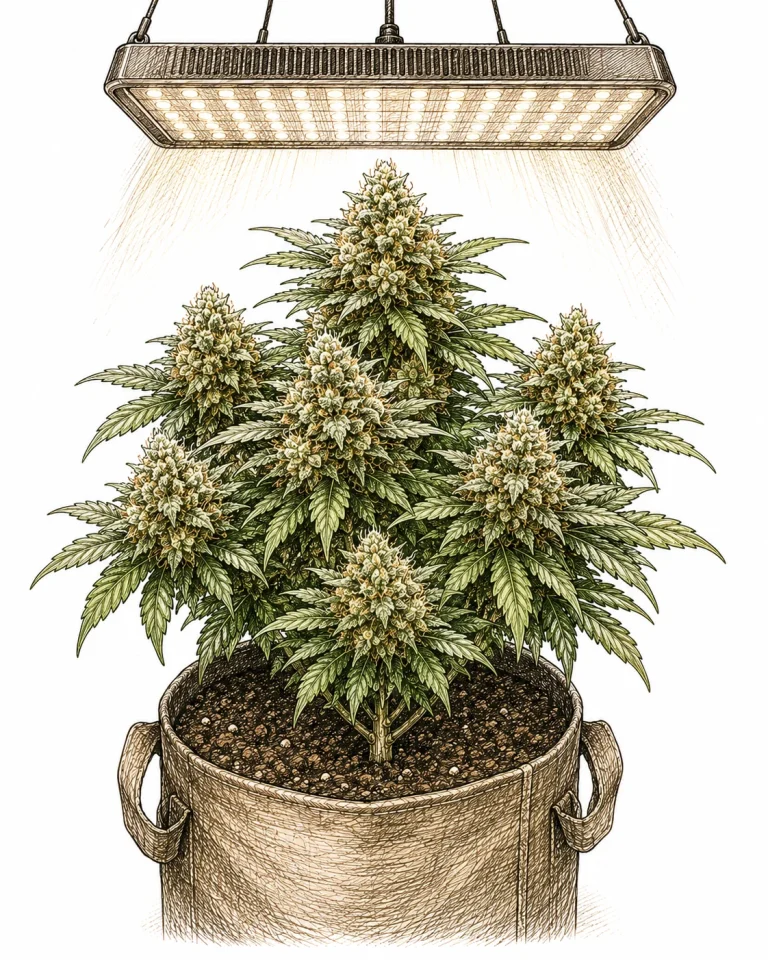
Autoflowering seeds start flowering on their own, no matter what the light schedule is – hence the name. They simply flip after a set number of weeks, whether you give them 18, 20 or 24 hours of light. This trait comes from Cannabis ruderalis, a subspecies native to regions with short summers like Russia and Central Asia, which adapted over time to the very short growing season there. A recent taxonomic study classifies ruderalis as a variety of Cannabis sativa rather than a separate species.
The biggest practical advantage: autoflowering strains typically go from seed to harvest in just 60 to 80 days. That makes them ideal if you want fast results, plan several harvests a year or live somewhere with short summers. They’re also popular for balcony grows because they stay compact – usually between 16 and 40 in (40–100 cm) tall – and are easy to hide or move.
Here’s what a lot of beginners love: autoflowers forgive small mistakes with your lighting. There’s no critical point where a light leak during the dark period can disrupt flowering or send the plant back into veg. That cuts down the room for error a lot. Still, the basics apply: if you overwater, your pH is off or your feeding is out of control, you can run into problems – even with tough autoflowers. So make sure you read up on the right pH for cannabis. This basic mistake can hit autoflowers especially hard, because their short life cycle leaves little time to correct course.
- Flowering kicks in automatically after about 3–4 weeks of veg
- Harvest possible just 60–80 days from germination
- No light schedule changes needed – much simpler to manage
- Compact growth, ideal for small spaces and balconies
- Multiple harvests per year, indoors and outdoors
- Less sensitive to light stress
Autoflower vs. Feminized: The Head-to-Head Comparison
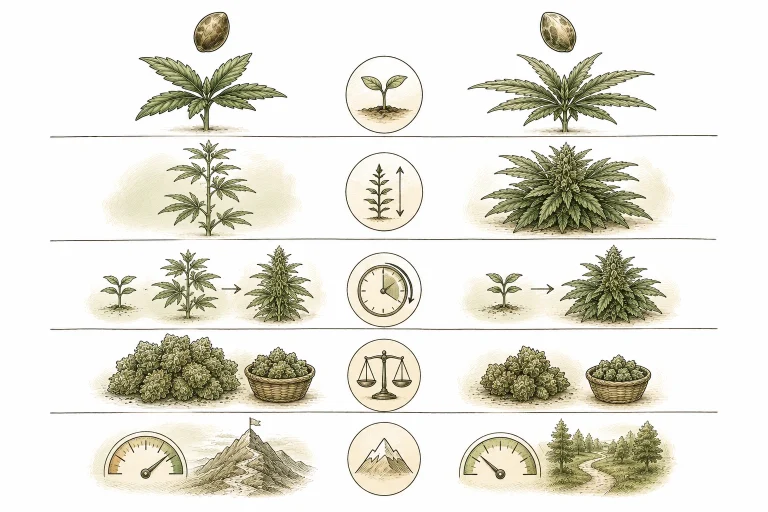
To really see the difference between autoflowers and feminized seeds, it helps to compare the key factors side by side. The big one is how flowering gets triggered: feminized photoperiod strains wait for a change in the light cycle, while autoflowers start blooming after a fixed number of days. Almost every other difference in plant structure, yield and care comes from that.
When it comes to yield, feminized strains usually come out ahead. A well-tended feminized plant that spends six to eight weeks in veg can get impressively big – and that means a noticeably higher yield per plant. Autoflowers, on the other hand, are limited by their short life cycle. The plant simply has less time to build biomass. That said, modern high-yield autoflower genetics keep closing the gap and can reach up to 150 g per plant under ideal conditions.
Another important point is how well the plant handles stress training. Techniques like HST (high stress training) or FIM are rarely recommended for autoflowers, because the plant has less time to recover from damage before flowering starts. With feminized photoperiod strains, you can simply extend veg to give the plant time to bounce back. LST (low stress training) – gently bending and tying down branches – works great on autoflowers too and can give your yield a real boost.
As for nutrients: autoflowers need less food overall than feminized strains, but they react more sensitively to overfeeding. If you feed too early or too heavy, you risk nutrient lockout or burnt tips – and with such a short grow cycle, there is barely any time to fix it. Our in-depth guide to cannabis nutrient burn helps you walk that fine line.
- Flowering trigger: autoflower is time-based – feminized is light-based
- Vegetative stage: autoflower fixed at ~3–4 weeks – feminized fully up to you
- Yield per plant: usually higher with feminized
- Total grow time: autoflower 60–80 days – feminized 90–150+ days
- Stress tolerance: feminized handles training techniques better
- Nutrient needs: lower for autoflowers, but they are more sensitive to overfeeding
- Light schedule: autoflowers don’t need a switch to 12/12
Which Seed Type Is Right for You?
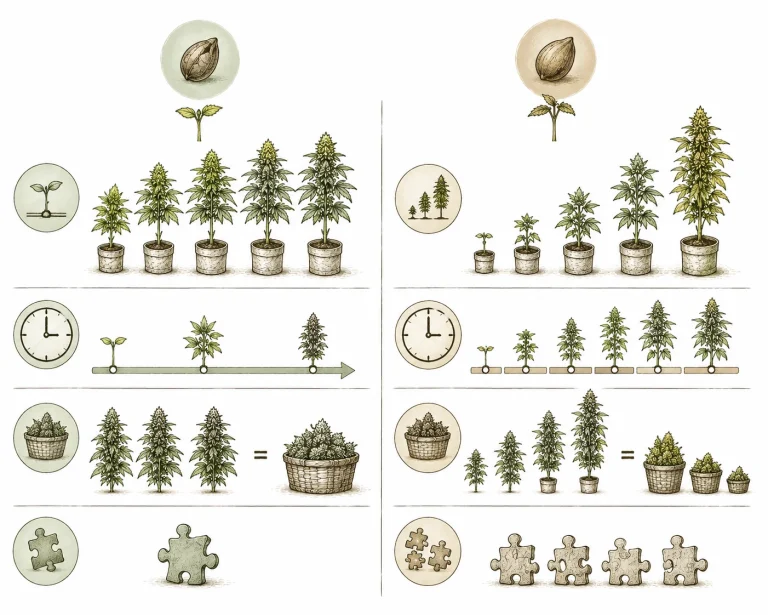
There is no one-size-fits-all answer to “Autoflower or feminized?” – it depends on your priorities, your available space and your experience. Let’s walk through the most common scenarios.
If you are a true beginner with no grow experience, autoflower strains are often the better first pick. The short grow cycle means you see results faster and learn from your mistakes sooner. You don’t have to deal with tricky light schedule changes and can run a simple 18/6 light cycle the whole time. Just keep in mind that the short timeline leaves little room for bigger mistakes. If you water wrong or neglect your pH, an autoflower gives you fewer chances to turn things around. For a rundown of especially forgiving, beginner-friendly genetics, check out best cannabis strains for beginners.
If you want to squeeze the maximum yield out of your space, feminized photoperiod strains are the better choice. You can take clones, run techniques like SCROG (screen of green) and time your veg to fill your grow room perfectly. So if yield matters more to you than speed, invest the time to understand light management – it pays off.
Growing outdoors in a cooler climate? There are good arguments for both types. Feminized outdoor strains reach their full potential during a long summer, but often don’t finish until October or November. If you live somewhere with an early fall or your yard doesn’t get enough hours of direct sun, autoflowers are often the safer bet. You can harvest as early as August or September – well before frost or long stretches of rain set in. You’ll find everything you need to know about possible plant problems in our plant diagnosis overview. For strains that handle a short, cool outdoor season, see our guide to outdoor strains for cooler climates.
- New grower with no experience managing light cycles → autoflower recommended
- Maximum yield from limited grow space → feminized preferred
- Outdoors with a short summer season → autoflower is the safer bet
- Planning several harvests per year → autoflower is ideal
- Want to use advanced training techniques → feminized is the better fit
- Tight on space and running a small setup → autoflowers stay more compact
- Building a long-term personal supply → feminized for clones and mother plants
Common Mistakes When Growing Either Seed Type
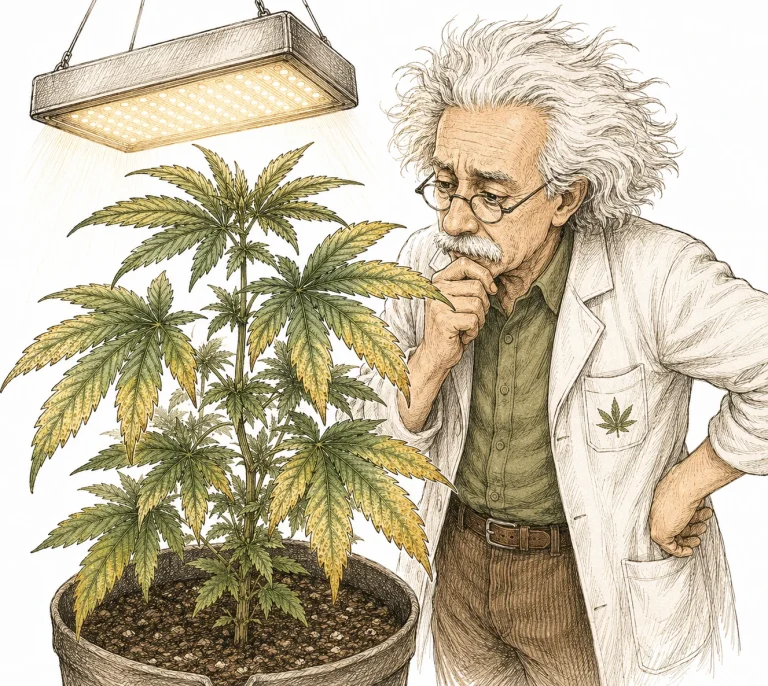
Whether you go with autoflowers or feminized seeds, new growers tend to make the same basic mistakes with both. The most common one is watering wrong. Too much water can suffocate the roots, too little leads to drought stress. Both can seriously hurt your plant and often show up as droopy or curled leaves.
With pH, many growers set it once and never check it again. That’s a mistake. Especially if you use tap water, pH can swing a lot between waterings. The wrong pH – whether too high or too low – blocks nutrient uptake. The result can look exactly like a deficiency, but it’s really a nutrient lockout. This happens a lot with calcium, which is why calcium deficiency in cannabis is one of the most commonly misdiagnosed problems.
Autoflowers come with one extra pitfall: feeding too early and too much. Many growers coming from feminized photoperiod strains are used to feeding plenty of nitrogen during veg. With autoflowers, that can quickly lead to nutrient burn, because these plants can handle far fewer nutrients. Start with a third of the recommended dose and increase slowly as needed.
Another common mistake with feminized strains: light leaking in during the dark period while they flower. Even a brief light leak from a poorly sealed grow cabinet or an open door can stress your plant and, in rare cases, cause it to turn hermaphrodite. Check your tent or cabinet carefully for light leaks before you flip to flowering.
- Overwatering or underwatering – the #1 beginner mistake with both types
- Forgetting to recheck pH after setting it the first time
- Burning autoflowers with too strong a starting nutrient dose
- Light leaks in the grow tent while feminized strains are flowering
- Using high stress training (HST) too aggressively on autoflowers
- Transplanting too early into a pot that’s too small – autoflowers really suffer from this
- Harvesting too early – go by trichome ripeness, not by counting weeks
The difference between indica, sativa and hybrid also shapes how your plant grows. By the way, photoperiod strains can be sent back into veg – learn more under revegging. That doesn’t work with autoflowering strains because of their fixed life cycle.
Frequently Asked Questions
Can I grow feminized and autoflower plants in the same grow tent?
Technically yes, but it’s not recommended. The biggest conflict is the light schedule. Autoflowers do best with 18–20 hours of light, while feminized strains need to be switched to 12/12 to flower. If you grow both together, you either have to go 12/12 – which holds your autoflowers back for no reason – or give your flowering feminized plants too much light. Ideally, keep the two types in separate spaces or grow them at different times.
Are autoflower plants less potent than feminized strains?
That used to be true, because old ruderalis genetics lowered THC levels. Modern autoflower breeding has closed much of that gap, though. Many current autoflower strains reach 20–25 % THC, which can easily keep up with good feminized strains. That said, top-tier feminized photoperiod strains may still come out slightly ahead.
How many harvests per year can you get with autoflowers?
Indoors, four to five harvests per year are possible in theory, since each plant is ready in 60–80 days. In practice, it depends on your planning, your light schedule and the space in your grow tent. Many growers start new seeds every three weeks to keep a steady harvest cycle going. Outdoors in a temperate climate with good conditions, two harvests (June and August) are realistic.
Is it worth transplanting autoflower plants?
With autoflowers, you should avoid transplanting if you can, or keep it to a minimum. Every bit of transplant stress costs your plant valuable days it doesn’t have, given its short life cycle. Your best move is to germinate right in the final pot – a 2.6 to 4 gal (10 to 15 L) container works well for most autoflower strains.
What’s the best light schedule for autoflower plants?
Most growers get great results with 18 hours of light and 6 hours of darkness. Some even run 20/4 or 24/0. Autoflowers flower regardless of the light cycle, so you don’t need to switch to 12/12. Doing so can actually cut your yield. 18/6 is a solid balance between growth speed and energy efficiency.
Can I take clones from autoflowers?
Technically yes, but in practice it’s pointless. A clone from an autoflower keeps the biological age of the mother plant. It will start flowering almost right away, with hardly any vegetative stage. You’d end up with a tiny plant and a minimal yield. For clones and mother plants, stick to feminized photoperiod strains.
The Bottom Line
The difference between autoflower and feminized seeds boils down to a simple formula: autoflowers mean speed, simplicity and flexibility – feminized photoperiod strains mean yield, control and potential. If you’re a beginner who wants to get some grows under your belt fast, autoflowers are a great pick — our autoflower grow guide walks you through it step by step. If you want to fine-tune your grow over time and push for maximum yields, it pays to learn light management for feminized strains. Either way, the basics like pH, watering habits and feeding matter more than the seed type. Check our Plant Diagnosis overview if you spot problems on your plant – catching issues early can save your grow. Not sure which seed type fits your setup? Our Strain Finder (German) looks at effect, experience and available space and suggests strains that suit you.
