

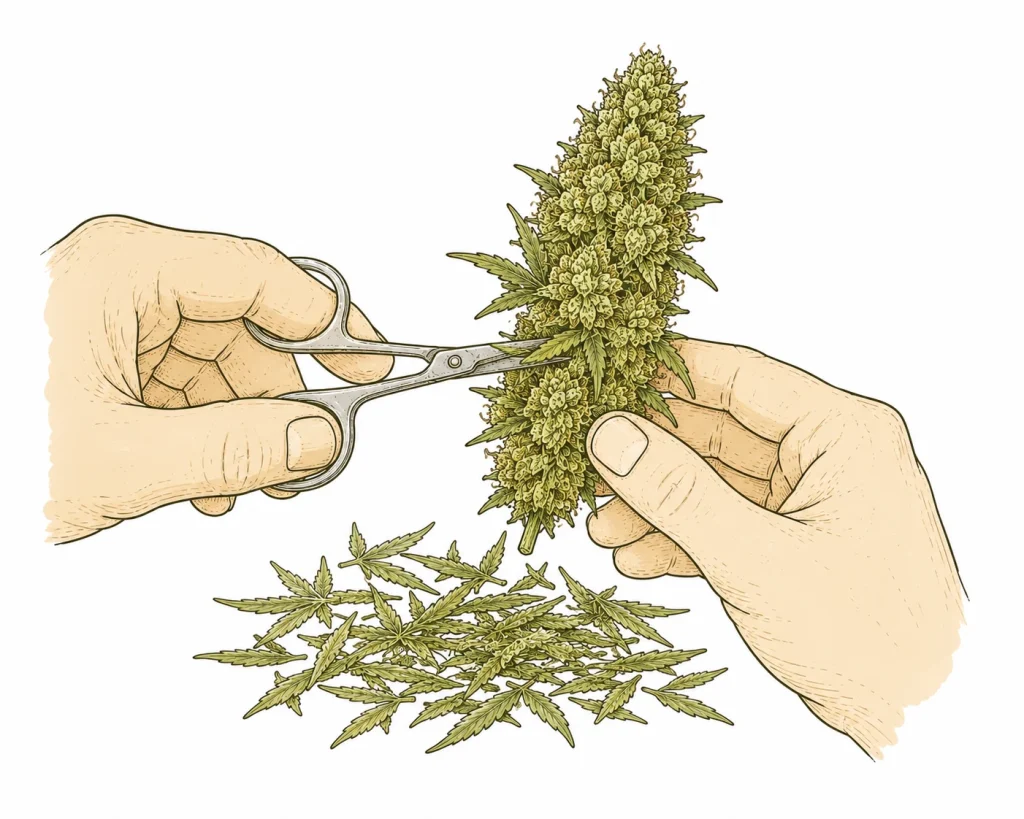
Manicuring your cannabis is one of the last steps after harvest. It’s also one of the most important, and one of the most underrated. Whether you wet trim or dry trim directly affects the look, aroma and shelf life of your buds. In this guide, you’ll learn the difference between the two methods, when each one works better, and how to trim cleanly and efficiently with the right tools. The result: buds you can be truly proud of.
What Does Manicuring Cannabis Actually Mean?
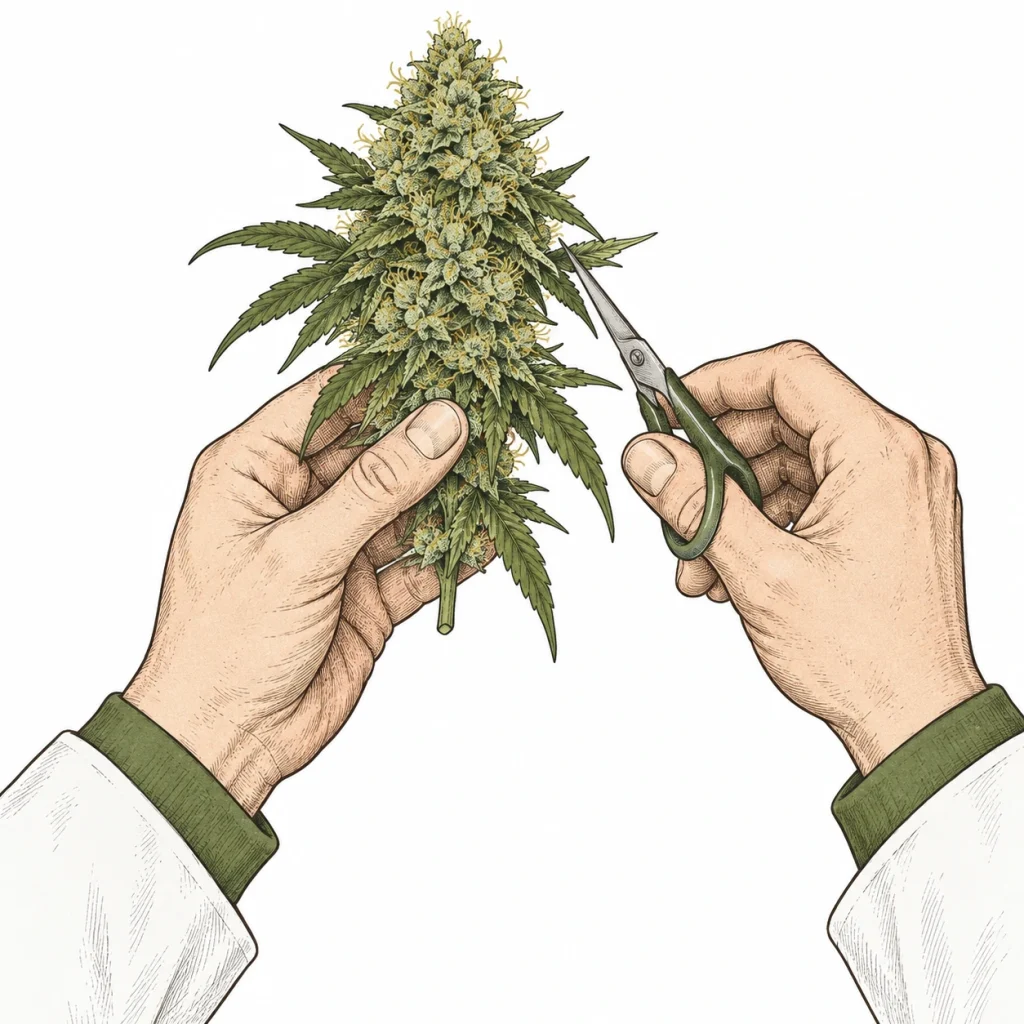
In cannabis growing, “manicuring” means removing the sugar leaves and fan leaves from your harvested buds. Fan leaves are the big, finger-shaped leaves of the plant. They carry very few trichomes. Sugar leaves are the small, often resin-covered leaves that grow right out of the buds. When you trim, you remove at least some of both to refine the final product.
Trimming has three goals. First, it makes your buds look a lot better: well-trimmed buds look professional and appear denser. Second, it affects flavor, because excess leaf material can taste harsh and bitter. Third, trimming helps your buds dry more evenly and cure better, since moisture is no longer trapped in the leaves.
A common beginner mistake is rushing the trim or skipping it entirely. But this step matters just as much as a solid harvest and drying routine. If you trim carefully from the start, you’ll have far fewer problems with mold or uneven drying during curing.
- Fan leaves: big leaves with almost no trichomes. Always remove them.
- Sugar leaves: small, resinous leaves growing right out of the buds. Remove them partly or completely.
- Goal: better looks, cleaner flavor, more even drying
- Trimmings (“trim”) can be put to use, for example for hash or cannabutter
Wet Trimming Cannabis: Pros and Cons
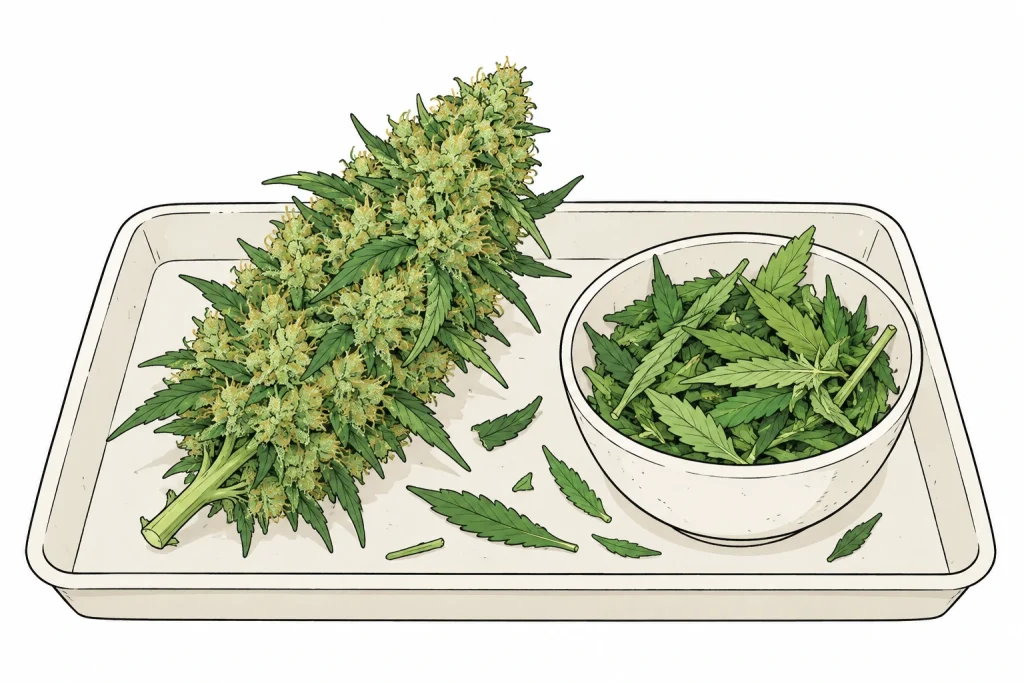
With wet trimming, you trim the buds right after harvest, before the plant goes up to dry. The branches and buds are still fresh and moist. The leaves stick out and are easy to grab and snip with your scissors. That makes the job a lot faster and more precise than trimming dried buds.
The biggest advantages of wet trimming are speed and cleanliness. The leaves are still standing up, so you can cut them off with ease. Less resin also gums up your scissors, because the trichomes aren’t as concentrated and sticky yet as they are after drying. If you’re short on time or have a big harvest, wet trimming is often the go-to choice.
The downside: wet-trimmed buds have more exposed surface, so they lose moisture faster during drying. Sometimes too fast. Drying too quickly can hurt the aroma, because volatile terpenes may evaporate before the enzymatic breakdown is complete. That’s why wet trimming works especially well in humid climates, where buds might otherwise mold, or when you’re under time pressure.
- Faster and easier than dry trimming
- Leaves stick out and are easy to cut precisely
- Less resin buildup on your scissors
- Buds dry faster, which raises the risk of losing terpenes
- Ideal for high humidity or large harvests
Dry Trimming Cannabis: When It’s the Better Choice
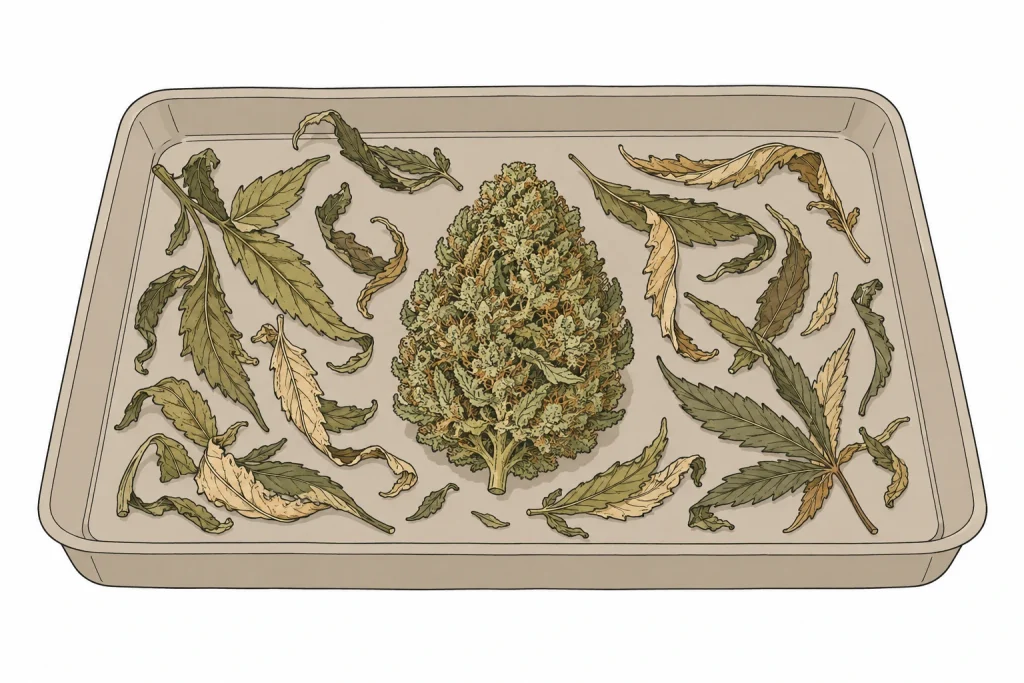
With dry trimming, you first let the plant dry untrimmed, or with just the fan leaves roughly removed. Only once the buds are dry enough, usually after 7 to 14 days, do you grab your scissors and remove the remaining sugar leaves. By then the leaves have curled around the buds and lie close to them. That makes trimming a bit trickier, but also gentler.
The key advantage of dry trimming is slower drying. The leaves hold on to moisture during drying, so the buds dry more evenly and gently. That protects the terpenes and often leads to a stronger, more complex aroma in the final product. That’s why many experienced growers swear by dry trimming when they’re going for top quality.
The downside: your scissors get much stickier, because the resin from the trichomes is more concentrated. Dry trimming also takes longer, since the leaves sit tight against the buds. When you dry trim, cleaning your scissors regularly with isopropyl alcohol is a must. Dry trimming works especially well in dry climates below 45 % humidity, where the leaves give the buds some natural protection.
- Buds dry slower and more evenly
- Terpenes and aroma are better preserved
- Leaves protect buds in dry environments
- Scissors get stickier, so clean them often
- Takes more time, but the quality is often better
The Right Tools for Trimming Cannabis
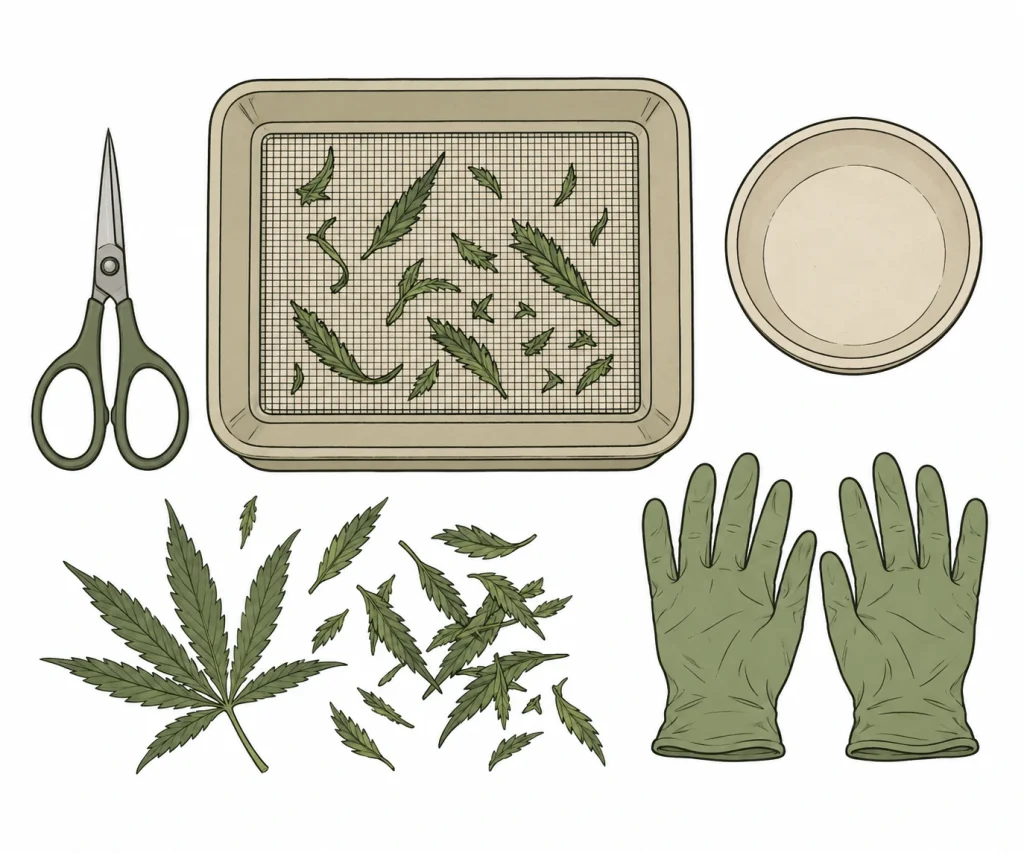
Wet trim or dry trim, the right tools make all the difference for speed and quality. The essentials: pointed trimming scissors (spring scissors), a pair of pruning shears (German) for branches, a clean tray or trim bin to catch the trim, disposable nitrile gloves and isopropyl alcohol to clean your scissors.
Spring scissors are spring-loaded precision scissors that pop open on their own after every snip. That saves your hand a lot of strain during long trim sessions. For bigger harvests there are electric trimming machines, but they can damage buds if you’re not careful. If you’re new to trimming, stick with hand scissors. You get much more control over the result.
One accessory people often forget is a trim tray with a screen. It catches the kief, the trichome heads that fall off while you work. This kief is rich in cannabinoids and you can sprinkle it straight on top or press it into hash. Good hygiene and clean tools matter when you trim, not just for quality but also for storing your buds properly.
- Spring scissors (spring-loaded): your most important basic tool
- Pruning shears for branches and the rough prep work
- Nitrile gloves: keep the resin off your hands
- Isopropyl alcohol: keeps your scissors clean between rounds
- Trim tray with screen: catch and use the kief
- Electric trimming machine: for larger amounts, but use with care
How to Manicure Trim Cannabis Step by Step
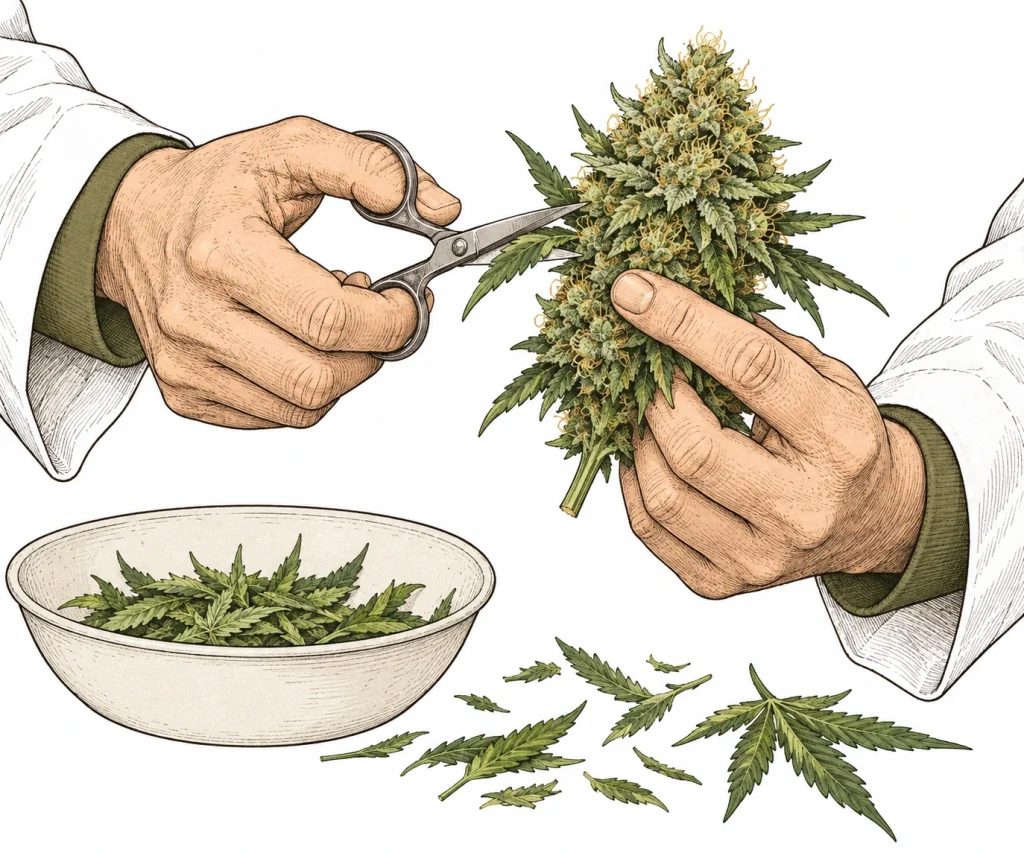
Before you start trimming, set up your workspace: a clean tray or trim tray, a fresh pair of gloves, and scissors cleaned with isopropyl alcohol and dried. Keep all your tools within reach and make sure you have good lighting so you can see every part of the buds clearly.
For a wet trim, first cut off the big fan leaves with your pruning shears right on the plant, before you take the branches down. Then cut the branches into manageable pieces. Now work your way through the sugar leaves sticking out of the buds with your spring scissors. Hold the bud loosely and turn it slowly so you reach every side. Snip close to the base of the little leaves without damaging the trichome heads on the buds.
For a dry trim, you follow the same steps, but the buds are already dried. The leaves sit tighter, so you work with small, precise snips. Clean your scissors every 15 to 20 minutes with isopropyl alcohol to keep resin from building up. Once trimmed, the finished buds go straight into curing jars, or they dry a few more days if the moisture content isn’t yet at the ideal 58 to 62 %.
How tight you trim is partly a matter of taste. Some growers trim very close (close trim) and remove almost every sugar leaf for a flawless look. Others prefer a light trim and leave small leaves on purpose, since they carry trichomes too. For a personal home grow, a medium trim is usually the best balance between looks and quality.
- Step 1: Set up your workspace, put on gloves, clean your scissors
- Step 2: Remove the fan leaves with your pruning shears
- Step 3: Cut the branches into manageable pieces
- Step 4: Snip the sugar leaves close to the base with spring scissors
- Step 5: Turn the bud as you go and work every side
- Step 6: Clean your scissors with isopropyl alcohol every 15-20 min.
- Step 7: Check the finished buds for moisture content and store them
Manicure Trimming Cannabis: Common Mistakes to Avoid
One of the most common mistakes when manicure trimming cannabis is going too far, also called over-trimming. If you get too aggressive, you can damage the valuable trichome heads on the buds themselves and lose potency and aroma. The goal is to remove only the leaves, not to sculpt the buds.
Another classic mistake is trimming without gloves. The resin sticks to your hands, and soap and water barely touch it. That’s why nitrile gloves are a must. Clean your scissors regularly, too. Resin-gunked scissors cut poorly and tend to tear the leaves instead of snipping them cleanly, which can damage your buds.
Many beginners also underestimate how much pH and feeding late in the grow affect how easy your buds are to trim. Buds from well-fed plants with dialed-in pH for cannabis (German) tend to be denser and more resinous, and they’re easier to trim. Plants with a calcium deficiency (German) or other nutrient problems often develop airier, less resinous buds, which makes trimming harder. So good prep starts long before harvest.
- Avoid over-trimming: don’t cut into the buds themselves
- Always wear nitrile gloves
- Clean your scissors regularly with isopropyl alcohol
- Use sharp tools. Dull scissors tear buds
- Don’t toss your trim. Turn the kief and trim into something useful
- Check your buds’ moisture content after trimming (58-62%)
What You Can Do With Your Trim
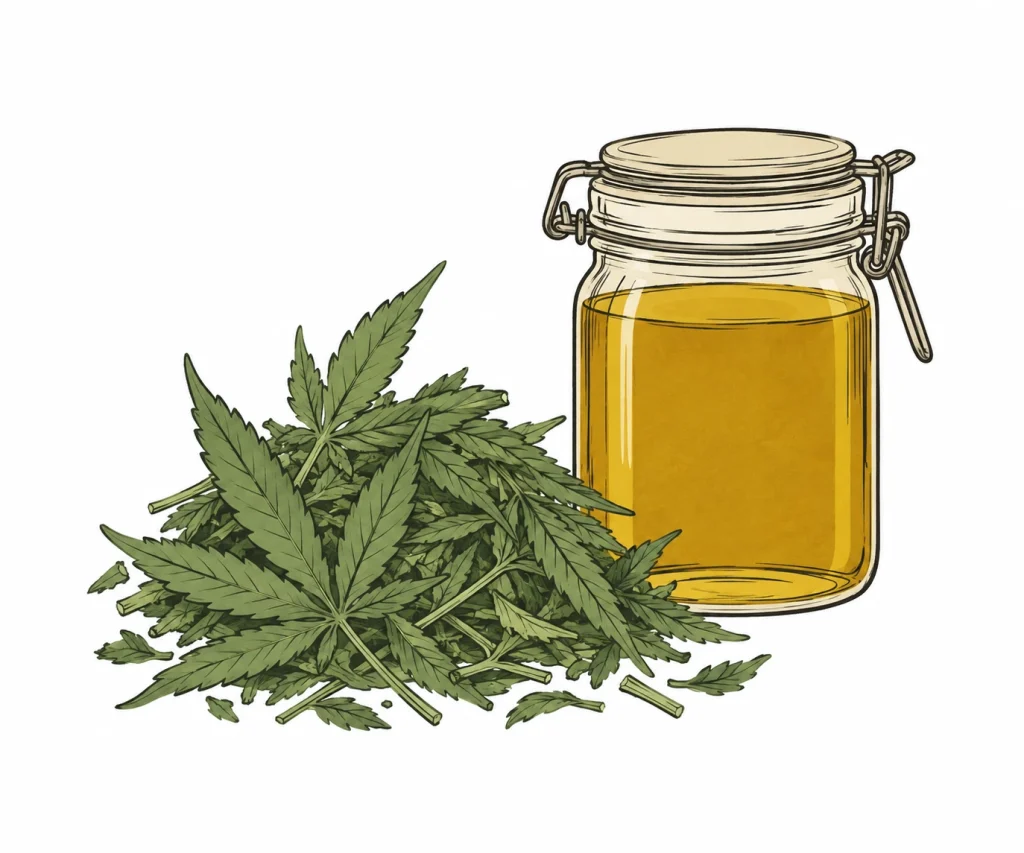
A lot of growers simply throw away the trim from their cannabis manicure, meaning the sugar leaves and smaller fan leaves. That’s wasted potential. Sugar leaves often still carry a good amount of trichomes and are great for further processing.
The easiest method is collecting the kief from your trim tray. While you trim, trichome heads fall through the screen and collect as a fine powder at the bottom. This kief is concentrated. You can use it as is or press it into hash with a pollen press. You can also make bubble hash from the rest of your trim by extracting the sugar leaves with ice water.
Another popular option is making cannabutter or cannabis oil from your trim. It’s less potent than the buds themselves, but more than strong enough for edibles. It pays to store every usable part of the plant carefully and put it to good use, both for maximum efficiency and for a more sustainable grow.
- Collect kief from your trim tray and use it or press it
- Make bubble hash from sugar leaves with an ice water extraction
- Cook cannabutter or oil from your trim
- Store trim dry and cool until you process it
- Fan leaves (without trichomes) can go in the compost
Frequently Asked Questions
What’s the difference between wet and dry trimming?
With wet trimming, you trim the buds right after harvest, before they dry. It’s faster because the leaves still stick out. With dry trimming, you wait until the buds have dried and trim them afterward. It takes longer, but the slower drying often gives you a more aromatic final product.
When should I wet trim my cannabis manicure instead?
Wet trimming is a good call when the humidity in your drying room is high (above 60% RH), because your buds could otherwise mold. Wet trimming is also often more practical for big harvests when you’re short on time.
What are the best scissors for a cannabis manicure?
Spring-loaded trimming scissors work best. They open automatically after every cut, they’re precise, and they go easy on your hand during long trim sessions. For branches, grab a sturdy pair of pruning shears as well.
How can I tell my buds are dry enough after trimming?
Well-dried buds feel slightly crispy on the outside but don’t snap apart right away. The ideal moisture level for curing is between 58 and 62%. A hygrometer in your curing jar takes the guesswork out of it.
Can I still use my trim somehow?
A cannabis manicure leaves you with quite a bit of trim, and yes, you definitely can. Sugar leaves still contain trichomes and work well for kief, bubble hash or cannabutter. The kief that collects on your trim tray’s screen while you trim can be used right away or pressed into hash.
How often should I clean my scissors during a cannabis manicure?
Clean your scissors with isopropyl alcohol (at least 70%) every 15 to 20 minutes, then let them dry briefly. When dry trimming, do it even more often, because the resin is more concentrated and stickier.
Before you start manicuring your buds, make sure you harvested at the right time. We walk you through the whole harvest step by step in our harvest guide. After trimming come drying and curing. For more on clean work habits and avoiding mold while you trim, check out the LWG Bayern (German).
The Bottom Line
Manicuring your cannabis is an art, and it can make or break the final quality of your harvest. Whether you go with wet or dry trimming depends on your climate, how much time you have and how picky you are about quality — both methods have their place. With the right tools, clean technique and a little patience, you’ll get buds that don’t just look great but also taste and smell their best. And remember: a good trim starts with a healthy plant. If you stay on top of feeding and care while you grow, harvest day will be a lot more fun.
