

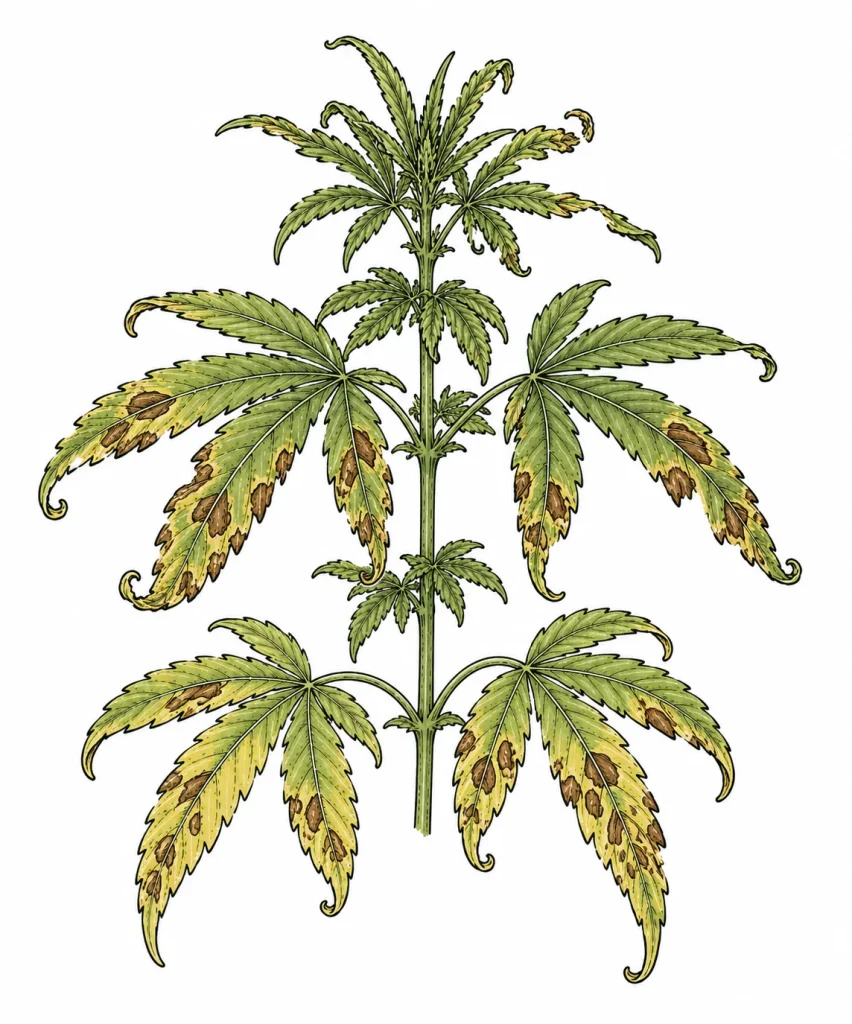
Spotting a calcium deficiency in cannabis early matters, because it’s a common problem, especially with indoor growing. The symptoms aren’t always clear right away, so many growers blame the wrong cause at first.
Calcium plays a key role in keeping cell structure strong and supporting healthy growth. When uptake gets disrupted, you can quickly see it in the leaves and in how the plant grows.
In this article, you’ll learn how to reliably identify a calcium deficiency in cannabis, understand what causes it and fix it the right way. For a rundown of all deficiencies, check out our nutrient deficiency overview.
What Is a Calcium Deficiency in Cannabis?
A calcium deficiency in cannabis happens when the plant can’t take up enough calcium. Typical symptoms are spots on young leaves, deformed growth and dead patches on the leaves.
Calcium is essential for cell structure, growth and the development of new shoots. Young plant parts in particular depend on a steady supply.
Typical Symptoms of Calcium Deficiency
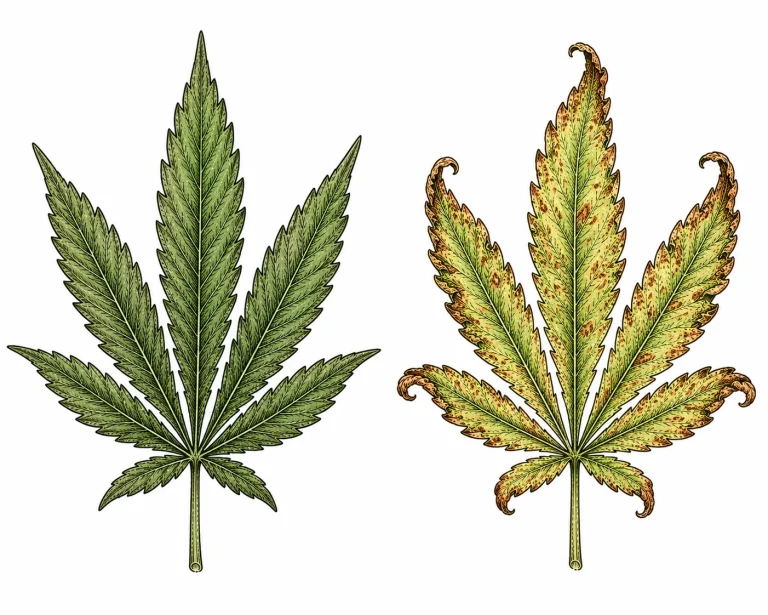
The telltale signs of a calcium deficiency in cannabis mostly show up on new leaves. They can develop spots, get deformed or grow unevenly.
You may also see yellow or brown patches and dead leaf tissue. Compared to other nutrient deficiencies, a calcium deficiency often hits the younger parts of the plant first.
Symptoms like discoloration or growth problems aren’t unique to cannabis. According to the Royal Horticultural Society, nutrient deficiencies in plants often cause exactly these kinds of signs.
How Can You Tell It’s Really a Calcium Deficiency?
You can recognize a calcium deficiency in cannabis because mainly the new leaves are affected, while older ones stay healthy at first. Typical signs are spots, deformed leaves and stunted growth.
A calcium deficiency isn’t always easy to pin down, because the symptoms can look like other problems.
To be sure, also check other factors like pH, watering and feeding.
Easy to Mix Up: Calcium Deficiency or Something Else?
At first glance, a calcium deficiency often looks like a magnesium deficiency or an early fungal infection. The key to telling them apart is where the symptoms appear and what the spots look like.
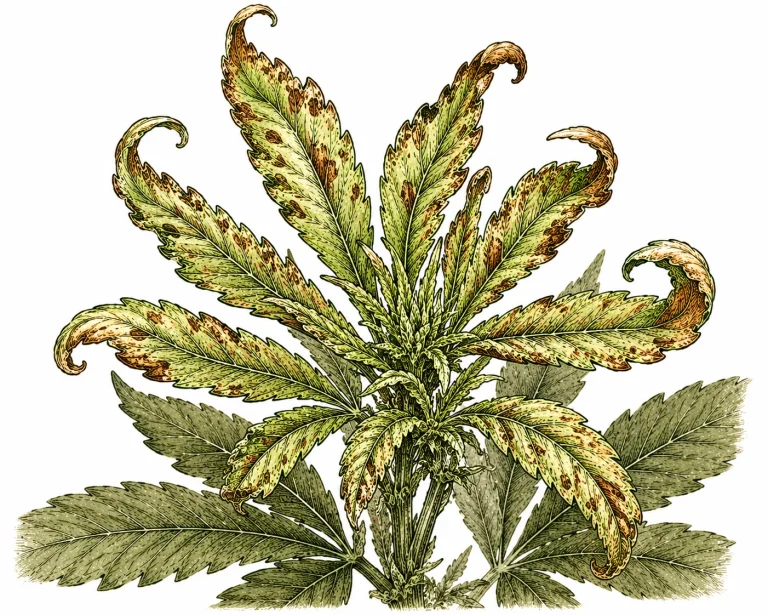
- Magnesium deficiency: hits older, lower leaves first, with even yellowing between the leaf veins while the veins themselves stay green.
- Calcium deficiency: hits new shoots and young leaves first, with irregular brown spots and deformed or curled leaf tips.
- Fungal infection, such as septoria leaf spot: spots often have a yellow halo. They spread from the outside in and affect old and young leaves alike.
For more on telling them apart, read our article on magnesium deficiency in cannabis.
The Most Common Causes of Calcium Deficiency
A calcium deficiency in cannabis often isn’t caused by missing nutrients alone. Outside factors that interfere with uptake can play a big part too.
Poor control of your grow environment is a major factor. Swings in temperature, humidity or light can keep the plant from using nutrients properly.
These problems show up more often with indoor growing. Besides environmental factors, nutrient imbalances are another common cause. That’s why a calcium deficiency in cannabis can show up even when there are enough nutrients available.
Cal-Mag and Water Hardness: The Overlooked Cause
Reverse osmosis (RO) water and distilled water contain virtually no calcium or magnesium. If you switch to this kind of water without adding a Cal-Mag supplement, you’re almost asking for a deficiency, even if your pH is dialed in.
Tap water, on the other hand, often has enough calcium but can push your pH up. Rule of thumb: if your water hardness is below 100 ppm, always add Cal-Mag.
If your plant shows signs of calcium and magnesium deficiency at the same time, a combined Cal-Mag problem is often behind it. This is common with coco coir or soft water. Our Cal-Mag deficiency article shows you how to fix both deficiencies at once.
pH and Calcium Uptake
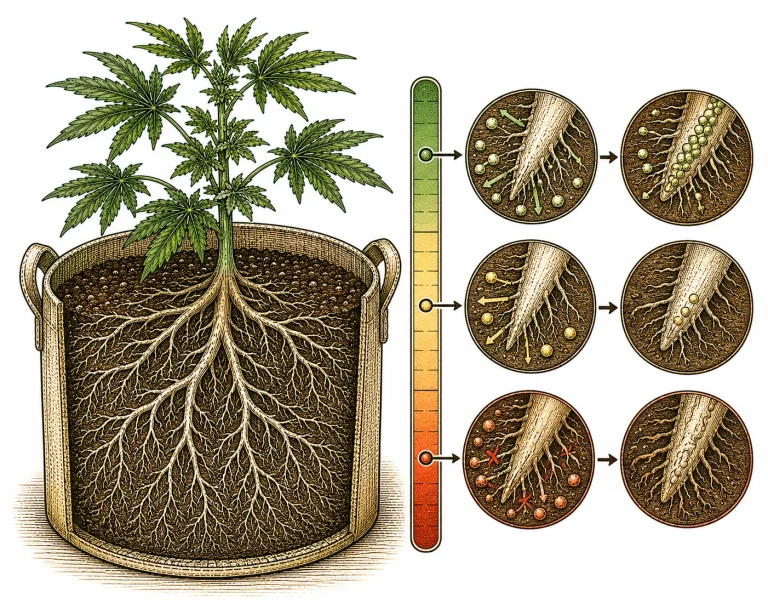
pH has a huge impact on nutrient uptake. If your pH drifts outside the ideal range, your plant can’t absorb calcium properly.
Even when there’s plenty of calcium in the soil, your plant can’t get to it. Especially in indoor growing, you should check your pH regularly to avoid problems like this.
Calcium demand rises sharply in the flowering stage. Your plant needs calcium to build strong new cell walls in the developing buds. If you switch to a pure bloom nutrient without any Cal-Mag, you risk a deficiency right when it hurts most. So check regularly whether your nutrients supply enough calcium and magnesium, or add Cal-Mag as needed.
How to Fix Calcium Deficiency
To fix calcium deficiency in cannabis, first figure out the cause. Often, correcting your pH and keeping your environment stable is already enough.
Real-world experience also shows that nutrient uptake depends heavily on the conditions in your setup, and imbalances can quickly lead to deficiencies.
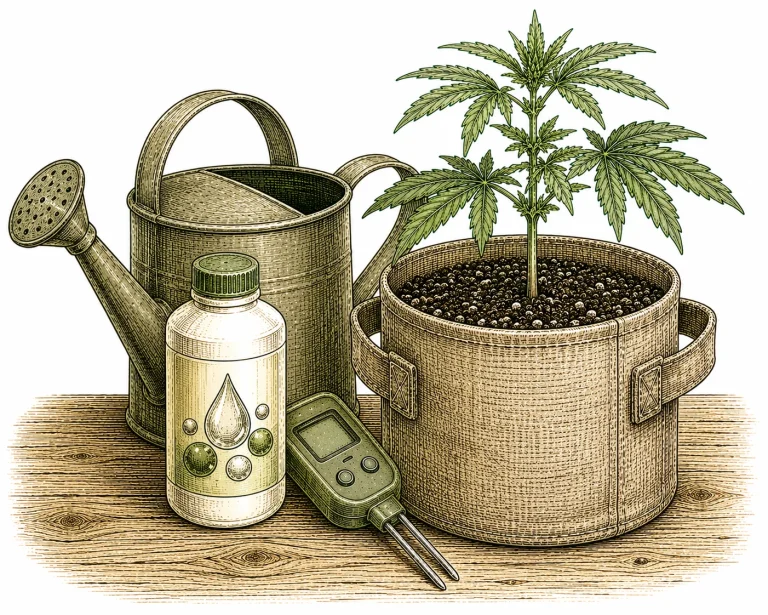
Follow these steps to fix it:
- Measure and correct your pH: 6.2–6.8 in soil, 5.5–6.1 in hydro or coco.
- Dose your Cal-Mag supplement as the label says. Typical is about 4–8 ml per gallon (1–2 ml per L) of water.
- Water with the Cal-Mag solution for 2–3 days in a row, then go back to your normal watering schedule.
- Watch the new leaves: you’ll usually see the first improvement after 5–7 days. Leaves that are already damaged won’t recover.
- In hydro systems: check your EC (electrical conductivity) after adding Cal-Mag to avoid nutrient burn.
How to Prevent Calcium Deficiency
Prevention is your best protection against calcium deficiency in cannabis. Keep conditions in your setup stable and avoid big swings.
Checking pH, watering and nutrients regularly helps you catch problems early. Balanced feeding also plays a big role.
- Check your pH regularly (soil: 6.2–6.8, hydro/coco: 5.5–6.1)
- Always add Cal-Mag when you use RO or distilled water
- Make sure your nutrients contain enough calcium during the flowering stage
- Don’t let your growing medium get too acidic: amend peat-based mixes with garden lime regularly
- Check new leaves weekly for early signs before the deficiency spreads

When Does Calcium Deficiency Get Serious?
Calcium deficiency in cannabis becomes critical when it goes untreated for a long time. Growth can slow down a lot, and new shoots may stop developing properly.
If the symptoms spread fast or the whole plant is affected, act quickly to prevent bigger damage.
Since calcium and magnesium are often lacking together, it’s also worth reading about Cal-Mag deficiency. The opposite, calcium excess, is less common, but it can happen, mostly with hard tap water.
Frequently Asked Questions
How fast do calcium deficiency symptoms go away after the fix?
You’ll usually see the first improvement in new growth after 5 to 7 days, once your pH and Cal-Mag supply are corrected. Leaves that already have brown spots won’t fully recover, though. Your plant simply grows past them.
Can I fix calcium deficiency in cannabis with eggshells?
Eggshells do contain calcium carbonate, but they break down way too slowly to fix an active deficiency. For a quick correction, a liquid Cal-Mag supplement is the more reliable choice. Ground eggshells can work as a long-term soil amendment, just not as a quick fix.
Is calcium deficiency different in outdoor plants than indoors?
Outdoor plants watered with rainwater or very soft spring water are more prone to calcium deficiency, because rainwater carries almost no minerals. In garden soil with enough lime, the deficiency tends to show up less often than in pots filled with store-bought growing medium.
Which nutrients contain enough calcium for cannabis?
Look for nutrients that are clearly labeled as Cal-Mag or list calcium and magnesium on the label. Many cheap NPK nutrients without secondary nutrients deliver too little calcium, especially if you grow with reverse osmosis (RO) or distilled water.
Can too much calcium be harmful too?
Yes. Overdoing calcium can block the uptake of magnesium and potassium. These nutrients compete for the same uptake pathways at the roots. Stick to the manufacturer’s dosage and avoid adding extra Cal-Mag without measuring.
You’ll find nutrients that target this deficiency in our recommended gear.
Bottom Line
Calcium deficiency in cannabis is a common problem, and in most cases it’s easy to fix. The key is to pin down the real cause and act fast, before the symptoms spread.
With stable conditions and a bit of experience, you can catch problems like this early and keep your plants healthy. If you’re seeing other symptoms, our Plant Diagnosis hub can help.
