

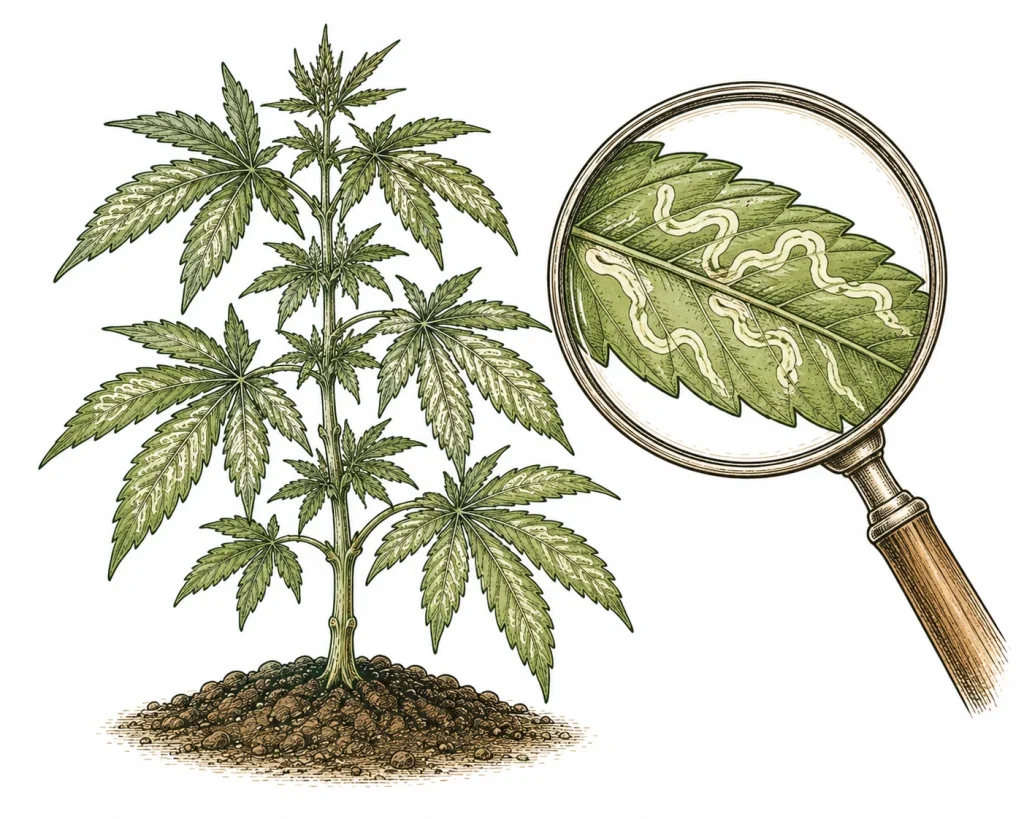
Leaf miners on cannabis leaves can leave a lot of growers scratching their heads at first. Those whitish, winding trails inside the leaf tissue look almost like doodles, so many people don’t recognize them as a pest problem until it’s late. Act early and you can save your plants and avoid bigger losses at harvest. In this article, you’ll learn how to spot leaf miners on your cannabis plants, where they come from, and which methods help you get rid of them for good.
What Are Leaf Miners and Why Do They Attack Cannabis Leaves?
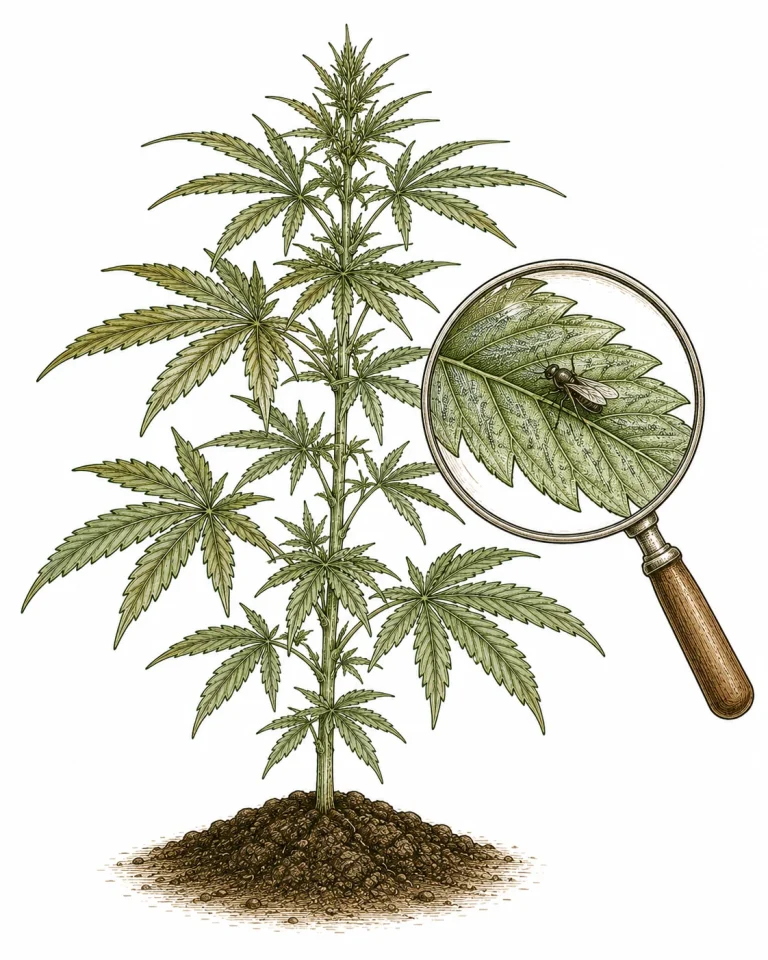
Leaf miners are tiny flies from several different families, most often the Agromyzidae. The adults are easy to miss: they measure just 0.04 to 0.12 in (1 to 3 mm), are usually black or dark gray, and most growers simply never notice them. But the adult flies aren’t the real problem. Their larvae are.
The females pierce the surface of cannabis leaves and lay their eggs directly in the leaf tissue. Once the larvae hatch, they eat their way through the mesophyll, the tissue between the top and bottom layers of the leaf. As they go, they leave behind telltale pale trails called mines. From the outside, these mines show up as white-silvery, often winding lines or irregular blotches in the leaf.
Cannabis plants can get hit both indoors and outdoors. Outdoors, leaf miners are a classic summer problem, since the flies are active in warm weather and multiply fast. Indoors, they can sneak in through contaminated soil, infested plants, or even open vents. Plants already weakened by a nutrient deficiency or other stress are especially at risk.
- Adult flies: 0.04–0.12 in (1–3 mm), black/dark gray, barely visible
- Larvae feed inside the leaf and leave mines behind
- Common entry points: contaminated soil, infested young plants or clones, vents
- Both indoor and outdoor grows can be affected
- Weakened plants are especially vulnerable
How to Spot Leaf Miners on Cannabis Leaves: Typical Symptoms at a Glance

Leaf miner damage on cannabis leaves is distinctive, but it takes a trained eye to tell it apart from other leaf damage. The first and clearest sign is the mines themselves: pale, whitish to yellowish lines or irregular patches right inside the leaf tissue. Unlike nutrient splash spots or deficiency symptoms, these trails are slightly raised when you look closely, and they snake their way across the leaf.
Hold an affected leaf up to the light and you can often see the larva itself: a small, whitish grub at the end of the trail. If the larva has already pupated or hatched, you’ll see a tiny black dot at the end of the trail (the larva’s droppings) or a small hole in the leaf. In a heavy infestation, whole leaves can be covered in a web of mines, which can seriously cut down your plant’s ability to photosynthesize.
Key to a correct diagnosis: leaf miner damage is always inside the leaf, never on the surface. Spots or patches on the leaf surface that wipe off point more toward powdery mildew or spray residue. Spider mites leave different marks too, mainly fine webbing and tiny pinprick bite marks. If you’re not sure what else your plant might be dealing with, the full Plant Diagnosis overview on PlantClue can help you narrow it down.
Caught early, an infestation is easy to treat. It only gets tricky when lots of leaves are affected and the plant is under other stress at the same time, for example from watering mistakes or nutrient problems, which often go hand in hand.
- Whitish-silvery, winding trails inside the leaf (they don’t wipe off)
- Larva visible at the end of the trail (small white grub), especially when backlit
- Black droppings at the end of finished trails
- In heavy infestations: large bleached areas on leaves, stunted growth
- No webbing (not spider mites), no spots that wipe off (not powdery mildew)
Leaf Miners on Cannabis: Causes and Risk Factors
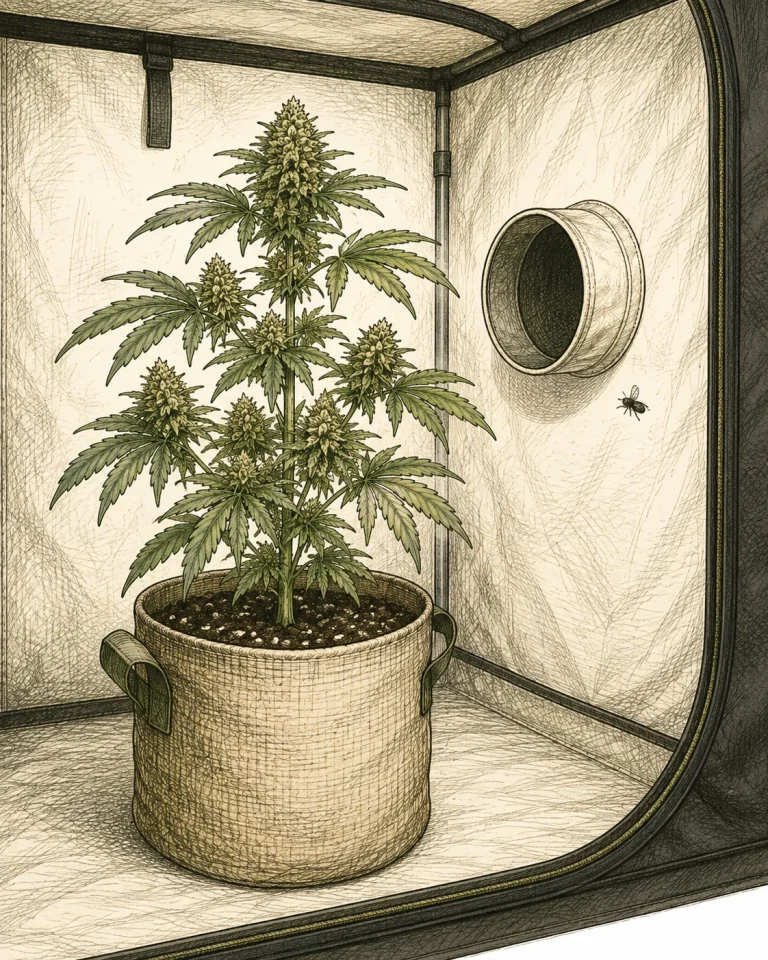
Leaf miners don’t just appear out of nowhere. They get carried in, or they find a gap in your setup that leads them to your plants. The most common cause in indoor grows is contaminated soil. Freshly bought potting soil, or garden soil that was stored outdoors, can contain leaf miner eggs or pupae. Once the flies hatch, they have an easy time in a closed grow space.
In outdoor growing, leaf miners are a natural part of the ecosystem and almost impossible to avoid. The risk climbs sharply in late summer, when insect populations peak. Plants that stand close together, or that develop a humid microclimate because of poor airflow, are especially at risk.
Weakened plant tissue is another factor that can invite trouble. Plants with a nutrient deficiency (especially calcium or magnesium deficiency) or with poor watering habits can develop thicker, softer leaf tissue. That tissue is easier for female leaf miners to pierce. Young plants from outside sources can also already be infested and bring the pest into your grow.
Indoor growers should also know that leaf miners can get in through ventilation openings that lack proper filters. Fine insect mesh or dedicated grow tent filters help keep the risk low. The bottom line: a clean, hygienic grow is your best defense against every kind of pest problem.
- Contaminated soil with eggs or pupae
- Open vents with no insect screen
- Infested young plants or clones
- Tight plant spacing and poor airflow
- Plants weakened by a nutrient deficiency or overwatering
- Outdoors: natural spread during the growing season
How to Get Rid of Leaf Miners: Save Your Cannabis Plant Step by Step
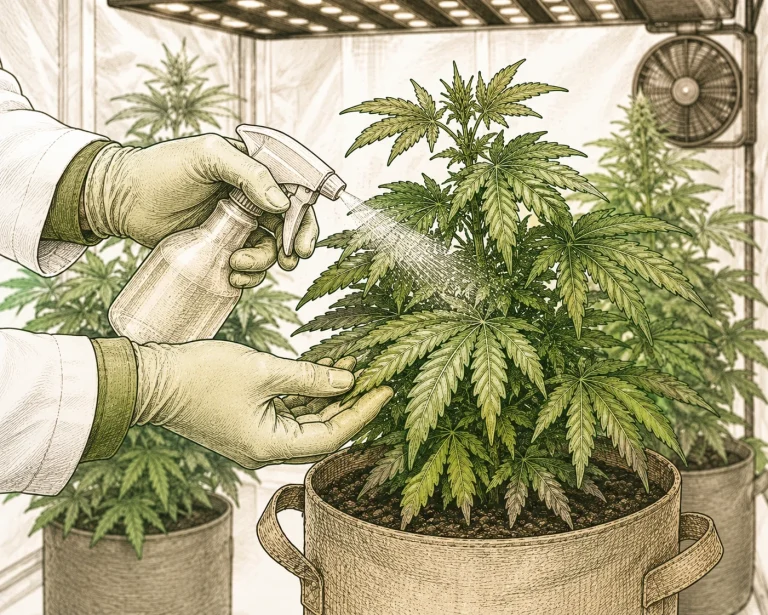
Spotted leaf miners on your cannabis leaves? Act fast. The earlier you step in, the easier they are to control. Step one is always removing them by hand, the most effective home remedy for leaf miners. Cut off every heavily infested leaf right away and get rid of it outside your grow space. Never toss it on the compost pile! If you can see a larva at the end of a tunnel, you can stop it by gently squeezing it through the leaf between your thumb and index finger. It sounds tedious, but it works really well on an early infestation.
For biological control, beneficial insects have a solid track record. Parasitic wasps of the species Diglyphus isaea specialize in leaf miner larvae. They lay their eggs next to the larvae inside the leaf tissue, and the hatching wasp larvae then kill the leaf miner larvae. You can order Diglyphus isaea from beneficial insect suppliers, and it works very well indoors. Predatory bugs such as Macrolophus pygmaeus are another option.
For heavier infestations, organic sprays come into play. Neem oil, an extract from the seeds of the neem tree, acts systemically and can disrupt larval development once the plant takes it up through the leaves. Only use neem oil during the vegetative stage and never shortly before harvest, because residue in your buds is a real problem. Pyrethrum-based products are another organic option, but use them sparingly, since they can also harm beneficial insects.
Treat chemical insecticides as a last resort and weigh them very carefully when growing cannabis. Systemic insecticides based on spinosad can work against stubborn infestations and are considered relatively gentle. Important: always read the label and follow the waiting periods. Never use insecticides during the flowering stage, because residue can put the quality and safety of your harvest at risk.
- Step 1: Remove infested leaves right away and dispose of them separately
- Step 2: Squeeze visible larvae through the leaf by hand
- Step 3: Release beneficial insects: the parasitic wasp Diglyphus isaea (ideal indoors)
- Step 4: Treat moderate infestations with neem oil (vegetative stage only!)
- Step 5: Spinosad as a last resort for heavy infestations
- Never use chemical products during the flowering stage
Preventing Leaf Miners on Cannabis Leaves: The Best Prevention Tips
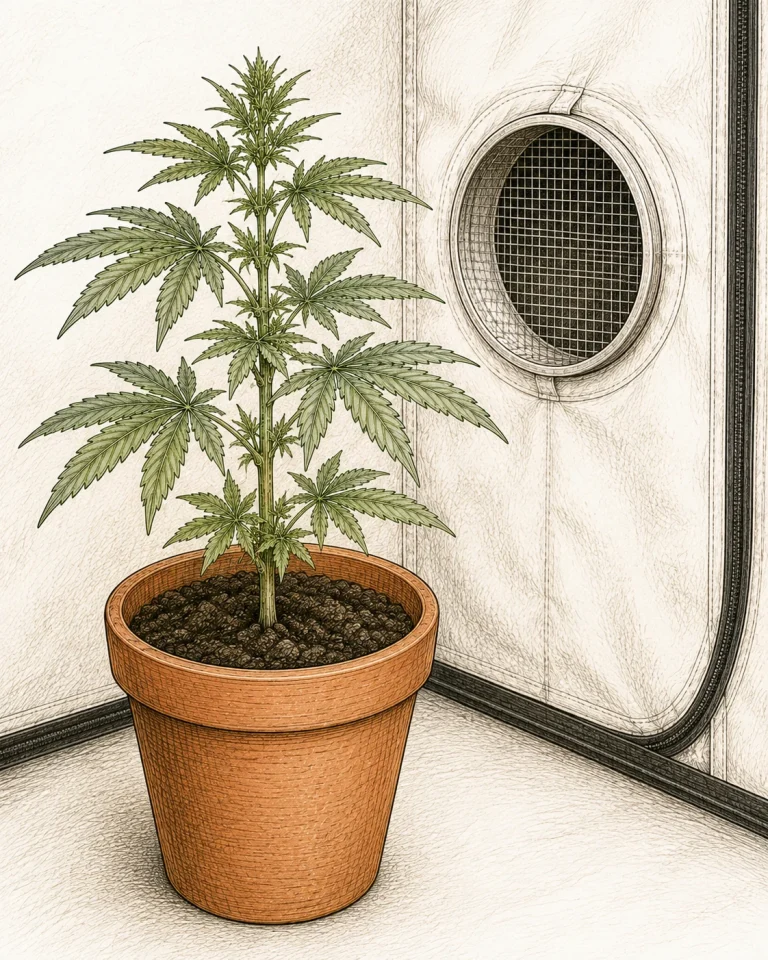
When it comes to leaf miners, prevention is much easier than fighting an infestation. The most important step for indoor growers is using high-quality, sterilized seed-starting soil from a trusted source. Avoid garden soil or fresh compost, or pasteurize it before use. Every new plant that enters your grow space, whether it’s a young plant or a clone, should first sit in quarantine in a separate area for at least one week.
Cover your vents and air intakes with fine insect mesh (0.03 in (0.8 mm) openings or smaller). Yellow sticky traps (German) are a simple, cheap tool you should keep hanging in your grow at all times. They help you fight pests, but mostly they work as an early warning system. If you catch adult leaf miners on the traps before they lay eggs, you’ve won.
For outdoor growers: pick resistant strains that develop tough leaf tissue. Balanced feeding makes your plants much more resilient, especially enough calcium for healthy cell structure. Silica-based plant boosters have proven themselves in real-world grows. They make the leaf tissue physically harder, so it’s tougher for females to lay their eggs.
Regular checks are key. Take a close look at the tops and undersides of your leaves at least twice a week. Use a magnifying glass or a cheap digital microscope. That way you spot larvae and the first tunnels before the infestation spreads. Keep your grow area clean, too. Remove fallen leaves right away, because pupae can overwinter in plant debris and grow into a new generation of leaf miners.
- Use sterilized, high-quality soil – no garden soil
- Quarantine new plants and clones for at least 1 week
- Cover vents with fine insect mesh
- Hang yellow sticky traps as a permanent early warning system
- Use silica supplements for harder, more resistant leaf tissue
- Check all leaves twice a week (tops and undersides)
- Remove fallen leaves right away – don’t give pupae a place to overwinter
Leaf Miners on Cannabis vs. Other Pests and Leaf Damage
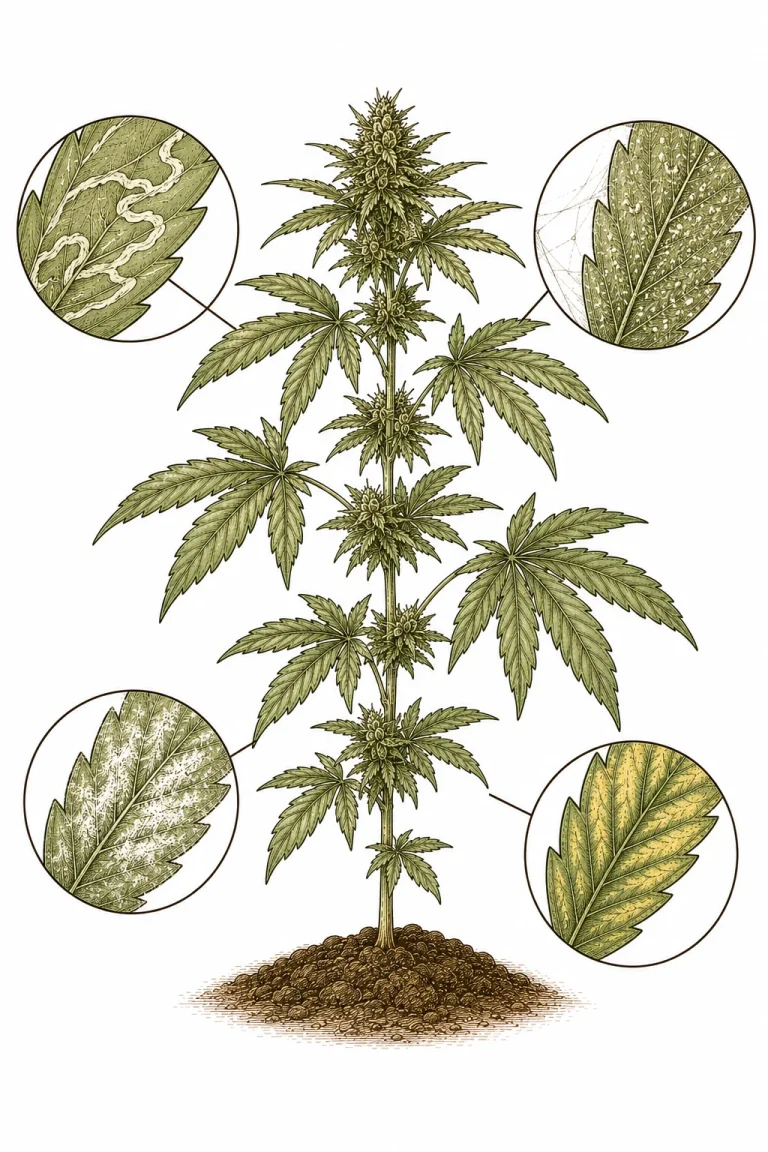
A common diagnosis mistake is confusing leaf miner damage with other problems. The telltale tunnels inside the leaf are actually pretty clear, but growers still get unsure. Here are the key differences: spider mites leave tiny yellow dots on the top of the leaf and fine webbing on the underside – no tunnels in the tissue. Thrips also cause silvery-white spots, but these sit on the leaf surface and aren’t embedded in the tissue. Real holes in the leaf instead of narrow tunnels in the tissue usually point to caterpillars or beetles.
Nutrient deficiencies like magnesium deficiency or iron deficiency cause discoloration that usually covers larger areas of the leaf and follows certain patterns (for example, yellowing between the veins, starting on older or newer leaves). They never show up as narrow, winding lines. The typical symptoms of yellow leaves caused by nutrient problems also follow different patterns than leaf miner tunnels.
Still not sure after a visual check? Hold the leaf up to a bright light. If you see a tiny wriggling worm in the light part of the tunnel – or at least the dark shadow of a larva – case closed: you’re dealing with leaf miners. Even beginners can use this simple trick with no trouble. For every other diagnosis situation, check out the full overview of all plant problems on PlantClue for quick help.
- Spider mites: yellow dots + webbing (NO tunnel pattern in the tissue)
- Thrips: silvery spots on the surface (wipe off or lie flat)
- Nutrient deficiency: widespread discoloration following a systemic pattern
- Leaf miners: tunnels in the tissue, larva visible when backlit
- Powdery mildew: white coating on the surface, wipes off
How Much Do Leaf Miners Really Damage Cannabis Leaves?
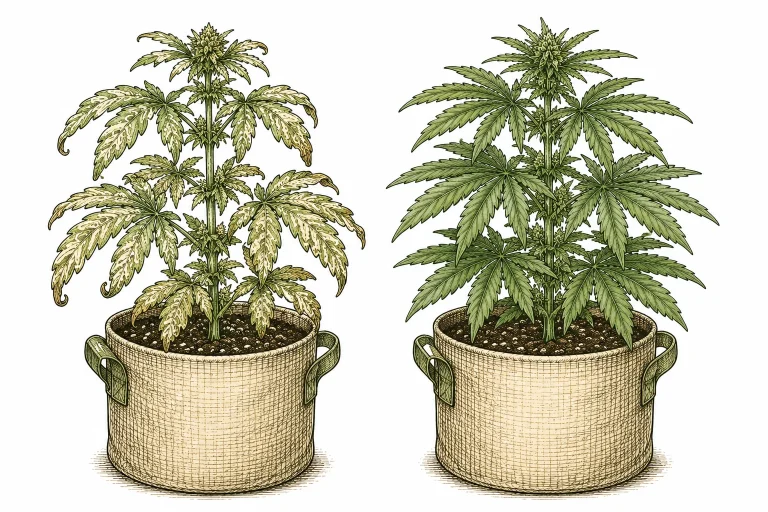
How seriously should you take leaf miners? The answer is clear: if you act early, the damage stays manageable. But a heavy infestation that runs for several weeks can take a real toll on your harvest. The larvae destroy the chlorophyll-rich mesophyll tissue of the leaves, which directly cuts your plant’s photosynthesis. When lots of leaves are affected, the plant can no longer cover its energy needs. That can lead to slower growth, weaker buds and a smaller yield overall.
Things get especially critical when leaf miners show up alongside other problems. A plant that’s also struggling with poor watering habits – too wet or too dry – has far fewer reserves to get through a pest infestation. Getting the basics of watering your cannabis plants right is a key building block for tough plants that can easily shrug off a light pest problem.
Here’s the bottom line: a healthy, well-fed cannabis plant in a good environment can fully recover from a leaf miner infestation you catch early. The damaged leaves won’t turn green again, but new growth stays clean and the plant keeps growing normally. You can expect lasting yield losses only from a heavy infestation that goes untreated for weeks.
- Light infestation (a few leaves): barely measurable yield loss
- Moderate infestation (many leaves): noticeably slower growth
- Severe infestation (widespread, untreated): significant yield loss
- Combined with other stress factors: much higher risk
- After successful treatment: full recovery is possible
For a complete overview of all cannabis pests, check out our pests guide. In outdoor growing, similar feeding damage can also come from caterpillars. You can tell them apart by the width of the trails and the visible droppings.
Frequently Asked Questions
How can I spot leaf miners on cannabis leaves at a glance?
The telltale sign is whitish-silver, winding or snake-like trails inside the leaf tissue, not on the surface. Hold the leaf up to the light and you’ll often see a tiny white larva at the end of the trail. You can’t wipe these trails off, and they look clearly different from nutrient deficiencies or other damage.
Can I still fight leaf miners on cannabis during the flowering stage?
Your options are limited in the flowering stage, because many sprays can damage buds or leave residue behind. Removing affected leaves by hand and releasing beneficial insects like Diglyphus isaea parasitic wasps are the safest methods during flower. As a rule, avoid chemical or oil-based sprays once your plants are flowering.
Do leaf miners show up in indoor cannabis grows too?
Yes, leaf miners can hit indoor grows too. They usually hitch a ride in contaminated soil or on infested young plants. They can also get in through vents without insect screens. Indoors, with no natural predators around, they find ideal conditions and can spread fast.
Is leaf miner damage on cannabis a threat to your harvest?
Not if you act early. You can keep a light to moderate infestation well under control by removing affected leaves right away and using biological control, without a major hit to your harvest. Only a heavy infestation left untreated for weeks can cause real yield losses, because it seriously cuts the plant’s capacity for photosynthesis.
Which beneficial insects help against leaf miners on cannabis?
The most effective biological control is the parasitic wasp Diglyphus isaea. It specializes in leaf miner larvae, is easy to find at garden and grow suppliers, and works great indoors because it’s harmless to plants and people. Predatory bugs from the genus Macrolophus can also help.
How do I tell leaf miner damage apart from thrips damage?
Leaf miners leave trails inside the leaf tissue that you can’t wipe off, and they often wind around. Thrips, on the other hand, cause silvery or bronze spots and streaks on the leaf surface, often with tiny black specks of droppings. Thrips damage sits on the surface, while leaf miner trails run through the tissue.
For more background on leaf miners and other crop pests, check out the Bavarian State Institute for Viticulture and Horticulture (LWG, in German).
Are leaf miners dangerous to humans?
No. Leaf miners and their larvae don’t sting or bite, and they don’t transmit diseases to people or pets. They only harm the plant, because the larvae eat tunnels into the leaf tissue. That means you can safely remove infested leaves by hand.
The Bottom Line
Leaf miners on cannabis leaves are a problem to take seriously, but one you can handle well – as long as you spot those typical mining trails early and act decisively. Removing infested leaves by hand, releasing beneficial insects like Diglyphus isaea and, if needed, using biological sprays like neem oil are usually enough to save your plants. Prevention matters even more: sterilized soil, quarantine for new plants, insect screens on your vents and regular checks are your best line of defense. Healthy, well-fed plants can bounce back quickly and fully from an infestation you catch early – so give them great care right from the start.
