


Companion plants for cannabis are one of the most effective ways to protect your outdoor grow from pests and diseases without any chemicals. The right mix of plants draws in beneficial insects, confuses pests with strong scents, and improves your soil along the way. Pair your plants smart and you can avoid a lot of trouble with aphids, spider mites or fungal problems, and harvest healthier, stronger plants in the end. In this article, we’ll show you which plants really work as neighbors for cannabis.
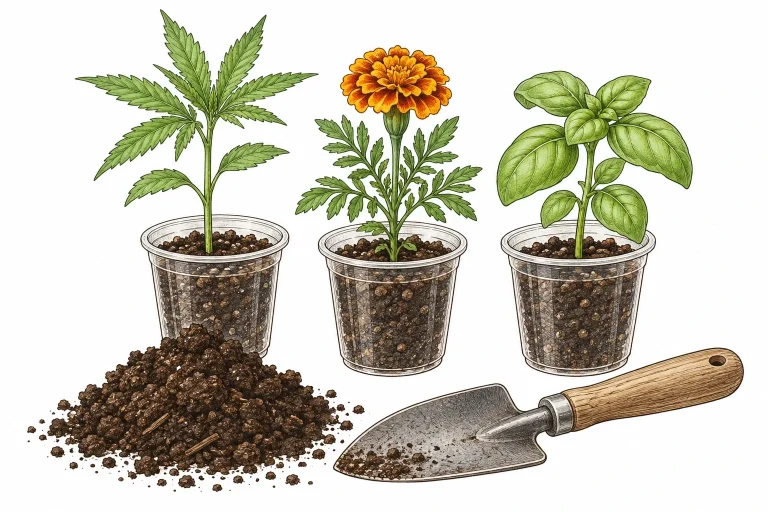
Why Companion Planting Makes Sense for Outdoor Cannabis
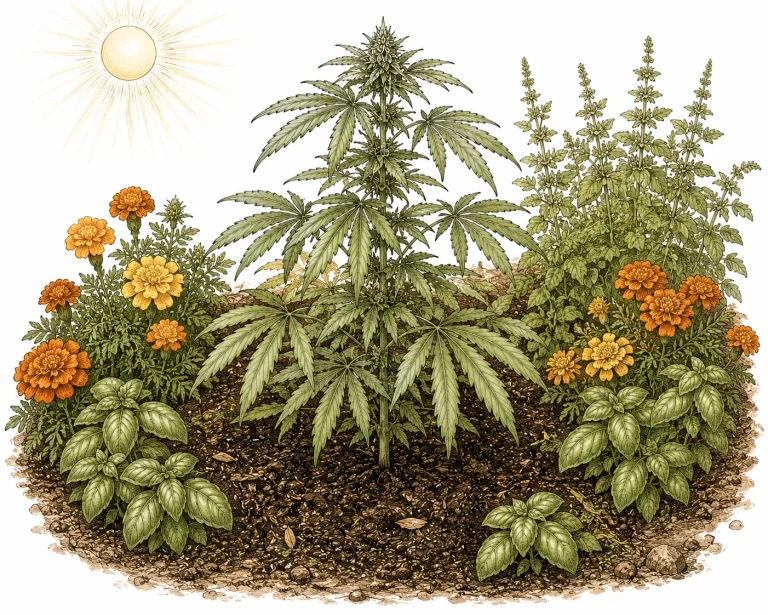
Companion planting is a centuries-old gardening principle: you deliberately place different plant species next to each other so they support one another. With cannabis companion plants, the main goals are to attract the natural enemies of pests, drive off unwanted insects with strong scents, and loosen up the soil with different root systems.
Outdoors, cannabis is exposed to a lot of factors you can easily control indoors. Wind, rain, swinging temperatures and natural pest pressure make outdoor growing more demanding. A well-planned companion planting setup can act like a living shield here. It works without synthetic pesticides and boosts the biodiversity in your garden at the same time.
Keep in mind: companion plants are no miracle cure. They don’t replace a good spot, healthy soil prep or regular plant checks. But they are a valuable piece of a holistic growing approach, and they work especially well in organic cannabis growing.
- Attract beneficial insects like ladybugs and lacewings
- Confuse pests with strong scents
- Improve soil structure and nutrient cycling
- Reduce the need for chemical pesticides
- Boost overall garden health and biodiversity
The Best Cannabis Companion Plants Against Pests

Some plants have proven themselves in practice as especially effective cannabis companion plants against pests. Their essential oils and scents can repel many insects or mask the smell of the cannabis plant. That makes it harder for pests to find their host plant in the first place.
Marigolds (Tagetes – not to be confused with pot marigold, Calendula) are among the most popular companion plants of all. Their roots release compounds that can kill harmful nematodes in the soil, and their strong scent helps keep aphids and whiteflies away. Basil is another classic: it repels thrips and mosquitoes, and when it grows right next to your cannabis, it’s even said to have a positive effect on the plant’s terpene profile.
Lavender draws in bees and other pollinators with its flowers, while its strong scent keeps moths and lice away. Garlic and onions release sulfur compounds that can repel sap-sucking insects like aphids. Already dealing with a pest problem? Check out these cannabis pest control methods too, so you can pair companion planting with other measures that make sense.
- Marigolds (Tagetes) against nematodes and aphids
- Basil against thrips and gnats
- Lavender against moths and lice, attracts pollinators
- Garlic and onions against sap-sucking insects
- Nasturtiums as a trap crop for aphids
Soil-Building Companion Plants for Healthy Roots

Cannabis companion plants don’t just help with pests. They also play a big role in soil health. Legumes like clover, beans, or peas pull nitrogen from the air with the help of nodule bacteria. Neighboring plants mainly get access to it when roots and plant debris break down, or when you leave the trimmings on the bed as mulch. Your nitrogen-hungry cannabis plant benefits most during the vegetative stage, and it can help you cut back on nutrients.
Ground covers like low-growing clover or creeping thyme also keep the soil surface from drying out, prevent erosion from heavy rain, and smother weeds. That’s especially valuable in summer, when strong sun can dry out your soil fast. Want to dial in your feeding? Take a look at the cannabis NPK chart to see which nutrients matter most in each stage.
Comfrey is another great pick. Its deep roots pull minerals up from lower soil layers and make them available to other plants as its leaves die back. Cut comfrey back regularly and use it as mulch, and you get a natural, nutrient-rich cycle right in your bed.
- Clover and legumes fix nitrogen in the soil
- Ground covers protect against drying out and erosion
- Comfrey brings up minerals from deep soil layers
- Less weed pressure thanks to dense planting
- Better soil structure from different root depths
Attract Beneficial Insects with Flowering Companion Plants
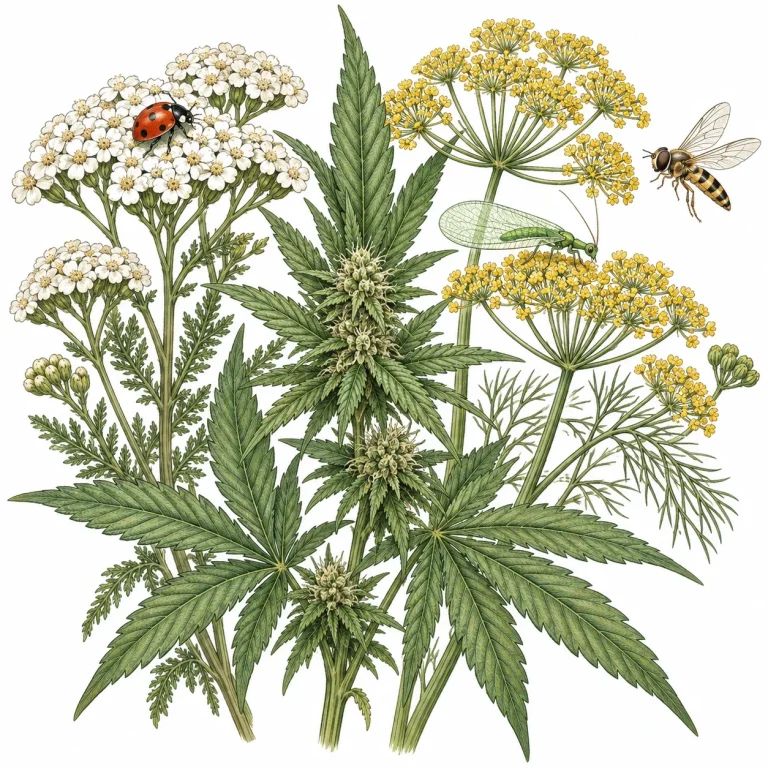
One of the biggest perks of companion planting: you can deliberately bring in the natural enemies of pests. Yarrow, dill, and fennel produce small, open flowers that ladybugs, lacewings, and parasitic wasps love. These beneficial insects in biological pest control feed on aphids, spider mites, and their eggs, so they can handle a big chunk of your pest control on their own.
Calendula and zinnias also pull in lots of helpful insects with their bright colors, including hoverflies, whose larvae are serious aphid eaters. Plan for staggered bloom times, so beneficial insects always have something to eat throughout your cannabis plant’s whole growing season.
Especially if you’ve already had trouble with mealybugs or other sap-sucking insects, companion plants that support beneficials can keep their numbers in check long term, without you having to step in all the time.
- Yarrow, dill and fennel attract predatory insects
- Ladybugs and lacewings feed on aphids and mites
- Hoverfly larvae can knock back pest populations effectively
- Staggered bloom times keep a steady food supply for beneficials
- Colorful flowers like zinnias also boost pollination
How to Plan Your Companion Planting: Spacing, Location and Combos

To get the most out of cannabis companion plants, planning is key. Companions planted too close compete for light, water and nutrients, and they can even slow down your cannabis plant. A good rule of thumb: low-growing herbs and ground covers can sit closer to your cannabis, while taller companions like sunflowers or corn need at least 3 ft (1 m) of space so they don’t cast shade.
Location matters, too. If you grow cannabis in a homemade soil mix, make sure your companions have similar pH needs. Most recommended companions do well in slightly acidic to neutral pH, which usually lines up nicely with what cannabis likes.
A proven combo for beginners: calendula as a border, basil and nasturtiums right next to your cannabis, and clover as a ground cover between the rows. This setup covers pest control, beneficial insects and soil improvement all at once, and it works well in smaller gardens or raised beds, too.
- Ground covers can grow close to your cannabis plant
- Tall companions need at least 3 ft (1 m) of space
- Pick plants with similar pH needs
- A marigold border is a proven classic
- Aim for a mix of protective, beneficial-attracting and soil-building plants
Plants You Should NOT Grow Next to Cannabis
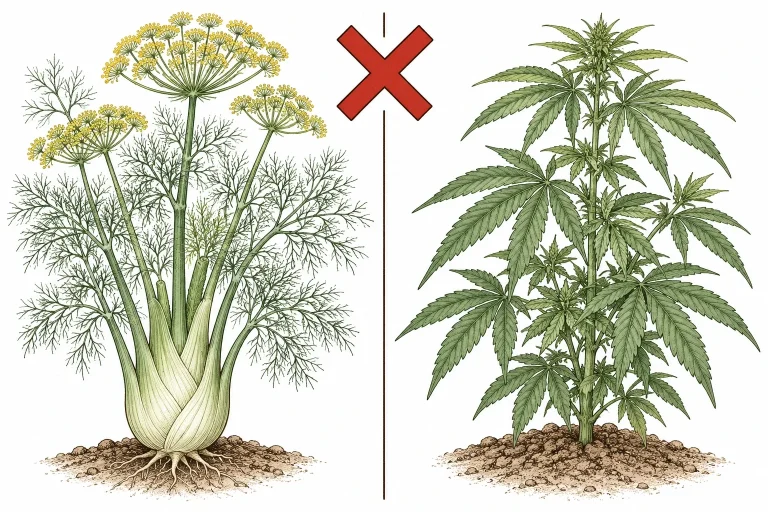
Not every plant makes a good neighbor for cannabis. Fennel, for example, releases compounds that can slow the growth of many other plants – an effect called allelopathy. If you still want fennel in your garden, plant it farther away or in separate containers.
Heavy drinkers and feeders like squash or zucchini can compete too hard with cannabis for resources, so it’s better to skip them. Also be careful with plants that attract the same pests or diseases as cannabis, such as certain nightshades that are prone to similar fungal diseases.
Not sure whether a problem on your cannabis plant comes from a bad neighbor or something else? Our guide to diagnosing cannabis diseases is a good first stop to sort out the symptoms. For typical outdoor problems, from pests to weather damage, check out the overview Spotting Outdoor Cannabis Problems.
- Fennel can stunt other plants through allelopathy
- Squash and zucchini compete hard for water and nutrients
- Nightshades often share similar fungal diseases
- Very tall plants can shade your cannabis
- Avoid invasive climbing plants altogether
Frequently Asked Questions
Which cannabis companion plants are best for beginners?
Calendula, basil and nasturtiums are great picks for beginners. They’re low-maintenance and reliably help against many pests. They also thrive in much the same conditions as cannabis.
Can I use cannabis companion plants in containers too?
Yes. Many companion plants like basil, nasturtium or calendula do just fine in their own pots right next to your cannabis plant. That way you still get the benefits of companion planting, even if you don’t have a big garden bed to work with.
How fast does companion planting start to work?
You’ll usually notice the first positive effects, like more beneficial insects showing up, within a few weeks. The full payoff for soil quality and pest control often takes a whole growing season to kick in, though.
Can companion plants fully replace pest control?
No. Companion plants are a smart addition, but they can’t fully replace regular checks and targeted treatments when needed. If you’re dealing with a heavy infestation, back them up with proven pest control methods.
Can companion plants affect the flavor of your cannabis?
Some growers report that aromatic herbs like basil planted close by can slightly influence the terpene profile. There’s no solid scientific proof for this yet, so think of it as a nice bonus rather than a sure thing.
The Bottom Line
Cannabis companion plants give you a natural, sustainable way to protect your outdoor grow from pests while improving your soil at the same time. With a smart mix of calendula, herbs, ground covers and flowering plants that attract beneficial insects, you can build a healthy, resilient growing system. Just keep the needs of every plant in the mix in mind, and treat companion planting as a useful addition to solid plant care, not a replacement for it. Stick to these principles and you can look forward to healthier plants and a bigger harvest.
