Getting Your Lighting Right
The right cannabis lighting makes or breaks growth and yield: LED vs. HPS, PPFD (photosynthetic photon flux density), light cycles and the right hanging distance — here’s how to give your plants the light they really need.
Cannabis lighting is the engine of growth
Cannabis is a short-day plant (German) — it reacts extremely sensitively to the number of light hours and to light intensity. Indoors, the right cannabis lighting — through your choice of lamp, its distance and the light cycle — determines how fast your plants grow, when flowering starts and, ultimately, the quality of your harvest.
When choosing a light, it usually comes down to LED vs. HPS today: LED uses less power, produces less heat and can hang closer to the plant, while HPS has traditionally been cheaper to buy but gives off more heat and needs extra cooling. More important than the technology, though, is the PPFD value — it tells you how much usable light actually reaches leaf level.
The light cycle directly controls the growth stage: 18 hours of light (18/6) keep the plant in the vegetative stage, and switching to 12 hours of light (12/12) triggers flowering. Keep in mind: even minimal light exposure during the dark period can disrupt flowering or cause the plant to turn hermaphrodite — the dark period has to be truly dark.
Getting the light distance right is a constant balancing act: too close causes light burn, too far wastes light intensity and slows growth. Use our PPFD Calculator to work out the ideal distance for your light and tent size.
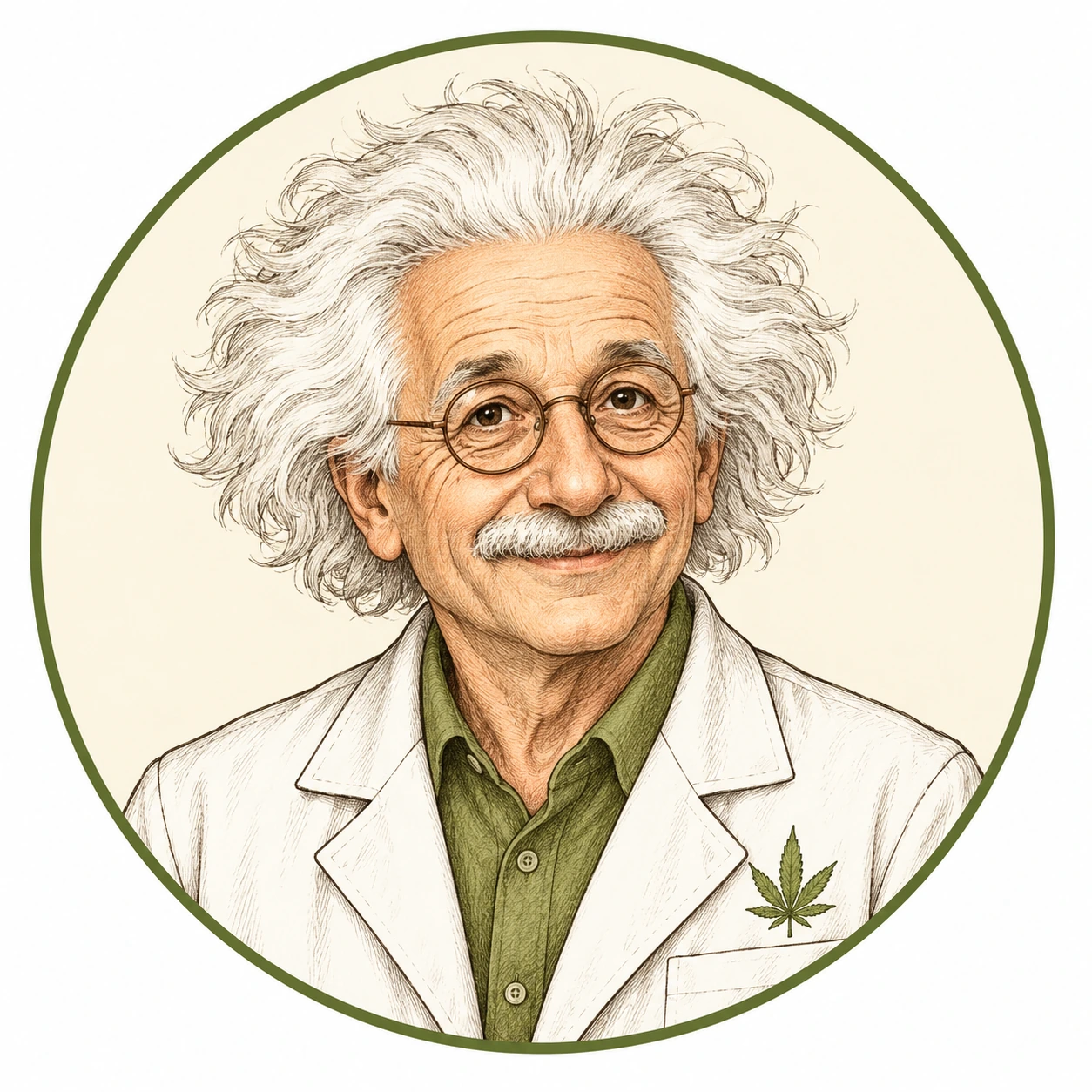
More light isn’t always better. An LED hung too close to the plant causes light burn, even when the temperature is fine. Go by PPFD values, not just wattage — wattage says little about the actual light intensity.
Lighting guides at a glance
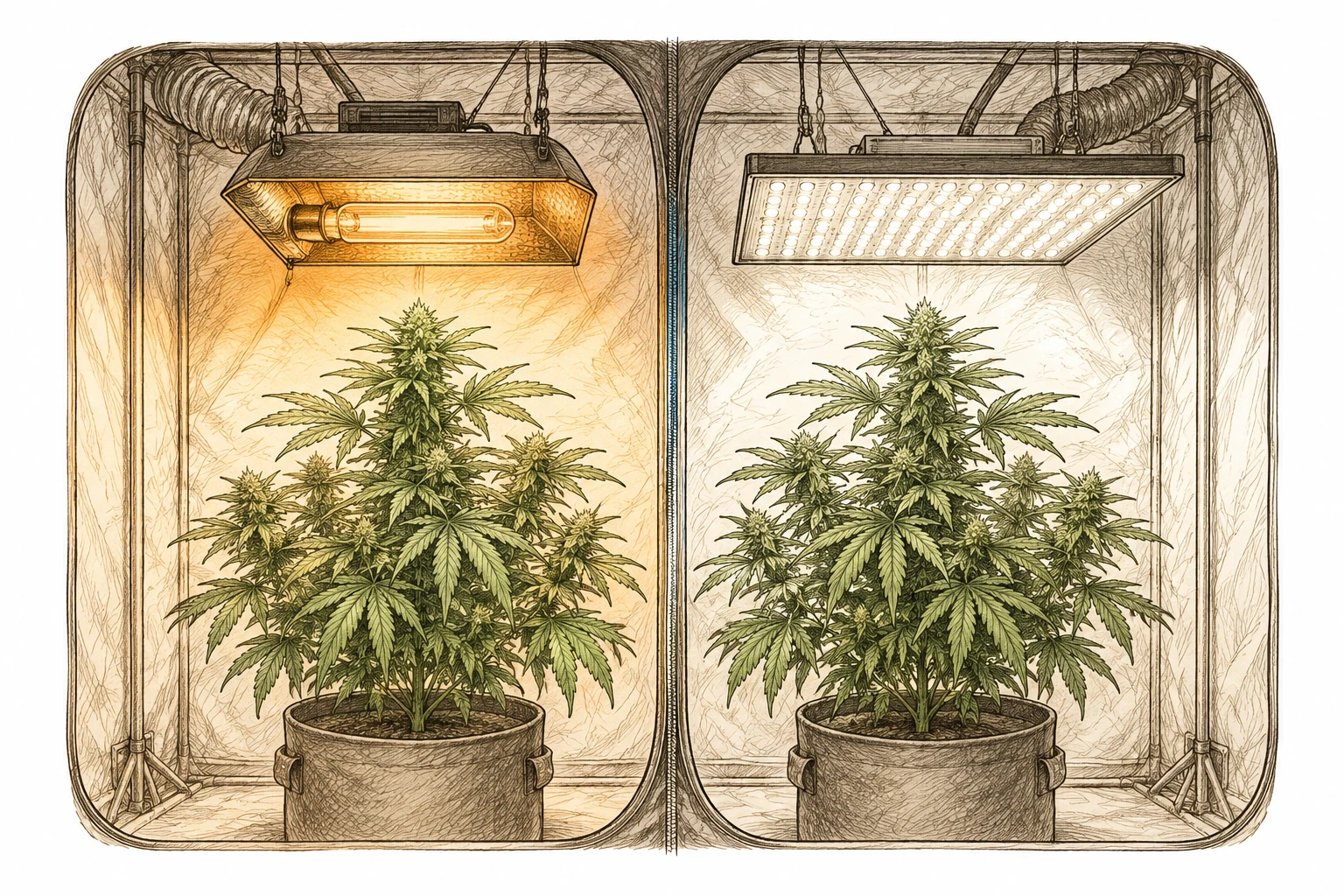
LED vs. HPS: which light is right for you?
Electricity costs, heat, yield and spectrum compared — how to find the right system for your grow.
Read article →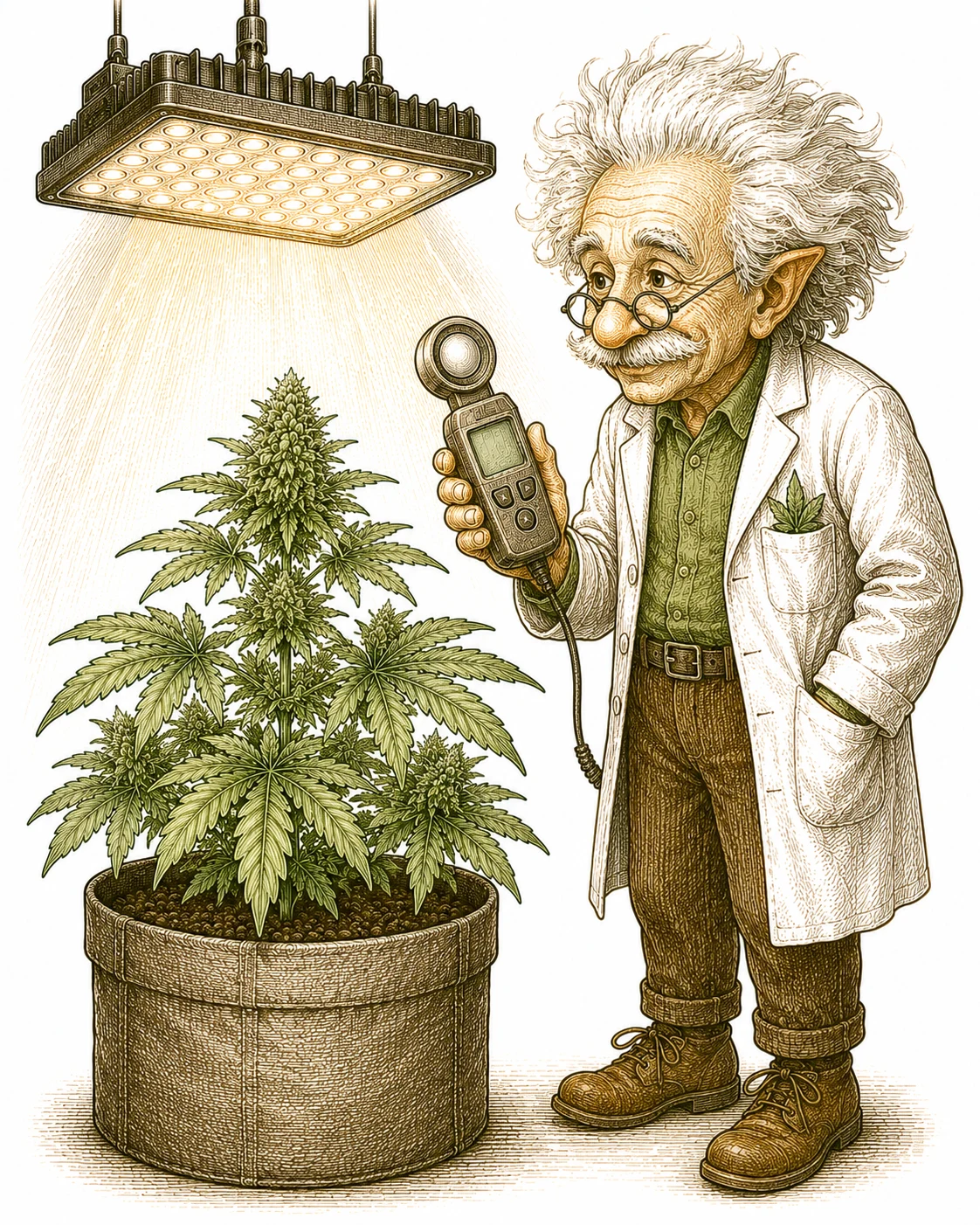
Making the most of light spectrum & light duration
Which wavelengths drive veg and flowering, and how long your light cycle needs to be in each stage.
Read article →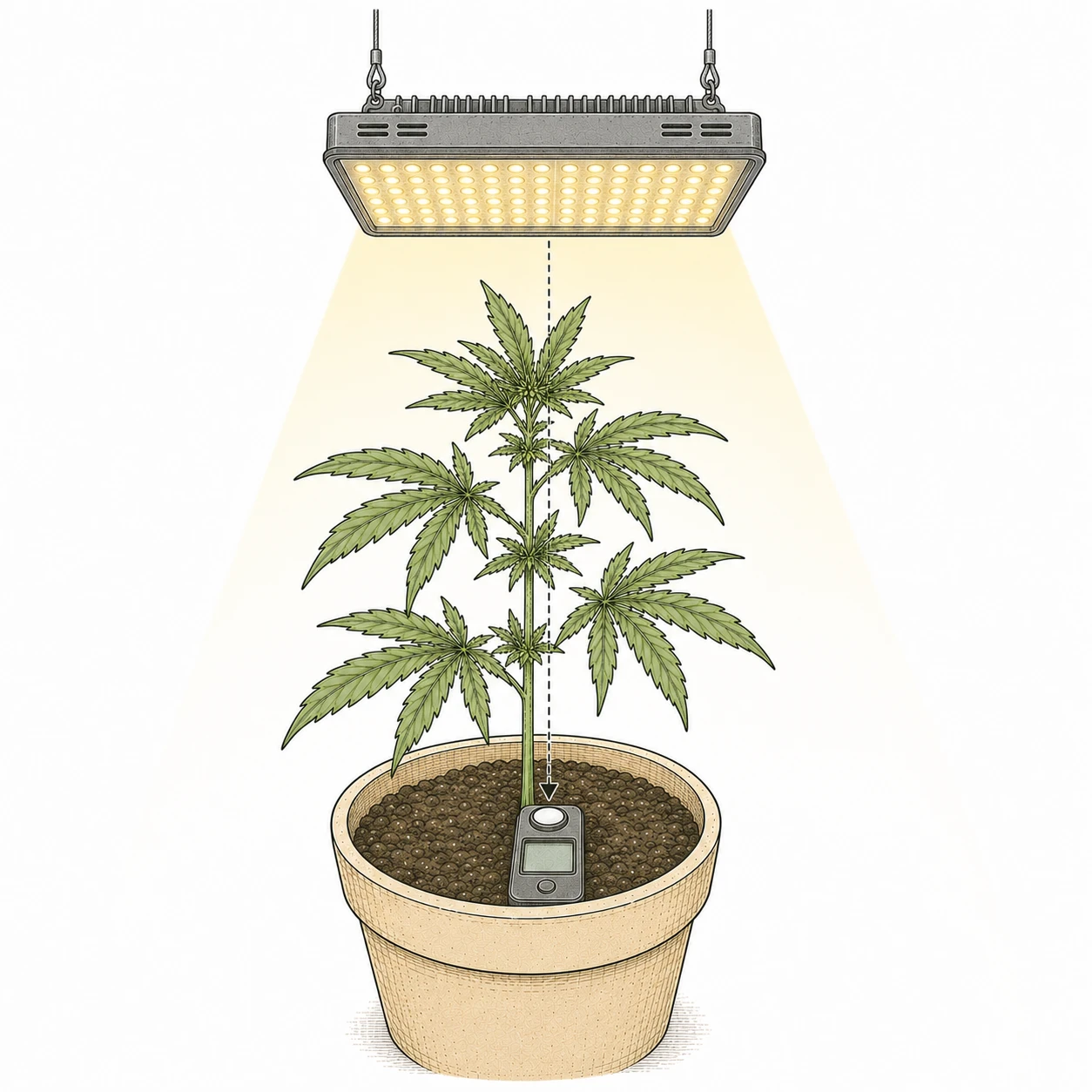
PPFD & DLI: measuring light intensity correctly
What PAR, lux and DLI (daily light integral) mean, and which values are ideal for veg and flowering.
Read article →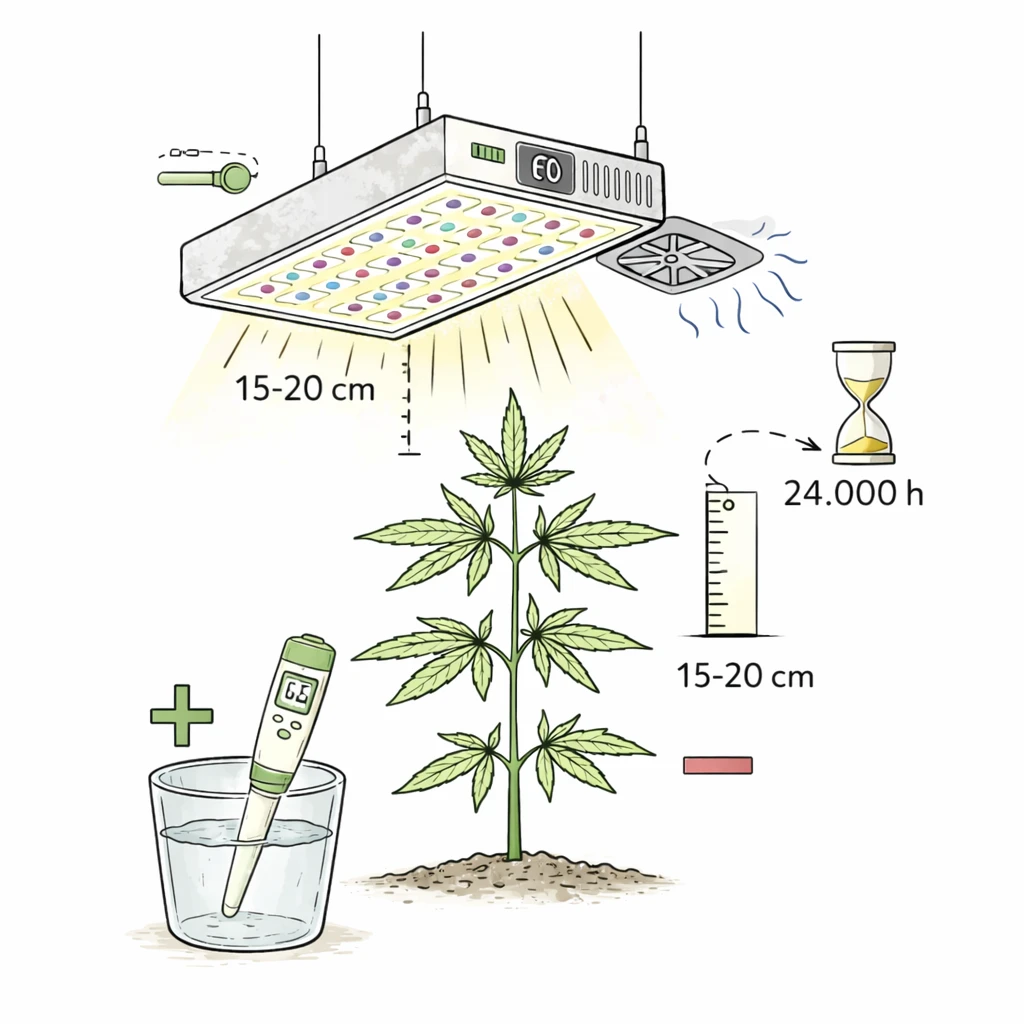
Setting the ideal light distance
The right distance for each wattage and stage, PPFD targets, and how to keep an eye on the stretch.
Read article →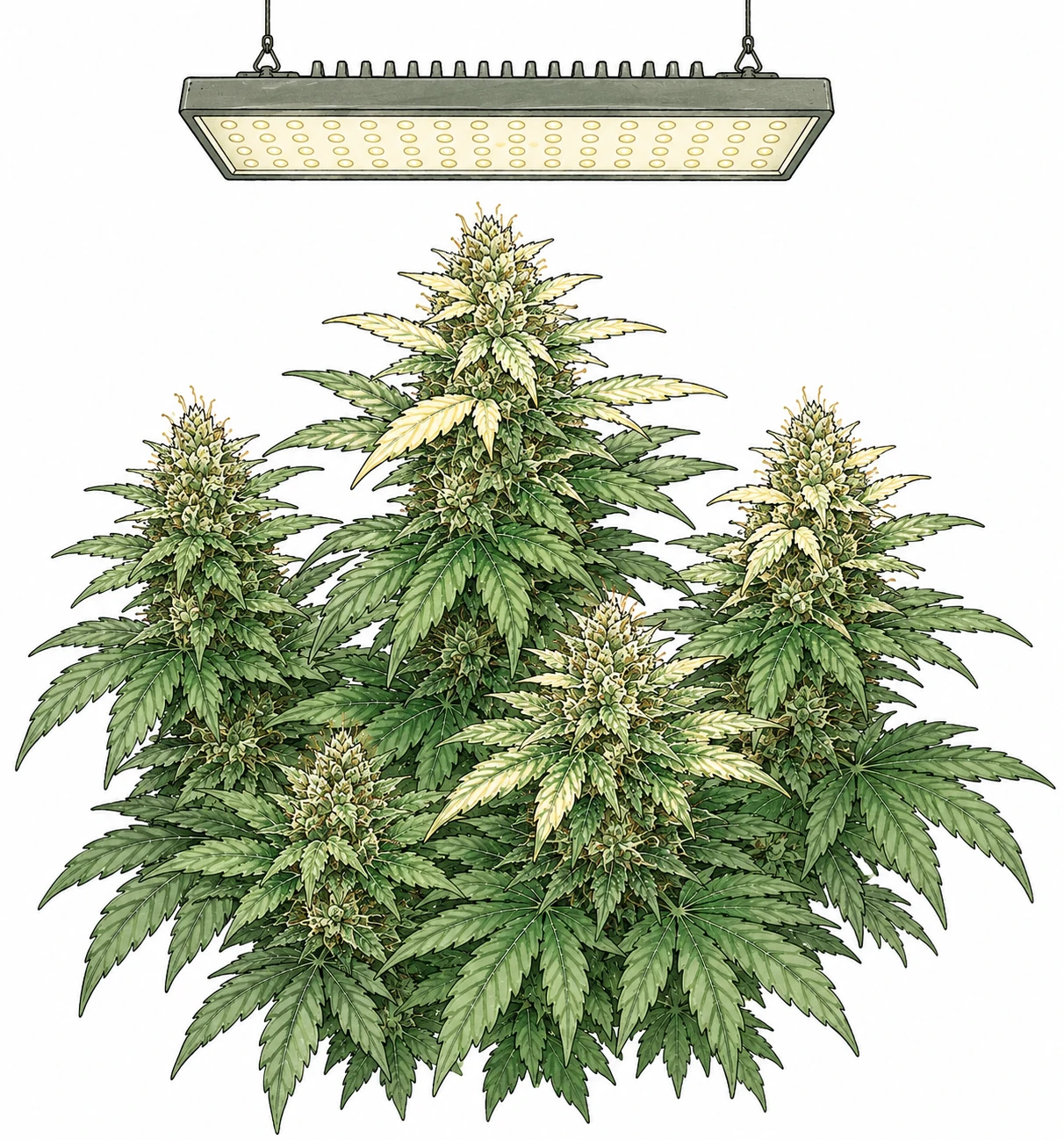
Spotting and fixing LED light burn
Symptoms, causes and quick fixes — how to save your plant quickly and safely.
Read article →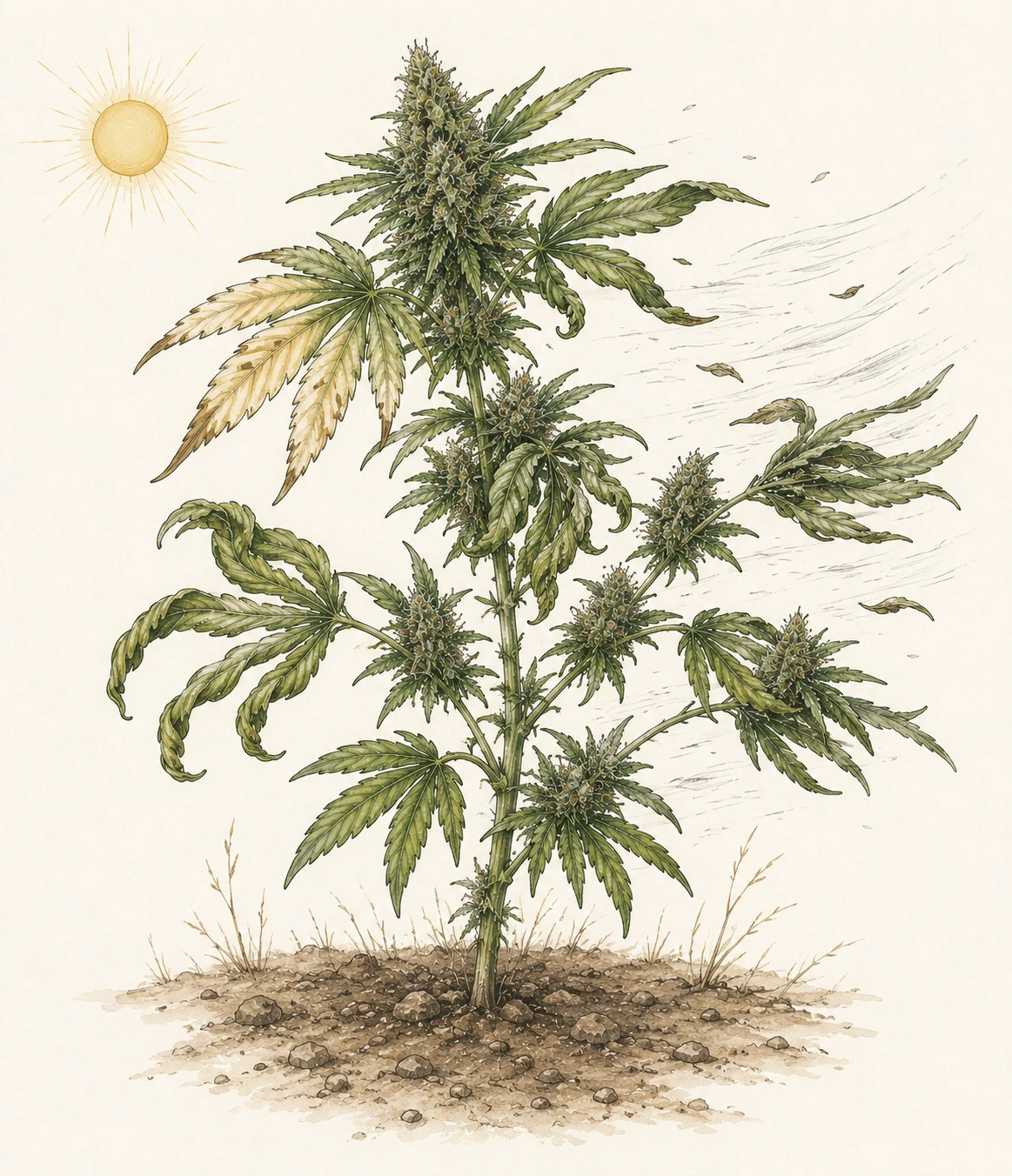
Spotting cannabis sunburn
Whitish-yellow bleaching only on the upper leaves facing the light — outdoors from the sun, indoors from lights that are too intense.
Read article →Frequently asked questions about cannabis lighting
LED or HPS — which lighting is better for cannabis?
LED is usually the better choice today: lower power consumption, less heat and easier handling, with similar or better yields. HPS is cheaper to buy but produces significantly more heat, which has to be removed as well.
What is PPFD, and why does it matter more than wattage?
PPFD (photosynthetic photon flux density) measures how much usable light actually reaches leaf level — wattage, on the other hand, only tells you about power consumption, not about the actual light intensity. Two lights with the same wattage can deliver completely different PPFD values.
How many hours of light does cannabis need per day?
In the vegetative stage, 18 hours of light and 6 hours of darkness (18/6). To trigger flowering, you switch to 12 hours of light and 12 hours of darkness (12/12). Autoflowering strains don’t depend on this and flower regardless of the light cycle.
How close can the light hang to the plant?
That depends on the light’s wattage and type — as a rule of thumb, hold your hand over the buds: if you feel noticeable heat after 30 seconds, the light is hanging too close. For an exact calculation, use our PPFD Calculator with your specific light’s data.
What happens if light hits the plant during the dark period?
Even brief light exposure during the dark period in flowering can confuse the plant and cause stress — in the worst case, it turns hermaphrodite and develops male flowers as a stress response. That’s why the dark period has to be truly, completely dark.
Can too much light harm the plant?
Yes, light that’s too intense at too short a distance causes light burn — pale, bleached leaf tips on the topmost leaves closest to the light. More light isn’t automatically better; what counts is the right balance between distance and intensity.
