

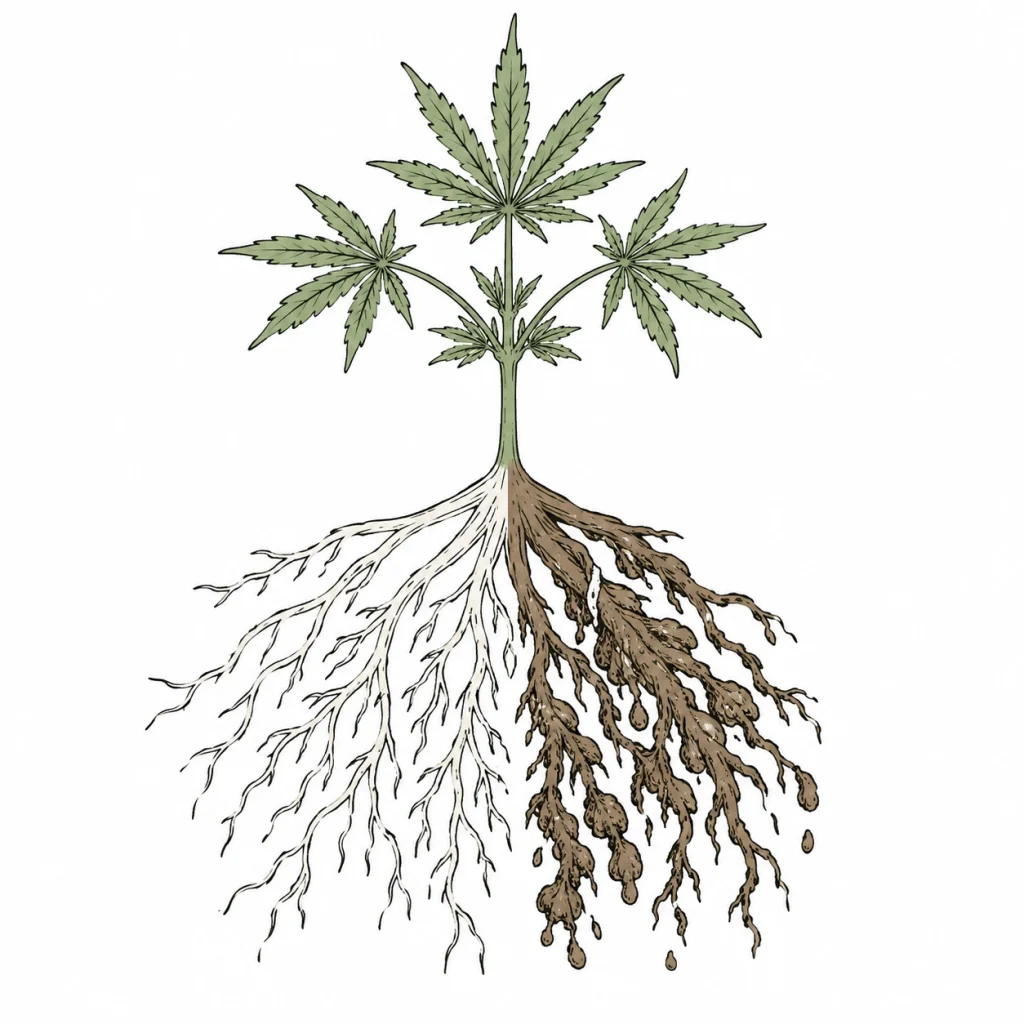
Low oxygen at the roots is one of the most underrated problems in home growing. It’s also one of the most common reasons plants suddenly droop even though you take good care of them. When roots don’t get enough oxygen, they can’t take up nutrients, and your plant literally starves from the bottom up. The tricky part: the visible symptoms often look like a nutrient deficiency or nutrient burn, so many growers miss the real problem for a long time. In this article, I’ll show you how to spot root oxygen deprivation, what usually causes it, and which quick fixes actually work.
Cannabis Root Oxygen Deprivation: What Happens Below the Surface?
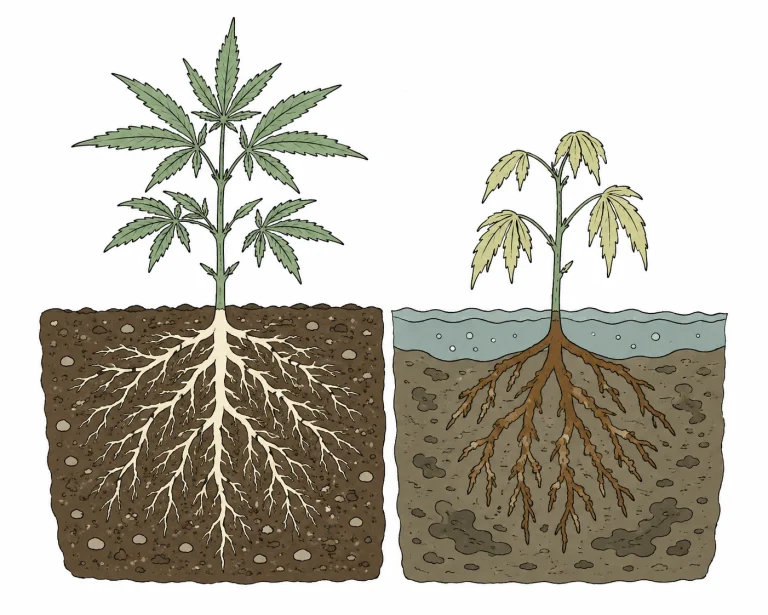
Healthy cannabis roots need more than water and nutrients. Above all, they need oxygen. Roots actively breathe, just like the rest of the plant. They pull oxygen from the air pockets in the growing medium and release carbon dioxide. When those air pockets stay clogged by too much water, compacted soil or poor drainage, the roots start to suffocate. Plant roots actively take in oxygen and release CO2, just like the parts of the plant above ground.
In a healthy growing medium, about 25 to 30 percent of the volume is air space. Water too often or too much, and those pores fill up completely with water. The roots get cut off from oxygen, cell activity crashes, and anaerobic bacteria start to spread. The result is a downward spiral of root damage, poor nutrient uptake and visible plant stress – all triggered by a simple lack of oxygen in the root zone.
The key thing to understand: this process starts slowly. Just a few days in fully saturated medium can do lasting damage to the delicate root tips. And because roots do their work out of sight, you often won’t notice the damage until it’s already well along.
- Roots need oxygen for cellular respiration and nutrient uptake
- A healthy growing medium is 25–30% air space
- Soggy medium clogs those pores and cuts off air to the roots
- Anaerobic bacteria and fungi thrive in low-oxygen conditions
- Damage can start after just a few days in saturated medium
Symptoms That Point to Root Oxygen Deprivation in Cannabis
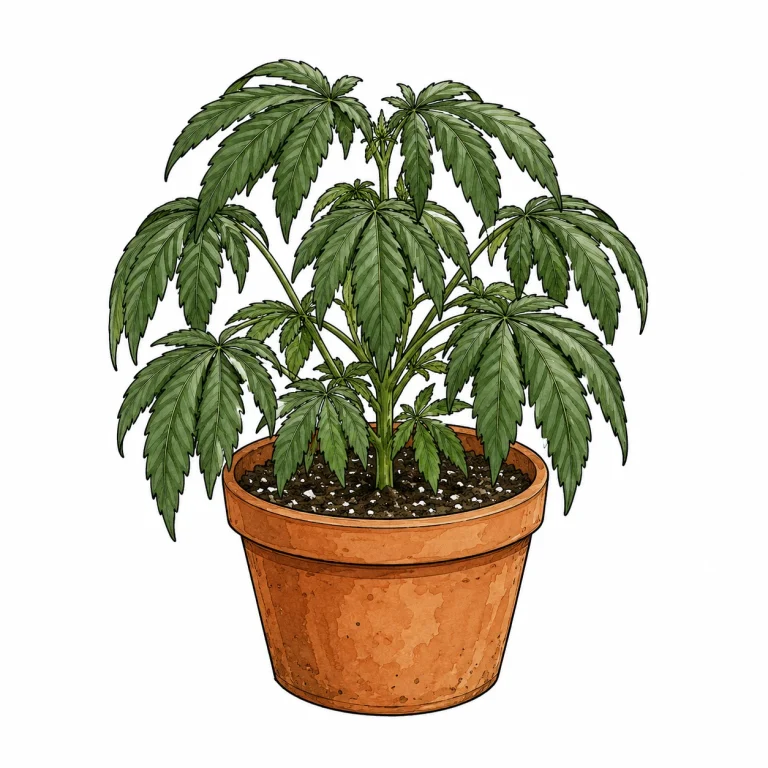
What makes low root oxygen so confusing is how varied the symptoms are – and how much they look like other problems. The most common sign is the classic “overwatering droop”: the leaves hang limp even though the soil is moist or even wet. Many growers then wrongly assume the plant needs more water – and make things worse.
Other typical symptoms include slow or stalled growth despite good conditions, dark green leaves with edges that curl slightly downward, and a general loss of vigor. If the oxygen shortage drags on, the roots can start to rot. You can spot root rot by brown or black, mushy, slimy roots and a nasty, rotten smell coming from the pot. Want to learn more about yellow leaves as a sign of different kinds of stress? Check out our detailed overview on cannabis with yellow leaves.
In later stages, low root oxygen can also show up as a nutrient deficiency, because damaged roots can’t take up nutrients efficiently anymore. You’ll often see symptoms that look like a nitrogen or calcium deficiency, even though there are plenty of nutrients in the medium. What you’re dealing with then is a nutrient uptake problem caused by root damage.
- Leaves droop even though the soil is moist (classic overwatering sign)
- Leaf edges curl slightly downward
- Dark green leaves with a dull, matte look
- Stalled growth despite good light and feeding
- Rotten smell from the pot – a sign of early root rot
- Brown or black, slimy roots when you check the pot
- Secondary deficiency symptoms even though you’re feeding enough
The Most Common Causes of Low Oxygen in the Root Zone
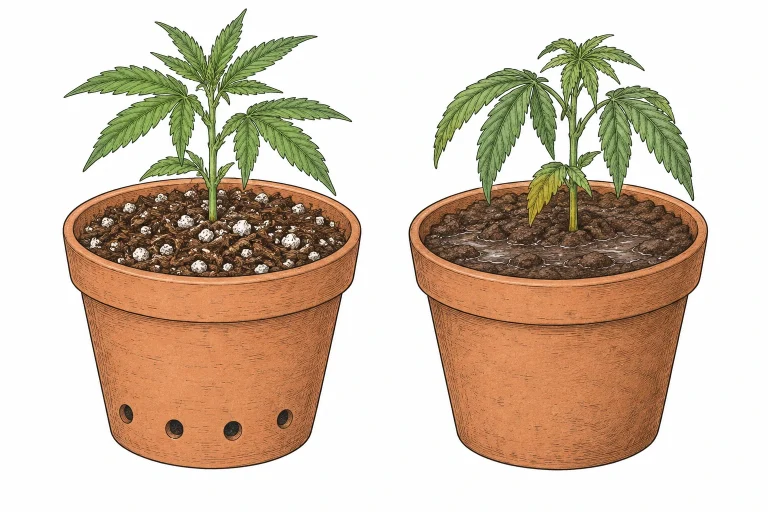
By far the most common cause of oxygen-starved cannabis roots is overwatering. Many growers, especially beginners, water on a fixed schedule instead of when the plant actually needs it. The result is a growing medium that stays wet all the time. Your roots barely get a chance to dry out between waterings. We cover how to water cannabis the right way, and how to avoid the classic beginner mistakes, in our guide to watering cannabis correctly.
Another common trigger is the wrong growing medium. Heavy, dense soils without enough perlite, vermiculite or similar amendments have very few air pockets and hold water for a long time. Pots with no drainage holes, or too few, make this much worse. Excess water can’t drain away and pools at the bottom of the pot.
Pots that are too small can also cause oxygen problems. Once the roots have filled the whole pot and start circling into a tight mass (more on that in Root Bound Cannabis), anaerobic zones can form inside the dense root ball. Hydroponics isn’t automatically safe either. If the nutrient solution isn’t aerated well enough, you can see the same oxygen-deprivation symptoms as in soil. Finally, low temperatures play a role: cold growing medium holds more water and releases less oxygen, which is why winter grows are especially prone to this problem.
Old growing medium that you’ve reused several times also compacts on its own over time. The ingredients that give it structure (perlite, coco fibers) break down and settle. Mechanical pressure at planting time, like packing the soil down too firmly or putting heavy objects on the surface, can also reduce air pockets right from the start. A reliable warning sign of compacted medium: when you water, it runs straight down the sides of the pot while the core stays dry, instead of soaking in evenly.
- Overwatering: too often or too much at once
- Wrong, overly dense growing medium with no perlite
- Missing or too few drainage holes in the pot
- Pot too small, with a root-filled, compacted root ball
- Saucers left full, holding excess water against the pot
- Poor aeration of the nutrient solution in hydro systems
- Cold growing medium that lowers oxygen levels and slows drainage
- Old, reused growing medium with no fresh structure
- Mechanical pressure at planting time or from objects on the soil
How to Fix Oxygen-Starved Cannabis Roots: Step-by-Step Emergency Measures
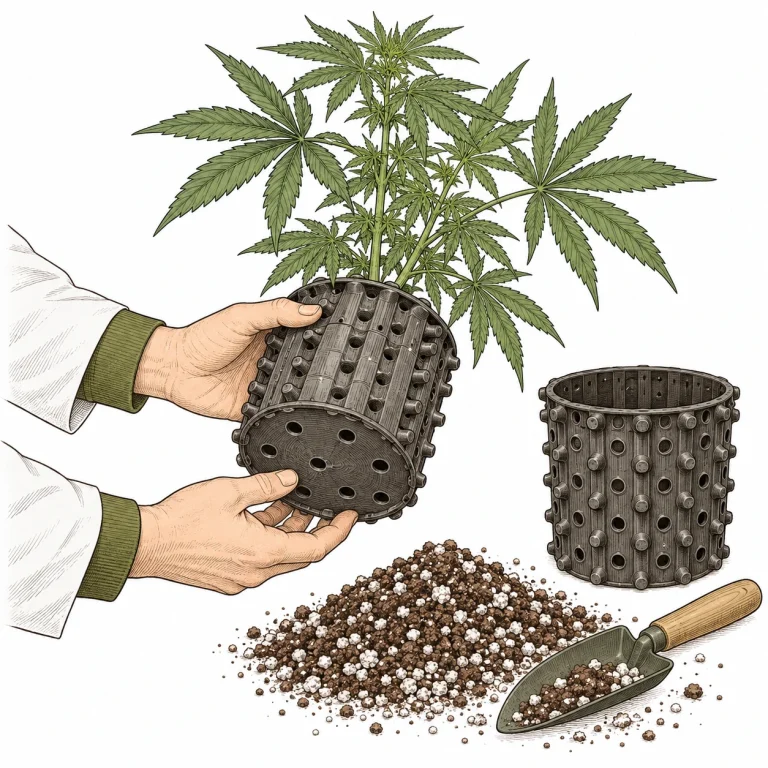
The first and most important step: stop watering right away. Let the growing medium dry out completely, until the pot feels noticeably lighter and the soil feels dry when you stick your finger in about 1–2 in (3–5 cm) deep. You can only avoid oxygen problems long term if you know how much water your plant really needs. Check out our guide to watering cannabis correctly for that too.
If your growing medium is too dense and holds too much water, improve it. If the roots are badly damaged, transplant into a new pot. For the fresh fill, mix new soil with 20 to 30 % perlite to improve drainage and aeration for good. Also make sure your pot has enough drainage holes, and empty the saucers after every watering.
If root rot has already set in, you can treat it with hydrogen peroxide (H2O2). A solution of 3 % H2O2 at about 11–19 ml per gallon (3–5 ml per liter) of water kills anaerobic bacteria and gives the root zone a short-term oxygen boost. Think of this as an emergency fix, not a routine. Beneficial organisms like trichoderma or mycorrhizal fungi can also help by stabilizing the root environment and supporting the roots as they recover. Don’t forget to check the pH of your water. The wrong pH blocks nutrient uptake on top of everything else and slows recovery. More on that in our article on pH for cannabis.
In hydroponic systems, you fix the problem by boosting your air pump’s output and bringing the water temperature below 72 °F (22 °C). Warmer water holds less dissolved oxygen, so be extra careful during the warm months.
- Stop watering right away until the growing medium is completely dry
- Lift or weigh the pot: noticeably lighter means it’s ready for water
- Mix 20–30 % perlite into your growing medium for better aeration
- Check drainage holes and enlarge them if needed
- Always empty saucers completely after watering
- Emergency treatment with an H2O2 solution for root rot
- Use beneficials like trichoderma to strengthen the roots
- Keep the pH of your water at 6.0–6.5 (soil)
Preventing Oxygen-Starved Cannabis Roots: The Right Setup From Day One
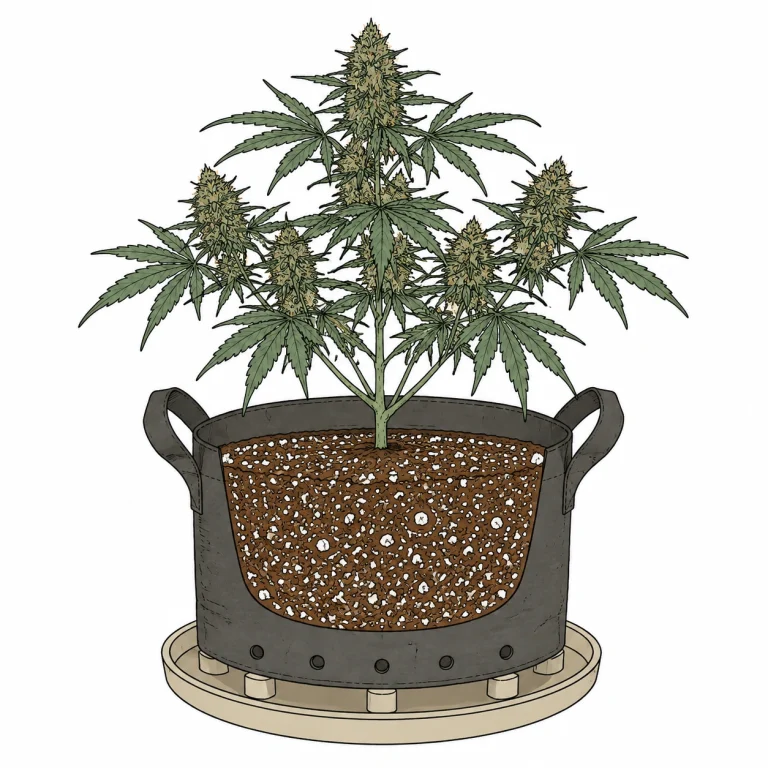
The best defense against low oxygen in the root zone is consistent prevention. Pick the right growing medium from day one: a quality cannabis mix with good structure, amended with at least 20 to 25% perlite, keeps the root zone well aerated for the whole grow. Skip cheap all-purpose potting soils. They’re often heavy and clay-like and can hold water for a very long time. Which types of perlite work best for loosening up your mix (German), we compare on a separate page.
Fabric pots, made from breathable fabric, are a great investment if you keep running into overwatering problems. They let air reach the roots from every side and also give you natural “air pruning”: when root tips hit the pot wall and meet air, they stop growing, and the plant puts out more lateral roots instead. The result is a dense, healthy root system with excellent oxygen supply.
Keep a close eye on your watering habits and only water once the pot feels noticeably lighter. A simple trick: lift the pot regularly. You’ll quickly get a feel for when your plant actually needs water. It also pays to check the pH of your medium regularly. A stable pH in the right range keeps nutrients available and supports the soil life that keeps your medium’s structure healthy over time. You’ll find everything you need to know about cannabis deficiencies in the Plant Diagnosis overview on PlantClue.
- Use fabric pots to aerate the root zone from every side
- Always amend your medium with perlite (20–25%)
- Water by pot weight, not by schedule
- Pot size: better too big than too small, but don’t go oversized for young plants
- Always empty saucers after watering
- Keep water temperature in hydro systems below 72 °F (22 °C)
- Check and adjust pH regularly
- Improve air circulation in your grow space – it also lowers the temperature of your medium
Low Root Oxygen in Cannabis: Key Differences Between Hydroponics and Soil
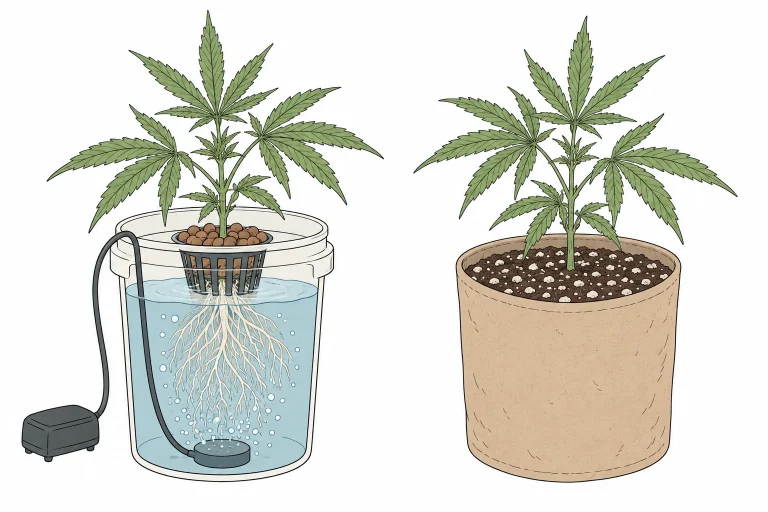
In soil, low root oxygen is mainly caused by overwatering and compacted medium, as described above. In hydroponic systems – especially Deep Water Culture (DWC) – the oxygen level of the nutrient solution is the deciding factor. Here the roots sit in water around the clock and depend on constant aeration from air pumps and air stones that push enough oxygen into the solution.
If aeration fails even briefly – say, from a dead pump or a clogged air line – the oxygen level in the solution can quickly drop below critical levels. It gets especially risky at water temperatures above 72 °F (22 °C): warm water physically holds less oxygen, which is why summer heat waves often trigger oxygen crises in hydro setups.
In NFT or aeroponic systems the risk is lower, since the roots are mostly exposed to air. Still, you should check regularly that all pumps and nozzles are working. One rule applies to every system: backup aeration with two independent pumps isn’t a luxury, it’s insurance. If you want to learn more about the basics of indoor growing, check out our in-depth Beginner’s Guide to Growing Cannabis Indoors.
- DWC: keep your air pump and air stone running 24/7
- Always keep hydro water temperature below 72 °F (22 °C)
- Plan for backup aeration in case a pump fails
- NFT and aeroponics: check nozzles and tubing for clogs regularly
- In soil: perlite ratio and pot choice make the difference
- In soil: always water based on what the plant actually needs
A related cause is root bound plants, where too little space in the pot also limits the oxygen supply to the roots. For a full overview of all root problems, see our article on cannabis root problems. Typical follow-up symptoms include drooping leaves, which can progress to wilting plants, as well as noticeably thin stems.
Frequently Asked Questions
How can I tell if my cannabis plant’s roots aren’t getting enough oxygen?
The most typical sign is droopy, limp leaves even though the soil is still wet or damp. Other clues include stalled growth, dark green leaves with curled edges and a rotten smell coming from the pot. If you can see the roots and they’re brown or black and slimy, root rot has already set in.
Can overwatering cause lasting damage to the roots?
Yes, chronic overwatering can cause lasting root damage. When roots go without oxygen for too long, the root tips die off and anaerobic bacteria start breaking down the root tissue. In advanced stages, this damage can be hard to fully reverse. That’s why spotting it early and acting fast matters so much.
How often should I water my cannabis plant to avoid oxygen deprivation?
There’s no one-size-fits-all schedule. The right approach is watering on demand: Lift the pot and only water once it feels noticeably lighter than right after your last watering. As an extra check, stick a finger about 1 to 2 in (3 to 5 cm) deep into the growing medium. If the soil feels dry at that depth, it’s time to water.
What’s the difference between root rot and oxygen deprivation?
Oxygen deprivation is the cause, and root rot is often the result. When roots go without oxygen for too long, anaerobic bacteria and fungi move in and break down the root tissue. That’s root rot. So a lack of oxygen can lead to root rot if you don’t fix it in time.
Does perlite really help prevent oxygen deprivation in the growing medium?
Yes, perlite is one of the most effective ways to prevent it. These small volcanic glass pebbles keep tiny air pockets open in the growing medium and improve drainage a lot. A mix of 20 to 30 percent perlite in your soil is a good rule of thumb. It prevents compaction and makes sure your roots always get enough air between waterings.
Can I still save a cannabis plant with root rot?
Yes, in early and moderate stages you can often save it. Stop watering right away, improve drainage and treat the root zone with a diluted hydrogen peroxide solution (3 % H2O2, 11–19 ml per gallon of water, or 3–5 ml per liter). With severe root rot, you may need to repot into a fresh growing medium. Biological plant boosters like trichoderma products can give recovery an extra push.
You’ll find airy growing medium components like perlite that help roots spread out in our recommended gear.
Bottom Line
A lack of oxygen at the roots is a serious problem for cannabis, but a very manageable one, as long as you catch it early. The right watering habits, a well-aerated growing medium and the right pot choice reliably protect your plant from low-oxygen conditions in the root zone. If you already see symptoms, act fast: Let it dry out, improve the growing medium and treat with H2O2 if needed. With what you’ve learned in this article, you have all the tools to keep your roots healthy and enjoy successful grows for the long haul.
