

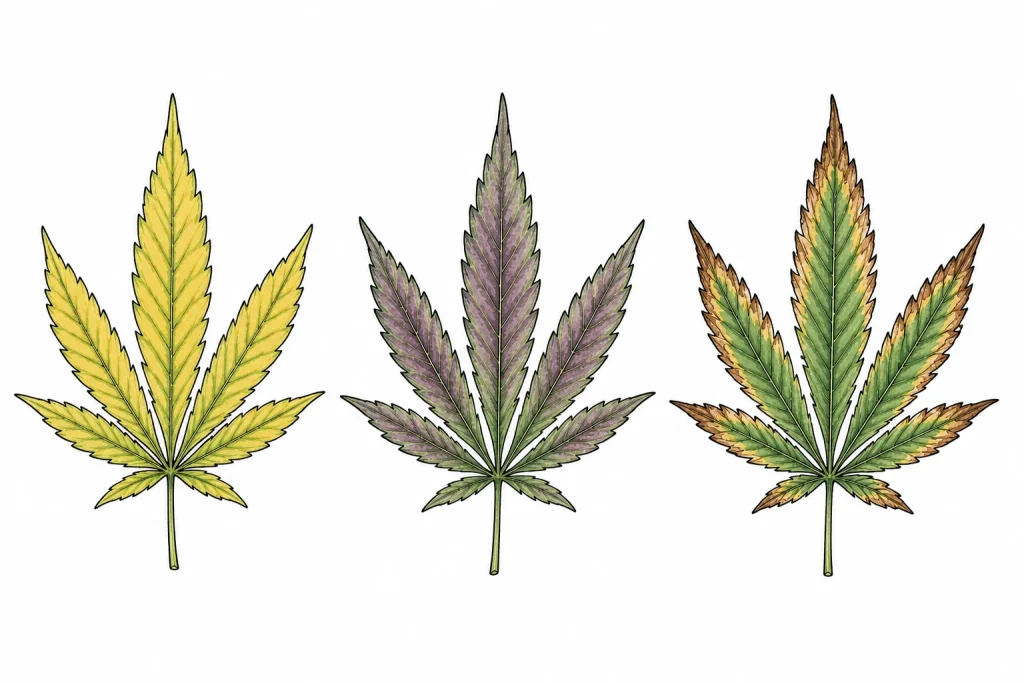
If you want to spot cannabis deficiencies, you need a clear overview — because the symptoms of different deficiencies often look deceptively alike. A nitrogen deficiency can cause yellow leaves just like a magnesium deficiency or the wrong pH. In this cannabis deficiency chart you get a structured overview of all the important nutrient deficiencies in cannabis, learn to tell them apart by their specific symptoms and know right away what to do. For more in-depth diagnosis, also check out our Plant Diagnosis overview on PlantClue.
Whether you call it cannabis, weed or hemp makes no difference to the deficiency symptoms — it’s the same plant, and the overview below applies either way.
Why spotting cannabis deficiencies matters so much
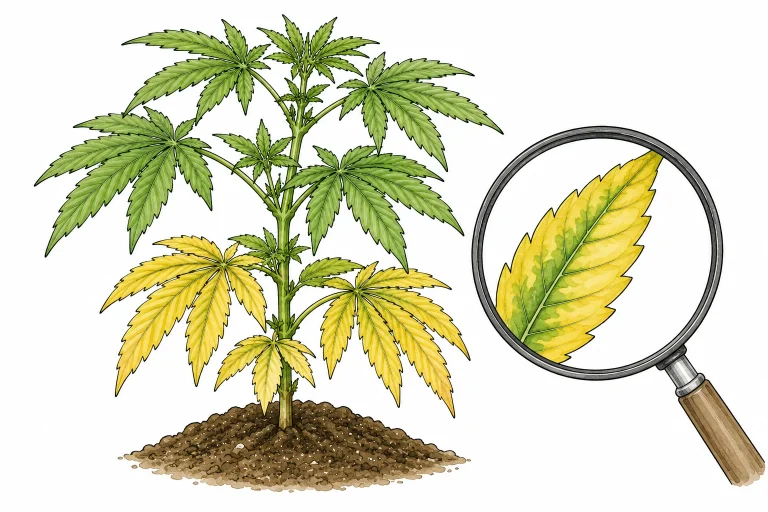
Nutrient deficiencies are among the most common problems when growing cannabis — both indoors and outdoors. The good news: most deficiencies can be spotted and fixed early if you know what to look for. The bad news: almost all deficiencies show up on the leaves first, and many symptoms overlap. That’s why a systematic approach is key.
Before you correct anything, always check two things: first, the pH of your water and growing medium; second, whether you’re feeding too much or too little in the first place. The wrong pH is the most common reason nutrients are present in the medium but the plant can’t take them up — known as nutrient lockout. Be sure to read our article on cannabis pH to rule out this mistake.
Basically, we distinguish between mobile and immobile nutrients. The plant can move mobile nutrients such as nitrogen, phosphorus, potassium and magnesium from older leaves to new growth. That’s why a deficiency shows up first on the lower, older leaves. Immobile nutrients such as calcium, iron, manganese and sulfur can’t be moved — here, deficiencies show up first on the young leaves and growing tips.
- Mobile nutrient deficiency → lower/older leaves affected first
- Immobile nutrient deficiency → upper/younger leaves affected first
- Always check pH first (soil: 6.0–7.0 / hydro: 5.5–6.5)
- Nutrient burn and a deficiency can happen at the same time
- Stress from light, temperature or pests can mimic deficiencies — so when diagnosing, always check temperature, humidity and light intensity too before you add more nutrients
Cannabis nutrient deficiency chart: the primary nutrients NPK
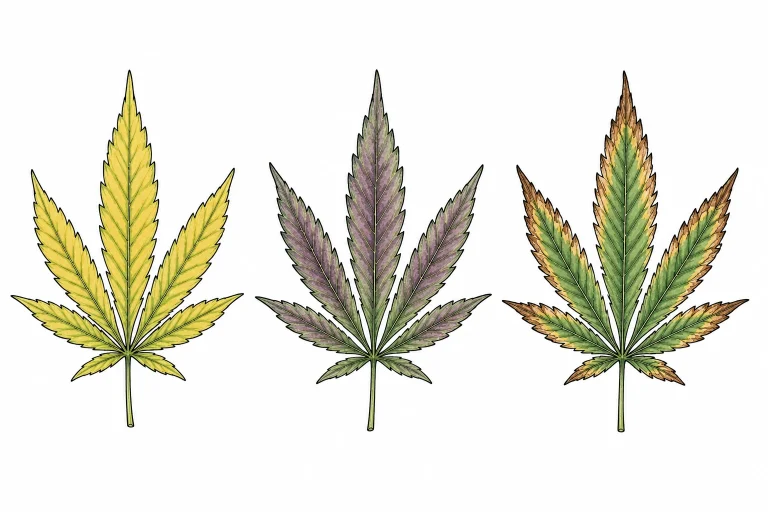
The three primary nutrients nitrogen (N), phosphorus (P) and potassium (K) are needed in the largest amounts. So it’s no surprise that deficiencies are common here — especially in plants that haven’t been fed for a long time or whose pH has gotten out of hand.
Nitrogen deficiency is by far the most common deficiency when growing cannabis. It always starts on the lowest, oldest leaves: they turn yellow evenly from the outside in, while the leaf veins stay green at first. Over time the leaves turn completely yellow, then light brown, and finally drop off. As it progresses, the yellowing moves up the plant. Nitrogen deficiency often occurs when the growing medium has run out of nutrients, when the pH is too low or when drainage is too poor. The fastest fix: give a nitrogen-rich liquid nutrient at the correct pH.
Phosphorus deficiency also shows up first on the lower leaves. The telltale sign is a distinctive purple to red discoloration on the undersides of the leaves and on the stems — sometimes on the top of the leaves too. The leaves can get darker and look almost blue-green before necrotic brown spots form. Phosphorus deficiency is common when the pH is too low (below 6.0 in soil) or when the growing medium is very cold — because cold blocks phosphorus uptake. This is especially relevant for outdoor grows in the fall.
Potassium deficiency shows up as necrotic, brown leaf edges — the leaves look as if they’ve been burnt. First the edges of the older leaves turn yellow, then brown and dry. As it progresses, the leaves often curl up or inward. With potassium deficiency, too, the older leaves are affected first. Too much nitrogen can block potassium uptake, and so can a pH above 7.0 in soil. Good to know: paradoxically, too much potassium can push out other cations such as calcium and magnesium — so overdoing potassium can trigger a calcium deficiency even though there’s enough calcium available.
- Nitrogen deficiency (N): even yellowing of the lower leaves, leaf veins stay green
- Phosphorus deficiency (P): purple/reddish discoloration on leaf undersides, dark leaves, brown spots
- Potassium deficiency (K): brown, necrotic leaf edges that look burnt, leaves curl up
- All three: older/lower leaves affected first (mobile nutrients)
- A pH check before any correction is a must
Secondary nutrients: spotting calcium, magnesium and sulfur deficiency
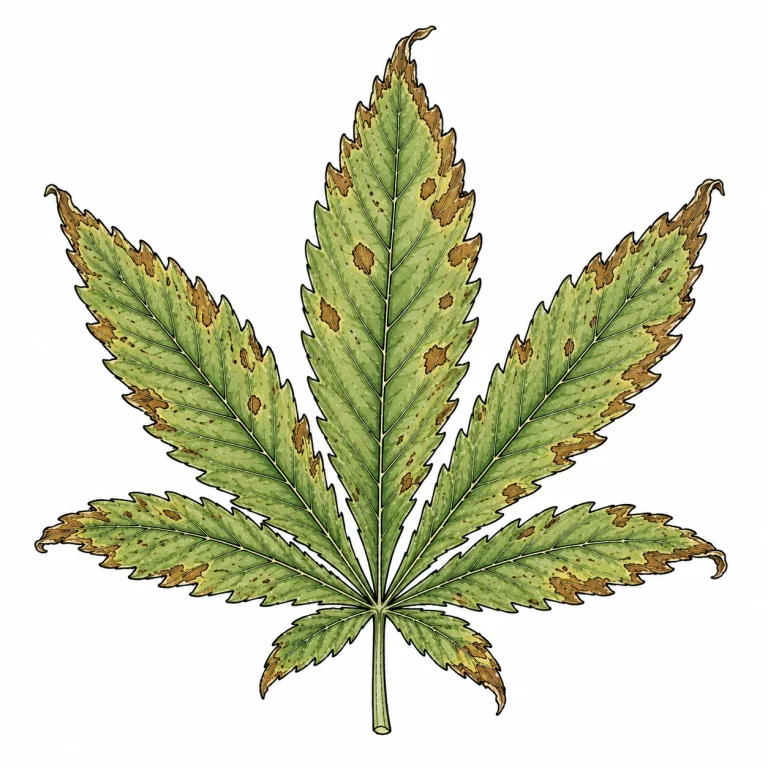
Calcium, magnesium and sulfur are needed in somewhat smaller amounts than NPK, but they’re essential for healthy growth. Magnesium deficiency and calcium deficiency are among the most common diagnoses we see at PlantClue — often together, since the uptake of the two nutrients affects each other.
You can recognize magnesium deficiency by interveinal chlorosis — meaning the areas between the leaf veins turn yellow while the veins themselves stay green. This pattern appears first on the middle to lower leaves (magnesium is mobile), but it can spread quickly. The leaves take on a marbled, yellow-green look. In later stages, brown, necrotic spots form. Magnesium deficiency is common when you use reverse osmosis water (RO water) or when the pH is too low. A Cal-Mag liquid supplement usually fixes both deficiencies at once. If you grow organically, you can correct it with dolomite lime instead, or with Epsom salt (magnesium sulfate).
Calcium deficiency is an immobile deficiency, so it shows up first on young leaves and growing tips. The symptoms: irregular brown spots on the leaves, deformed or curled new shoots, sometimes dead growing tips. The leaves often look wavy or ragged. Calcium deficiency is especially common in coco and when using RO water, because both naturally contain very little calcium. Our detailed article on calcium deficiency in cannabis walks you through all the symptoms step by step.
Sulfur deficiency is rarer, but it does happen. It shows up as even yellowing of young leaves (immobile) — it looks a lot like nitrogen deficiency, but affects new leaves instead of old ones. In severe cases, the stems turn pink or purple. Sulfur deficiency occurs mainly in fully synthetic nutrient lines without a sulfate component.
- Magnesium deficiency: interveinal chlorosis (veins green, spaces between them yellow) — middle to lower leaves
- Calcium deficiency: brown spots + deformed shoots — young leaves and growing tips
- Sulfur deficiency: even yellowing of young leaves (easy to confuse with N deficiency!)
- Ca and Mg deficiencies often appear together — use a Cal-Mag supplement in a targeted way
- Coco and RO water: especially high risk of Ca/Mg deficiency
Spotting micronutrient deficiencies in cannabis: iron, manganese, zinc and more
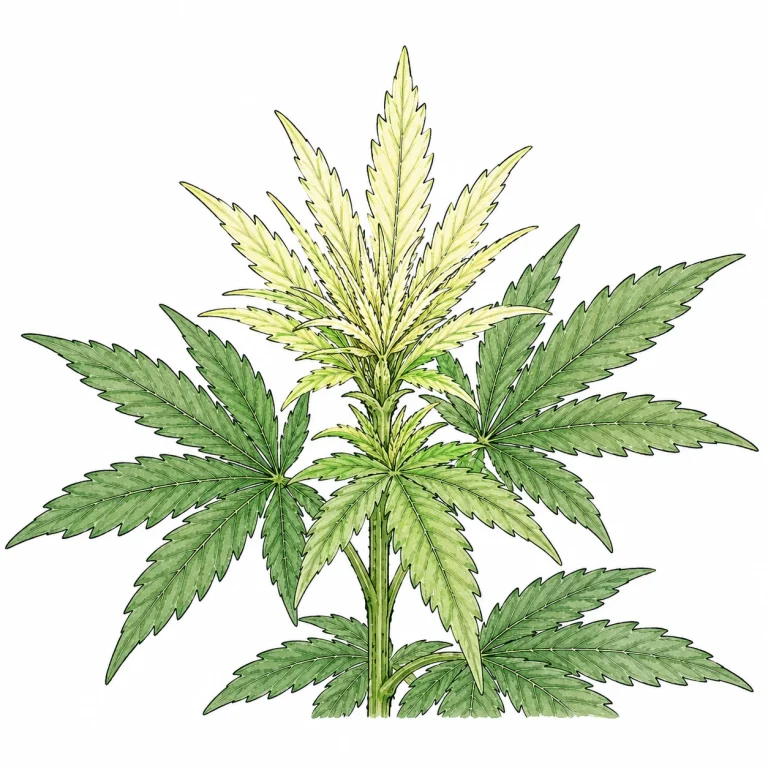
Micronutrients are only needed in tiny amounts, but they’re essential for important metabolic processes. Micronutrient deficiencies almost never come from an actual lack of nutrients in the growing medium — they’re almost always caused by an unfavorable pH that blocks uptake. Iron deficiency at pH 7.5 in soil is a classic example. You’ll find a detailed article on this at spotting iron deficiency in cannabis.
Iron deficiency shows up as intense yellowing of the young leaves and growing tips while the leaf veins stay green — interveinal chlorosis like with magnesium deficiency, but only on new leaves (iron is immobile). In extreme cases the leaves turn almost white. Since iron can barely be taken up at a pH above 7.0, the first step is always to bring the pH down before you add iron-containing nutrients.
Manganese deficiency looks a lot like iron deficiency — here, too, you get interveinal chlorosis on young leaves. The difference: with manganese deficiency, small brown dots or spots often appear in the yellowed areas, which is less common with iron deficiency alone. Manganese becomes less available at a pH above 6.5 in soil. The two deficiencies sometimes occur together. You’ll find a detailed article on this at spotting manganese deficiency in cannabis.
Zinc deficiency shows up as twisted, narrow or abnormally small new leaves — the internodes (the spaces between leaf pairs) get very short, and the plant looks stunted and compressed. The leaves can also yellow between the veins. Read more in our detailed article spotting zinc deficiency in cannabis. Boron deficiency shows up as deformed, disrupted growth at the growing tips, which often die off or fail to unfold, while molybdenum deficiency tends to affect older leaves, causing yellow spots between the veins there that are easily mistaken for nitrogen deficiency. Copper deficiency is very rare and shows up as bluish, shiny leaves that curl. Read more in our article spotting copper deficiency in cannabis.
- Iron deficiency: intense chlorosis of young leaves (almost white), veins green — pH usually too high
- Manganese deficiency: like iron deficiency + brown dots in yellow areas — pH usually too high
- Zinc deficiency: twisted, narrow, small new leaves — short internodes
- Boron deficiency: deformed, dying growing tips
- Copper deficiency: bluish, shiny, curling leaves (very rare)
- Micronutrient deficiencies are almost always pH-related → fix the pH first!
Cannabis deficiency chart: the quick diagnosis table
The quick overview below helps you narrow down your plant’s deficiency systematically. First look at which leaves are affected (old/young), then at which symptom dominates.
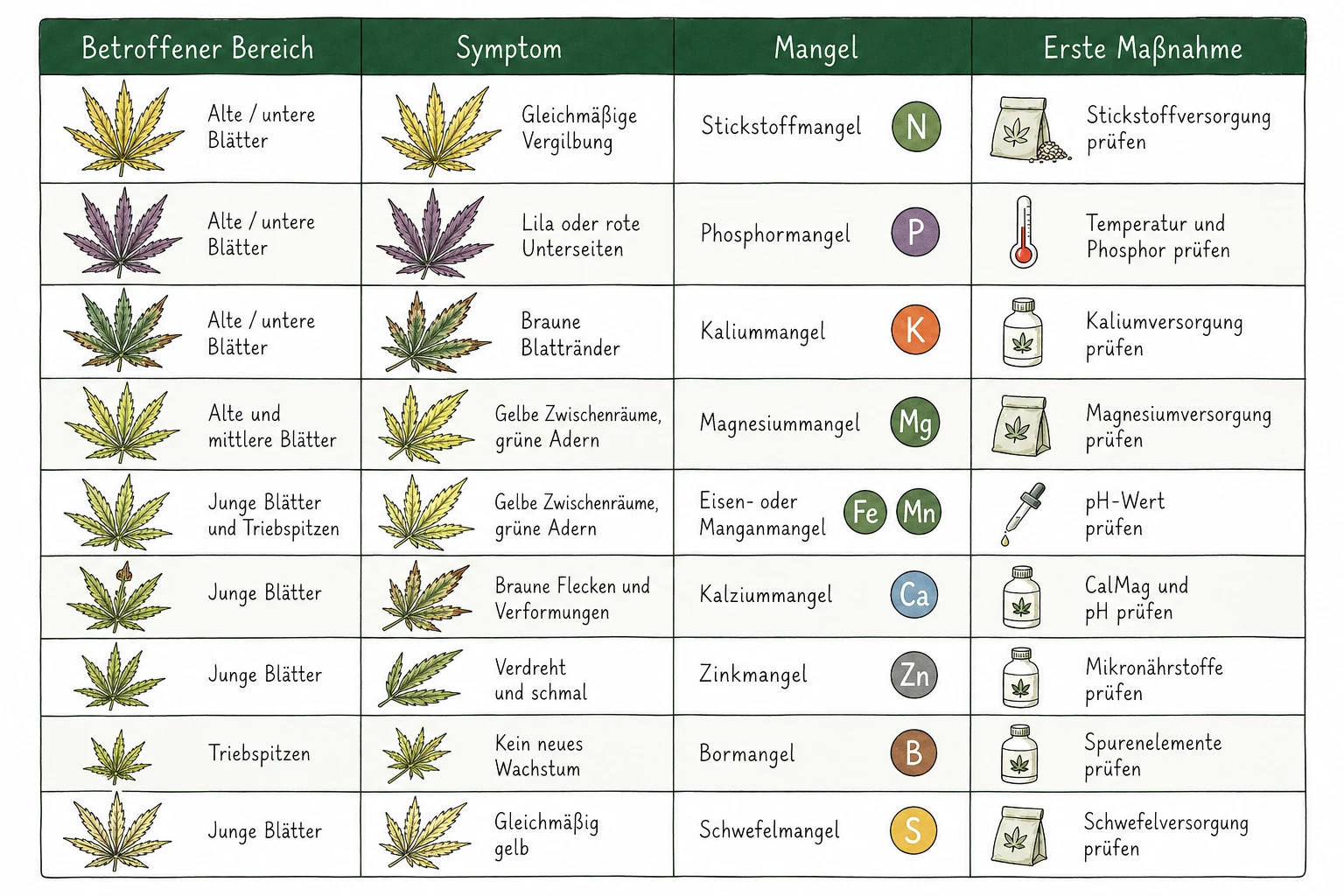
If you’re unsure about your diagnosis, we recommend our complete guide in the Plant Diagnosis overview on PlantClue. There you’ll find the matching in-depth article for every symptom. Also keep in mind that yellow cannabis leaves don’t always mean a nutrient deficiency — overwatering, underwatering, pests and light problems can cause identical symptoms.
Common mistakes when spotting and fixing cannabis deficiencies
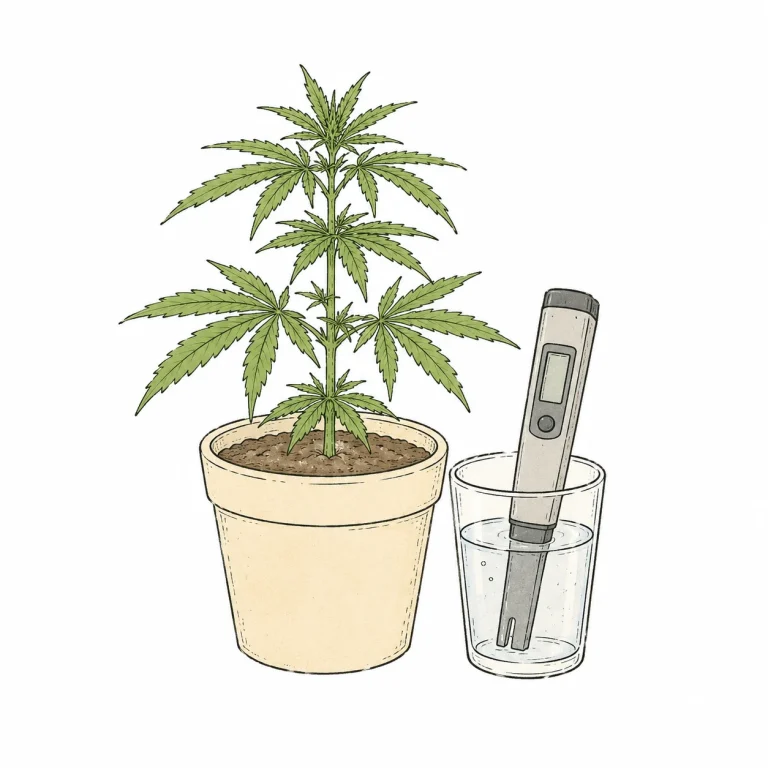
The most common mistake: feeding right away without checking the pH. If your pH is off, extra nutrients won’t solve the problem — on the contrary, you risk adding nutrient burn on top. Always make sure your pH is in the optimal range (soil: 6.0–7.0, coco: 5.8–6.3, hydro: 5.5–6.0) before you step in. You’ll find everything on the topic in our article on cannabis pH.
Mistake number two: overdoing it with the correction. If you spot a nitrogen deficiency and immediately give three times the amount of nutrients, you can push the plant into acute nutrient burn. Better: increase slowly, watch how the plant responds, then keep adjusting. Cannabis nutrient burn is often harder to fix than the original deficiency.
Mistake number three: trying to fix several deficiencies at once. If you see symptoms of nitrogen, potassium and iron deficiency, check the pH first. Often two of the three symptoms disappear as soon as the pH is right. Only then should you go after the remaining deficiency. Wait at least 5–7 days after each step before you intervene again — cannabis needs time to show visible improvement. New leaves grow in healthy after a correction; old, damaged leaves won’t fully recover.
Mistake number four: reading watering mistakes as a deficiency. Overwatering and root problems often cause symptoms similar to nutrient deficiencies — wilting, drooping leaves, yellowing. Learn how to water cannabis properly before you think about nutrients.
- Always check pH before you adjust your nutrients
- Make corrections slowly and step by step — never overdo it
- Change only one variable at a time
- Wait 5–7 days and observe after each step
- Old, damaged leaf tissue won’t recover — watch the new leaves
- Rule out watering habits as a common cause
Cannabis nutrient deficiency chart: what to do right away if you suspect a deficiency
No matter which deficiency you’re dealing with: go through these steps right away before you start targeted feeding.
- Measure the pH of your growing medium or runoff — see how to adjust cannabis pH. The wrong pH blocks nutrient uptake, even if you’re feeding enough.
- Check the EC (electrical conductivity) — see how to measure EC for cannabis. An EC that’s too high can mimic a deficiency, because salt stress stops the roots from taking anything up.
- Flush the growing medium with twice its volume of pH-adjusted water if you can’t rule out nutrient burn.
- Take a photo of the affected leaf and compare it with the quick diagnosis table above instead of feeding right away.
- Only AFTER this check should you add the missing nutrient in a targeted way — feeding at random often makes things worse.
Cannabis nutrient deficiency chart: prevention beats treatment
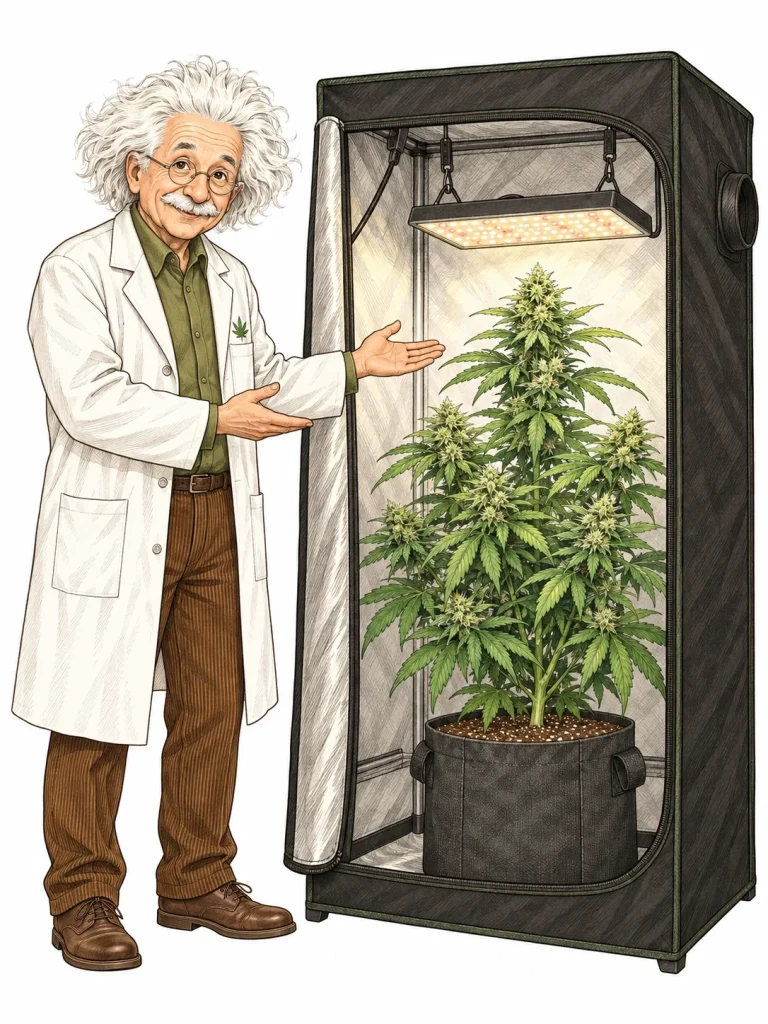
The best protection against nutrient deficiencies is solid prevention. If you get the growing conditions right from the start, you’ll rarely face serious deficiencies. It starts with choosing your growing medium: a high-quality cannabis soil with a balanced NPK starter charge will usually feed your plant for the first 4–6 weeks without extra nutrients. After that, you should support it regularly with a complete liquid nutrient.
Regular pH checks are essential. Measure the pH of your water before every watering, and check the pH of your growing medium or runoff every 2–3 weeks. A stable pH prevents most micronutrient deficiencies from the start. Quality meters quickly pay for themselves through the nutrients you save and the problems you avoid.
Observe your plants every day. Early signs of deficiencies — slight yellowing, minimal discoloration — are much easier to fix than advanced deficiencies. A quick daily check of your plants, where you look specifically at leaf color, growth habit and new shoots, is the cheapest prevention you can get. Over time you’ll develop an eye for the typical early signs and can step in right away before serious damage is done.
Keep in mind: too much of a nutrient is just as harmful as too little. If you overcorrect in the name of prevention and feed far more than needed, you risk a toxicity instead — the symptoms of boron, manganese, calcium and iron toxicity often look strikingly similar to a deficiency, but have the exact opposite cause. A wrongly dosed Cal-Mag supplement can also tip things in either direction.
- Choose a high-quality growing medium with a balanced starter charge
- Check the pH of your water before every watering
- Use a complete base liquid nutrient from week 4–6 on
- Check your plants daily for early signs of deficiencies
- Test your runoff regularly for pH and EC
- Always add a Cal-Mag supplement with coco and RO water
Depending on the symptom, it’s worth taking a closer look: red stems, leaf claw, light green leaves, yellow leaf tips, brown leaf tips or stunted growth often have a specific cause that goes beyond a general deficiency.
Frequently asked questions
How can I tell whether my cannabis plant has a deficiency or nutrient burn?
With a deficiency, usually only certain parts of the leaf or certain leaf generations (old vs. young) turn yellow or discolor, and the plant grows more slowly. With nutrient burn, you often see burnt leaf tips and edges (brown, dry margins) on many leaves at once, and the EC of the runoff is very high. Always check the pH first, since many deficiency and nutrient burn symptoms are triggered by the wrong pH.
Why is my plant showing deficiency symptoms even though I feed regularly?
That’s classic nutrient lockout. If the pH is outside the optimal range, nutrients can’t be taken up — no matter how much you feed. Check your pH right away. Soil should be between 6.0 and 7.0, coco between 5.8 and 6.3. Correct the pH and wait 5–7 days before you take any further steps.
How long does it take for a nutrient deficiency to improve after treatment?
Leaf tissue that’s already damaged won’t fully recover — old yellow or brown leaves stay that way. But new leaves that grow after your correction should come in healthy and green again. The first improvements usually show on the new growth after 5–10 days. Patience is key here.
Which deficiencies are most common in the flowering stage?
Potassium and phosphorus deficiencies are especially common in the flowering stage, because the plant’s demand for these nutrients rises during flowering. Calcium and magnesium deficiencies are also common, because the plant puts an enormous amount of resources into building buds during flowering. Nitrogen is deliberately reduced in late flowering (flush), which leads to slight yellowing of the lowest leaves — that’s normal and not a problem.
Can I fix nutrient deficiencies faster with foliar feeding?
Yes, foliar feeding (foliar spray) can work faster than feeding through the root zone for some deficiencies, because the nutrients are absorbed directly through the leaves and bypass the pH of the growing medium. This is especially useful for iron, manganese or magnesium deficiency. Only spray under dimmed light or during the dark period to avoid leaf burn. Foliar feeding is a stopgap — you still need to fix the cause in the growing medium.
How do I tell magnesium deficiency from iron deficiency?
Both show interveinal chlorosis (yellow areas between green veins), but the key difference is which leaf generation is affected. Magnesium deficiency is a mobile deficiency and appears first on older, lower leaves. Iron deficiency is immobile and shows up only on young leaves and growing tips. If the youngest leaves at the top are almost white, iron deficiency is likely — check your pH in that case.
You’ll find a hand-picked selection of proven nutrients for every deficiency in our Recommended Gear.
Conclusion
Spotting and correctly classifying cannabis deficiencies is a skill you can pick up quickly with a little practice and the right knowledge. The most important first step is always the pH — in most cases it’s the real cause, even when the deficiency looks like something else. With our overview, you can quickly narrow down which nutrient is missing based on the affected leaf generation and the symptoms, and act in a targeted way. Keep up to date with the Plant Diagnosis overview and our in-depth articles — because a healthy plant starts with an informed grower.
