

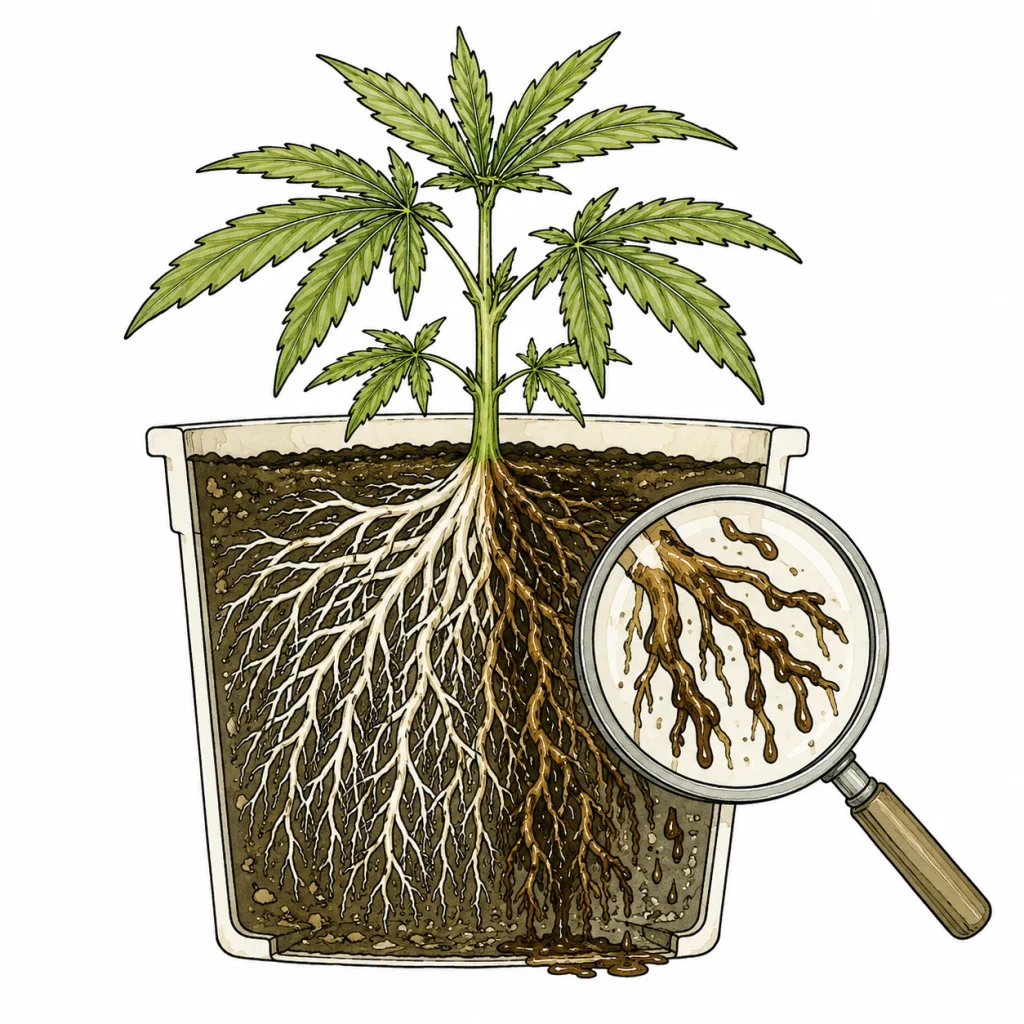
Spotting cannabis root rot is one of the most important skills any grower can have. This sneaky disease destroys your plant from the inside out, long before you see anything on the leaves. In hydro systems and in a growing medium that stays too wet, root rot can spread incredibly fast and kill a healthy plant within just a few days. If you know what to look for, you can catch the warning signs early and step in before the damage can’t be undone. Here you’ll learn which symptoms to watch for, what the most common causes are, and which concrete steps can actually save your plant.
What Is Cannabis Root Rot and How Does It Start?
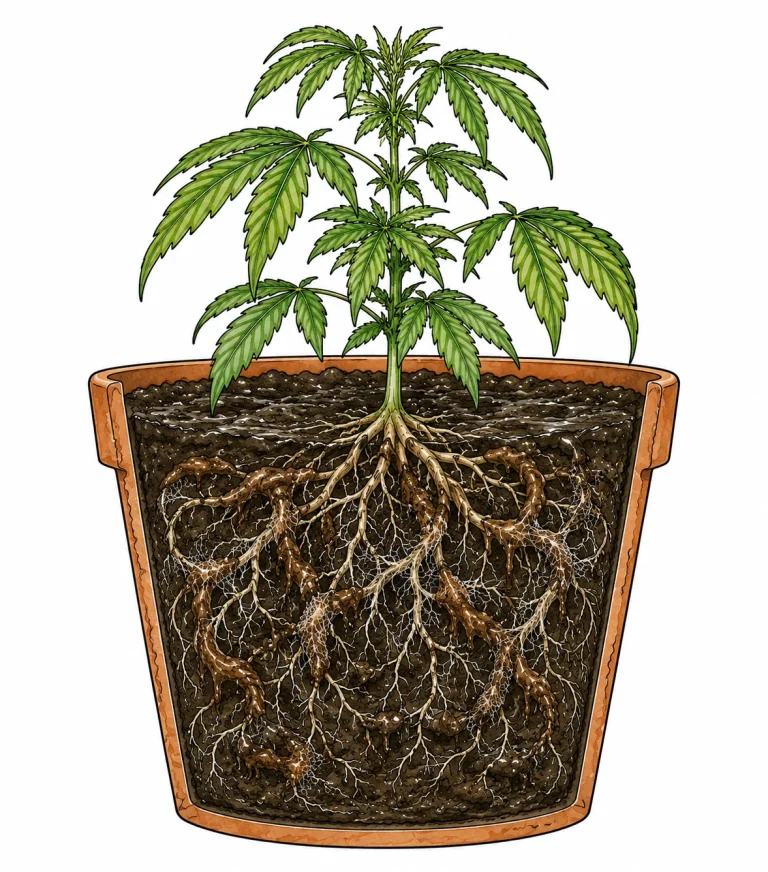
Root rot in cannabis is a disease of the root system. In most cases, it’s caused by water-loving oomycetes. The most common culprit is Pythium sp., a so-called “pseudo-fungus” that actually belongs to the water molds. Fusarium, Phytophthora and Rhizoctonia species can also be involved. All of these pathogens have one thing in common: they thrive in wet, low-oxygen conditions and attack roots that are already weakened by stress.
Root rot almost always comes down to too much moisture in the growing medium or the nutrient solution. When roots stay wet all the time and don’t get enough oxygen, the plant’s natural defenses break down. The pathogens take advantage of that moment, invade the root tissue and break down the cells from the inside. Hydro and DWC (deep water culture) systems are especially at risk, because the roots are constantly in contact with water and the water temperature can quickly climb into the danger zone.
Water temperature is another key factor. If the water in your hydro system stays above 72–75 °F (22–24 °C), dissolved oxygen drops sharply while Pythium and friends multiply much faster. Poor or missing aeration of the growing medium, overly dense soil and poor pot hygiene also set the stage for an outbreak. The same thing can happen in soil grows when you water too often and too much: the soil stays soaked and never gets the dry-back it needs between waterings.
Struggling plants are especially vulnerable. Stress from nutrient deficiencies, pH swings or physical damage to the roots basically rolls out the red carpet for pathogens. That’s why a stable overall environment is your best defense against root rot.
- Most common pathogens: Pythium, Fusarium, Phytophthora, Rhizoctonia
- Main cause: constantly wet, low-oxygen growing medium or nutrient solution
- Hydro/DWC risk zone: water temperatures above 72–75 °F (22–24 °C) give pathogens a huge boost
- Roots weakened by pH problems or nutrient deficiencies are more vulnerable
- No dry-back between waterings in soil grows is a classic trigger
Rhizoctonia in Cannabis: How This Pathogen Differs From Pythium
Unlike Pythium, Rhizoctonia solani isn’t a water mold but a true soil fungus. The infection itself also starts when the soil is very moist, but the visible damage usually shows up afterward, when a wet spell is followed by warm, drier weather. That sets Rhizoctonia clearly apart from the constantly wet conditions where Pythium is most active.
Rhizoctonia is most dangerous for young seedlings: the fungus attacks the stem base right at the soil line and causes a pinched, dry-looking lesion there – classic damping-off. You’ll find more about how this looks in young plants in the article Cannabis Seedling Falling Over.
On older plants, Rhizoctonia mainly attacks the stem base and the fine roots. The lesions range from reddish-brown to dark brown and at first look dry and sunken rather than slimy and wet. As the infection progresses, the roots also turn brown and soft. That initially dry, firm texture is the most important way to tell it apart from Pythium, where the roots are slimy and mushy right from the start.
Prevention follows the same basic rules as with the other root rot pathogens: even moisture without waterlogged soil, good drainage and clean growing conditions. Products containing trichoderma work not only against Pythium but also against Rhizoctonia, because they crowd out the fungus in the growing medium before it can reach the roots.
How to Spot Cannabis Root Rot: Symptoms You Should Know
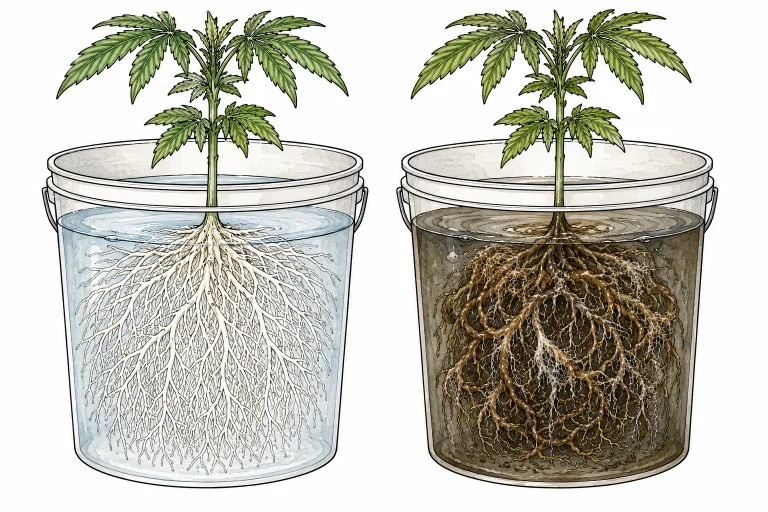
The most reliable way to spot cannabis root rot is to look at the roots themselves. Healthy cannabis roots are bright white to creamy white, firm and slightly fuzzy, and they smell neutral to mildly earthy. Infected roots turn brown, gray or even black. They get soft, slimy and mushy, and they give off a rotten, sweetish-musty smell. In advanced stages, whole sections of the root mass can fall apart at the slightest touch.
In a DWC or hydro system, you can check the roots directly by lifting the lid of the bucket or tote. In soil it’s trickier: you have to gently slide the plant out of its pot to see what the roots look like. Don’t just check the root tips. Also look at the root crown right below the surface of the growing medium. In soil grows, rot often starts there first.
Besides the root symptoms, your plant usually shows warning signs above ground too. These include sudden wilting even though the growing medium is still wet (one of the clearest signs!), yellow or brown leaf edges, poor growth, drooping leaves even while the lights are on, and the plant generally “giving up” for no obvious reason. If your plant stalls or goes downhill fast even though your watering and feeding are on point, check the roots right away. You can learn more about yellow leaves as a possible symptom in our article on cannabis with yellow leaves.
At first glance, the above-ground symptoms look a lot like overwatering or a nutrient deficiency, which makes the diagnosis tricky. The key difference: root rot often produces a distinct rotten smell that hits you the moment you open the pot or the hydro system. That smell is a clear red flag. Never ignore it.
- Roots brown, gray or black instead of white
- Roots slimy, mushy, falling apart when touched
- Strong rotten or musty-sweet smell coming from the growing medium
- Plant wilting even though the soil is moist – a classic warning sign
- Yellow leaves, brown edges, stalled growth for no clear reason
- Leaves hang limp even while the lights are on
- Plant goes downhill fast even with proper care
Treat Cannabis Root Rot Right Away: These Steps Can Save Your Plant
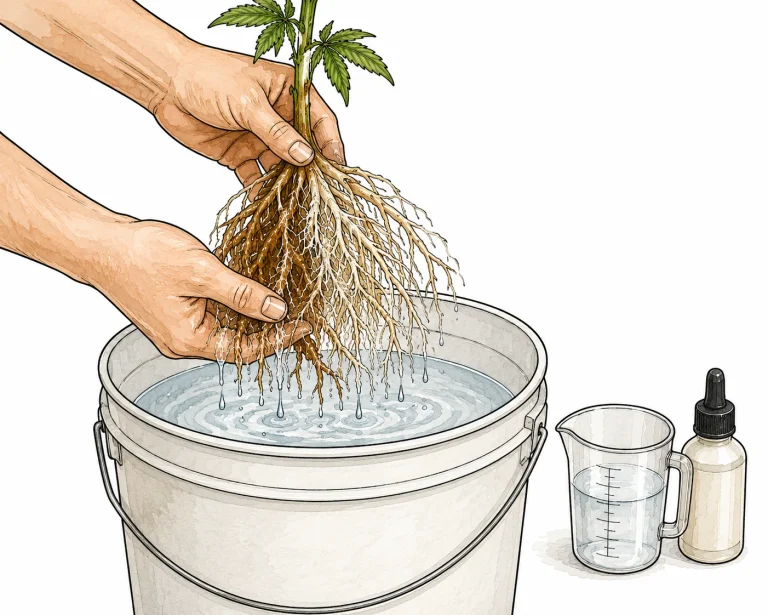
If you catch root rot early, you have a good chance of saving your plant. The key is to act fast and be thorough. Step one is always removing every infected part of the roots. Use clean, sanitized scissors or a scalpel and cut away all brown, slimy sections completely until you reach healthy white tissue. Wipe your tool with isopropyl alcohol after every cut so you don’t spread the infection.
Next, treat the remaining roots with a hydrogen peroxide solution (H2O2). Use 3% H2O2 and mix it 1:5 with clean water. Soak the cleaned roots for 30–60 minutes or rinse them thoroughly with the solution. The hydrogen peroxide kills off remaining pathogens and also boosts the oxygen level in the water, which helps the roots recover.
Hydro systems need a complete clean and sanitize – no shortcuts. Empty the bucket completely, clean every surface with a diluted H2O2 solution or a dedicated hydro cleaner, and refill the system with fresh, oxygen-rich water. Keep your water temperature below 72 °F (22 °C) at all times and max out aeration with strong air pumps and air stones. For soil grows: remove as much of the old, wet growing medium as you can, repot into fresh, loose soil, and stop watering completely for a few days so the medium can dry out.
Biological allies are a great addition to mechanical and chemical treatment. Products based on trichoderma fungi or Bacillus subtilis colonize the root zone (rhizosphere) and crowd out pythium and other pathogens for the long haul. You can add these beneficials to hydro systems and soil grows alike, and they work both as prevention and as treatment. Add them after the H2O2 treatment, since hydrogen peroxide kills beneficials too – wait at least 24 hours after treating before you add trichoderma or Bacillus.
While your plant recovers, stress it as little as possible. Cut your nutrients to about half the normal dose: damaged roots can’t take up as much, and nutrient burn would only make things worse. Also check the pH of your water and nutrient solution regularly. A stable pH between 5.8 and 6.2 (hydro) or 6.0 and 6.8 (soil) is essential for root recovery. Learn how to dial in the pH for cannabis correctly in our in-depth guide.
- Step 1: Cut away all brown, slimy root sections with sanitized tools
- Step 2: Rinse the remaining roots with 3% H2O2 (diluted 1:5 with water)
- Step 3: Clean and sanitize your entire hydro system
- Step 4: Keep your water temperature below 72 °F (22 °C) at all times and max out aeration
- Step 5: Add trichoderma or Bacillus subtilis (24 h after the H2O2 treatment)
- Step 6: Cut nutrients back to 50% and keep your pH stable
- Soil grows: Repot into fresh growing medium and hold off on watering for a while
Preventing Root Rot in Cannabis: How to Protect Your Root System for Good
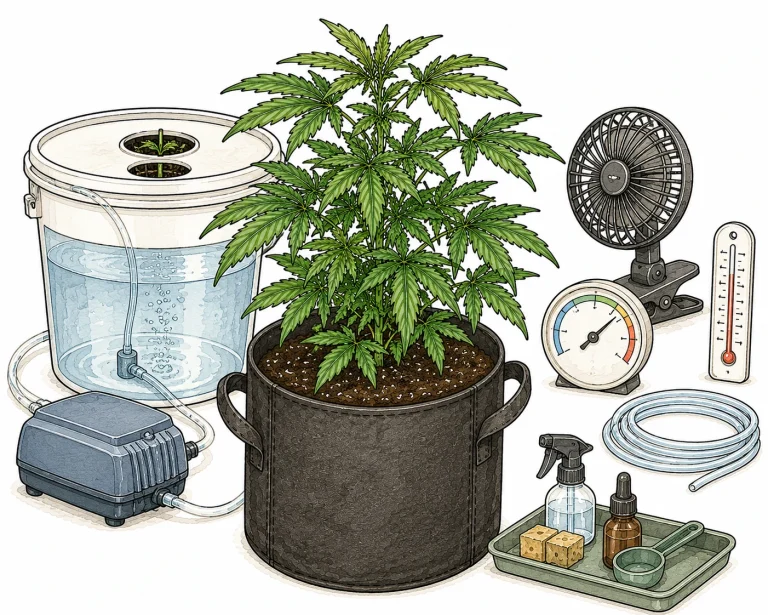
Your best strategy against root rot in cannabis is consistent prevention. Once it breaks out, it can cause serious stress and yield loss, even if you react fast. The most important factor is how you water. In a soil grow, only water again once the top inch (2–3 cm) of the medium is dry and the pot feels noticeably lighter. This “wet-dry cycling” encourages healthy root growth: during the dry phases, roots actively search for water and grow deep and well branched. We cover how to water your cannabis the right way in detail in our article How to Water Cannabis.
For hydro grows: Keep your water temperature between 64 and 72 °F (18–22 °C). Use an aquarium thermometer so you can monitor it around the clock. If needed, cool the water with a water chiller or with frozen water bottles (PET plastic, nothing that contains plasticizers). Keep plenty of oxygen in the water with powerful air pumps, several air stones and regular reservoir changes.
Hygiene is everything. Thoroughly clean and sanitize all pots, tubing, buckets and tools between grows. Mold, fungal and bacterial spores survive in cracks and on surfaces and can infect your next grow right away. Don’t reuse any growing medium without sterilizing it first – soil from old grows is a classic source of infection. Regular preventive doses of products containing trichoderma (for example as a tea or added straight to your water) build a stable microbial shield around the roots.
The right growing medium matters a lot, too. Use loose, well-aerated soil with a high perlite content (20–30%) or coco coir – both improve drainage and help prevent waterlogging. Avoid heavy, clay-rich soils without amendments, since they tend to compact and stay poorly aerated. In the grow room itself, good climate control (relative humidity below 60%, plenty of air circulation) creates an environment where mold and water molds (oomycetes) generally have a harder time.
- Wet-dry cycling in soil: only water once the top layers are dry
- Keep your hydro water temperature below 72 °F (22 °C) at all times
- Max out nutrient solution aeration with air pumps and air stones
- Use trichoderma or Bacillus subtilis preventively, starting at germination
- Use growing media with 20–30% perlite for better drainage and aeration
- Fully sanitize gear, pots and your hydro system between grows
- Never reuse growing medium without sterilizing it
- Keep relative humidity below 60% and make sure air keeps moving
Spotting Cannabis Root Rot in Hydro vs. Soil: The Key Differences
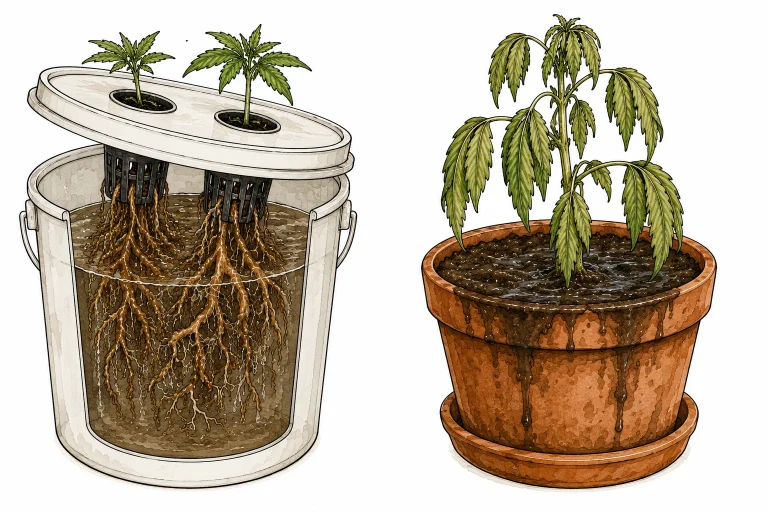
The pathogens behind root rot in cannabis are the same in both growing methods, but symptoms, detection and treatment differ depending on your system. In a hydro or DWC system, you have one big advantage: you can inspect the roots directly at any time. Lift the lid, and if you see brown, slimy roots instead of healthy white tissue, the diagnosis is clear right away. In hydro, you’ll also often notice root rot earlier thanks to cloudy water and the telltale rotten smell coming off the system.
In a soil grow, root rot often stays hidden longer because you can’t just take a look. Here you need to watch the symptoms above the soil line: wilting even though the medium is moist, stalled growth and yellow leaves. The pot test can help. If the pot feels unusually heavy and smells musty even though you haven’t watered in a while, that points to a medium that stays too wet and possibly root rot. When in doubt, gently slide the plant out of its pot and check the roots directly.
One key difference in treatment: In a hydro system, a complete system sanitization is a must, while in a soil grow, repotting into fresh medium is the most important first step. In hydro, you can also adjust your water parameters (temperature, oxygen, pH) much more precisely and quickly than in soil – which can mean a faster recovery if you step in early enough.
Hydro or soil, it doesn’t matter: overwatering is the most common trigger. Lots of beginners water too often and too much because they want to “treat” their plants. In fact, overwatering is one of the top reasons plants die in indoor cannabis grows. Want to dig deeper into the most common beginner mistakes? Check out our Cannabis Indoor Grow Guide.
- Hydro/DWC: You can see and check the roots directly, so it’s easier to catch early
- Hydro: Cloudy water and a rotten smell are the first warning signs
- Soil: Wilting even though the growing medium is moist is the main warning sign
- Soil: Use pot weight and the smell of the medium to help you diagnose
- Hydro: After an infection, you need to fully disinfect the whole system
- Soil: Repotting into fresh medium is the most important first step
- Overwatering is the most common trigger in both systems
Common Mistakes When Treating Root Rot in Cannabis
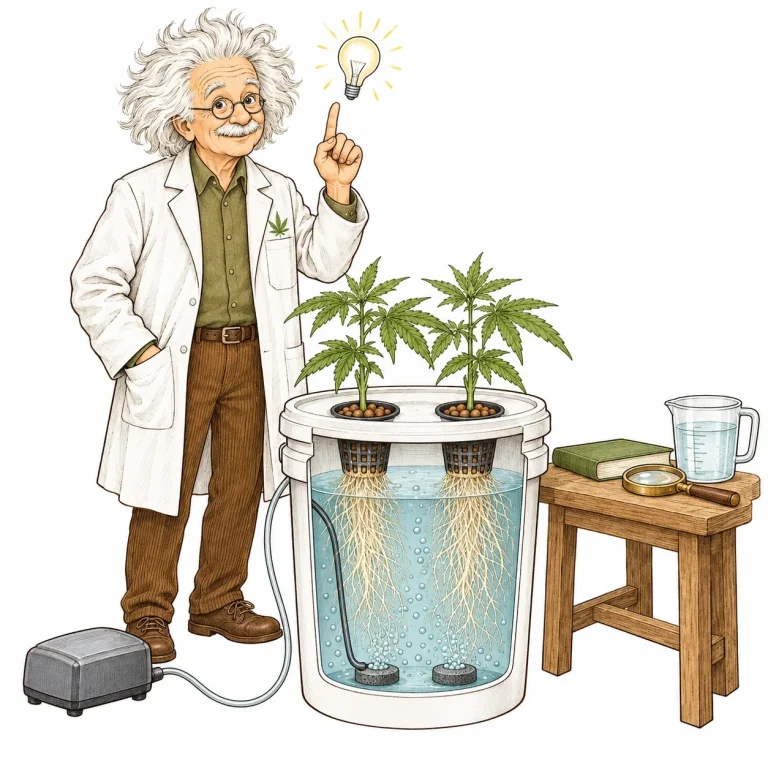
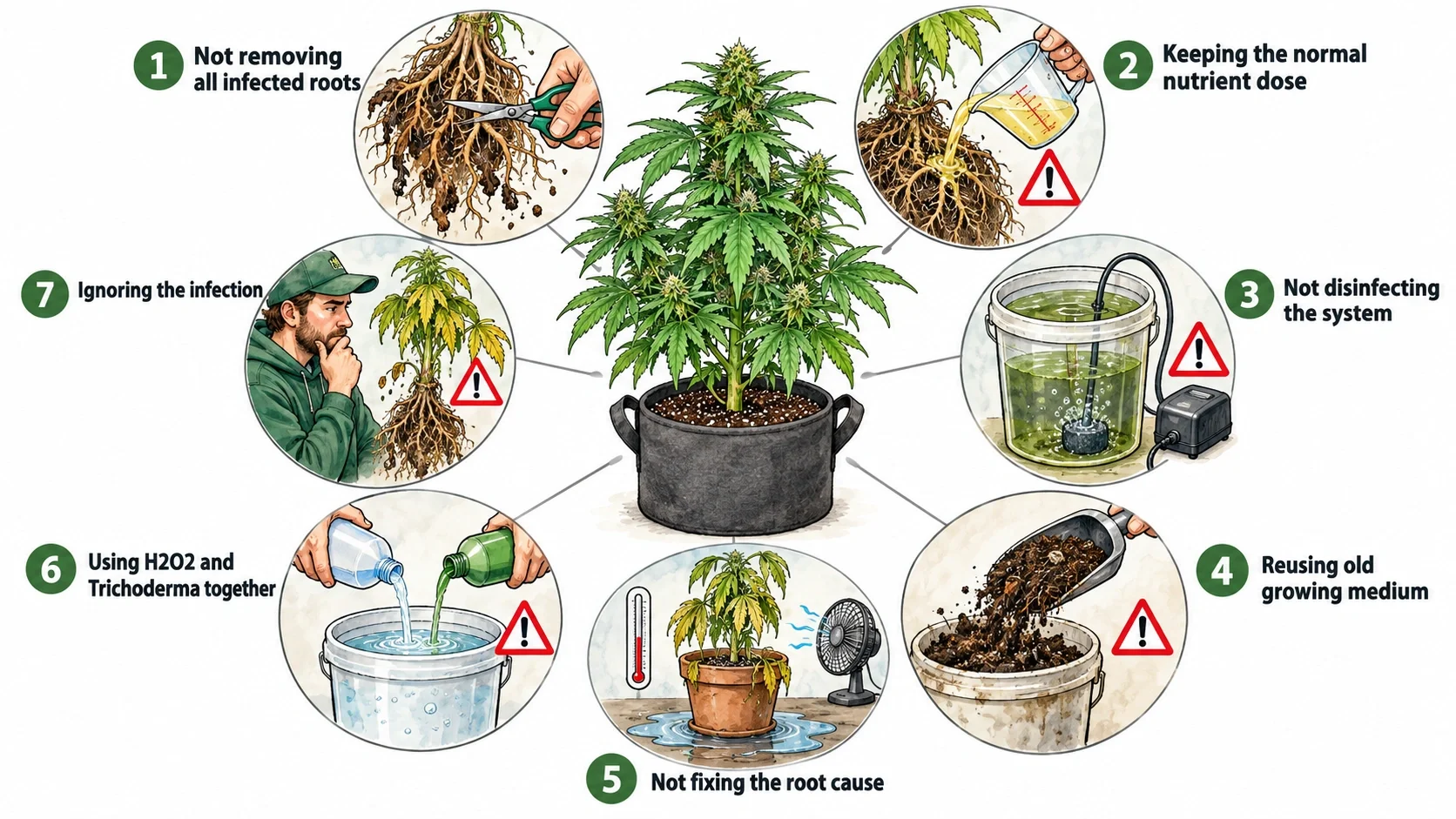
One of the most common mistakes when treating root rot is doing it halfway. Many growers only cut off the obviously rotten roots and leave brown spots that don’t look “that bad” yet. That’s a mistake: even slightly discolored roots are already infected and act as a reservoir for the pathogens. Be thorough and cut off everything brown and slimy – better a bit more than not enough.
Another mistake is watering again right away or going straight back to full nutrient doses after treatment. Damaged roots can barely take up water and nutrients – nutrient burn at this point can push a weakened plant over the edge. Give your plant time to recover with lighter feeding and less water.
Many growers also underestimate how important system hygiene is. If you don’t fully clean your hydro system after an infection, or you reuse an old soil pot without cleaning it, you risk the problem coming right back in your next grow. Pythium spores are extremely tough and easily survive in cracks, tubing and old growing media. A thorough disinfection with H2O2 or a citric acid-based cleaner isn’t optional – it’s a must.
And don’t forget to fix the root cause. If you don’t lower the water temperature, change how you water or improve ventilation, root rot can come back – no matter how carefully you treated it. Getting rid of it for good always means tackling both the symptom and the cause. Not sure what’s causing the problem with your plant? The Plant Diagnosis overview on PlantClue can help.
Crown Gall (Agrobacterium): Easy to Confuse with Root Rot
Besides Pythium and Rhizoctonia, there’s a much rarer cause of problems at the root crown: crown gall, caused by the bacterium Agrobacterium tumefaciens (now usually listed as Rhizobium radiobacter). In cannabis, it has only been documented in a few cases so far, but it can affect a huge range of plant species.
Unlike root rot, Agrobacterium doesn’t show up as soft, brown-black, foul-smelling roots. Instead, you’ll see hard, irregularly shaped growths right where the root meets the stem:
- Galls feel woody and firm, not spongy or mushy
- No rotten smell like with Pythium or Rhizoctonia
- The growth usually sits on one side of the root crown, not spread across the root tips
- Growth stalls because the galls block nutrient transport
There’s no cure: you should dispose of affected plants, don’t reuse the growing medium and disinfect your tools before using them again, because the bacterium enters through wounds on the stem. That said, most root problems in cannabis come down to far more common causes: fungal infections, lack of oxygen or waterlogged roots.
Frequently Asked Questions
Can I Still Save a Plant with Advanced Root Rot?
That depends on how far the rot has spread. If less than 50% of the roots are affected and your plant still has plenty of green, healthy foliage, your chances are good. Cut away all infected roots, disinfect your system and keep stress to an absolute minimum. If more than 70–80% of the roots are rotten and the plant is badly weakened, the outlook is unfortunately poor.
How long does it take for roots to recover from root rot?
If you catch it early and conditions are right (water temperature below 72 °F (22 °C), good aeration, pH 5.8–6.2 in hydro), new white roots can start growing within 3–7 days. A full recovery can take 2–4 weeks. During that time, your plant will barely grow above the surface. That’s completely normal.
Is hydrogen peroxide (H2O2) safe for my cannabis plant?
Yes, at the right concentration. 3% H2O2 mixed 1:5 with water is safe for cannabis roots. It kills pythium and other pathogens effectively and boosts oxygen levels. Keep in mind: H2O2 also kills beneficial microbes like trichoderma. Wait at least 24 hours after an H2O2 treatment before you add beneficials.
What water temperature prevents root rot in a DWC system?
Keep the water temperature in your DWC or hydro system steady between 64 and 72 °F (18–22 °C). Above 72 °F (22 °C), dissolved oxygen drops sharply and pythium can multiply explosively. Use an aquarium thermometer to keep an eye on it and, if needed, a water chiller to keep it in range.
Can root rot spread from plant to plant?
Yes. Pythium and other root rot pathogens can spread through contaminated water, growing media, tools and even the air (as spores). In a hydro system, it can spread especially fast through the shared nutrient solution. Disinfect all your gear, isolate infected plants right away and replace the entire nutrient solution.
Do mycorrhizal fungi help against root rot in cannabis?
Mycorrhizal fungi (endomycorrhizae) form a symbiosis with cannabis roots and can make your plant more resistant to pathogens. But they’re mainly a preventive measure, not a cure for an active infection. Combine mycorrhizal fungi with trichoderma and Bacillus subtilis for a strong, biologically active root zone.
The Bottom Line
Spotting cannabis root rot early and acting fast are the two things that decide whether you save your plant or lose it. Brown, slimy roots with a foul smell, plus leaves that droop even though the growing medium is still wet, are clear warning signs. Take them seriously right away. If you consistently cut away infected roots, treat with hydrogen peroxide (H2O2), fully disinfect your system and bring in beneficial microbes like trichoderma, you have a good shot at getting your plant back on track. Even better: set up the right conditions from day one. Proper watering, controlled water temperature and regular cleaning can make root rot the exception rather than the rule in most grows.
Dealing with other root problems on your cannabis plant, from nutrient deficiencies to pests? Check out our root diagnosis overview.
