
Cannabis Germination & Seedlings: How Your Grow Gets Started
From the first root tip to the first true leaves — the first 2–3 weeks decide how solid a start your plant gets for the rest of the grow.
What really matters in the germination and seedling stage
The cannabis seedling stage begins as soon as the seed shell cracks open and the taproot grows downward — and ends once the plant has formed its first serrated, “true” leaves. That usually takes 10 to 21 days, during which the plant is extremely sensitive to overwatering, too much light or fluctuating temperatures. Mistakes in this stage are hard to make up for later, because this is when the entire root and stem framework is laid down.
Before a seed can germinate at all, its natural dormancy has to be broken — usually simply by enough moisture and warmth. After that, the growing medium is what mostly decides success: soil that’s too wet suffocates the young root, while soil that’s too dry lets the sprout dry out before it even reaches the surface.
Once the sprout has broken the surface, light becomes the most important factor. Light that’s too weak or too far away makes seedlings thin and leggy (stretching) — a warning sign many beginners notice too late. Light that’s too intense right after emergence, on the other hand, can burn the delicate cotyledons.
The good news: you can avoid most problems in this stage entirely with the right basics (temperature, humidity, gentle light). If your plant still shows symptoms, you’ll find detailed guides to the most common causes below.

“Touch your seedling as little as possible during the first two weeks. Most damage isn’t caused by too little care, but by too much meddling.”
Germination & Seedlings in detail
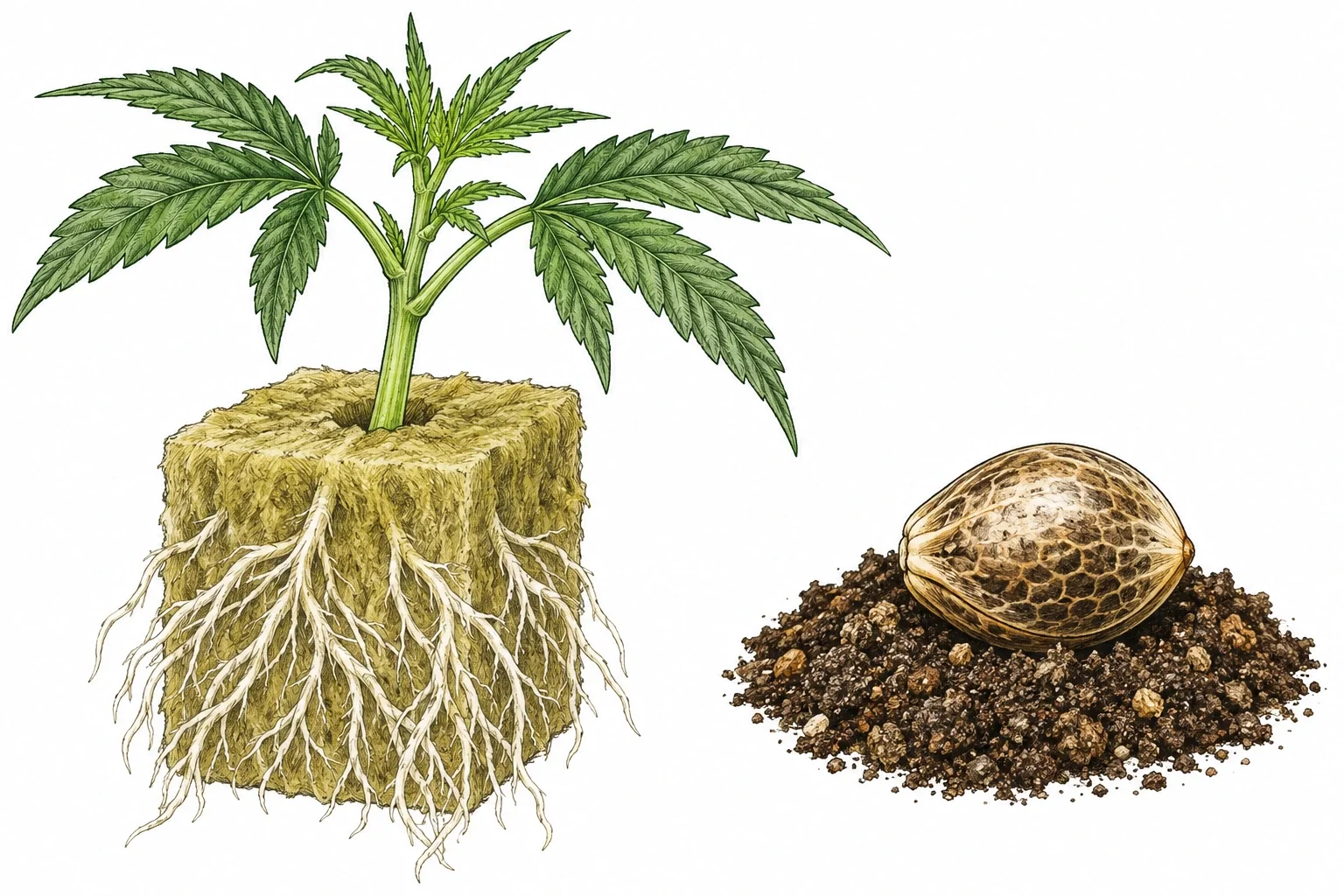
Clone or Seed?
Genetics, time, cost and risks compared — make the right choice for your grow before you start.
Read article →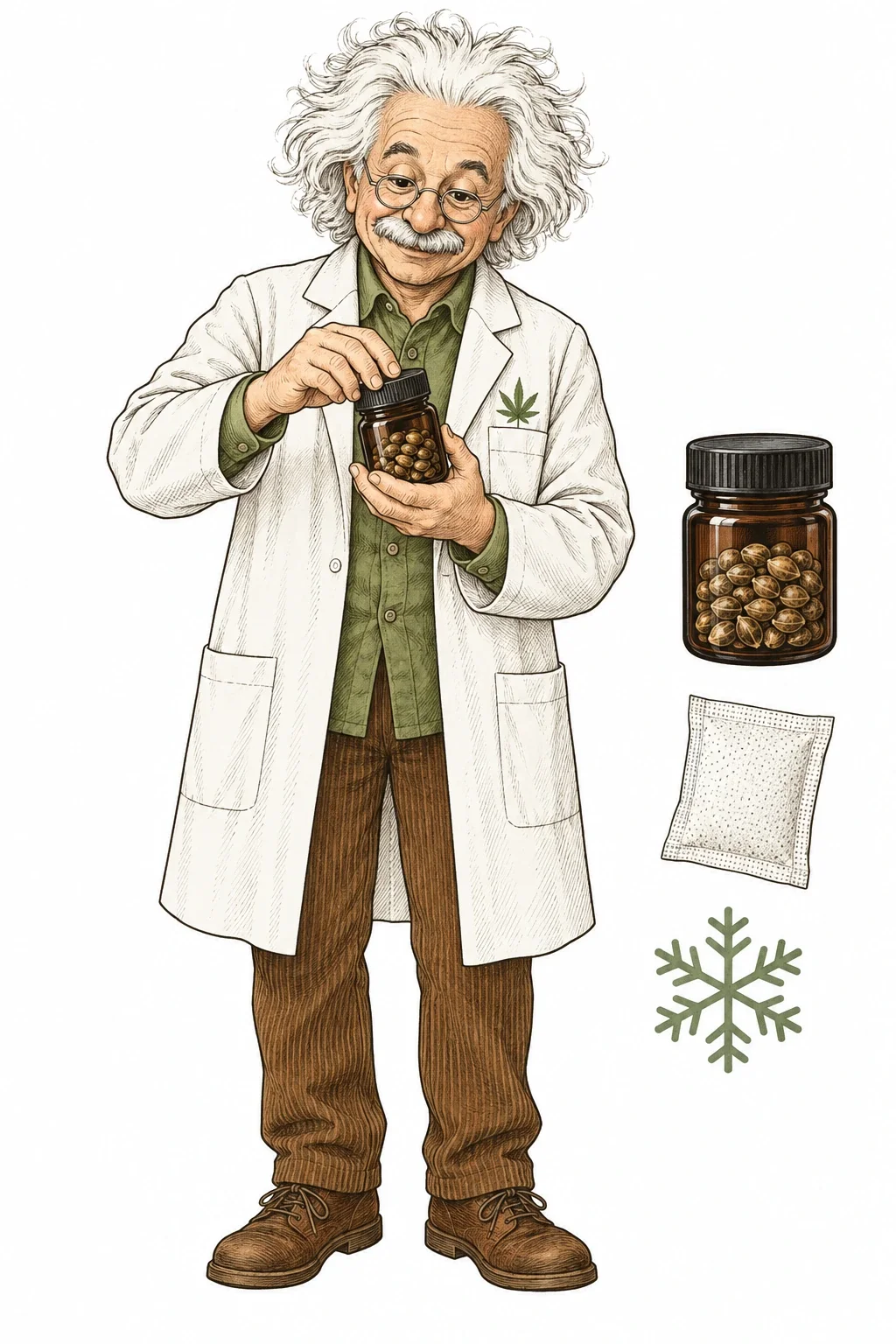
Storing Seeds: 4 Factors for Reliable Cannabis Germination
Learn how to protect cannabis seeds from light, heat and moisture so they stay viable for years.
Read article →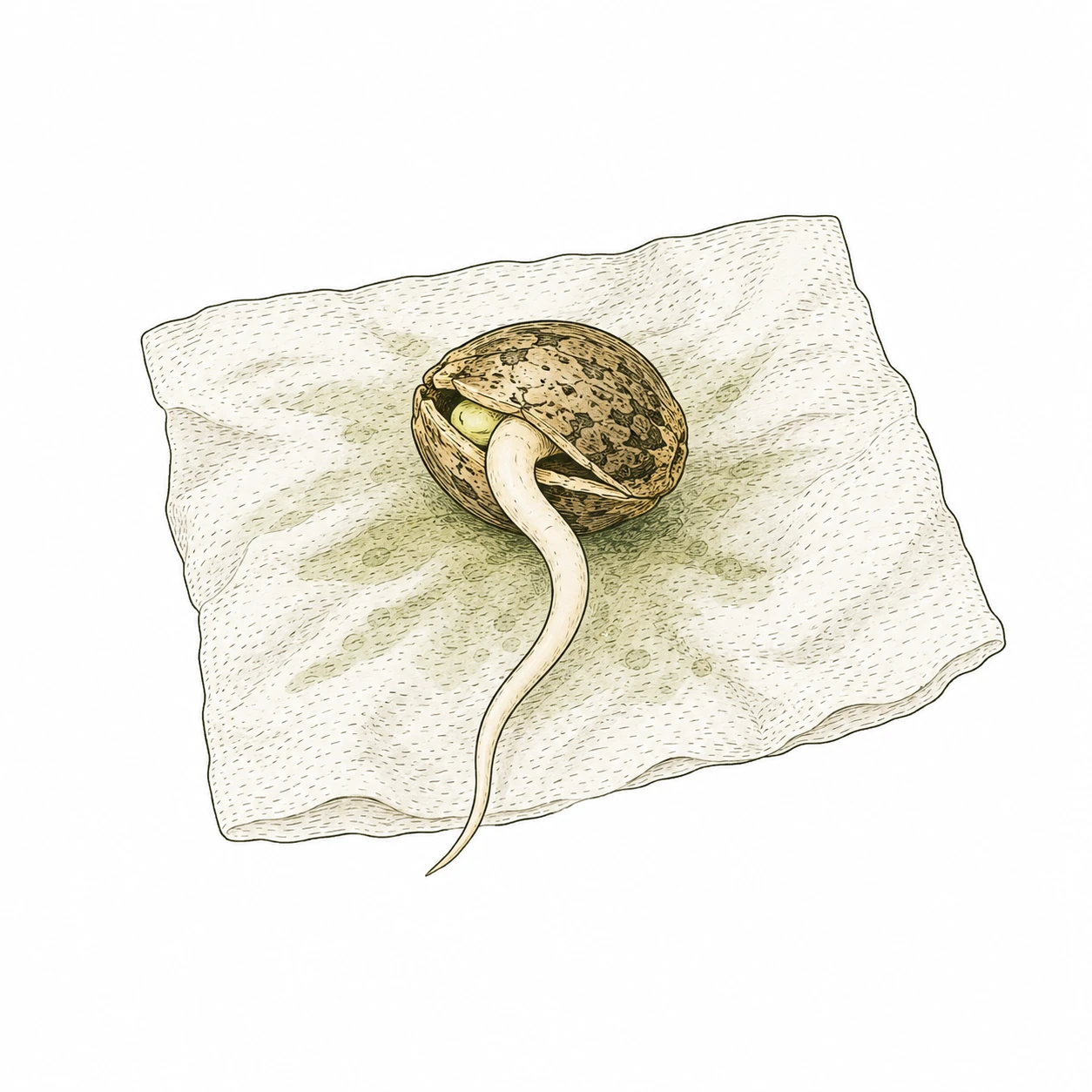
How to Germinate Cannabis Seeds
All common germination methods compared — from the paper towel method to planting directly in soil.
Read article →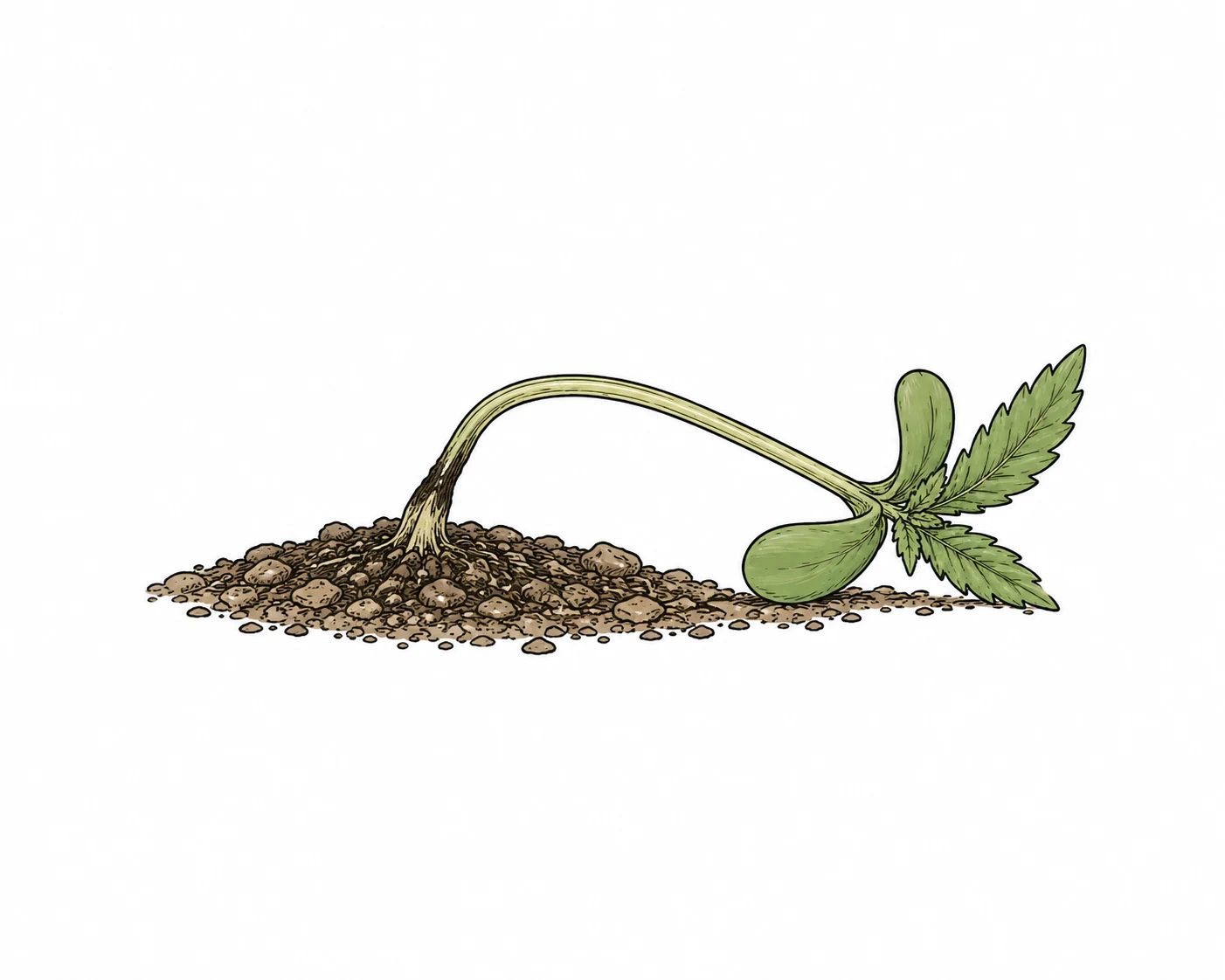
Cannabis Seedling Falling Over
Usually damping-off caused by too much moisture — recognize the causes and save the plant.
Read article →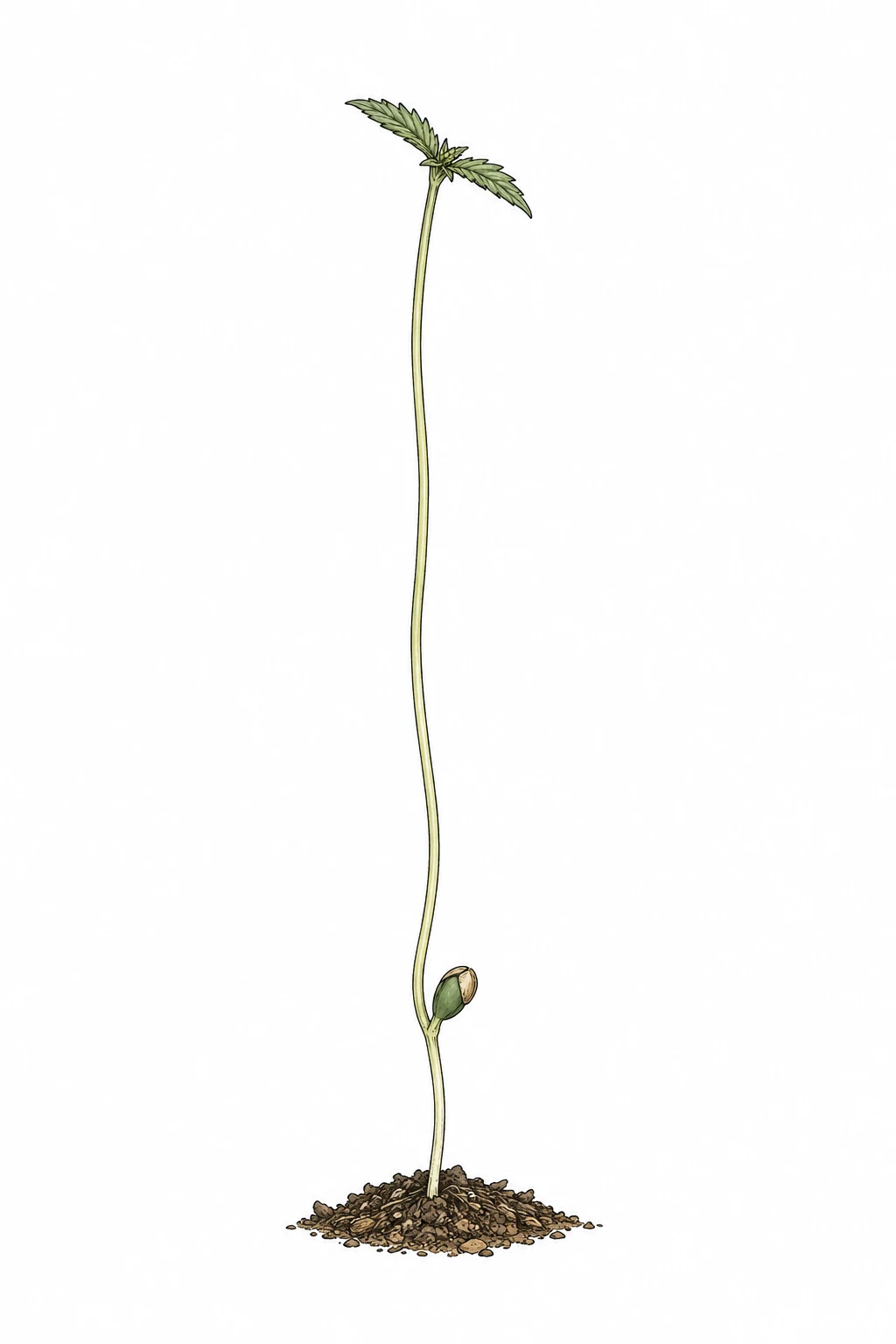
Leggy, Stretched Seedlings
An unusually long, thin stem — almost always a sign of light that’s too weak or too far away.
Read article →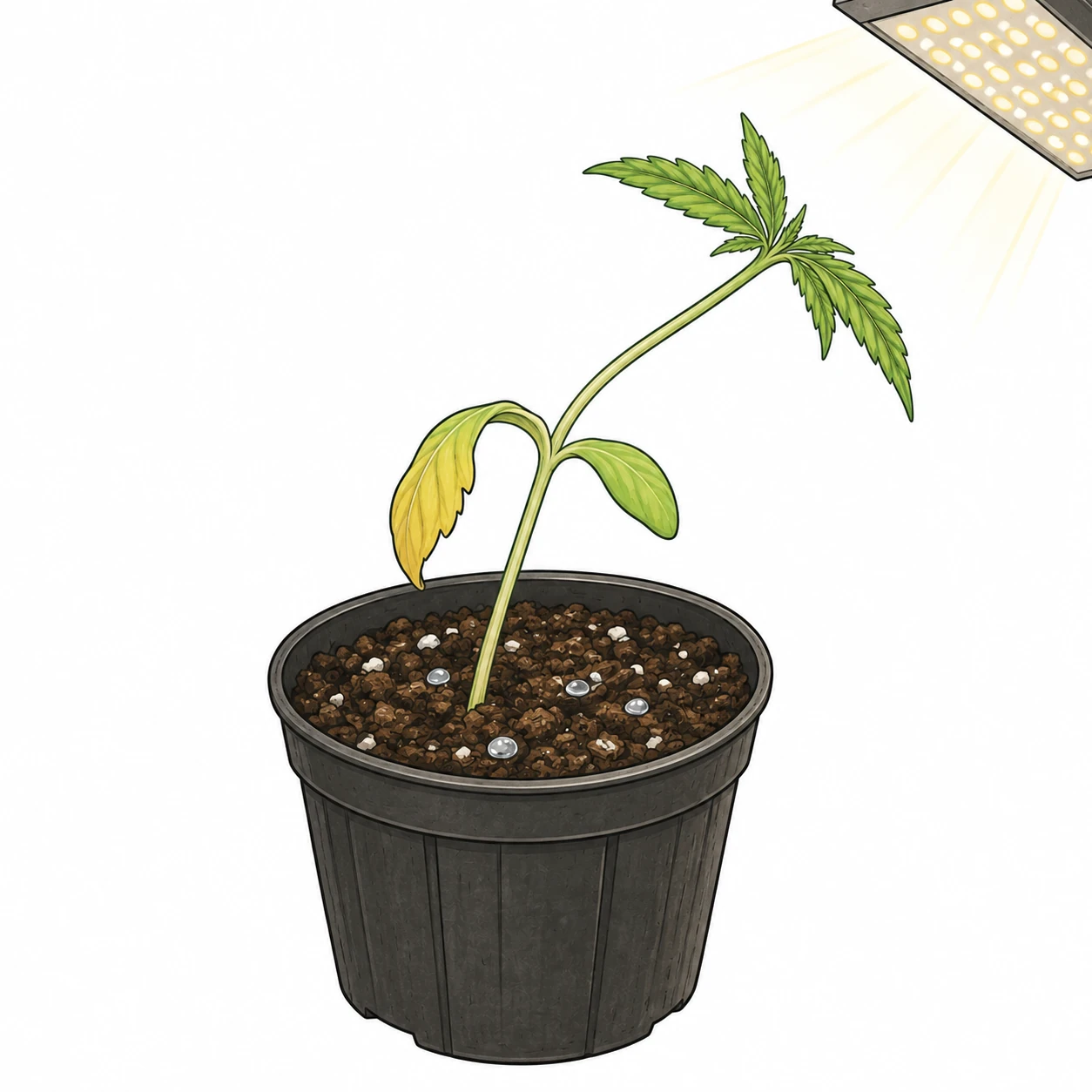
Seedling Problems at a Glance
The 5 most common causes when your seedling doesn’t grow as expected in the first days and weeks.
Read article →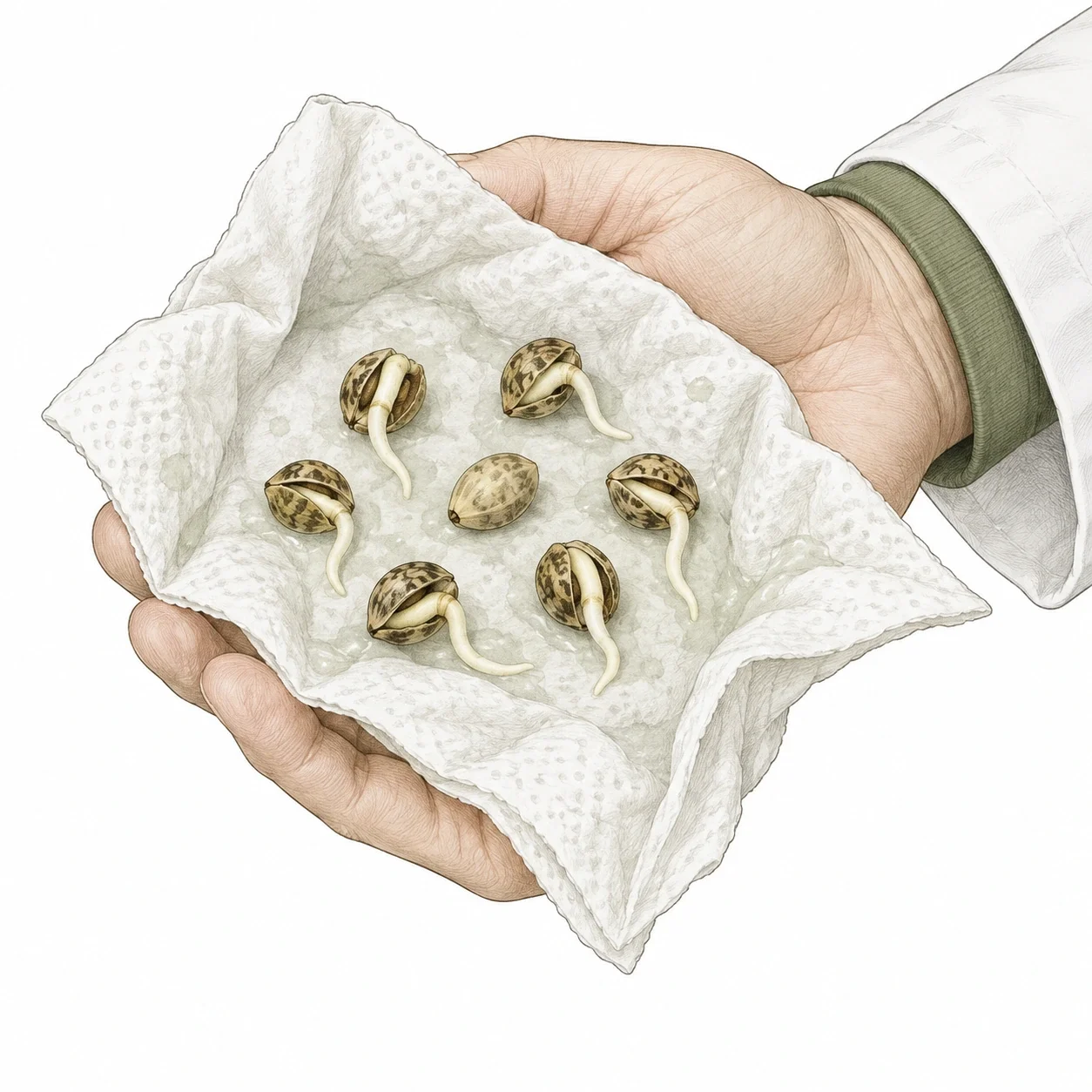
Cannabis Seeds Not Germinating
Spot dead seeds, find the 6 most common causes and rescue germination by soaking or scarifying.
Read article →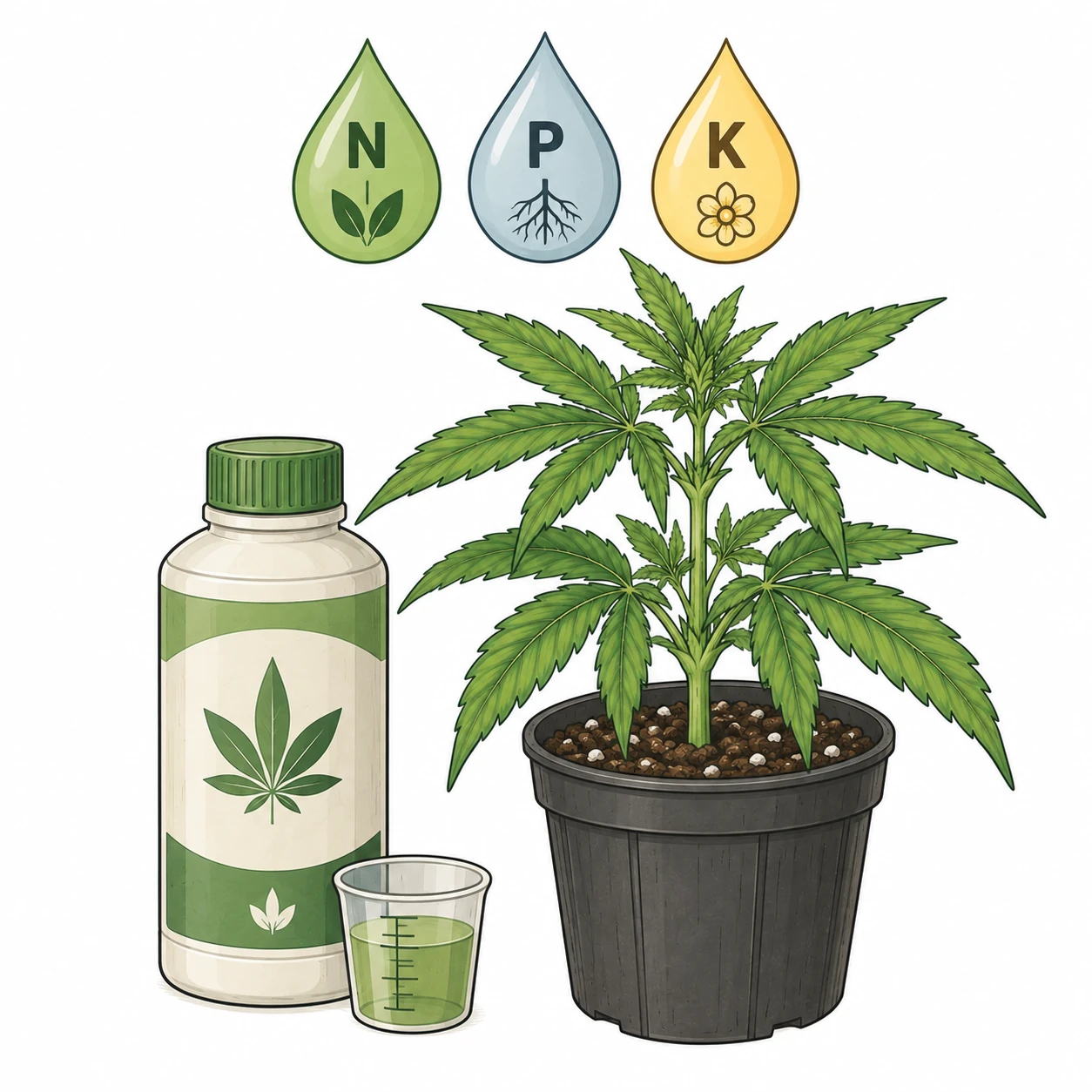
Feeding Seedlings: Little to No Nutrients
The growth stage chart shows why your seedling hardly needs any nutrients in the first 2 weeks.
Read article →Frequently asked questions about germination & seedlings
How long does it take for cannabis seeds to germinate?
Usually 2 to 7 days until the taproot becomes visible. Some seeds take up to 10 days — that’s no reason to worry yet, as long as the seed is firm and not moldy.
When does a sprout become a seedling?
As soon as the first “true,” serrated cannabis leaves appear — the round cotyledons that show up right after emergence don’t count yet. That’s usually the case after 5 to 10 days.
How often should I water my cannabis seedling?
Much less often than many beginners think — only when the top layer of soil has noticeably dried out. Overwatering is the most common cause of seedlings that topple over or stay stunted in this stage.
What temperature does a cannabis seedling need?
Ideal is 72–77 °F (22–25 °C) at 65–70% humidity. Cooler temperatures noticeably slow growth and raise the risk of fungal problems like damping-off.
When can I transplant my seedling?
Once the roots have visibly filled the first small pot, usually after 2–3 weeks. Transplanting too early or too often stresses the plant unnecessarily.
What should I do if my seedling isn’t growing at all?
First check light, temperature and your watering habits — those are the three most common causes. If the plant also shows visible symptoms, the matching detailed article above helps you pin down the cause.
