

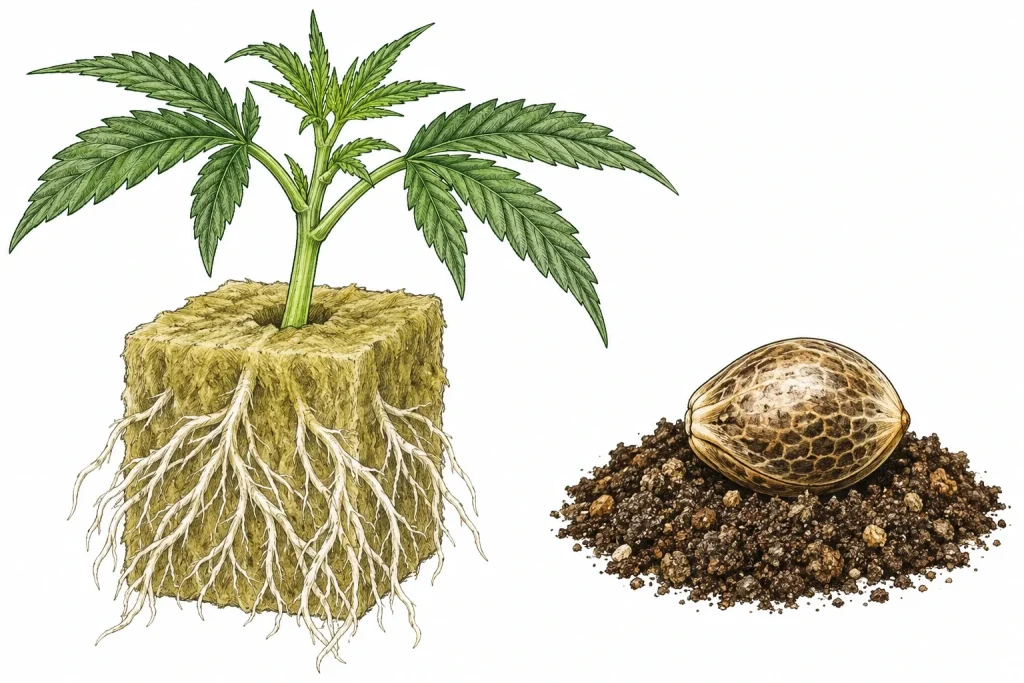
Should you start your grow with a cannabis clone or from seed? It’s one of the first and most important decisions you’ll make, and it has a big impact on effort, yield and genetic stability. Both methods have solid advantages, but also real weaknesses you should know about before you get started. Whether you’re a beginner growing your very first plant or an experienced grower looking to dial in your workflow, a side-by-side comparison helps you make the right call. In this guide, you’ll learn everything that matters about germination, cloning, genetics, time and cost, explained clearly and practically.
What Is a Cannabis Clone and What Are Seeds?
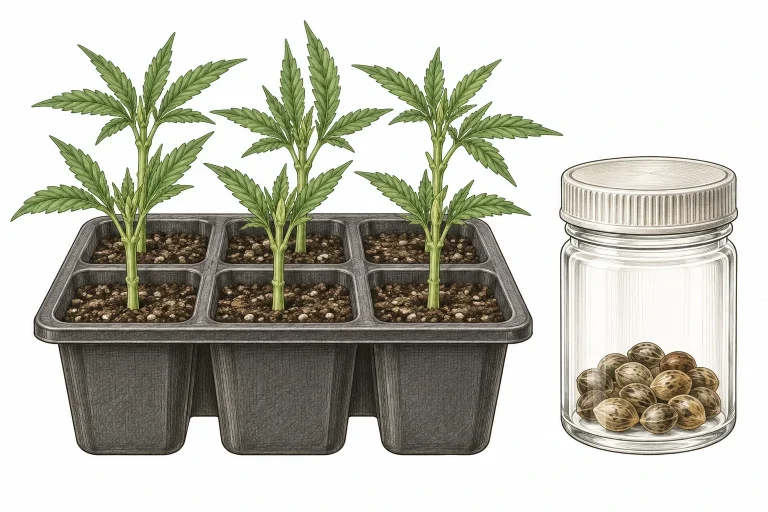
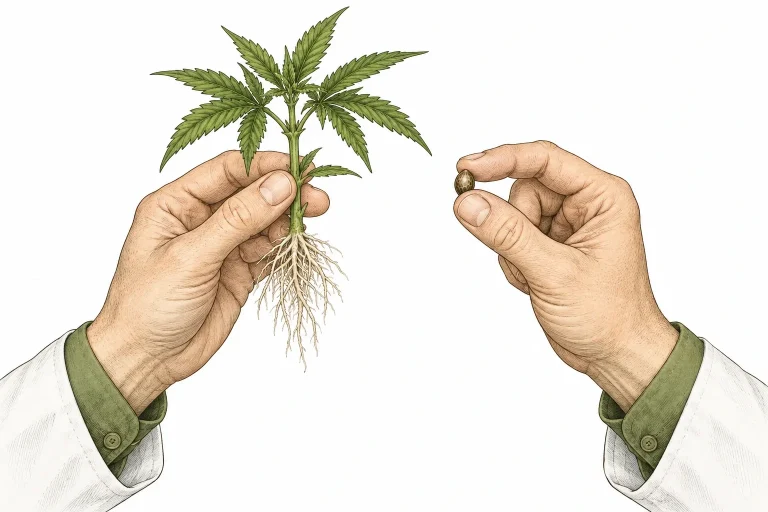
A clone is a cutting taken from an established mother plant and then rooted. Here’s the key point: the clone carries exactly the same genetics as the mother plant. No genetic dice roll, no surprises. So if you’ve found a plant with outstanding aroma, a big yield or specific growth traits, you can, in theory, reproduce those traits with clones indefinitely.
Seeds, on the other hand, are created through pollination and carry genetic material from two parent plants. Even high-quality feminized seeds from stable lines show some phenotypic variation, meaning differences in growth, aroma or flowering time within the same strain. Regular seeds also produce around 50 percent male plants, which most home growers don’t want. Autoflowering seeds flower regardless of the light cycle, which makes them especially beginner-friendly, but it also largely rules out reproducing them from clones. For a detailed look at how the seed types differ, check out the comparison Autoflower vs. Feminized: The Difference.
- Cannabis clone = genetically identical copy of the mother plant
- Seeds = new genetic combination with possible variation
- Feminized seeds produce almost exclusively female plants
- Autoflower seeds can’t be cloned in any practical way
- Regular seeds: about a 50% chance of male plants
Cannabis Clones: Pros and Cons at a Glance
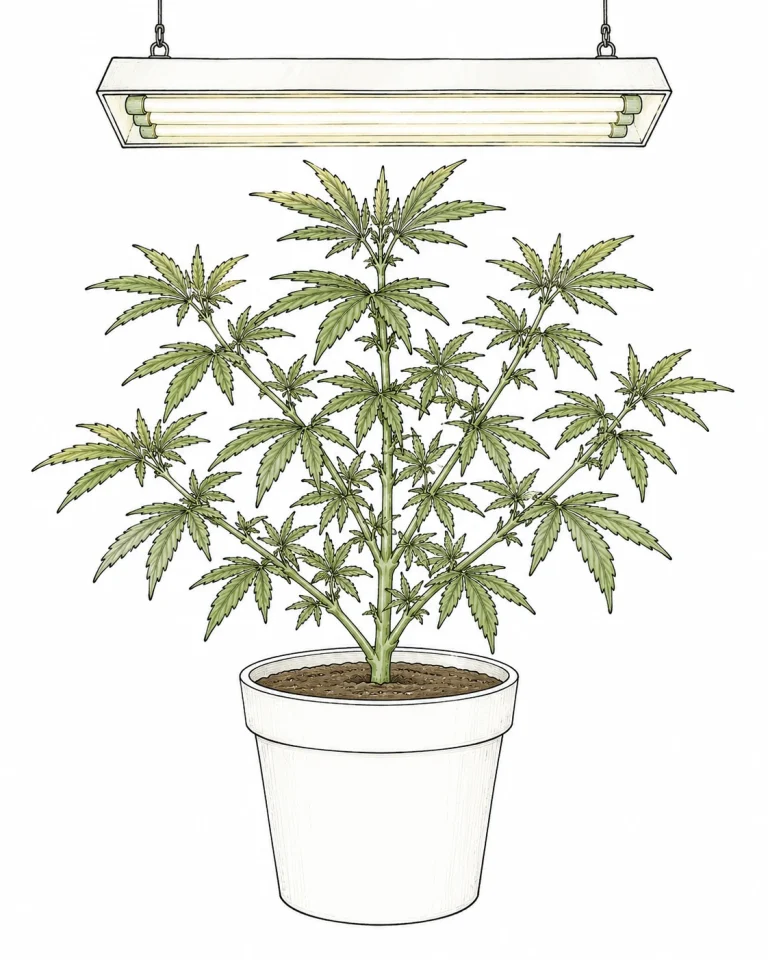
The biggest advantage of a clone is the genetic guarantee. Before your grow even starts, you already know how the plant grows, when it flowers and what to expect in terms of aroma and potency. That makes planning a lot easier and keeps surprises to a minimum. On top of that, you skip germination: clones that have already rooted can go straight into the vegetative stage, which can save you one to two weeks of grow time depending on the strain.
On the flip side, clones come with risks. They can pass pathogens, pests or viruses from the mother plant, including the dreaded hop latent viroid (HLVd), which you can only detect through testing. You also need a healthy mother plant in the vegetative stage at all times, and that takes space, light and care. If you don’t have access to a proven mother plant or a trusted clone source, seeds are your only real option anyway. The HLVd cannabis viroid is a serious problem. It spreads through infected clones and can cut your yields dramatically.
Clones are also more demanding early on. Without enough humidity, a stable temperature and the right rooting medium, many clones won’t take root. A success rate of 80–90% is considered good. In poor conditions, it can drop well below that.
- Pro: Genetically identical to the proven mother plant
- Pro: No germination stage, so you save time and resources
- Pro: Even growth and a predictable harvest
- Con: Can carry diseases and viruses
- Con: A mother plant needs space and care at all times
- Con: The rooting stage needs steady conditions
- Con: No taproot, since clones don’t develop a taproot system
Starting from Seed: Strengths and Weaknesses
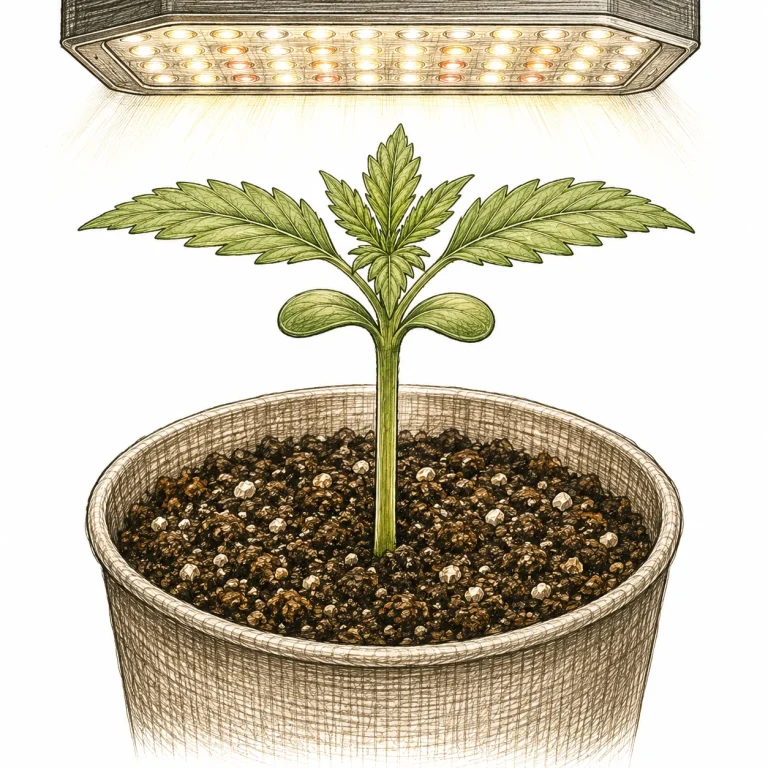
Seeds offer one key biological advantage: the taproot. This deep main root can make seedlings tougher, more adaptable and often more stress-resistant than cloned plants. That matters most in outdoor growing, where soil conditions and weather can vary a lot. Another plus is the easy start without a mother plant. All you need is seeds, a growing medium and light.
Feminized seeds are the go-to choice for most home growers today. They take male plants out of the equation, come in thousands of strains and are very reliable. Autoflower seeds go one step further: they flower after a set number of weeks, no matter the light cycle. That makes them especially appealing for beginners and for outdoor growing with a short season. Learn more in the guide to growing autoflower cannabis.
The downside: even high-quality seeds show phenotype variation. Not every plant from the same pack will turn out identical. So if you’re hunting for a top phenotype, you may need to grow out and select from several plants, and many growers underestimate that effort. Regular seeds also mean you have to spot and remove male plants early to avoid unwanted pollination.
- Pro: The taproot builds a tougher, more resilient root system
- Pro: No mother plant needed
- Pro: Feminized and autoflower seeds are beginner-friendly
- Pro: A huge selection of strains
- Con: Phenotype variation is possible
- Con: Regular seeds: up to 50% male plants
- Con: Germination adds time to the whole grow
How to Take a Cannabis Clone: Step by Step
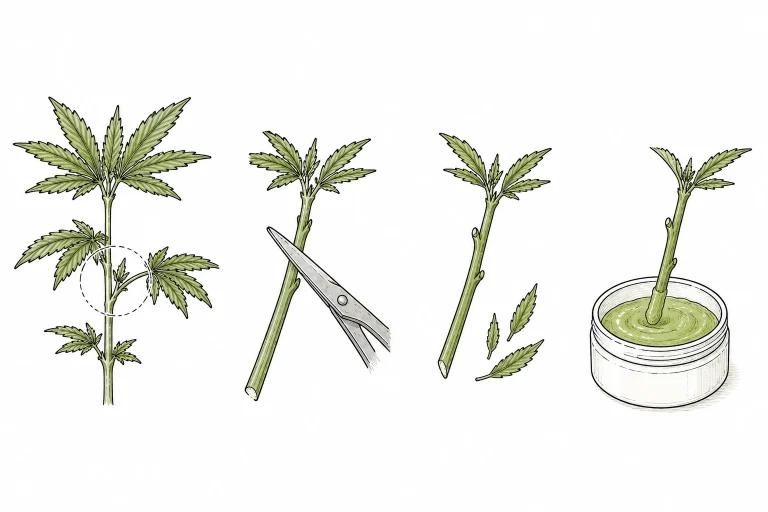
If you’ve decided to go with clones, clean work and stable conditions are what count. Pick shoots from a healthy mother plant in the vegetative stage. Side shoots with at least two to three sets of leaves and a length of 3–6 in (8–15 cm) work best. Disinfect your cutting tool with isopropyl alcohol before you cut so you don’t spread pathogens. The Royal Horticultural Society gives a clear overview of the horticultural basics of propagating from cuttings.
Cut the shoot at a 45-degree angle just below a node. Dip the cut end right away into rooting gel or powder. Then set the clone into a prepared rooting medium. Rockwool, peat pellets and coco cubes are all proven choices. For every step in detail, check out the guide How to Take and Root Cannabis Clones. Next, place your clones under a humidity dome to keep humidity at 70–80 percent. Temperatures of 72–79 °F (22–26 °C) help them root. You should see the first roots after 7–14 days.
If you want your mother plant, and with it every clone, to stay problem-free, keep an eye on cannabis training stress too. Heavily stressed mother plants can produce weaker clones. Also keep your mother plant on a vegetative light cycle like 18/6 at all times and don’t overfeed her. Both have a direct impact on clone quality.
- Disinfect your tools with alcohol before cutting
- Choose a shoot 3–6 in (8–15 cm) long with at least 2 sets of leaves
- Make a 45-degree cut just below a node
- Dip the cut end right away into rooting gel or powder
- Use a humidity dome: humidity at 70–80 %
- Keep temperatures between 72–79 °F (22–26 °C)
- Expect roots after 7–14 days
How to Germinate Cannabis Seeds: The Best Methods
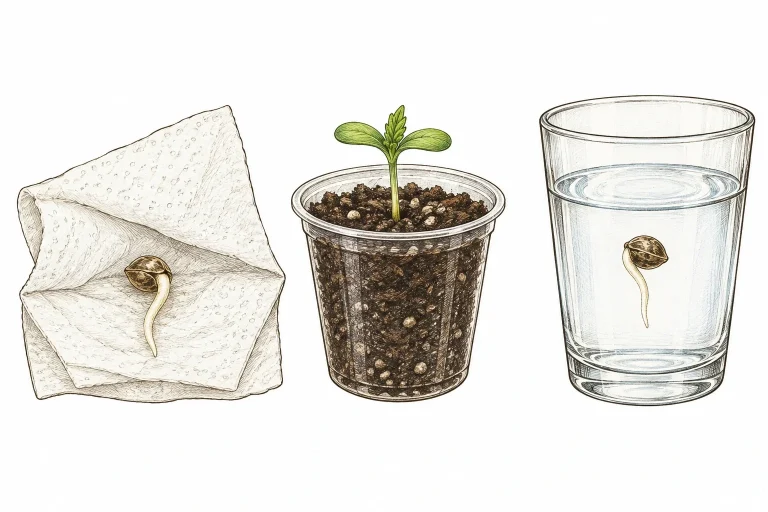
There are several proven ways to germinate cannabis seeds. The easiest is planting directly in your growing medium. Place seeds 0.2–0.4 in (0.5–1 cm) deep in moist, loose medium, cover with plastic wrap and keep them at 72–79 °F (22–26 °C). After 2–5 days, most seedlings break through the surface. This method is gentle because you never have to touch the delicate taproot.
The paper towel method is another favorite. Keep your seeds between two damp paper towels in a closed container at room temperature. Once the taproot is 0.4–0.8 in (1–2 cm) long, carefully move the seedlings into your growing medium. This method gives you good control, but it takes careful handling so you don’t damage the root. You’ll find more details in the article How to Germinate Cannabis Seeds, which compares all methods in depth.
Whichever method you choose, fresh, high-quality seeds from a reputable seed bank are the key to high germination rates. Old or poorly stored seeds can fail even under perfect conditions. A light, airy medium with a cannabis pH between 6.0 and 7.0 (soil) gives your seedlings the best possible start.
- Direct planting: 0.2–0.4 in (0.5–1 cm) deep in moist, loose medium
- Paper towel method: lets you track germination progress
- Germination temperature: 72–79 °F (22–26 °C) is ideal
- Protect the taproot from light and direct handling
- Fresh seeds have higher germination rates than old stock
- Medium pH: 6.0–7.0 for soil
Cannabis Clones vs. Seeds: Head-to-Head
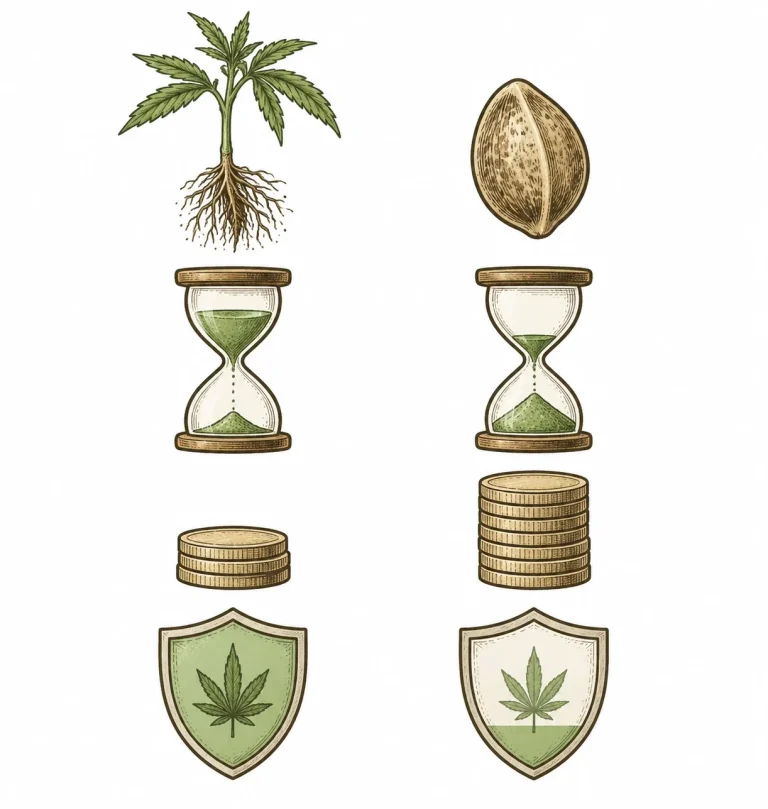
If you want to save time and lock in your genetics, a proven clone is a smart pick. If you want flexibility, want to explore new strains or don’t have a mother plant yet, go with seeds. Cost matters too: quality feminized seeds run roughly $5 to $20 each, but you only buy them once. Once you’ve invested in a mother plant, clones are practically free, but keeping that mother healthy takes ongoing work.
For beginners, feminized or autoflower seeds are often the easier way in. No cloning, no mother plant and clear strain info. Experienced growers with a proven top phenotype, on the other hand, will usually clone it rather than leave things to chance. For the full picture on every part of growing, check out the indoor cannabis grow guide. It gives you the big-picture framework for your grow.
One thing is worth pointing out: in theory, you can clone autoflowering plants. But the clone flowers just as fast as the mother plant, and you can’t keep it in the vegetative stage any longer. That makes autoflower clones pretty much useless. So for autoflower grows, always plan with seeds.
- Time: clones skip germination (1–2 weeks)
- Genetics: clones give you identical traits
- Cost: seeds are a one-time buy, clones are free on an ongoing basis (if you have a mother plant)
- Getting started: seeds are easier for beginners without a mother plant
- Disease risk: clones can carry pathogens and viruses
- Autoflowers: always start from seed, cloning doesn’t really work
- Phenotype selection: only possible with seeds
Cannabis Clones vs. Seeds: Common Mistakes to Avoid
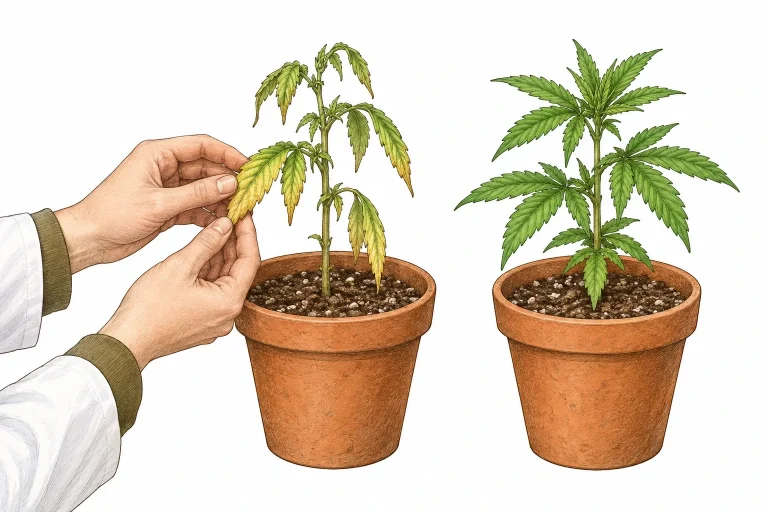
With clones, poor hygiene is the most common mistake. Dirty cutting tools, unsanitized rooting trays or infected mother plants can wreck an entire grow. Also make sure your mother plant isn’t too old. Very old mothers tend to produce clones that root more slowly and handle stress worse. Yellow leaves on a clone shortly after rooting often point to a nutrient deficiency. The article on yellow cannabis leaves during flowering helps you identify deficiencies with confidence.
With seeds, many growers underestimate how much early seedling care matters. Too much water, the wrong pH or too little light in the first weeks can lead to weak, leggy seedlings. If your seedling is falling over or acting strange, read the article on cannabis seedling problems. It walks you through the most common causes step by step.
Another common mistake with seeds: transplanting into the final pot too early or too late. Seedlings need a small container at first, so the roots don’t have to fill a big volume of growing medium and the risk of overwatering goes down. Transplanting at the right moment is key for healthy root growth. You’ll find all the details in the guide on transplanting cannabis.
- Clones: always use sterile tools
- Clones: check the mother plant for viruses and pests
- Clones: don’t take the humidity dome off too early
- Seeds: check the pH of your growing medium before germination
- Seeds: don’t overwater seedlings, small amounts of water are enough
- Seeds: don’t transplant into a big pot too early
- General: keep light and temperature steady in the early stage
When Does Each Method Make Sense? A Decision Guide for Your Grow
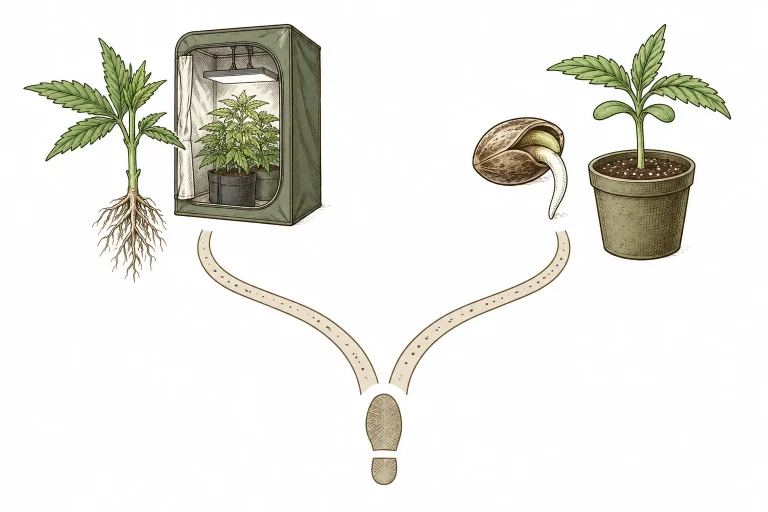
If you have a proven phenotype you want to reproduce, a cannabis clone is the logical choice. That goes double for indoor growers with a consistent setup who want even results harvest after harvest. Clones also pay off if you grow several plants of the same strain at once and need them all to hit the same harvest window.
Seeds are the better choice if you’re just starting out, want to try new strains, or don’t have access to a mother plant you can trust. For outdoor growing in particular, seeds are the way to go thanks to their sturdier root system. And if you grow autoflowers, you don’t really have an alternative: seeds are the only option. For a solid overview of beginner-friendly strains, check out the article on cannabis strains for beginners.
Experienced growers often combine both methods. They start a season from seed to hunt for phenotypes, then keep the best keeper going as clones for several generations. This approach gives you plenty of genetic variety during selection and maximum efficiency in production. It’s the best of both worlds. And if you take clones from flowering plants, you’re into cannabis monster cropping.
- Go with clones for proven phenotypes, indoor continuity and an even harvest
- Go with seeds for your first grow, new strains, outdoor growing and autoflowers
- Combine both: seeds for selection, clones for reproduction
- Budget: seeds are cheaper to get started, clones are more cost-effective long term
- Space: a mother plant needs a permanent spot, so plan for it in a small grow
Frequently Asked Questions
Are clones or seeds better for beginners?
For beginners, feminized seeds are usually the easier way in. You don’t need a mother plant, you get clear strain info, and they’re simpler to handle. Clones need more precise conditions while rooting, and you need access to a healthy mother plant.
How long does it take a cannabis clone to root?
Under ideal conditions (humidity 70–80 %, temperature 72–79 °F (22–26 °C), diffused light), most clones show visible roots within 7 to 14 days. In poor conditions it can take 21 days or longer, and some clones may never take root at all.
Can you clone autoflowers?
Technically yes, but in practice it makes little sense. A clone from an autoflower carries the same genetic clock and flowers just as fast as the mother plant, with no way to extend its vegetative stage. The result is usually a tiny plant with barely any yield. If you grow autoflowers, stick with fresh seeds.
Which diseases can be passed on through clones?
Clones can carry viruses, viroids, fungal pathogens and pests over from the mother plant. The most feared one is hop latent viroid (HLVd). It can hide in the mother plant without any symptoms and only cut yields once it shows up in the clones. Only ever clone from healthy, tested mother plants.
How can I tell my clone has rooted successfully?
The most reliable sign is white roots poking out of the bottom of the rooting medium (for example a rockwool cube or peat pellet). Successfully rooted clones also put out new leaf growth and perk back up after the wilting phase. Once roots are visible, you can transplant the clone into a bigger container of growing medium.
How much does it cost to make your own clones?
If you already have a mother plant, clones are almost free. All you need is rooting gel or powder (about $2–12), rockwool cubes or peat pellets (about $5–15 for 50) and a humidity dome (about $10–35). The main investment is the mother plant itself, plus the space and light to keep her in the vegetative stage permanently.
Do plants from seed have an advantage over clones?
Yes. Plants grown from seed develop a taproot that pushes deeper into the growing medium and makes the plant tougher. That matters most in outdoor growing. Clones grow a shallower, fibrous root system instead. In a controlled indoor setup, this difference matters less, but outdoors in open ground it can be significant.
Bottom Line
Choosing between cannabis clones and seeds mostly comes down to your experience, your goals and your resources. Clones give you genetic certainty and save time, but you need a healthy mother plant and solid hygiene habits. Seeds are more flexible, more beginner-friendly and open up the full range of strains, though they take a bit longer to reach your first harvest. Experienced growers get the most out of combining both: explore new strains from seed, pick the best phenotype, then keep it going with clones. Whichever path you choose, clean work, stable conditions and knowing what your plants need are the real keys to success.
