

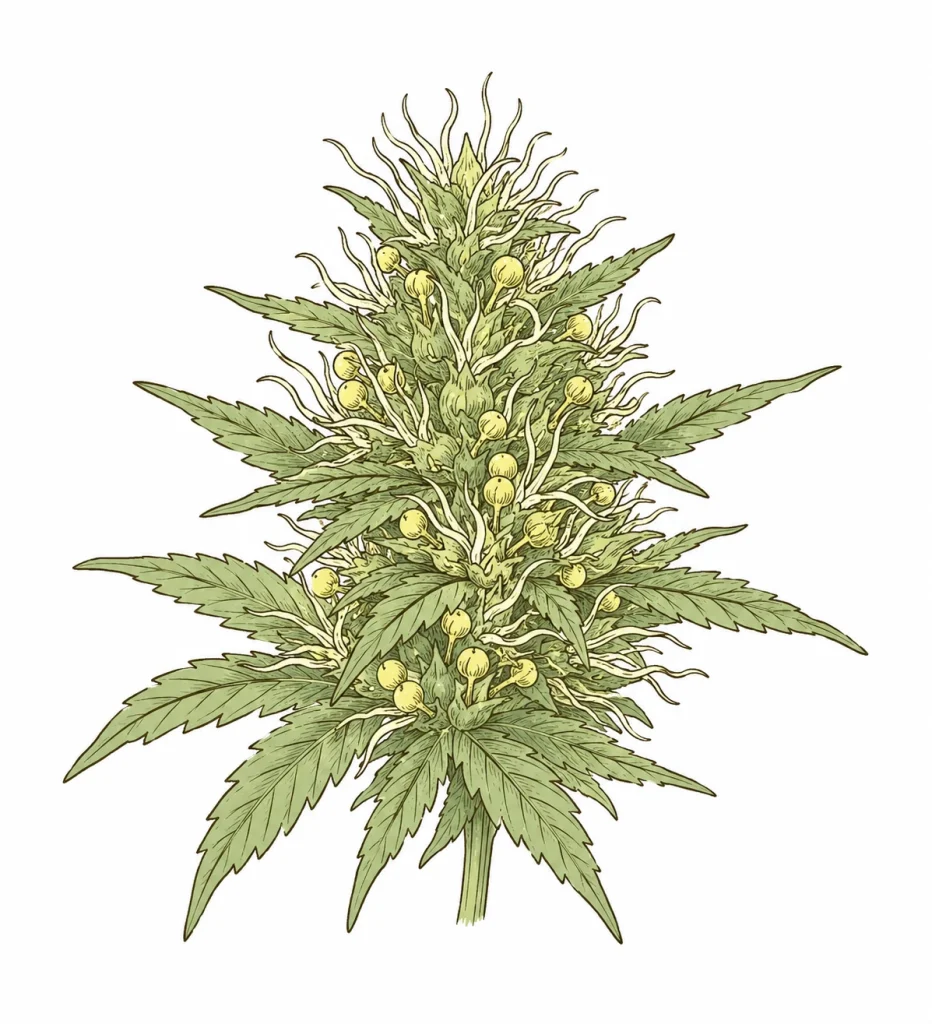
Spotting hermaphrodite cannabis plants is one of the most important skills you can have as a grower. A single hermie can seed your whole harvest and wipe out months of hard work. Hermaphroditism in cannabis happens when a female plant grows male reproductive organs, usually because of stress or unstable genetics. The good news: if you know the early warning signs, you can step in on time and save your buds. In this article, you’ll learn how to reliably identify hermaphrodite plants, what causes them, and what steps to take right away.
What Is a Hermaphrodite Cannabis Plant? Hermaphroditism Explained
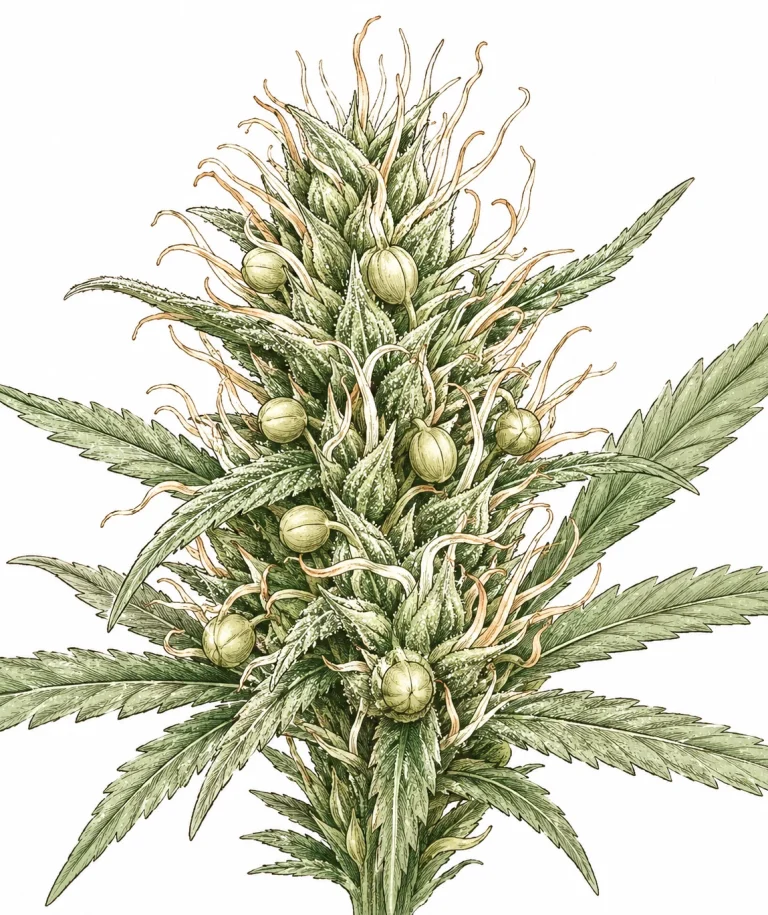
Cannabis is naturally dioecious. That means male and female plants are usually separate individuals. Female plants produce the prized buds packed with cannabinoids and terpenes. Male plants grow pollen sacs that serve only one purpose: pollination. A hermaphrodite, or hermie, carries traits of both sexes at the same time. It produces female calyxes and male, pollen-producing structures.
This isn’t random. In most cases, it’s the plant’s emergency response. Over the course of evolution, cannabis learned to pollinate itself when the survival of the species seems at risk. For you as a grower, that’s a serious threat. Once pollen sacs burst, the pollen spreads through your grow space fast and pollinates every female flower nearby. The result is seedy buds with a big drop in quality and yield.
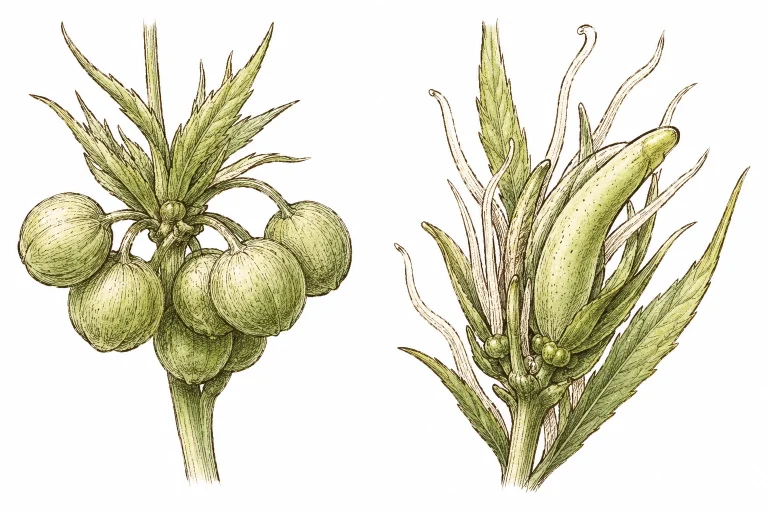
There are two main forms of hermaphroditism. The classic form shows fully developed male pollen sacs growing in the bud sites between the female calyxes. The second form is much sneakier: so-called bananas, or nanners. These are elongated, yellow-green stamens that grow straight out of the bud tissue. They give you almost no warning time because they open extremely fast.
- Hermaphrodite = female plant with male reproductive organs
- Two types: classic pollen sacs and bananas (nanners)
- Often triggered by the plant’s survival mechanism
- Just one open pollen sac can seed your entire grow
- Pollinated buds lose a lot of quality and potency
How to Spot a Hermaphrodite Cannabis Plant: Key Symptoms at a Glance
To catch a hermie early, inspect your plants regularly and carefully under good lighting. Check them daily, at the latest from week two of the flowering stage. A loupe or macro lens works best, so you don’t miss small changes in the bud sites. The sooner you spot the problem, the better your chances of saving the harvest.
The first and most obvious sign is small, round to egg-shaped growths that show up in the calyxes between the white pistils. At first, these early pollen sacs look like normal calyxes. But they have no visible style and no pistils. A real calyx always has two white hairs; a pollen sac doesn’t. This is the single most important rule for telling them apart.
Nanners, the bananas mentioned above, are much more dangerous. These yellow-green, banana-shaped stamens push straight out of mature buds without going through a closed pollen-sac stage. They can be ripe and open within hours. If you find bananas in your flowers, the danger is real and immediate. Check all your other plants right away and act fast.
Another warning sign is seeds suddenly showing up in buds that were seedless before. If you find small, hard, whitish-green seeds while handling your buds, the damage is already done. Somewhere in your grow there’s a pollen source: either a hermaphrodite or a male plant that slipped through. Track down the source immediately.
- Round growths without pistils between calyxes = early pollen sacs
- A real calyx always has 2 white pistils – a pollen sac has none
- Yellow-green, banana-shaped stamens (nanners) right in the bud tissue
- Yellow-green anthers visible between mature buds
- Seeds suddenly forming in previously seedless buds
- Pale yellow dust on leaves or buds (released pollen)
What Causes Hermaphroditism? Why Your Plant Turns Hermie
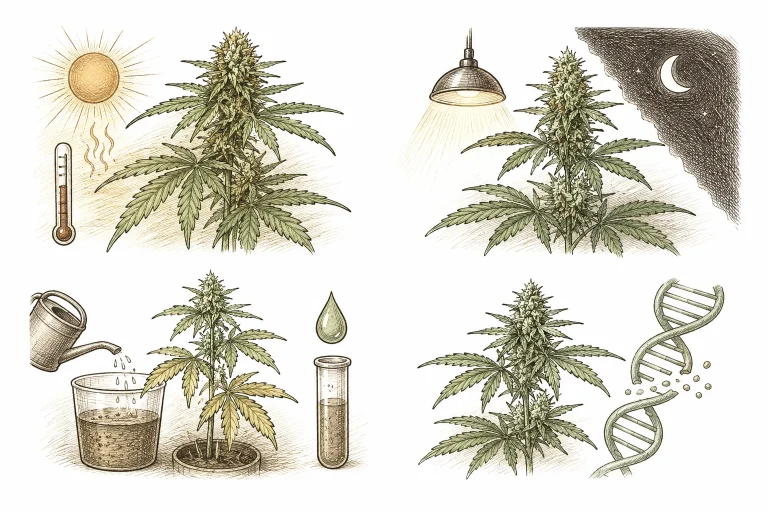
The most common cause of cannabis hermaphrodites is stress during the flowering stage. Your plant reads strong, ongoing stress as a threat to its survival. It then switches on a genetic emergency program so it can pollinate itself. Classic stress triggers include extreme temperatures, especially heat stress above 86 °F (30 °C) for long stretches. Physical damage to stems and branches can do it too, and so can too little or too much water. Poor feeding can also stress a plant hard enough to make it turn hermie.
One of the most critical factors is light getting in during the dark period. In the flowering stage, cannabis needs a stable, uninterrupted dark period of at least 12 hours. Even short interruptions from light leaks, a failed timer or quickly opening your grow tent can be enough to throw the plant’s hormones off balance and trigger hermaphroditism. So check your grow space for light leaks on a regular basis. Even a thin strip of light under the door can cause trouble.
Genetic instability is the second big cause, and sadly it’s out of your control. Poor or unstable genetics, cheap no-name seeds or seeds of unknown origin are much more likely to turn hermie than quality feminized strains from reputable seed banks. Under stress, feminized seeds generally carry a slightly higher risk than regular seeds, because they’re made by chemically inducing a plant to pollinate itself. That doesn’t mean feminized seeds are a problem in general. With good stress management, the risk is very low.
Another factor: plant hormones or certain pesticides that interfere with the plant’s hormone system. Some growth boosters contain ethylene-like compounds that can mess with bud development. Read product labels carefully, and during flowering only use proven products made for cannabis.
- Heat stress above 86 °F (30 °C) for several days during flowering
- Light interruptions or light leaks during the dark period
- Physical damage from training (especially HST methods late in flowering)
- Genetic instability from low-quality or unstable seeds
- Nutrient stress from heavy overfeeding or underfeeding
- Water stress from letting the medium dry out completely or from overwatering
- Using hormone-active products during flowering
- pH problems that keep blocking nutrient uptake
How to Spot a Cannabis Hermaphrodite and Act Fast: Step-by-Step Guide
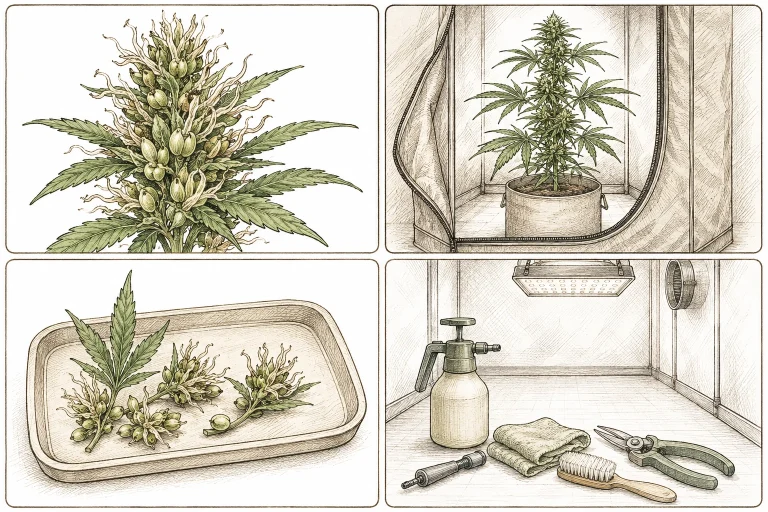
Found a hermaphrodite? Then every minute counts. First things first: move slowly in your grow space. Don’t shake or touch the affected plant until you know whether any pollen sacs have already opened. Ripe pollen is microscopic and spreads in every direction with the slightest air movement. To be safe, turn off your fans while you inspect and remove the plant.
If the hermie shows only a few pollen sacs that are still closed, and the rest of your plants are high quality and well into flowering, you can consider carefully plucking the sacs off with tweezers. This takes thorough daily checks, though, because new sacs can pop up at any time. This method only makes sense for very mild hermaphroditism and takes a lot of discipline. If the plant is heavily hermied, it’s not a fix.
But if the plant shows bananas, lots of pollen sacs or sacs that have already burst, there’s only one reliable move: take the plant out of your grow space right away, all of it. Seal it in a tight plastic bag before you carry it out so no pollen escapes. Get rid of the plant outside your grow area. Then wipe down every surface, the leaves of the remaining plants and your entire grow tent with damp cloths to catch and remove any pollen that may have been released.
After removing the hermie, check all remaining plants very closely every day for the next 10 to 14 days. Stress often affects the whole grow. If one plant turned hermie, others in the same environment can be affected too. Also find and fix the stress trigger. Check temperature, light timers, light leaks and your cannabis pH to prevent more hermies.
- Turn off fans before you touch the plant
- Bag the plant BEFORE you carry it out of your grow
- Wipe down all surfaces with damp cloths after removal
- Check the remaining plants daily for 14 days
- Find and eliminate the stress trigger
- Check your timer and fix light leaks right away
Hermaphrodite vs. Male Cannabis Plant: How to Tell Them Apart
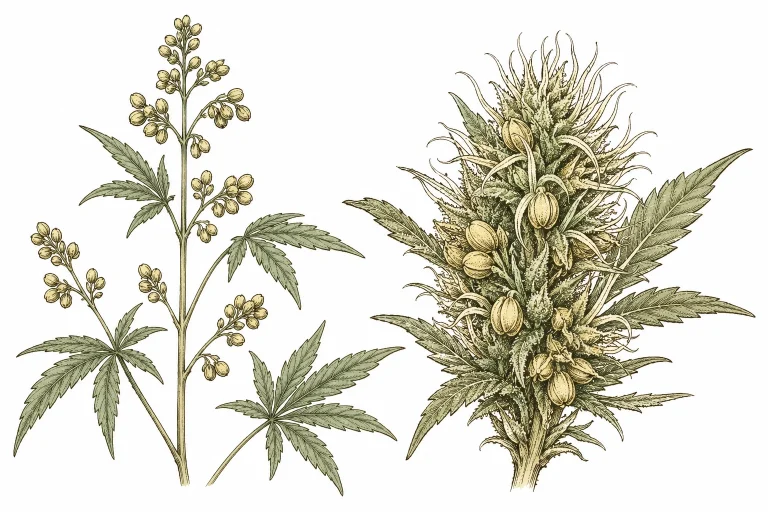
New growers sometimes mix up hermaphrodite plants and male plants. But the difference matters. It decides how you should react, and it gives you clues about the cause. A male cannabis plant only grows male flower clusters, with no female structures at all. The pollen sacs grow in typical clusters on small, separate stalks. They usually show up early in pre-flower, long before female plants show their first calyxes.
A hermaphrodite, on the other hand, clearly started out female. It has pistils, calyxes and often well-developed flowers already. The male structures show up later, tucked between the female calyxes or growing straight out of the bud tissue. This mix of male and female organs on the same plant, or even on the same bud, is the telltale sign of a hermie.
Stipules can also fool you. These are small, spur-like appendages that grow where calyxes meet the stem, and they sometimes get mistaken for pollen sacs. But stipules always have a long, leaf-like shape and are dark green. They never open, and they don’t contain any pollen. When in doubt, grab a loupe, take a close look and search for pistils. If the structure has no white hairs, stay alert.
- Male plant: only pollen sacs, no pistils, visible early in pre-flower
- Hermaphrodite: female flowers with pollen sacs or nanners (bananas) showing up later
- Stipules: green, leaf-like appendages with no pollen – no danger
- Calyx without pistils = red flag, take a closer look right away
- Hermies often only become visible in weeks 3–6 of flowering
Preventing Hermaphrodites: Stress Management for Healthy Female Plants
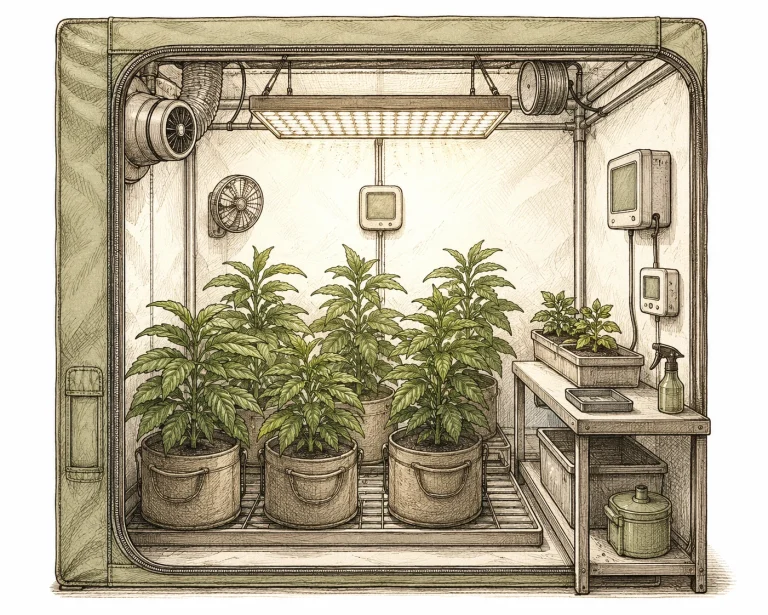
Your best defense against hermaphrodite cannabis is consistent prevention. Good stress management starts with picking high-quality, stable genetics from reputable seed banks. Look for strains that are clearly labeled as stress-resistant or low hermie risk. Cheap or unknown genetics may look tempting, but they can come with a much higher risk of hermies caused by genetics.
During the flowering stage, controlling your environment is everything. Ideally, keep temperatures between 68 and 79 °F (20–26 °C), make sure you have enough ventilation and avoid hot spots, especially right under your light. Check your light timer regularly and seal your grow space against any light leaks. Even opening your grow tent briefly during the dark period should be a rare exception. If you really have to, use a dimmed headlamp with a green light, since cannabis barely reacts to green light.
Managing stress during training matters too. High stress techniques like topping or heavy branch bending should only happen in the vegetative stage and be wrapped up by the first week of flowering at the latest. The later in flowering you stress your plant mechanically, the higher the risk of a hermie reaction. If you’ve already run into nutrient problems or nutrient burn, fix them completely before you flip to flowering.
Checking your plants by eye regularly from week 2 of flowering on is the best early warning system you have. Build a daily routine: use good lighting and a loupe to look into your buds, especially where branches meet the main stem. Pollen sacs you catch early can still be removed. The ones you catch late can cost you your harvest. Round out your prevention by keeping a grow journal where you note any unusual changes.
- Buy high-quality, stable genetics from reputable seed banks
- Keep temperatures below 82 °F (28 °C), ideally 68–79 °F (20–26 °C)
- Check your light timer daily and inspect your grow space for light leaks
- Stick to the dark period, no white light in your grow at night
- Only do high stress training in the vegetative stage
- Fix nutrient and pH problems before flowering starts
- From week 2 of flowering, check every bud daily with a loupe
- Keep a grow journal so you can track what happened
Seeds from Hermaphrodite Plants: Are They Any Good?
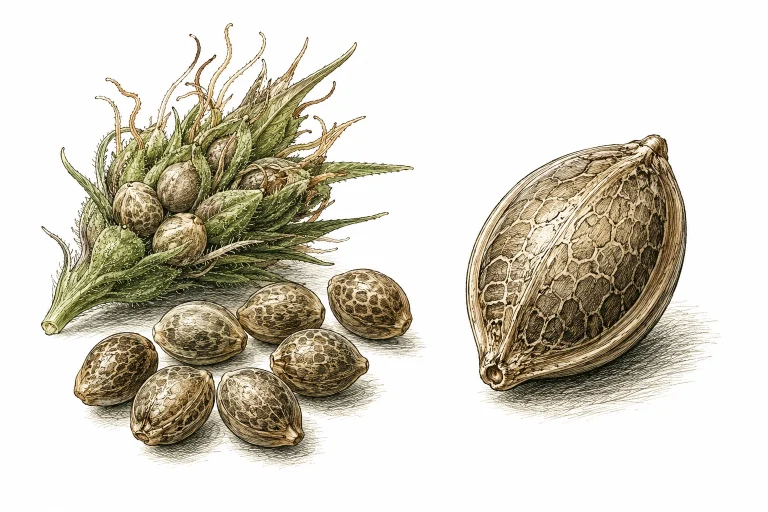
Did part of your harvest get seeded despite your best efforts? Then the next question is: what do you do with those unwanted seeds? When a hermaphrodite plant pollinates itself, the seeds it produces are almost all female, much like feminized seeds. That’s because a plant needs a Y chromosome to turn out male, and a hermaphrodite plant usually doesn’t pass one on.
The catch: these seeds are genetically unstable. They carry the tendency to go hermie, because they come from a plant that already turned hermaphrodite, whether from stress or from its genetics. If you plant them, there’s a high risk the offspring will also turn hermaphrodite under stress. You can still grow them out for your own personal grow. Just stay extra alert and give them ideal conditions.
If you want solid, stable genetics for future grows, you’re better off buying quality seeds from a seed bank. In the long run, the quality of your harvest depends heavily on the genetics you start with. For a full overview of every key decision in building a successful setup, check out our guide to indoor cannabis growing.
- Seeds from self-pollination are almost always female (like feminized seeds)
- But they carry the genetic instability of the mother plant
- High risk of hermaphrodites in the next generation
- Usable for a personal grow, but keep a much closer eye on them
- Not suitable for serious breeding – buy stable genetics instead
A recent scientific review in the journal Plants (MDPI) shows how strongly environmental stress can affect sex expression in cannabis: stress-induced hermaphroditism is estimated to affect 5 to 10 % of cultivated plants, triggered in part by shifts in the balance of auxin and gibberellin.
If pollen sacs go unnoticed, you may end up with seeds in your buds – that article shows you how to spot them and what you can do about it.
Frequently Asked Questions
Can I still save and harvest a hermaphrodite plant?
Yes, in some cases. If there are only a few pollen sacs, they’re still closed, and you check daily, you can carefully remove them with tweezers. If the plant is heavily hermied or showing bananas, the risk is too high. In that case, remove the plant to protect the rest of your harvest.
How fast can pollen from a hermaphrodite plant seed all your other plants?
Very fast. Once pollen is released, your ventilation and air movement can spread it through the entire grow space within minutes. In theory, a single open pollen sac is enough to pollinate every flower within reach. That’s why it’s so important to act right away: turn off the fans and bag the plant in plastic before you carry it out.
Do feminized seeds turn hermaphrodite more often than regular seeds?
Feminized seeds have a slightly higher genetic predisposition to hermaphroditism, because they’re created through chemically induced self-pollination. With quality genetics from stable lines and good growing conditions, though, the risk is very low. Cheap or poor-quality feminized seeds from unknown sources really are more prone to it.
Are bananas (nanners) just as dangerous as true pollen sacs?
Yes, and often even more so, because they mature faster. Bananas don’t have a shell that has to burst first. They’re open from the start and can release pollen right away. They’re also harder to spot, since they can hide deep inside the bud. That’s why a daily check with a jeweler’s loupe is a must.
What do I do if I only find seeds in my buds after harvest?
Somewhere in your grow, a pollen source was active – either a hermaphrodite plant or a male plant you missed. Unfortunately, there’s nothing left to fix for this harvest. Figure out what might have caused the stress and dial things in for your next grow: check your genetics, make sure your space is light-tight, and improve your temperature control.
Can I stop hermaphroditism by removing the pollen sacs?
Only if it’s mild. Pulling pollen sacs won’t stop hermaphroditism for good, because new sacs can keep popping up. Think of it as damage control, and it means checking your plant every single day. If the plant is heavily hermied or showing nanners, removing the whole plant is the only safe fix.
Hermaphrodites are just one of several cannabis symptoms that don’t fit into a classic category. You’ll find more special cases like foxtailing or HLVd in the overview.
Bottom Line
Spotting cannabis hermaphrodites is a crop-saving skill for every grower, because hermaphroditism can wreck an entire harvest within hours. What matters most: daily visual checks starting in week two of flowering, isolating and removing affected plants right away, and consistently cutting out every stress factor in your grow. With quality genetics, stable temperatures, a light-tight grow space and clean nutrient management, you can keep the risk to a minimum. If you know the early warning signs and act fast, you can reliably protect your grow, even when a hermie shows up.
