

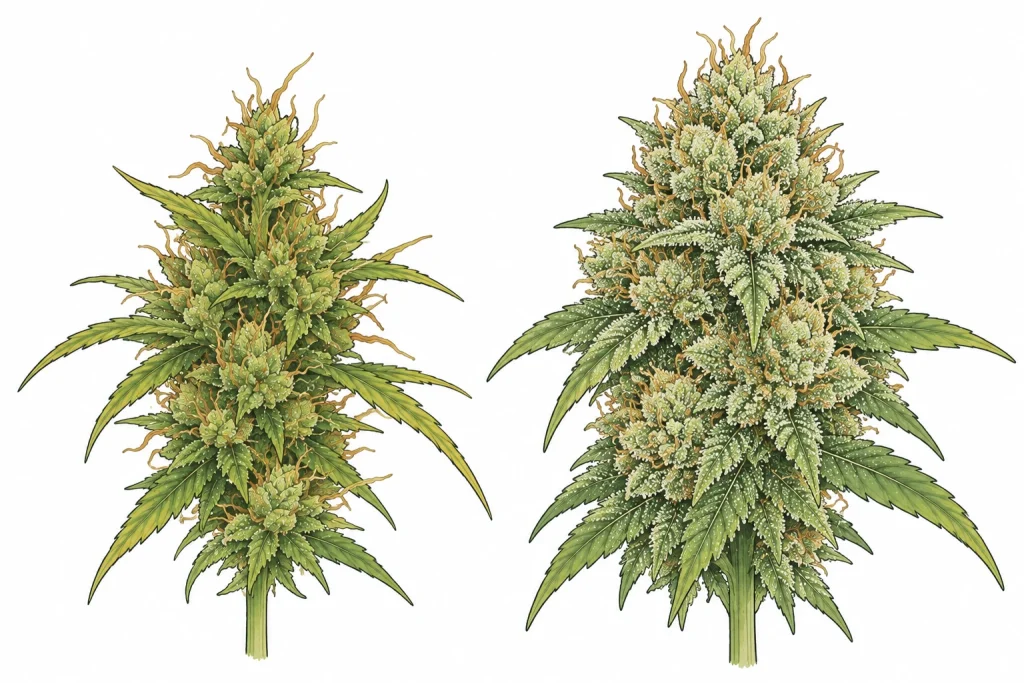
Few trichomes on cannabis is one of the most frustrating problems for growers who want top quality and potency. Trichomes are the tiny, crystal-like glandular hairs on buds and leaves. They produce THC, CBD, terpenes and other cannabinoids. Without them, your harvest falls far short of its potential. If your plant barely sparkles late in flower, shows little resin and looks dry, there’s usually a clear, identifiable cause behind it. In this article, you’ll learn all the key reasons for poor trichome development and how to fix them step by step.
What Are Trichomes and Why Do They Matter So Much?
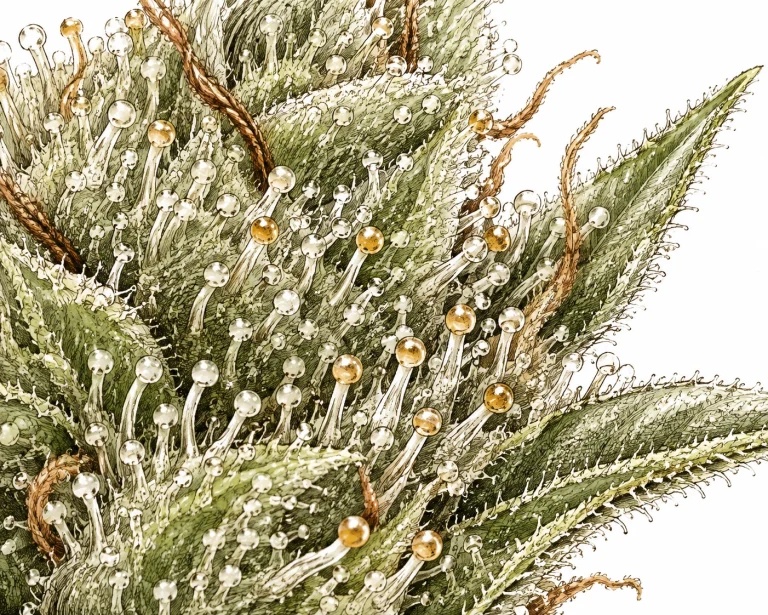
Trichomes are microscopic glandular hairs that grow on the surface of cannabis buds, sugar leaves and sometimes stems. They’re made of a stalk and a round gland head, where the actual cannabinoid production happens. There are three main types: bulbous, capitate-sessile and capitate-stalked trichomes. The stalked ones are the biggest and most valuable, because they produce most of the cannabinoids and terpenes.
Trichome density and maturity largely decide the quality of your harvest. Few or poorly developed trichomes mean less THC, less CBD, weaker aroma and an overall much lower-quality harvest. Your goal as a grower: dial in conditions so your plant builds as many large, well-filled trichomes as possible. Want a full checkup of your plant? The Cannabis Plant Diagnosis Hub gives you a complete overview of all possible plant problems.
- Stalked glandular trichomes produce the largest share of THC and terpenes
- Trichomes naturally protect the plant from UV radiation, insects and fungi
- Milky white trichomes indicate peak THC content
- Amber trichomes signal that THC is breaking down into CBN
- Clear trichomes mean the cannabinoids aren’t mature yet
Few Trichomes on Cannabis: The Most Common Causes at a Glance
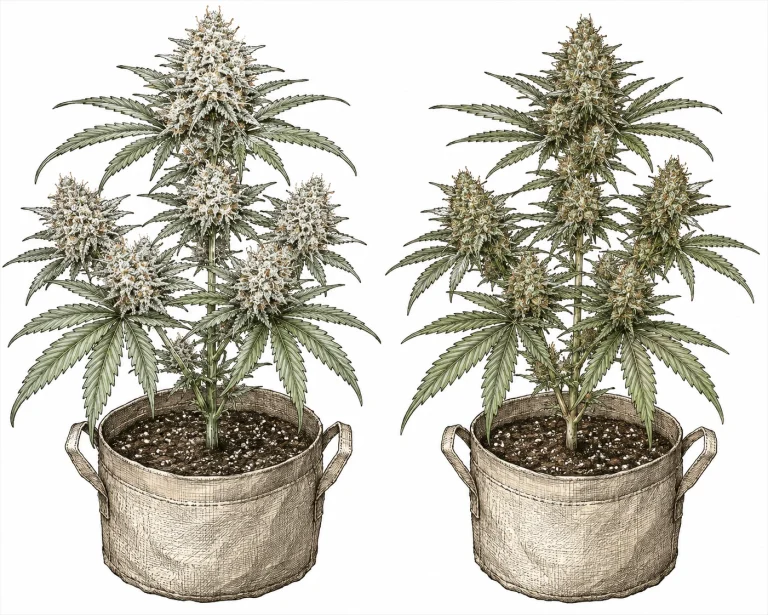
If you notice few trichomes on your cannabis plant, there are several clear causes to check. The most common ones are poor lighting, less-than-ideal temperature and humidity, genetic limits and nutrient problems. On top of that come stress factors like overly aggressive training, pest infestations and harvesting at the wrong time. The good news: you can fix most of these factors once you’ve pinned down the cause.
Light is the factor growers underestimate most often. Cannabis produces trichomes as a protective response, partly to UV-B radiation. If your grow room lacks UV-B or your light intensity is too low, trichome production can fall well short of its maximum. The same goes for nutrient imbalances: a calcium deficiency in cannabis, for example, can weaken the cell structure of the trichome glands and indirectly reduce resin production.
- Light intensity too low or the wrong light spectrum in the flowering stage
- Missing UV-B radiation holds back the plant’s natural protective response
- Unfavorable temperatures (too hot, too cold) during flowering
- Humidity that’s too high in late flower reduces resin production
- Nutrient deficiencies or nutrient burn disrupt plant functions
- Genetically weak strain with low trichome potential
- Harvesting too early, before trichomes are fully mature
- Mechanical stress from incorrect or overly aggressive training
Light: The Biggest Factor Behind Few Trichomes on Cannabis
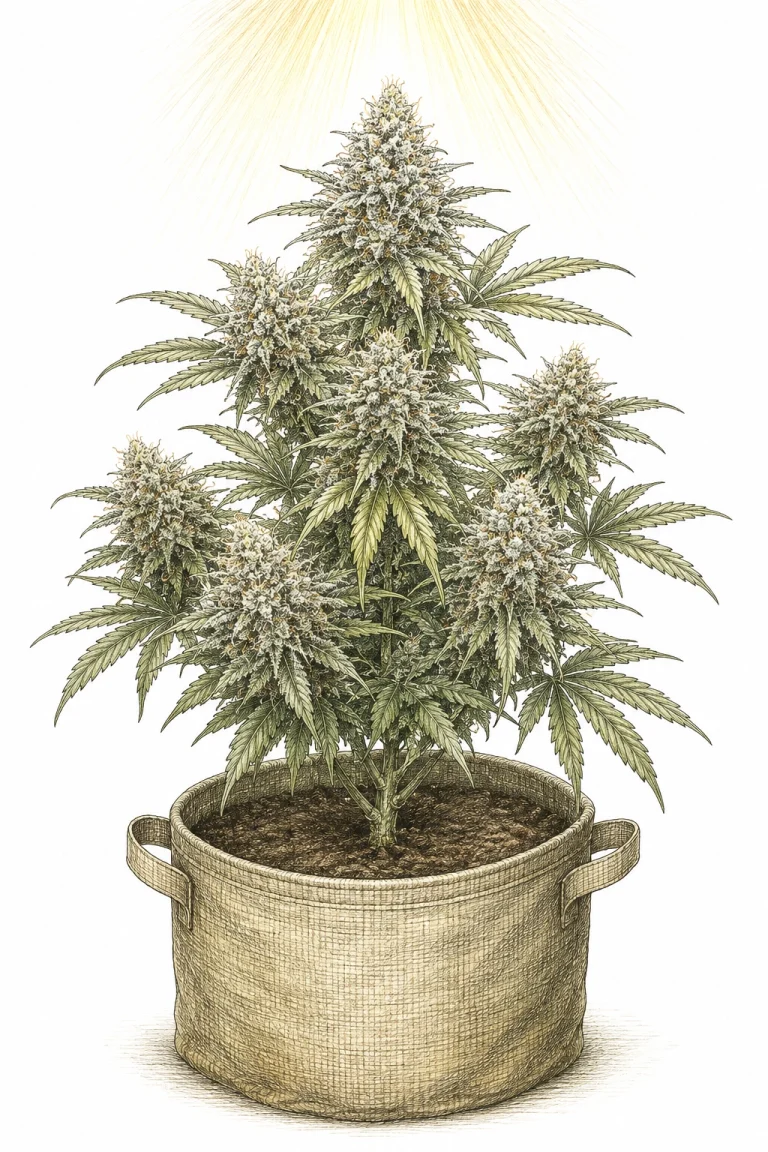
Light is by far the most important external factor for trichome development. Cannabis originally produces trichomes as protection against intense sunlight, insects and other environmental stress. The more light hits the buds, especially UV-B, the more resin the plant tends to produce. Indoor setups often get no UV-B at all, because most HPS and standard LED lights barely cover this part of the spectrum. Full-spectrum LEDs with a UV-B component or separate UV-B lamps can make a noticeable difference here.
Besides the spectrum, light intensity (measured as PPFD (photosynthetic photon flux density) or lux) plays a key role. In the flowering stage, PPFD should ideally sit between 600 and 1,000 µmol/m²/s, or even higher depending on the strain and how much CO₂ is available. If your light hangs too far away or is too weak for your footprint, the buds simply don’t get enough energy for maximum trichome production. Also check your light schedule: a 12/12 cycle with 12 hours of total darkness is a must during flowering. Any light leak during the dark period can disrupt the plant’s hormonal processes and slow down resin production.
- Use UV-B strategically: special LEDs or separate UV-B lamps during the last 4–6 weeks of flowering
- Aim for a PPFD of 600–1,000 µmol/m²/s in the flowering stage
- Adjust your light height regularly: too close can cause light burn, too far cuts intensity
- Make sure the 12-hour dark period is completely dark
- HPS lights offer a broader flowering spectrum than many basic LEDs
Temperature and Humidity Behind Poor Trichome Development
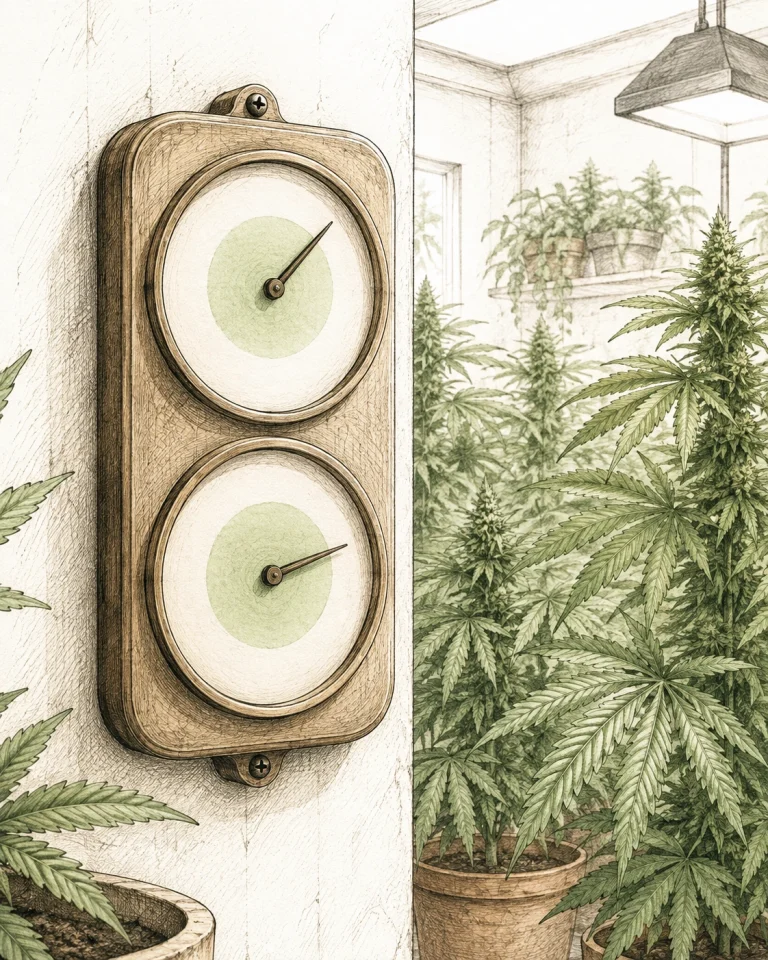
Temperature and humidity directly affect trichome production, and many beginners underestimate this. High temperatures, especially above 82 °F (28 °C), speed up the breakdown of terpenes and cannabinoids in the trichomes before you even harvest. Terpenes are volatile compounds that evaporate in the heat, which can seriously hurt aroma and quality. Ideal daytime temperatures are 68–79 °F (20–26 °C), with a slight drop to 64–72 °F (18–22 °C) at night. This so-called “DIF” (day/night temperature difference) can even boost anthocyanin production and, indirectly, resin production.
Lower the humidity (relative humidity, RH) to 40–50% RH in late flower. Humidity above 60% during flowering doesn’t just invite mold. It also reduces the plant’s drive to produce protective trichomes. Controlled dry stress in the final weeks before harvest, created by lowering humidity, signals the plant to make more resin for self-protection. Running 35–45% RH for the last 2 weeks before harvest is especially recommended for maximum trichome density. Learn more about how to water cannabis properly, because watering mistakes also affect the microclimate around your buds.
- Ideal temperature in the flowering stage: 68–79 °F (20–26 °C) during the day, 64–72 °F (18–22 °C) at night
- Never above 82 °F (28 °C): terpenes evaporate and trichomes degrade
- Humidity in early flower: 50–60% RH
- Humidity in late flower: 40–50% RH
- Last 2 weeks: 35–45% RH for maximum trichome stress
- A day/night difference of 9–14 °F (5–8 °C) stimulates resin production
Nutrient Problems as a Cause of Low Trichome Production
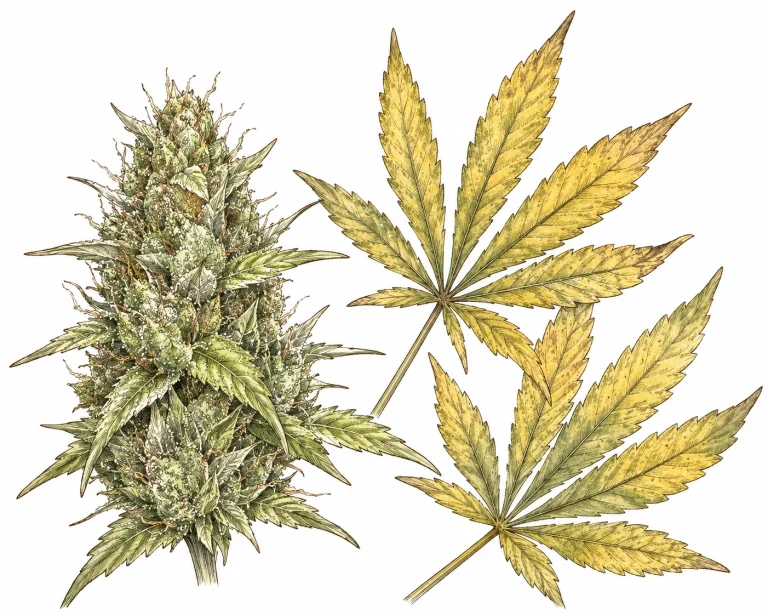
Balanced feeding is the foundation for healthy, resinous buds. In the flowering stage, the plant needs much less nitrogen and more phosphorus and potassium instead, both directly involved in bud and trichome formation. A phosphorus deficiency can noticeably slow bud development, while a potassium deficiency can hurt terpene synthesis and trichome quality. If you feed too much nitrogen during flowering, you risk lush leaf growth at the expense of bud and resin production.
At the same time, overfeeding is one of the most common reasons for poor trichome development. If you feed too aggressively, you can throw off the pH in your growing medium and trigger nutrient lockout. Your plant then can’t take up certain minerals, even when they’re sitting right there in the medium. An off pH for cannabis is one of the most common invisible stressors. It blocks nutrient uptake and can indirectly hold back trichome development. In late flower, a targeted flush with plain water is also worth considering. It helps clear out built-up nutrient salts and can improve the aroma of your buds.
Secondary nutrients and micronutrients matter too. Magnesium is a key building block of chlorophyll, so it drives your plant’s entire energy production. When magnesium runs short, the whole metabolism suffers, and so does resin production. Silicon isn’t a classic macronutrient, but it strengthens cell walls and can support trichome production. Want to dig deeper into common feeding problems? Check out the article on cannabis nutrient burn for practical tips on getting your dosing right.
- Cut back nitrogen in the flowering stage, since too much can slow bud formation
- Increase phosphorus and potassium (PK booster) from week 3-4 of flower
- Keep an eye on root-zone pH: 6.0-7.0 for soil, 5.5-6.5 for hydro
- Spot magnesium deficiency early: interveinal chlorosis on older leaves
- Silicon additives can boost trichome production and cell strength
- Flush 1-2 weeks before harvest for cleaner, more aromatic buds
- Check your EC (electrical conductivity) regularly to avoid nutrient burn
Genetics and Strain Choice When Trichomes Are Sparse
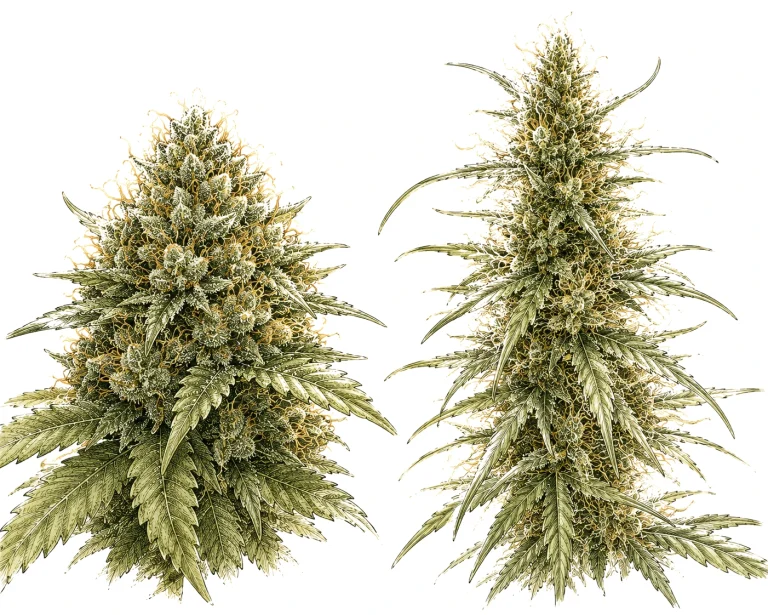
Your plant’s genetics set the hard ceiling for trichome production. Even in a perfect grow, a strain with low genetic trichome potential will never match the resin output of a top-shelf Kush. Sativa-dominant strains in particular tend to put on a less dense trichome coat than indica-dominant or Kush strains, though the quality of those trichomes can still be excellent. If you keep seeing few trichomes even though your conditions are dialed in, your strain choice might be the real issue.
Autoflowering strains often produce fewer trichomes than photoperiod strains. They’re bred to finish fast, so they have less time to build up resin. Reggie or bagseed genetics of unknown origin also often show a much weaker trichome profile than stable, selectively bred strains from reputable seed banks. If you’re after maximum resin, go for strains that are known for high THC and heavy frost.
- Indica-dominant and Kush strains usually show denser trichome coverage
- Autoflowering strains have limited trichome potential by genetics
- Choose seed bank genetics with a solid breeding history
- Bagseed can come with weak genetics, since its origin is unknown
- Pick strains with documented high THC for maximum resin
- Pheno hunting: some plants of the same strain produce more resin than others
How to Improve Trichome Development in Cannabis: Stress Management and Techniques
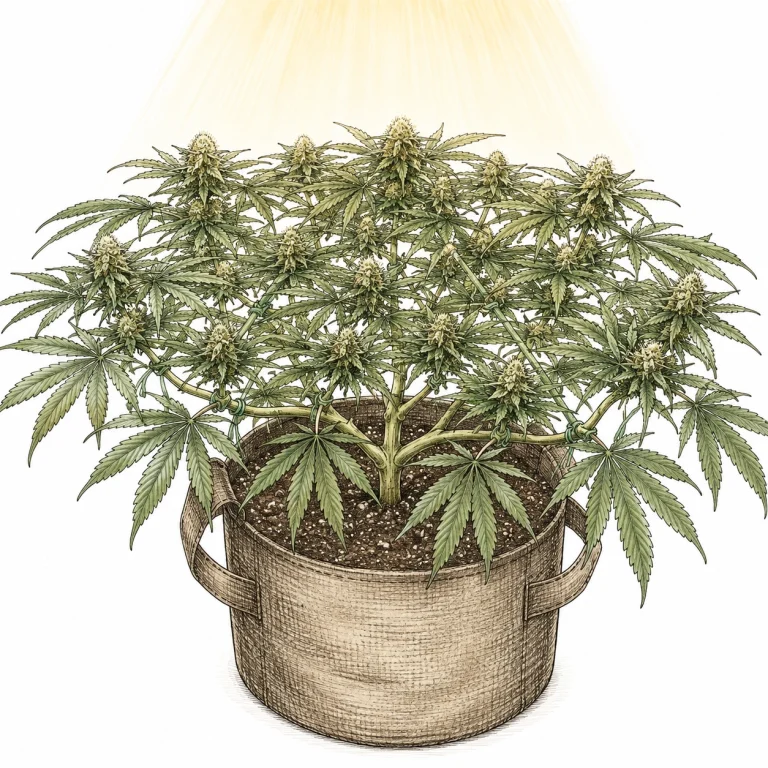
Controlled stress can actually kick trichome production up a notch, while uncontrolled stress works against it. Your plant makes trichomes as a defense mechanism, and targeted stress in late flower can trigger that response. Well-known techniques include dropping temperature and humidity in the final weeks, a 24-48 hour dark period right before harvest, and so-called “leaf stripping”: removing extra leaves to get more light onto the buds. These methods are hotly debated in the community, but many growers report noticeable results.
What you want to avoid is heavy mechanical stress from aggressive training during the flowering stage. Low stress training (LST) in the vegetative stage is safe and helpful. But going too hard on your plant during flower can stress it out and shift its whole energy budget toward repair, at the cost of resin production. The same goes for pests: spider mites, aphids and other pests can seriously weaken your plant and indirectly reduce trichome density. That’s why acting fast at the first signs of pests is key.
For a full diagnosis of your plant problems, whether it’s pests, nutrient deficiencies or environmental stress, check in regularly with the Cannabis Plant Diagnosis Hub. There you’ll find step-by-step help for all the common grow problems that can hold back trichome development.
- Dropping night temps to 61–64 °F (16–18 °C) in the last 2 weeks can boost resin production
- Lower humidity to 35–45% in late flower
- Optional 24–48 h dark period right before harvest (the research is mixed)
- Leaf stripping (defoliation) in early and mid flower for better light penetration
- No aggressive training after week 3–4 of flower
- Deal with pests right away, because stressed, weakened plants tend to make less resin
- CO₂ enrichment to 1,000–1,200 ppm combined with high light intensity
Harvest Time: How Bad Timing Leads to Low Trichome Production
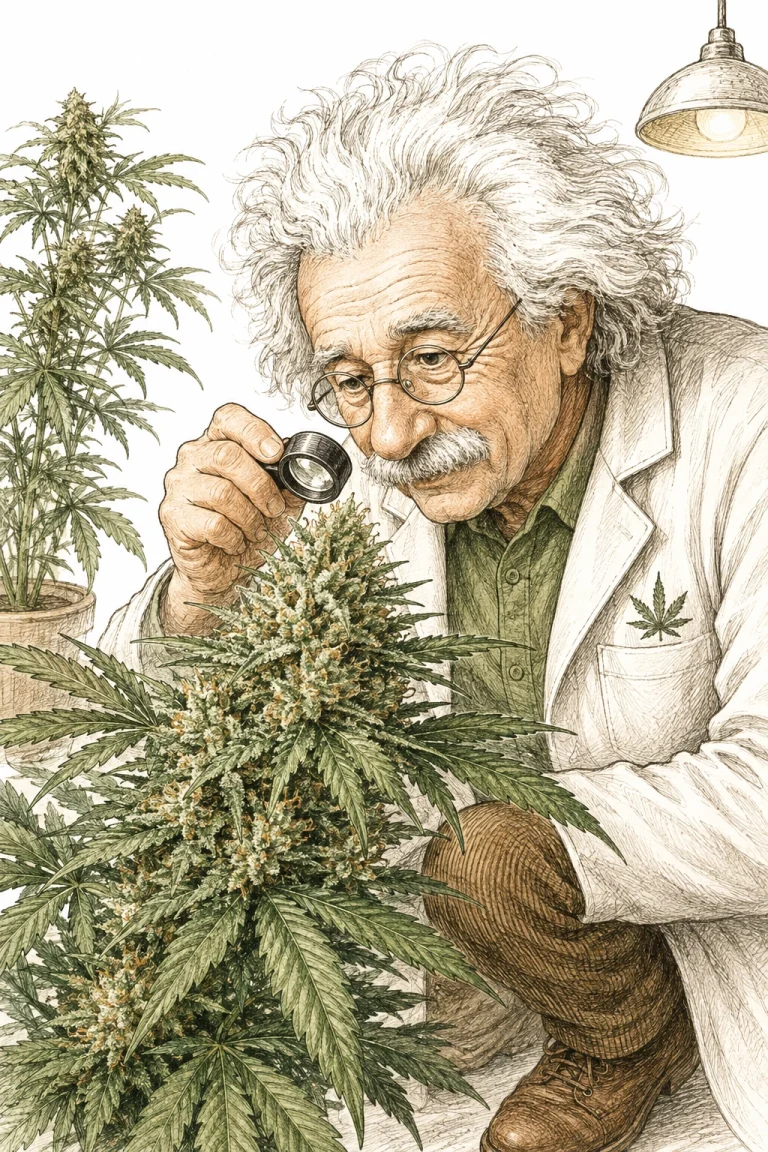
One of the most common reasons growers feel let down after harvest, convinced their buds have few trichomes, is bad timing. If you harvest too early, while most trichomes are still clear instead of milky white, you miss the point where they’re fully loaded with cannabinoids. The buds can look literally “empty” because the compounds haven’t been made yet. Checking trichomes with a loupe or microscope (at least 40x magnification) is a must for nailing your harvest window. For a full walkthrough, see the article How to Read Trichomes for Harvest Time.
On the flip side, leaving plants too long can also hurt trichome quality. Amber trichomes show that THC is already breaking down into CBN, so potency can drop and the high tends to shift toward a sedating effect. The sweet spot is usually around 70–80% milky and 20–30% amber trichomes, depending on the effect you’re after. Reading the right harvest moment is a key skill, and you get better at it with every run.
- Clear trichomes: not ripe yet, compounds not fully developed
- Milky trichomes: peak THC, more energetic, heady effect
- Amber trichomes: THC breaking down into CBN, more sedating, body-heavy effect
- Use at least a 40x loupe or a USB microscope for accurate trichome checks
- Harvest at 70–80% milky and 20–30% amber for a balanced effect
- Pistils alone aren’t a reliable harvest indicator, so always check the trichomes
Low trichome production can also come with other flowering problems. Check whether your plant shows signs of being a hermaphrodite or whether seeds have already formed in the buds.
Frequently Asked Questions
Why does my cannabis plant have hardly any trichomes even though it looks healthy?
A healthy-looking plant with few trichomes usually points to weak lighting, a strain with poor genetics for resin, or bad harvest timing. Start by checking your light’s intensity and spectrum. Missing UV-B is a common but often overlooked factor. Your harvest window matters a lot too: take a loupe to the trichomes and see if they’re still clear (a sign you harvested too early).
Can I still improve trichome development during the flowering stage?
Yes, you can still influence trichome development while your plants are flowering. Drop night temps to 61–64 °F (16–18 °C), lower humidity to 40–50% RH and make sure your light intensity is high enough. PK boosters (bloom nutrients rich in phosphorus and potassium) can also support resin production. From week 4 of flower on, avoid aggressive training and keep pests out.
Does a 48-hour dark period before harvest really increase trichomes?
The 48-hour dark period before harvest is a popular technique, but the science behind it isn’t settled yet. Many growers report stronger aroma and more resin, while others see no difference at all. The effect is probably small. Long-term factors like light, climate and feeding matter much more. That said, it usually doesn’t hurt to give it a try.
Which strains produce the most trichomes?
Indica-dominant strains, OG Kush genetics, Chemdawg lines and high-performance hybrids like Gorilla Glue, Zkittlez or Wedding Cake are known for heavy trichome production. Hash plants like Pakistani Kush or Afghani were traditionally bred for maximum resin. Among autoflowering strains, Gorilla Cookies Auto and Bruce Banner Auto reach fairly high trichome density.
Can too many nutrients lead to fewer trichomes?
Yes. Overfeeding is a common cause of weak resin production, especially with nitrogen-heavy nutrients during the flowering stage. Too much nitrogen pushes leaf growth instead of bud development. On top of that, excess nutrient salts can throw your pH off and trigger nutrient lockout, which can weaken the whole plant. Switch to a P-K-focused bloom nutrient in flower and check the pH of your growing medium regularly.
How can I tell if my trichomes are ripe without a microscope?
Judging trichomes accurately without a microscope is tricky. Still, a cheap jeweler’s loupe with 30–60x magnification lets you tell milky-white trichomes from clear ones. Budget USB microscopes are another option and can give you solid results. As a rough guide: once 70–90% of the white pistils have turned red-orange and the buds feel dense and smell strong, you’re usually in the harvest window. For precise timing, though, a microscope is a must.
There are a few similar issues during flower you should know about, too: Foxtailing and Popcorn Buds often share the same stress triggers as weak trichome development.
The Bottom Line
Low trichome production in cannabis isn’t bad luck. In most cases, it comes down to clear causes you can identify and fix. Your three biggest levers: dialed-in lighting with enough UV-B, a stable climate with a controlled day/night temperature swing and humidity, and a feeding plan built for the flowering stage with a P-K focus. Add a genetically strong strain selected for resin and a precise harvest time based on checking your trichomes. Optimize these factors step by step, and you can see a measurable boost in resin production with every run, and with it, better overall quality of your harvest.
