

Your cannabis plant should be mature enough, but it still won’t flower? That’s a real head-scratcher for a lot of growers. Most of the time, a simple light cycle mistake is behind it. Sometimes it’s stress, nutrient problems or a plant that’s simply too young. In this article, we’ll show you why cannabis doesn’t always start flowering when you expect it to, and how you can trigger flowering on purpose and reliably. That way, you get your plant back on track fast.
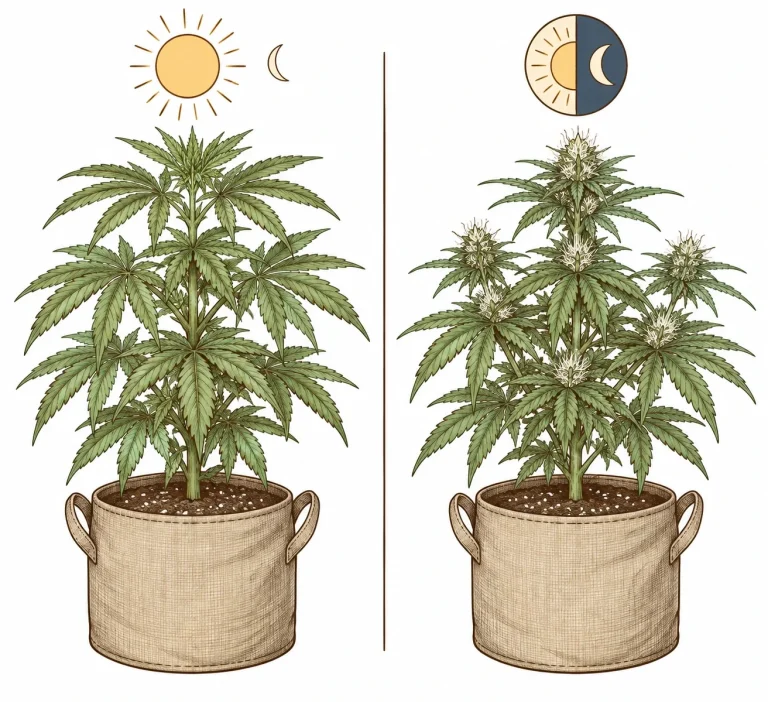
Cannabis Not Flowering: The Most Common Causes at a Glance
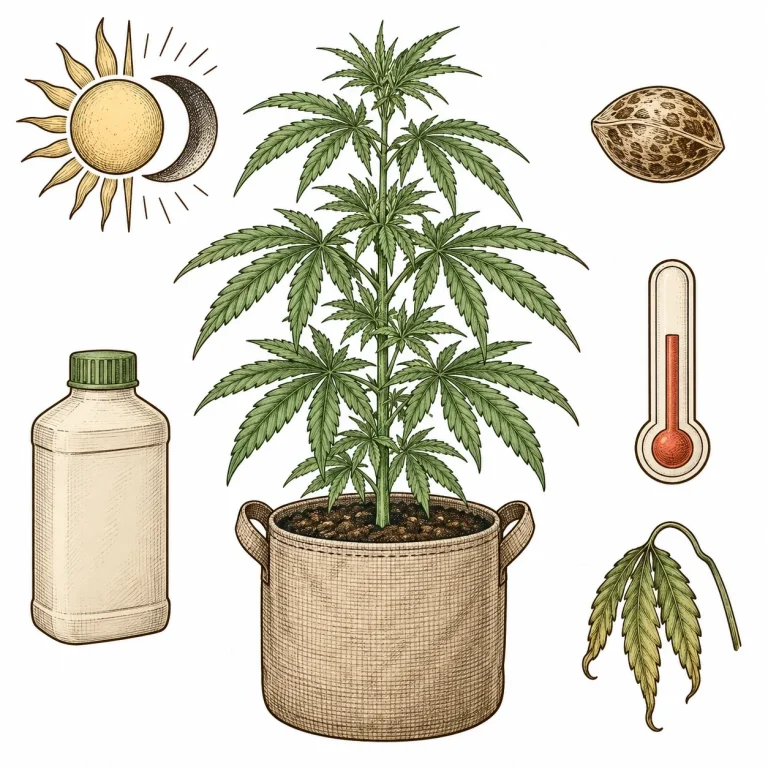
There are several reasons why cannabis can switch to the flowering stage late or not at all on its own. With photoperiod strains, the light cycle is by far the most common cause. These plants go by the length of the dark period. They need at least 12 hours of uninterrupted darkness per day so the light receptor phytochrome can trigger flower initiation.
Besides light, the plant’s age matters too. Very young plants that haven’t developed enough nodes and root mass yet can be slow to respond to the flowering signal, even if you switched the light cycle correctly. Stress from transplanting, training or pests can delay this transition even more.
Another factor that’s often overlooked is light pollution during the dark period. Even small light sources like a standby LED, a phone screen or stray light coming through a door can stop flowering completely or turn your plant into a hermaphrodite.
- Wrong or interrupted light cycle (no clean 12/12 schedule)
- Plant too young, with too little vegetative development
- Light leaks during the dark period
- Ongoing stress from transplanting, training or a pest infestation
- Nutrient imbalance, especially too much nitrogen
Photoperiod vs. Autoflower: Why Not All Cannabis Flowers the Same Way
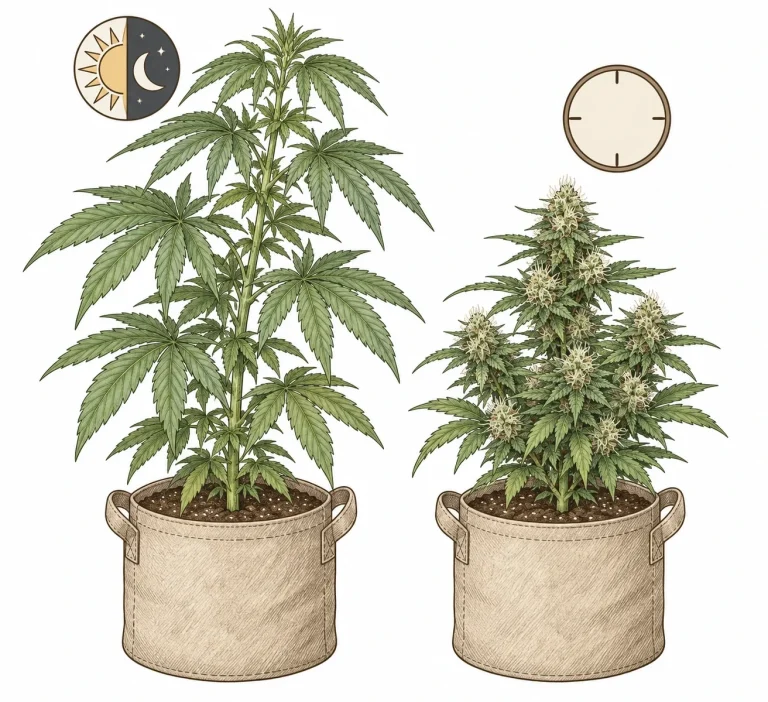
Whether and when cannabis flowers depends heavily on the strain’s genetics and its photoperiodism. Photoperiod strains need you to actively switch the light cycle from 18/6 to 12/12 to kick off flowering. Without that switch, they can in theory stay in the vegetative stage indefinitely, as long as the light period stays above 14 hours.
Autoflowering strains are a different story. They flower regardless of the light cycle, triggered by their genetic age. If your autoflower won’t start flowering, the cause is usually heavy stress, root problems or weak genetics. For more background, check out our article on autoflowers flowering too early, which also covers the opposite problem.
Not sure which stage your plant is in right now, or whether it’s even ready to flower yet? Take a look at our in-depth plant diagnosis guide. It sorts every growth problem step by step.
- Photoperiod: flowering is triggered by a change in the light cycle
- Autoflower: flowering starts automatically based on genetic age, usually after 3-5 weeks
- Photoperiod strains need exactly 12 hours of darkness
- Autoflowers react more to stress than to light
How to Set the Right Light Cycle So Your Cannabis Flowers
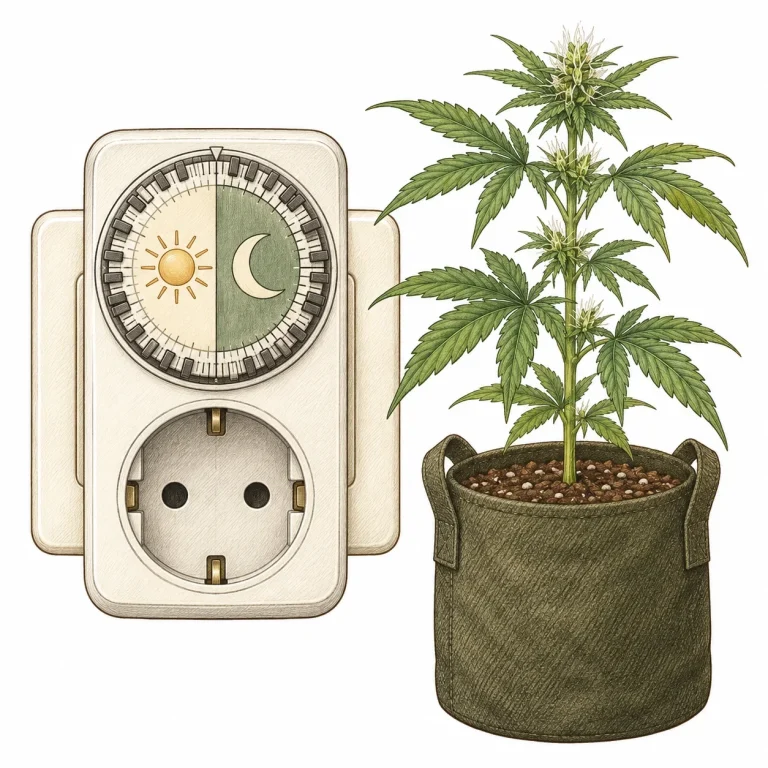
The most important step to get photoperiod strains flowering is a clean, consistent 12/12 light cycle. Always use a timer (German) so the schedule stays exactly the same every day. Even small shifts of a few minutes add up over weeks and can confuse your plant.
Pay special attention to the dark period. It has to be truly pitch-black, because any interruption can reset the flowering process or even trigger hermaphrodites. Check your grow tent for light leaks around zippers, vents and the door.
If your plant has been on 12/12 for several weeks and still isn’t flowering, also check the room temperature during the dark period. Temps above 82 °F (28 °C) can delay the flowering trigger as well. Your choice of light matters too. Learn more in our comparison LED vs HPS for growing cannabis.
- Use a timer for a precise, consistent 12/12 schedule
- Black out your grow tent completely, no light leaks
- Keep dark-period temps below 79-82 °F (26-28 °C)
- Give it at least 2-3 weeks after the switch
- Use only green light if you need to check on plants during the dark period
Stress and Nutrients: More Reasons Your Cannabis Isn’t Flowering
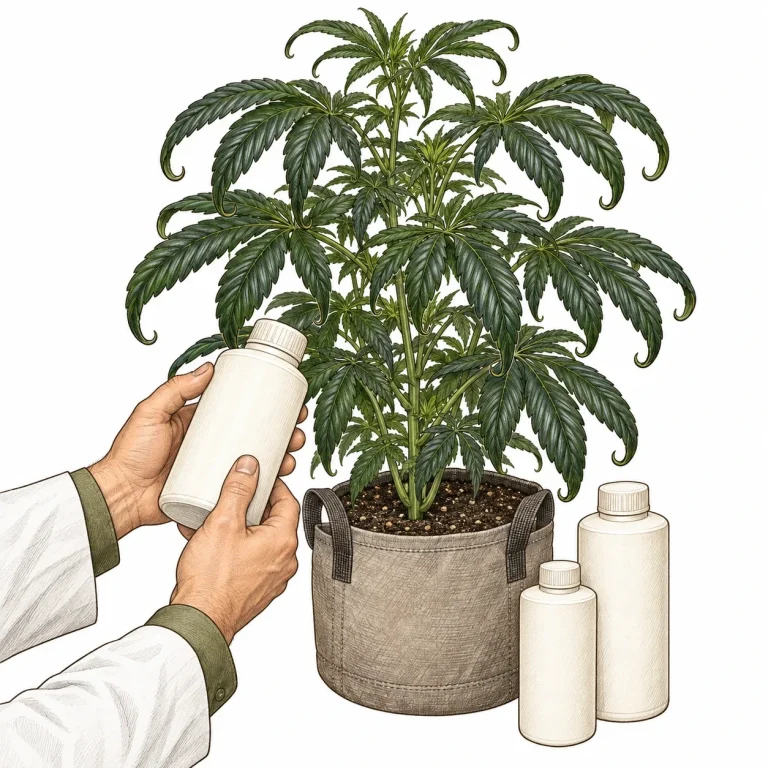
Besides the light cycle, nitrogen toxicity can also keep flowering from kicking in as expected. Too much nitrogen keeps your plant stuck in veg mode and can noticeably delay the switch to the flowering stage. At this point, cut back on nitrogen and increase phosphorus and potassium.
Physical stress from aggressive training, transplanting right before the flip or a pest infestation can also make your plant put its energy into repairs instead of building flowers. So always schedule training like topping or LST (low stress training) well before the flip, not during or right after it.
Matching your feeding to each stage helps you avoid these problems from the start. Our cannabis NPK chart shows you exactly which ratio makes sense in each growth stage.
- Cut back on excess nitrogen and increase phosphorus and potassium
- Finish all training at least 1–2 weeks before you flip to flower
- Treat pests and diseases thoroughly before the flip
- Don’t transplant right before or during the flip to flower
- Give the roots enough space so the plant is mature enough to flower
When to Step In If Your Cannabis Won’t Flower
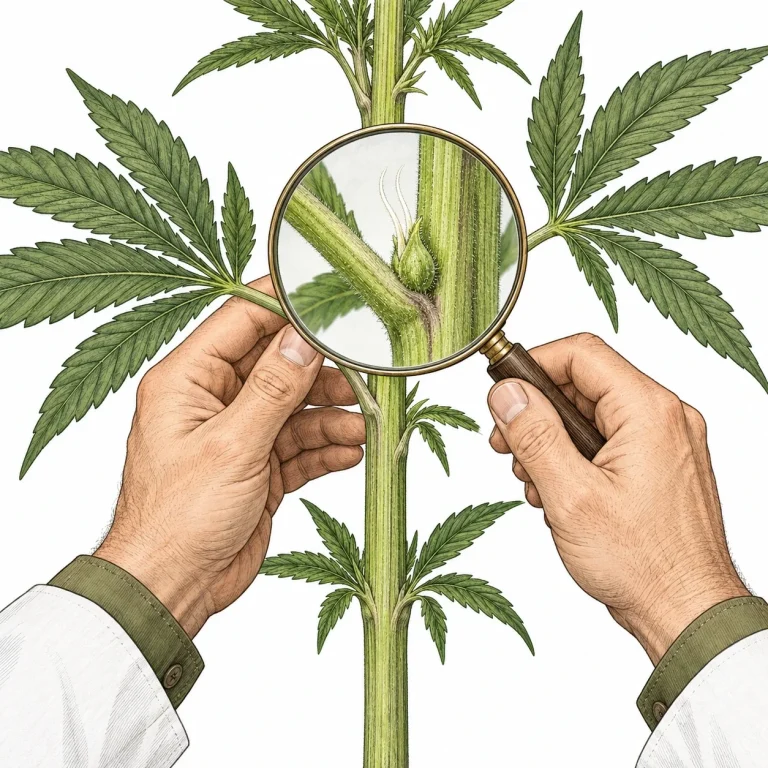
After you switch to 12/12, give your plant at least two to three weeks before you assume there’s a real problem. During this time, it goes through the flower stretch: it keeps growing noticeably before the first bud sites show up.
If you still can’t see any pistils at the nodes after three to four weeks on the correct light cycle, work through the most common culprits one by one: light leaks in your tent, timer consistency, feeding, and the overall health of the plant.
In rare cases, a genetic quirk or a plant that has already revegged can be the cause. If your plant flowered before and has now gone back to vegetative growth, check out our article on cannabis revegetation for more on this special case.
- Plan on 2–3 weeks of patience after switching the light cycle
- The flower stretch is normal and nothing to worry about
- No pistils after 4 weeks? Check the common culprits one by one
- Check your tent for light leaks and test your timer regularly
- If the plant keeps slipping back into veg, think revegetation
Frequently Asked Questions
How long does it take for cannabis to flower after the flip?
Usually, the first pistils show up one to three weeks after you switch to a 12/12 light cycle. The exact timing depends on the strain and the age of the plant.
Can an autoflower fail to flower, too?
Yes. When an autoflower won’t flower, it’s usually down to heavy stress, root problems, or weak genetics, not the light cycle. Autoflowers start flowering based on their age, no matter what the light schedule is.
What happens if light gets in during the dark period?
Even short light leaks during the dark period can delay or stop flowering, and in rare cases they can even turn your plant hermaphrodite. That’s why your grow tent should be completely light-tight.
Why does my plant keep growing on 12/12 instead of flowering?
That’s normal. It’s called the flower stretch. For the first one to two weeks after the flip, the plant still grows noticeably before it shifts its energy into building flowers.
Does cutting nitrogen completely help the plant flower faster?
You don’t need to cut nitrogen completely. But gradually lowering nitrogen in favor of phosphorus and potassium can noticeably help your plant make the switch into the flowering stage.
Bottom Line
Cannabis not flowering the way you expected? In most cases, the cause is an inconsistent light cycle, light leaks or too much nitrogen. Stick to a strict 12/12 schedule, give it some patience and adjust your nutrients the right way, and you can trigger flowering reliably in almost every case. Keep a close eye on your plant and tweak one factor at a time if needed, instead of changing several things at once.
