


Want to know for sure whether your cannabis plant is male or female? Take a close look at the pre-flowers. Only female plants grow those sticky, resin-packed buds you’re after. Males, on the other hand, can pollinate your whole harvest and fill it with seeds you don’t want. In this article, you’ll learn how to sex your cannabis plants using clear, reliable signs, so you can act in time. That saves you valuable time, space and nutrients in your grow.
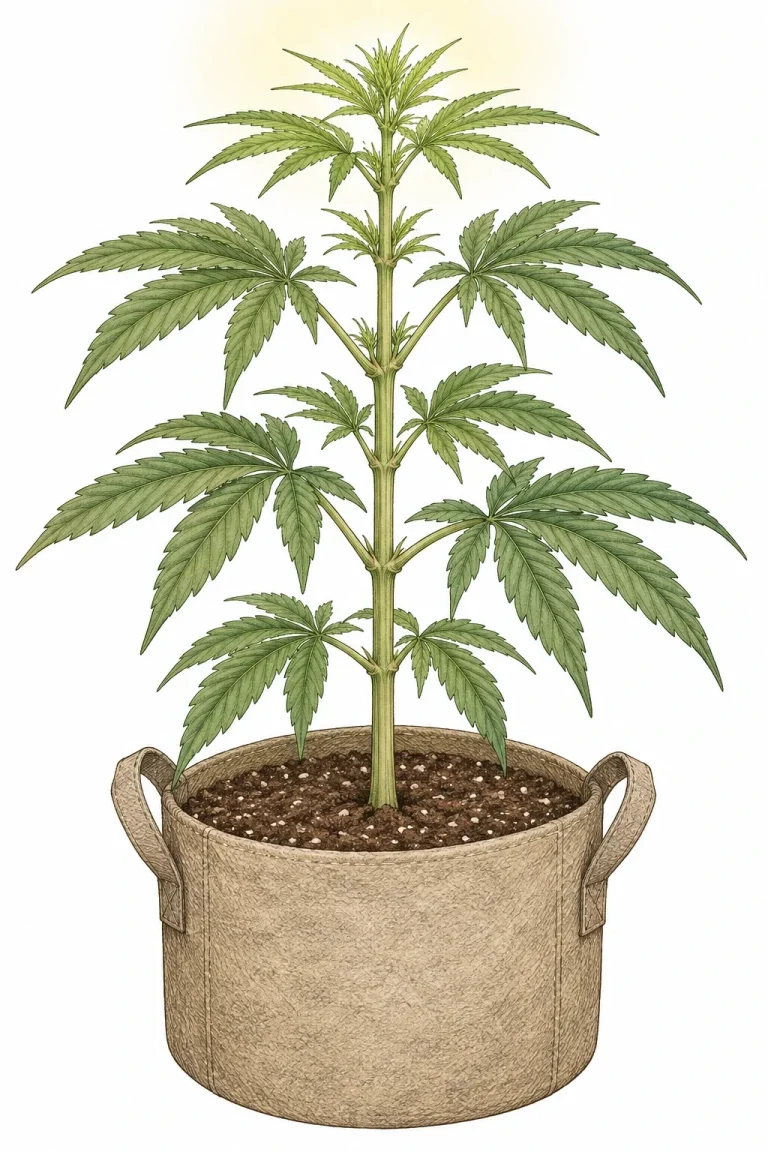
Why you need to sex your cannabis plants in the first place
Cannabis is naturally dioecious. That means there are separate male and female plants. Only the females produce the resin-rich flowers that carry the cannabinoids and terpenes. Male plants put their energy into pollen sacs instead, so they can pollinate female flowers.
Once a female plant gets pollinated, it starts producing seeds in the buds instead of stacking on more resin. That can seriously cut the quality and yield of your harvest. If you’re only running a handful of plants, every mistake counts. Check the cannabis laws where you live before growing.
That’s why it pays to sex your cannabis plants as early as possible and to pull the males without hesitation, unless you’re planning to breed your own genetics.
- Only female plants produce smokable buds
- Male plants can pollinate your entire grow space
- Pollinated buds contain seeds and lose quality
- Spotting the sex early saves space, time and nutrients
When does cannabis show its sex?
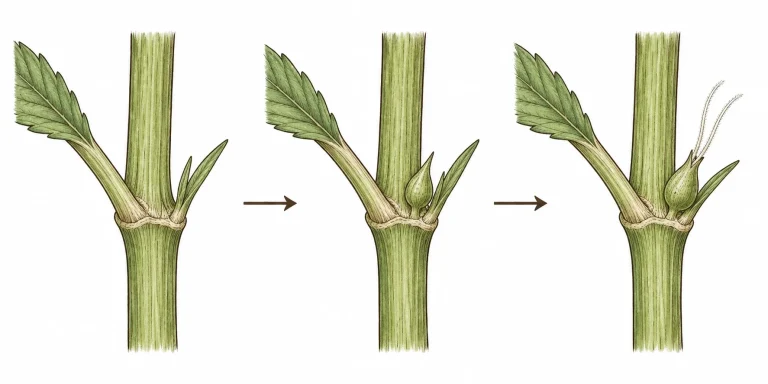
Most cannabis strains reveal their sex during the so-called pre-flowering stage. It usually kicks in somewhere between week four and week six. By then, your plant typically has five to seven sets of leaves and starts forming tiny structures at the nodes that hint at its sex.
With autoflowering strains, this can happen a lot sooner, often after just three to four weeks. Thanks to their ruderalis genetics, autos flip into flowering based on age, not light cycle. Want more details on this growth stage? Check out our article on cannabis pre-flowering, where we break down the stretch in detail.
Photoperiod plants usually only show their sex reliably once you extend the dark period to 12 hours, in other words, when the flowering stage begins. In outdoor grows, the timing depends heavily on day length in late summer.
- Pre-flowers usually show up in weeks 4 to 6
- Autoflowers often reveal their sex after just 3 to 4 weeks
- Photoperiod strains respond to shorter light hours
- Watching the nodes closely is key
How to Spot a Male Cannabis Plant: The Telltale Signs
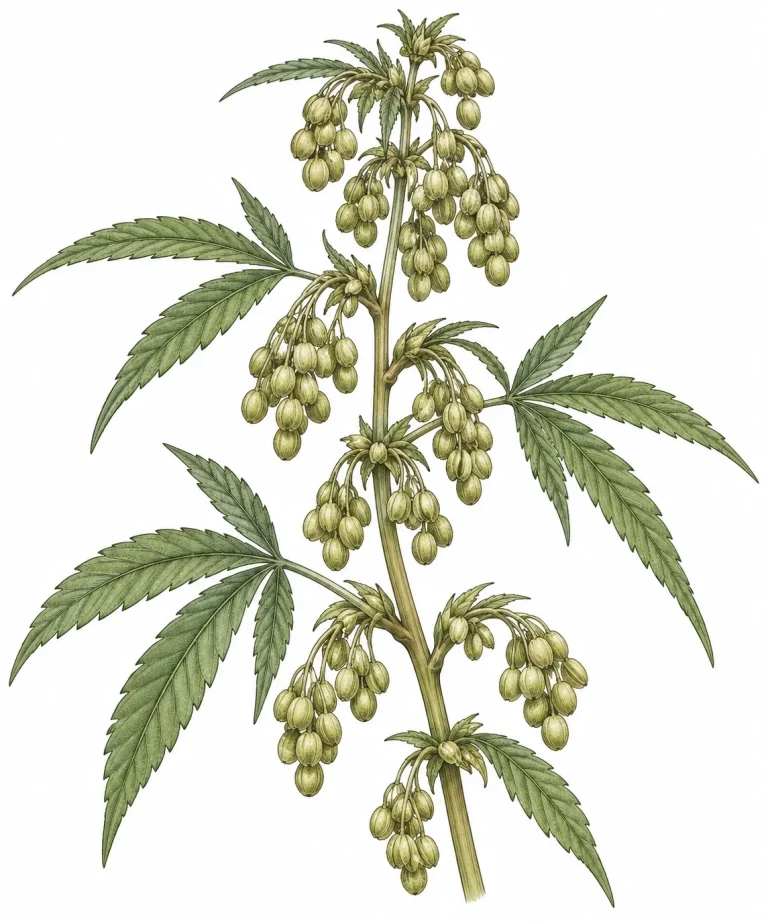
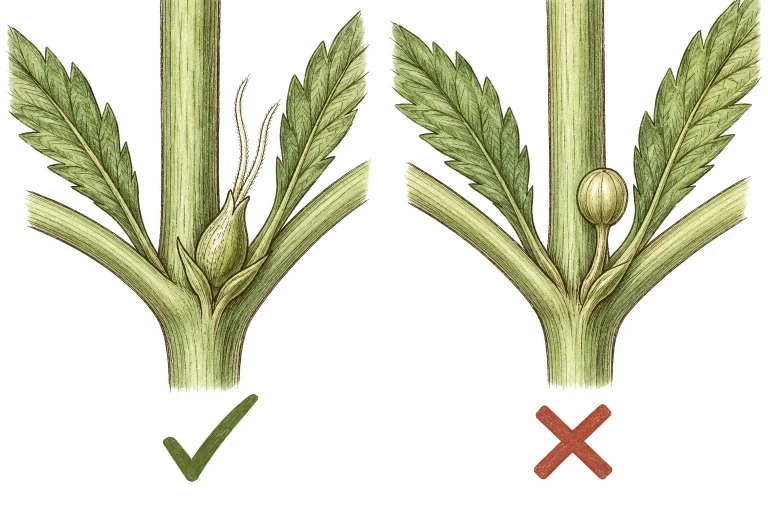
Male plants grow small, round structures at the branch points that look like tiny balls or bunches of grapes. These pollen sacs start out green and closed. After a few days they open and release yellow pollen. Once the sacs open, pollination is almost impossible to avoid if female plants are nearby.
Growth habit is another giveaway: male plants often shoot up faster, but they have fewer branches and look slimmer overall. They don’t grow the typical white hairs (pistils) you see on female plants. If you find both traits on the same plant, you’re dealing with a hermaphrodite.
Check the nodes regularly with a jeweler’s loupe or a macro lens. Early on, the differences are tiny and easy to miss. The sooner you spot a male, the faster you can isolate it or pull it.
- Round, grape-like pollen sacs at the nodes
- Closed at first, later yellowish and open
- Slimmer, faster growth with fewer branches
- No white pistils visible
How to Reliably Identify Female Plants
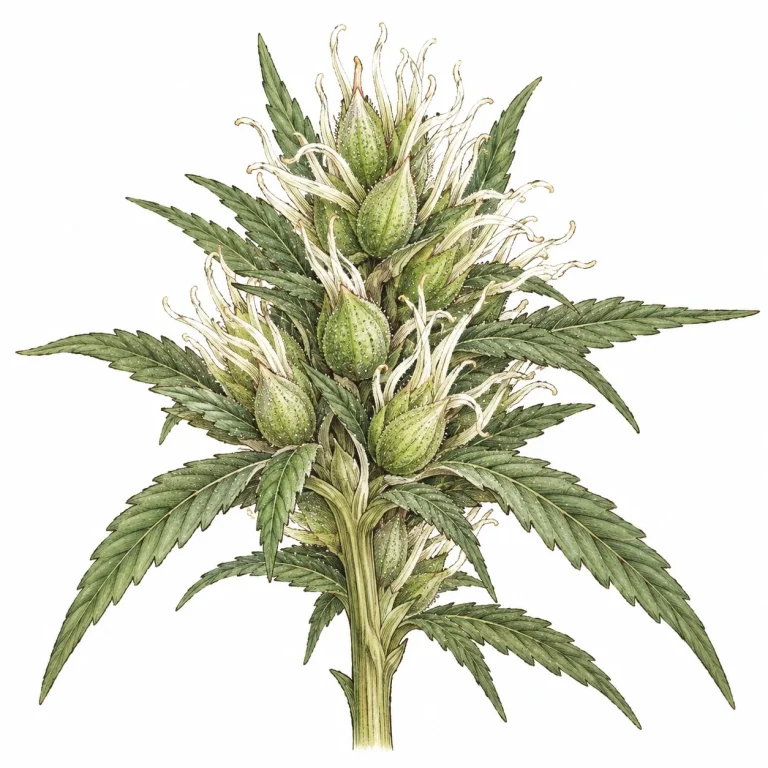
Female plants show fine white hairs at the nodes, called pistils. They grow out of a small, teardrop-shaped calyx and are the clearest sign of a female cannabis plant. As flowering goes on, these calyxes swell and eventually stack up into dense buds.
Compared to males, females often stay a bit more compact and bushy, because they put their energy into making flowers instead of racing upward. The pistils start out white and only later in flowering turn orange to brownish, which is a sign of ripeness.
Not sure whether you’re looking at pre-flowers or just normal leaf growth? Compare them with reference photos, or wait a few days until the structures become easier to read.
- White, thread-like pistils at the nodes
- Teardrop-shaped calyx at the base
- More compact, bushier growth
- Pistils later turn orange to brown
Spotting Hermaphrodites and Hidden Male Flowers
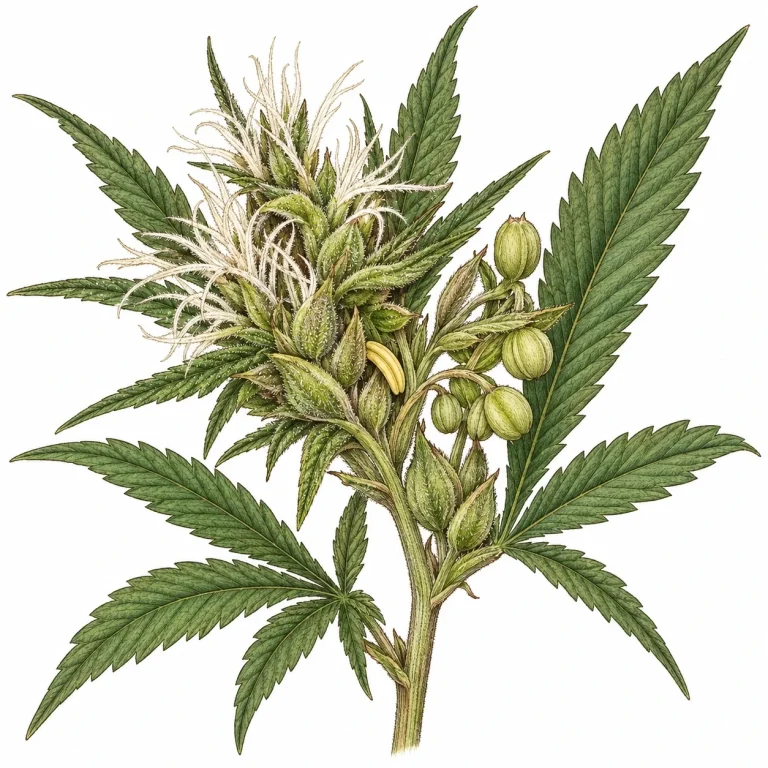
Besides purely male and purely female plants, there are hermaphrodites, plants that grow both female pistils and male pollen sacs. Hermies often show up after stress like light leaks during the dark period, big temperature swings or physical stress from training.
Watch out for so-called nanners: small, yellowish, banana-shaped stamens that hide right inside female buds and are easy to miss. They can pollinate a lot of flowers in a short time, so keep checking your plants regularly, even late in the flowering stage.
If you spot signs of a hermaphrodite, act right away. For a deep dive into causes and fixes, check out our article How to Spot Hermaphrodite Cannabis, which explains hermaphroditism and how to stop it in detail.
- Hermaphrodites show male and female traits at the same time
- Common triggers are stress, light leaks or heat
- Nanners often hide deep inside the bud
- Keep checking regularly, even in late flower
How to Reliably Sex Cannabis Plants: The Methods
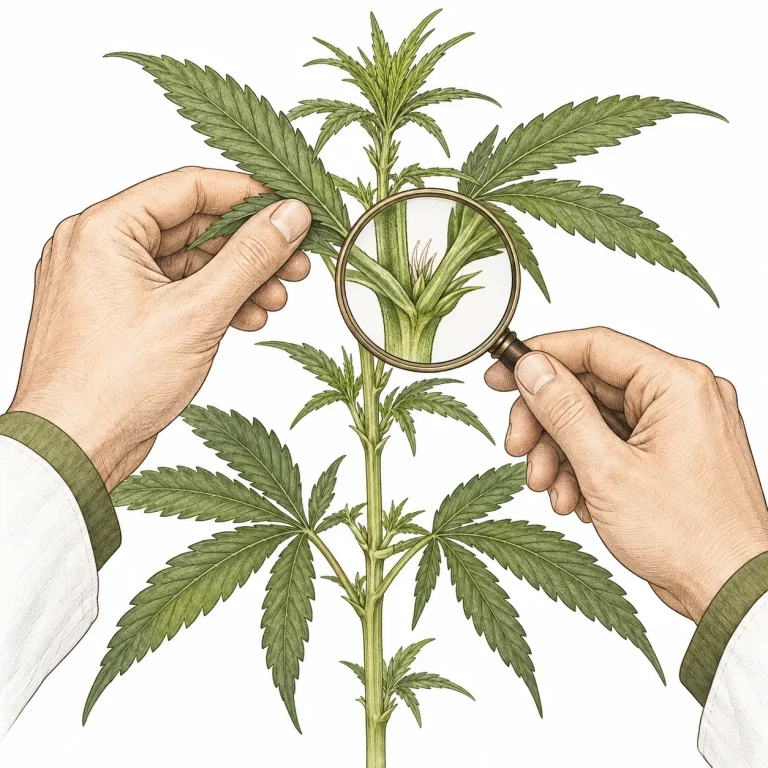
There are several ways to sex your cannabis plants early and reliably. Checking the nodes with a loupe or macro lens is the most common method, and with a bit of experience it is very accurate. Take regular photos of the preflowers so you can track changes over time.
Another option is the clone test: you take a small clone from the plant, root it and put it on a 12/12 light cycle. That way the clone shows its sex early, without stressing the main plant. This technique works especially well for valuable genetics when you don’t want to put stress on the mother plant.
With feminized seeds, the odds of getting female plants are very high, but there is still a small risk of hermaphrodites, so checking makes sense here too. If you are still unsure which strain to pick, our post Best Cannabis Strains for Beginners can help you make a safe choice.
- Regular visual checks with a loupe or macro lens
- Photos to compare changes over time
- Clone test to determine sex early
- Checking makes sense even with feminized seeds
What to Do With Male Plants
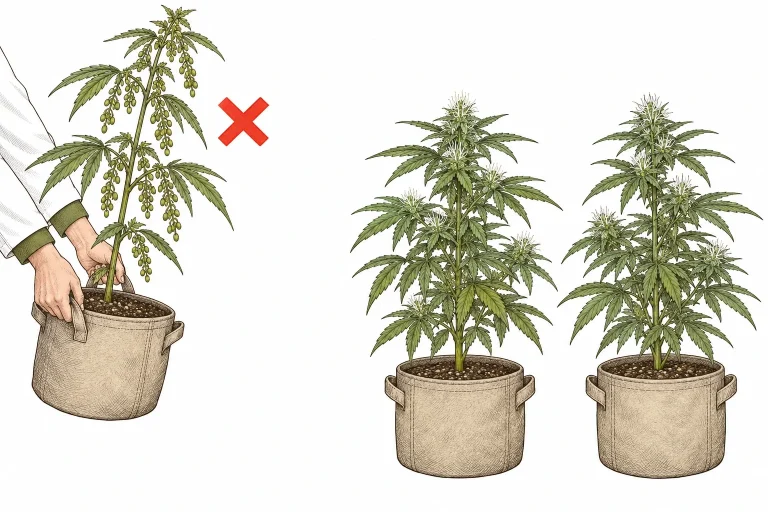
Once you have identified a male plant, act fast. If you are not planning to breed, the safest move is to remove the plant right away, before the pollen sacs open. Dispose of it outside your grow area to avoid accidental pollination from drifting pollen.
If you want to make your own seeds for future grows, you can isolate the male plant and use it to pollinate a selected female in a controlled way. We explain exactly how that works, step by step, in our article How to Make Your Own Seeds, which covers controlled pollination in detail.
Check the cannabis laws where you live before growing. Once a male plant is gone, you can fill the free spot with a new seed or clone, even if it will lag a bit behind the rest of your plants.
- Pull male plants before their pollen sacs open
- Dispose of them well away from your grow space
- Want to breed? Controlled, isolated pollination is an option
- Check the cannabis laws where you live before growing
Frequently Asked Questions
How long does it take for cannabis to show its sex?
Most cannabis plants show their sex between week four and week six after germination, once preflowers start forming at the nodes. Autoflowering strains can show early signs after just three to four weeks. Photoperiod strains often only become clearly readable once you flip to a 12/12 light cycle with a 12-hour dark period.
Can a cannabis plant change its sex during the grow?
A plant’s genetic sex stays the same. But stress like light leaks, heat or nutrient deficiencies can push a female plant to grow male flowers as well. This is called hermaphroditism, and the sooner you spot it, the better.
Are feminized seeds always guaranteed to be female?
Feminized seeds usually give you more than 99 percent female plants. Still, the odd male or hermaphrodite can never be ruled out completely. That’s why it pays to check the preflowers regularly, even with feminized genetics.
What happens if I miss a male plant?
If a male slips through, its pollen sacs will open sooner or later and pollen can spread through your whole grow space. Your female plants can get pollinated and start putting their energy into seeds instead of resinous buds. Your yield can drop noticeably.
How do I spot hidden male flowers in female buds?
Hidden male flowers, known as nanners, usually look like small, round, yellowish structures tucked deep between the calyxes of a bud. Their smooth, ball-like or banana-like shape sets them apart from the white or orange pistils. Remove them as soon as you find them.
The Bottom Line
Sexing your cannabis plants in time is one of the most important steps of the whole grow, because only females give you those resinous buds you’re after. Keep a close eye on the preflowers at the nodes, check regularly for hermaphrodites and pull males quickly to protect your harvest. With a little practice and a loupe, sexing your plants quickly becomes routine and can save you a lot of headaches and lost yield. If a plant still shows unusual symptoms, our Plant Diagnosis Tool can help you track down the cause.
