

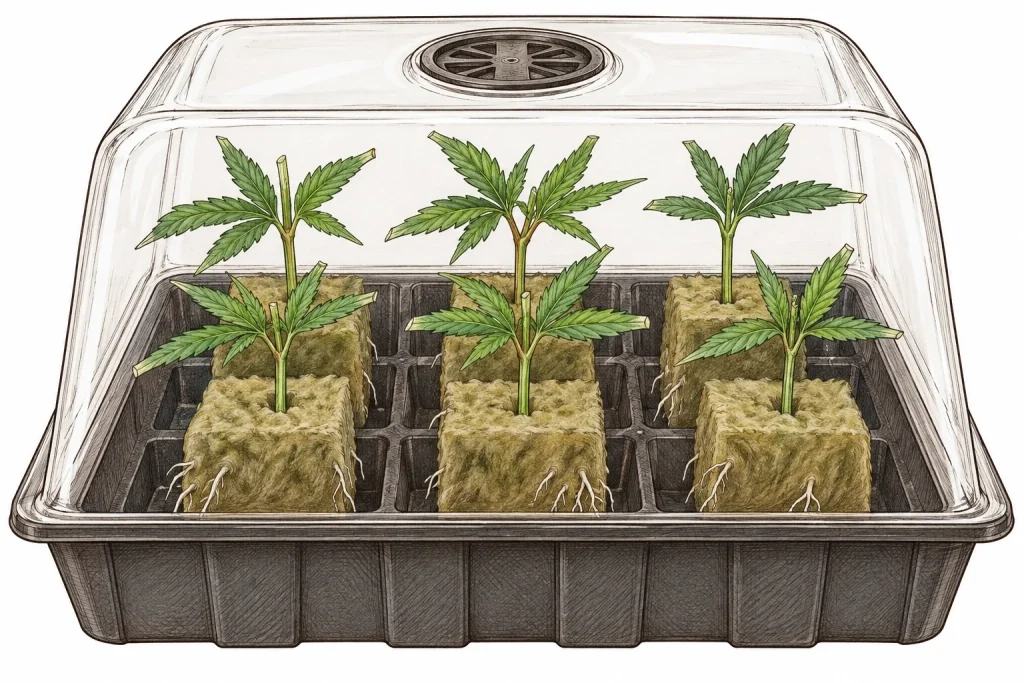
Taking and rooting cannabis clones is one of the most effective ways to get genetically identical plants and save money on new seeds. Once you have a mother plant with perfect traits, you can clone her again and again and grow the exact same phenotype every time. This guide covers everything you need, from the right tools and the best growing media to the most common mistakes beginners make when cloning. Whether you root in rockwool, soil or water, you’ll find the right method for your grow here.
How to Take and Root Cannabis Clones: Cloning Basics
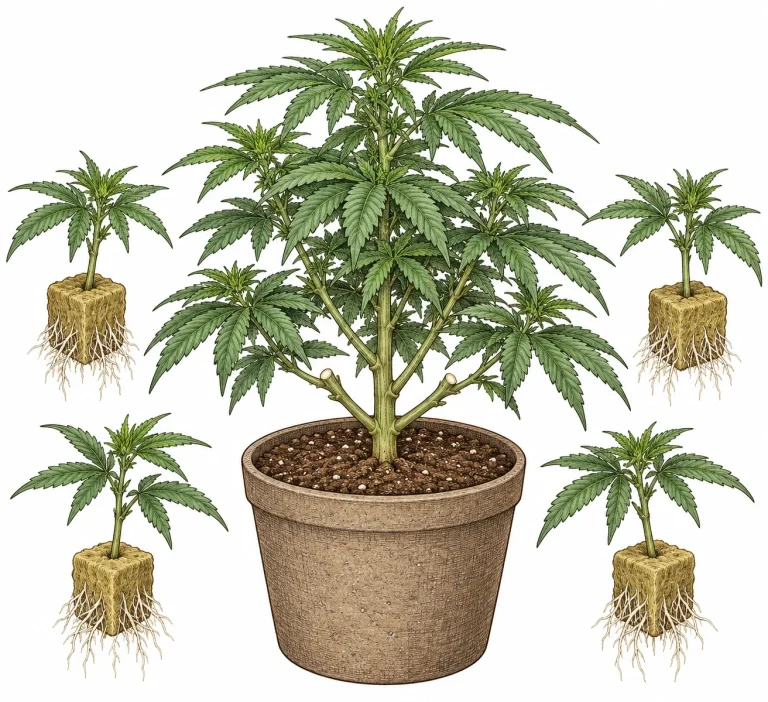
A clone is a cut branch tip from a cannabis mother plant that you coax into growing its own roots so it can keep growing as an independent plant. Because the clone carries the exact same genetics as the mother, it inherits all her good traits: growth speed, flowering time, aroma, potency and resistance to certain diseases.
The biggest advantage over growing from seed is genetic stability and the time you save. Seeds, even feminized ones, can show small differences in phenotype. Clones are 100 % identical to the mother plant. You also skip germination and start right away with a plant that’s already developed. For more experienced growers who want to keep a proven favorite phenotype going long term, cloning is a must.
Cloning also pays off fast: a single mother plant can give you dozens of clones over several months, so you don’t have to buy new seeds every time. Before you start, check the cannabis laws where you live.
- Genetically 100 % identical to the mother plant
- No germination time, so your grow gets off to a faster start
- You save money because you don’t need new seeds
- Proven traits like potency and aroma stay the same
- Uniform plants for an efficient grow room
Prep Work: The Right Tools and Growing Media for Taking Cannabis Clones
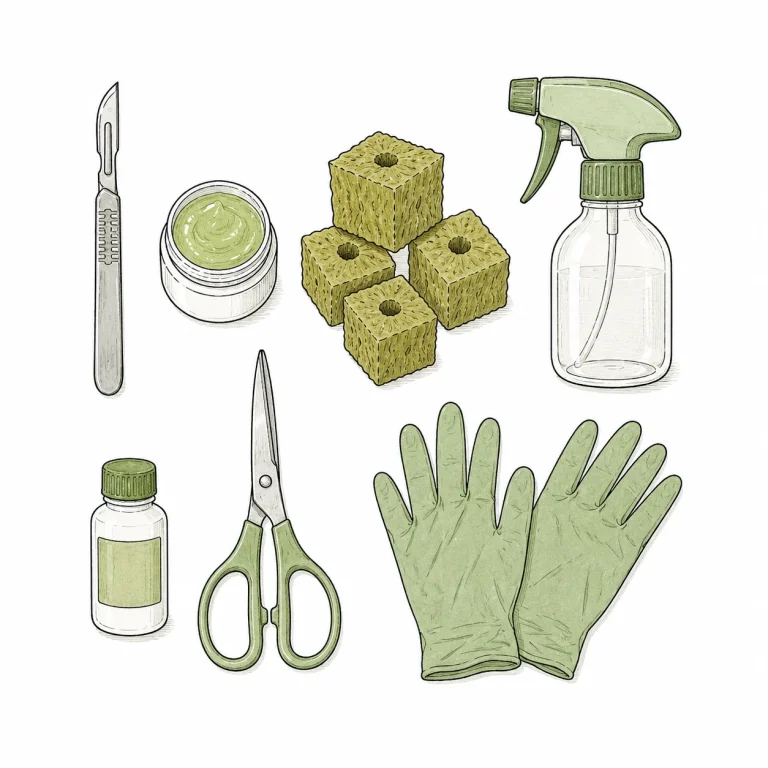
Before you start taking and rooting cannabis clones, good prep is everything. Dirty tools are one of the most common reasons clones die or pick up diseases from the mother plant. Only use sterile blades. A fresh scalpel or a disinfected razor blade is ideal. Regular pruning shears can crush the stem tissue and make rooting a lot harder.
Watch out for HLVd (hop latent viroid) in particular — it can spread through contaminated blades even if you sanitize with alcohol, and it often goes unnoticed for months.
You have several options for your rooting medium: rockwool cubes, Jiffy peat pellets, perlite, special cloning media or even water (hydro cloning). Rockwool cubes are especially popular with indoor growers because they hold a great moisture balance and are easy to move into hydro or soil later. Jiffy pellets are perfect for beginners because they’re easy to handle. Rooting hormone in gel or powder form noticeably boosts your success rate and belongs in every cloning setup.
Other key supplies: a clear plastic dome or a mini greenhouse for high humidity (70–90 % RH), a heat mat with a thermostat (ideally a medium temperature of 72–79 °F (22–26 °C)), a spray bottle with filtered or distilled water, and gloves to keep germs from spreading. Keep the pH of your water at 5.5–6.0 if you use rockwool (German) or hydro, or 6.0–6.5 for soil.
- Sterile blade: scalpel or fresh razor blade (no crushing!)
- Rooting hormone: gel preferred, powder works too
- Growing medium: rockwool cubes, Jiffy pellets or perlite
- Mini greenhouse or plastic dome for high humidity
- Heat mat: 72–79 °F (22–26 °C) medium temperature
- Water pH: 5.5–6.0 (rockwool/hydro) or 6.0–6.5 (soil)
- Gloves and disinfectant for clean work
Step-by-Step Guide: How to Take and Prep Cannabis Clones
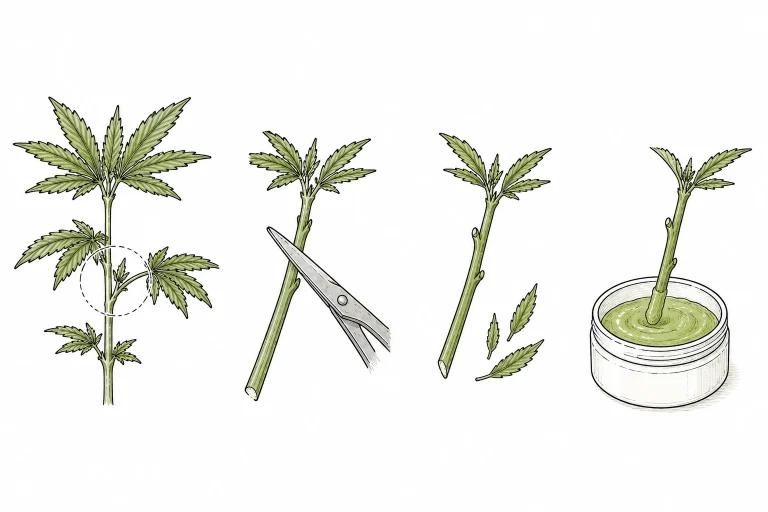
When you take cannabis clones, pick healthy side shoots from the lower to middle part of the mother plant. These shoots usually carry higher levels of auxin (a plant growth hormone) than the top shoots, so they tend to root more reliably. The ideal clone is 3–6 in (8–15 cm) long, has at least 2–3 nodes and a main stem with sturdy internodes. Don’t take clones from mother plants that are already half in flower or under stress. Your success rate can drop a lot.
Make the cut in one clean, smooth motion. Cut at a 45-degree angle. This gives you a bigger cut surface, so the clone can take up more water. Dip the fresh cut into a glass of water right away, before you do anything else. This keeps air from getting into the stem’s water channels (an air embolism). Next, remove all leaves on the bottom third of the clone, plus any big fan leaves, to cut down on transpiration. You can trim large leaves in half.
Now gently scrape the outer layer (epidermis) off the bottom half inch (1 cm) of the stem with your blade until you see the whitish-green cambium. This step can noticeably boost rooting. Dip the prepped end deep into the rooting gel and spread it evenly. Then quickly push the clone into your pre-soaked growing medium. Press the medium down lightly without packing it too tight, and put the clone under the humidity dome right away.
- Step 1: Pick a healthy side shoot (3–6 in / 8–15 cm) from the middle of the plant
- Step 2: Make a clean 45-degree cut with a sterile scalpel
- Step 3: Straight into a glass of water to prevent an air embolism
- Step 4: Remove the leaves on the bottom third, cut big leaves in half
- Step 5: Gently scrape the cambium at the base of the stem
- Step 6: Dip in rooting gel and set it in the medium right away
- Step 7: Place under a humid dome, no strong direct light
Taking and Rooting Cannabis Clones: Ideal Conditions and Common Mistakes
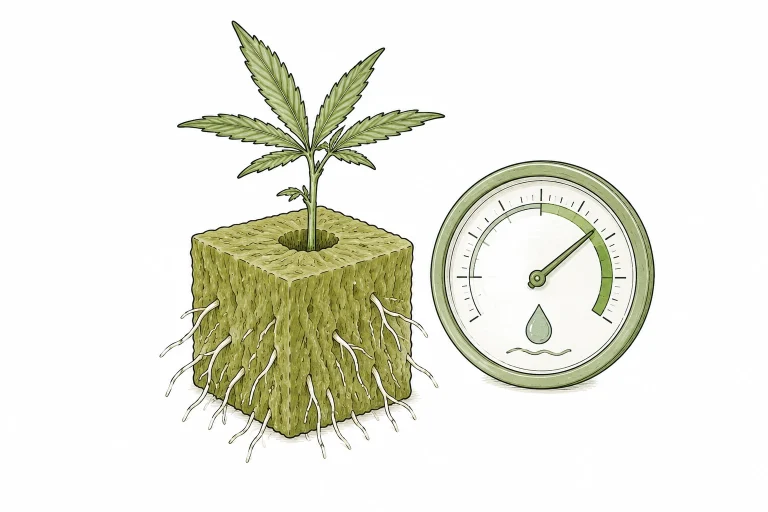
While they root, cannabis clones need one thing above all: stable conditions. Keep humidity (relative humidity, RH) at 75–90 %. Clones don’t have working roots yet, so they take in water only through their leaves. Start lowering the humidity gradually from day 5–7 by opening the dome for a short time each day. Keep your grow room at 72–79 °F (22–26 °C), and try to keep the medium temperature and the air temperature as close together as you can.
Light matters, but it shouldn’t be too intense while your clones root. Fluorescent tubes (T5), low-power LEDs or CFLs on an 18/6 light cycle are ideal. Light that’s too strong stresses clones that have no roots yet and can lead to wilting and burnt leaves. Keep your LED light much farther away than usual during rooting. You’ll find helpful tips in our article on how to spot and prevent cannabis light burn.
Overwatering is the most common mistake when rooting clones. The medium should be slightly moist, but never wet or waterlogged. Mist the leaves lightly every day instead of watering the medium. Too much moisture in the medium can lead to root rot and mold. If your clone still hasn’t rooted after 10–14 days, check how moist the medium is and make sure the temperature is right. The first roots usually show up after 7–21 days, depending on the strain and conditions.
- Humidity: 75–90 % for the first 5 days
- Temperature: 72–79 °F (22–26 °C), keep it steady
- Light: low-power LEDs or T5 tubes, 18/6 cycle
- Keep the medium only slightly moist, never waterlogged
- Mist the leaves lightly every day
- Open the dome gradually from day 5
- Rooting time: 7–21 days depending on the strain
Taking Cannabis Clones: The Best Growing Media Compared
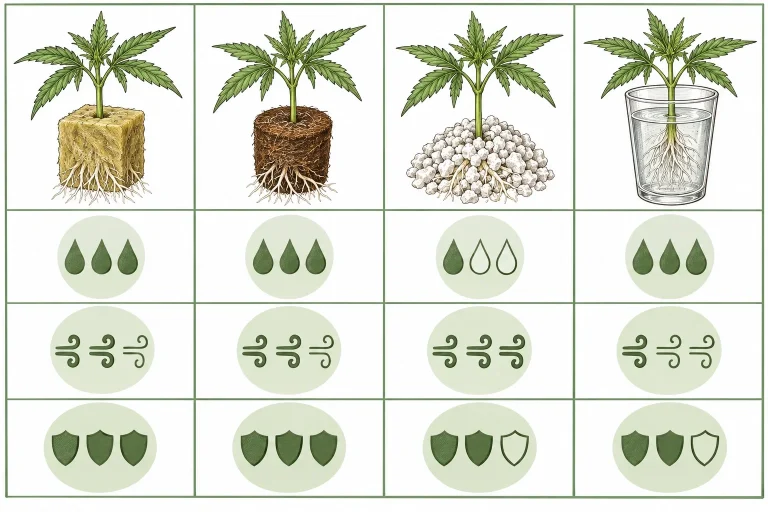
Rockwool cubes are the go-to choice for many pro indoor growers. They strike a great balance between holding water and letting air in, move easily into almost any system, and are pH-neutral once you’ve pre-soaked them correctly (soak at pH 5.5 for 12–24 hours). The downside: rockwool isn’t biodegradable and needs a bit more care when it comes to pH. If eco-friendly materials matter to you, Jiffy pellets are the better pick.
Jiffy pellets are made of peat or coco and are fully compostable. You can transplant them straight into soil without damaging the roots, because the pellet mesh breaks down over time. Jiffy pellets are a great choice for beginners. They’re easier to handle and don’t need as much pH precision. Another popular medium is straight perlite. It gives you excellent drainage and aeration but holds very little water, so you’ll need to keep a closer eye on moisture.
Water rooting (hydro cloning) is getting more popular with modern growers. You simply set your clones in a container of water, with no growing medium at all. Keep the water lightly aerated and at an ideal pH of 5.5–6.0. Roots often show up within 5–10 days. The downside: water clones need a little time to adjust when you transplant them into soil. Still, it’s a fast, cheap method that works without any special equipment.
- Rockwool: professional, pH-neutral, ideal for hydro setups
- Jiffy pellets: beginner-friendly, biodegradable
- Perlite: great aeration, but you need to watch moisture more closely
- Water cloning: fast, cheap, no growing medium needed
- Coco coir: a good balance of moisture control and sustainability
Taking and Rooting Cannabis Clones: When Are Clones Ready to Transplant?
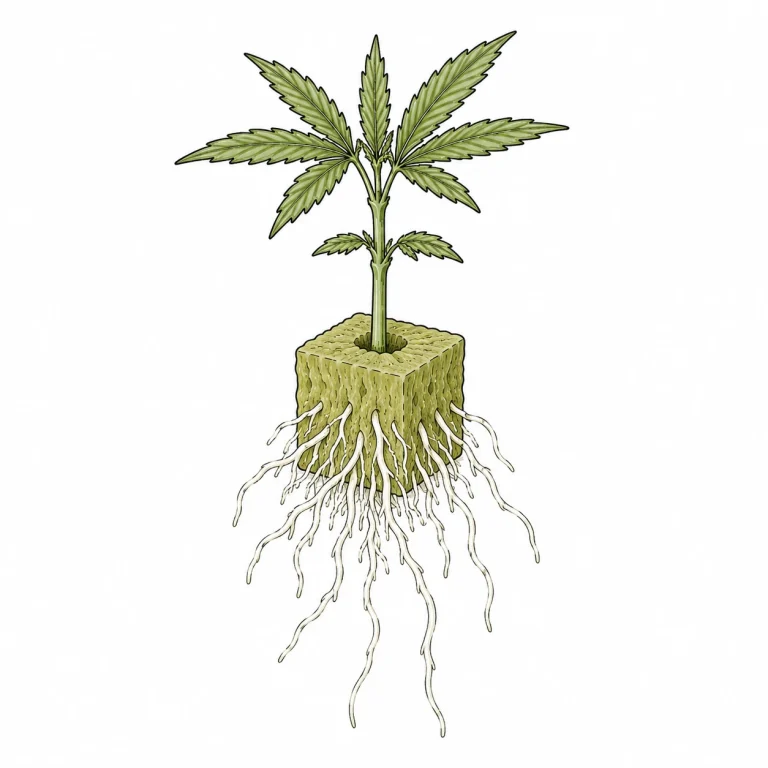
A clone is ready to transplant when the roots are clearly poking out of the medium. With rockwool cubes, you’ll see white roots coming out of the bottom or sides of the cube. With Jiffy pellets, the first roots push through the mesh wrap. Wait until the roots stick out at least 0.5–1 in (1–2 cm) before you transplant. Moving a clone too early weakens it and can lead to transplant shock.
When you transplant into soil, pick a light, airy mix that drains well. Water the new medium lightly and skip heavy feeding for the first few days, because the clone needs time to settle in. A small dose of root stimulator in your water can help speed up the transition. For the first week after transplanting, keep humidity a bit higher (55–65% RH) until you see clear new growth.
Keep an eye on your watering after transplanting, too. Overwatering is the most common reason clones struggle after rooting. We cover how to water cannabis the right way and how to avoid typical beginner mistakes in a detailed separate article. Hold off on nutrients until the second week after transplanting, and start at a very low strength to avoid nutrient burn.
- Roots visible at least 0.5–1 in (1–2 cm) outside the medium
- Use a light, airy mix when transplanting
- First few days: no strong nutrients, just a mild root stimulator
- Humidity after transplanting: 55–65% RH for one week
- Start feeding in week 2, at low strength
Mother Plant Care: How to Keep Healthy Cannabis Clones Coming
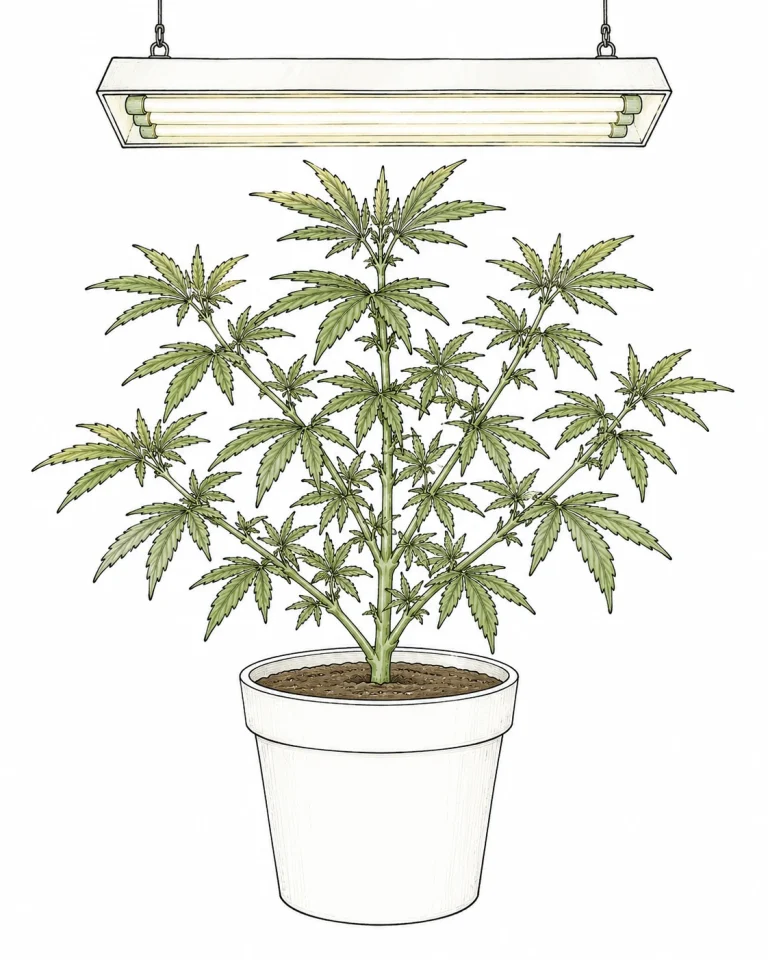
A healthy mother plant is the foundation for successful clones. Keep her in the vegetative stage permanently under an 18/6 light cycle, free of pests, diseases and nutrient deficiencies. Clones taken from stressed, underfed or pest-infested mothers root at a much lower rate and can pass those problems on to the next generation.
Feed your mother plant a balanced veg nutrient and pay special attention to calcium and magnesium, since frequent cloning takes a lot out of her. Always keep the pH of your water in the ideal range: 6.0–6.5 for soil or 5.5–6.0 for hydro/coco. A light flush with pH-adjusted water every 4–6 weeks helps prevent salt buildup in the medium.
Limit each round of cloning to 20–30% of the shoots at most, so your mother plant can recover between cuts. Use training techniques like LST (low stress training) or light topping to keep her bushy and well branched. That way you’ll always have plenty of good side shoots ready for your next batch of cannabis clones. A well-kept mother plant can last for years and keep giving you fresh clones of the same genetics.
- Keep her on an 18/6 light cycle to stay in veg
- Free of pests, diseases and nutrient deficiencies
- Balanced veg nutrients plus a Cal-Mag supplement
- Check and adjust pH regularly
- Take no more than 20–30% of the shoots per cloning round
- LST or topping for bushy, well-branched growth
Want to start from seed instead? Our guide on germinating cannabis seeds walks you through all the common methods.
Frequently Asked Questions
How Long Does It Take for Cannabis Clones to Root?
When you take and root cannabis clones, how long it takes for roots to form depends on the strain, the growing medium and your conditions. On average, clones show their first roots after 7–14 days. Some hardy strains root in as little as 5 days, while others can take up to 21 days. An ideal medium temperature of 72–79 °F (22–26 °C), high humidity (75–90 % RH) and a rooting gel can speed things up a lot.
What are the best rooting hormones for cannabis clones?
Rooting gels like Clonex or Root!t Gel are considered especially effective. They fully seal the cut and deliver auxins such as IBA (indole-3-butyric acid) right where they’re needed. Powders work well too, but they don’t stick as reliably. Natural options like willow water or aloe vera gel can work, but they’re usually less effective than commercial products.
Can you take clones from flowering plants?
Yes, you can, but it’s a lot harder. Clones taken from flowering plants (re-vegging) take much longer to root. They first have to switch back to the vegetative stage, which can take 2–4 weeks. Your best bet is to take clones only from plants in veg.
Why are my clones wilting even under a humidity dome?
Wilting under the dome often comes from a growing medium that’s too dry, temperatures that are too high, or an air embolism when you made the cut. Check that the medium is slightly moist, the temperature stays below 80 °F (27 °C) and the cut was prepped correctly. A light daily misting of the leaves can help. If the leaves are badly wilted, trim them back by half to cut down on transpiration.
How many clones am I allowed to keep?
That depends entirely on where you live. Rules on plant counts, and on whether rooted clones count as plants, vary a lot from place to place. Check the cannabis laws where you live before growing, and keep an eye on updates, since regulations can change.
Can you root clones in water?
Yes, water cloning is a popular method that skips the growing medium completely. You just set your clones in a container of aerated, pH-adjusted water (pH 5.5–6.0). The first roots often show up after 5–10 days. Once you transplant them into soil, these clones can need a little extra time to adjust, because water roots and soil roots are built differently.
The Bottom Line
Taking and rooting cannabis clones is one of the most rewarding skills you can build as a grower. With the right tools, a good growing medium, rooting gel and stable conditions, you can quickly hit rooting rates above 90 %. The keys are clean work, smart humidity management and a healthy mother plant to start from. With a little practice, cloning becomes routine – and you can keep reproducing your favorite phenotype again and again.
