


Cannabis pre-flowering marks the switch from the vegetative stage to the flowering stage, and it’s one of the most exciting parts of the whole grow. At the same time, the stretch kicks in, and your plant can sometimes double in height within just a few weeks. Once you understand this phase, you can spot the sex early, plan for the extra height, and fine-tune your plant care. In this article, you’ll learn exactly what happens during cannabis pre-flowering and what to watch for.
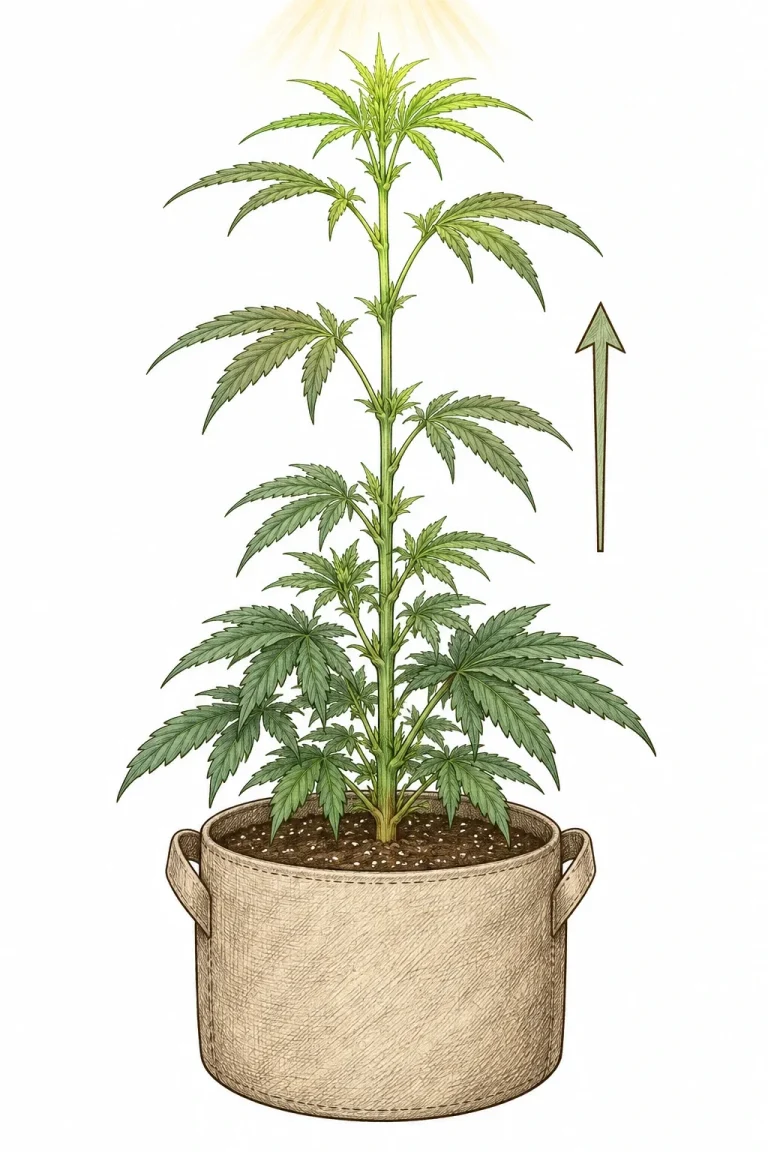
What Exactly Is Cannabis Pre-Flowering?
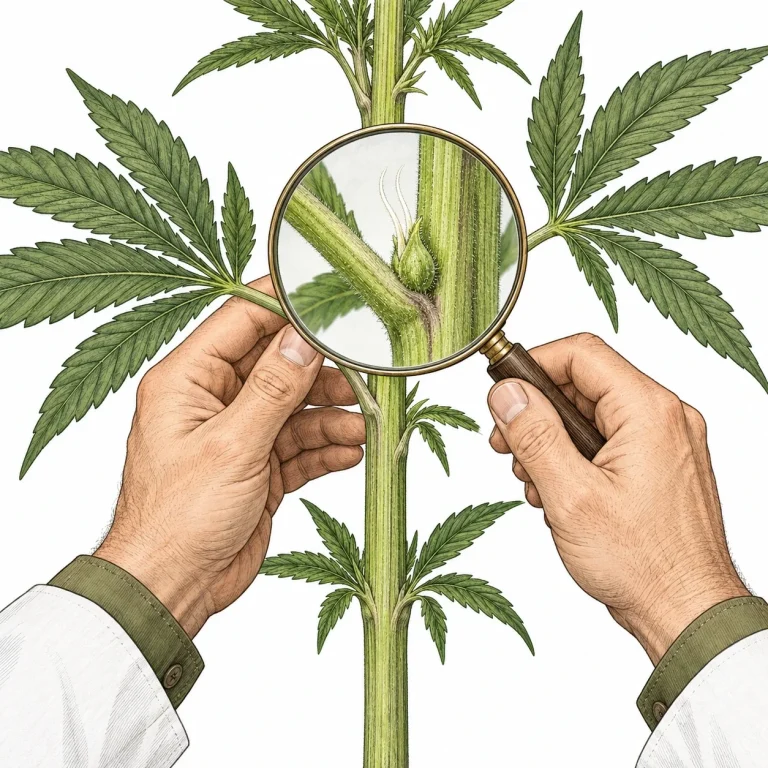
Pre-flowering is the window between the end of the vegetative stage and the start of real bud formation. During this time, your plant starts showing its first sex traits at the nodes where the branches meet the stem. With autoflowers, this happens automatically after a certain number of weeks. With photoperiod strains, whether feminized or regular, it’s the switch to a 12/12 light cycle that triggers actual flower induction.
Pre-flowering usually lasts one to three weeks. Your plant isn’t fully flowering yet, but it’s gearing up hard for it. Hormonal shifts inside the plant change how it grows, and the first female flower sites (calyxes with white pistils) or male pollen sacs become visible.
- Timing: usually 1 to 3 weeks after the light switch or the automatic trigger
- First visible pre-flowers at the upper nodes
- Hormonal shift from vegetative to reproductive growth
- In autoflowers: independent of the light cycle, triggered by age
The Stretch: Why Cannabis Grows So Fast During This Phase
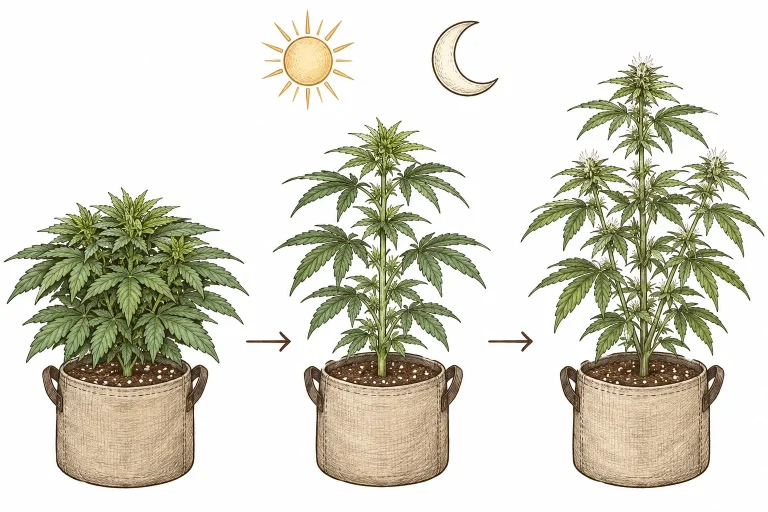
Alongside cannabis pre-flowering, the stretch kicks in: a phase of explosive vertical growth. Depending on genetics, your plant can double or even triple in height during this time. Sativa-dominant strains usually stretch more than indica-dominant ones. Why the growth spurt? It’s one last burst of energy the plant puts in before it shifts all its resources to building buds.
The stretch usually kicks in right after you flip to a 12/12 light cycle and peaks in weeks two to three of flowering. After that, vertical growth slows down noticeably, and more and more energy goes into building bud sites. If you underestimate your plant’s final height, you can run into trouble with your lights or the ceiling of your grow tent. To see which tent height fits which plant size, check out the grow tent comparison (German) (German).
Rule of thumb: plan for your plant to double in height from the day you flip the lights. With especially stretchy strains, the factor can even reach 2.5 to 3. If you top in time, defoliate selectively or use LST (low stress training) (German), you can actively control the stretch.
- Vertical growth can double or even triple
- Usually peaks in weeks 2 to 3 of flowering
- Sativa strains stretch more than indica strains
- After that, energy shifts to bud development
Sexing Your Plants During Preflower
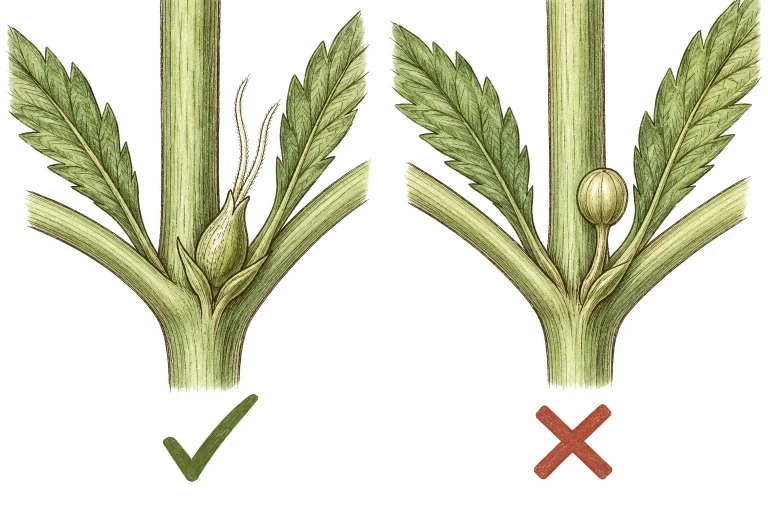
One of the biggest reasons to watch your cannabis preflowers closely is sexing your plants. With regular (non-feminized) seeds, it’s crucial to spot and remove males early, before they release pollen and pollinate your female flowers. Unwanted pollination makes the plant put its energy into seed production instead of resin. If you actually want to make your own seeds, the article Making Cannabis Seeds Through Pollination (German) shows you how to do it in a controlled way.
Female preflowers show up as small, pear-shaped calyxes with two white, hair-like pistils. Male preflowers, on the other hand, look like small, round pollen sacs without pistils, growing on short stalks from the nodes. With a loupe or a macro lens, you can usually tell them apart from the second week of preflower on. For a detailed guide with all the signs, check out the article How to Sex Cannabis Plants (German).
Even with feminized seeds, keep an eye on the preflowers. Stress like heat, light leaks or nutrient deficiencies can occasionally turn a plant hermaphrodite. If you’re not sure what to look for, get familiar with the typical signs so you can react in time. You’ll find more in the article How to Spot Hermaphrodite Cannabis Plants (German).
- Female preflowers: pear-shaped calyxes with white pistils
- Male preflowers: round pollen sacs without pistils
- Check with a loupe from the second week on
- Stress can trigger hermaphrodites even in feminized plants
Plant Care During Preflower and Stretch
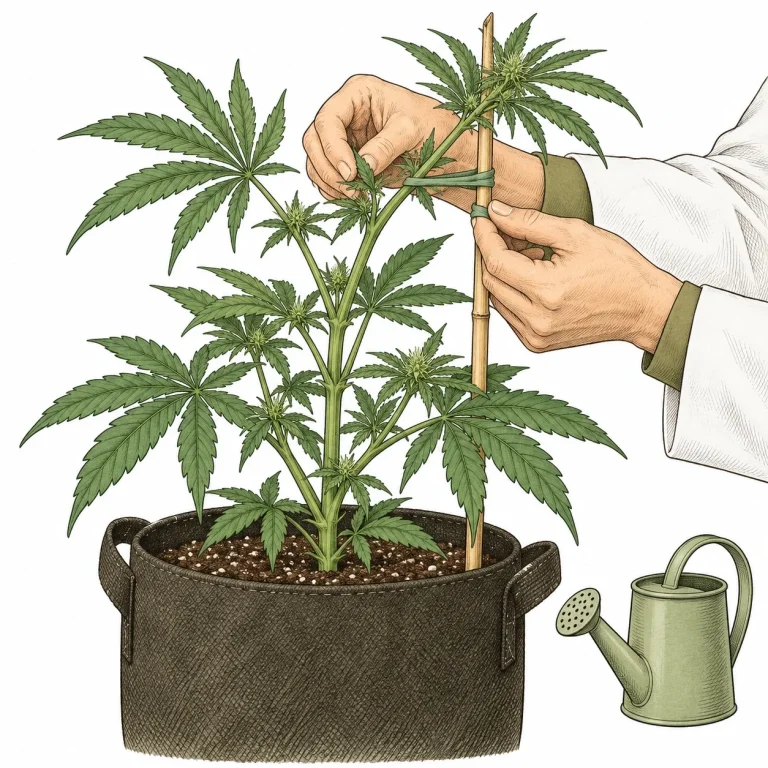
Preflower and stretch together call for a few changes in how you care for your plants. Since the plant gains a lot of height in a short time, check and adjust the distance to your light regularly to avoid light burn. At the same time, nutrient demand goes up as the plant gets ready for the upcoming flowering stage (German).
Now is the time, at the latest, to switch to bloom nutrients with an adjusted NPK (nitrogen, phosphorus, potassium) ratio: more phosphorus and potassium, less nitrogen. For an overview of the ideal nutrient ratios for each growth stage, check out our Cannabis NPK Chart (German).
Finish high-stress moves like topping or FIM by the start of pre-flower at the latest. Cutting later can stress your plant even more and may delay bud formation. Gentle LST (low stress training) or tucking branches into a SCROG (screen of green) net (German) still works well during the first days of the stretch. If you still want to shape your plant, read up on cannabis training stress first so you can avoid common mistakes.
Check your watering too. Bigger plants with more leaves need more water. Still, avoid overwatering, because the roots can be especially sensitive at this stage.
- Adjust your light height regularly as the plants get taller
- Switch to bloom nutrients with more phosphorus and potassium
- Finish high-stress training (topping, FIM) before pre-flower starts
- Water needs rise as the plant puts on more leaves
Common Problems During Pre-Flower and the Stretch
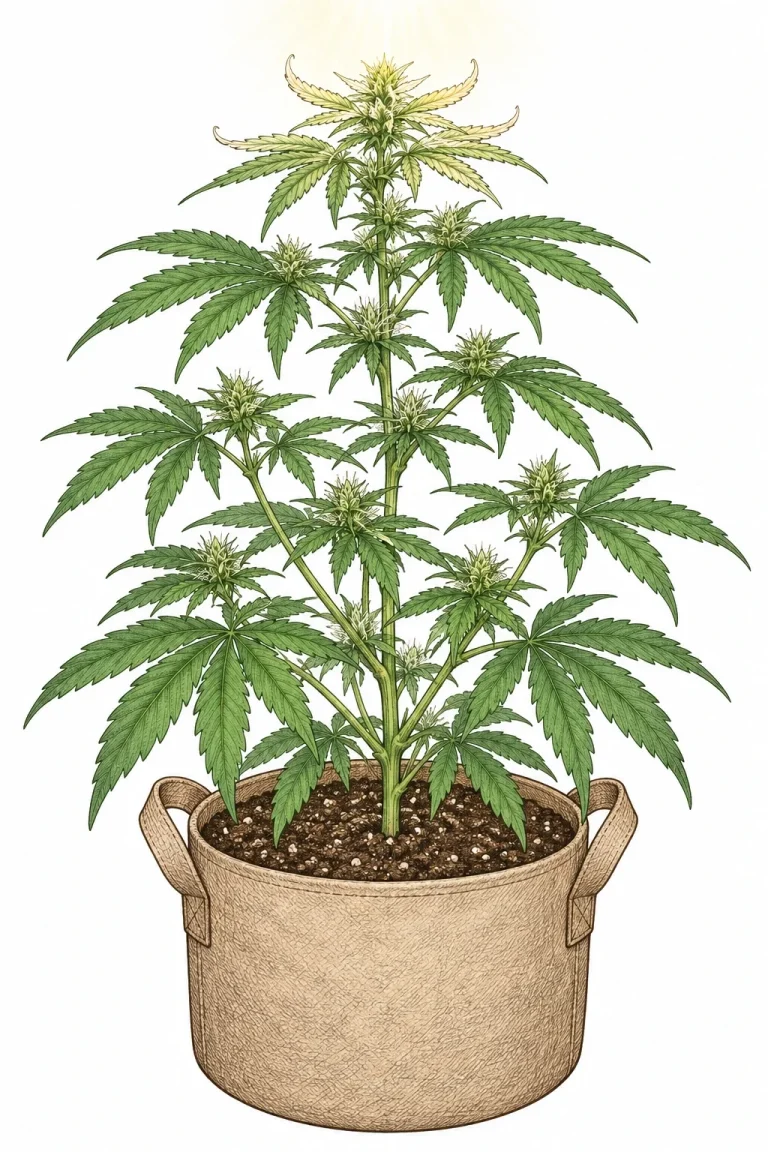
Cannabis pre-flower doesn’t always go smoothly. Common issues at this stage include plants that won’t flower even after the light switch, an unusually strong or weak stretch, and signs of stress from the fast growth spurt. If your plants still don’t flower after several weeks on a 12/12 light cycle, light leaks, plants that are too young or the strain’s genetics may be the cause. For the full rundown, check out the article Cannabis Not Flowering.
Too much stretch can also lead to thin, weak stems that may snap under the weight of the buds later on. Supporting your plants early with stakes or trellis netting helps. You’ll find more on weak stems in the article Cannabis Thin Stems.
Nutrient deficiencies or nutrient burn often show up especially clearly during this transition, because your plant’s needs change fast. Keep a close eye on your plants and you can spot deficiencies early and correct course before they hurt bud quality.
- No flowers despite the light switch is a warning sign
- Too much stretch can cause thin, unstable stems
- Nutrient needs change quickly during this stage
- Early support helps prevent damage from heavy buds later
Frequently Asked Questions
How long does cannabis pre-flower last?
Pre-flower usually lasts one to three weeks, depending on the strain and your growing conditions. With autoflowers, the timing can vary a bit, since it’s driven by the plant’s age rather than the light cycle.
How much do cannabis plants stretch?
Most plants double in height during the stretch. Sativa-dominant strains can even triple, while compact indica strains often grow only moderately.
How can I tell the sex during pre-flower?
Female plants show small calyxes with two white pistils. Male plants form round pollen sacs without pistils. These signs are usually easy to see from the second week of pre-flower.
Should I still repot during the stretch?
Ideally, finish repotting before pre-flower starts. At this stage, your plant needs all its energy for the growth spurt and the upcoming flowering stage.
What happens if I miss male plants during pre-flower?
Males you miss will release pollen and pollinate your female flowers. The result can be seedy buds with noticeably lower quality and less usable flower.
Bottom Line
Cannabis pre-flowering and the stretch are key transition phases. Your plant’s sex, growth pattern and nutrient needs all shift in a big way. Keep a close eye on this stage and you can pull males in time, plan your grow space properly and fine-tune your plant care. With the right know-how, this often underrated phase becomes a solid building block for a successful harvest. For more basics on the whole growing process, check out our Grow Guide and our Knowledge Base.
