

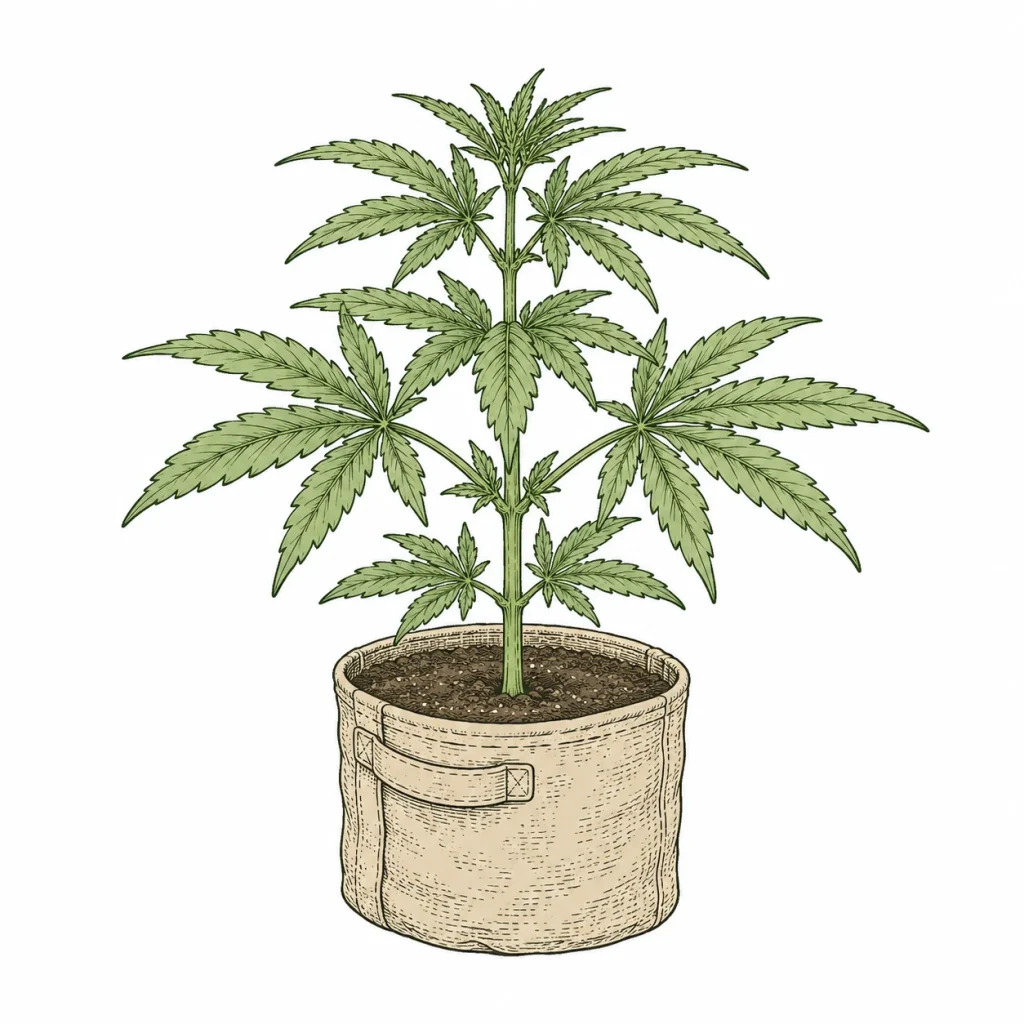
Picking the right cannabis strains for beginners can make or break your first grow. Start with a strain that’s too demanding and you’ll soon be fighting nutrient problems, a touchy flowering stage or tricky growth habits. Hardy, forgiving strains let you learn from your mistakes, grow vigorously and still give you a satisfying harvest. Here you’ll find out which cannabis strains really suit first-time growers and what to look for when you choose. We’ll also show you how to prepare your first grow step by step.
Why Strain Choice Matters So Much for Beginners
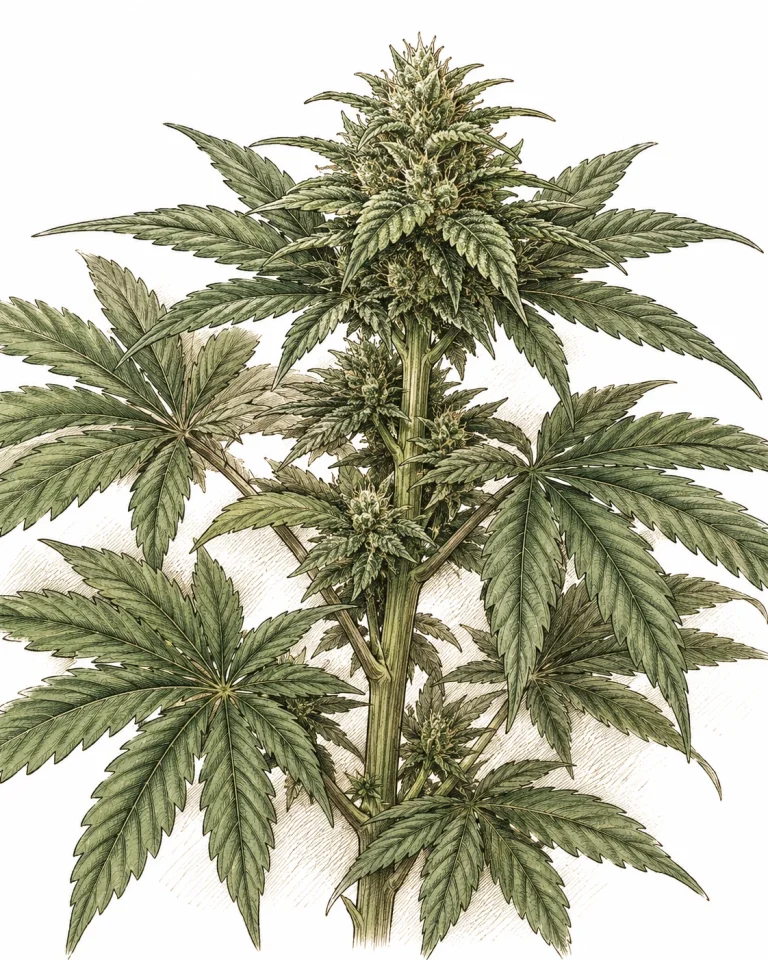
Not all cannabis strains are created equal. Some genetics are extremely sensitive to pH swings, temperature swings or overfeeding. Other strains forgive small mistakes, grow strong even in less-than-ideal conditions and still pack on dense, resinous buds. For beginners, that trait is worth its weight in gold.
As a beginner, you’re bound to make mistakes. Maybe you overwater once, your pH drifts out of the sweet spot for a bit or your grow light isn’t dialed in perfectly. A hardy strain can ride out phases like these without serious damage. A sensitive strain, on the other hand, can react right away with yellow leaves, stalled growth or nutrient lockout. To enjoy growing from day one, go for strains that are made for beginners.
Flowering time matters too. A longer flowering stage means more time for problems to show up. That’s why autoflowering strains with a short seed-to-harvest time of 60 to 75 days are so popular with beginners: they need less hands-on management and deliver results fast.
- Hardy cannabis strains forgive pH swings and small care mistakes
- Shorter flowering times shrink the window for errors
- Autoflowering genetics flower regardless of the light cycle
- Indica-dominant strains stay compact and are easier to manage
- Strains with moderate THC levels are often tougher than highly bred high-potency genetics
Autoflowers: The Perfect Starting Point for Beginners
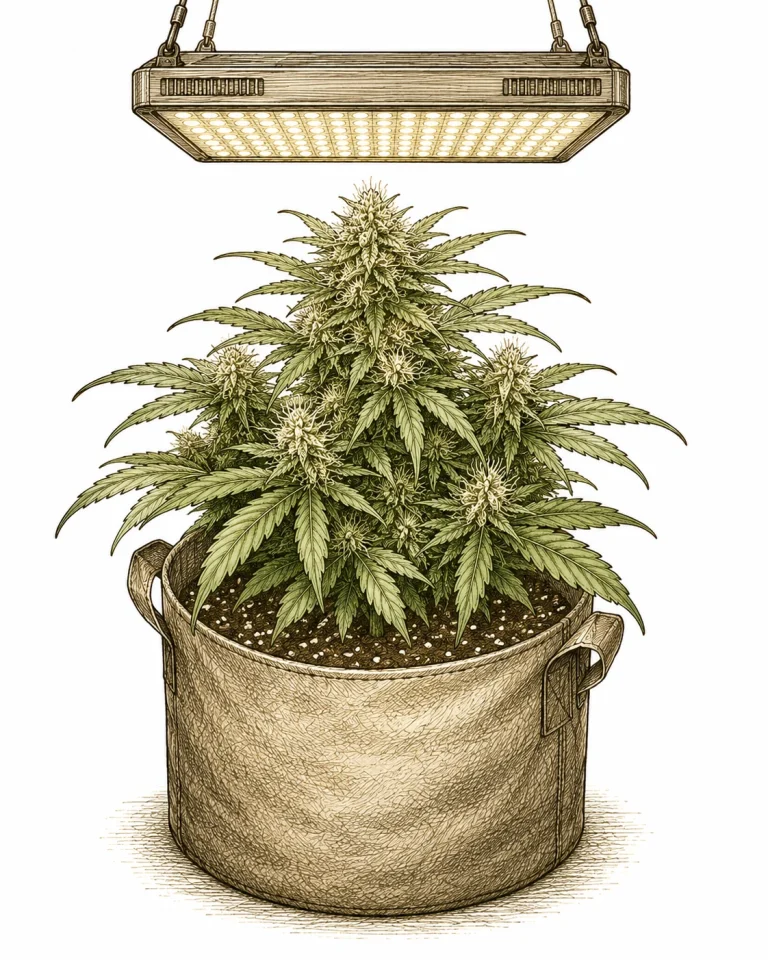
Autoflowering strains are some of the best cannabis strains for beginners, period. They’re genetically day-neutral and flower automatically, no matter the light cycle, so you never have to switch from 18/6 to 12/12 by hand. That makes growing a lot simpler. You can just run them under a constant 18- or 20-hour light schedule from germination to harvest. We break down the differences between autoflower and feminized strains in detail in Autoflower or Feminized?
Another plus is their compact size. Most autoflowering plants stay between 16 and 35 in (40–90 cm) tall, which makes them ideal for a small grow tent or a balcony grow. And thanks to years of breeding work, modern autoflowering genetics now hold their own against many photoperiod strains in both quality and yield.
Classic beginner autoflowers include Northern Lights Auto, Gorilla Glue Auto and White Widow Auto. These strains are known for being hardy, forgiving of beginner mistakes and ready to harvest about 70 to 80 days from germination. If you want your first grow to be as stress-free as possible, autoflowers are hard to beat.
- No manual light-cycle switch needed
- Seed-to-harvest time often under 80 days
- Compact size, ideal for small spaces and grow tents
- Northern Lights Auto: extremely hardy, great resin profile
- Gorilla Glue Auto: heavy resin production, forgives care mistakes
- White Widow Auto: classic genetics, consistent results
Indica-Dominant Strains: Hardy, Compact and High-Yielding
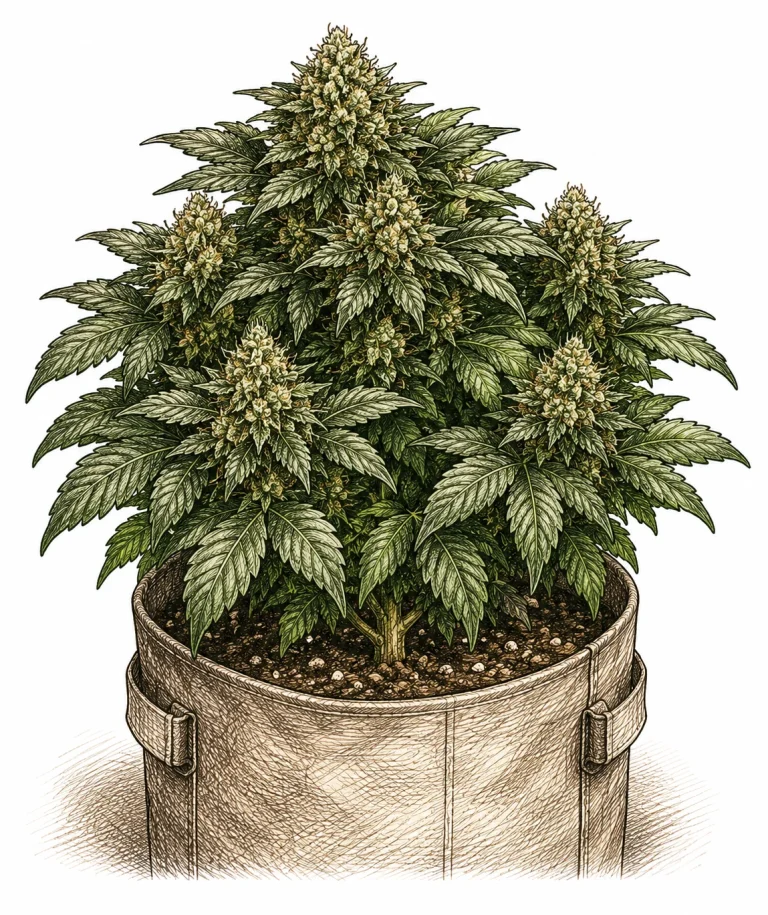
Besides autoflowers, indica-dominant photoperiod strains are an excellent choice for beginners. They grow compact, develop broad leaves and are less sensitive to temperature swings or short stretches of bad watering. Indica genetics originally come from the harsh mountain regions of Central Asia, where they adapted to tough conditions – that makes them naturally hardy.
Popular indica strains for beginners include Northern Lights (photoperiod), Bubba Kush and Critical. Want to dig into the basic differences between strain types? Check out our article Indica, Sativa or Hybrid?. Northern Lights has been one of the most reliable beginner strains around for decades. It shines with a fast flowering time of about 7 to 8 weeks, compact growth, strong mold resistance and a solid yield. Critical is known for exceptionally big yields with a fairly short flowering time. It’s ideal if you want a real payoff from your very first grow.
One key point with indica strains: they form very dense buds, so good airflow is essential to keep mold away. Also keep your pH stable. Even tough indica strains can run into nutrient uptake problems if the pH stays off for too long.
- Naturally hardy thanks to their roots in harsh climates
- Compact growth makes managing your space easier
- Northern Lights: a classic with strong mold resistance
- Critical: very big yields, short flowering time of around 7 weeks
- Bubba Kush: forgiving of small care mistakes
- Dense indica buds need good airflow
Which Cannabis Strains Beginners Should Avoid
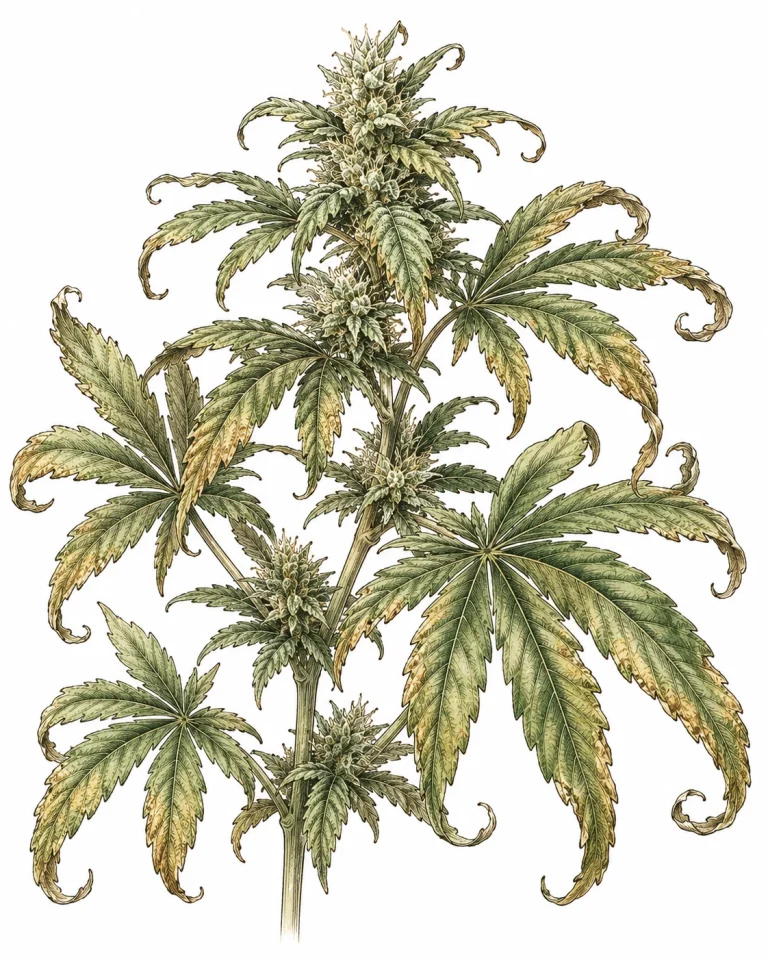
Knowing which strains to skip matters just as much as picking the right one. Heavily bred, ultra-high-THC strains like Gorilla Glue #4 (photoperiod, original), Bruce Banner or certain Haze varieties are often a challenge for beginners. They tend to be more sensitive to nutrient toxicity, need more precise light levels and have longer flowering times of up to 12 weeks.
Sativa-dominant strains are usually more demanding than indica strains. They grow very tall, need more space and take a lot longer to flower. If your space is limited or you don’t have much experience with plant training (LST, SCROG), sativa strains can quickly get out of hand. If sativa genetics catch your interest, save them for your second or third grow.
Strains known as especially “hungry” that need heavy feeding can also be tricky. As a beginner, it’s easy to overfeed and end up with cannabis nutrient burn. So here’s the strain tip: pick genetics that do well on moderate feeding and don’t need a complex feeding schedule.
- Heavily bred THC monsters are more sensitive and less forgiving
- Pure sativa strains grow too tall and take too long
- Strains with very long flowering times (10+ weeks) aren’t a good fit for beginners
- Extremely “hungry” strains need precise nutrient management
- Haze varieties: top quality, but demanding to grow
- Start with proven classics instead of the latest hype strains
Beginner Cannabis Strains for Outdoor Growing
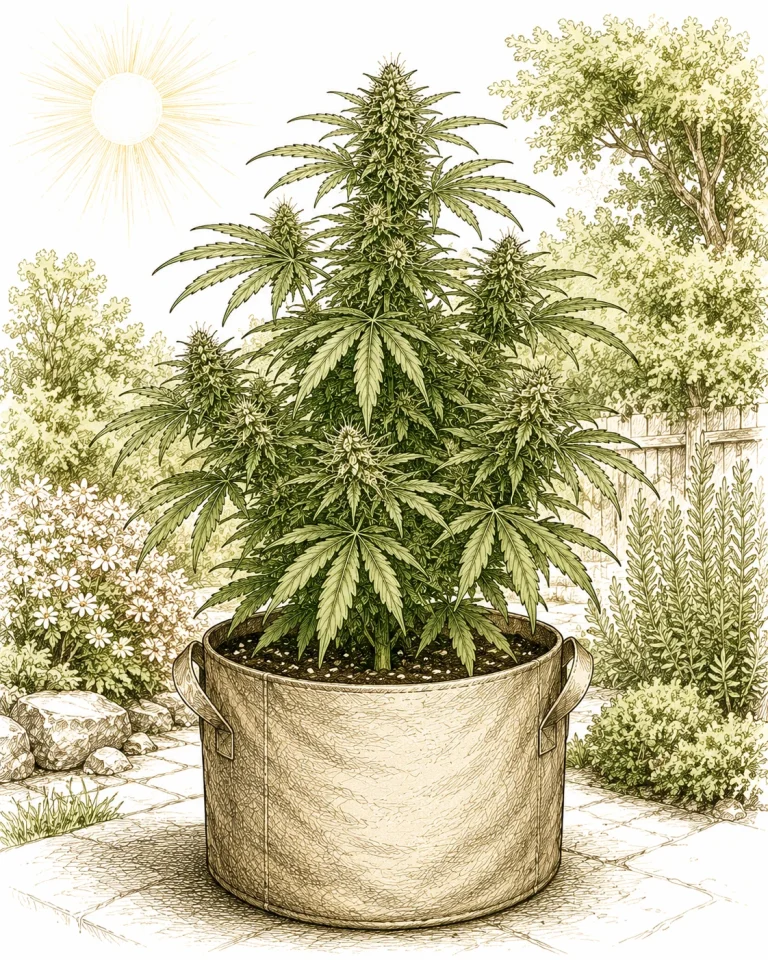
If you want to grow outside, your priorities shift compared to an indoor grow. Outdoor strains for beginners should be mold-resistant, compact enough for a balcony or backyard and suited to your local climate. Early-flowering strains that are ready to harvest by September or early October lower the risk of fall moisture and mold.
Top picks for beginner outdoor growing are Early Skunk, Royal Cheese Early Version and Vertigo Auto. Early Skunk flowers early, is extremely mold-resistant and delivers reliable yields even in short, cool summers. Autoflowering outdoor strains like Vertigo Auto can even give you several harvests per season, since they flower no matter how long the days are. For a deeper strain selection for cooler outdoor climates, also read our article Outdoor Cannabis Strains for Germany.
When growing outdoors, also make sure the strain fits your region. In cooler, wetter areas like the Pacific Northwest or much of Canada, different cannabis strains work best than in warm, dry regions down south. As a rule of thumb: indica-dominant and early-flowering genetics perform more reliably in temperate climates than slow-flowering sativa strains bred for the tropics.
- Mold-resistant strains are key for damp fall weather
- Harvest early-flowering strains before the fall rains (September/October)
- Early Skunk: hardy, early, mold-resistant
- Autoflowering outdoor: several harvests per season possible
- Indica-dominant strains perform more reliably in temperate climates
- Factor in your regional climate when choosing a strain
Getting Started Right: Growing Medium, Watering and Nutrients for Beginner Strains
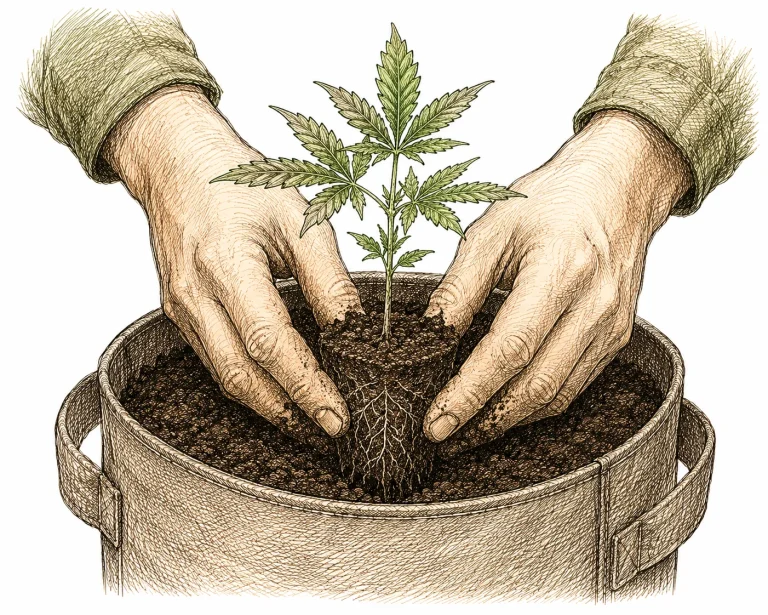
Even the best strain won’t help much if the basics aren’t right. Hardy beginner strains also need the right growing medium, watering and feeding to really thrive. For your medium, go with a quality soil made for cannabis. It should drain well and have a balanced nutrient content. A dense, poorly draining medium can quickly leave the roots waterlogged and cause root problems.
For watering, the rule of thumb is: less is more. Watering cannabis the right way means checking how moist the medium is. Only water once the top layer of soil has dried out a bit. Overwatering is one of the most common beginner mistakes, and it can get even hardy strains into trouble.
As for nutrients, the nutrients already in the soil are enough for most beginner strains during the first few weeks. Start feeding carefully after about 3 to 4 weeks, at 25 to 50 percent of the recommended dose. Watch your plants closely and check our Plant Diagnosis overview regularly. That way you can spot problems early and step in before they turn into bigger damage.
- Use a quality, well-draining cannabis growing medium
- Only water once the top layer of the medium has dried out a bit
- Start nutrients after 3–4 weeks, at a reduced dose
- Keep the pH of your water between 6.0 and 7.0 (soil)
- Check your plants regularly to catch problems early
- Use beginner starter kits with pre-mixed growing medium
The 5 Best Cannabis Strains for Beginners at a Glance
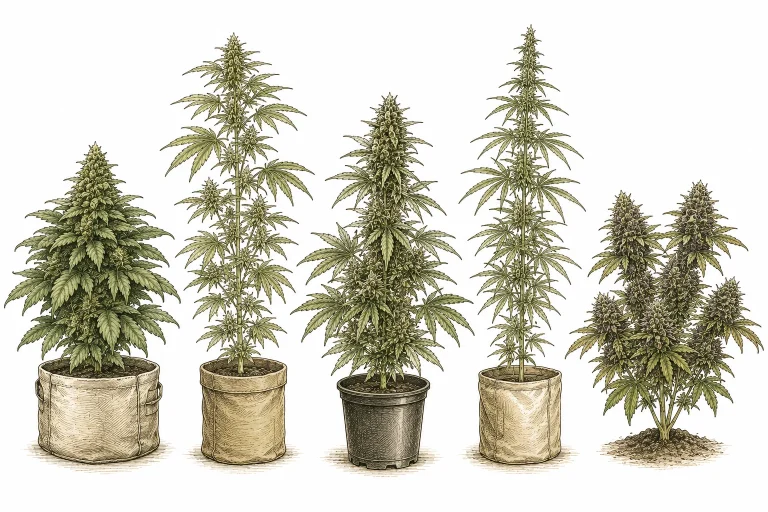
After everything we’ve covered, this list sums up the five best cannabis strains for beginners. These strains weren’t picked at random – they all combine toughness, easy care and satisfying yields. Thousands of beginners have grown each of them successfully, and the community sees them as a reliable way to get started.
#1: Northern Lights Auto – The ultimate classic. Extremely hardy, forgiving of mistakes, short total time of about 70 days. #2: Critical – Photoperiod indica, huge yields, short flowering time, very low-maintenance. #3: White Widow Auto – Consistent results, great resin profile, forgives care mistakes. #4: Early Skunk – Ideal for outdoor growing, early harvest, mold-resistant. #5: Gorilla Glue Auto – Modern autoflower classic, heavy resin production, easy to handle.
Beginners and experienced growers alike will enjoy growing all five of these strains. They make the perfect place to learn. You can try out techniques like low stress training (LST), dial in your watering and feeding, and develop a feel for healthy plants. Small slip-ups won’t turn into a disaster right away. If you want to dig deeper into indoor growing, you’ll find all the key basics in our indoor cannabis grow guide.
- 1. Northern Lights Auto: The hardiest classic, ~70 days
- 2. Critical: Top yields, short flowering time, photoperiod
- 3. White Widow Auto: Consistent, resinous, beginner-friendly
- 4. Early Skunk: Outdoor specialist, early harvest, mold-resistant
- 5. Gorilla Glue Auto: Modern, resinous, easy to manage
- All five strains forgive mistakes without disastrous results
Frequently Asked Questions
Which cannabis strain is really the best for total beginners?
Northern Lights Auto is widely seen as the best strain for total beginners. It’s extremely hardy and forgives pH swings and minor care mistakes. It flowers on its own without a light cycle change and is ready to harvest after about 70 days. Critical (photoperiod) is also a great choice if you want maximum yields with minimal effort.
Are autoflowering strains really easier to grow than photoperiod strains?
Yes, in most cases autoflowering strains are easier for beginners to handle. The biggest advantage: you don’t need to switch the light cycle – the plant flowers on its own. They’re also more compact and faster. The only downside: autoflowers are a bit more sensitive to repotting and transplant stress, so it’s best to start them right in their final container.
Can I grow sativa strains as a beginner?
You can, but it’s not the best pick for your first grow. Sativa-dominant strains grow very tall, can take 10 to 14 weeks to flower and are generally harder to manage. If you really want a sativa, choose a sativa-indica hybrid with mostly indica genetics. That gives you the sativa traits without the extreme growth of pure sativas.
How many plants should you grow at once as a beginner?
As a beginner, we recommend starting with 1 to 3 plants. Fewer plants mean less work, more focus on learning from each plant, and less damage if something goes wrong. Check the cannabis laws where you live before growing, since some places limit how many plants you can keep.
What’s the most common mistake with beginner strains?
The most common mistake is overwatering. Even hardy beginner strains can suffer in a growing medium that stays wet all the time. That can starve the roots of oxygen and lead to root rot and nutrient uptake problems. The second most common mistake is feeding too early and too much. Wait 3 to 4 weeks before you start feeding nutrients, and begin with clearly reduced doses.
Can you grow cannabis as a beginner without special equipment?
For outdoor growing on a balcony or in your backyard, you really don’t need much gear: good soil, suitable pots, water and a sunny spot. For indoor growing, you should have at least an LED grow light, a fan for air circulation and a simple thermometer/hygrometer. Autoflowering outdoor strains are the most budget-friendly way to start, because you can skip artificial lighting completely.
Bottom Line
Picking the right cannabis strains for beginners is the most important step toward a successful first grow. With hardy strains like Northern Lights Auto, Critical or White Widow Auto, you start with genetics that forgive mistakes and still deliver solid results. Pair your strain choice with proper watering, a stable pH and moderate feeding, and your chances of a successful harvest look very good. Also check out our cannabis yellow leaves diagnosis so you can spot typical beginner problems early and fix them fast. Once you’ve picked your strain, our guide How to Germinate Cannabis Seeds shows you step by step how to get off to the best start. If you’re still stuck choosing, our Strain Finder (German) guides you in just a few steps to genetics that match what you’re looking for.
