

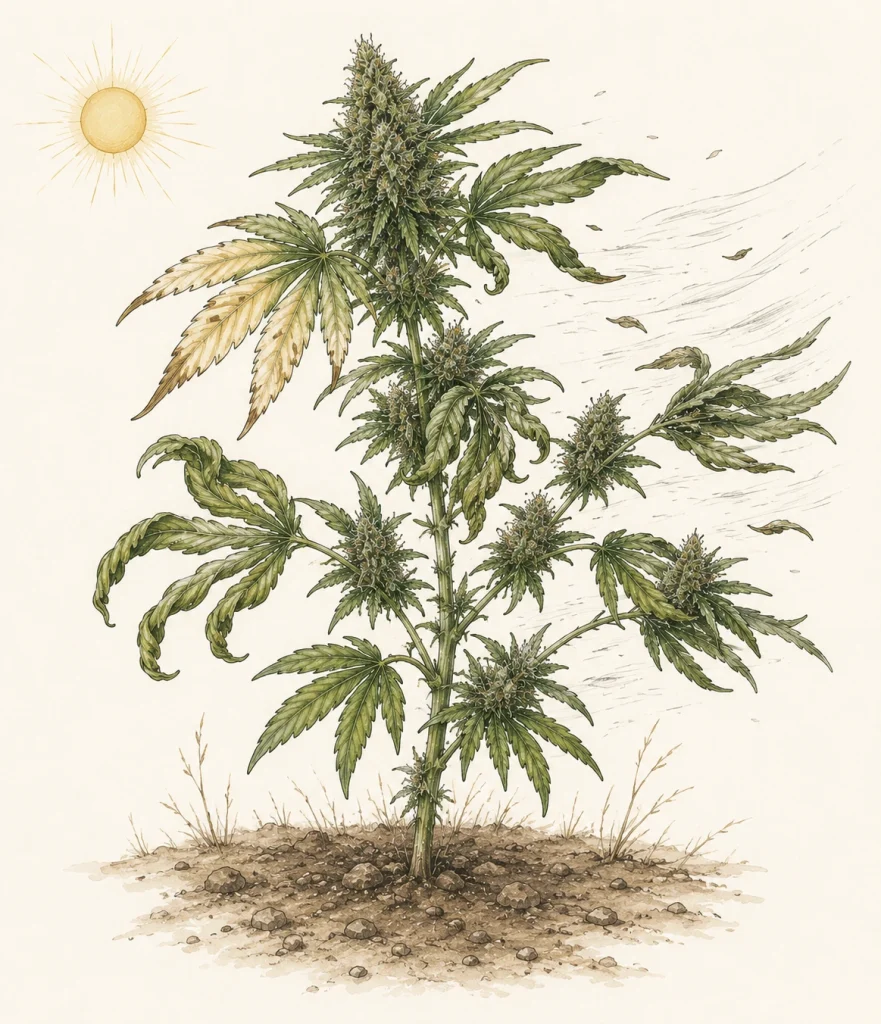
Learning to spot cannabis sunburn and light burn is one of the most important skills you can build as a grower. Why? Because the symptoms get mistaken for nutrient deficiencies or pest problems surprisingly often. Whether it’s an outdoor plant baking in the midday sun or an indoor plant sitting right under an overpowered LED, too much light and heat can fry the chloroplasts in the leaves and leave telltale damage behind. The good news: once you know what to look for, you can spot sunburn fast, and in most cases your plant can be saved. In this guide from PlantClue, you’ll learn how to diagnose light damage with confidence, tell it apart from look-alike problems and take targeted action.
What Exactly Is Cannabis Sunburn and Light Burn?
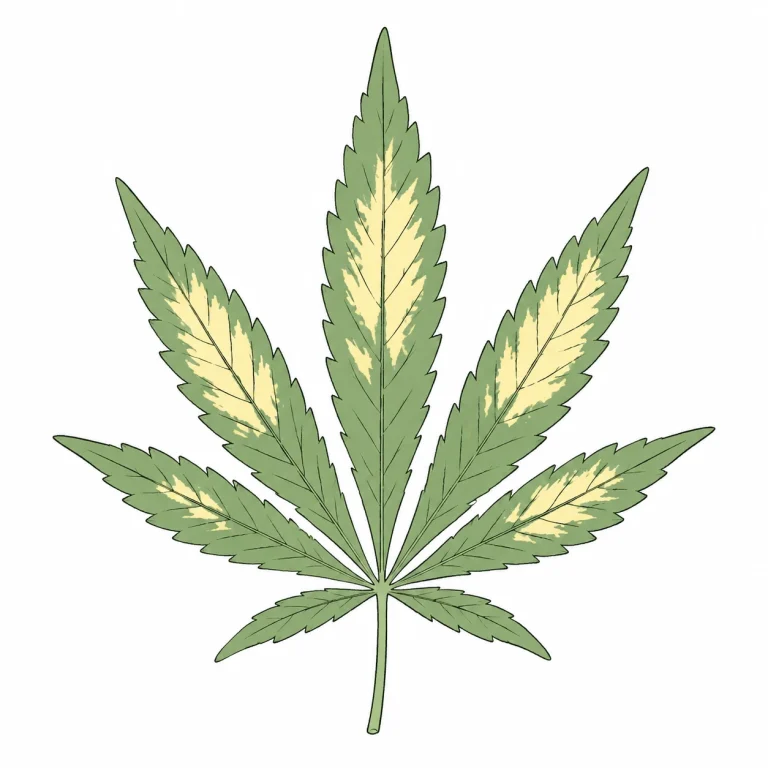
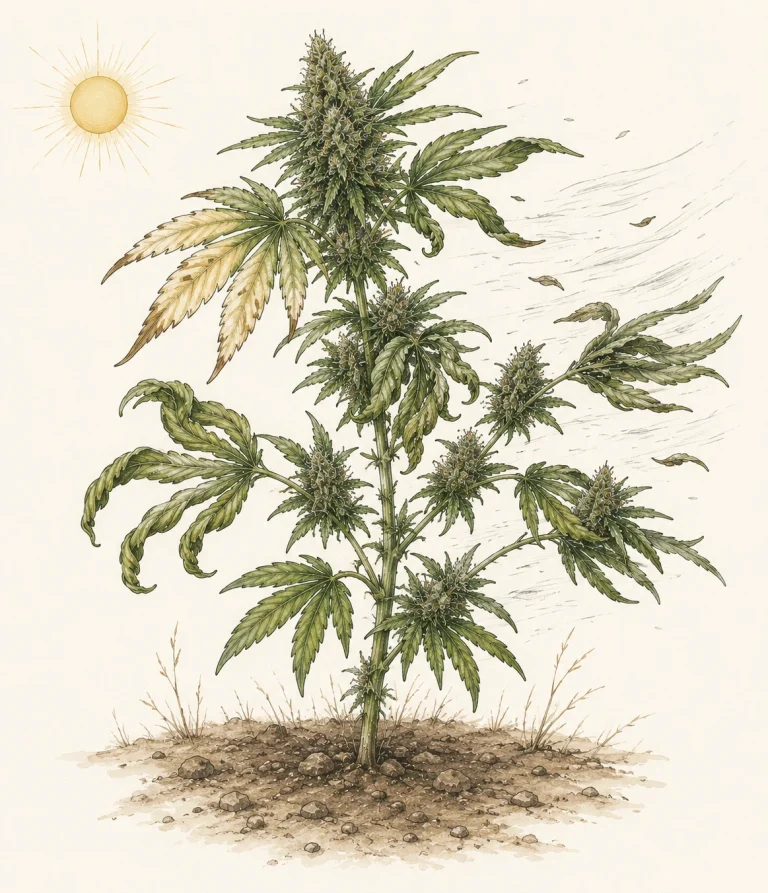
Sunburn in cannabis – also called light burn – happens when the plant absorbs more light energy than it can process. Photosynthesis basically “overflows”: excessive light intensity destroys the chloroplasts, and the tissue dies off and discolors. Plants actually have their own light-sensing systems that are supposed to switch on protective mechanisms when they get overloaded. This isn’t just a cosmetic issue – badly affected leaves can lose their ability to photosynthesize for good.
Here’s a key point: sunburn and heat stress are related, but they’re not the same problem. Heat stress is mainly caused by temperatures that run too high (above 82–86 °F (28–30 °C)), while sunburn can also show up at moderate temperatures when the light intensity is too strong. Still, the two often hit together, because intense light almost always produces heat too. In real-world grows, they tend to make each other worse.
Outdoors, the most critical time is direct midday sun between 11 a.m. and 3 p.m., when the UV index peaks. Indoors, it usually happens when a new, powerful LED hangs too close to the canopy, or when you crank up the light intensity too fast without letting the plant adjust.
- Chloroplasts destroyed by overly intense light
- Happens indoors (LED, HPS) and outdoors (direct sun)
- Often combined with heat stress – but not the same thing
- Damaged tissue won’t fully recover
- Young, fresh growth is especially vulnerable
How to Spot Cannabis Sunburn and Light Burn: The Key Symptoms
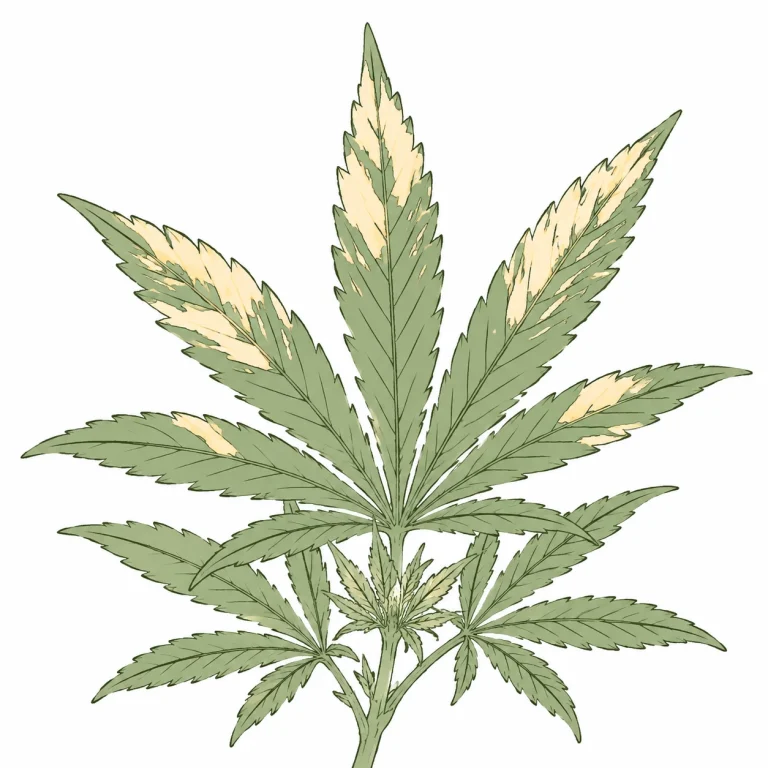
The hallmark symptom of cannabis sunburn is a whitish-yellow bleaching that shows up only on leaf surfaces facing the light source directly. That’s the deciding diagnostic clue: the discoloration always starts at the top – on the upper side of the leaves closest to the light. Leaves lower down in the shade of the canopy stay completely green. This top-down pattern clearly sets sunburn apart from nutrient deficiencies, which usually develop from the leaf edges or tips, or affect the whole leaf evenly.
In the early stage, the leaves look slightly washed out – almost like an overexposed photo. Over time, the spots turn whiter, take on a papery, dry texture and can tear easily when you touch them. With severe sunburn, the tissue turns brownish to bronze and dies off. At that point, no treatment will help – the tissue is permanently damaged.
When you compare it with similar symptoms, keep this in mind: yellow leaves from a nutrient deficiency are usually spread out evenly and don’t start on the side facing the light. A calcium deficiency in cannabis, for example, shows typical brown necrotic spots scattered randomly across the leaf – not just on top leaves exposed to light. Also check whether the symptoms appeared after a particularly sunny day outdoors or after you turned up your light output indoors – that’s often the biggest clue.
- White to pale yellow bleaching on the upper leaf surface
- Only light-exposed leaves affected – undersides and shaded leaves stay healthy
- Papery, dry texture of the damaged tissue
- In extreme cases, brown to bronze necrotic spots
- Symptoms appear quickly after intense light exposure (often within 12–24 h)
- No bottom-to-top progression (unlike true nutrient deficiencies)
Cannabis Sunburn vs. Other Light Problems: How to Tell Them Apart
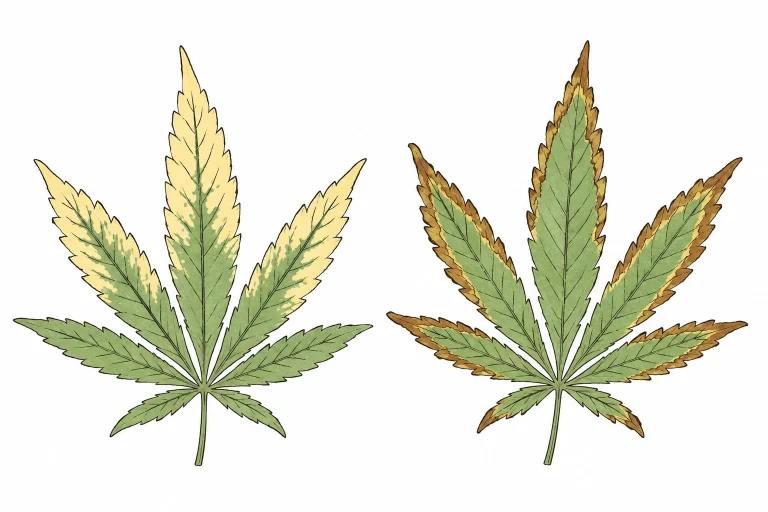
The most common mix-up is between sunburn and classic cannabis light burn from LEDs. Strictly speaking, “light burn” is the umbrella term. Sunburn is the outdoor version caused by natural sunlight. LED burn is the indoor version caused by artificial light. The symptoms are almost identical, so the context makes the call. Still, there are subtle differences: LED burn often has sharper edges because the light source doesn’t move. Sunburn can look more spread out because the sun moves across the sky during the day.
Here’s how you tell sunburn apart from heat stress: with pure heat stress, the leaves often curl up (the so-called “taco” shape), wilt or droop, but they usually stay green at first. With sunburn, the discoloration is the main symptom. When both show up together, which often happens outdoors on hot, sunny days, you’ll see curled leaves AND white, bleached spots.
A magnesium deficiency can also cause bleaching, but it starts between the leaf veins (interveinal) and hits the older, lower leaves first. A pH problem can cause similar patchy discoloration. Always check your cannabis pH before you settle on a diagnosis. If your pH is in the sweet spot and the discoloration only shows up on the side facing the light, you can be pretty sure it’s sunburn.
- Sunburn = outdoor / natural sunlight; LED burn = indoor / artificial light
- Heat stress: leaves curl but usually stay green at first
- Magnesium deficiency: interveinal bleaching that starts at the bottom
- pH problems: patchy discoloration, not tied to the light direction
- The key question: Is only the side facing the light affected?
What Causes Cannabis Sunburn Outdoors and Indoors
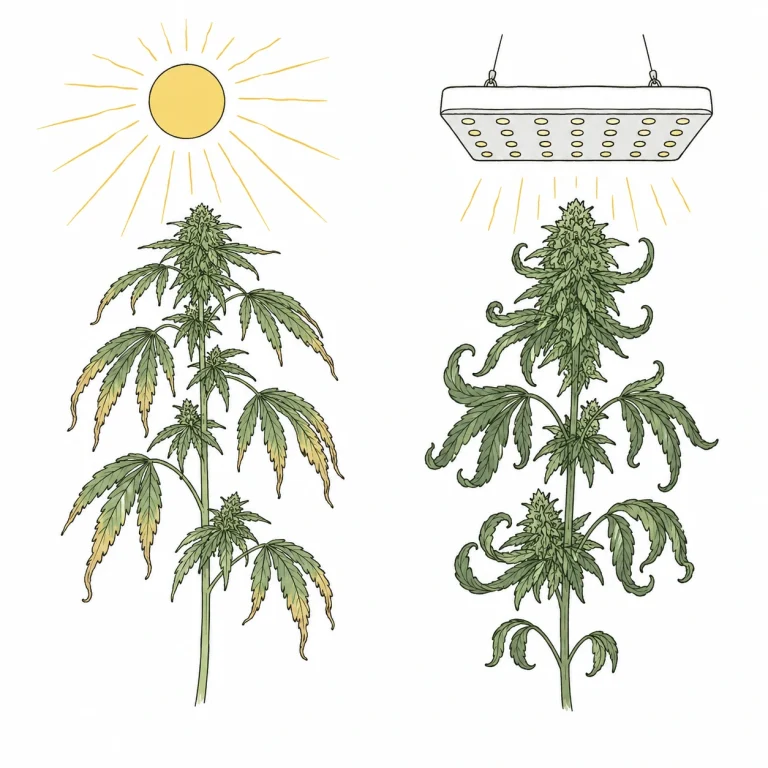
Outdoors, sunburn usually happens in one of three situations. First, when plants that were kept in the shade or indoors suddenly get full sun without hardening off. Second, when the clouds break up on an overcast day and the light intensity jumps all at once. Third, when plants sit in pots or beds with no way to shade them and the summer turns especially hot and sunny.
Indoors, the most common cause is a light hanging too close to the canopy. Modern LEDs are extremely powerful. At 8–12 in (20–30 cm), they can easily push light intensity to levels where burn is pretty much guaranteed. Another typical indoor cause: you crank up the dimmer too fast or switch from a weaker light to a much stronger one without letting your plants adjust step by step. In the flowering stage, the dense buds at the top of the canopy are especially at risk.
One factor people often overlook is how light and moisture work together. Water droplets on the leaves can act like tiny magnifying glasses and cause spot burns. This can happen to outdoor plants that hit direct sun right after a rain shower, or to indoor plants that got watered from above, over the leaves. Want to learn how to water your plants right without creating new problems? Check out our guide on watering cannabis the right way.
- No hardening-off period when moving plants from indoors to outdoors
- Sudden jump in light intensity (clouds breaking up)
- Light hanging too close indoors (especially with modern LEDs)
- Turning up light output too fast without an adjustment period
- Water droplets on leaves acting like magnifying glasses
- High temperatures combined with high light intensity
Spotting Cannabis Sunburn and Light Burn and Acting Fast: The Best Fixes
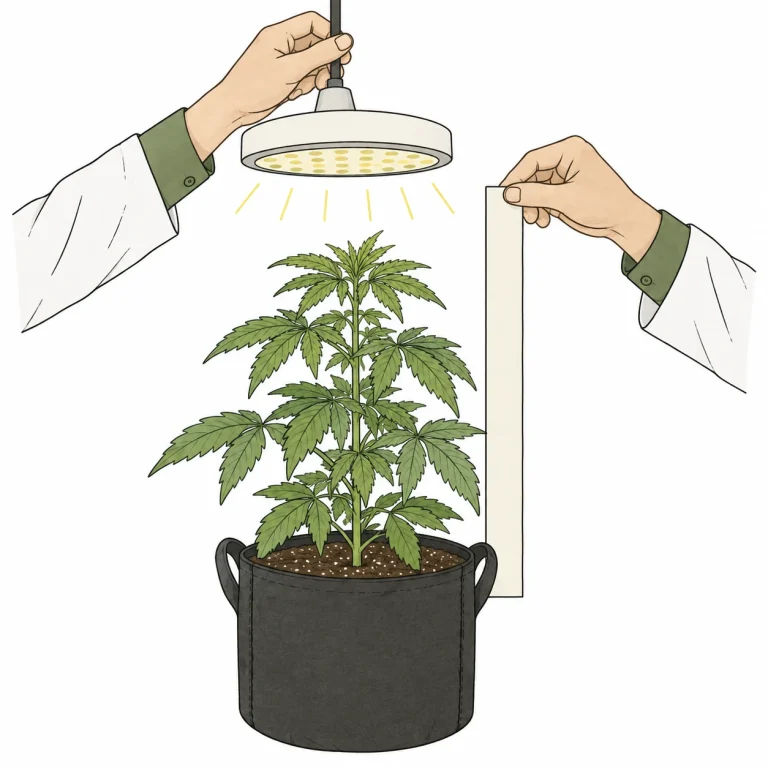
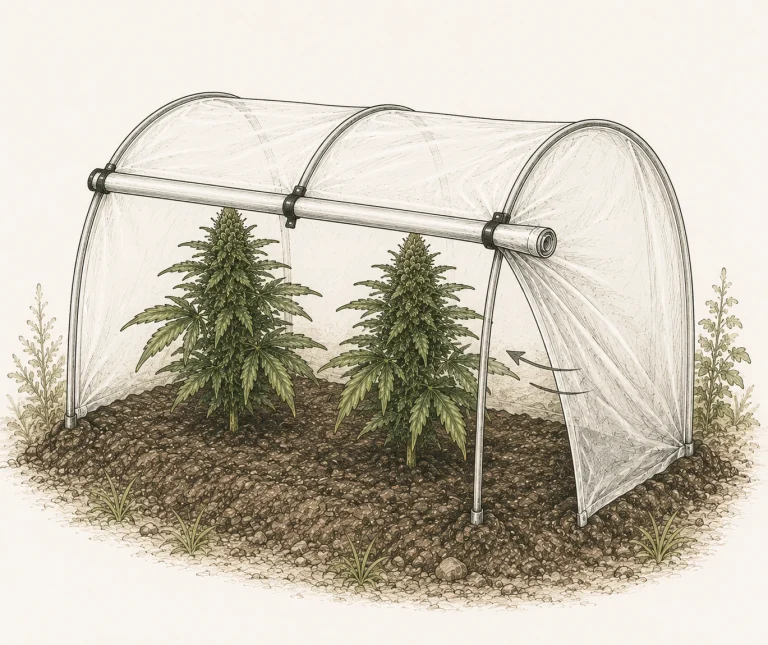
As soon as you spot sunburn or light burn on your cannabis, act fast. First, cut the light exposure right away. Outdoors, that means moving the plant into partial shade or putting up a shade cloth that blocks 30–50 % of the light. Indoors, raise your light at least 8–12 in (20–30 cm) higher right away, or dim it down to 60–70 %. Leaves that are already burned won’t recover, but you’ll stop the damage from spreading to healthy leaves.
Step two: check your temperature. If it’s above 82 °F (28 °C), your plant is also dealing with heat stress. Improve ventilation. Indoors, bring the room temperature down with a stronger exhaust fan. Outdoors, move your plants to a cooler spot. Also check how your plant is doing on water. Light and heat stress can push water needs way up. Make sure your plant gets enough water without ending up waterlogged.
Step three: stabilize the plant. Look at the whole picture. Besides the light damage, are there signs of nutrient problems too? A common mistake is reaching for the nutrients right after a stress event, which can make things worse. Check your pH and EC (electrical conductivity) first, and read our overview of cannabis plant problems and diagnosis to rule out any other issues. Remove badly burned leaves that can’t photosynthesize anymore, but leave lightly affected leaves on the plant for now.
- Cut light exposure right away: shade outdoors, more distance indoors
- Dim your light or turn it down to 60–70 % power
- Check temperature and improve air circulation
- Keep watering steady: not too much, but don’t let it dry out
- Don’t rush to feed after a stress event
- Remove badly burned leaves, keep lightly affected ones for now
- Check your pH and EC
Preventing Cannabis Sunburn: How to Protect Your Plants for Good
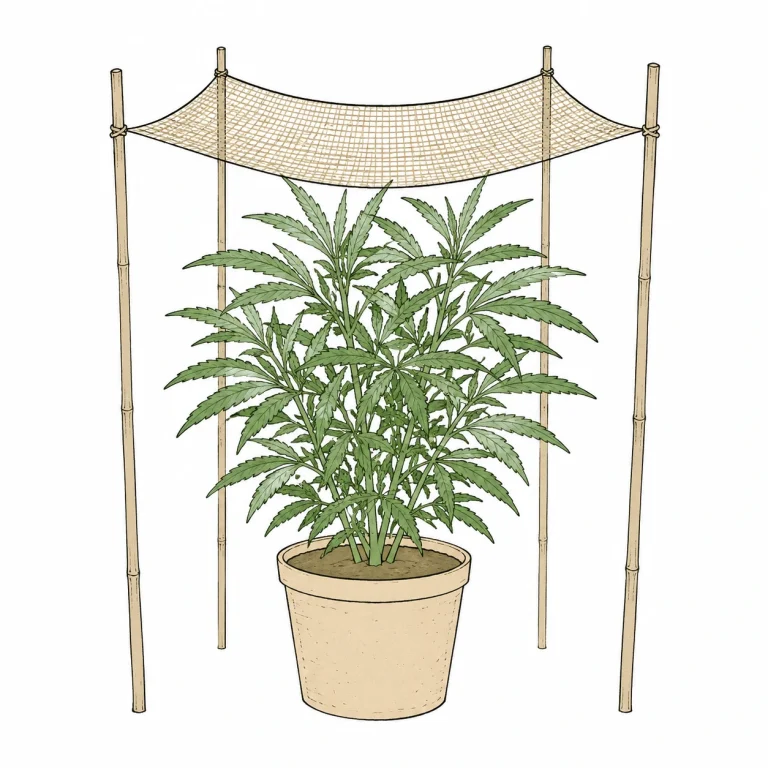
When it comes to cannabis sunburn, prevention is clearly your best strategy, because burned tissue doesn’t grow back. Outdoors, your most important protection is hardening off: give plants that have been indoors 2–3 hours a day in a bright spot without direct sun at first. Increase their time outside over 10–14 days until they can handle full midday sun without trouble. This gives the leaves time to build up more UV-protective pigments.
For plants that live outdoors full-time, a shade cloth with 30–40 % coverage during the hottest midday hours is a smart move. If you can, place your plants so they get morning sun and some afternoon shade. Morning light is less intense than midday light. Also pick tough strains that suit your climate, since some cannabis genetics handle heat and strong light much better than others.
Indoors, the key to prevention is ramping up light intensity in a controlled way. Always start new plants, or plants after a strain or light change, at reduced intensity (50–60 %), and raise it by no more than 10–15 % per week. Know the minimum hanging distance for your light (the manufacturer lists it) and use a lux or PPFD (photosynthetic photon flux density) meter to be sure. As a general rule, a PPFD of 400–600 µmol/m²/s is considered safe in the vegetative stage, and 600–900 µmol/m²/s in the flowering stage.
- Hardening off: get plants used to sunlight gradually over 10–14 days
- Shade cloth (30–40 %) for outdoor plants in the midday heat
- Pick your spot: morning sun yes, soften harsh midday sun
- Indoors: ramp up light intensity slowly, never more than +15 % per week
- Stick to the manufacturer’s minimum distances and measure your PPFD
- Choose tough strains that suit your climate
- Avoid water droplets on leaves, especially before direct sun exposure
Cannabis Sunburn in the Flowering Stage: Special Risks and Fixes
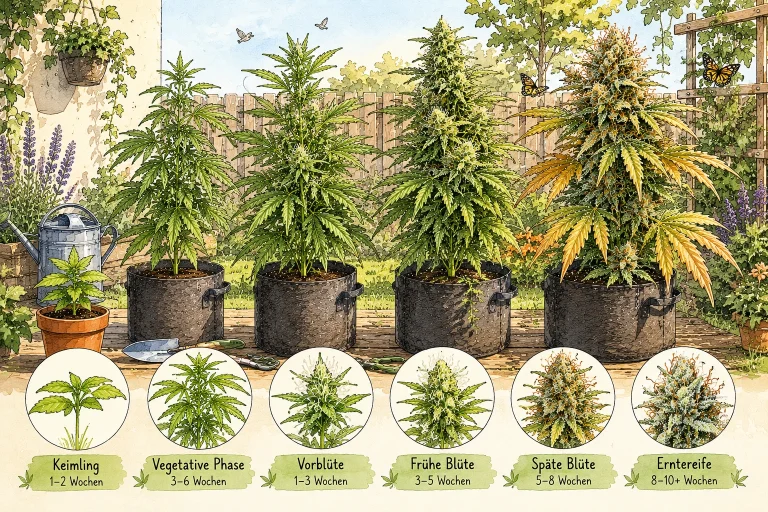
In the flowering stage, the risk of sunburn and light burn is especially high, and the damage is more serious. Dense buds at the top of the canopy get less airflow and build up heat. Bleached buds, along with foxtails caused by too much light, don’t just look worse. They can also lose a good chunk of their potency, because UV exposure and heat break down the trichomes.
Indoors, you can spot bleached buds when the side of the bud closest to the light turns whitish-yellow and grows tiny, often oddly stretched foxtails. That’s not a sign of ripeness. It’s light damage. Outdoors, you may see similar symptoms after extreme sunny days. If you’re not sure whether your buds are ripe or stressed, check the trichomes with a loupe. Bleached trichomes are usually clear and empty, not cloudy or amber like they are at true ripeness.
The fix during flowering is the same as always: correct light intensity and distance, lower the temperature, and improve air circulation. In the flowering stage, also keep in mind that too many nutrients can lower your plant’s stress tolerance even further. A well-balanced feeding schedule makes your plant more resilient to all kinds of environmental stress.
- Bleached buds: whitish-yellow bleaching on the bud surface
- Foxtails from light overload: a stress symptom, not a sign of ripeness
- With bleaching, trichomes stay clear and empty instead of turning cloudy or amber
- Loss of potency and quality as UV breaks down the trichomes
- Keep flowering temps strictly below 79–82 °F (26–28 °C)
- Good airflow right at the canopy reduces heat buildup in the buds
If the discoloration looks more purple or bluish than bleached, cold stress could also be the cause.
Frequently Asked Questions
How can I reliably spot light burn on cannabis?
The most reliable sign is the pattern: the damage follows the light. Only leaf surfaces facing the light source directly turn whitish-yellow and papery. Leaves shaded by the canopy stay green. Symptoms show up fast, often within 12–24 hours of intense light exposure.
Do burned cannabis leaves recover?
No. Once leaf tissue has died from sunburn or light burn, it won’t come back. But if you act fast – dial back the light, bring down the temperature – you can keep the damage from spreading to more leaves. New, healthy leaves will grow in once you’ve fixed the cause.
What’s the difference between light burn and heat stress?
Light burn comes from light that’s too intense and destroys the chloroplasts – the main symptom is bleaching. Heat stress is mainly caused by high temperatures and first shows up as leaves curling upward (“taco leaves”) without any immediate discoloration. The two often hit at the same time and make each other worse.
Can I still save my harvest after light burn, or do I have to give up on the plant?
In most cases, you can save the plant. Remove badly damaged leaves, cut the light intensity right away, and keep temperatures and watering on point. If only the top leaves are affected and the buds still look intact, your plant can often finish flowering just fine.
How far should my LED light be from the canopy?
That depends on your light’s wattage. A good rule of thumb for high-power LEDs: at least 16–24 in (40–60 cm) in the vegetative stage, 12–20 in (30–50 cm) in the flowering stage. Always follow the manufacturer’s recommendations, and ideally use a PPFD meter. With a new light, always start at reduced power and a greater distance.
Can light burn symptoms be mistaken for a nutrient deficiency?
Yes, this happens a lot. The key difference: sunburn only hits the light-facing upper side of the leaves, starts at the top of the canopy and shows up after intense light exposure. Nutrient deficiencies are usually spread more evenly, start at the leaf edges or tips and typically move from the bottom of the plant upward.
The Bottom Line
Spotting sunburn and light burn on cannabis is easier than you might think once you know the telltale sign: the bleaching only ever hits the light-facing side of the leaves. Act fast – lower the light intensity and temperature – and in most cases you can prevent bigger damage. Prevention is still your best strategy: gradually hardening off your plants outdoors and keeping your lighting under control indoors will reliably protect them. If you need more help diagnosing your plants, PlantClue has in-depth guides on all the common cannabis problems.
