

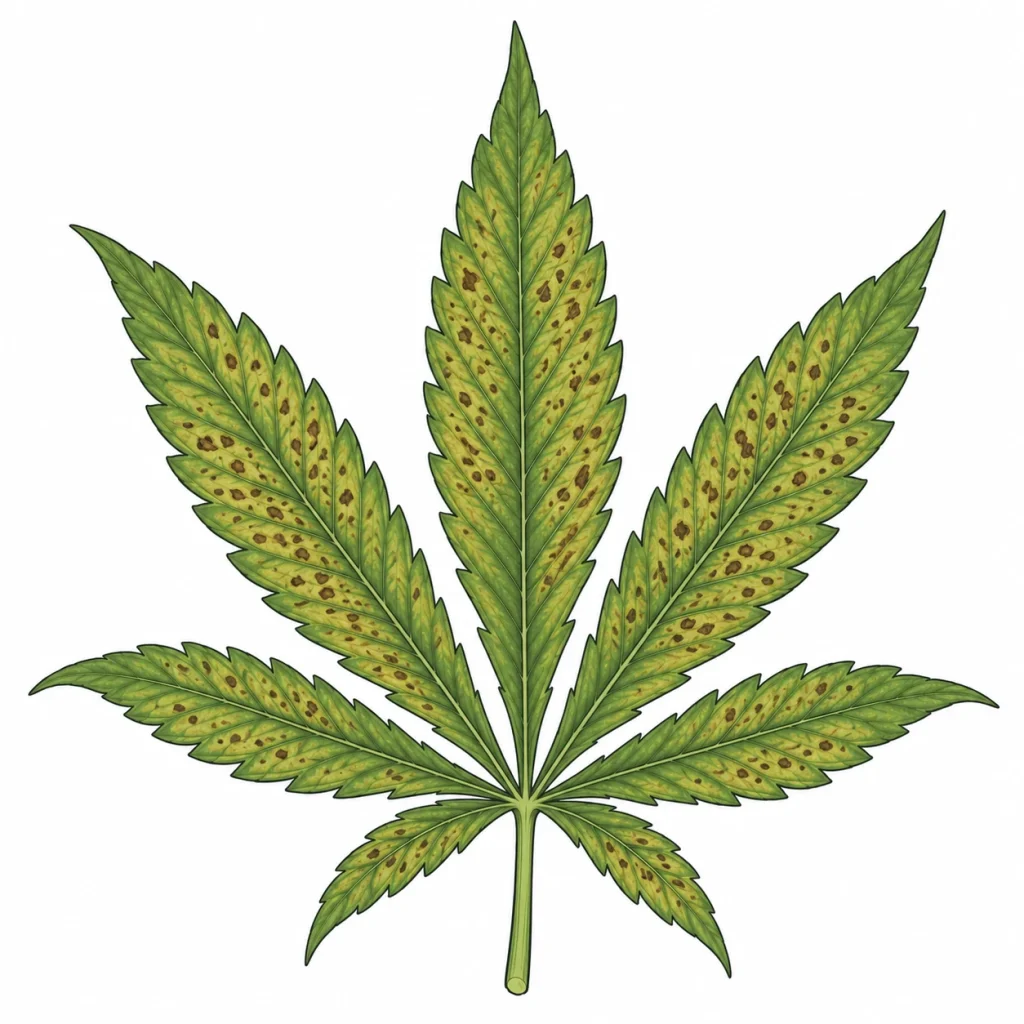
Spotting manganese toxicity in cannabis isn’t always easy. At first glance, the symptoms look a lot like other nutrient problems. Still, manganese toxicity is a serious issue. If you don’t step in early, it can do lasting damage to your plant. Manganese is a micronutrient, so your plant only needs tiny amounts. But once the concentration climbs too high, it locks out other key nutrients and disrupts core metabolic processes. In this article, I’ll show you how to reliably spot the typical warning signs, pin down the most common causes and nurse your plant back from toxicity step by step.
How to Spot Manganese Toxicity in Cannabis: The Typical Symptoms
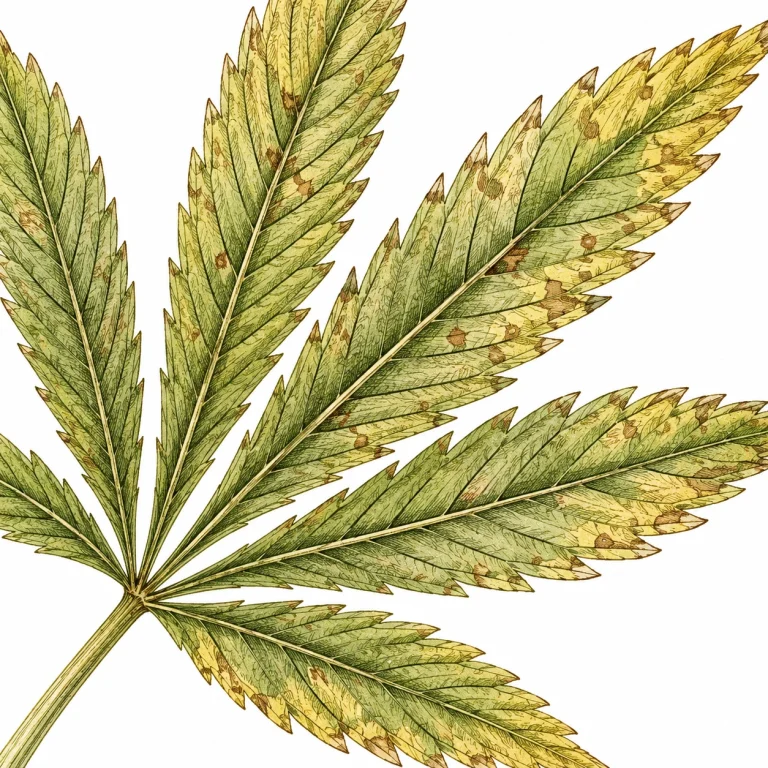
Manganese toxicity usually shows up first on older, lower leaves before it spreads upward. That’s because manganese is a mobile element that the plant moves around when it’s under stress. The first signs are often small, irregular brown or reddish-brown spots scattered across the whole leaf. These spots often start between the leaf veins and then keep spreading.
As the toxicity gets worse, the leaf edges turn yellow and then brown. This dying tissue is called necrosis. The leaves look dull overall and lose their healthy shine. One key difference from a manganese deficiency: with toxicity, the leaf veins stay green at first while the tissue between them breaks down. In severe cases, whole leaves can die off and drop.
You’ll often see signs of an iron or zinc deficiency at the same time, because high manganese levels block the uptake of these nutrients. That makes diagnosis trickier, since your plant is showing several problems at once. So if you see yellow leaves with brown spots plus stunted growth, consider manganese as a possible cause. For a full overview of everything that can turn leaves yellow, check out our article on yellow cannabis leaves – all causes at a glance.
- Brown to reddish-brown spots on older leaves, especially between the veins
- Yellow to brown leaf edges (necrosis) that spread inward
- Leaf veins stay green at first while the surrounding tissue breaks down
- Dull-looking leaves that lose their natural shine
- Secondary signs of iron or zinc deficiency caused by nutrient lockout
- Badly affected leaves dying off and dropping in severe cases
- Slower growth and reduced vigor across the whole plant
Main Causes of Manganese Toxicity in Cannabis
The most common cause of manganese toxicity in cannabis is a root-zone pH that stays too low for too long. When the pH in soil drops below 6.0, or below 5.5 in hydroponics, manganese becomes extremely soluble and your plant takes up far more than it can handle. It’s a textbook example of an indirect problem – the wrong pH – triggering a direct nutrient toxicity, even though you never fed too much manganese in the first place. Your cannabis pH should sit between 6.0 and 7.0 in soil and between 5.5 and 6.5 in hydro.
The second common cause is simply overdoing manganese-rich nutrients. Cheap base nutrients or homemade mixes that haven’t been dialed in sometimes contain way too much manganese. If you also add dedicated micronutrient products without keeping an eye on the total amount, manganese can build up in your growing medium and cause problems for weeks. Nutrient burn in cannabis is often how this downward spiral starts.
Water quality matters a lot, too. In some areas, tap water naturally contains elevated levels of manganese. If you use that water for a long time without flushing your medium regularly, manganese builds up in the soil. On top of that, poor drainage and overwatering can lower the pH locally and push manganese availability even higher. That’s why good watering technique is an often overlooked line of defense – learn more in our article on how to water cannabis properly.
- pH too low in the growing medium (below 6.0 in soil, below 5.5 in hydro) sharply increases manganese uptake
- Overdoing manganese-rich nutrients or micronutrient products that aren’t dialed in
- High manganese in your tap water without regular flushing
- Overwatering and poor drainage that lower the pH locally
- Buildup from poor watering habits over several weeks
- Cheap all-in-one nutrients with an unbalanced micronutrient mix
How to Spot Manganese Toxicity in Cannabis and Tell It Apart from Other Problems
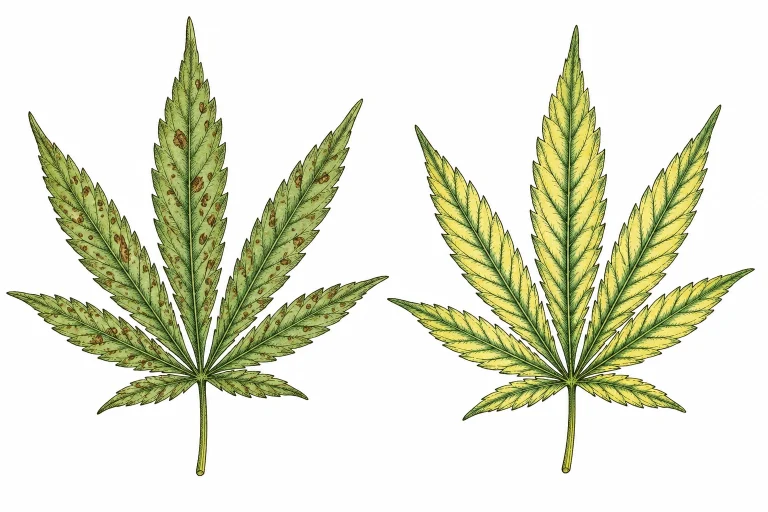
The biggest challenge in diagnosing manganese toxicity is how easily it gets mixed up with other problems. Calcium deficiency, pH stress or magnesium toxicity can all look similar. Brown spotting can point to calcium deficiency, a fungal infection, pH stress or pests. The key difference from calcium deficiency is the pattern. With potassium and calcium deficiency, the spots often have irregular edges and a typical halo around them. Manganese toxicity tends to show diffuse, evenly scattered dots with no clear border.
Magnesium deficiency can look similar at first: the yellowing starts between the veins, and the veins stay green for a long time. The difference? With a magnesium deficiency, you don’t get the brown necrosis between the veins. With manganese toxicity, those brown necrotic dots are the main sign, not the yellowing. On top of that, magnesium deficiency usually shows up when the pH is too high. Manganese toxicity shows up when the pH is too low.
Another clue is where the symptoms appear on the plant. Manganese toxicity starts on the lower, older leaves and slowly works its way up. Damage from pests or fungal diseases, on the other hand, often shows an irregular, patchy pattern with no clear bottom-to-top progression. Not sure what you’re looking at? Our Cannabis Plant Diagnosis Hub gives you a structured overview to narrow down the problem step by step.
- Manganese toxicity: diffuse brown dots between the veins, no clearly defined halos – for the opposite problem, see our article on manganese deficiency in cannabis
- Calcium deficiency, by contrast, shows clearly defined, often round spots with a dark edge
- Magnesium deficiency: interveinal yellowing without brown necrosis – shows up at high pH
- Pest damage doesn’t follow an even bottom-to-top progression
- Fungal diseases like Alternaria or Cladosporium: often with visible fuzzy spore growth
- Checking your pH is the first diagnostic step if you suspect manganese toxicity
Cannabis Manganese Toxicity: What You Can Do Right Now
Your most important first step: check and correct your pH right away. Measure the pH of your input water and your runoff, then compare the two. If your runoff pH is well below 6.0 (soil) or 5.5 (hydro), that’s a clear sign your growing medium has turned acidic and manganese is way more available than it should be. Adjust the pH of your water gradually – never too aggressively all at once. Big pH swings can stress your plant even more.
Next, I recommend a targeted flush (flushing). Water with two to three times your pot volume of pH-adjusted water (pH 6.2–6.5 in soil). This washes excess manganese and other built-up salts out of the medium. After flushing, let the medium dry out well before you water again. Then restart feeding at a reduced dose – no more than 50 percent of what you were using before.
Remove badly damaged leaves that are already necrotic and won’t recover. They drain energy from the plant without contributing to photosynthesis anymore. At the same time, take a hard look at your feeding schedule: Does it include separate micronutrient products or manganese-rich supplements? If so, pause them completely for at least two weeks. After a proper flush and pH correction, your plant will usually push out new, healthy leaves within one to two weeks. The damaged leaves, however, won’t recover.
- Measure the pH of your input water and runoff right away – target in soil: 6.0–7.0
- Flush the medium with 2 to 3 times your pot volume of pH-adjusted water
- Pause micronutrient products and any manganese sources completely for 2 weeks
- Remove badly necrotic leaves that no longer photosynthesize
- After flushing, let the medium dry out completely before the next watering
- Restart feeding at no more than 50 percent of your previous dose
- Check on your plant’s growth daily for the next 7–14 days
Preventing Manganese Toxicity in Cannabis Long-Term: Prevention and Growing Medium Management
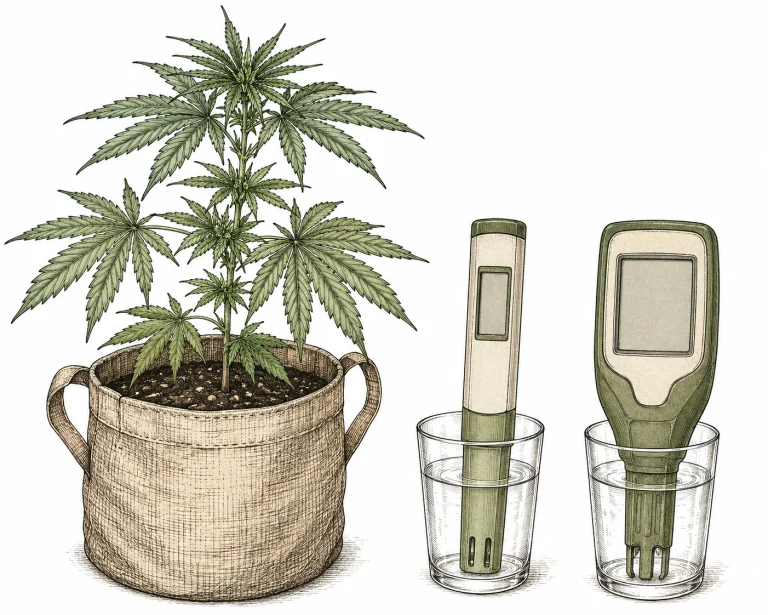
Long-term prevention starts with consistent pH monitoring. Get a reliable digital pH meter and calibrate it regularly. Don’t just measure the pH of your input water – check your runoff after every watering too. That way, you’ll catch an acidifying medium early, before your plant shows any symptoms. Keeping a pH log for your whole grow isn’t overkill. It’s one of the simplest and most effective prevention steps there is.
Pick your nutrient line carefully and check what’s in it. Quality base nutrients from the big brands are usually formulated to deliver micronutrients in the right ratio. If you add extra micronutrient products, read the label closely and check whether your base nutrients already contain enough manganese. Rule of thumb: when growing cannabis, the manganese in a quality base nutrient is almost always all your plants need.
Good growing medium management is the third pillar of prevention. Use quality soil with good buffering capacity that keeps the pH stable on its own. Prevent waterlogged soil with enough drainage holes and smart watering habits, because overwatering is a common trigger for local pH swings. In long grows, also plan a light preventive flush every four to six weeks to keep salts from building up. If you set up your indoor cannabis grow systematically, you can build these routines in from day one.
The North Rhine-Westphalia Chamber of Agriculture (Germany) also recommends feeding based on measured needs rather than blanket add-ons as the most effective protection against micronutrient toxicity.
- Make checking the pH of your input water and runoff a fixed routine
- Calibrate your pH meter every 2–4 weeks with buffer solution
- Choose quality base nutrients with a clearly listed micronutrient profile
- Don’t add extra micronutrient products without a clear reason backed by measurements
- Good drainage in the pot and adjusted watering habits to prevent waterlogging
- Preventive flushing every 4–6 weeks in long grows
- Use quality buffered soil that holds its pH steady
- Test your tap water’s mineral content before you start growing (TDS reading)
To catch overfeeding early, measure your EC (electrical conductivity) regularly. Similar symptoms can also show up with iron toxicity, which a pH that’s too low can also encourage.
Frequently Asked Questions
How can I tell manganese toxicity from calcium deficiency in cannabis?
With manganese toxicity, you’ll see diffuse brown necrotic specks spread evenly between the leaf veins, with no clear edge or halo. Calcium deficiency spots, on the other hand, tend to be rounder and more sharply defined, often with a darker border. Manganese toxicity also usually starts when the pH is low, while calcium deficiency tends to show up at medium to high pH.
Can a plant fully recover from manganese toxicity?
Yes, if you step in early enough. Leaf areas that are already necrotic won’t recover, but new leaves can grow in healthy once you’ve corrected the pH and flushed. In severe cases, it can take two to three weeks before the plant grows normally again. Remove badly damaged leaves so the plant can put its energy into new growth.
How long does flushing for manganese toxicity take, and how do I do it right?
Water with two to three times the pot’s volume of pH-adjusted water (pH 6.2–6.5 for soil). At the end, check the pH of your runoff. It should be getting close to your input value. Then let the growing medium dry out completely before you water again. Depending on pot size, the whole flush takes about 20–60 minutes.
Can manganese toxicity happen even when the pH is correct?
Yes, but it’s less common. If your pH is on point but the manganese level in your nutrients or water is extremely high, toxicity can still develop. In most cases, though, a pH that’s too low is the main culprit, because it can boost manganese availability dramatically. So always check your pH first before you blame your nutrients.
Which nutrients does too much manganese lock out?
Manganese toxicity mainly blocks the uptake of iron, zinc and magnesium. That’s because these nutrients use similar uptake pathways in the roots, and at high levels manganese competes with them and crowds them out. That’s why plants with manganese toxicity often look like they have an iron or magnesium deficiency at the same time.
Is manganese toxicity more common in hydroponics than in soil?
The risk tends to be higher in hydroponics because there’s no buffering medium like soil. A pH below 5.5 in your nutrient solution can drive manganese availability way up. In soil, the medium cushions pH swings a bit. Still, manganese toxicity can happen in soil too, especially in acidic peat-based mixes without added lime.
To keep an eye on your feeding strength going forward, an EC meter from our recommended gear can help.
The Bottom Line
Spotting manganese toxicity in cannabis is the first and most important step to saving your plant – the sooner you catch those typical brown necrotic spots on the lower leaves and check your pH, the better your chances of a full recovery. In most cases, a pH correction combined with a targeted flush of the medium is enough to fix the problem. The best prevention is consistent pH monitoring, choosing the right nutrients and solid watering habits. Get these basics dialed in, and you’ll rarely run into manganese toxicity in your grow.
