

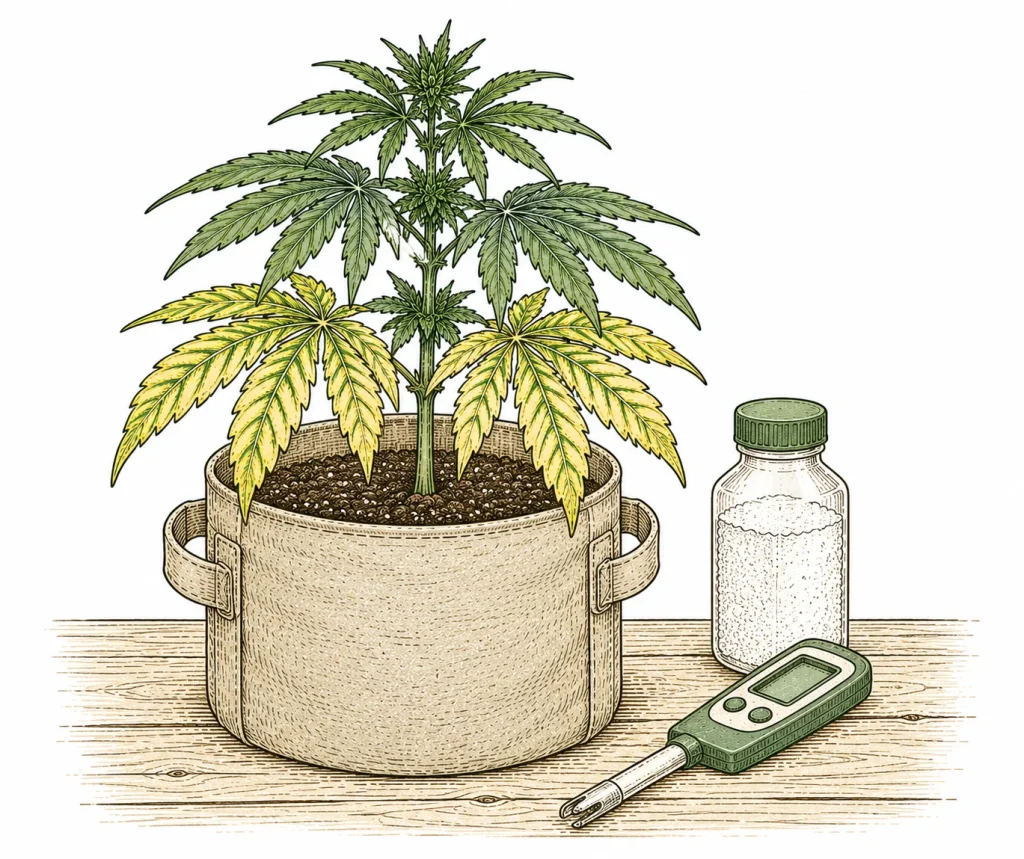
Cannabis magnesium deficiency is one of the most common problems home growers run into — and it gets misread surprisingly often. The characteristic pattern of yellowed leaf tissue while the leaf veins stay green, known as interveinal chlorosis, is a clear warning sign from your plant. If you spot it early and respond the right way, you can still save your grow and prevent yield losses. In this article, we at PlantClue explain how to reliably tell a magnesium deficiency apart from other deficiencies, what causes it and how to correct it quickly and effectively.
What is magnesium and why does cannabis need it so badly?
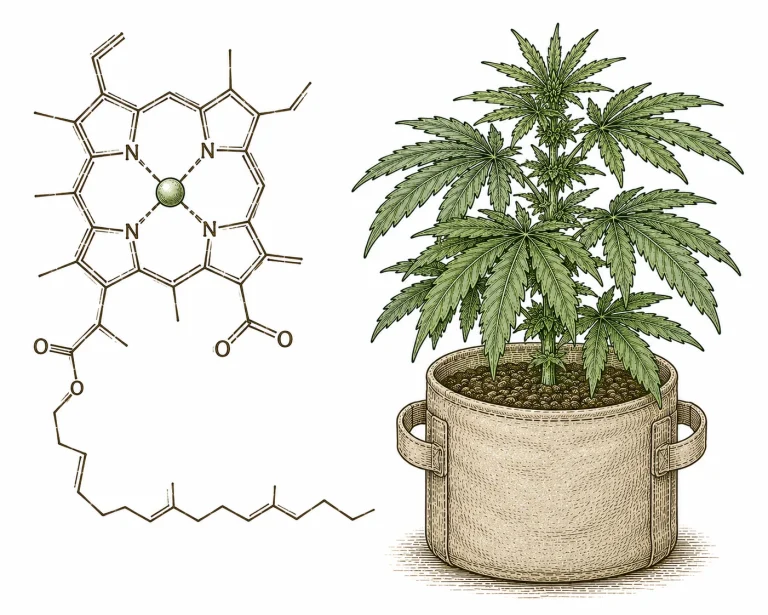
Magnesium is an essential macronutrient that sits at the center of every single chlorophyll molecule. Without magnesium, cannabis simply can’t produce chlorophyll — for more on magnesium’s role in plant metabolism, see the Julius Kühn Institute (German) — and without chlorophyll, there’s no photosynthesis. That means: if magnesium is missing, your plant can’t turn light into energy, growth stalls and the leaves start to yellow. Besides its role in chlorophyll, magnesium also helps activate numerous enzymes, regulates the uptake of other nutrients such as phosphorus and nitrogen, and supports the transport of sugars from the leaves to the growth zones and buds.
Cannabis has a relatively high magnesium demand — especially in the flowering stage, when the plant mobilizes huge amounts of energy to build buds. At the same time, magnesium is a mobile nutrient, which means the plant can move it from older leaves to younger, more active areas. That explains exactly why cannabis magnesium deficiency symptoms typically show up on the older, lower leaves first and only work their way up once the deficiency advances. So if you only watch the growing tips, you’ll often miss the early warning signs completely.
- Magnesium is the central atom of the chlorophyll molecule — essential for photosynthesis
- Activates important enzymes for metabolism and nutrient transport
- Supports phosphorus uptake and sugar distribution in the plant
- Mobile nutrient: a deficiency shows up first on older, lower leaves
- Especially high demand during the flowering stage
Cannabis magnesium deficiency symptoms: how to identify it for sure
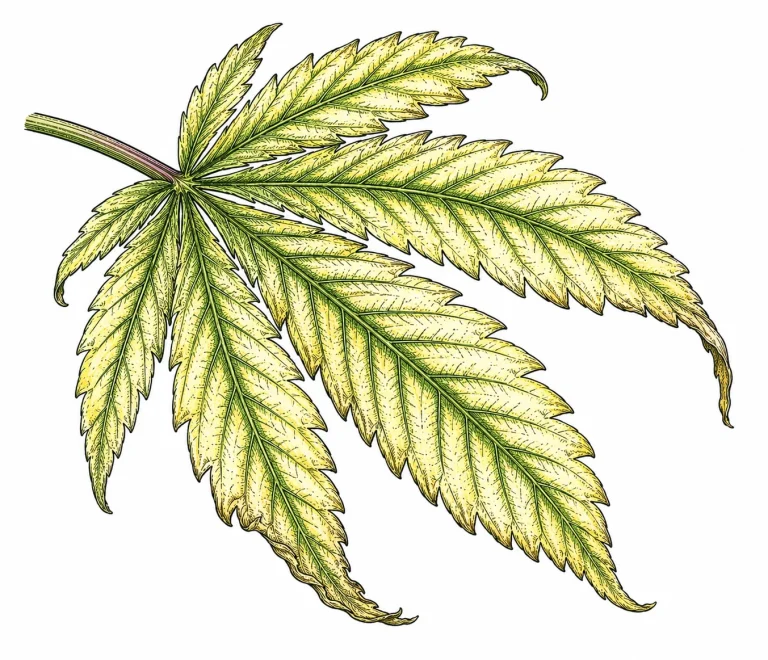
The key symptom of magnesium deficiency is interveinal chlorosis: the leaf tissue between the veins turns light yellow to whitish, while the veins themselves stay green at first. This high-contrast pattern is the telltale sign and sets magnesium deficiency apart from many other problems. In early stages, the discoloration looks pale green and subtle — only later does the yellowing intensify, all the way to almost white leaf tissue. At the same time, the leaf edges may start to turn brownish and curl, which signals progressing tissue damage.
The symptoms almost always start on the oldest, lowest leaves and move upward over time. With a severe deficiency, the discoloration also reaches the middle of the plant, and affected leaves eventually die and drop. By direct comparison: with an iron deficiency, the chlorosis shows up mainly on the youngest shoots and leaves — that’s the deciding difference for diagnosis. Other accompanying symptoms can include slower growth, droopy leaves and, in advanced stages, brown necrotic spots in the middle of the yellow tissue. In the flowering stage, an untreated magnesium deficiency leads to noticeably smaller, less dense buds.
To narrow it down quickly, take a look at the whole plant: if only old leaves show interveinal chlorosis, everything points to a magnesium deficiency. If, on the other hand, it’s the new leaves that look pale yellow, that points more toward iron deficiency or other micronutrient problems. If you also see brown spots or necrosis on the leaf tips or edges, you should consider calcium deficiency in cannabis as a possible companion problem, since these two deficiencies often show up together.
- Interveinal chlorosis: leaf tissue yellow, veins stay green — the main sign
- Symptoms start on older, lower leaves — not at the growing tips
- Advanced: brown edges, necrotic spots, leaves drop off
- In the flowering stage: smaller, less dense buds as a result
- Telling them apart: iron deficiency affects young leaves, magnesium deficiency old leaves
Causes of cannabis magnesium deficiency: where’s the real problem?
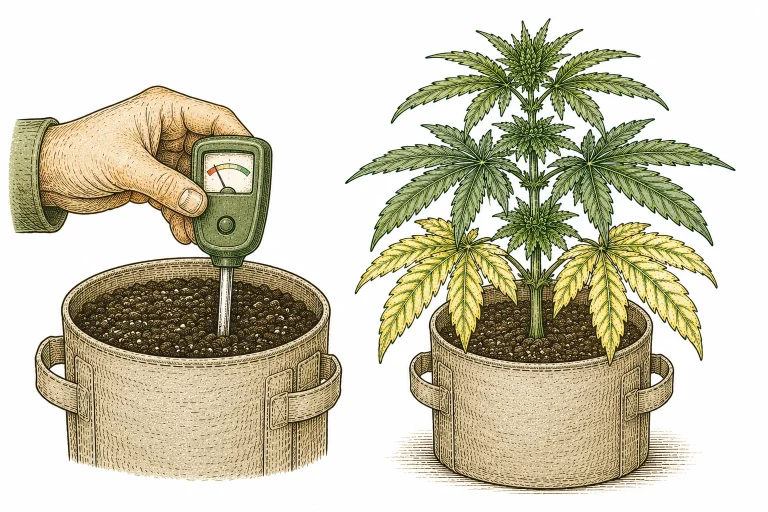
By far the most common cause of magnesium deficiency in cannabis isn’t an actual lack of the nutrient in the growing medium, but the wrong pH. If the pH in the root zone is outside the optimal window, the plant simply can’t take up the magnesium that’s there — this is called induced chlorosis or nutrient lockout. In a soil grow, the pH should be between 6.0 and 7.0, ideally around 6.2 to 6.8. In hydro or coco, the window is narrower: 5.5 to 6.1 is ideal. A pH that’s even slightly below or above that can severely limit magnesium uptake. So before you start adding nutrients, always check the pH for cannabis first — that saves time, money and further plant damage.
Another common cause really is too little magnesium in the growing medium or in your feed water. Many standard grow nutrients are designed for specific base media and don’t always supply enough magnesium, especially if you use soft tap water. Soft water contains hardly any dissolved minerals, including little magnesium and calcium — a very commonly underestimated factor in indoor growing. On top of that, an oversupply of potassium or calcium can competitively inhibit magnesium uptake: the nutrients compete for the same uptake channels in the roots. So if you feed a lot of calcium or use hard water without balancing it, you paradoxically risk a magnesium deficiency even though magnesium is present.
If magnesium deficiency shows up together with calcium deficiency symptoms, there’s usually a combined Cal-Mag problem behind it — typical with coco coir or soft water. Our Cal-Mag deficiency article shows you how to fix the combined deficiency in a targeted way.
Environmental factors play a role too: root zone temperatures that are too low, below 59 °F (15 °C), slow root activity down considerably, which inhibits nutrient uptake overall — and magnesium is hit especially hard. Waterlogging and overwatering also restrict root function and encourage magnesium deficiency as a secondary effect. If you water your cannabis plants correctly and keep an eye on the root zone temperature, you already rule out many of these risk factors. Less common causes are a growing medium that wasn’t replaced in time, with depleted soil, or growing in pure coco without adjusted magnesium supplementation.
- Wrong pH is the most common cause — magnesium gets locked out, not absorbed
- Soft tap water provides hardly any natural magnesium
- Excess potassium or calcium blocks magnesium uptake (nutrient competition)
- Root zone temperature below 59 °F (15 °C) inhibits root activity and nutrient uptake
- Waterlogging and overwatering as contributing factors
- Coco grows without adjusted Mg supplementation are especially prone
How to fix cannabis magnesium deficiency: step-by-step guide
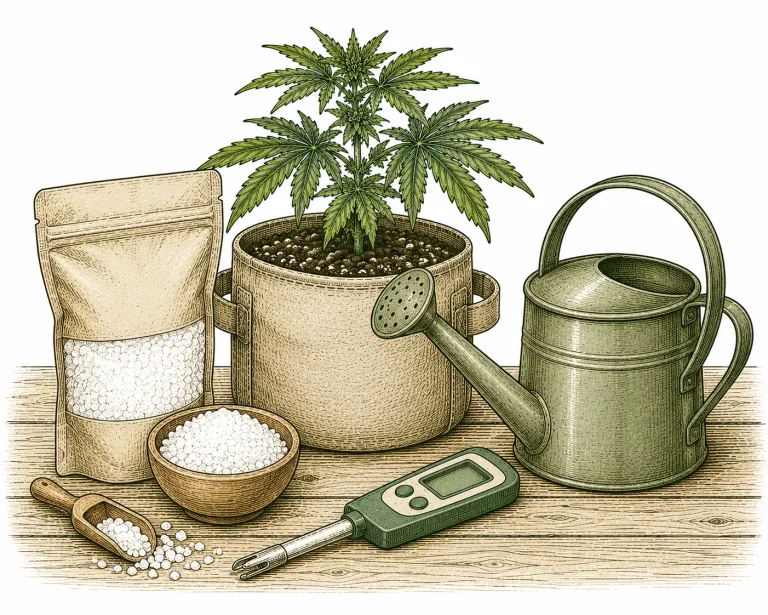
The first step is always to confirm the diagnosis and check the pH. Measure the pH of your water and of the runoff from your growing medium. If it’s outside the optimal range, correct it first and watch the plant for a few days — the problem often stabilizes without any further action. Use pH Up or pH Down to dial in your value reliably. Only once the pH is correct and the symptoms persist or reappear does it make sense to add magnesium directly.
The most proven and cheapest fix for magnesium deficiency is Epsom salt, chemically magnesium sulfate (MgSO4). Epsom salt is available at any drugstore or garden center and is completely safe for plants. To feed it through the growing medium, dissolve 4 to 8 grams of Epsom salt per gallon of water (1 to 2 grams per liter) and water as usual. For faster results, you can prepare a foliar spray: 4 to 8 grams per gallon (1 to 2 grams per liter) as a spray solution, applied to the undersides of the leaves during the dark period or under dimmed lights to avoid burns. Foliar feeding kicks in within 24 to 48 hours, much faster than feeding through the soil.
Alternatively or in addition, specialized nutrients such as Cal-Mag products provide calcium and magnesium together. These are especially recommended if you use soft water or grow in coco, since both nutrients tend to run short there by default. When using Cal-Mag products, follow the manufacturer’s dosage recommendations and check whether your base nutrient already contains a high concentration of potassium — too much potassium can cancel out the effect. In that case, cut back the potassium slightly and balance it out with magnesium. Older leaves that are already badly damaged won’t fully recover — instead, watch whether the new growth comes in healthy and deep green again; that’s the sign of a successful treatment.
After the initial treatment, regular checks are important. Measure the runoff pH every 2 to 3 days and look for new symptoms on leaves that were healthy so far. If you grow indoors, also check the root zone temperature and adjust your heat mat or room temperature if necessary. You’ll find a detailed overview of all possible causes of yellow leaves in our article Yellow cannabis leaves – how to identify the cause if you’re still not sure whether magnesium deficiency really is the right diagnosis.
- Step 1: Measure and correct the pH — always first
- Step 2: Epsom salt (MgSO4) — 4–8 g/gal (1–2 g/L) as a soil drench or foliar feed
- Foliar feeding works within 24–48 h; feeding through the medium is slower but lasts longer
- Cal-Mag nutrients are ideal with soft water and in coco grows
- Reduce excess potassium if you suspect nutrient competition
- Healthy new leaf growth is the sign of a successful treatment
Preventing cannabis magnesium deficiency: tips for healthy growth
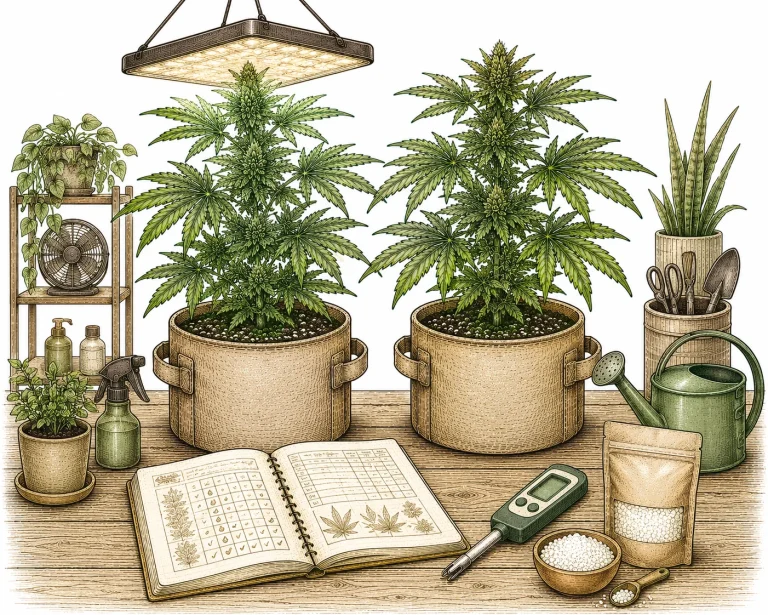
With magnesium deficiency, prevention is much easier than treatment. The most important safeguard is a stable, correctly set pH — measure it consistently every time you water and adjust as needed. In a soil grow, a pH of 6.2 to 6.8 is recommended; in hydro and coco, 5.5 to 6.1. If you work carefully with pH from the start, you protect your plants not only from magnesium deficiency but from almost every nutrient-related problem. Invest in a reliable digital pH meter and calibrate it regularly — it’s one of the most important investments in an indoor grow.
When mixing your nutrient solution, always use tap water of known hardness, or measure the EC (electrical conductivity) of the plain water. With very soft water below 150 ppm (0.3 mS/cm), it’s a good idea to routinely add 2 to 4 grams of Epsom salt per gallon (0.5 to 1 gram per liter) as a base supplement, regardless of what you see on the plant. Many experienced growers do this as a precaution every second time they water, especially in the flowering stage. A high-quality, balanced base nutrient system that includes secondary nutrients and trace elements also helps prevent deficiencies systematically.
For indoor grows, choose a growing medium that naturally contains moderate levels of magnesium — many quality potting soils already include perlite and dolomite lime, which acts as a natural magnesium buffer. When you work with pure coco, you have to provide the complete mineral supply yourself, since coco contains no nutrients of its own. Also keep an eye on the root zone temperature: especially in winter or in poorly heated rooms, the temperature in the potting soil can drop sharply and stall nutrient uptake. A heat mat under the pot keeps the roots active and nutrient uptake steady.
- Monitor the pH consistently: 6.2–6.8 in soil, 5.5–6.1 in coco/hydro
- With soft water, add 2–4 g/gal (0.5–1 g/L) of Epsom salt as a precaution
- Choose a growing medium with dolomite lime — a natural magnesium buffer
- Always plan for Cal-Mag in a coco grow
- Keep the root zone temperature above 64 °F (18 °C) — use a heat mat if needed
- A balanced base nutrient with secondary nutrients prevents individual deficiencies
Telling cannabis magnesium deficiency apart from other deficiencies
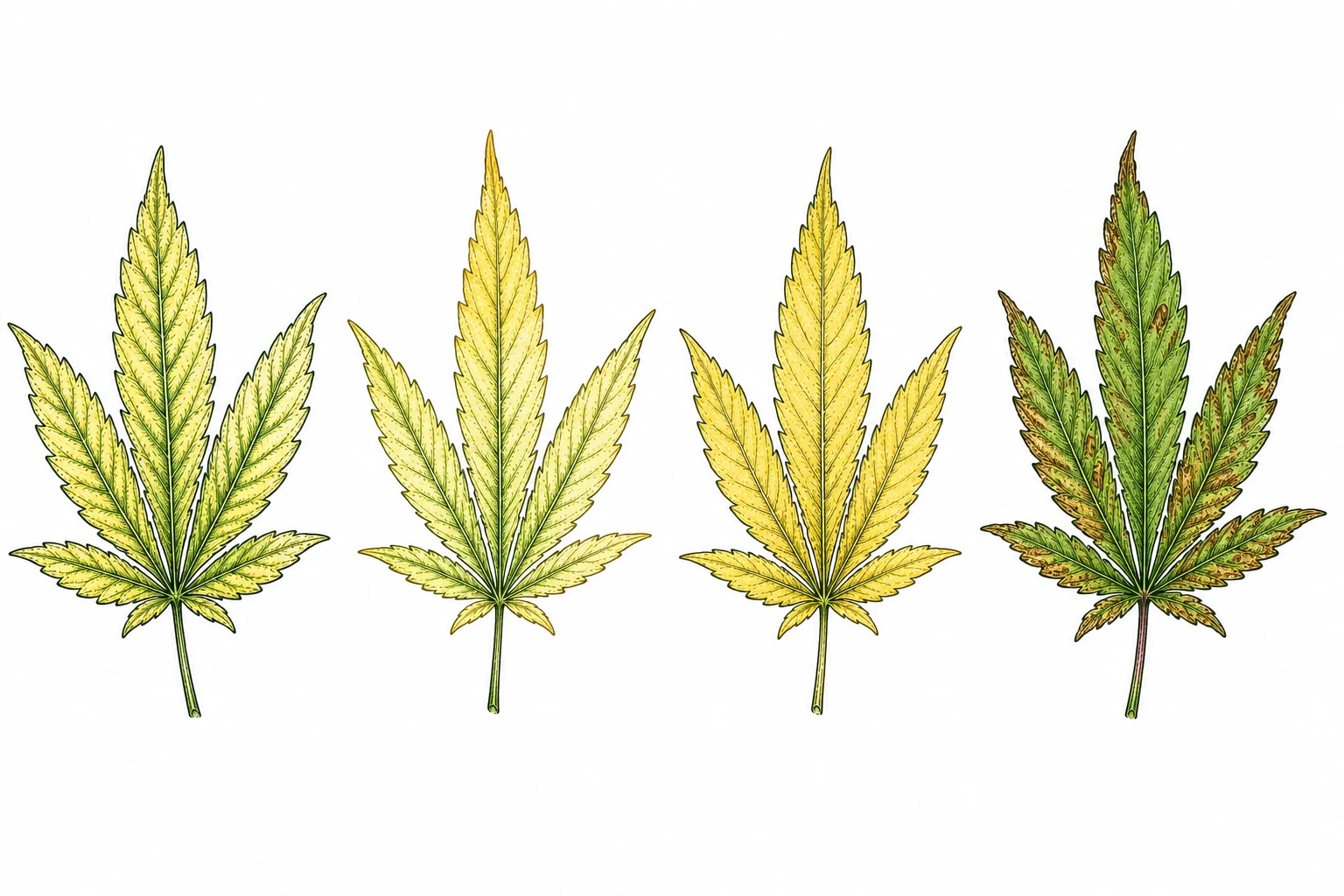
The biggest risk of confusion is between magnesium deficiency and iron deficiency, since both cause interveinal chlorosis. The deciding difference: iron deficiency starts on the youngest leaves and growing tips, magnesium deficiency on the oldest leaves. So if you see that the new leaves are the palest while the older leaves still look normal, iron deficiency is the more likely culprit. Iron deficiency also shows up especially often when the pH is too high and disappears very quickly after you bring the pH down.
Nitrogen deficiency can also cause yellow lower leaves, but it shows a different pattern: the entire leaf yellows evenly starting from the tip, without the veins staying green. The whole leaf also gets smaller, and the entire plant’s growth slows noticeably. With a magnesium deficiency, growth stays largely normal at first. Calcium deficiency typically shows up as brown spots and necrosis on middle to young leaves, but, as mentioned, it can occur together with magnesium deficiency. In the complete Plant Diagnosis overview on PlantClue, you’ll find all deficiencies compared side by side so you can quickly make the right diagnosis.
Another candidate for confusion is light burn or heat stress: in that case, though, it’s mainly the upper leaves closest to the light that yellow and burn, not the lower ones. A spider mite infestation also causes yellowish dots and discoloration that can look like chlorosis at first glance — a look at the underside of the leaf with a magnifying glass clears that up quickly. If you see several symptoms at once or aren’t sure whether you’re dealing with cannabis nutrient burn, which can produce similar patterns due to excessive salt concentration, always work methodically: check the pH, check the EC, analyze the symptom pattern.
- Vs. iron deficiency: Mg deficiency = old leaves affected, Fe deficiency = young leaves affected
- Vs. nitrogen deficiency: N deficiency = evenly yellow without green veins
- Vs. calcium deficiency: Ca deficiency = brown necrotic spots on middle to young leaves
- Vs. heat stress: damage at the top, leaves closest to the light affected, not the bottom
- Vs. spider mites: a magnifying glass helps — spider mites leave dots, webbing and the mites themselves
- Always measure the pH and EC before you treat
A potassium deficiency and a phosphorus deficiency can also occur at the same time if the nutrient ratio is off. Since magnesium and calcium are often lacking together, it’s also worth checking out Cal-Mag deficiency.
Frequently asked questions
How quickly will I see improvement after treating a magnesium deficiency?
With foliar feeding using an Epsom salt solution, you’ll see the first improvements in new leaf growth within 2–4 days. Existing yellow leaves usually don’t fully recover — the sign of success is new leaves growing in healthy and dark green. Feeding through the growing medium takes a bit longer to work, but the effect lasts longer.
Can too much magnesium harm my cannabis plant?
Yes, magnesium toxicity is possible, though less common than a deficiency. Too much magnesium blocks calcium uptake and can also crowd out other nutrients. Symptoms include brown leaf tips and a general nutrient burn look. Stick to the recommended dosages and increase Epsom salt doses gradually.
Why does magnesium deficiency show up so often in the flowering stage?
In the flowering stage, the plant’s energy demand rises sharply — building buds requires large amounts of chlorophyll and therefore magnesium. At the same time, many feeding schedules increase the potassium share, and potassium competes with magnesium for uptake. That’s why a preventive magnesium supplement starting at the transition to flower is highly recommended.
Is magnesium deficiency common in outdoor grows?
Yes, especially in heavily depleted or sandy soils, and after heavy rainfall that washes magnesium out of the soil. For outdoor grows, it’s a good idea to work dolomite lime into the soil as a precaution or to foliar feed regularly with Epsom salt. Container plants outdoors follow the same pH and feeding rules as an indoor grow.
Can watering the wrong way cause a magnesium deficiency?
Indirectly, yes. Overwatering and waterlogging damage the roots and limit nutrient uptake overall — magnesium is hit especially hard. Watering too often and too lightly can also cause salts to build up in the growing medium, which shifts the pH and locks out magnesium. So always water until you get runoff, and allow enough time for the medium to dry out between waterings.
What pH is best for magnesium uptake in cannabis?
In a soil grow, magnesium uptake is best at a pH of 6.0 to 7.0, ideally in the 6.2 to 6.8 range. In coco and hydroponic systems, the pH should be between 5.5 and 6.1. Outside these windows, magnesium is absorbed less and less well, even when it’s present in the growing medium.
You’ll find suitable nutrients to correct the deficiency in a targeted way in our Recommended Gear.
Conclusion
Cannabis magnesium deficiency symptoms are easy to identify once you know what to look for: the characteristic interveinal chlorosis on older leaves is the clear warning sign. The most common cause isn’t an actual lack of magnesium in the growing medium, but the wrong pH — that’s why checking the pH is always the first step. With simple tools like Epsom salt, Cal-Mag nutrients and consistent pH monitoring, you can fix the deficiency quickly and prevent it for good. If you check regularly, feed preventively and keep an eye on environmental conditions, magnesium deficiency will hardly ever become a problem in your grow. You’ll find an organized overview of all common deficiencies in our cannabis nutrient deficiency chart.
