

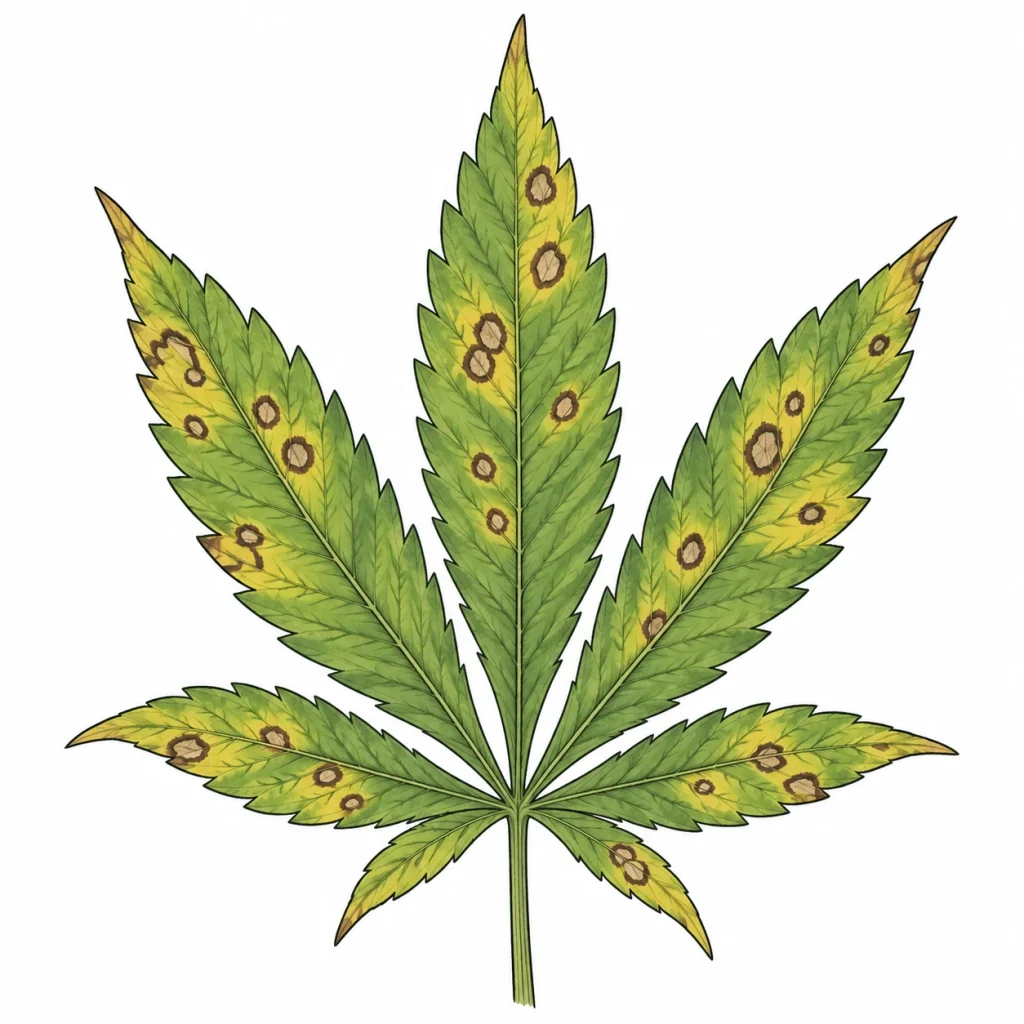
Knowing how to spot cannabis anthracnose is crucial for every grower, because this sneaky fungal disease can wipe out entire plants in just a few days. Caused by fungi of the genus Colletotrichum, anthracnose attacks leaves, stems and buds alike, and it can spread incredibly fast when conditions are off. What makes it especially tricky: the early symptoms are often mistaken for a simple nutrient deficiency or harmless leaf spots. If you know the telltale signs and act fast, you can still save your harvest. This article walks you through it step by step.
What Is Cannabis Anthracnose and What Causes It?
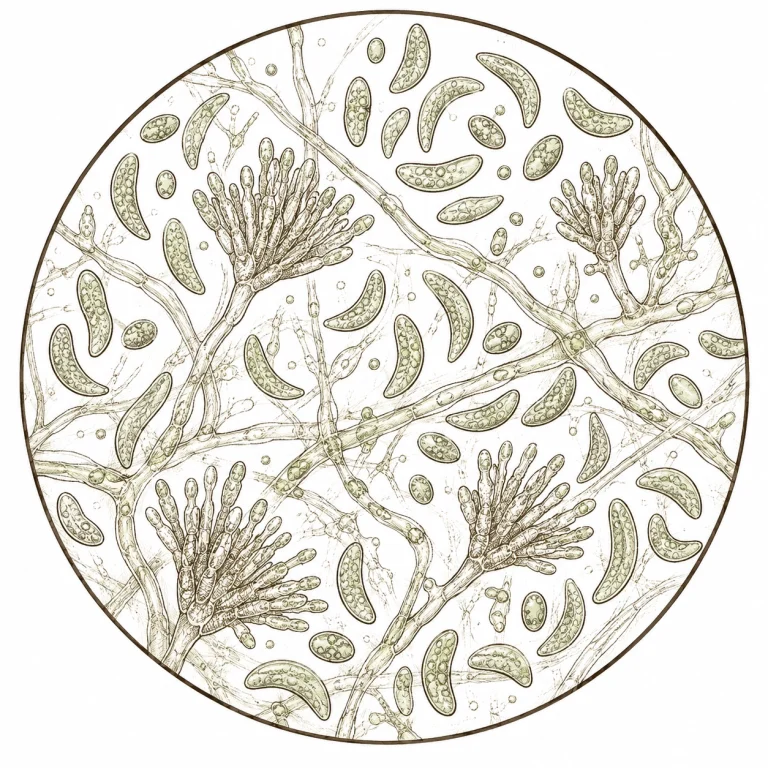
Cannabis anthracnose is a fungal disease caused by several species of the genus Colletotrichum, most often Colletotrichum truncatum and Colletotrichum gloeosporioides. These fungi belong to the ascomycetes and can colonize both living and dead plant material. They survive as spores in the growing medium, on old plant debris and even on tool surfaces, which makes it especially easy for them to spread through your grow room.
Colletotrichum species are opportunistic pathogens: they wait for a moment when your plant is weak or for favorable conditions before they strike. High humidity, poor air circulation and physical damage to the plant basically roll out the red carpet for the fungus. Unlike better-known fungal diseases such as powdery or downy mildew, anthracnose especially likes to go after plants that are already weakened or stressed. That’s why you’ll find anthracnose in our Plant Diagnosis hub among the more serious fungal infections.
Here’s the interesting part: the fungus goes through a two-phase infection cycle. First, it slips into the plant tissue unnoticed and stays there dormant. Then a stress trigger, like a temperature shock or a nutrient deficiency, can kick it into its destructive second phase. That explains why symptoms sometimes seem to show up overnight, even though the infection may have happened weeks earlier.
- Pathogen: Colletotrichum truncatum, C. gloeosporioides and related species
- Survives as spores in the growing medium, on plant trimmings and on equipment
- Two-phase infection cycle: dormant phase → active outbreak
- Opportunistic pathogen that prefers weakened plants
- Related to similar fungal diseases like alternaria and septoria leaf spot
How to Spot Cannabis Anthracnose: Typical Symptoms in Detail
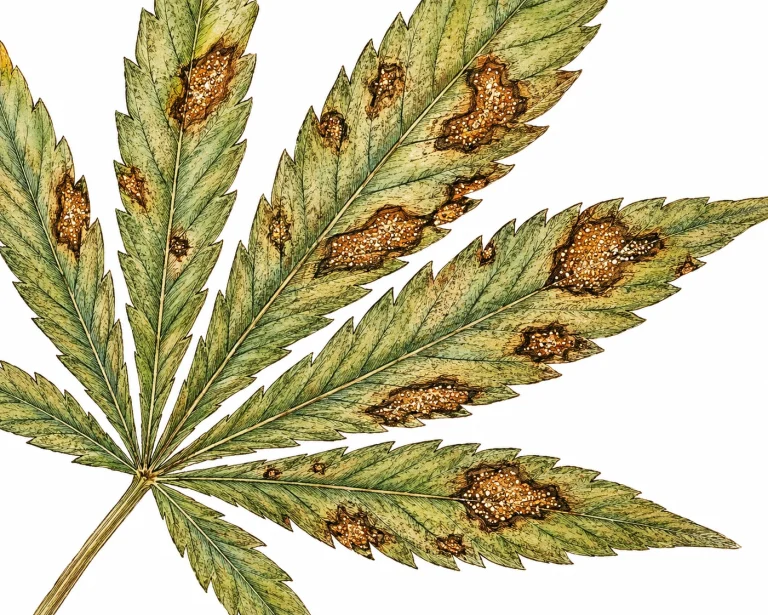
The most important clue for diagnosing anthracnose is its distinctive leaf spots. They start as small, water-soaked-looking areas in light green to yellowish tones and develop into irregularly shaped dead patches (necrosis) in brown, orange or reddish shades. A key giveaway is the slightly sunken center of the spots, often with a dark border. This hollow look is typical of Colletotrichum infections and sets anthracnose apart from look-alike deficiencies. In later stages, you may see tiny orange to cream-colored spore masses on the spots with the naked eye. These are called acervuli.
On stems, anthracnose shows up as long, sunken, dark brown to black lesions that can wrap around the entire stem. Once a stem is fully girdled, it can snap easily, or the nutrient supply to everything above it gets cut off completely. The result: whole branches can wilt and die fast. Especially with dense buds in late flowering, anthracnose can also invade the buds directly and break them down from the inside, which at first can look like normal fading from the outside.
The most common mix-ups happen with yellow cannabis leaves caused by nutrient deficiencies or with calcium deficiency, which also causes brown, necrotic spots. The key difference: with anthracnose, the spots are sunken, irregularly shaped and spread quickly to neighboring leaves, while nutrient deficiencies tend to show up more symmetrically and develop more slowly. The orange spore masses are also a clear sign of a fungal infection.
- Early stages show water-soaked, yellowish to light green spots on the leaves
- Sunken, brown-orange to reddish-brown dead patches (necrosis) with a dark border
- Cream to orange spore masses (acervuli) visible on the spots
- Dark brown, sunken lesions on stems and internodes
- Fast spread to neighboring leaves and branches
- In infected buds: rot on the inside, which at first looks like simple bleaching from the outside
- No symmetrical pattern, unlike typical nutrient deficiencies
Causes and Risk Factors of Cannabis Anthracnose
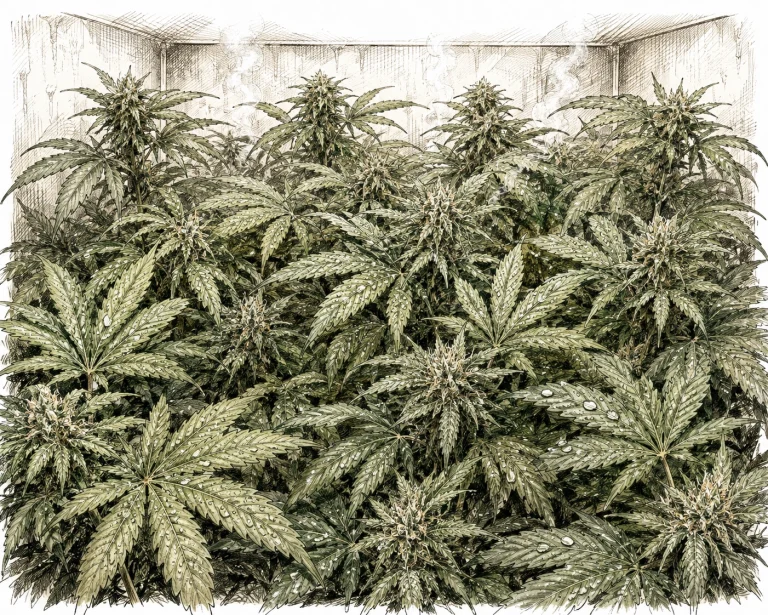
By far the most common cause of an anthracnose outbreak is constantly high humidity combined with poor air circulation. Colletotrichum spores germinate best at humidity levels above 85 % and temperatures between 68 and 86 °F (20 and 30 °C). Without solid climate control, your grow room can hit those conditions fast. Equip your grow space with a good dehumidifier and enough fans, and you cut the risk a lot. Late flowering is the most dangerous time: dense buds barely let air through, and damp microclimates form inside them.
Another major trigger is spores brought in through contaminated growing medium, infected clones or dirty tools. Colletotrichum can survive in soil and on plant debris for months and wakes up during your next grow once conditions are right. If you water your cannabis the right way and avoid waterlogged soil and wet leaf surfaces, you take away one of the fungus’ main ways to spread. Water splashing onto leaves and the soil surface carries spores from plant to plant.
Plants weakened by stress are especially prone to anthracnose. That stress can come from the wrong pH, nutrient toxicity or physical damage during training. The fungus uses wounds, cracks in the tissue and weakened defenses as an entry point. Outdoor growers also face rain, high humidity and contaminated soil, so outdoor plants are most at risk in wet summers.
- Humidity above 85 % and poor air circulation
- Contaminated growing medium, infected clones or dirty scissors
- Waterlogged soil and wet leaf surfaces from poor watering habits
- Plants weakened by pH problems, nutrient stress or training wounds
- Outdoors: rain, high humidity, contaminated soil
- Temperatures of 68–86 °F (20–30 °C), the ideal growing range for Colletotrichum
- Leftover plant debris from earlier grows in the grow room
How to Treat Cannabis Anthracnose: First Steps and Effective Treatment
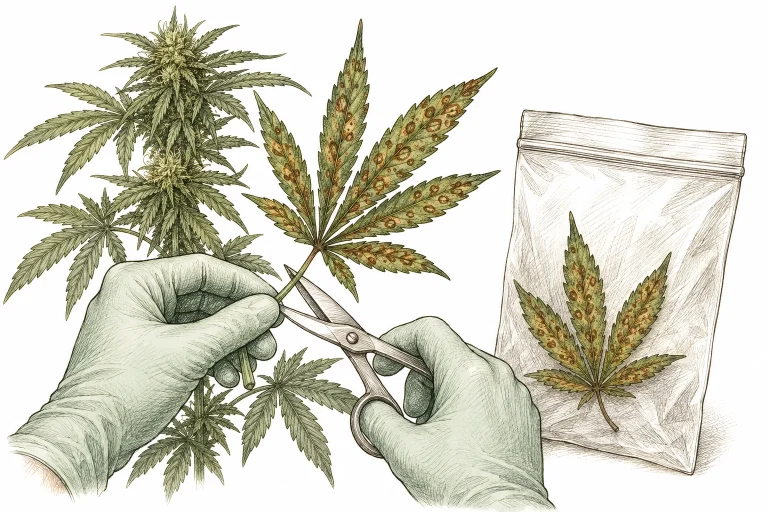
As soon as you spot the typical signs of cannabis anthracnose, act fast. First, remove every visibly infected leaf, branch and bud with disinfected scissors. Dip the blades in isopropyl alcohol (70 %) between every cut so you don’t spread the fungus. Put the removed plant material in a sealed container, take it out of the grow room right away and destroy it. Never toss it in the compost! Then drop the humidity below 50 % immediately and add extra fans for much more air movement.
To treat the plant directly, several organic and chemical options have a good track record. Copper products like copper hydroxide or Bordeaux mixture act as fungicides against Colletotrichum and work well as a spray. They leave a protective film on the plant surface that blocks spore germination. Biofungicides based on Bacillus subtilis (e.g. Serenade) or trichoderma species have one big plus: they also work preventively and strengthen the microbiome of your growing medium. Important: always treat the whole plant, including areas that still look green, because latent infections can stay invisible.
Plant tonics based on potassium bicarbonate or a diluted sodium bicarbonate solution (baking soda, 1 tsp per quart (about 1 L) of water) can slow down the fungus. They make the leaf surface more alkaline, which helps block spore germination. Keep in mind that these home remedies don’t replace professional fungicides. Use them as backup. Check your plant every day and repeat the treatment every five to seven days until no new lesions show up.
- Cut off infected plant parts right away with sterilized pruning shears and dispose of them safely
- Drop humidity below 50 % and boost air circulation immediately
- Spray the whole plant with a copper-based fungicide or Bordeaux mixture
- Use biofungicides with Bacillus subtilis or trichoderma
- Try potassium bicarbonate or a baking soda solution as a supporting home remedy
- Repeat the treatment every 5–7 days until no new lesions show up
- Disinfect all tools and surfaces in your grow room
How to Spot Cannabis Anthracnose and Prevent It Long Term
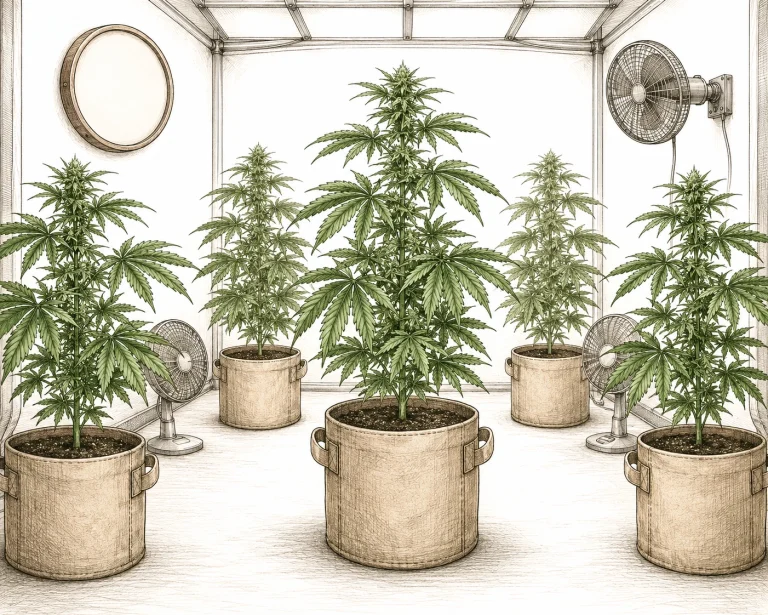
With anthracnose, prevention works far better than treatment, because the fungus can spread very fast. The key is consistent climate control: keep humidity between 50 and 70 % in the vegetative stage and between 40 and 50 % in the flowering stage, and keep the air moving nonstop with at least two fans in your grow room. Add a good dehumidifier for your grow tent, and you can cut the risk of fungal diseases across the board – not just anthracnose, but also bud rot (botrytis, gray mold) and powdery mildew.
Grow room hygiene is the second big factor. Clean and disinfect your grow space thoroughly between every run: walls, floors, pots and all tools should be treated with a fungicide or diluted bleach solution. Use sterile or pasteurized growing medium from a trusted source whenever you can, and check clones from outside sources for signs of fungal infection before you bring them into your setup. Proper watering – no wet leaf surfaces and no waterlogged soil – is another core part of prevention.
Boost your plants’ natural resistance with balanced feeding and a dialed-in pH between 6.0 and 7.0 in soil. Calcium plays a special role in cell wall strength – plants with enough calcium can hold up much better against fungal infections. Using trichoderma products preventively at transplant or as a regular soil drench is one of the most effective biological prevention methods for both indoor and outdoor growers.
Germany’s Julius Kühn Institute also confirms in its guidance on soil fertility and plant resistance how much balanced nutrition can help plants fight off fungal infections.
- Keep humidity below 50 % during the flowering stage
- Make sure the air keeps moving with at least two fans
- Fully clean and disinfect your grow room between every run
- Only use sterile or pasteurized growing medium
- Check clones for fungal symptoms before bringing them in
- Use trichoderma preventively at transplant
- Feed a balanced diet with enough calcium for strong cell walls
- Keep leaves dry when watering – no spraying the leaf surfaces
How to Tell Cannabis Anthracnose Apart from Similar Diseases
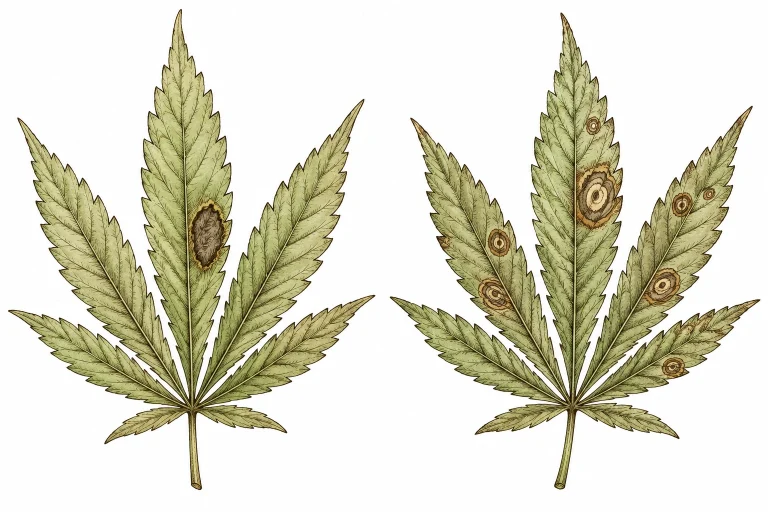
Anthracnose can look a lot like several other fungal diseases and deficiencies, so an accurate diagnosis matters if you want to pick the right treatment. Compared to septoria leaf spot, here’s what sets them apart: septoria spots tend to be rounder and smaller, often with a lighter, creamy center, while anthracnose lesions are more irregular and sink deeper into the tissue. Septoria also often shows black dots (pycnidia) in the center of the spots – anthracnose, on the other hand, shows its typical orange spore masses.
The difference from alternaria mostly comes down to the spot pattern: alternaria forms concentric rings (a bullseye look) inside the lesions, which you won’t see with anthracnose. Telling it apart from bud rot (botrytis, gray mold) is easier: botrytis produces clearly visible gray mycelium on the surface, while anthracnose tends to leave dry, sunken lesions without any visible fuzzy growth. To confirm it, you can cover an infected spot for a few hours in warm, humid conditions – with anthracnose, the characteristic orange spore masses will typically show up.
A common mistake is confusing it with calcium deficiency in cannabis, which also causes brown necrotic spots, usually on young leaves. Here’s the key test: correct your calcium levels and your pH. If the symptoms clear up on new leaves within seven to ten days, it wasn’t a fungus. If the spots keep spreading and don’t respond at all to nutrient fixes, you should consider a fungal infection like anthracnose.
- Septoria: round spots with black pycnidia instead of orange spore masses
- Alternaria: concentric rings (bullseye pattern) inside the lesions
- Botrytis: clearly visible gray mycelium on the surface
- Calcium deficiency: responds to nutrient fixes, no spore formation
- Anthracnose test: a moist cover brings out orange spore masses
- Most important marker: sunken lesions + small orange spore clusters
If the spots have watery edges instead of dry, brown centers, you may be dealing with bacterial leaf spot.
Frequently Asked Questions
Can I still harvest a cannabis plant infected with anthracnose?
That depends on how bad the infection is and how close you are to your harvest window. If only a few leaves and branches are affected and the buds are still clean, you can often still harvest. Remove all infected plant parts, lower the humidity and treat with a fungicide. Heavily infected buds should never be consumed and need to be thrown out.
How long do Colletotrichum spores survive in a grow room?
Under the right conditions, Colletotrichum spores can survive for several months up to a year in the growing medium, on plant debris and on surfaces. That’s why a thorough disinfection of your entire grow room between every grow cycle is a must. Use isopropyl alcohol, an H2O2 solution or a dedicated grow room disinfectant.
Can anthracnose on cannabis spread to humans?
No. Colletotrichum species are plant-specific fungi and aren’t considered harmful to humans. They pose no risk to healthy people. Still, anyone with a weakened immune system should generally keep contact with mold and fungi to a minimum.
Can I use baking soda alone against anthracnose?
Baking soda solutions (sodium bicarbonate) can slow down fungal growth by making the leaf surface more alkaline. On their own, though, they aren’t enough against an active infection. Use them as a supporting measure alongside proven fungicides like copper-based products or biological treatments with Bacillus subtilis.
Do I need to treat every plant in the grow room if only one is infected?
Yes, absolutely. Colletotrichum spores spread very easily to nearby plants through the air, water splashes and contact. Even if other plants don’t show visible symptoms yet, they may already carry a hidden infection. Always treat every plant in the grow room and disinfect all surfaces and tools.
Which pH helps protect cannabis from anthracnose?
Keeping your soil pH between 6.0 and 7.0 makes sure all nutrients, especially calcium, stay available to your plant and its cell walls stay strong. Healthy, well-fed plants with sturdy cell structures can hold up much better against Colletotrichum infections than plants weakened by deficiencies.
Anthracnose often gets confused with bud rot (botrytis, gray mold), but these two fungal diseases differ a lot in their causes and in how you fight them.
The Bottom Line
Spotting cannabis anthracnose early is the first and most important step to protect your plants from the dreaded Colletotrichum fungus. The telltale sunken, brownish-orange lesions with visible spore masses set this disease apart from look-alike deficiencies and other fungal infections. Acting fast can contain an infection even at an advanced stage: remove infected plant parts, keep your climate under tight control and use copper-based or biological fungicides. In the long run, consistent prevention is your only reliable protection against another outbreak: a clean grow room, the right pH and low humidity.
