

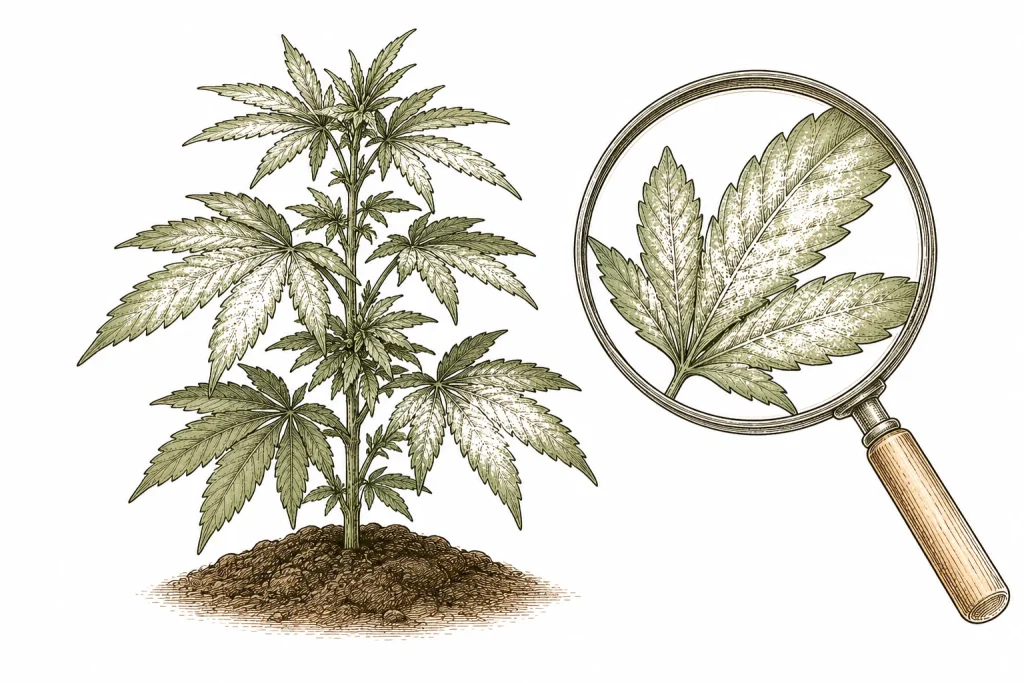
Fighting mildew on cannabis is one of the most common challenges growers run into, both indoors and outdoors. That white, flour-like coating on the leaves is hard to miss, and it’s a clear warning sign you should never ignore. If you act early, you can usually still save your plants and protect your harvest. In this guide, you’ll learn everything you need to know about powdery mildew and downy mildew: from the first symptoms and their causes to proven treatment methods and long-term prevention.
How to Fight Mildew on Cannabis: Powdery vs. Downy Mildew – The Key Difference
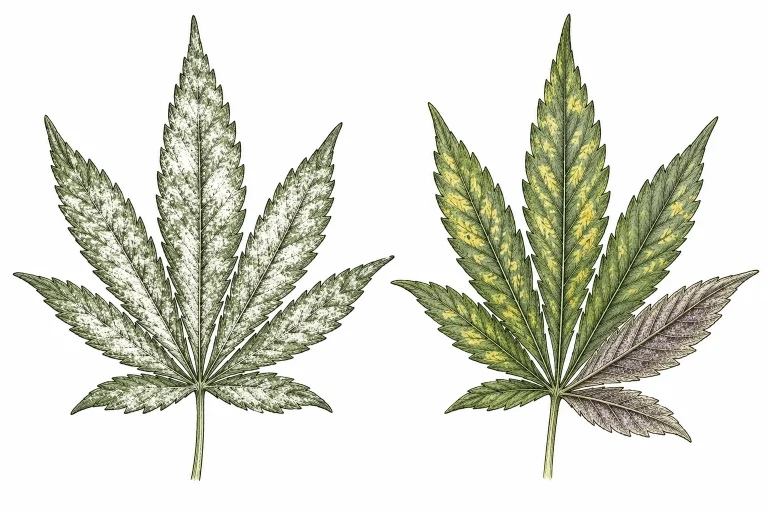
Before you start treating, you need to know which type of mildew you’re dealing with. Powdery mildew and downy mildew are two completely different diseases. They’re caused by different pathogens and need different treatments. Mix them up, and you may end up using the wrong method and losing valuable time.
Powdery mildew (Erysiphales) shows up as a white to gray, dusty, flour-like coating on the upper side of the leaves. At first, you can still wipe it off, but it comes back fast if you don’t tackle the cause. The fungus spreads across the surface of the plant tissue and prefers older leaves in the lower canopy. As the infection progresses, the leaves turn yellow, dry out and die.
Downy mildew (Peronosporales), on the other hand, isn’t a true fungus. It’s an oomycete – a fungus-like organism that’s more closely related to algae. It first appears as yellowish spots with blurry edges on the upper side of the leaves. On the underside, you’ll find the telltale grayish-purple, fuzzy layer of spores. Downy mildew is more aggressive and can wipe out a plant within a few days in wet weather.
The easiest test: flip the leaf and check the underside. With powdery mildew, the underside usually stays mostly clean or shows only light infection. With downy mildew, you’ll see that obvious gray to purple fuzz there. This one detail decides your whole treatment strategy.
- Powdery mildew: white, flour-like coating, mainly on the upper side of the leaf
- Powdery mildew: you can wipe the coating off at first, but it comes back without treatment
- Powdery mildew: thrives in dry, warm conditions with high humidity at night
- Downy mildew: yellowish spots on top, gray-purple fuzz on the underside of the leaf
- Downy mildew: spreads explosively in wet, cool conditions
- Downy mildew: much more aggressive, so you need to act faster
Spotting the Symptoms: What Mildew Looks Like on Cannabis Plants
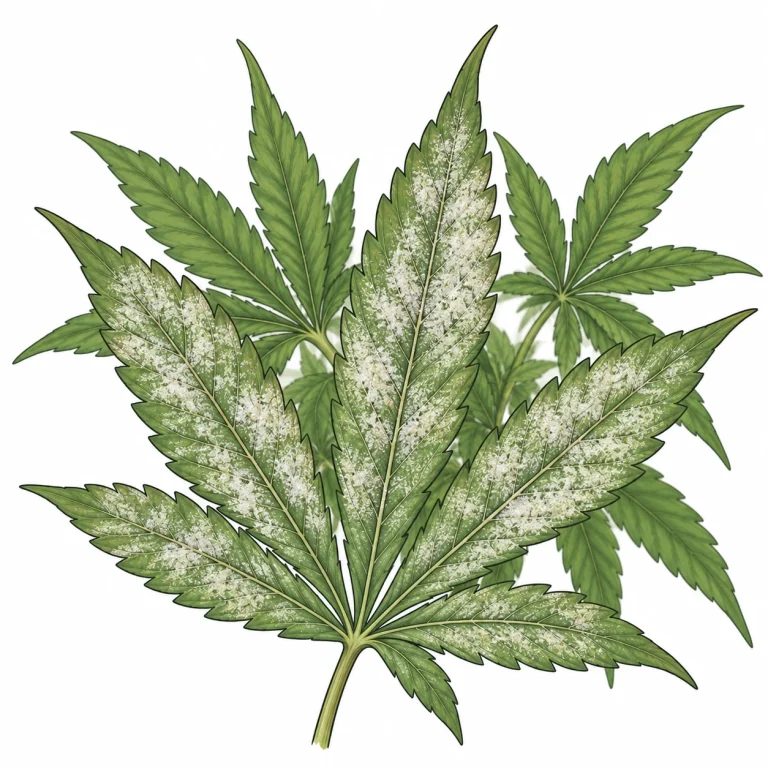
When you’re fighting mildew on cannabis, early detection is everything. The sooner you step in, the better your chances of saving the plant. So inspect your plants every day – especially during the vegetative stage and early flowering stage, when they’re most vulnerable.
Powdery mildew often starts with small, round white spots that look like someone sprinkled flour on the leaf. These spots merge quickly and can cover the entire leaf within a few days. Infected leaves look dull and flat instead of glossy. In later stages, the leaves turn yellow, then brown, and eventually die. The fungus can also spread to stems and even buds, which is especially serious.
Downy mildew starts more subtly: first, light green to yellow, angular spots appear on the upper side of the leaf, bordered by the leaf veins. These spots are easy to mistake for a nitrogen deficiency or other nutrient problems. The key difference only shows on the underside of the leaf: that’s where a whitish-gray to purple layer of spores grows. In high humidity, this fuzz can show up on the upper side too.
Watch closely for these warning signs: plants in dense, leafy areas or with poor airflow get sick first. The lower leaves in the inner part of the plant are often the first victims. If you see white powder on your fingers after touching infected leaves, it’s almost certainly powdery mildew. Does the plant smell musty or moldy? Then bud rot (botrytis, gray mold) may be involved too – a separate but equally serious threat.
- Early powdery mildew: small, round white spots like dusted flour on the upper side of the leaf
- Advanced powdery mildew: spots merge until the whole leaf is coated white
- Early downy mildew: pale yellow, angular spots on the upper side of the leaf
- Downy mildew underside: a gray-purple, fuzzy layer of spores is the telltale sign
- In severe cases, stems and buds can get infected too
- White residue on your fingers after touching a leaf: a clear sign of powdery mildew
Causes and Risk Factors: Why Does Your Cannabis Plant Get Mildew?
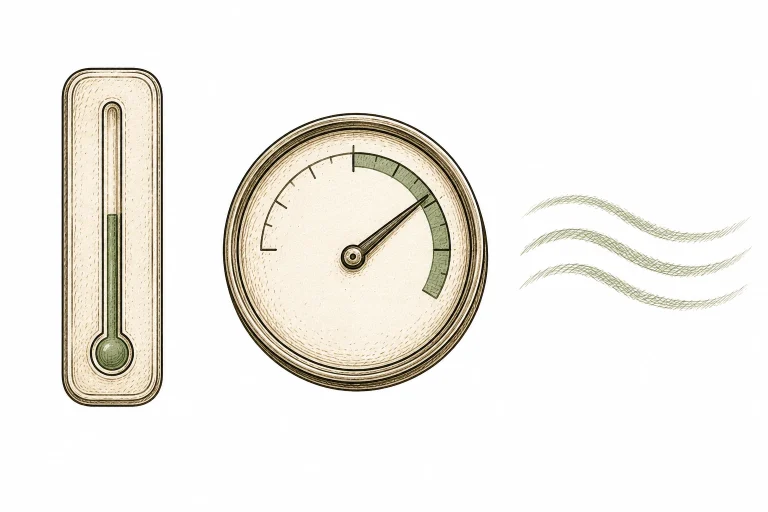
Powdery mildew doesn’t show up by accident. The fungus thrives under very specific conditions. Once you know the causes, you can counter them directly and keep it from coming back. Powdery mildew loves a particular climate: warm and fairly dry during the day (50-70 % humidity), then cool at night with rising humidity. That exact pattern is common in fall in many temperate regions, both outdoors and in poorly ventilated grow tents.
Here are the most common causes of powdery mildew at a glance. High humidity (relative humidity, RH) is the main driver, especially when it stays above 60-65 % for long stretches. Poor air circulation keeps moist air from moving away from the leaves. Overcrowded plants, where leaves touch each other and air can’t move, create perfect conditions. Temperature stress and plants weakened by nutrient deficiencies also make cannabis more vulnerable. A poorly dialed-in pH for cannabis can block nutrient uptake and weaken the plant, which makes it more prone to fungal diseases.
Outdoor growers in temperate climates often battle powdery mildew in August and September, when days are still warm but nights cool down and humidity climbs. Spots with little sunlight and poor airflow are especially at risk. Indoor growers often underestimate how fast powdery mildew can spread: one infected leaf can infect several neighboring plants within 48 hours if conditions are right.
Genetics play a role too. Sativa-dominant strains are considered a bit more susceptible than indica-dominant ones because their leaves are thinner and more delicate. Some hybrid strains have been bred specifically for mildew resistance. Keep that in mind when you pick a strain, especially if you grow in a humid climate.
- Humidity constantly above 65%: ideal conditions for powdery mildew
- Poor air circulation: moist air builds up around the leaves
- Canopy too dense: blocks airflow between the leaves
- Day/night temperature swings: boost spore growth, especially in fall
- Plants weakened by nutrient or pH problems: more vulnerable
- Sativa-dominant strains: genetically a bit more susceptible than indica strains
How to Get Rid of Powdery Mildew on Cannabis: Proven Home Remedies and Organic Methods
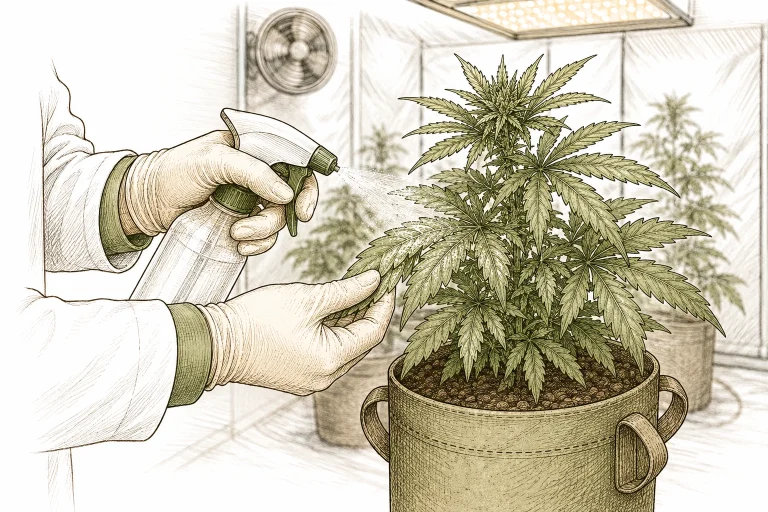
If you catch powdery mildew early, you have a good shot at getting it under control with organic and natural remedies. Here are the most effective home remedies used by experienced growers around the world. Important: always treat early in the morning or right after lights-out so the leaves can dry before the next light cycle. Wet leaves under the lights raise the risk of burns.
Baking soda solution (sodium bicarbonate): Mix 1 teaspoon of baking soda with 1 quart (1 L) of water and a drop of organic soap as a sticker. This solution changes the pH on the leaf surface and makes it hostile to the mildew fungus. Spray it on affected leaves every 3-5 days. Heads up: too strong a mix can burn the leaves, so test it on a single leaf first.
Potassium bicarbonate works even better than sodium bicarbonate, and many organic gardeners prefer it. It acts faster and is gentler on the plant. Mix 1 teaspoon per quart (1 L) of water plus a drop of soap. You can find potassium bicarbonate at garden centers or online. Neem oil is another proven organic option with a broad range of action: it fights not only powdery mildew but also many other pests and fungal diseases. Mix 2-3 ml of neem oil with 1 quart (1 L) of water and an emulsifier (soap). Never use neem oil during the flowering stage, though, because it can hurt the taste and smell of your final buds.
Milk and water mix: This unusual home remedy has shown surprisingly good results against powdery mildew in several studies. Mix whole milk and water at a 1:9 ratio and spray it on the leaves every 2-3 days. The proteins in milk have an antifungal effect. Baking soda water, a potassium bicarbonate solution, neem oil and milk water are your first line of defense. Don’t combine them all at once, though. Rotate between methods to keep the fungus from building resistance.
- Baking soda solution: 1 tsp sodium bicarbonate + 1 qt (1 L) water + soap, spray every 3-5 days
- Potassium bicarbonate: more effective than baking soda, gentler on plants, available at garden centers
- Neem oil: 2-3 ml per quart (1 L) of water, use only in the vegetative stage (veg)
- Milk and water (1:9): proven antifungal effect, apply every 2-3 days
- Always spray in the morning or after lights-out so the leaves can dry
- Rotate methods to keep the fungus from building resistance
Chemical and Commercial Products for Powdery Mildew on Cannabis
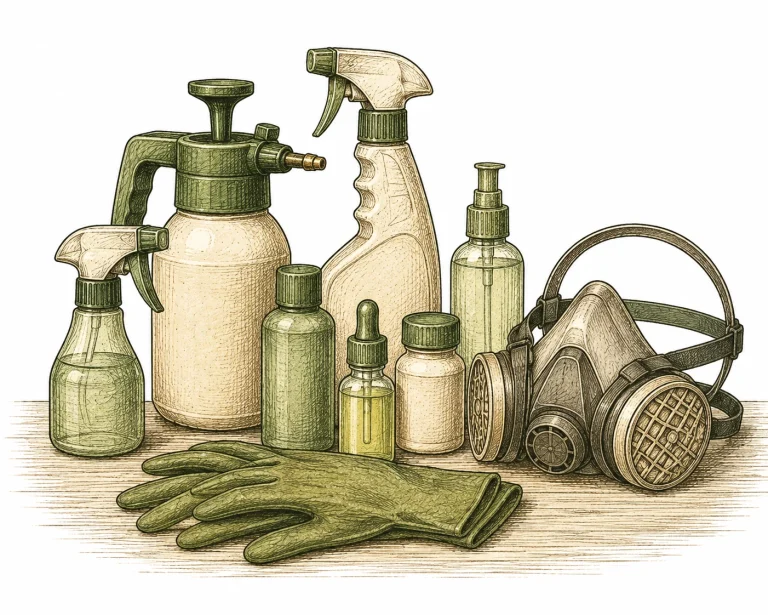
If organic remedies aren’t enough or the infection has already spread, you can turn to commercial fungicides. Check the cannabis laws and product label rules where you live before using them on your plants. Always start with organic options first, and only step up to stronger products if the infection is severe.
Sulfur-based fungicides are the classic weapon against powdery mildew. Wettable sulfur (colloidal sulfur) has been used for decades and works very well. Important: don’t use sulfur at temperatures above 86 °F (30 °C), or it can burn the leaves. Also, never combine it with neem oil, and stop using it at least 4 weeks before harvest. Copper products (copper hydroxide, Bordeaux mixture) are a better fit against downy mildew. They destroy the cell structure of these fungus-like organisms. Same rule here: don’t apply them too close to harvest.
Organic-approved commercial products based on Bacillus subtilis (e.g. Serenade) are a solid middle-ground option. This soil bacterium slows fungal growth without harming your plant, and you can still use it in early flowering. Products based on Trichoderma harzianum work preventively and boost your plant’s immune response – ideal as part of your prevention plan.
Heads-up for growers in flower: skip all spray treatments in late flowering. Moisture trapped in dense buds can quickly lead to botrytis (bud rot). If you spot powdery mildew during flowering and the buds aren’t very developed yet, go with a dry approach: carefully cut off and remove infected leaves, max out air circulation and drop humidity below 50 %.
- Wettable sulfur: the classic fix for powdery mildew, don’t use above 86 °F (30 °C)
- Copper products: effective against downy mildew, stop at least 4 weeks before harvest
- Bacillus subtilis (Serenade): organic, safe to use in early flowering
- Trichoderma products: preventive, boost your plant’s immune response
- In late flower: no sprays, only manual removal + climate correction
- Never combine sulfur and neem oil – it can burn your plants
Step-by-Step Emergency Plan: What to Do About a Severe Powdery Mildew Infection
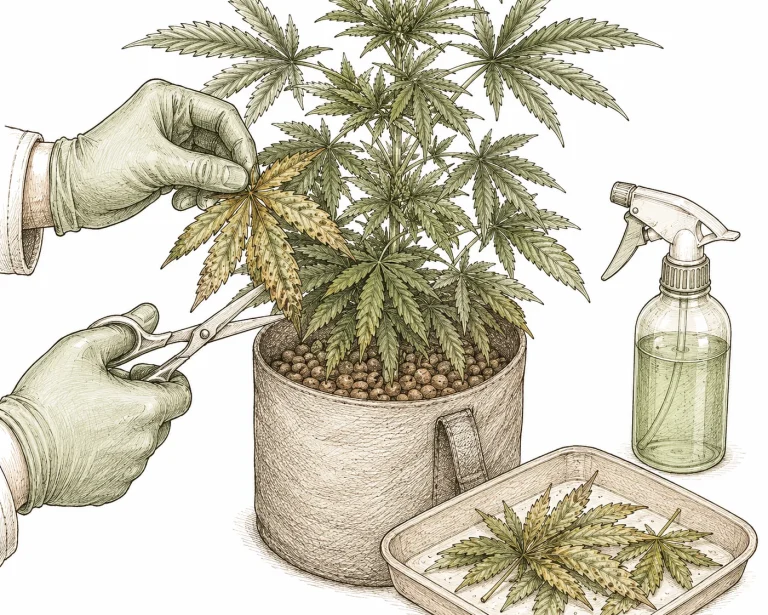
You’ve found a heavy powdery mildew infection and you’re wondering what to do next? Here’s a structured emergency plan to follow step by step. No need to panic – but fast, consistent action is key. Every hour you wait gives the fungus time to infect more leaves and produce spores that can spread through your entire grow space.
Step 1 – Isolate: Move infected plants away from healthy ones right away. Indoors, put infected plants in a separate corner or another room. Outdoors, you can cover them with garden fleece to limit spore spread. Step 2 – Remove infected leaves: Cut off all heavily infected leaves with clean, disinfected scissors. Put the leaves straight into a sealed plastic bag – don’t shake them, or you’ll release spores. Throw the bag out somewhere away from your grow area.
Step 3 – Start treatment: Begin right away with one of the methods described above. For heavy infections, potassium bicarbonate or a commercial organic product is a good choice. Treat the whole plant, including areas that don’t show visible signs yet. Step 4 – Adjust your climate: Drop humidity below 50 % and boost air circulation with extra fans. Take a look at your cannabis watering habits – watering too often or too much raises room humidity and can encourage fungal growth.
Step 5 – Strengthen weakened plants: Powdery mildew tends to hit stressed plants first. Check your feeding and make sure there are no deficiencies. A calcium deficiency in cannabis in particular can weaken leaf cell walls and make them more vulnerable to fungal infections. Step 6 – Monitor and re-treat: Check daily and repeat the treatment every 3-5 days for at least 2-3 weeks. One round of treatment is rarely enough – the fungus can quickly come back from leftover spores.
- Step 1: Isolate infected plants from healthy ones right away
- Step 2: Cut off heavily infected leaves with disinfected scissors and bag them up
- Step 3: Start treatment immediately – potassium bicarbonate or an organic fungicide
- Step 4: Drop humidity below 50%, boost air circulation
- Step 5: Check your feeding, especially calcium and pH
- Step 6: Check daily, re-treat every 3-5 days for at least 2-3 weeks
How to Prevent Powdery Mildew on Cannabis: Long-Term Prevention for Healthy Plants
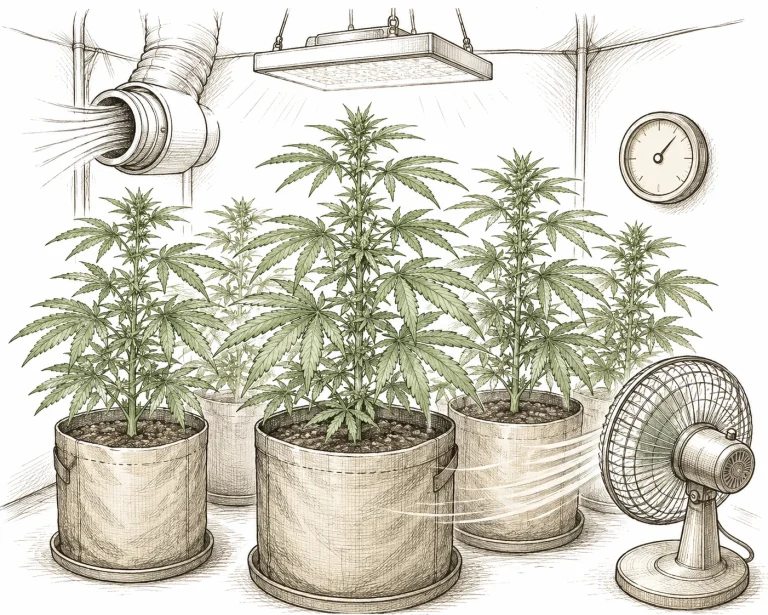
The best fight against powdery mildew is the one you never have to fight. Consistent prevention is the key. Set up the right conditions, and the fungus has a hard time getting a foothold. The good news: most prevention steps cost you little money and effort. But if mildew ever does show up, they can save you a lot of stress and lost harvest.
Air circulation is your most important weapon. Make sure there’s always enough air movement in your grow room or outdoor bed. Indoors: Position your fans so air keeps moving through the canopy. One oscillating fan at floor level and one at mid-height works well for most grow rooms. Outdoors: Pick spots with natural airflow and avoid still, damp corners.
Control your humidity: Keep relative humidity (RH) between 40–60% in the vegetative stage and between 40–50% in the flowering stage. A digital hygrometer is a cheap investment that pays for itself fast. If you keep running into high humidity, a dehumidifier is worth it. Defoliation – removing excess leaves on purpose – noticeably improves airflow inside the plant. Focus on the lower, older leaves that get little light and block air circulation.
Strong, healthy plants hold up against fungal diseases better than stressed or underfed ones. So keep your feeding balanced, dial in the right pH for cannabis and follow the basics from the indoor cannabis grow guide for beginners. Strain choice: Check whether the strain you want is considered mildew-resistant, especially if you grow in a humid climate or in a region with foggy fall mornings. Many modern strains have been bred specifically for resistance to fungal diseases.
- Air circulation: indoors at least 2 fans, outdoors pick breezy, open spots
- Humidity: veg 40–60%, flowering 40–50% – a hygrometer is a must
- Defoliation: regularly remove lower, older leaves for better airflow
- Plant spacing: leave enough room between plants so leaves don’t touch
- Balanced feeding: strong plants resist fungal diseases better
- Strain choice: go for mildew-resistant genetics in humid climates
Similar leaf spots can also show up with anthracnose – but unlike powdery mildew, it doesn’t have the typical white, powdery coating.
Frequently Asked Questions
Can I still smoke plants that had powdery mildew?
If the infection only hit the leaves and the buds stayed clean, using the buds after thorough drying and curing is generally possible. Still, it’s better not to consume buds with obvious mildew, since burned fungal spores can harm your lungs. Lightly affected buds may be usable to a limited extent after careful drying and inspection – but when in doubt, play it safe.
How fast does powdery mildew spread on cannabis?
Under ideal conditions for the fungus (high humidity, little air movement), powdery mildew can spread from a single leaf to several plants within 24–48 hours. The spores are so light that the slightest airflow carries them. That’s why daily checks matter so much – and if you spot an infection, act right away.
Does baking soda really work against powdery mildew on cannabis?
Yes, baking soda (sodium bicarbonate) is a proven method against powdery mildew. It raises the pH on the leaf surface to a level where the fungus can’t survive. Potassium bicarbonate works even better and is gentler on your plants. Important: Baking soda doesn’t work against downy mildew – for that, you need other methods such as copper-based products.
What’s the difference between powdery mildew and bud rot (botrytis)?
Powdery mildew shows up as a dry, white, flour-like coating and mainly attacks the leaves. Bud rot (Botrytis cinerea, gray mold), on the other hand, forms wet, brown rotting spots, especially inside dense buds, and is far more dangerous for your harvest. Bud rot typically smells musty and forms gray, fuzzy spore patches. Powdery mildew is drier and more “powdery.” The two need different treatment strategies.
At what week of flowering is it too late to treat powdery mildew?
There’s no hard cutoff, but from week 6–7 of the flowering stage on, treatment gets harder and riskier. The buds are so dense by then that spraying can trap moisture and lead to bud rot (botrytis). In late flowering, stick to mechanical steps only: remove affected leaves, drop the humidity aggressively and max out air circulation. With a heavy infection, harvesting early can be the better call.
Can powdery mildew survive the winter in the soil and infect my next grow?
Powdery mildew survives mainly on plant debris and as airborne spores. In a grow room, spores can survive on walls, equipment and in the growing medium. After an outbreak, disinfect your grow space thoroughly with a 70% isopropyl alcohol and water mix, replace your growing medium and wash all your gear. Outdoors, spores in the soil can still pose some risk, but mulching and working the soil can help reduce it.
For more background on fungal diseases in crop production, check out the Bavarian State Research Center for Viticulture and Horticulture (LWG, in German).
Septoria leaf spot and bud rot are also among the most common fungal diseases in cannabis, and you should be able to tell them apart from powdery mildew.
The Bottom Line
You can absolutely beat powdery mildew on cannabis if you act fast and stay consistent. The key is early detection, correctly telling powdery mildew apart from downy mildew, and using the right treatments. Organic home remedies like potassium bicarbonate, neem oil and milk-and-water sprays are often enough for light to moderate infections. Commercial products come into play when things get worse. In the long run, consistent prevention is your best strategy: strong air circulation, controlled humidity and healthy, well-fed plants. Stick to these basics, and powdery mildew can become a manageable problem instead of a disaster.
