

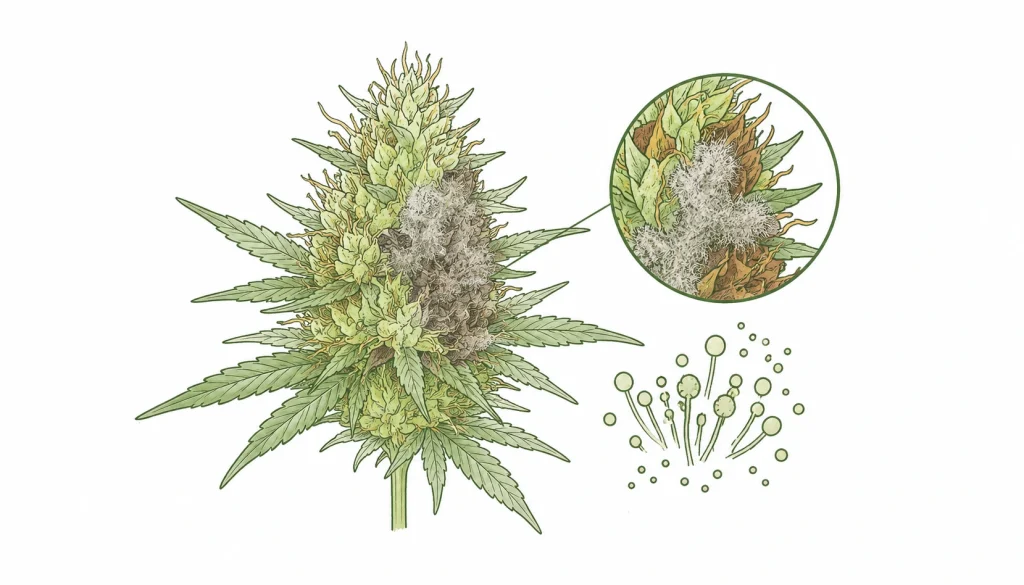
Knowing how to spot bud rot on cannabis is one of the most important skills you can have as a grower — because Botrytis cinerea can wipe out an entire harvest within just a few days. The fungus mainly attacks dense buds in late flowering and spreads incredibly fast in damp conditions. If you recognize the first symptoms early and act immediately, you can often still save most of your harvest. In this article you’ll learn everything you need to know about identifying and fighting bud rot (botrytis, gray mold): symptoms, causes, emergency steps and prevention.
Bud rot, gray mold, botrytis: one disease, several names
In grower slang, this exact problem is known as “bud rot” — it refers to the same fungus, Botrytis cinerea, when it sits inside dense buds. “Gray mold” is the general name gardeners use for the same pathogen on all kinds of plants. The name bud rot gets right to the heart of the problem: the infection almost always starts hidden in the core of the bud, long before anything is visible on the outside. All the symptoms, causes, emergency steps and prevention tips in this article therefore apply one-to-one to bud rot — it’s the same disease, just with a different name.
What is Botrytis cinerea? The fungus behind bud rot in detail
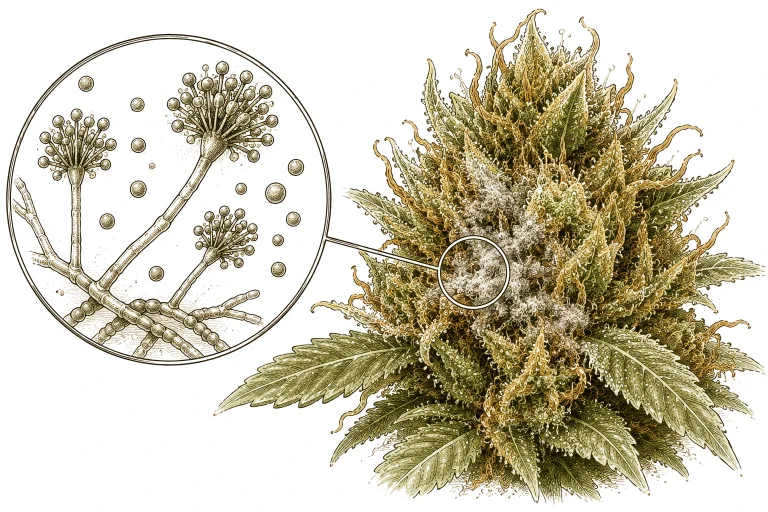
Botrytis cinerea, better known as gray mold, is a necrotrophic fungus that attacks both dead and living plant tissue. In cannabis it mainly shows up during flowering, because dense, resinous buds create the perfect microclimate for the fungus: damp, little air movement and plenty of organic material. The name “gray mold” comes from the characteristic gray spore dust that covers infected areas.
The fungus overwinters as sclerotia in the soil or on plant debris and produces masses of spores in spring and fall, which spread through wind, water and touch. What makes it especially treacherous: botrytis first attacks the inside of dense buds before you can see anything from the outside. By the time the gray fuzz becomes visible, the core of the bud is often already completely dead.
How fast this happens is often underestimated: on damp plant material, botrytis spores need only about 5 hours to germinate. That’s exactly why it’s so important to act immediately as soon as you notice dew, wetness or standing moisture on your buds — a single damp evening without countermeasures is enough for the fungus to take hold.
For outdoor growers in regions with cool, wet autumns, botrytis is the single most dangerous threat to the harvest. The typical harvest season in September and October falls right into the period when nights get colder and damper and morning dew is heavy. For indoor growers, botrytis is also a serious risk as soon as humidity in the room stays above 60 percent or ventilation isn’t right.
- Botrytis cinerea is a fungus that attacks both living and dead plant tissue
- Dense buds and high humidity massively increase the risk of infection
- Spores are everywhere in the air, just waiting for the right conditions
- The fungus starts inside the bud — it often becomes visible from the outside only late
- Especially problematic during the fall outdoor harvest in cool, damp climates
- Temperatures between 59 and 77 °F (15 and 25 °C) are ideal for botrytis growth
How to identify bud rot: the symptoms that reveal an infection
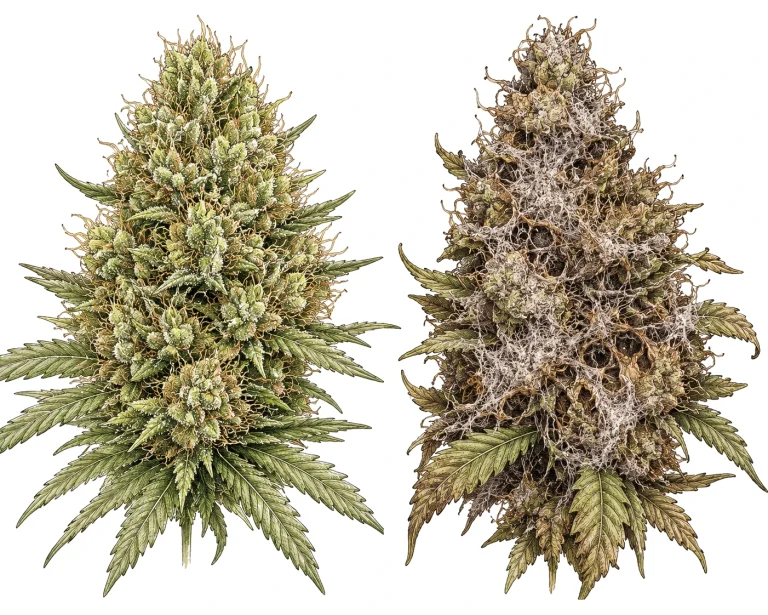
The first sign, which is easy to miss, is individual brown sugar leaves or other leaves inside the bud that die off for no obvious reason. If you see leaves like that and carefully pull them out of the bud, you may already find gray or whitish-gray mycelium underneath. This gray, powdery coating is the unmistakable hallmark of botrytis.
In the advanced stage, the bud material turns brown and mushy and feels damp — even if you haven’t watered the plant. If you gently squeeze an infected bud, it gives way and feels soft, while a healthy bud is springy and firm. In the final stage, the whole bud is covered in gray spore dust that rises into the air like a little cloud when touched and infects other buds.
A symptom that’s often overlooked is so-called stem rot: botrytis can also attack stems and branches, especially where branches sit tightly together or where there are wounds. An infected stem turns brown and soft, breaks easily and shows the typical gray coating. If you find spots like this on the stem, you need to act immediately, because from there the fungus can spread to the entire plant. Also watch for leaves right next to the buds that turn yellow unusually fast — this can be an early warning sign, even before any mold is visible.
It’s important to tell botrytis apart from other problems: powdery mildew shows a white, flour-like coating on leaf surfaces and looks like someone dusted the leaves with flour. Botrytis, on the other hand, is grayer and fuzzier and mainly attacks bud tissue. If your cannabis plant shows yellow leaves in general, nutrient deficiencies can also be the cause — so carefully separate the possible causes from each other.
- Brown, dying sugar leaves inside the bud are often the first sign
- A gray, powdery-fuzzy coating on or inside the buds is the main sign
- Mushy, brown and soft bud areas indicate an advanced infection
- Gray spore dust that rises when touched means acute danger for other buds
- Brown, soft spots on stems or branches can be entry points
- Leaves right next to buds that yellow quickly can be an early warning sign
- Botrytis gray is fuzzier and darker than the white coating of powdery mildew
Causes and risk factors: why does your plant get bud rot?
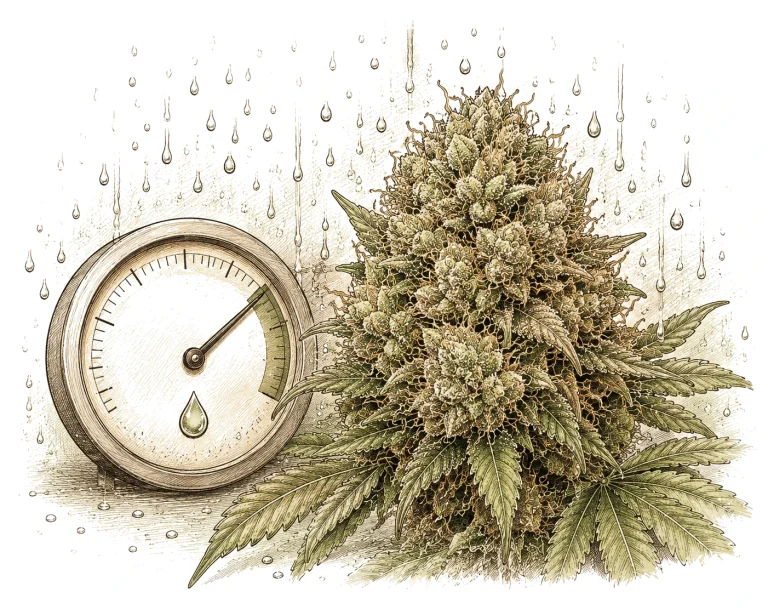
The most important risk factor for bud rot in cannabis is excessive humidity combined with poor air circulation. As soon as relative humidity stays above 60 percent during flowering, the risk starts to rise significantly. At 70 percent humidity and temperatures below 68 °F (20 °C) — typical of cool fall nights — the botrytis risk practically explodes.
Dense strains with compact, tight buds are genetically more susceptible than loose, airy phenotypes. Indica-dominant strains that develop especially large, compact buds suffer from botrytis more often than sativa-dominant strains with a looser bud structure. Outdoor strains bred specifically for cool, damp climates are often more resistant to fungal diseases. Wounds on the plant — from wind, pests or careless training — give the fungus easy entry points.
Another underestimated factor is how you water. If you water your plants too often or too much, you raise the moisture in the soil and, with it, the humidity around the plant massively. Learn how to water cannabis the right way to avoid unnecessary moisture stress. Watering in the evening is also a problem, because the water can’t dry off anymore and the nighttime moisture raises the risk of mold.
For indoor growers, poor ventilation and a lack of air circulation are the most common cause. When the air in your grow tent stagnates, moisture collects on buds and leaves and botrytis spores find ideal conditions. Finally, plant health plays a role too: plants weakened by nutrient deficiencies or nutrient burn are more susceptible. A calcium deficiency in cannabis , for example, weakens the cell walls and makes the plant an easier target for fungi. Too much nitrogen in late flowering also plays a role: it makes the tissue soft and watery — exactly the texture botrytis attacks most easily — and at the same time dulls the terpene profile of your buds.
- Humidity above 60 percent during flowering is the main risk factor
- Cold nights below 59 °F (15 °C) strongly favor botrytis growth
- Dense, compact colas carry a higher risk than loose structures
- Wounds from pests, wind or training are entry points
- Watering too often or in the evening raises the risk of mold
- A lack of air circulation lets moisture sit on the buds
- Nutrient deficiencies and weakened plants are more prone to fungal infection
- Too much nitrogen in flowering makes tissue soft and watery — an additional risk factor
- Outdoor grows in cool, damp fall weather: September and October are high-risk months
Emergency steps: how to react when bud rot hits your cannabis
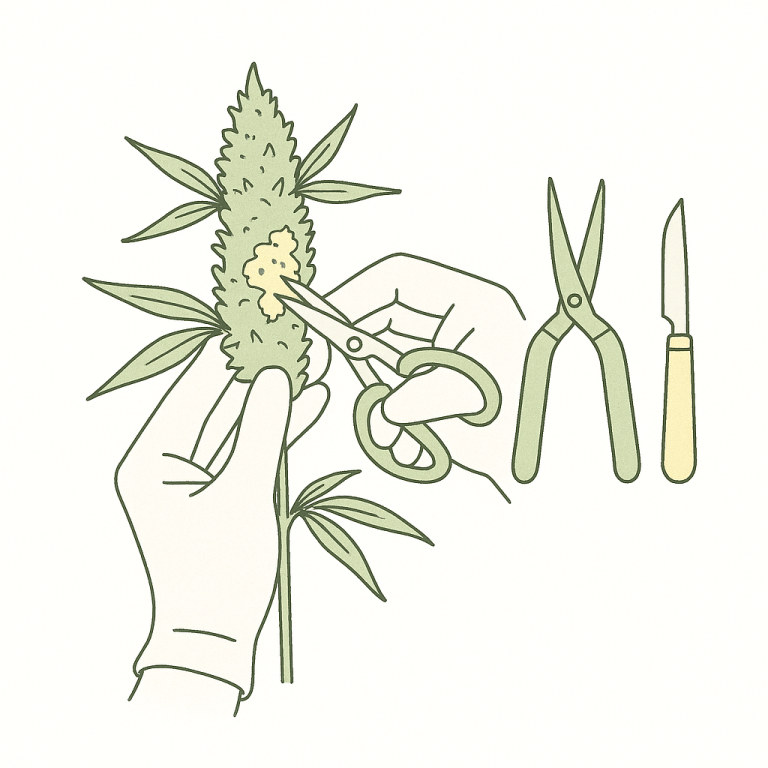
Once you’ve found botrytis, every minute counts. Most important: do NOT touch the infected area with bare hands, and don’t move the plant or the infected bud before you’ve taken precautions. Mold spores are released into the air the moment you touch them and infect other buds. Put on gloves and a respirator mask before you start removing anything.
Cut out infected areas generously — at least 2 to 4 in (5 to 10 cm) beyond the visibly infected part. The fungus grows invisibly into healthy tissue, so it’s not enough to remove only the visibly gray part. Put the removed material straight into a sealed plastic bag and throw it out with the household trash — never in the compost. Disinfect your scissors between every cut with isopropyl alcohol or another suitable disinfectant.
After removing the infected material, you need to adjust the conditions immediately. Lower the humidity to below 50 percent as quickly as possible. Indoors, you do that with more ventilation, a dehumidifier and, if needed, temporarily watering less. Outdoors you have less control, but you can set up rain protection and improve air circulation around your plants.
With a severe infection that has already spread to several buds or a large part of the plant, you have to make a painful decision: sometimes an early harvest is the best option to save at least part of your crop. Infected areas have to be removed consistently, and the remaining material should be dried and processed right away. Throw out anything that smells moldy or looks even slightly suspicious — infected material is harmful to your health and unusable.
- Never touch infected areas without gloves and a mask
- Put infected material into a sealed bag and into the household trash right away
- Cut at least 2–4 in (5–10 cm) beyond the visibly infected area
- Disinfect your scissors with isopropyl alcohol between every cut
- Lower humidity to below 50 percent immediately
- Maximize ventilation and air circulation
- With a severe infection: consider harvesting the remaining healthy material early
- Infected material is harmful to your health and must not be consumed
Organic and chemical treatment of botrytis on cannabis
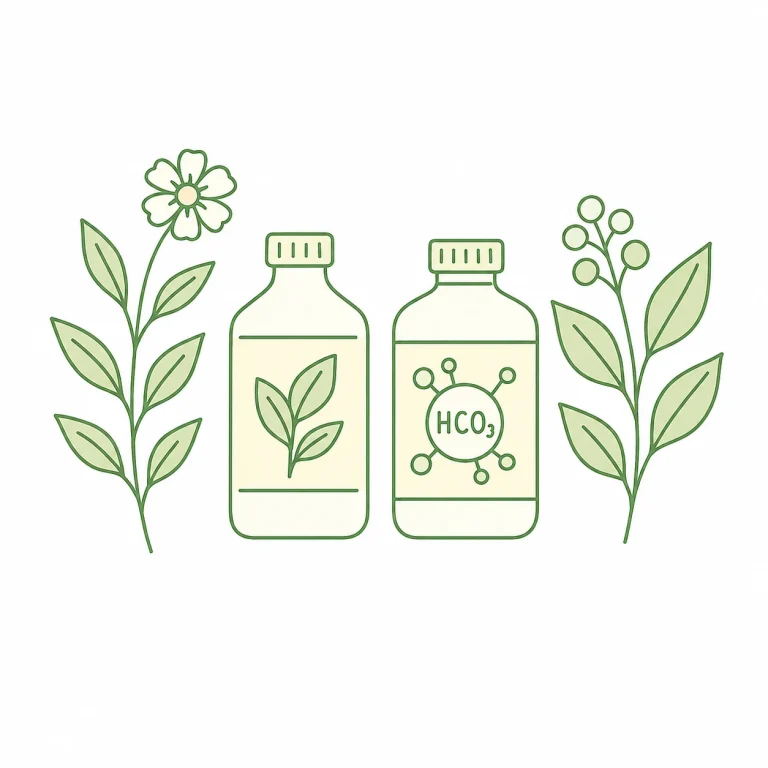
Besides removing it by hand, there are several organic products that can inhibit or kill botrytis. Bacillus subtilis is a naturally occurring soil bacterium that produces antifungal compounds and attacks botrytis spores directly. Products based on Bacillus subtilis are commercially available and can be used as a spray, either preventively or on light infections. They are safe for plants and leave no harmful residues.
Potassium bicarbonate (a close relative of baking soda) changes the pH on leaf and bud surfaces and makes the environment hostile to fungi. A solution of 5 to 10 g of potassium bicarbonate per quart (1 L) of water can be used as a preventive spray. Important: never spray during flowering under strong lighting, and let the plants dry off well so you don’t create moisture problems. Products based on Trichoderma fungi, which are known as natural antagonists of botrytis, also help. For early prevention, a weak hydrogen peroxide solution (3% H2O2, diluted 1:10 with water) also works as a spray on bud areas that aren’t infected yet — it kills spores on the surface, but it doesn’t replace physically removing tissue that’s already infected.
Chemical fungicides like copper products can be used during the vegetative stage, but they’re a problem during flowering because residues stay in the harvested buds. As a general rule: chemical products should not be used during flowering, because they affect the taste, smell and safety of the final product. At most, copper-based products may be considered as a preventive measure in early flowering when the risk of infection is very high. If you have questions about approved plant protection products, always check current official sources, since regulations can change.
An underestimated measure is defoliation: by selectively removing large leaves that block air circulation, you can significantly improve the microclimate around your buds. Fewer leaves mean better air movement between the buds and faster drying after rain or dew. It’s a purely mechanical but very effective way to prevent botrytis.
- Bacillus subtilis: organic bacterium with antifungal action against botrytis
- Hydrogen peroxide (3%, diluted 1:10) kills spores on the surface as a preventive measure
- Potassium bicarbonate spray changes the surface pH and inhibits fungal growth
- Trichoderma-based products can be used as natural antagonists
- Never use chemical fungicides during flowering — risk of residues
- Defoliation improves air circulation and mechanically lowers the risk of mold
- Always apply sprays with good ventilation and in weather that’s as dry as possible
- Start preventive treatments before visible symptoms appear
Preventing bud rot: prevention beats treatment
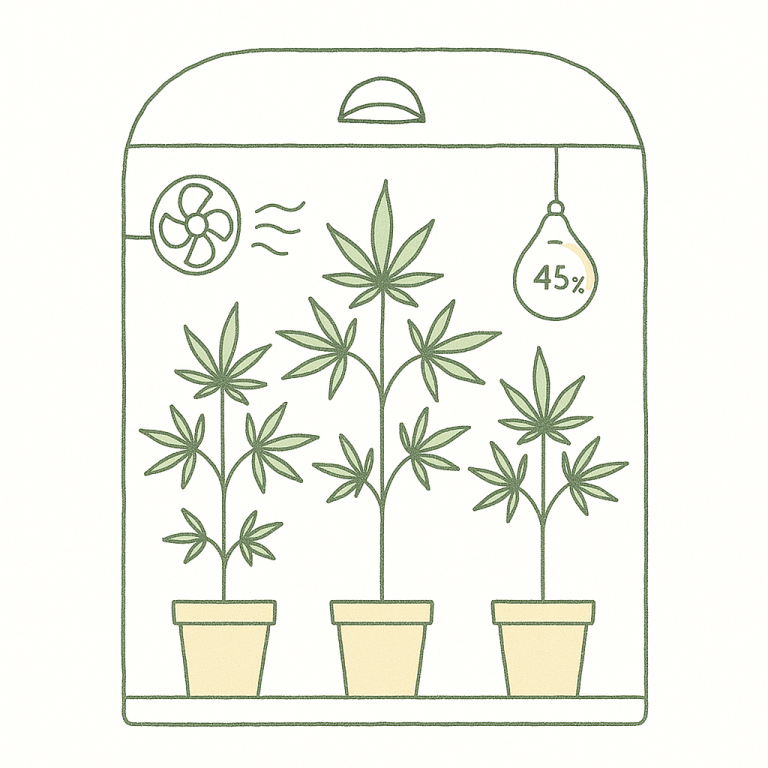
The most effective measure against bud rot is consistent prevention. The most important parameter is humidity: keep relative humidity between 40 and 70 percent during the vegetative stage and between 40 and 50 percent during flowering. From the last week of flowering (ripening phase), many experienced growers even recommend lowering humidity to 35 to 45 percent. A good hygrometer is essential for this.
Air circulation is the second crucial factor. Make sure air flows continuously through your plants — indoors with fans that keep things moving gently but steadily, outdoors by choosing a breezy spot and leaving enough space between plants. Stagnant air is a botrytis paradise. When growing indoors, a good exhaust fan with enough capacity for regular air exchange is also essential.
In outdoor grows with wet fall weather, rain protection is especially important in the last weeks before harvest. A simple plastic sheet cover or a patio roof can work wonders and keeps buds from staying wet for hours. After it rains, walk carefully through your plants and gently shake water droplets out of especially dense buds to prevent moisture from building up. Also choose strains known to handle your local climate and to resist mold — that’s the most basic protection of all.
Training methods like removing lower branches (lollipopping) and moderate defoliation in early flowering improve air circulation considerably. Healthy, well-fed plants are more resistant to fungal infections. Make sure you have the correct pH for cannabis so your plants can take up all nutrients optimally. Finally, it pays to clean your grow space regularly and remove dead plant material right away, because dead leaves are ideal breeding grounds for botrytis spores. Our complete Plant Diagnosis overview also helps you spot other plant diseases early and tell them apart from botrytis.
- Keep humidity consistently below 50 percent during flowering
- Ensure continuous air circulation with fans or a breezy location
- Set up rain protection in the last weeks before harvest (outdoors)
- After rain, gently shake water droplets out of dense buds
- Choose mold-resistant strains suited to your local outdoor climate
- Use lollipopping and defoliation for better air circulation
- Remove dead plant material right away — don’t create breeding grounds
- Clean and disinfect your grow space regularly
- Keep pH in the optimal range for strong, resistant plants
Harvest and aftercare: what to do if mold shows up anyway
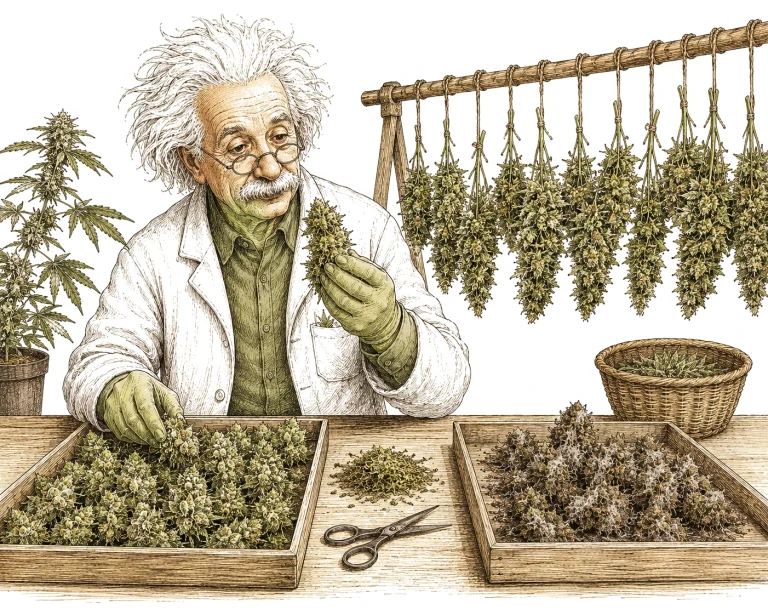
If you still get botrytis during harvest time despite all precautions, you need a strategy. Harvest in the morning, while temperatures are still cool and humidity hasn’t reached its daily peak. Work quickly and cleanly — disinfected tools, gloves, no touching infected areas without protection. Separate infected and clean plant parts immediately and clearly.
After harvest, careful drying is crucial to stop further mold growth. Don’t hang your plants too close together, so air can circulate between them. Ideal drying conditions are 64 to 72 °F (18 to 22 °C), 45 to 55 percent humidity and gentle air movement. Check every day for new mold — botrytis can keep growing on dried material if conditions allow it.
A water cure is a method that’s sometimes used on lightly infected material: the harvested buds are soaked in cold water for several days, with the water changed daily. This is supposed to wash out spores and mold residue, but it also costs you terpenes and changes the final product considerably. It’s only meant as a last resort for lightly infected material and is no cure-all. Heavily infected material should never be consumed.
Good to know: cannabis that was infected with botrytis — even if the mold was removed — can contain mycotoxins that are harmful to your health. Invisible fungal residues can remain even after drying. When in doubt: better to throw it out than take the risk. Your health comes first — losing a harvest hurts, but you’ll get over it.
- Harvest in the morning while humidity is still low
- Strictly separate infected and clean areas right away
- Drying temperature 64–72 °F (18–22 °C), humidity 45–55 percent
- Check for new mold daily during drying too
- Water cure only as a last resort for lightly infected material
- Mycotoxins are invisible and remain even after the mold is removed
- Never consume heavily infected material — your health comes first
Preventing pests & fungal infections: more protective measures
Beyond the measures against botrytis itself, it pays to take a broader look at preventing pests and fungi overall — many risk factors overlap. Build these protective measures into your routine:
- Carbon filter on the air intake: Filters spores, pollen and pest eggs out of the incoming air before they can get into your grow tent
- Change clothes and shower after working in the garden: Keeps you from bringing spores or pests from outside or from other plants into your grow
- Neem oil as organic plant protection: Works both systemically through the irrigation water and locally when sprayed directly on leaves and stems — covering two application routes at once
- Beneficial insects for biological pest control: Predatory mites, lacewing larvae or other beneficial insects keep pest populations low before they become a problem and weaken the plant even further
Keep in mind that fusarium can also cause wilted, brown plant parts — the difference usually shows in the pattern of the infection: bud rot starts in the bud, fusarium more often in the stem.
Frequently asked questions
Can I still smoke cannabis with botrytis if I’ve removed the mold?
No, that’s not recommended. Botrytis cinerea produces mycotoxins that can remain in the plant material even after the visible mold has been removed. These toxins aren’t completely destroyed by burning or heating and can cause serious health problems when inhaled. Infected material should always be thrown out.
How fast can bud rot (botrytis) spread on cannabis?
Under ideal conditions for the fungus — humidity above 70 percent and temperatures around 68 °F (20 °C) — botrytis can destroy an entire bud within 24 to 48 hours. A single infected bud that goes unnoticed can affect several plants within a week. That’s why daily checks during flowering are essential.
What’s the difference between bud rot and powdery mildew on cannabis?
Powdery mildew shows up as a white, flour-like coating on leaf surfaces and feels dry and powdery. Bud rot (botrytis), on the other hand, prefers to attack the buds, looks grayer and fuzzier, and the infected tissue turns brown, mushy and damp. Botrytis is more dangerous to your harvest than powdery mildew because it penetrates directly into the bud material.
What humidity prevents bud rot on cannabis?
During flowering, keep relative humidity consistently below 50 percent, ideally between 40 and 50 percent. During the ripening phase (last 2 weeks), experienced growers recommend 35 to 45 percent. Botrytis needs humidity of at least 60 percent to grow optimally, which is why consistent humidity control is the most effective prevention.
Can botrytis spread from plant to plant?
Yes, botrytis spreads very easily between plants. The spores travel through air movement, when you touch the plants, on contaminated tools and even through water. That’s why it’s so important not to stir up spores when removing infected areas, to disinfect your tools and to wear gloves. Isolate heavily infected plants from the others immediately.
Can I protect outdoor cannabis from botrytis with a rain cover?
Yes, a rain cover is one of the most effective measures against botrytis in outdoor growing. A simple plastic sheet roof keeps buds from staying wet for hours after it rains, which lowers the risk of mold enormously. Make sure the sides stay open for enough air circulation — a closed greenhouse without ventilation can even make the problem worse by trapping humid air.
Are some cannabis strains more resistant — and how can you spot bud rot before it spreads?
Yes, there are clear differences between strains. Sativa-dominant strains with loosely structured buds are generally less susceptible than indica-dominant strains with dense, compact buds. Many breeders have developed strains specifically for damp, cool climates that are genetically more resistant to mold. Autoflower strains often finish earlier and can avoid the wet fall season.
What’s the difference between bud rot and root rot?
Bud rot (botrytis) attacks the buds above ground and is caused by the mold fungus Botrytis cinerea. Root rot, on the other hand, develops in the root zone, usually caused by pythium species, and shows up as brown, slimy roots and wilting plants despite adequate watering. Both are fungal diseases, but they call for different countermeasures — learn more in our root rot article.
Can I keep growing in the same medium after a bud rot infection?
You should avoid that. Botrytis sclerotia and spores can survive in the growing medium and on plant debris and become active again right away in your next grow. Throw out the medium completely after an infection, thoroughly disinfect pots, tools and your grow space with isopropyl alcohol or a hydrogen peroxide solution, and start over with fresh, sterile growing medium.
Other fungal diseases you should be able to tell apart from bud rot: powdery and downy mildew as well as anthracnose.
Are my buds turning brown — is it always botrytis (bud rot)?
Not every brown discoloration on your buds automatically means botrytis. Bud rot typically shows up as mushy, damp brown spots inside the bud, usually together with a gray, fuzzy mold coating. But brown buds can have other causes too: in extreme heat, plants react with heat stress, which browns leaves and sometimes bud tips as well. Light that’s too intense or too close can first bleach bud tips and then turn them brown. An infestation of spider mites or other pests also leads to brownish, dried-out spots on the buds. And toward the end of flowering, it’s completely normal for the pistils to turn brownish-orange — that’s a natural sign of ripeness, not a symptom of disease. So always check whether there’s also a mushy texture or a gray coating: only then are you really dealing with bud rot.
Conclusion
Spotting bud rot early and acting the right way is crucial for the success of your grow — especially in the critical weeks before harvest. The key pillars are checking your plants daily for the first signs, consistently keeping humidity below 50 percent during flowering, and acting immediately at the first suspicion. If you catch botrytis early and step in decisively, you can often still save a large part of your harvest — if you wait, you can lose everything. In the long run, prevention through air circulation, rain protection and choosing resistant strains is the best strategy against this most dangerous fungal enemy of cannabis buds.
