

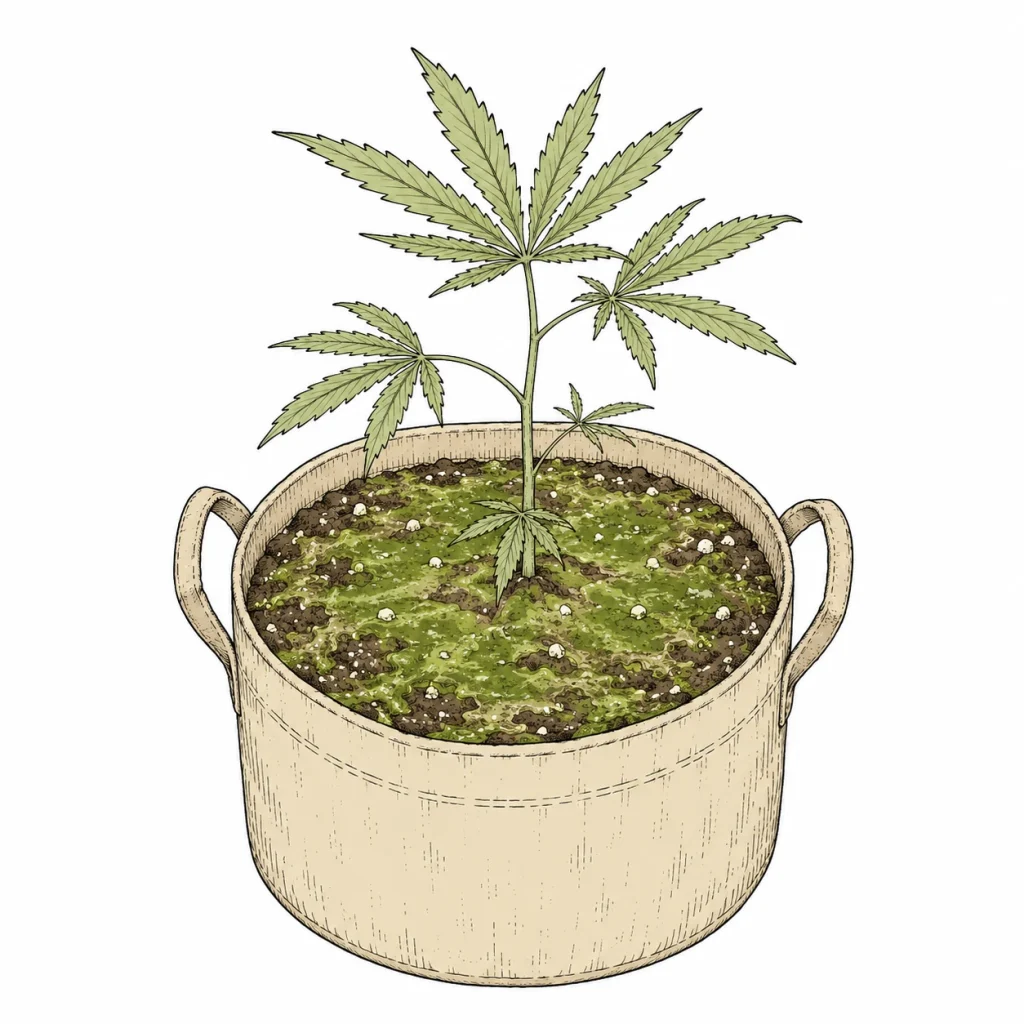
Algae in your cannabis grow is an often underestimated problem. It can show up in your growing medium, in your watering water or in hydroponic systems. If you spot the green film on the soil surface or the cloudy tint in your reservoir too late, you risk root damage, nutrient lockout and weaker plant growth. Algae compete directly with your cannabis plants for dissolved nutrients, and in closed systems they can take over within just a few days. In this article, you’ll learn how to reliably spot algae in your cannabis grow, react the right way right away and keep it from coming back.
What Is Cannabis Algae and How Does It Start?
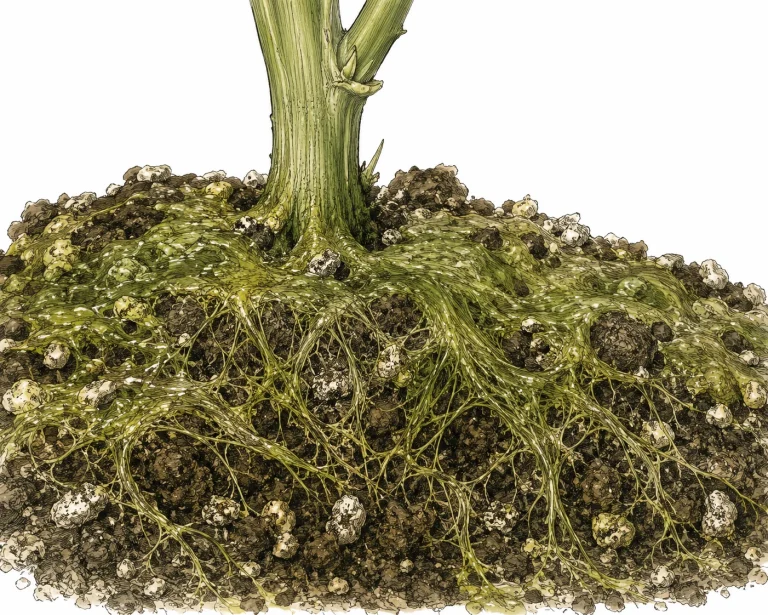
Algae are photosynthetic microorganisms. They thrive anywhere light, water and nutrients come together. In cannabis growing, they mostly show up on the surface of the growing medium, in drip trays, in reservoirs and in the lines of hydroponic systems. In the medium, algae look like a green, blue-green or brown film that coats the soil. In hydro and DWC systems, the water turns greenish or cloudy, and slimy coatings form on the roots.
The cause is always the same combo: light hits a moist, nutrient-rich environment. Indoor grows are especially at risk because grow lights are intense and the medium stays moist all the time. A small gap in a pot, a clear water bottle or an uncovered reservoir lid can be enough to trigger an explosive algae bloom. Cyanobacteria, often called blue-green algae, are the most aggressive type because they can produce toxins that harm plant roots.
In outdoor growing, algae are less of a concern because natural predators and the soil itself keep things in check. Indoors, that natural balance is missing completely. If you’ve ever dealt with a bad algae outbreak in a DWC system, you know how fast it can spread. With warm water and full lighting, a clean system can be fully contaminated within 48 to 72 hours.
- Algae need light, water and nutrients at the same time
- A green or blue-green film on the medium surface is the first warning sign
- Hydroponic systems are especially vulnerable
- Cyanobacteria produce toxins that can damage roots directly
- Water temperatures above 72 °F (22 °C) speed up growth dramatically
Spotting Cannabis Algae: Symptoms in the Medium and Water
Diagnosing algae in your cannabis grow is usually easy just by looking. On the surface of the medium, you’ll see a green to brown film that spreads out flat and feels felt-like once it’s more advanced. Sometimes there’s a slightly rotten or musty smell, especially when cyanobacteria are involved. Inside the medium, algae can spread along moist zones and wrap around the roots, which can block gas exchange in the soil.
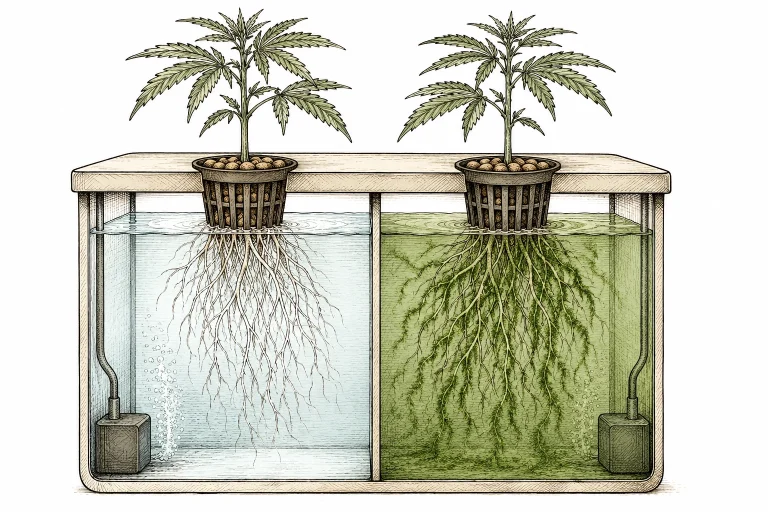
In hydro systems, algae show up as a color change in your nutrient solution, from clear to green, yellow-green or brown. Reservoir walls and lines feel slimy. It gets especially tricky when the roots themselves are affected: healthy cannabis roots are white and firm. Roots covered in algae turn brownish, slimy and smell bad. This is often mistaken for root rot, but root rot is usually caused by pythium (pythium root rot), not by algae alone.
Indirect symptoms on the plant itself are harder to pin down. A heavy algae problem can cause nutrient lockout because algae pull minerals like nitrogen, phosphorus and potassium out of the solution or medium. Your plant may then show signs of deficiency: yellowing leaves, slower growth or an overall weak look. You can learn more about the most common causes of yellow cannabis leaves in our plant diagnosis article.
- A flat green to brown film on the surface of the medium
- Cloudy, discolored water in hydro reservoirs and lines
- Slimy, discolored roots in hydroponic systems
- A rotten or musty smell in the root zone
- Indirect plant symptoms: yellowing and stunted growth from competition for nutrients
- Slimy buildup on the inside walls of pots and around drainage holes
Algae in Cannabis Growing Medium: The Most Common Causes
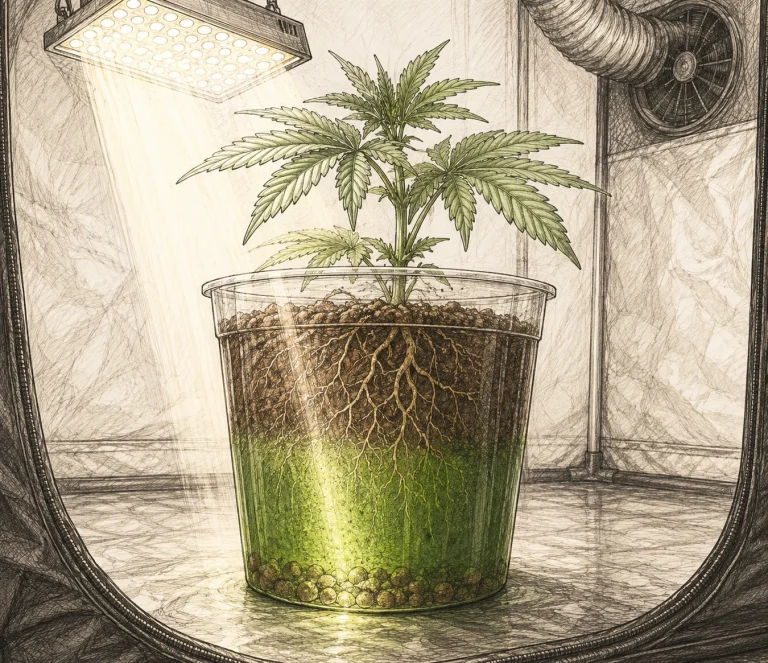
The most common cause of algae on your cannabis growing medium is too much light hitting the soil. When your grow light shines directly on the medium, algae get perfect growing conditions. Clear or white pots make this much worse because they let light through or bounce it around. Algae growth can really take off during the flowering stage, when your light is more intense.
Another big factor is a surface that stays too wet. If you water too often or pour too much at once, the top layer of soil stays wet all the time. Algae only need a thin, damp top layer to sprout and spread. Our article Watering Cannabis the Right Way shows you how to water your plants properly. Medium temperature matters too: above 75 °F (24 °C) in the root zone, algae can grow much faster.
Nutrient-rich water sitting on the surface is another problem. If you feed your plants nutrient solution and let it dry on top, it leaves a film of nutrients behind. That film is a perfect breeding ground for algae. In hydroponic systems, the main trigger is almost always light leaks in the reservoir or the lines. Water temperature is critical as well: nutrient solution above 72 °F (22 °C) can make algae growth skyrocket.
- Direct light hitting a damp growing medium
- Clear or white pots without light protection
- Watering too often keeps the surface constantly wet
- Water temperatures above 72 °F (22 °C) in hydro systems
- Light leaks in reservoirs and lines
- Nutrient residue on the surface of the medium
Getting Rid of Algae on Cannabis: Quick Fixes for Your Growing Medium
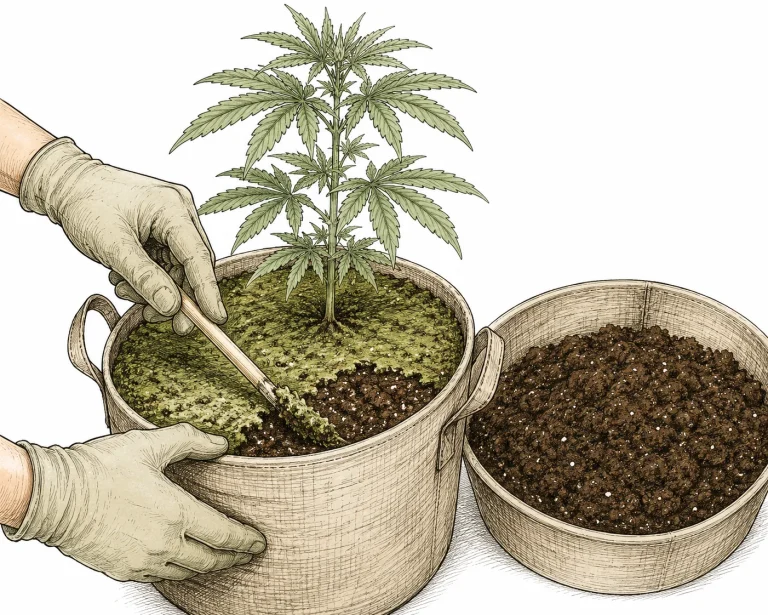
Spot algae on your cannabis growing medium? Act fast. Your first and most important step is to physically remove the affected layer. Scrape off the top 0.5–1 in (1–2 cm) of soil generously and dispose of it outside your grow room. Replace it with fresh, sterile medium. This step alone gets rid of most of the active algae.
Right after that, cut off the light reaching the medium. Cover the surface with a light-proof layer. Black plastic mulch, coarse crushed lava rock or a layer of dark, dried plant material all work well. Black pots or light-proof pot covers keep light from shining through the pot walls into the medium. Swap clear pots for dark, opaque ones.
At the same time, adjust how you water. Water less often but more thoroughly, so the surface can dry out completely between waterings. The classic finger test helps you nail the timing: the top 1 in (2–3 cm) of soil should be dry before you water again. You can spray diluted hydrogen peroxide (H₂O₂, 3 %) on the surface to kill leftover algae without harming your plant. Use a ratio of about 1:10.
- Scrape off the affected top 0.5–1 in (1–2 cm) of medium and throw it out
- Cover the surface with light-proof material (lava rock, black plastic)
- Swap clear pots for opaque black pots
- Stretch out the time between waterings so the surface can dry
- Spray diluted H₂O₂ solution (3 %, 1:10 ratio) on the surface
Getting Rid of Algae in Your Water and Hydro System
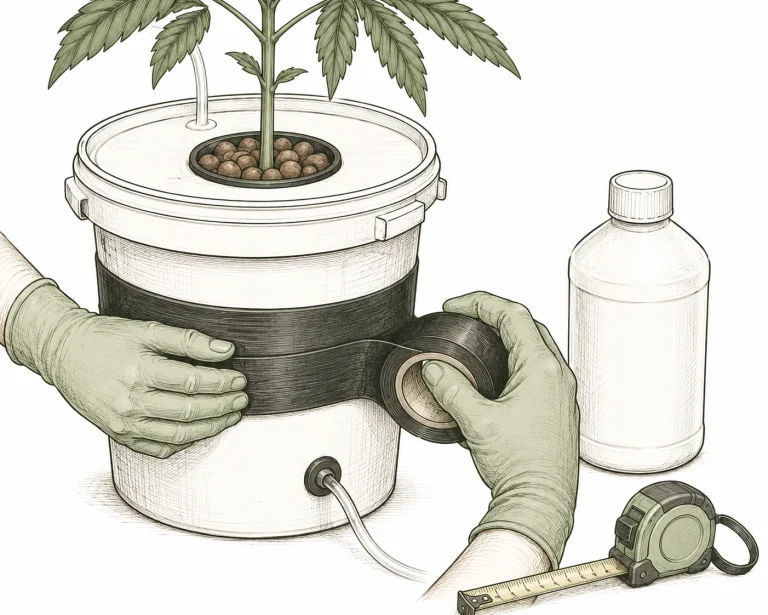
In hydroponic systems, DWC bubblers or NFT setups, getting rid of algae takes more work, but it’s definitely doable. Start by fully draining and cleaning the system. Empty the reservoir, then flush all lines and containers with a mix of water and hydrogen peroxide (H₂O₂). Let the solution sit for at least 30 minutes before you rinse the system thoroughly with clean water. While you’re at it, check every lid, hose and pump housing for algae slime.
Your plants’ roots deserve special attention. Gently rinse affected roots with lukewarm water and carefully remove any slimy buildup. Not every brown section of root is a lost cause. Roots often bounce back surprisingly well once the algae load is gone. After that, add a product like Hydroguard (Bacillus amyloliquefaciens) or a similar biological. These support a healthy root microbiome and crowd out algae and root rot pathogens.
The most important structural fix is making your system completely light-tight. Seal every lid opening, cable entry and tubing connection with black electrical tape or foam strips. Use only opaque black tanks and containers. Keep your nutrient solution below 68 °F (20 °C), ideally at 64 to 68 °F (18 to 20 °C). Algae grow much more slowly at these temperatures. Also keep an eye on the right pH for cannabis. A pH outside the optimal range can weaken plant growth and favor certain types of algae at the same time.
- Drain the system completely, clean it with an H₂O₂ solution and rinse
- Gently clear slime off the roots and add biologicals
- Seal all light leaks in the system with black tape
- Use only opaque black tanks and containers
- Cool the nutrient solution to 64–68 °F (18–20 °C)
- Check pH regularly and keep it in the optimal range
Preventing Algae in Cannabis Grows for Good: Prevention
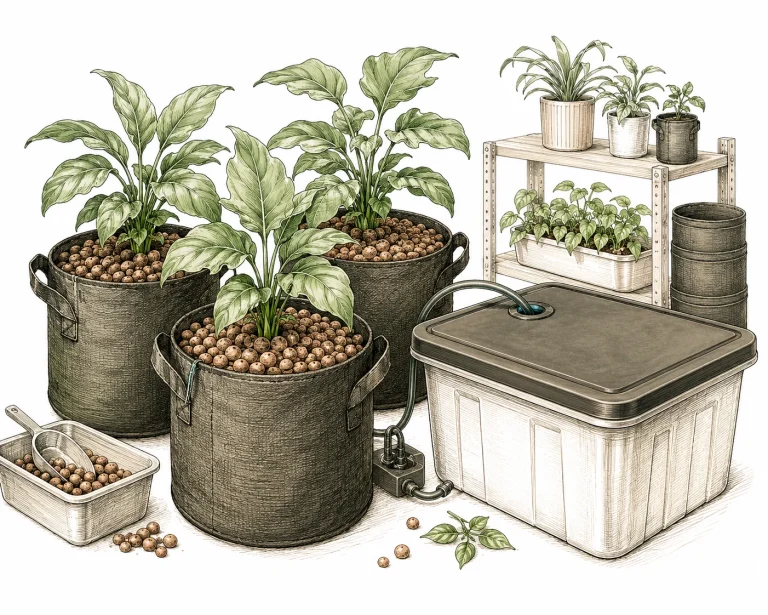
When it comes to algae, prevention is your most effective strategy. The three golden rules: no light on the growing medium, no light in the water, no surface that stays wet all the time. If you put these basics in place from day one, you usually won’t see any significant algae problems. For soil grows, that means black pots, crushed lava rock as mulch and a watering routine that fits your plants. For hydroponics: 100 % light-tight systems and water temperatures below 72 °F (22 °C).
On the nutrient side, it pays to use biological products that support an active microbiome in the growing medium or nutrient solution. Mycorrhizal fungi, Bacillus species and other beneficial microbes take over the ecological niches algae would otherwise use. Products like Great White, Hydroguard or Mammoth P support a living microbiome and make your system more resilient against algae and fungal infections. You’ll find more on this in our Cannabis Plant Diagnosis Hub, where we walk through all growing medium and root problems step by step.
Regular visual checks are a must. Every week, inspect the surface of the growing medium, the pots and, in hydro systems like a DWC setup, the roots and the water. Small patches of algae take just a few minutes to remove by hand. A large-scale infestation, on the other hand, can mean hours or even days of cleanup. Also make sure nutrient solution doesn’t sit on the surface of the medium after watering. Wipe excess liquid off the soil surface and out of the drainage saucers. With these simple routines, your grow stays algae-free.
- Use black, light-tight pots right from the start
- Cover the medium surface with crushed lava rock or black plastic sheeting
- Adjust your watering intervals: let the surface dry out between waterings
- Use biologicals like Hydroguard or mycorrhizal products regularly
- Build hydroponic systems to be 100 % light-tight
- Keep water temperature below 72 °F (22 °C) at all times
- Check weekly for early signs of algae
Algae in Cannabis Grows and Nutrient Problems: How They’re Connected
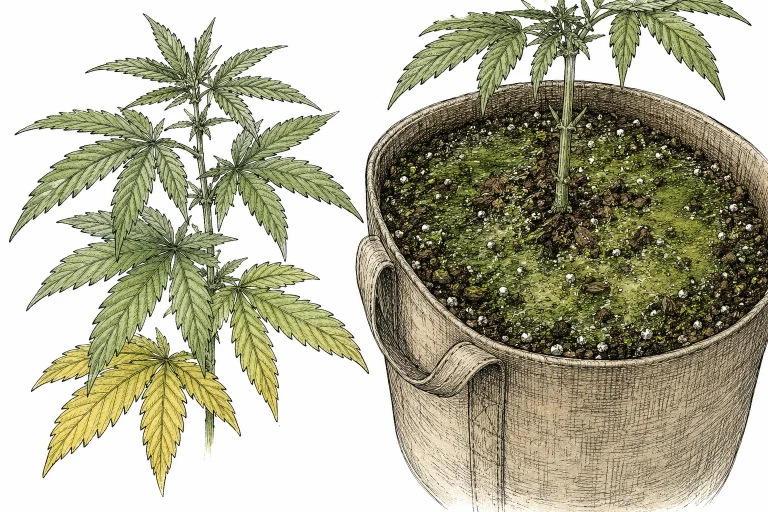
One often overlooked side of algae in cannabis grows is how it affects your plant’s nutrient supply. Algae are very efficient at taking up nutrients. They compete directly with your cannabis roots for nitrogen, phosphorus, potassium, calcium and magnesium. With a heavy infestation, nutrient availability in the growing medium or nutrient solution can drop so much that your plant develops deficiencies even though you’re feeding enough. A typical sign is yellowing lower leaves, which can easily be misdiagnosed as a nitrogen deficiency.
The interaction with calcium and magnesium is especially critical. Algae can efficiently pull these secondary macronutrients out of the root zone, which can lead to a secondary Cal-Mag deficiency. If your plants show leaf spots, necrosis or interveinal chlorosis despite correct feeding, check the growing medium and water for algae before you blindly bump up your nutrient dose. Cannabis nutrient burn from overfeeding is another common follow-up mistake.
Cyanobacteria (often called blue-green algae) are the most common type of “algae” in cannabis grows, and they’re a special risk because they can produce cyanotoxins. These toxins can damage root tissue directly and impair nutrient uptake. Even after you remove the algae, your plant may not fully recover until the toxins are washed out of the growing medium. That’s why a thorough flush with clean, pH-adjusted water is strongly recommended after a heavy cyanobacteria outbreak.
- Algae compete directly with your roots for nutrients
- Secondary deficiencies can show up even when you’re feeding enough
- Cyanobacteria produce toxins that can damage root tissue directly
- After a heavy outbreak: flushing with pH-adjusted water is recommended
- Don’t ramp up feeding too soon. Rule out algae first
The Bavarian State Institute for Viticulture and Horticulture (LWG) also confirms in its hydroponics fact sheet that light is the key driver of algae growth in water: dark, light-proof containers noticeably reduce algae.
Frequently Asked Questions
Are algae directly harmful to my cannabis plant?
Common green algae aren’t directly toxic, but they compete with your roots for nutrients and oxygen. Cyanobacteria (blue-green algae) are more dangerous because they produce toxins that can damage root tissue. Algae can also create anaerobic zones in the growing medium, where root rot pathogens like pythium thrive.
Can I fight algae with household remedies?
Yes. Diluted hydrogen peroxide (H₂O₂, 3 %) is an effective household remedy that’s gentle on plants. Mixed at 1:10 (H₂O₂ to water) and applied to the surface of the growing medium or added to a hydroponic system, it kills algae effectively without harming your plant. Important: afterward, always fix the root cause, whether that’s light reaching the medium or a surface that stays too wet.
Why do algae keep coming back even though I removed them?
If algae keep coming back, you haven’t fixed the root cause yet. Check: Is light hitting the growing medium or getting into your reservoir? Does the surface of the medium stay wet all the time? Are your pots clear or light-colored? Algae can regrow from tiny leftover traces, so without lasting prevention, the problem will likely keep returning.
What water temperature prevents algae growth in a hydro system?
Keep your nutrient solution below 72 °F (22 °C) at all times. Ideal is 64 to 68 °F (18 to 20 °C). At these temperatures, algae grow much more slowly and oxygen dissolves better in the water, which improves root health. If your grow room runs warm, an aquarium chiller or water chiller is a smart investment for DWC systems.
Can algae be mistaken for root rot?
Yes, that happens a lot. Roots covered in algae turn brown and slimy and smell bad, just like pythium root rot. The difference: with algae alone, the roots are often still structurally intact and bounce back well after cleaning. With true pythium root rot, the root tissue is mushy and falls apart. If in doubt, treat both causes at the same time.
Does grapefruit seed extract (GSE) help against algae in a cannabis grow?
Grapefruit seed extract (GSE) often gets recommended as a natural fix for algae and germs, and it can actually slow algae down. But the evidence behind it is weaker than for H₂O₂ or biologicals like Hydroguard. You can use GSE as an extra measure. It doesn’t replace the structural prevention steps, though, like keeping light out of your medium and watering correctly.
Bottom Line
Algae in your cannabis grow is a very fixable problem, as long as you understand the root causes and act consistently. Light, moisture and nutrients together fuel every algae bloom. Take away one of those three pillars and the growth stops. For quick action, remove the algae by hand, block out the light and use diluted hydrogen peroxide. For long-term prevention, your most effective tools are lightproof pots, smarter watering habits and an active microbiome. React early and optimize your setup for prevention, and you can keep your grow algae-free and harvest healthy cannabis plants.
