

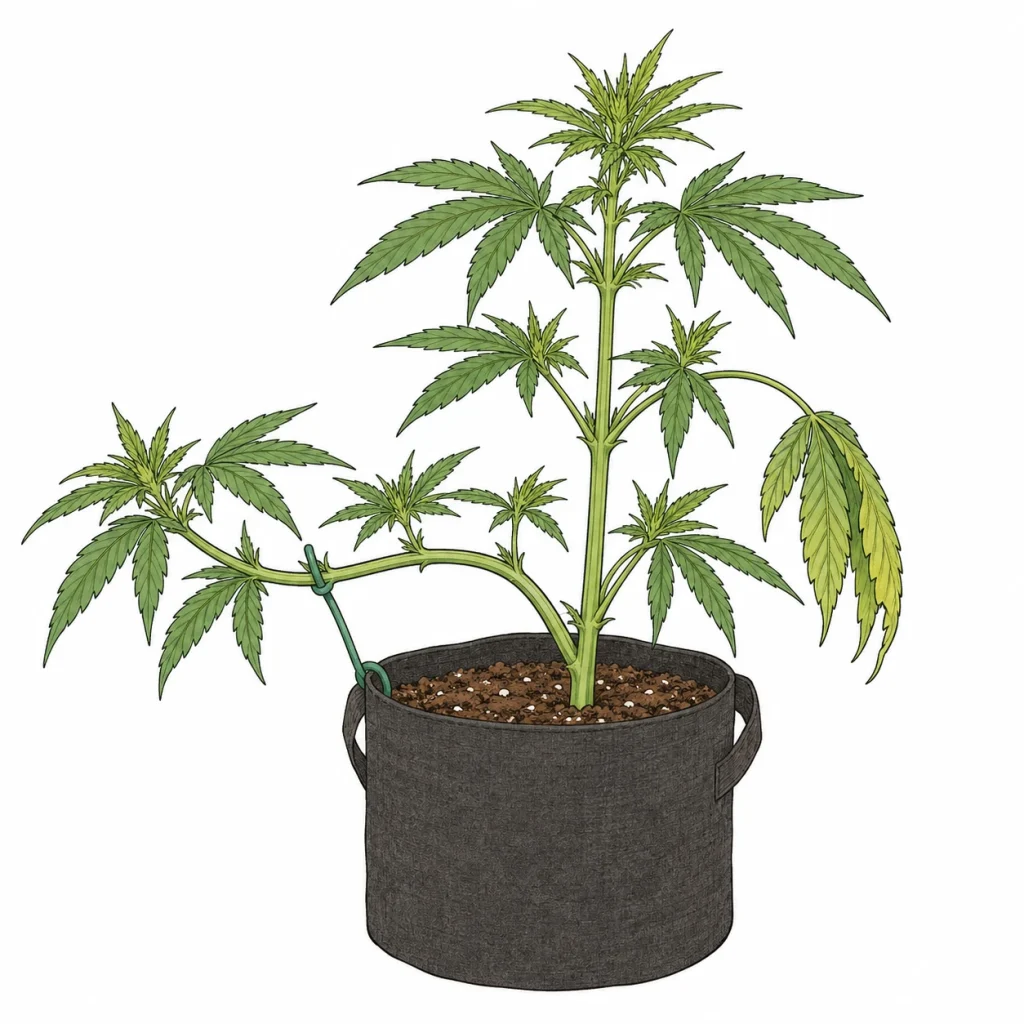
Learning to spot training stress in cannabis is one of the most important skills you can build as a grower. The difference between a healthy response and real damage can decide your yield. Methods like LST (low stress training), topping, FIMing or SCROG (screen of green) actively change how your plant grows, and they always trigger a stress response. What matters is whether that response stays short and under control, or whether your plant slips into a state it can’t fully bounce back from. In this article, you’ll learn how to read the signs of training stress, how to tell them apart from other problems, and what to do about them.
What Is Training Stress in Cannabis and What Causes It?
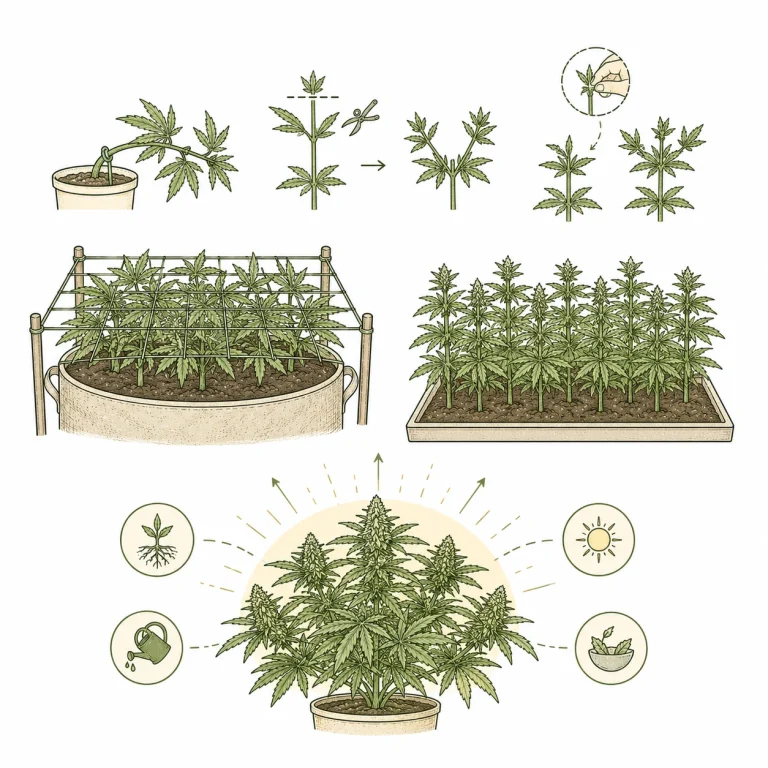
Every physical or structural change you make to a cannabis plant means stress. Your goal with training is to put that stress to work: you want a bushier plant that catches more light and ultimately produces more buds. Techniques like low stress training (LST), topping, FIMing, mainlining or the Sea of Green (SOG) method all have one thing in common – they force the plant to adapt. That adaptation costs energy and time.
Training stress happens when your plant reacts to a change and shifts its resources around. After topping, for example, it briefly pauses its main (apical) growth and sends energy into the side branches. With LST, bending the main stem interrupts the flow of auxin, which also slows growth for a bit. These phases are normal and exactly what you want. Problems only start when too frequent, too early or too aggressive training leaves the plant weakened for the long haul.
Think of cannabis training as a balance between stress and recovery. After every training step, your plant needs a set recovery period. Skip it, and the stress piles up – the plant can’t keep up, and instead of a yield boost you end up with a stressed, stunted plant. That’s what growers call overtraining, or chronic training stress.
- LST (low stress training): bending without cutting – low stress, fast recovery
- Topping: removing the growing tip – moderate stress, several days of recovery
- FIMing: an incomplete topping – similar stress to topping, less precise
- Mainlining: several techniques combined – high cumulative stress
- SCROG: training branches through a net over time – moderate, ongoing stress
- Supercropping: pinching the stem – a local stress hit that heals quickly
How to Spot Cannabis Training Stress: The Key Symptoms at a Glance
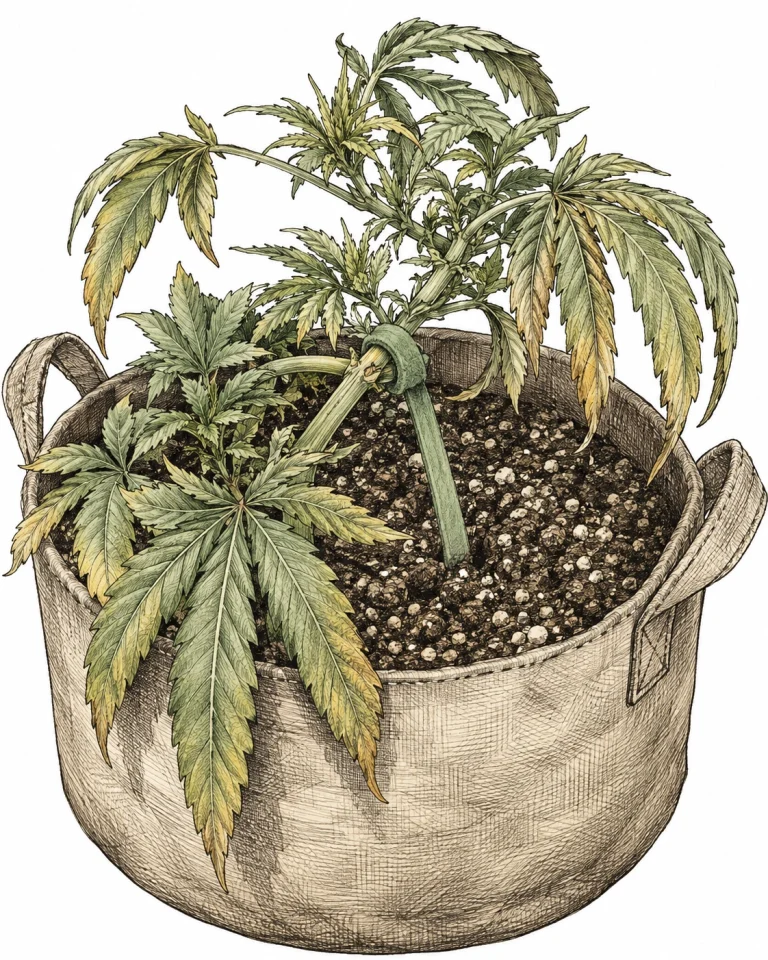
Normal training stress shows up within the first 12 to 48 hours after you train. Your plant reacts in a typical way, and knowing what that looks like keeps you from panicking. Drooping leaves, slightly wilting branches where you worked, and a short growth pause are classic signs of a healthy stress response. The plant is “reorganizing itself” – and that’s completely fine.
It gets critical when symptoms last longer than 72 hours, get worse, or spread to healthy parts of the plant you didn’t touch. In that case, you may be dealing with overtraining, a timing mistake, or a combined problem of training plus another stress factor. Training stress often gets mistaken for a nutrient deficiency, since both can change how the leaves look.
Learn to tell acute from chronic training stress: acute stress stays local, clearly lines up with when you trained, and visibly heals. Chronic training stress from overtraining affects the whole plant – everything grows slowly, leaves look dull, and the stem doesn’t recover between sessions. Our Cannabis Plant Diagnosis hub gives you a full side-by-side overview of all stress factors.
- Drooping or limp leaves right after training (normal for up to 48 hours)
- A short growth pause of 1–3 days after topping or FIMing
- Slight discoloration at the cut (greenish-yellow, heals within a few days)
- Twisted or curled new growth after heavy bending
- Slowed growth for more than a week (a warning sign of overtraining)
- Leaves losing turgor even though the plant isn’t thirsty (a sign of chronic stress)
- No new shoot development for more than 5 days after topping
Spotting Overtraining: When Does Cannabis Training Stress Become a Problem?
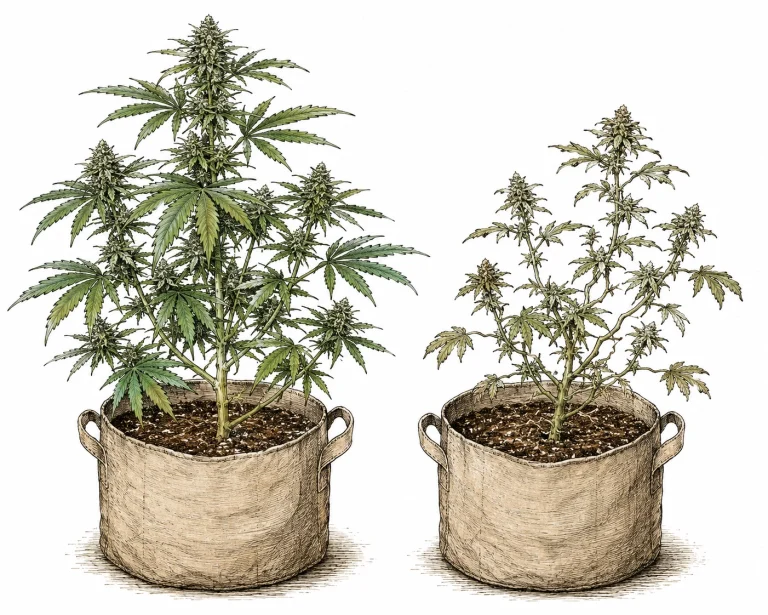
Overtraining is the most common mistake in advanced training. Unfortunately, it’s also one of the hardest to diagnose. Acute training stress hits fast. Chronic stress builds up slowly. You train every 3–4 days, the plant looks “okay”, but it just stops making progress. That’s the classic pattern: your plant is in survival mode instead of growth mode.
A clear sign of overtraining is when no new growth tips appear after several rounds of training. After topping, a plant normally pushes out new lateral branches within 3–5 days. If that doesn’t happen, the plant may be too stressed to invest in growth. Another red flag: leaves that stay dull and slightly droopy, even though you water correctly and your feeding is dialed in. Always check your cannabis pH first here, because the wrong pH can make your plant a lot more vulnerable to stress.
Timing matters, too. Training in the flowering stage is a common mistake that can cause serious stress. The exceptions are targeted defoliation and light SCROG (screen of green) work. Topping or supercropping in flower costs the plant valuable energy it needs to build buds. Rule of thumb: no aggressive training after you flip to a 12/12 light cycle, unless you know exactly what you’re doing.
- No new growth within 5 days after topping = overtraining warning sign
- The plant hasn’t grown noticeably for more than a week despite good conditions
- Several training sessions in a short time with no recovery in between
- Leaves stay dull, even though watering and nutrients are on point
- Training during the flowering stage without proper preparation
How to Tell Cannabis Training Stress Apart from Other Problems
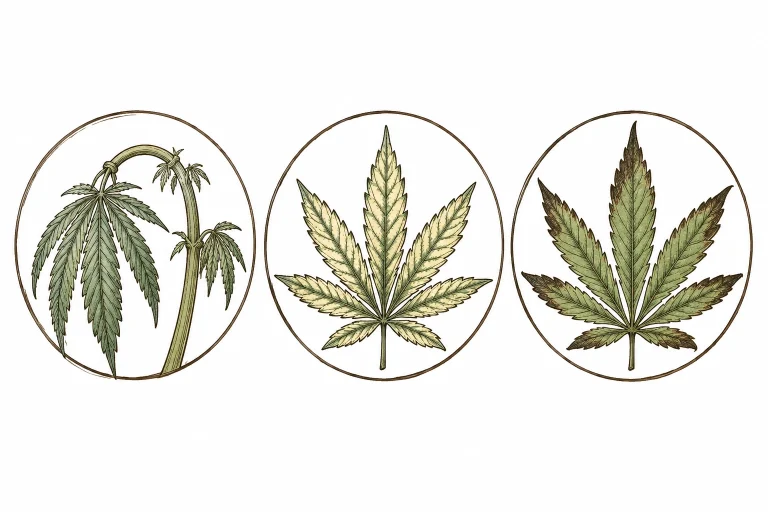
The biggest challenge in spotting training stress is ruling out other problems. Droopy leaves can point to overwatering, underwatering, a nutrient deficiency or training stress. The key to the right diagnosis is timing: did the symptoms show up within 24–48 hours after you trained the plant? Then training stress is the most likely cause.
If you see yellow spots or discoloration that isn’t directly linked to training, you’re usually dealing with a different problem. Yellow cannabis leaves can point to a nutrient deficiency, pH problems or overfeeding. Training stress alone rarely causes true yellowing. It’s more likely to cause temporary drooping without any color change. Also check whether the symptoms are local (close to where you trained) or global (spread across the whole plant). Local symptoms strongly suggest mechanical stress.
Training stress can also be confused with heat stress or light burn, which can cause drooping or curling leaves as well. In that case, check whether the symptoms show up on the leaves closest to the light. Watering problems can look similar, too. Make sure you’re watering your cannabis correctly before you blame training alone. A good diagnosis always looks at several factors at once.
- Training stress: symptoms within 24–48 h after training, limited to one area
- Overwatering: drooping without any prior training, growing medium stays wet
- Nutrient deficiency: widespread discoloration, not linked to when you trained
- Heat stress: symptoms on the leaves closest to the light
- pH problem: several deficiency signs at once, despite proper feeding
How to Spot Cannabis Training Stress and Help Your Plant Recover
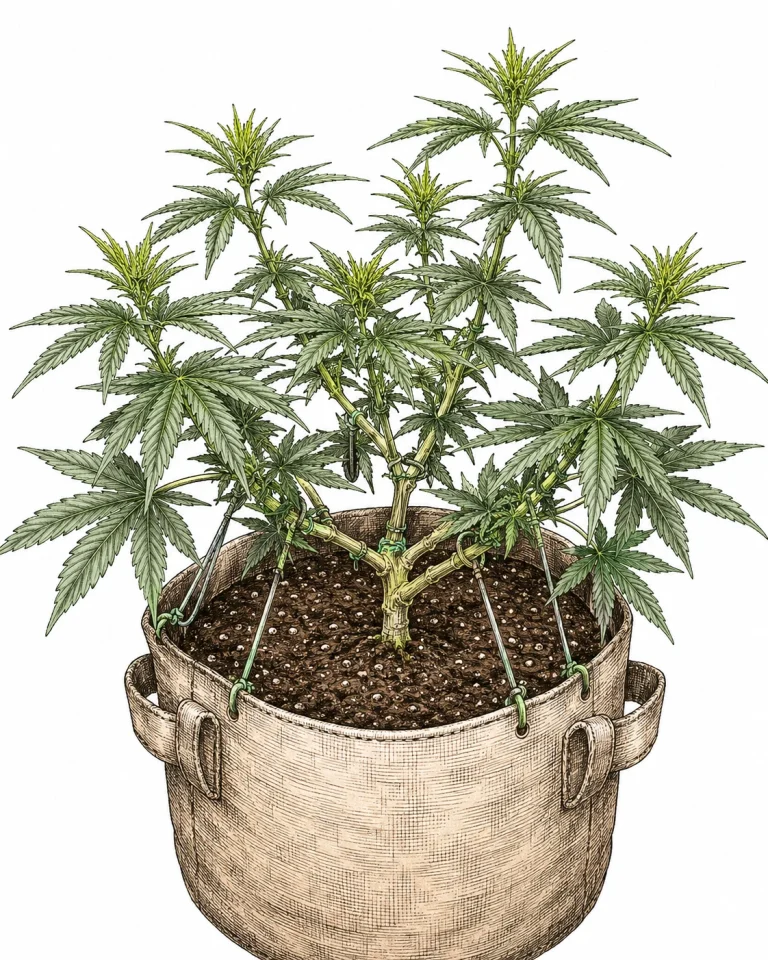
Once you’ve spotted training stress, the most important thing is to stay calm and give your plant time. The most common beginner reaction is to make more changes right after training, and that can make the stress a lot worse. After every major training session, take a break of at least 5–7 days before you plan your next step. Use that time to watch closely how your plant responds.
While your plant recovers, dial in the environment. Slightly higher humidity (50–60 % in the vegetative stage) cuts down on transpiration stress and helps the healing process. Keep the temperature stable and not too high, because heat stress can slow recovery a lot. Ease back on nutrients for a while. A stressed plant takes up nutrients less efficiently, and nutrient burn on top of existing stress can do serious damage.
For the long game, plan your training steps ahead and put them on a schedule. Start with the most aggressive techniques early in veg, when your plant bounces back best. The closer you get to flowering, the gentler your moves should be. A structured training plan helps you avoid overtraining and get the most out of your harvest.
- Wait at least 5–7 days between major training sessions
- Raise humidity to 50–60 % to support recovery
- Ease back slightly on nutrients during recovery
- Keep temperatures stable and below 82 °F (28 °C)
- Hold off on further training until you see clear new growth
- Save aggressive training for the vegetative stage only
Timing and Stages: When Each Training Method Is Safe
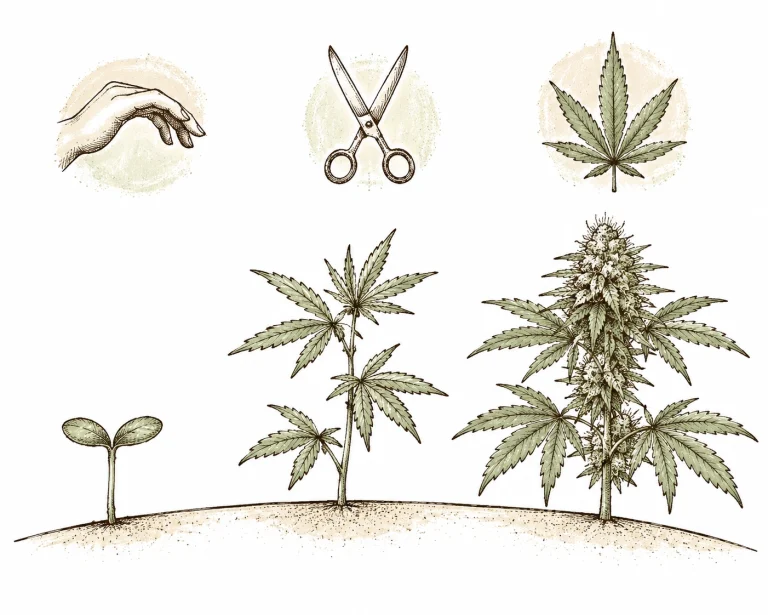
When you train matters just as much as how you train. A plant that’s still a seedling with fewer than 3–4 nodes should never be topped. It simply doesn’t have enough mass to recover. Wait to top until your plant has at least 5–6 internodes and is growing vigorously.
LST is the lowest-stress method, and you can start as early as the 3rd–4th node. Since no tissue gets damaged, the stress response stays minimal. Bend slowly and in small steps. Bending too hard in one go can snap the stem or crush it on the inside. Supercropping, on the other hand, works well but is best left to experienced growers in late veg. You’ll find an overview of all methods in our Grow Techniques Hub, and the big picture in our indoor growing guide.
The basic rule in the flowering stage: hands off invasive methods. Light scrogging (tucking shoots through the net), selective defoliation (removing single leaves to get light to the lower buds) and carefully adjusting LST ties are still fine. Topping, FIMing or supercropping in flower can cost your plant up to two weeks of recovery, and that’s time it no longer has for building buds.
After cutting and bending, plants need a recovery period in which growth and nutrient uptake slow down for a bit. The pruning basics from the Royal Horticultural Society back this up, and the principle applies to cannabis just like any other crop.
- Seedlings (up to 4 nodes): No invasive training, gentle LST only
- Early veg (5–7 nodes): Ideal for topping, FIMing and LST
- Mid veg (8+ nodes): Mainlining, supercropping, setting up your SCROG (screen of green)
- Late veg (pre-flower): Only LST and SCROG adjustments, no topping
- Flowering stage: Defoliation and gentle scrogging only
- Autoflowering strains: LST only, no invasive training because of their fixed life cycle
Autoflowering Strains: What to Know About Spotting Training Stress
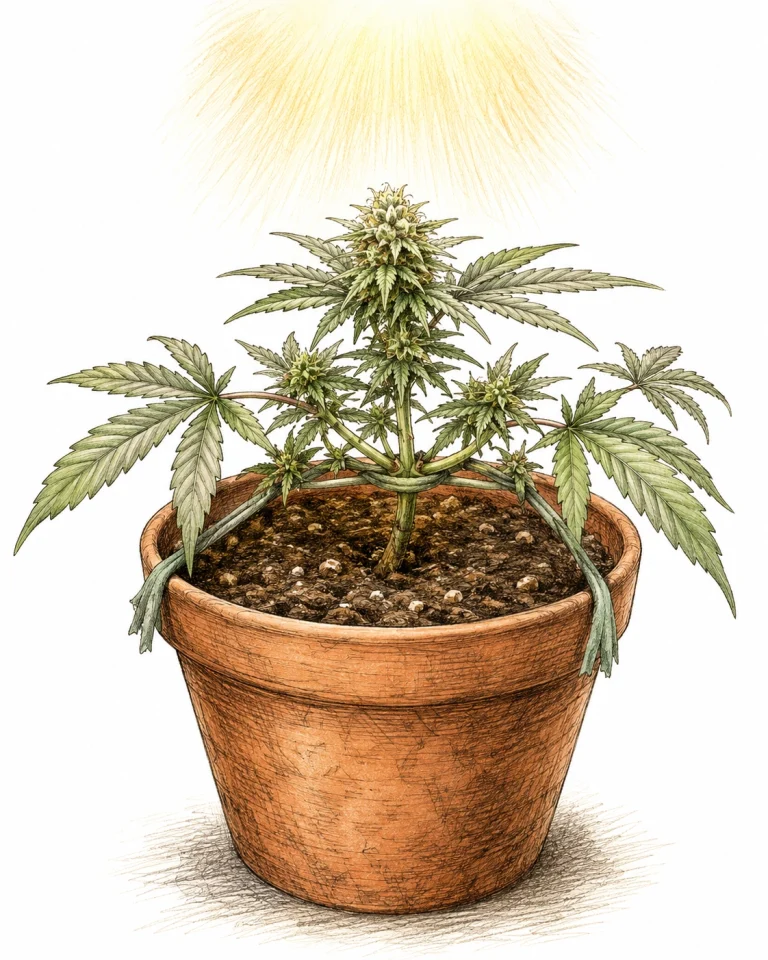
Autoflowering strains react to training stress in a fundamentally different way than photoperiod plants. Autos have a genetically fixed life cycle of usually 70–90 days and flower regardless of the light cycle, so they often can’t recover in time from heavy training. What heals in a week on a photoperiod plant can cost an autoflower a fifth of its entire growing time.
So for autos, the advice is clear: low stress training only, no topping, no supercropping. You can gently start LST as early as the 3rd node and keep adjusting it without causing damage that needs a long recovery. Since you can’t extend veg to make up for lost time, every day of recovery comes straight out of your final harvest.
Training stress in autos shows the same symptoms as in photoperiod strains, but you should react faster and more conservatively. If an autoflower still shows clear signs of stress more than 48 hours after an LST session, let it recover fully before you take the next step. When in doubt, less is more: a lightly trained autoflowering plant that hasn’t been overtrained will usually out-yield a heavily trained, stressed plant by a wide margin.
- Autos: LST only, never topping or supercropping
- Every day of recovery costs autos measurable yield
- Start LST on autos gently from the 3rd node
- Stress symptoms lasting over 48 hours: wait for full recovery
- With autos, fewer interventions often mean bigger yields
Frequently Asked Questions
How long does it take a plant to recover from topping?
After a clean topping cut, a healthy, well-fed cannabis plant usually needs 3–7 days before it visibly pushes new side shoots. Under ideal conditions (stable temperature, correct pH, balanced feeding), recovery can drop to 3–4 days. If recovery takes longer than 7 days, there may be another stress factor in play.
Can my plant have training stress and a nutrient deficiency at the same time?
Yes, and it happens a lot. Training stress weakens the plant for a while and makes it more vulnerable to other problems. A deficiency the plant was compensating for before can suddenly show up after training. In that case, check the pH of your growing medium. The wrong pH blocks nutrient uptake and can make stress symptoms much worse.
Should I keep feeding during the stress phase?
Yes, but go lighter. A stressed plant doesn’t take up nutrients as well. For the first 3–5 days after training, give no more than 50–70 % of your normal nutrient dose. Keep a close eye on pH so the reduced nutrients are actually available. Once the plant is growing actively again, you can work your way back up to the full dose.
How can I tell my plant has recovered from training?
The most reliable signs of full recovery: fresh green growth tips are clearly growing, leaves perk back up and look firm (turgor), the stem stands solid, and overall growth speed is back to normal. Only when you see all of these signs should you move on to the next training step.
Is training completely off-limits in the flowering stage?
Not completely, but it’s very limited. Gentle SCROGging (tucking shoots into the trellis netting), selective defoliation and LST adjustments are still fine during the first 2 weeks of flowering. Avoid invasive methods like topping, FIMming or supercropping during flowering. The plant needs its energy to build buds, and any recovery time can cut directly into your yield.
Why has my plant stopped growing after topping?
If your plant stalls for more than 7 days after topping, you’re either looking at overtraining or another stress factor that’s blocking recovery. Common causes: topping too early (before 5 nodes), an existing nutrient deficiency, the wrong pH, or poor growing conditions like heat or humidity that’s too low. Check every factor one by one. Then give your plant at least a full week to recover without any more training.
Funny enough, the most common triggers for training stress are the training techniques themselves. Learn more in our guides to topping and LST.
The Bottom Line
Spotting cannabis training stress isn’t rocket science. It does take a close eye and an understanding of how your plant normally reacts. Short-term, local stress right after training is intended and harmless. Chronic stress from overtraining, on the other hand, can cost you yield and quality. Stick to your recovery breaks, match your methods to the growth stage, and check on your plants every day. With this know-how, training can become your strongest lever for bigger yields instead of your biggest source of mistakes.
