


Flushing cannabis before harvest is a fixed ritual of the final grow week for a lot of growers. You water the plant with nothing but plain, pH-adjusted water to wash excess nutrient salts out of the growing medium. But do you really need it, or is it a myth that just won’t die? In this article, you’ll learn when flushing makes sense, how long it should last and which mistakes to avoid.
What Does Flushing Cannabis Actually Mean?
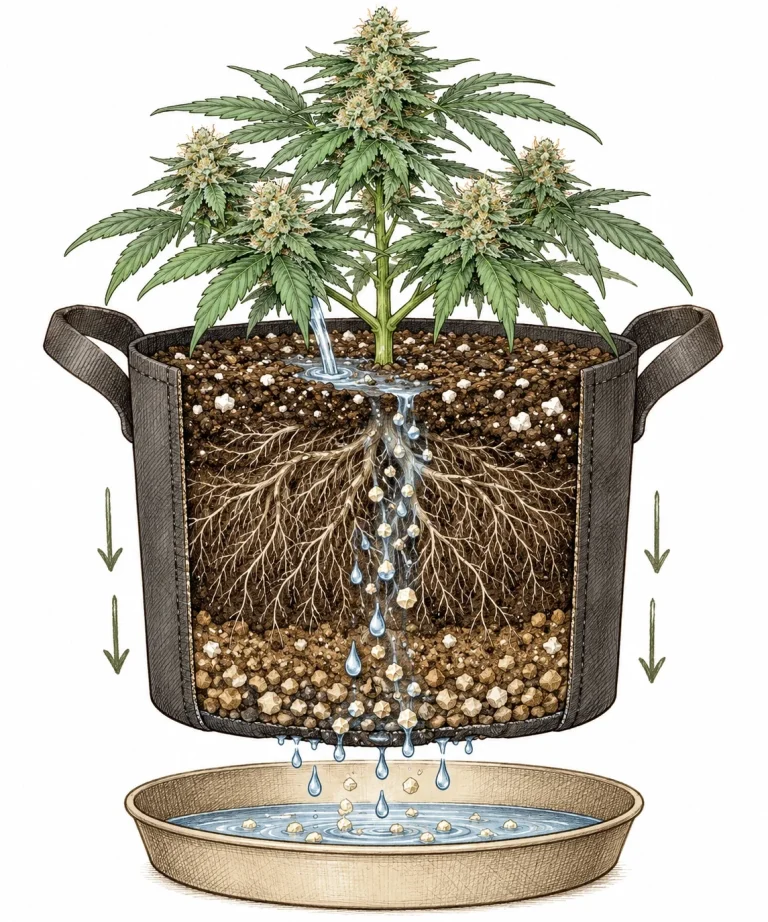
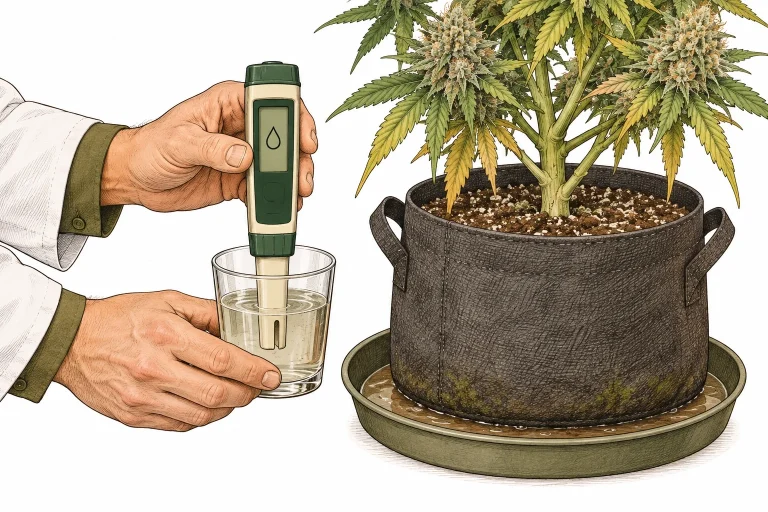
When you flush cannabis, you stop feeding completely for the last one to two weeks before harvest. Instead, you water the plant with nothing but plain, pH-adjusted water. The goal: the plant uses up and breaks down the nutrient salts left in its leaves, stems and growing medium before you harvest.
The theory behind it is simple. The fewer mineral salts remain in the plant, the cleaner and smoother the smoke or vapor should taste later. According to this theory, leftover nitrogen, phosphorus or potassium can show up in the taste when you burn it. Growers often use this argument especially with synthetic mineral nutrients.
What matters here is the growing medium. In soil with organic nutrients and a living soil food web, nutrients break down differently than in coco coir or hydroponics, where nutrient salts are available directly and fast. Want to know more about feeding your plants right through the whole flowering stage? Our Cannabis NPK Chart gives you a solid overview of nutrient needs for each growth stage.
- Flushing means: stop feeding, give plain water only
- The goal is to break down excess nutrient salts before harvest
- The effect depends on your growing medium and type of nutrients
- Most relevant with mineral (synthetic) nutrients
Do You Really Need to Flush Cannabis?
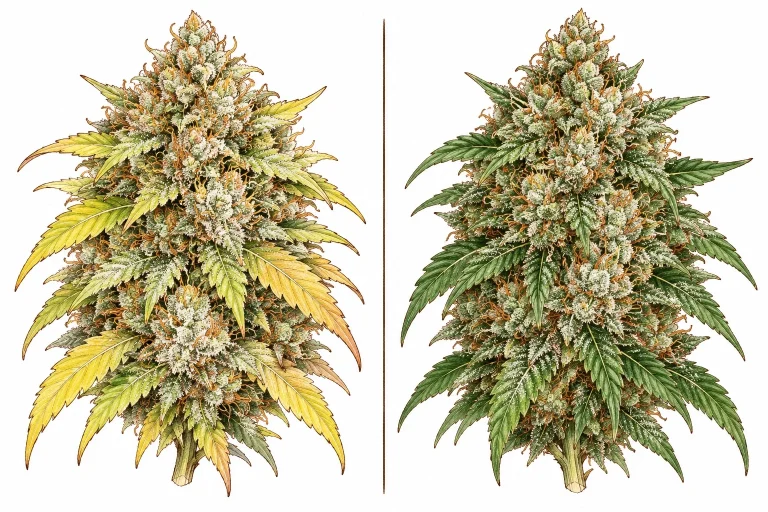
Science hasn’t fully settled this one. Several independent studies and plenty of reports from the grower community suggest that flushing has less impact on taste and effect than many people think. Plant cells don’t store nutrients like a sponge you can simply rinse out. Many minerals are locked firmly into the plant’s structure.
Still, many experienced growers report a noticeable difference, especially with heavily fed plants or salt-heavy mineral nutrients. If you feed too aggressively or for too long, it can actually show in the final product, for example as a chemical or harsh aftertaste when you burn it.
In a fully organic grow with compost, worm castings or compost tea, the effect of flushing is often barely measurable. Organic nutrients first have to be converted by microorganisms, so fewer free salts sit in the growing medium. If you grow organic, take a deeper look at Organic Cannabis Growing to dial in your plant’s feeding right from the start.
Bottom line: Flushing usually won’t hurt as long as you don’t overdo it. But skipping it doesn’t automatically mean lower quality either, as long as you fed at the right strength during flowering.
- Scientific evidence for a strong effect on taste is limited
- The effect tends to be more noticeable with synthetic nutrients than with organic ones
- Overfed plants benefit the most from flushing
- Feeding at the right strength during flowering matters more than the flush itself
When should you start flushing?
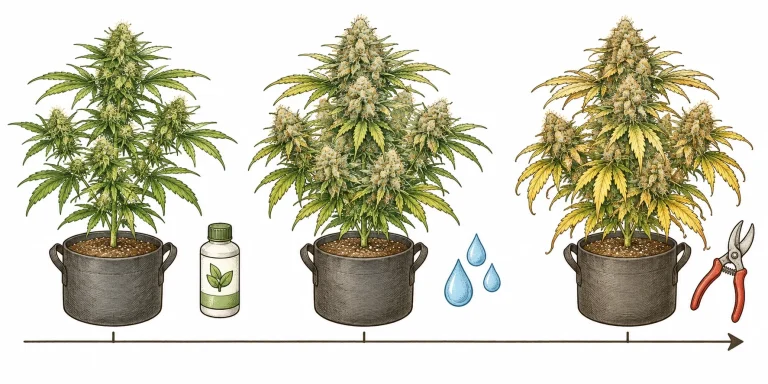
The right timing depends a lot on your growing medium. In soil, a flush of 7 to 14 days before harvest is usually enough. Soil holds on to nutrients longer, so your plant keeps drawing on those leftovers for a while after you stop feeding.
In coco or hydro setups, nutrient uptake happens much faster because there’s hardly any buffer. In coco, 5 to 10 days of flushing is usually plenty, and in hydro systems 3 to 7 days is often enough. Flush longer in these media and you can quickly run into a real nutrient deficiency, which can hurt both your yield and trichome quality.
A good signal for when to start is the condition of your trichomes and leaves. Flushing only makes sense once most of the buds are well developed and the trichomes are turning from clear to milky. Flushing too early can slow down bud growth for no reason. Check out our detailed guide to learn how to nail your harvest window by reading the trichomes.
Rule of thumb: The less flowering time you have left, the more careful you should be with your flush timing so you don’t trigger an early deficiency.
- Soil: flush 7 to 14 days before harvest
- Coco: 5 to 10 days is usually enough
- Hydroponics: 3 to 7 days, since there’s hardly any nutrient buffer
- Use trichome color as your cue to start flushing
How to flush cannabis the right way
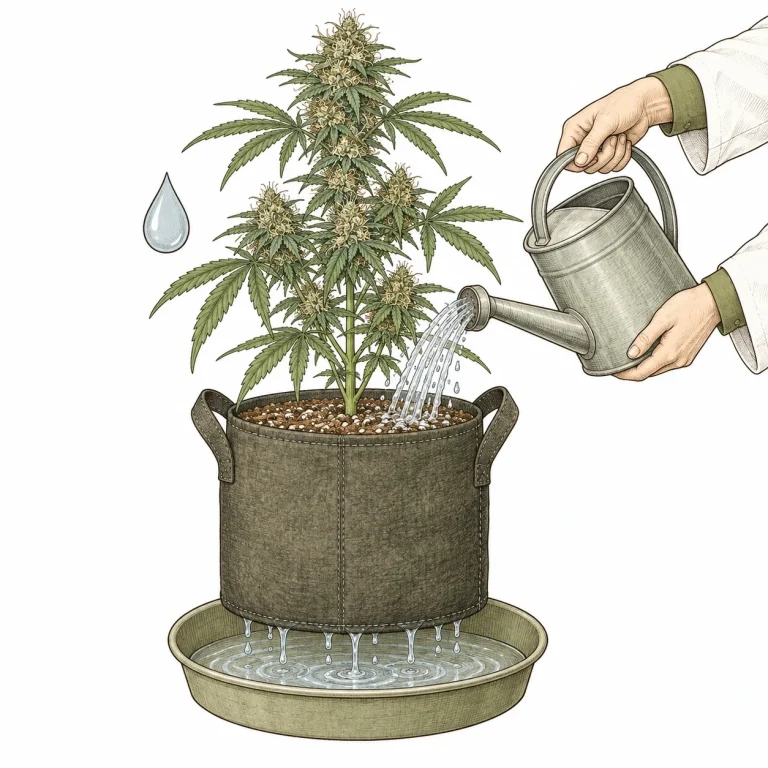
Flushing is simple from a technical standpoint, but you need to pay attention to pH and the amount of water. Only use clean water, ideally low in hardness, with a pH between 6.0 and 6.5 for soil, or 5.5 to 6.0 for coco and hydro systems. Our pH Calculator can help you dial in your water.
Give the plant two to three times the pot’s volume in water so excess salts actually get washed out of the medium and drain from the bottom of the pot. A single light watering isn’t enough to effectively remove nutrient salts. Why you can read the salt level in your medium from the EC (electrical conductivity) is explained in the EC info sheet from the German Chamber of Agriculture (in German).
Keep a close eye on the leaves during the flush. Some light yellowing of the lower, older leaves is normal and shows the plant is using up its internal nutrient reserves. But if the upper leaves and buds also fade quickly or drop early, you may have flushed too early or too aggressively.
Ideally, use a pH and EC meter to check both the pH of your water and the EC of your runoff. A dropping EC in the runoff is a reliable sign that the flush is working. You can put your readings into context with our EC Calculator.
- Use water with the right pH for your growing medium
- Water with 2 to 3 times the pot volume
- Check the EC (electrical conductivity) of your runoff regularly
- Slight yellowing of the lower leaves is normal, heavy wilting is not
Avoid Common Flushing Mistakes
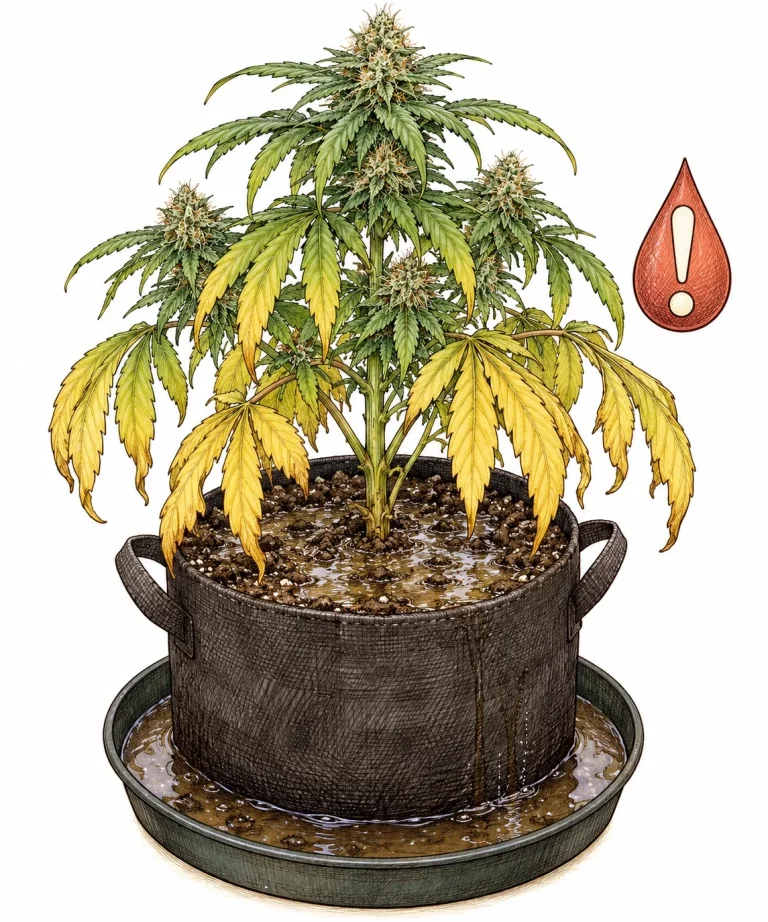
The most common mistake is flushing too early or for too long. If you stop feeding too soon, your plant can run short on nutrients for the final bud development. That can cost you density and weight. Flushing for more than two weeks can lead to a real deficiency in low-buffer media like coco coir.
Another mistake is using untreated tap water with a pH that is way off or a high mineral (hard water) content. This can add extra stress during the flush, which may show up as yellow leaf tips even though you only meant to flush.
Too little water per session is also a problem. If you only water the surface, the nutrient salts in the medium don’t really get mobilized and washed out. They just get diluted. That cuts down the effect a lot and drags out your flush for no reason.
Finally, be extra careful with autoflowers. They often have a shorter, less flexible flowering stage. A flush that runs too long can eat into the already tight window your buds have to ripen.
- Don’t start flushing too early
- Don’t stretch your flush past 14 days
- Always use enough pH-adjusted water
- Keep the flush shorter and gentler with autoflowers
Flushing and Curing: Two Separate Processes
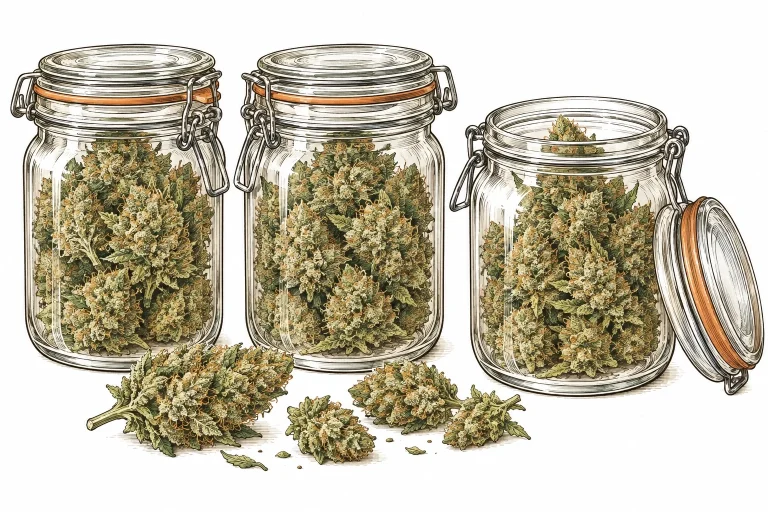
A common misconception is that flushing and curing do the same job or can stand in for each other. They can’t. Flushing happens before harvest and affects the living plant. Curing is the step after drying, where your harvested buds mature slowly in jars.
In fact, a careful cure often has a bigger impact on the final flavor than the flush itself. During curing, enzymes break down leftover chlorophyll and sugars. The result is a noticeably smoother, more aromatic end product. So if you’re chasing better flavor, give both steps your attention.
For a detailed walkthrough of what to do after harvest, check out our cannabis curing guide. It shows you step by step how to get the most out of your harvest.
The rule of thumb: flushing can help soften obvious feeding mistakes, but it never replaces careful drying and curing. Get both right, and you’ll see the best results in aroma and effect. You’ll find every step that comes after flushing in our Harvest & Drying section.
- Flushing affects the living plant before harvest
- Curing happens in jars after drying
- Curing often shapes the aroma more than flushing does
- The two processes complement each other, but neither replaces the other
Frequently Asked Questions
How long should you flush cannabis before harvest?
In soil, 7 to 14 days is usually enough. In coco, 5 to 10 days. In hydroponics systems, 3 to 7 days. The exact timing depends on how much your medium buffers nutrients and how heavily you fed before.
Does flushing really improve the taste of cannabis?
The effect tends to be more noticeable in plants fed heavily with mineral (synthetic) nutrients than in organically grown ones. The science on the benefits is still debated, but many experienced growers report that their buds taste better after flushing.
Can flushing too long hurt your plants?
Yes. Especially in coco coir or hydroponics, flushing for too long can cause a real nutrient deficiency. That can cut into your yield and trichome density. Going beyond 14 days usually doesn’t make sense.
Do you need to flush when growing organic?
In organic grows with compost or worm castings, flushing usually has less of an effect, because microorganisms first have to break down the nutrients before your plant can use them. That’s why many organic growers skip flushing altogether.
How can I tell the flush is working?
A dropping EC (or ppm) reading in your runoff, plus a slight, even yellowing of the lower, older leaves, shows that your plant is using up its nutrient reserves.
The Bottom Line
Flushing cannabis before harvest can help clear out excess nutrient salts and may reduce harsh, chemical off-flavors, but it isn’t a must for every grow. What matters most is the right duration for your growing medium, a dialed-in pH and enough water volume. If you feed correctly from the start, you’ll get less out of flushing anyway, but never cut corners on drying and curing. Get the combo of flushing, drying and curing right, and you’ll bring out the best aroma and top quality in your harvest.
