

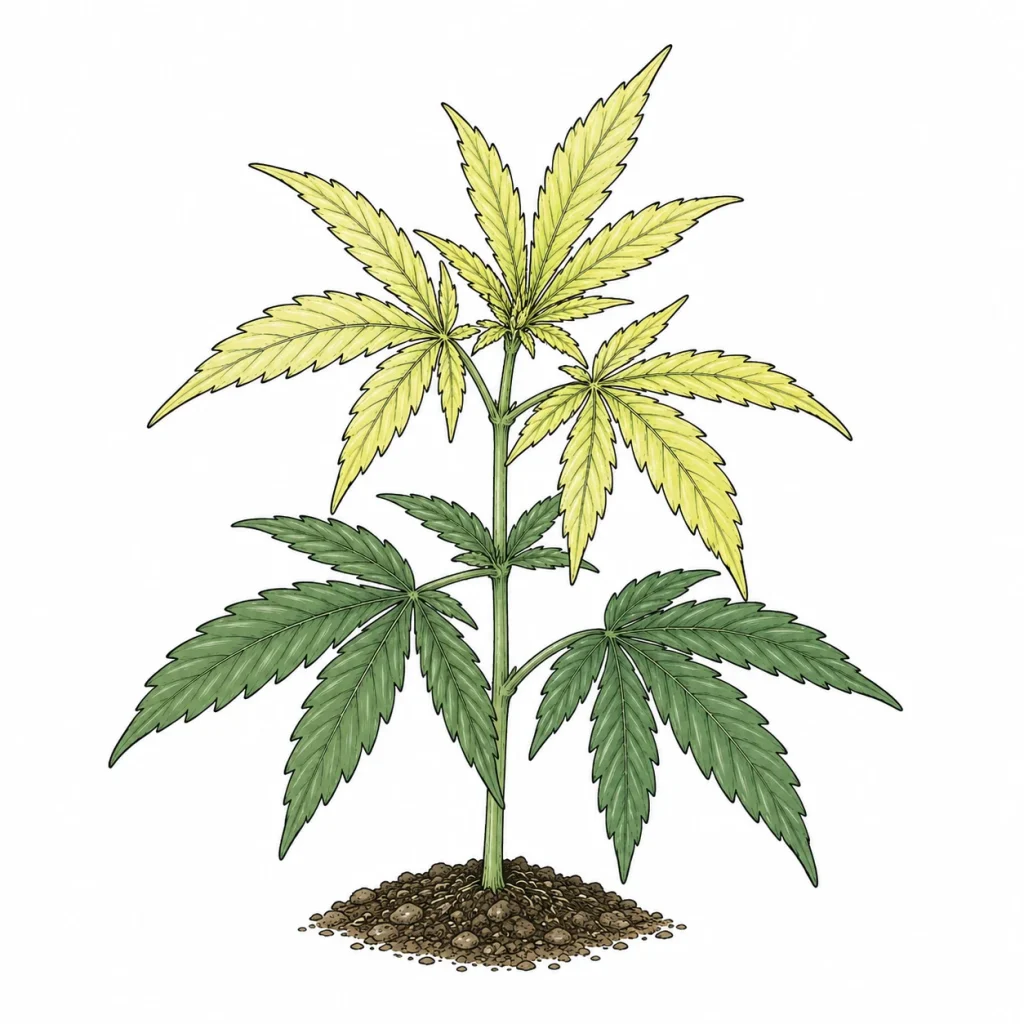
Spotting a sulfur deficiency in cannabis is a real challenge for many growers, because at first glance the symptoms look a lot like a nitrogen or iron deficiency. Sulfur is an important secondary nutrient that your plant needs to build amino acids, proteins and terpenes. When it runs short, your plant’s whole development can suffer, from the vegetative stage all the way into flowering. In this article, you’ll learn how to identify a sulfur deficiency with confidence, what causes it and how to fix it fast.
Why Sulfur Matters So Much for Your Cannabis Plant
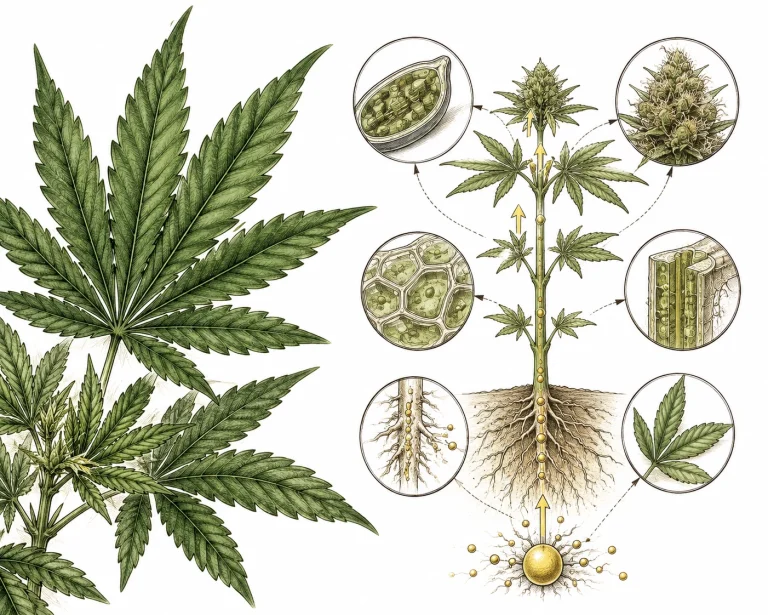
Sulfur is one of the so-called secondary nutrients, and cannabis needs it in fairly large amounts, more than many trace elements. It’s directly involved in making the sulfur-containing amino acids cysteine and methionine, which serve as building blocks for proteins and enzymes. Without enough sulfur, your plant can’t build complete proteins, and that slows down cell growth across the board.
Sulfur also plays a key role in building chlorophyll and in activating important enzymes in the plant’s photosynthesis machinery. If you’re chasing high terpene levels and heavy resin production, a steady sulfur supply matters even more: many aromatic compounds in cannabis buds contain sulfur or are made through sulfur-dependent pathways. So a deficiency doesn’t just show on the leaves. It can also hurt the quality of your harvest.
- Building block of sulfur-containing amino acids (cysteine, methionine)
- Essential for making proteins and enzymes
- Involved in chlorophyll formation and photosynthesis
- Supports terpene and resin production during flowering
- Activates enzymes in the plant’s energy metabolism
How to Spot Sulfur Deficiency in Cannabis: The Key Symptoms
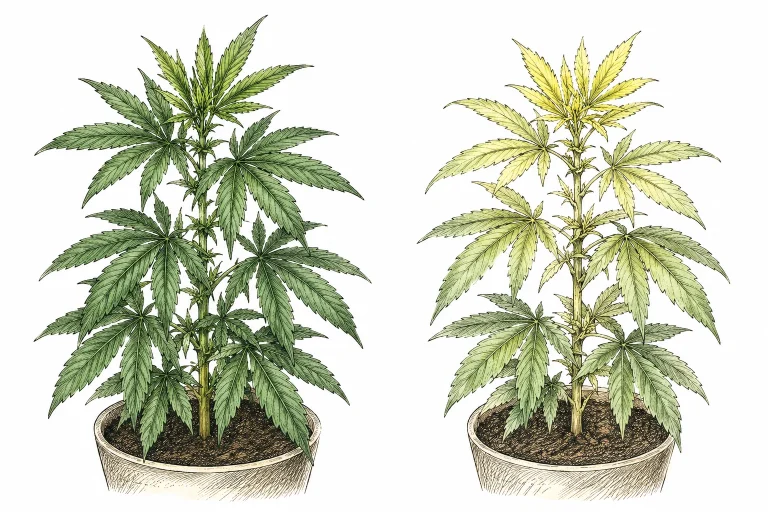
The most obvious sign of a sulfur deficiency is yellowing of the young, new leaves, meaning the leaves at the top shoot tips and growing points. That’s the key difference from a nitrogen deficiency, which always hits the older, lower leaves first. With sulfur deficiency, the old leaves usually stay green at first, while the new leaves turn pale, yellowish-green or almost white. When yellow areas also form between the leaf veins while the veins themselves stay slightly greenish, this pattern is called “interveinal.”
As it progresses, the affected leaves can turn orange-yellow to reddish, and growth slows down noticeably. New shoots stay small and look weak. In severe cases, the chlorosis spreads to older leaves as well. Stems and leaf veins can turn reddish or purple, similar to a phosphorus deficiency. Bud sites develop more slowly, and the whole plant can look stunted. Important: don’t confuse sulfur deficiency with iron deficiency. With iron deficiency, the veins stay clearly green; with sulfur deficiency, the discoloration tends to be more even.
- Yellowing starts on new, young leaves (at the top)
- Older leaves stay green at first – a typical telltale sign
- Pale yellow to whitish color at the shoot tips
- Veins may stay a little greener early on (interveinal chlorosis)
- Reddish or purple stems and leaf veins
- Slower growth and weak shoot development
- In advanced stages, older leaves are affected too
Spotting Sulfur Deficiency in Cannabis: Easy to Mix Up With Other Deficiencies
For a complete overview of all deficiency symptoms, check out the cannabis deficiency overview.
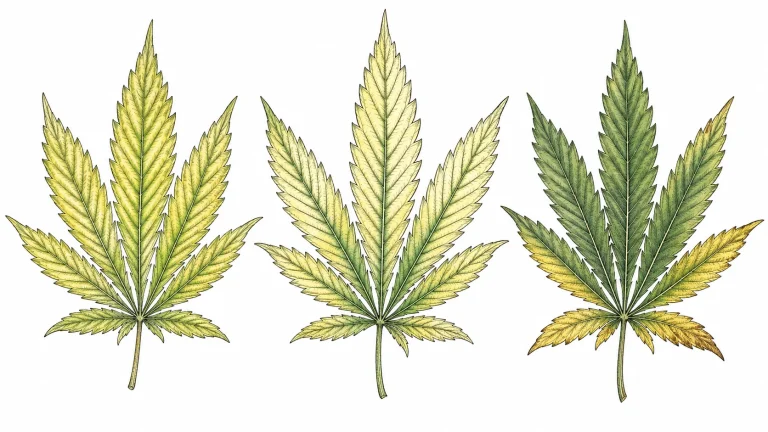
Sulfur deficiency is most easily mixed up with iron deficiency and nitrogen deficiency. The key difference is where the symptoms show up: nitrogen deficiency always starts on the lower, older leaves and works its way up, because nitrogen is a mobile nutrient and the plant moves it from old leaves to new ones. Sulfur, on the other hand, is only partly mobile. The plant can barely relocate it, so the young leaves suffer first.
Iron deficiency also causes chlorosis on young leaves, but the leaf veins stay a distinct dark green while the tissue between them turns yellow to almost white. With sulfur deficiency, this vein pattern is much less obvious and the yellowing looks more even. If you’re not sure, always check your pH first. Many apparent deficiencies are really pH-related nutrient lockout. The plant diagnosis overview on PlantClue walks you through narrowing down your symptoms step by step.
- Nitrogen deficiency: starts on old, lower leaves. Sulfur deficiency starts on new, upper growth
- Iron deficiency: veins stay clearly green. With sulfur, the chlorosis is more even
- Magnesium deficiency: interveinal chlorosis that starts on older leaves
- Zinc deficiency: small, crinkled leaves and badly stunted growth
- A pH check is always your first step before any diagnosis
What Causes Sulfur Deficiency in Cannabis
Learn more about soil fertility from the Julius Kühn-Institut (German).
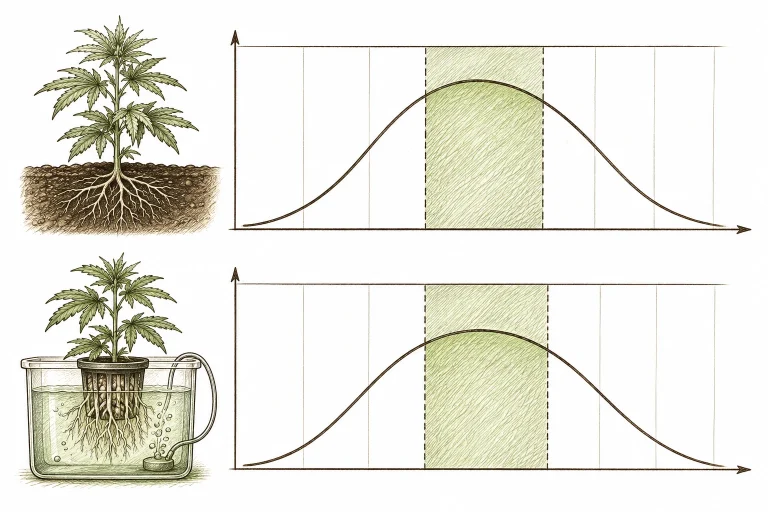
The most common cause of sulfur deficiency in cannabis isn’t an actual shortage in the growing medium. It’s pH-related nutrient lockout. In soil, cannabis absorbs sulfur best at a pH of 6.0 to 7.0. In hydroponics systems, the sweet spot is a bit lower at 5.5 to 6.5. If your pH is too high or too low, your plant simply can’t take up the sulfate, even when there’s plenty of it in the medium. That’s why adjusting the pH for cannabis is often the only fix you need.
A real sulfur shortage in the medium can happen if you only use nutrients that are very low in sulfur, haven’t added a base fertilizer in a long time, or grow in a heavily leached medium like plain coco coir with no amendments. Watering too often or too heavily can also wash sulfur out of the medium. Sulfate is water-soluble and gets flushed into the runoff fairly quickly. So take a look at your watering habits and make sure you’re not pouring on too much at once. High root-zone temperatures and poor aeration can also hurt nutrient uptake and set you up for a secondary sulfur deficiency.
- pH too high or too low: the most common cause, because sulfate gets locked out
- Low-sulfur nutrients with no sulfate sources
- Leaching from watering too often or too heavily
- Depleted medium after a long vegetative stage without feeding
- Poor root aeration and high root-zone temperatures
- Coco coir without added nutrients is especially prone to it
- Interactions with too much nitrogen or chloride in the medium
How to Fix Sulfur Deficiency in Cannabis: Step-by-Step Guide
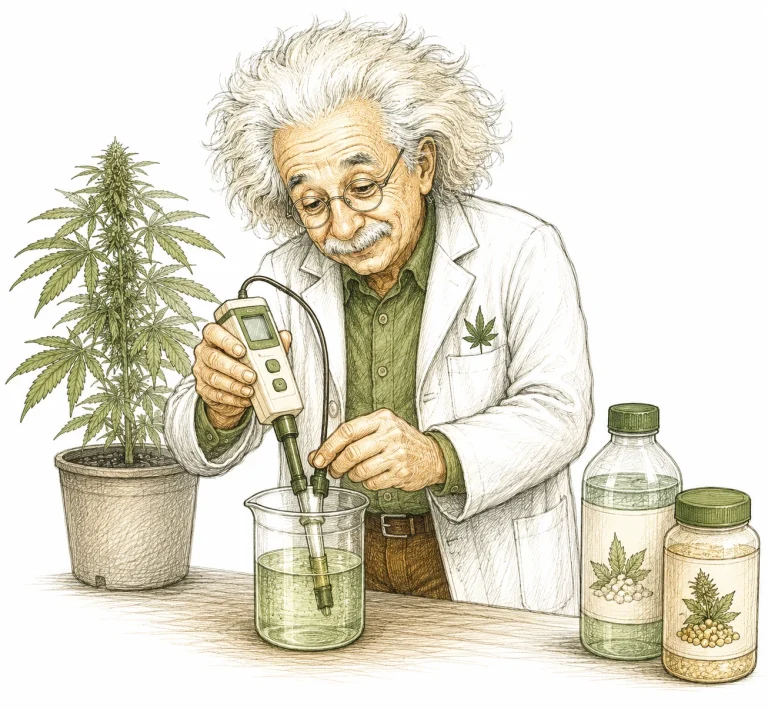
Step 1 is always a pH check. Measure the pH of your water and your medium. In soil, aim for 6.0 to 7.0. In hydro, aim for 5.5 to 6.5. If you’re outside that range, correct it first, before you add any nutrients. Often this step alone stops the symptoms within a few days. Step 2: Once your pH is dialed in, add a sulfur source to your feeding. The easiest and cheapest option is Epsom salt (magnesium sulfate, MgSO₄). Dissolve about 4 to 8 g per gallon (1 to 2 g per liter) of water and use it to water your plant. Epsom salt delivers sulfur and magnesium at the same time. That double benefit works well for many indoor plants.
Step 3: For more targeted support, you can use calcium sulfate fertilizers (gypsum, CaSO₄) or potassium sulfate-based nutrients. Many quality cannabis nutrients already contain sulfates, so check the label on the products you’re using now. Step 4: Cut back your watering amount for a while to prevent further leaching. Step 5: Watch your plant over the next 5 to 10 days. New leaves should come in healthy and green. The leaves that are already yellow and damaged usually won’t fully recover, but the deficiency should stop spreading. If you also notice signs of overfeeding, check out our article on cannabis nutrient burn and how to fix it.
- Step 1: Measure pH and correct it if needed (6.0–7.0 soil, 5.5–6.5 hydro)
- Step 2: Epsom salt (MgSO₄), about 4–8 g/gal (1–2 g/L), as a fast sulfur source
- Step 3: Potassium sulfate or calcium sulfate for more targeted support
- Step 4: Reduce your watering amount to stop leaching
- Step 5: Watch how new leaves develop for 5 to 10 days
- Old yellow leaves won’t recover, so focus on healthy new growth
- Check your nutrients for sulfate content and switch if needed
Spotting Sulfur Deficiency in Cannabis in Hydro and Coco
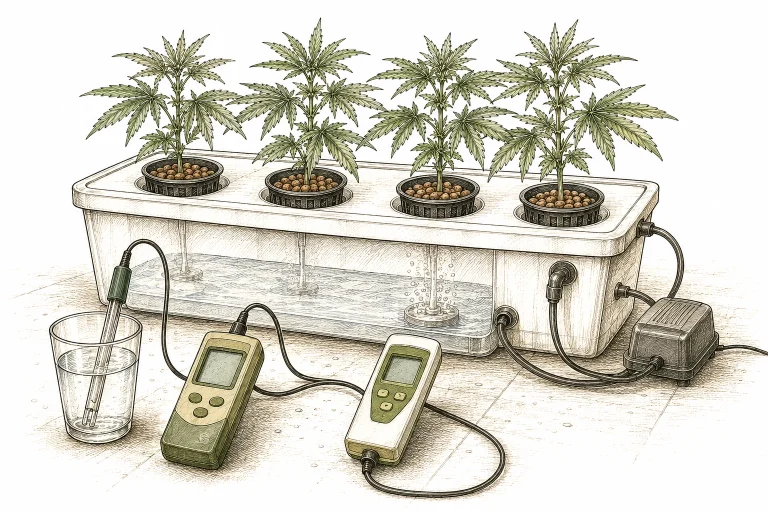
Sulfur deficiency shows up more often in hydroponics and coco than in regular soil. The medium itself has almost no nutrient buffer, so your plant depends completely on the nutrient solution you give it. That makes regular EC and pH checks especially important here. An EC reading that’s too low often points to an underfed solution overall, not just a sulfur problem. Make sure your base nutrients contain sulfates, and add Epsom salt or a dedicated micronutrient supplement if needed.
In coco coir, the calcium-magnesium balance can also get out of whack, which can indirectly hold back sulfur uptake. Coco is naturally very low in nutrients, so you need to feed consistently right from the start. Not sure if your medium and feeding schedule are a good match? Check out our article on growing cannabis indoors. It gives you a full overview of growing media, nutrients and environment for indoor growing.
- Hydro and coco: no natural nutrient buffer, so deficiency symptoms can show up faster
- Check and adjust your EC regularly
- Make sure your base nutrients contain sulfates
- In coco, keep an eye on the calcium-magnesium balance
- Epsom salt works well in hydro too (about 4–6 g/gal, or 1–1.5 g/L)
- Frequent reservoir changes in hydro help prevent nutrient washout issues
Preventing Sulfur Deficiency in Cannabis: Long-Term Strategies
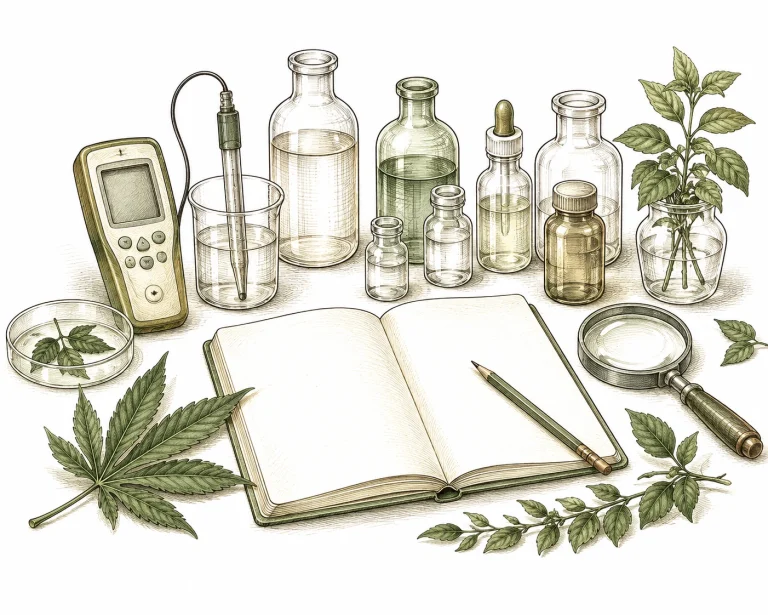
Prevention always beats treatment. The most important step is regular pH monitoring, ideally every time you water. Only when your pH is dialed in can your plant take up all nutrients efficiently, sulfur included. Use a quality pH meter or at least reliable test strips, and calibrate your meter regularly. Keep a simple grow journal where you log pH, EC and feedings. That makes troubleshooting way easier.
Pick a complete base nutrient that’s proven to contain sulfates, and add a Cal-Mag supplement during flowering, since most of them supply sulfur as well. For your growing medium, you can go with sulfur-rich compost or special grow soils with slow-release nutrients that already contain sulfates. Also pay attention to proper watering of your cannabis plants. Water neither too often nor too rarely, so nutrients don’t get washed out and the roots stay healthy. If you work systematically, you’ll rarely run into sulfur deficiency.
- Check pH every time you water
- Use a complete base nutrient that contains sulfates
- A Cal-Mag supplement during flowering helps prevent sulfur and magnesium deficiency
- Keep a grow journal: log pH, EC and feedings
- Choose a growing medium with natural sulfur sources (compost, grow soils)
- Dial in your watering: avoid overwatering and nutrient washout
- Calibrate your pH meter regularly for reliable readings
Frequently Asked Questions
How can I reliably spot sulfur deficiency in cannabis?
The clearest sign is yellowing of the young, new leaves at the growing tips, while the older leaves stay green. This top-down pattern sets sulfur deficiency clearly apart from nitrogen deficiency, which starts at the bottom.
What’s the most common cause of sulfur deficiency in cannabis?
Most of the time, the problem isn’t a real lack of sulfur in the medium. It’s the wrong pH. If your pH is too high or too low, your plant can’t take up the sulfate that’s already there. Always check and correct your pH first.
Can I use Epsom salt to fix sulfur deficiency?
Yes. Epsom salt (magnesium sulfate, MgSO₄) is a cheap and effective sulfur source. Dissolve about 4 to 8 grams per gallon of water (1 to 2 g per liter) and water your plant with it. That way you give it sulfur and magnesium at the same time.
Will yellow leaves recover after treatment?
No. Leaves that have already turned yellow won’t fully recover and may drop off. You’ll know the treatment is working when new leaves grow in healthy and green and the symptoms stop spreading.
Is sulfur deficiency more common in hydroponics than in soil?
Yes. Sulfur deficiency tends to show up more often in hydro and coco systems, because the medium offers no natural nutrient buffer. Your plant depends completely on the nutrient solution. That makes regular EC and pH checks especially important here.
What pH is best for sulfur uptake?
In soil, aim for a pH between 6.0 and 7.0, ideally around 6.5. In hydro and coco setups, the sweet spot sits a little lower, between 5.5 and 6.5. Outside these ranges, your plant takes up sulfate less efficiently.
How long does it take for a cannabis sulfur deficiency to improve?
Once you’ve corrected the pH and added sulfur to your feeding, you should see new, healthy green leaves after about 5 to 10 days. The symptoms usually stop spreading sooner, often within 2 to 3 days.
Looking for the right nutrients to fix the deficiency? Check out our Recommended Gear.
Bottom Line
You can spot a cannabis sulfur deficiency if you watch for one key clue: the symptoms always start on the young, new leaves at the top of the plant, not on the old ones at the bottom. In most cases, it’s not a true nutrient shortage but a pH problem that blocks sulfate uptake. With a targeted pH correction, a dose of Epsom salt and a few tweaks to your watering habits, you can usually stop the deficiency fast. Keep your pH dialed in and use a complete nutrient line that contains sulfate, and you’ll rarely see sulfur deficiency in your cannabis.
