

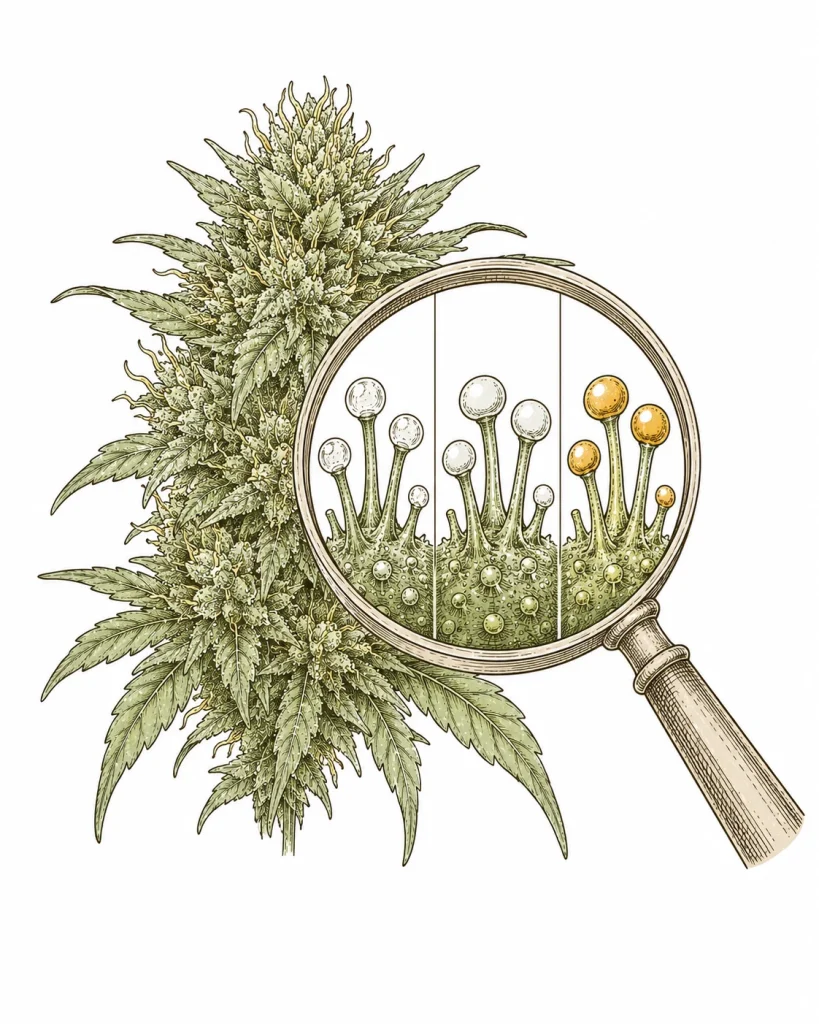
Reading the trichomes to decide when to harvest cannabis is the most precise method you have as a grower — and at the same time the one most beginners skip. Harvest too early and you give away potency and yield. Harvest too late and you risk a heavy, sedating effect and degraded cannabinoids. The good news: with a simple loupe or an inexpensive digital microscope, you can read the perfect harvest moment exactly — straight from your plant. In this article, you’ll learn everything you need to know about trichomes, their colors and how to read them correctly so you never mistime your harvest again.
What are trichomes, and why are they the key to cannabis harvest time?
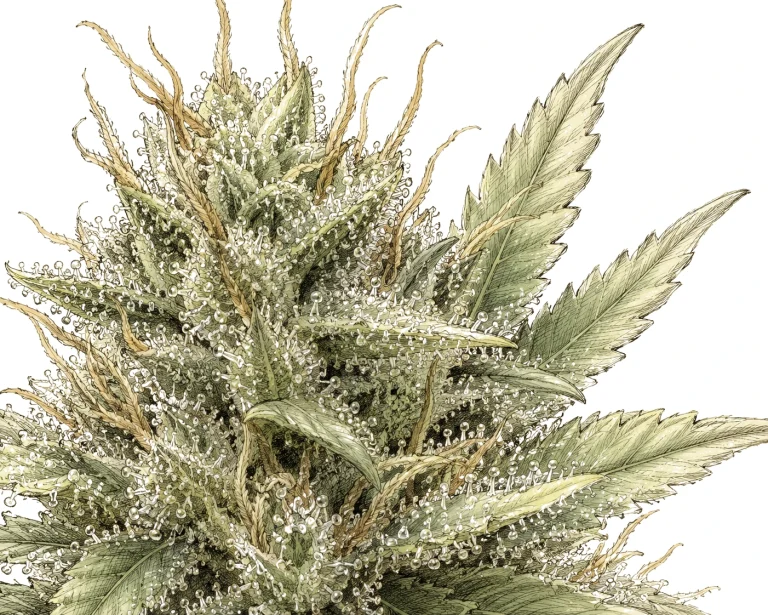
Trichomes are tiny, gland-like structures on the surface of your cannabis buds and leaves. Under a loupe, they look like tiny mushrooms or crystal heads on a thin stalk. In these heads, the plant produces its most valuable compounds: cannabinoids such as THC and CBD, as well as terpenes, which are responsible for aroma and effect. No trichomes, no cannabinoids — so this is exactly the structure you watch when you judge ripeness.
There are three main types of trichomes: bulbous (very small, barely visible), capitate sessile (medium-sized, without a long stalk) and capitate stalked (large, clearly visible, with a stalk and head). For timing your harvest, only the capitate stalked trichomes matter, because they contain most of the cannabinoids and their color is the easiest to read. Over the course of the flowering stage, these trichomes change color from clear to cloudy (milky) to amber — and exactly this color change is your harvest calendar.
Why is this method so much more reliable than simply going by the seed bank’s flowering time? Every plant ripens differently, depending on lighting, temperature, nutrient supply and the genetic phenotype. A strain that the breeder says needs 8 weeks of flowering can be ready to harvest after 7 weeks under ideal conditions — or need 10 weeks under less-than-ideal conditions. Watching the trichomes shows you the actual biological state of your plant, not a calendar average.
- Trichomes produce THC, CBD and terpenes
- Capitate stalked trichomes are what matter for checking ripeness
- The color change clear → cloudy → amber shows the degree of ripeness
- Flowering times listed for a strain are guidelines, not guarantees
- Individual growing conditions have a big impact on when a plant is ripe
The three trichome colors and what they tell you
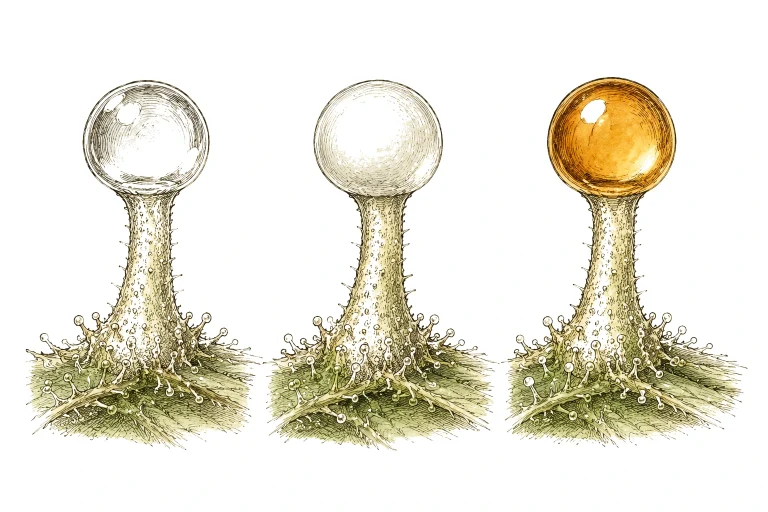
Clear, transparent trichomes mean: not ripe yet. At this stage, the trichome heads are still see-through like glass. The cannabinoid profile hasn’t fully developed yet, THC levels are low and the aroma compounds are incomplete. Harvesting at this stage gives you a weak, green effect without the depth you want. If you mostly see clear trichomes, you definitely need to wait — no matter what the calendar says.
Cloudy, opaque trichomes are the sign of peak THC production. The trichome heads look like tiny beads of frosted glass. At this stage, the plant’s cannabinoid production is at its peak. Harvesting now delivers an energetic, cerebral high with maximum potency. For sativa-dominant strains and anyone who prefers a clear, uplifting effect, this is the ideal time to harvest cannabis. The guideline: 70–90% cloudy trichomes with a few clear and very few amber ones.
A high share of amber trichomes indicates overripeness. THC starts breaking down into CBN, a cannabinoid with a strongly sedating effect. The aroma often turns heavy and earthy, and the effect becomes more physical and relaxing. For indica strains, or for users looking for a deep, body-focused effect, a higher amber share of 20–30% can be desirable. More than 50% amber, however, means too much THC breakdown — quality drops noticeably.
For most growers, the ideal cannabis harvest time is a mix of 70–80% cloudy and 10–20% amber trichomes, with no or hardly any clear ones left. This sweet spot delivers both potency and a balanced effect with good depth. Always note both extremes and find your personal target range.
- Clear = unripe; harvesting too early gives away potency
- Cloudy = peak THC, best cerebral high
- Amber = THC breakdown, more physical and sedating effect
- 70–80% cloudy + 10–20% amber = balanced cannabis harvest time
- More than 50% amber = loss of quality as THC converts to CBN
The right tool: magnifier, jeweler’s loupe or digital microscope?
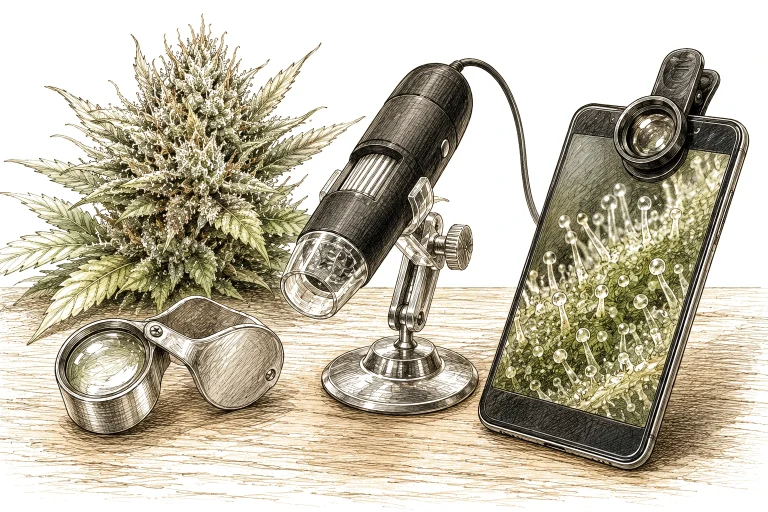
With the naked eye, you can see trichomes as a shiny layer, but you can’t tell their colors or condition apart. You need at least 30x magnification for a useful assessment. The cheapest entry-level option is a jeweler’s loupe with 30x or 60x magnification — often available for under $10. The downside: you have to hold it very steady and you need good light. Beginners often struggle with blurry images and shaky hands here.
A USB digital microscope or a clip-on smartphone microscope solves this problem neatly. These devices cost between $15 and $60, offer magnification from 40x to 1000x and show the image directly on your smartphone or laptop. You can take photos and videos, compare shots and document progress over several days. For regular growers, this is the recommended investment — the added value over a loupe is huge.
Whatever tool you use: always look at different spots on the bud. The trichomes at the top of the main cola often ripen earlier than those in the lower, shaded spots. Check at least three different areas of the plant and judge the overall average. The best way is to snip off a small piece of sugar leaf and put it on a white surface — that way you have both hands free to steady the loupe. Keep in mind: you can’t undo a wrong cannabis harvest time, while a careful check only takes a few minutes.
- At least 30x magnification needed to judge trichomes
- Jeweler’s loupe 30–60x: cheap, but harder to handle
- USB digital microscope: best option for regular checks
- Smartphone macro clip-ons as an affordable mid-range option
- Always check several spots on the plant, not just the top
- Snip off a small piece of bud and check it against a white background
When to harvest cannabis by trichomes: step-by-step process
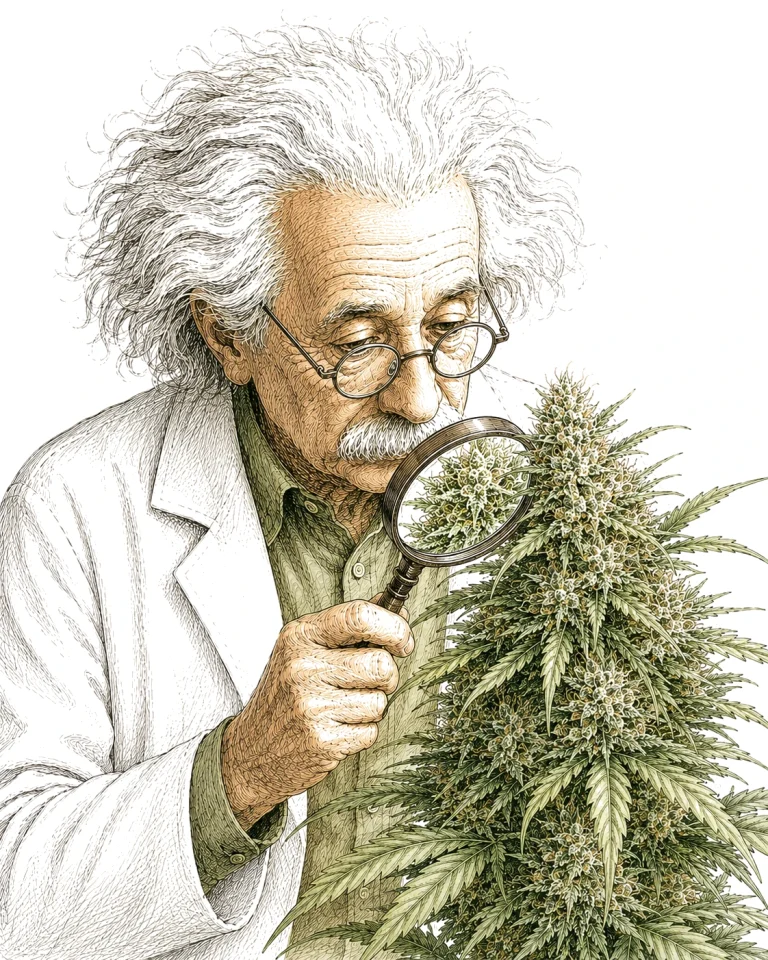
Start checking trichomes no earlier than week 6 of flowering for photoperiod strains, and from week 5–6 for autoflowers. Before that, you’ll see almost only clear trichomes and waste time on frustrating checks. Start with weekly checks and switch to daily or every-other-day checks in the last 2 weeks before the expected harvest. Trichomes can change a lot within a few days, especially at the end of the flowering stage.
Step 1: Snip off a small piece of a sugar leaf (the small leaves right on the bud, not the big fan leaves). Place it on a white surface or a piece of white paper. Step 2: Hold your microscope or loupe steady over the piece with both hands, and make sure you have good side lighting or use your digital microscope’s built-in LED. Step 3: Focus on the trichome heads — not the stalks — and judge the color. Step 4: Count or estimate the ratio of clear : cloudy : amber in percent.
Keep a simple grow journal with the date, trichome status and a photo, or use the Harvest Time Calculator as extra guidance for your expected harvest window. That way you’ll see the trend and can predict when the ideal time is coming. If today you’re at 50% cloudy and 5% amber, and 3 days ago you were still at 30% cloudy, you know things are moving fast and your cannabis harvest time will arrive within a few days. Combine watching the trichomes with other signs of ripeness, such as more than 70% of the pistils (hairs) darkening and the typical heavy, sweet and resinous smell of the buds.
A common mistake: judging the trichomes on the big fan leaves. These ripen differently from the trichomes on the buds and give you false readings. Focus only on the trichomes directly on the bud tissue or the sugar leaves. Also: stress from too little light, nutrient burn or heat stress can turn trichomes amber early without the plant actually being ripe — in cases like this, the overall condition of the plant is your cross-check. Always check the pH of your cannabis in late flowering too, because pH problems can block nutrient uptake and delay ripening.
- Start checking trichomes from week 6 (photo) or week 5–6 (auto)
- Switch to daily checks in the last 2 weeks
- Check sugar leaves, not the big fan leaves
- Use light from the side or the microscope’s built-in LED
- Document trichome status with photos to spot the trend
- Combine with pistil color and smell for a more reliable assessment
- Stress can turn trichomes amber early — look at the big picture
Trichomes and strain type: indica, sativa and autoflower compared
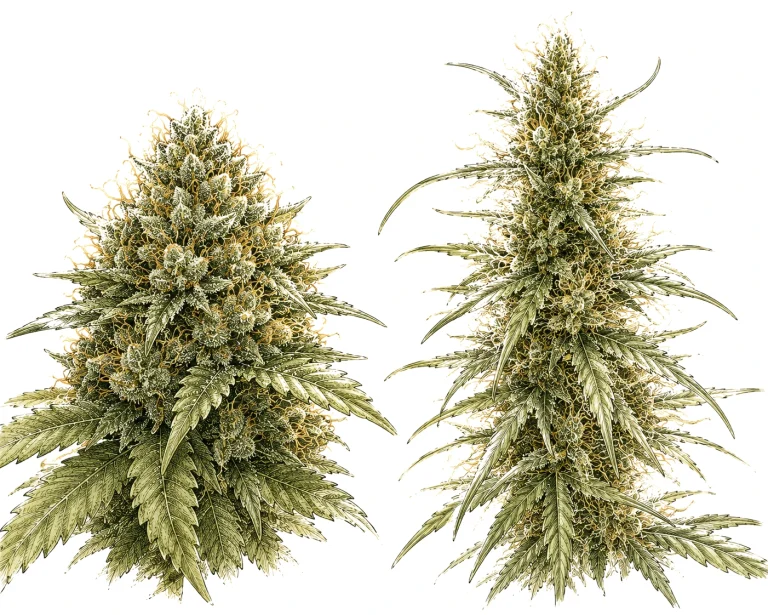
Indica-dominant strains benefit from a slightly higher amber share at harvest. Since indica strains naturally deliver body-focused, relaxing effects, an amber share of 15–25% can enhance the desired effect even more. So wait a little longer than you would for the purely cloudy optimum. Typical flowering times are 7–9 weeks, but don’t rely on the calendar — rely on the trichomes.
Sativa-dominant strains often have much longer flowering times of 10–14 weeks, and their trichomes develop more slowly. Here, the sweet spot is a higher cloudy share (80–90%) and little amber (under 10%) to preserve the characteristic, uplifting sativa effect. Waiting too long ruins the energetic effect through THC breakdown. With sativas in particular, daily checks in the final phase are especially important, because the window can close quickly.
Autoflowering strains are especially tricky, because they flower regardless of the light cycle and sometimes go from seed to harvest in just 60–70 days. Here, you can start checking trichomes from week 5–6. Since many autoflower strains form more compact buds, trichomes can be harder to judge. Use a digital microscope for better results. If you don’t have experience with autoflowers yet, our complete beginner’s guide to growing cannabis indoors gives you a solid foundation for understanding every growth stage.
- Indica: 15–25% amber for the ideal heavy body effect
- Sativa: 80–90% cloudy, under 10% amber for a cerebral high
- Autoflower: start checking trichomes from week 5–6
- The sativa window can close quickly — daily checks needed
- Hybrid strains: note whether indica or sativa is dominant
Common mistakes when reading trichomes for harvest time
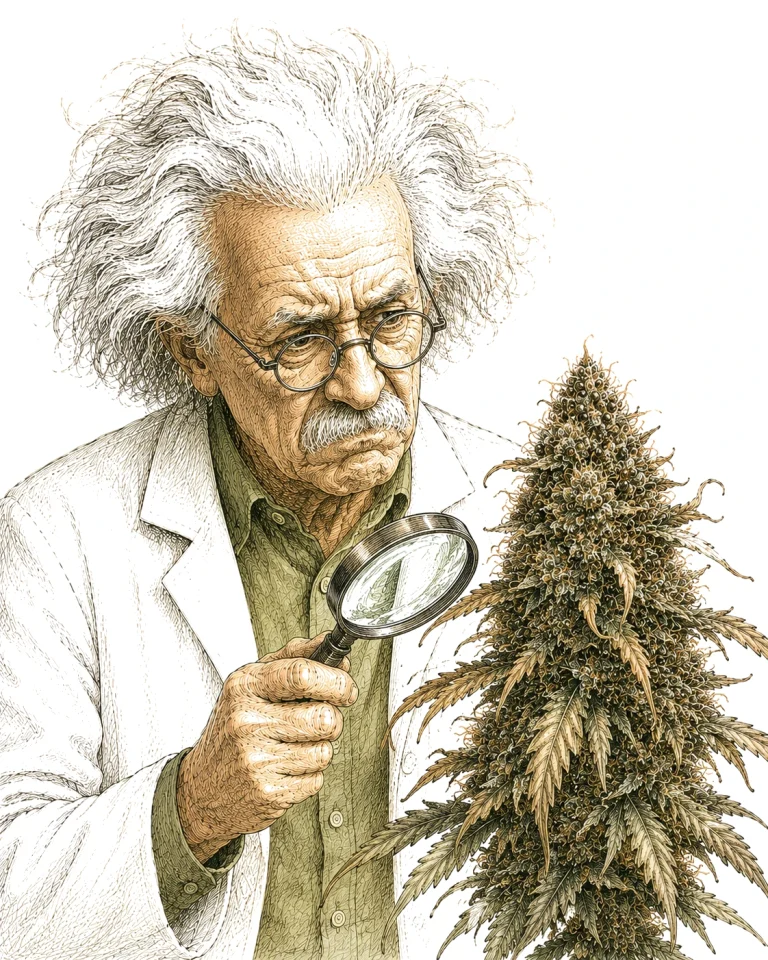
The most common mistake is being impatient and harvesting at the first cloudy signs. When you see cloudy trichomes for the first time, that’s not a start signal but a sign of progress. Wait until most of them are cloudy and the first amber trichomes appear. On the flip side, waiting too long is also a classic beginner mistake — if you think “a few more days won’t hurt,” you risk a significant loss of quality through THC breakdown.
Another common mistake is checking under poor lighting. Clear trichomes can look cloudy under yellowish artificial light — and vice versa. Always use bright, white light. The LED lighting on many digital microscopes is often ideal, because it shines calibrated white light directly onto the sample. Many growers also underestimate how fast things can change: what’s 60% cloudy today can already be at 80% in 3 days. Adjust how often you check accordingly.
Checking trichomes doesn’t replace looking at the plant as a whole. If your plant is showing symptoms like yellow leaves or other signs of stress at the same time, the trichomes can send misleading signals. Always check that your plant is basically healthy and that ripening comes from natural bud development — not from deficiency stress or disease. If you’re not sure what your plant is showing, the Plant Diagnosis overview on PlantClue helps you identify problems quickly.
- The first cloudy trichomes aren’t a harvest signal, just a sign of progress
- Poor lighting distorts trichome color — always use white light
- Document progress daily instead of checking only now and then
- Don’t use fan leaves as a reference, only bud tissue and sugar leaves
- Tell stress symptoms apart from true ripeness
- The seed bank’s calendar info is an average, not a guarantee
After ripeness: what comes after the ideal cannabis harvest time?
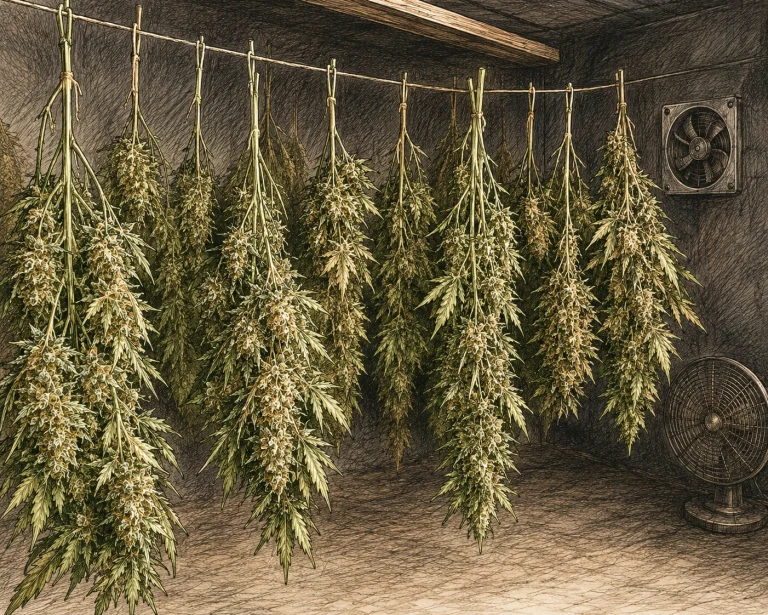
Once you’ve confirmed the ideal cannabis harvest time by checking the trichomes, the next critical phase begins: harvesting, drying and curing. All three steps decide whether the potential of your carefully timed harvest actually makes it into the final product. If you dry perfectly harvested cannabis carelessly, you lose much of the aroma and quality to poor conditions — so avoid the most common drying mistakes.
Drying should take place at 64–72 °F (18–22 °C) and 45–55% humidity in a dark, well-ventilated room. The buds should dry slowly over 10–14 days — drying too fast at too high a temperature destroys terpenes and gives you a harsh, scratchy end product. Ideally, curing in airtight jars for 2–8 weeks follows right after drying. This process significantly improves aroma, consistency and effect. Before drying, you should also know how to properly manicure and trim your buds — wet or dry.
Remember: your work with the trichomes has given you the best possible starting point. Now it’s up to post-harvest care to keep that advantage. If you carry out every phase carefully — growing, timing the harvest, drying and curing — you’ll be rewarded with an end product that’s well above average. You can find answers to all other diagnostic questions about your plant anytime in the Plant Diagnosis overview on PlantClue.
- Drying at 64–72 °F (18–22 °C) and 45–55% humidity
- Slow drying over 10–14 days protects terpenes
- Curing in airtight jars for 2–8 weeks for maximum quality
- Darkness during drying and storage protects against THC breakdown
- The whole chain harvest → drying → curing decides the final quality
Frequently asked questions
How many trichomes need to be amber before I can harvest?
As a rule of thumb, 70–80% cloudy and 10–20% amber trichomes are the balanced sweet spot for most strains. For indica strains, the amber share can rise to 20–30%; for sativa strains, it should stay under 10%. More than 50% amber means too much THC breakdown and declining quality.
Can I tell when to harvest cannabis without a loupe?
You can’t reliably pin down the exact cannabis harvest time with the naked eye. You can see trichomes as a glittery layer, but not the differences in color. Use at least a jeweler’s loupe with 30x magnification. Inexpensive digital microscopes ($15–30) deliver even better results and let you document with photos.
Why do my trichomes look amber even though the plant hasn’t been flowering long enough?
Early amber coloring can be caused by stress: heat stress, overfeeding or underfeeding, pH problems or light damage can make trichomes age prematurely. Check your plant’s overall health. If leaves are turning yellow or other problems are visible, you may not be looking at a natural ripening process.
Where exactly should I check the trichomes?
Only check the trichomes on the buds themselves and on the small sugar leaves right on the bud. The big fan leaves ripen differently and give you misleading readings. Check several spots on the plant — the top and lower areas — because ripening isn’t always even.
Do trichomes keep changing after harvest?
After harvest, trichomes no longer develop. However, THC can keep breaking down into CBN due to light, heat and oxygen. That’s why dark storage, cool temperatures below 68 °F (20 °C) and airtight containers are so important during drying and curing. Trichome quality at harvest is your starting point — after that, it can only be preserved or get worse.
Does the trichome check work for autoflower strains too?
Yes, absolutely. Checking the trichomes is the most reliable way to find the cannabis harvest time across all strains — autoflowers included. With autoflowers, start checking from week 5–6 after germination. Since autoflower buds are often more compact, a digital microscope is recommended for a better view.
You can find more on proper harvest quality and preventing mold from the LWG Bayern (Bavarian State Institute for Viticulture and Horticulture, German).
Are my pistils or hairs turning brown too early: ripeness or stress?
If the white pistils turn orange or brown early in the flowering stage, that’s not automatically a sign of ripeness. There are four possible causes:
- Heat or light stress: Lighting that’s too intense or hung too close makes pistils age prematurely, similar to sunburn and light burn.
- Physical contact: Frequent handling, transplanting or training during flowering can turn individual hairs brown where they were touched, even though the rest of the bud isn’t ripe.
- Pollination: When pollen lands on the pistils, they recede and turn brown because the bud switches to making seeds instead of ripening further.
- Strain-related variation: Some phenotypes naturally show a few brown hairs early on, even though the plant as a whole isn’t any further along.
So never rely on hair color alone: also check the trichomes under a loupe, because only they reliably show how far along the bud really is.
Can I use a smartphone macro lens instead of a loupe?
Yes, clip-on macro lenses for smartphone cameras work for checking your cannabis harvest time as long as they offer at least 20x to 60x magnification – cheap clip-on models start at around $10 to $15. The advantage over a simple loupe: you can photograph the trichome color directly and compare the pictures in your grow journal instead of just trying to remember the color. Use steady light without flash, because the flash can distort the cloudy color. For an even sharper view, an affordable digital microscope is still the more reliable choice.
Conclusion
Reading the trichomes to find your cannabis harvest time is the only method that truly shows you what’s going on inside your plant — no calendar, no pistil color and no strain description can replace a direct look at the trichome heads. With an inexpensive loupe or a digital microscope, a little practice and consistent documentation, you’ll develop a confident eye after just a few grows that lets you harvest precisely every time. Invest those few minutes a day in the final phase — the difference in the end product is clearly noticeable. Your carefully timed harvest then deserves an equally careful drying and curing process, so the full potential of your trichomes really ends up in the jar.
