
Growing Cannabis Indoors
Grow tent, lighting, ventilation and climate control — here’s how to set up your indoor cannabis grow like a pro.
Growing cannabis indoors: full control, year-round
Growing cannabis indoors means you control everything yourself — light, temperature, humidity, nutrients. It’s more demanding than growing outdoors, but it gives you harvests year-round, independent of the seasons, and maximum control over quality and yield.
A working indoor setup needs four basic components: a suitable light source, active ventilation with intake and exhaust, the right growing medium and basic monitoring tools (pH/EC meter, thermo-hygrometer). Only once this foundation is in place do further optimizations pay off, such as CO2 supplementation (German) or additional training techniques.
Fresh, moving air matters more in an indoor grow than most beginners think: it supplies the plant with CO2, prevents heat buildup under the lamp and keeps humidity in the safe range to prevent mold. Undersized exhaust is one of the most common causes of growth problems that get mistaken for nutrient deficiencies.
Whether you go with LED or HPS, soil or coco — the principles stay the same: a controlled climate, consistently watering only when the plant needs it, and regular observation instead of hectic interventions. The best way to dig deeper into specific topics is through our Lighting and Watering guides.

Ventilation is the heart of every indoor grow — not the lamp. Fresh air, a stable temperature and a gentle breeze strengthen the stem and prevent mold better than any expensive LED.
Indoor guides at a glance
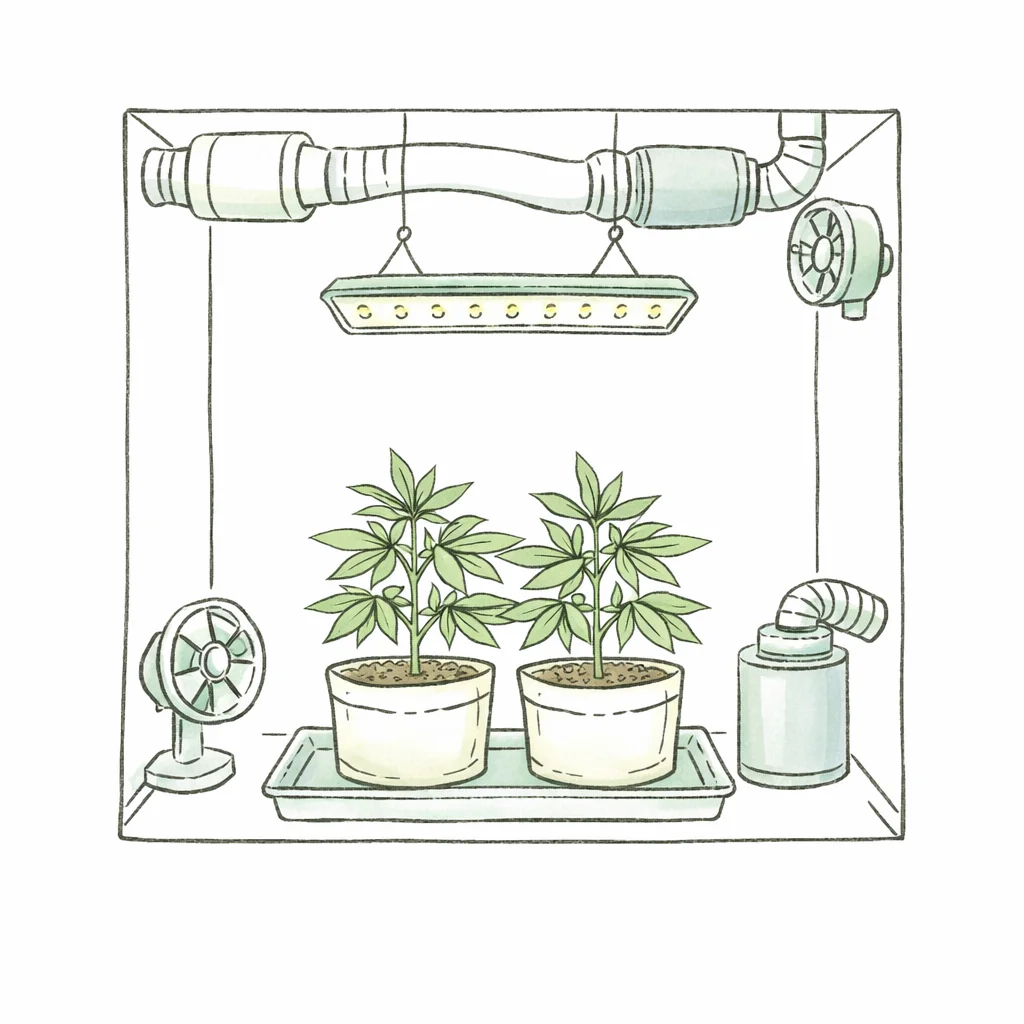
Indoor cannabis grow guide
The complete step-by-step guide: setup, lighting, care and harvest for your first indoor grow.
Read article →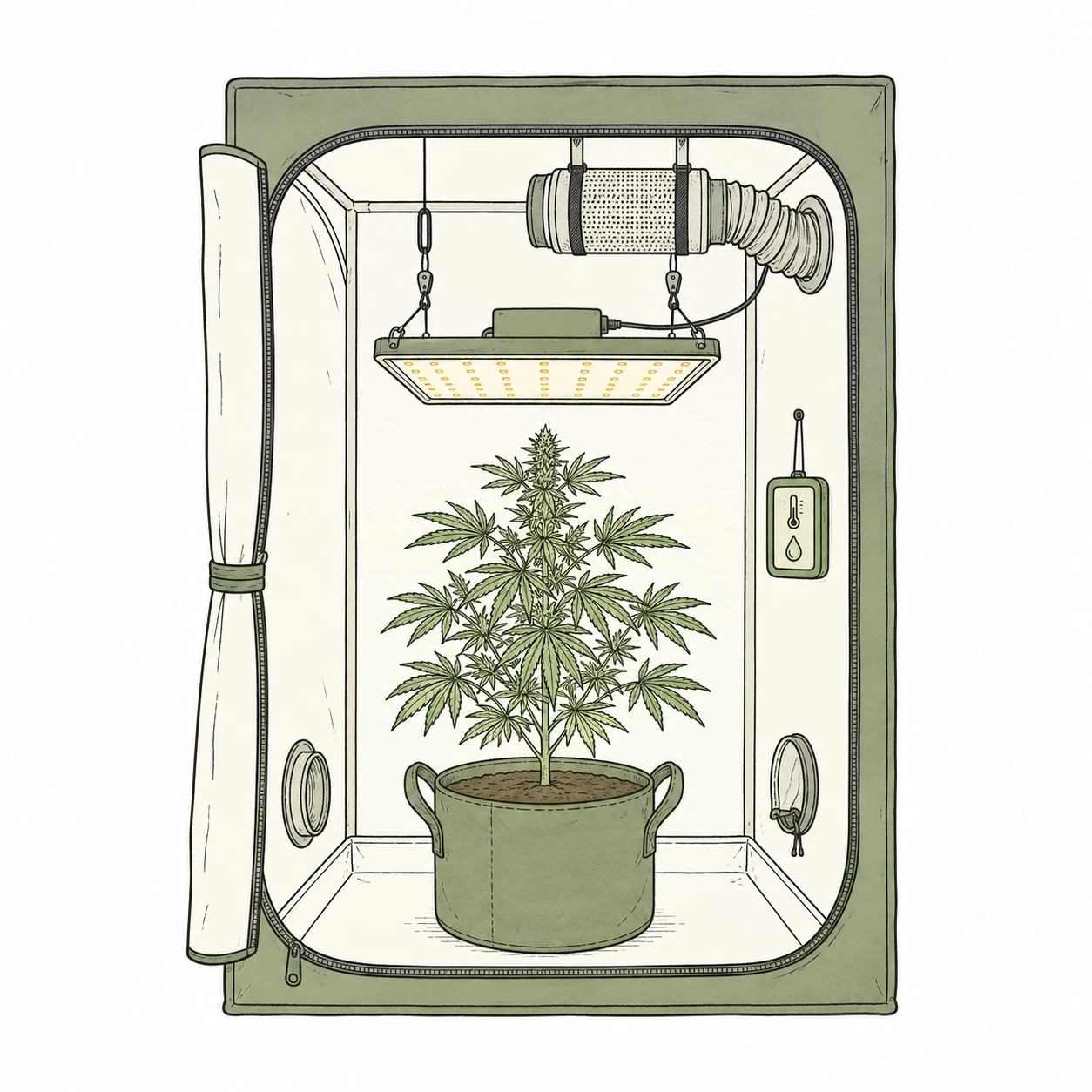
How to set up a grow tent, step by step
The 6 most important components, the correct setup and common beginner mistakes in your first indoor grow.
Read article →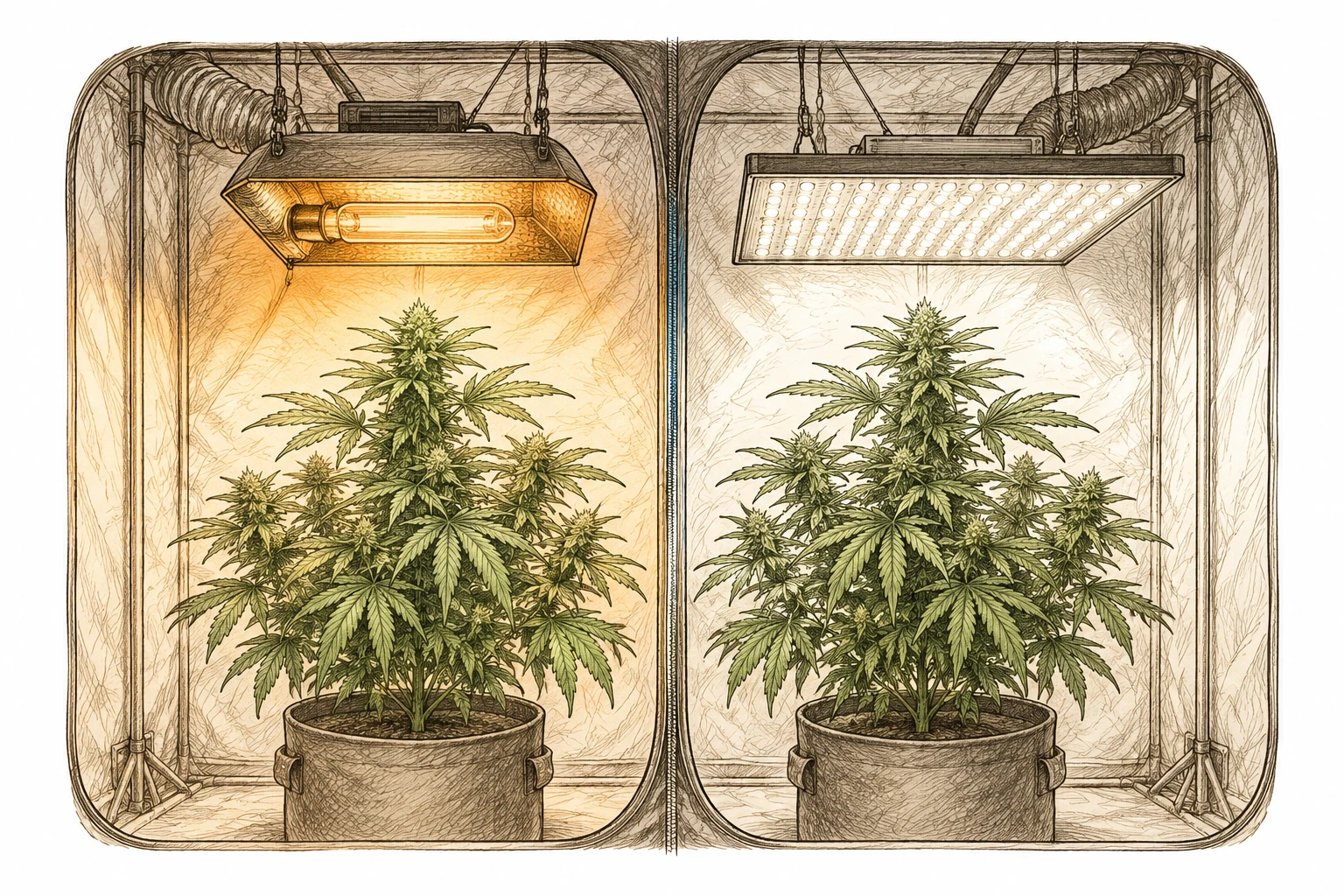
LED vs. HPS: choosing the right light
Power consumption, light output and upfront cost of LED and HPS lights compared side by side.
Read article →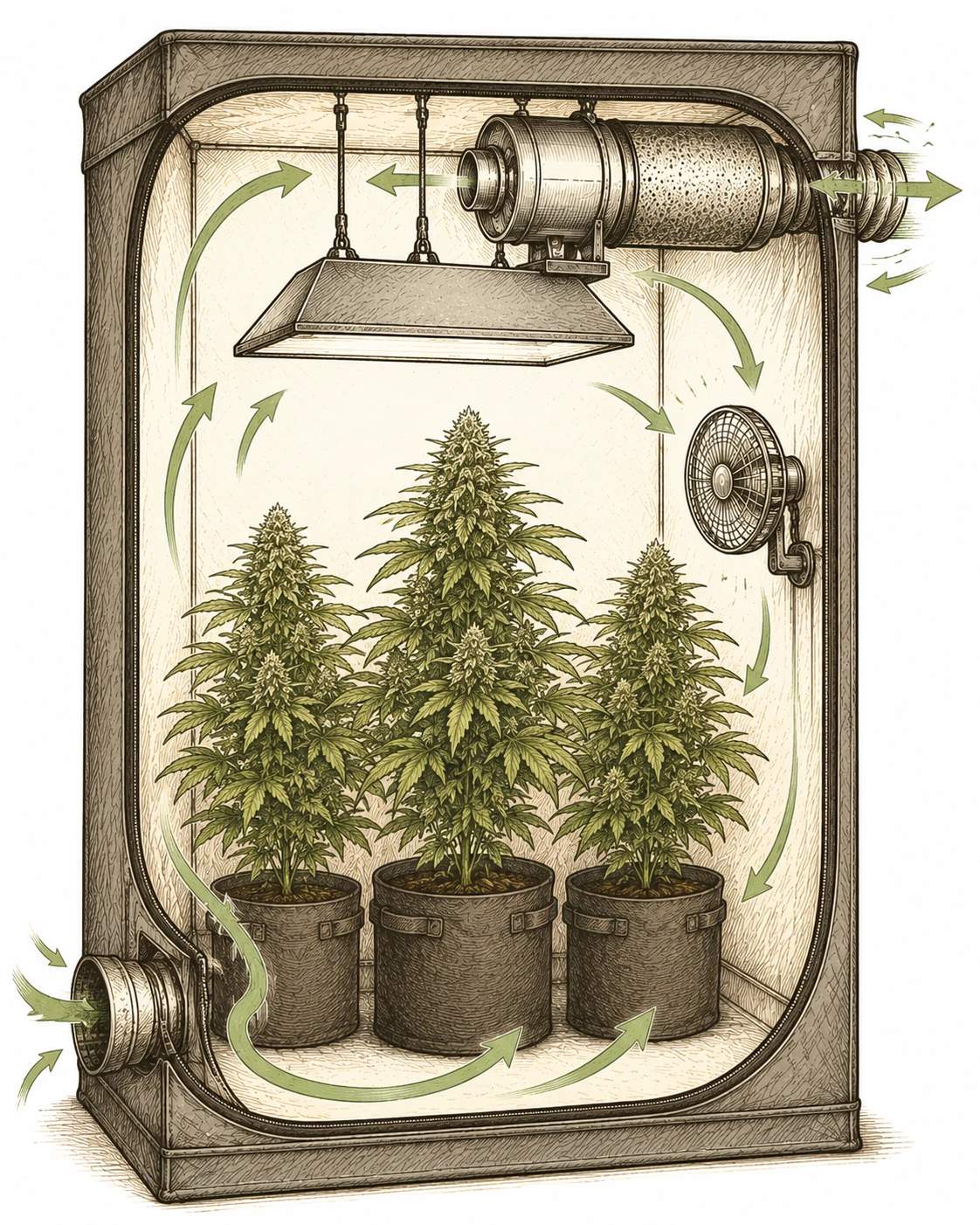
How to set up ventilation and exhaust
Calculate exhaust and intake, position circulation fans and use a carbon filter for odor control.
Read article →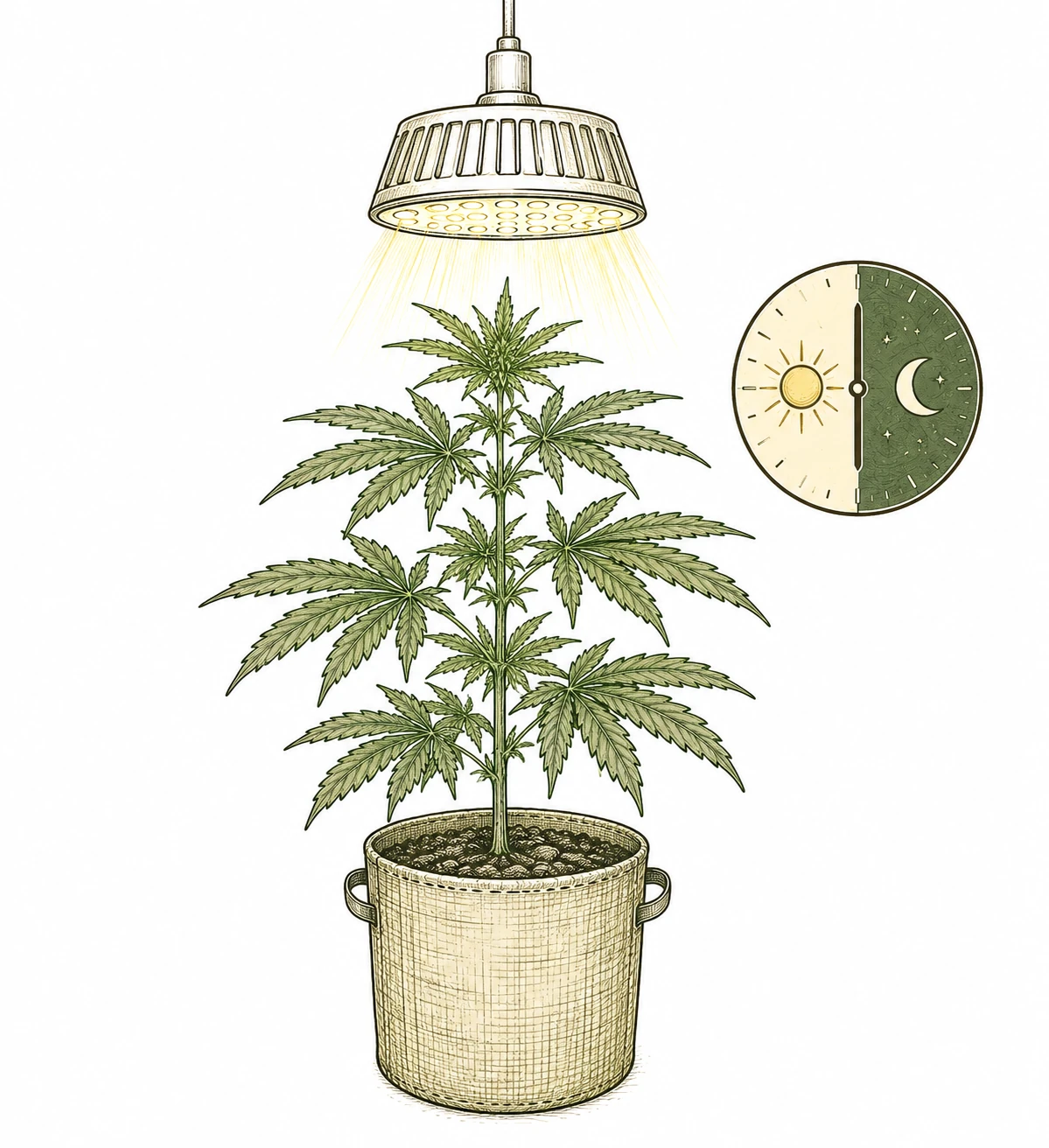
Light cycles: controlling veg and flowering
18/6, 12/12, 20/4 and 24/0 compared — autoflower vs. photoperiod and how to set the right schedule.
Read article →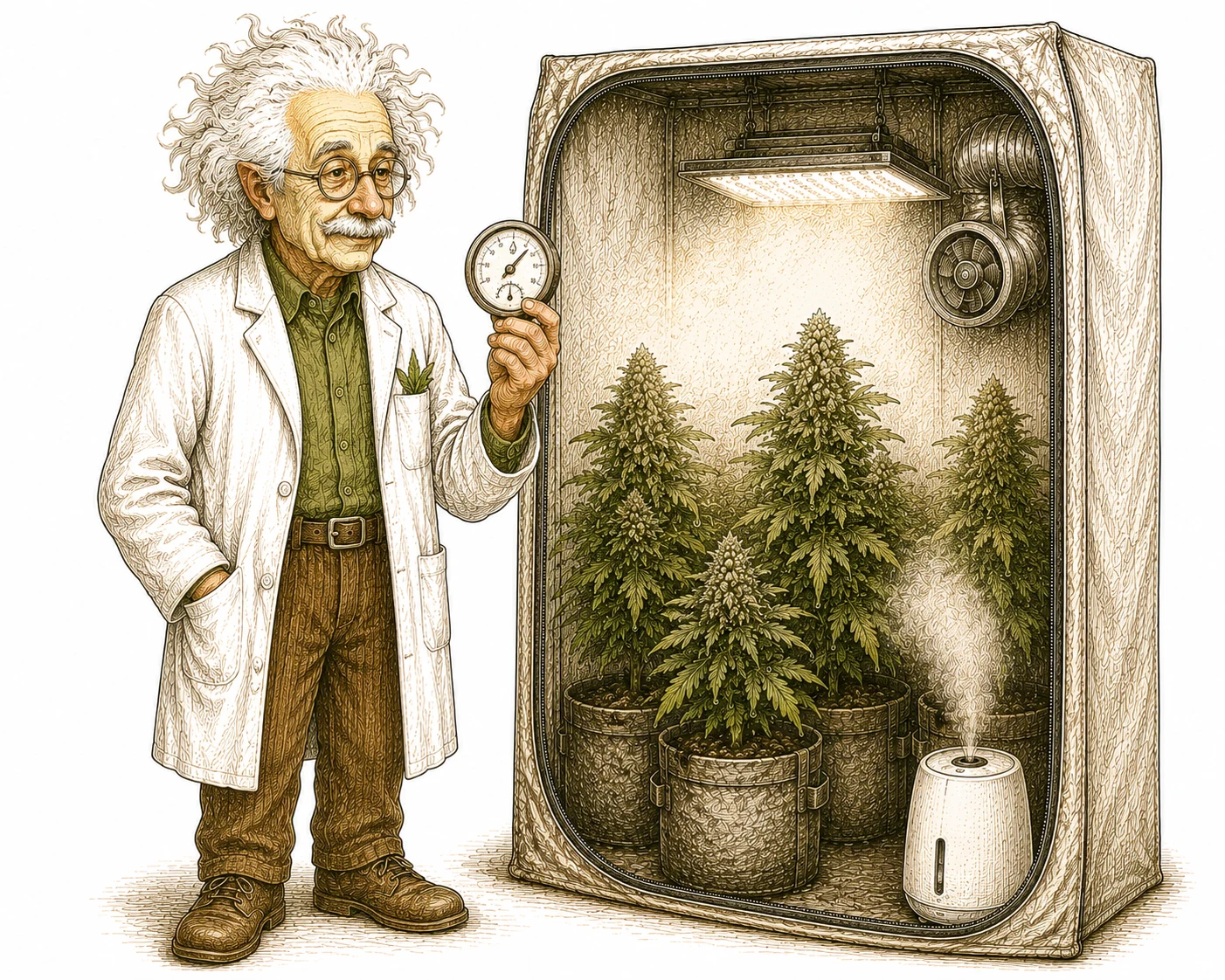
Keeping humidity in the ideal range
Which humidity is ideal in each growth stage, and how to use VPD (vapor pressure deficit) to prevent mold.
Read article →Frequently asked questions about growing cannabis indoors
What’s the minimum I need for a working indoor setup?
The four basic components are a suitable light source, active ventilation with intake and exhaust, the right growing medium and basic tools like a pH/EC meter. With this foundation you can already run a successful grow — extras like CO2 supplementation are optional.
How important is ventilation compared to lighting?
At least as important. Undersized exhaust leads to heat buildup, poor CO2 supply and a higher risk of mold — problems that often get mistaken for nutrient deficiencies. Invest equally in both areas, not just in the lamp.
What size grow tent do I need to grow cannabis indoors?
For 1–2 plants, a 24×24 in (60×60 cm) or 32×32 in (80×80 cm) tent is usually enough. Larger tents give you more flexibility but also need correspondingly more light and ventilation capacity — for your first grow, a smaller setup that’s easy to control is usually the better choice.
How long does a complete indoor grow take?
Depending on the strain, about 15 to 21 weeks from germination to a harvest ready for drying — made up of a few days of germination, 4 to 8 weeks of vegetative growth and 8 to 10 weeks of flowering, plus drying and curing afterward.
Can I start growing indoors without expensive equipment?
Yes, a solid basic setup is realistic for a few hundred dollars. The key is not to skimp on lighting and ventilation — on pots, decor or extra gadgets, on the other hand, you can easily save money.
What are the most common beginner mistakes when growing indoors?
Watering too often, undersized ventilation and hanging the light too close are the classic indoor mistakes. A wrong pH is also often overlooked, even though it’s behind many apparent nutrient problems.
