

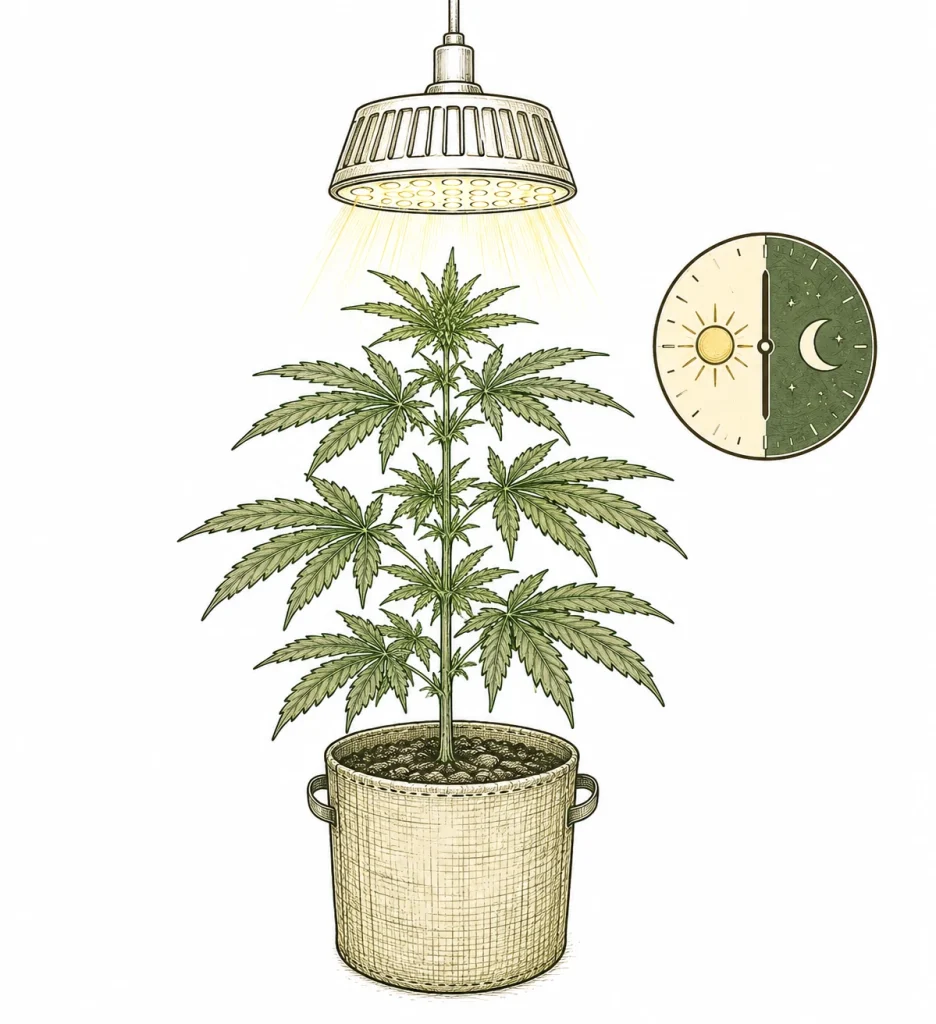
Picking the right cannabis light cycle is something a lot of growers underestimate. But your light and dark periods directly decide whether your plants grow strong. They also decide whether your plants switch to flowering on time and in good health. The vegetative stage and the flowering stage need different light conditions. Pick the wrong rhythm and you risk growth stress and a noticeably smaller harvest. Worst case, you can even end up with unwanted hermaphrodite flowers. This guide gives you clear answers: the four common light cycles, the difference between autoflowers and photoperiod strains, and the most common beginner mistakes.
What Are Light Cycles and Why Do They Matter So Much?
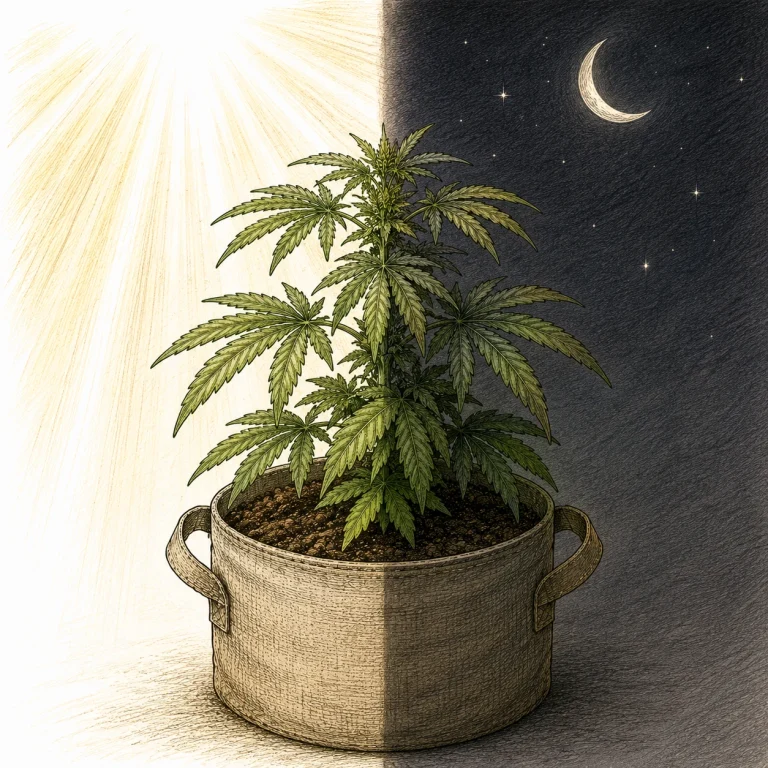
A light cycle is made up of a light period and a dark period. Both repeat in your grow room every single day. Cannabis is a short-day plant. It uses a light-sensitive pigment in its leaves (phytochrome) to sense how long the night lasts. Some growers even run a supplemental far-red light (German) at the end of the light period for this reason. From the night length, the plant figures out what season it is. Once the dark period gets long enough, the plant switches gears: from vegetative growth to building flowers. Outdoors, this happens in late summer when the nights get longer.
With indoor growing, you simulate this change of seasons yourself with the timer on your grow light (German). Light drives every step of plant growth, from photosynthesis all the way to triggering flowers. The Bavarian State Institute for Viticulture and Horticulture (LWG, in German) explains how strong this effect is, using ornamental plants as an example. The basic principle of day-length control works the same way for cannabis.
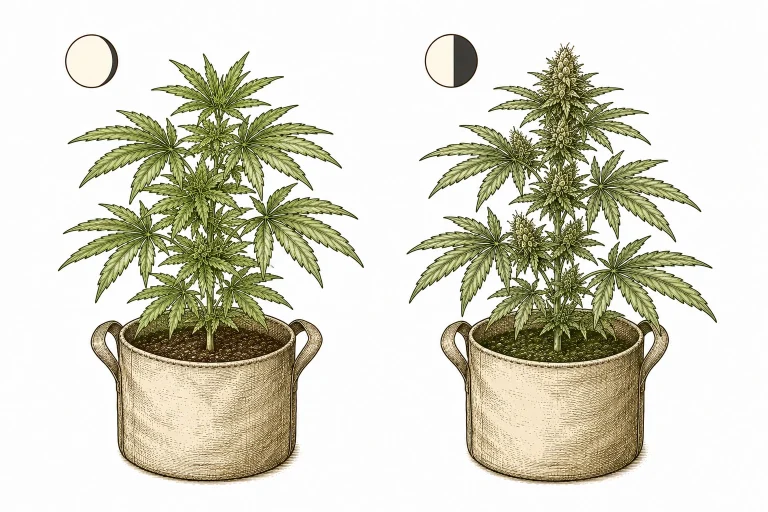
The vegetative stage needs more hours of light than the flowering stage. Growers usually start with an 18/6 cycle: 18 hours of light, 6 hours of darkness. Once you want the plant to flower, you switch to 12/12. That means 12 hours of light and 12 hours of uninterrupted darkness.
- Veg usually lasts 3–8 weeks, depending on how big you want your plants to get.
- For the flowering stage, light and dark periods of exactly equal length are key.
- A steady, uninterrupted light schedule can noticeably improve growth and yield.
The 4 Common Light Cycles at a Glance
Why are there different light cycles in the first place? Each growth stage needs its own light conditions to perform at its best.
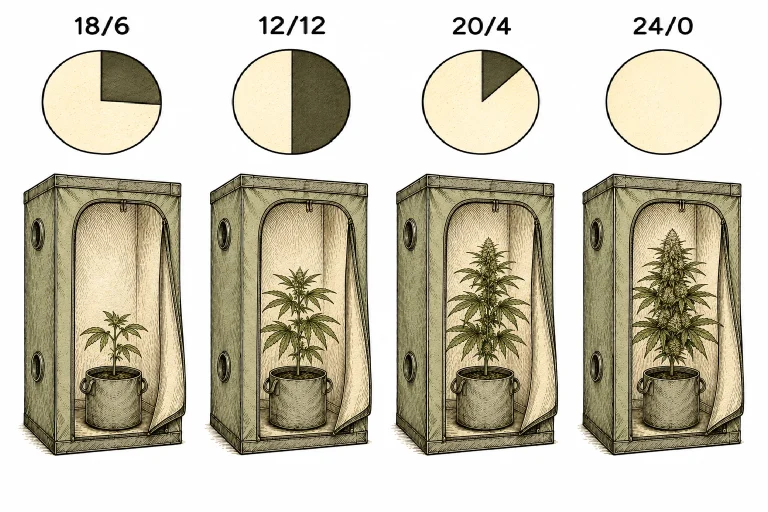
- 18/6 – the standard cycle for the vegetative stage. 18 hours of light drive fast, vigorous growth.
- 12/12 – the flowering trigger for photoperiod strains. Equal light and dark periods kick off bud formation.
- 20/4 – a middle ground between energy efficiency and growth speed. Popular with growers watching their power bill.
- 24/0 – constant light with no rest period. It barely speeds up growth, but it does drive up your electricity costs. Most experienced growers advise against it, since plants also need a dark period to recover.
An irregular, constantly changing schedule almost always leads to stress and a smaller yield. Consistency matters more than which exact cycle you choose.
Autoflower vs. Photoperiod Strains: The Key Difference
Before you settle on a light cycle, check your strain. There is a fundamental difference here.
Photoperiod Strains
Most classic cannabis strains are photoperiod strains. They need the switch from 18/6 to 12/12 to start flowering at all. Without that switch, they can, in theory, stay in veg indefinitely. That gives you full control over plant size. But it also stretches out your total grow time.
Autoflowering Strains
Autoflower strains are usually crosses with Cannabis ruderalis. They flower automatically after a set amount of growing time, no matter what the light cycle is. Switching them to 12/12 isn’t necessary and gives you no advantage. That’s why many growers run autoflowers on 18/6 or even 20/4 from start to finish. This way, your plants get the benefit of the extra light without changing when they start to flower.
The most common mistake: accidentally switching an autoflower strain to 12/12. You gain nothing, and the plant loses valuable hours of light, and with them yield. So always check the strain type before you buy. Every seed bank lists it right in the strain profile.
Light-Proofing: Why Every Light Leak During the Dark Period Is a Risk
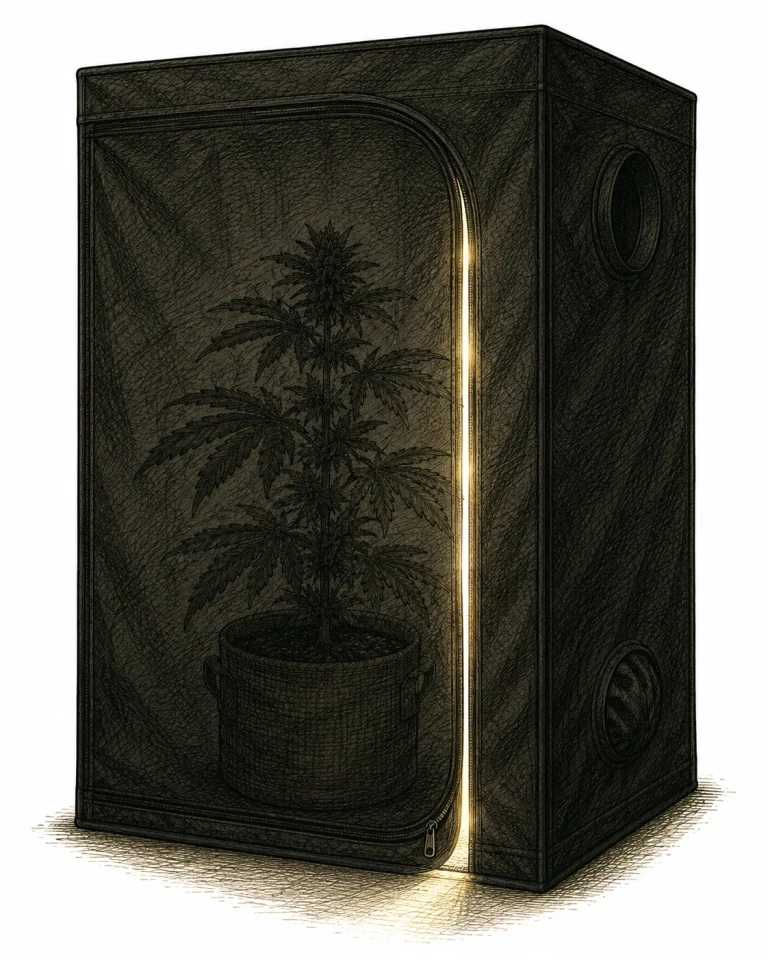
Photoperiod strains are extremely sensitive to interruptions of the dark period. Just a few minutes of light can be enough. Common culprits are a leaky grow tent door or an LED standby light. Briefly opening the door with your phone flashlight counts, too. The plant reads the light as a shorter night and responds with stress.
In the worst case, repeated light stress can lead to stress-induced hermaphroditism. The plant then grows male pollen sacs in addition to its female flowers, so it can pollinate itself if it has to. This doesn’t just threaten the yield of that one plant. Unwanted pollination can also leave neighboring plants full of seeds.
If your plant shows the first male flowers after a light leak, our guide on how to spot cannabis hermaphrodites shows you how to react before any pollen is released.
- Check your grow tent for light leaks while it’s completely dark. Sit inside with the lights off for 5–10 minutes until your eyes adjust to the darkness.
- Seal zippers, door gaps and cable ports with light-proof tape or foam rubber.
- Try never to open the door during the dark period. In an emergency, use only a green flashlight, which cannabis barely perceives.
Switching From Veg to Flower: What Happens During the Stretch
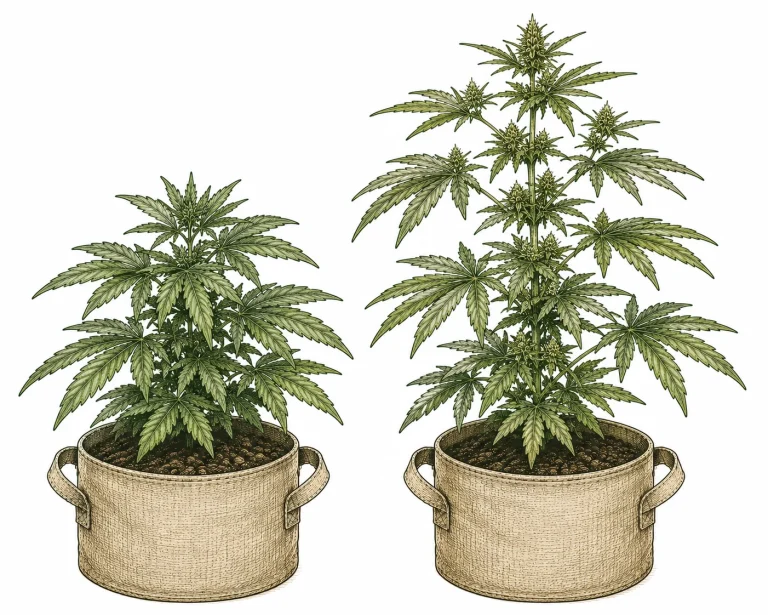
When you switch a photoperiod strain from 18/6 to 12/12, the flower stretch begins (often just called the “stretch”). In the first 1–2 weeks after the switch, the plant shoots up noticeably one more time. Depending on the strain, it can double or even triple in height. After that, vertical growth stops and all the energy goes into building flowers.
Plan for this stretch from day one. If you wait to flip until the plant is close to the top of the tent, you risk light burn, because the plant grows too close to the lamp. Rule of thumb: flip to 12/12 at the latest when the plant still has 12–20 in (30–50 cm) of headroom.
The first signs of flowers, called pistils, usually show up 1–2 weeks after the switch. Look for them at the branch nodes. They’re a reliable sign that the new cycle is kicking in.
How to Spot the Symptoms of a Wrong Light Cycle
A wrong light cycle can cause problems fast. If you catch the symptoms early, you can correct course quickly.
Common symptoms are stressed plants and lower bud yields. The look of the leaves often tells you whether the cycle is right, too.
- Weak stems can point to too little light.
- Fading leaves are often a sign of the wrong cycle.
- Slowed growth is a common symptom.
- Unusually long internodes can show up.
- Delayed or missing flowering despite switching to 12/12.
- Uneven flower development can point to an unstable cycle.
Not every symptom automatically means a wrong light cycle. Slowed growth and pale leaves can also come from a nutrient deficiency or heat stress. So check your timer first before you adjust nutrients or temperature. An inconsistent light cycle is often the overlooked cause behind unclear growth problems.
Setting Up Your Light Cycle Step by Step
Getting your light cycle right is key. These steps help you put your plants on the ideal schedule.
- Figure out your current cycle and check your strain type: autoflower or photoperiod.
- Make sure your light source runs steadily and reliably.
- Switch from 18/6 to 12/12 as soon as you want flowering to start – photoperiod strains only.
- Flip the cycle in one go on the day you choose, not gradually. That way you avoid unnecessary stress.
- Check and calibrate your timer regularly.
- Keep an eye on your plants and check your grow tent regularly for light leaks.
Choosing the Right Timer: What to Look For
Your timer is the heart of a stable light cycle. A single failure can disrupt the dark period and stress your plants. You basically have two options.
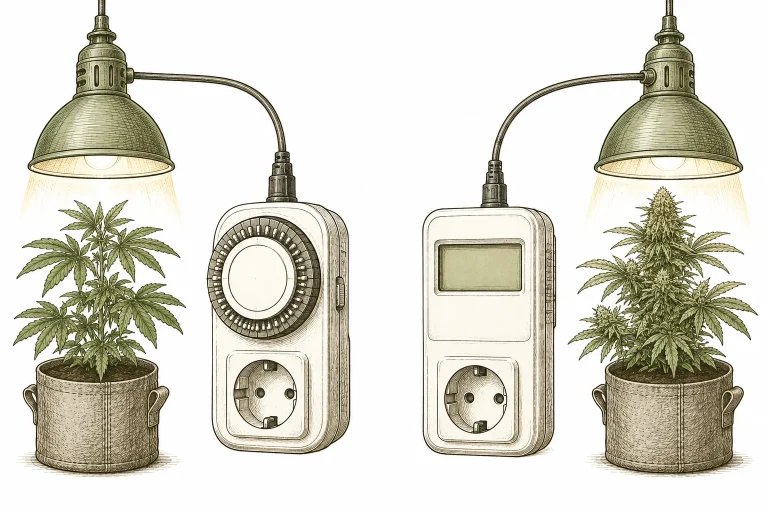
- Mechanical plug-in timers – cheap, but prone to small timing errors. They don’t adjust for daylight saving time on their own. Good enough to get started, but check them regularly.
- Digital timers – more precise, often accurate to the minute. They keep their settings even through a short power outage. The safer choice for the sensitive 12/12 schedule.
If you run several lights, for example in an LED or HPS setup, make sure they switch on and off in sync. Separate timers for multiple light sources are a common but easy-to-avoid source of problems.
Recalibrate your timer after every clock change. Also spot-check it every few weeks. Mechanical models in particular can drift by several minutes over time.
Common Light Cycle Mistakes
Mistakes happen fast, but you can avoid them. Here are the most typical light cycle mistakes – and how to steer clear of them.
- Too much light during flowering can stress your plants. Stick to 12/12.
- Fluctuating light cycles stress the plant. Keep your cycle consistent.
- Too little darkness can slow down flowering. Give your plants a full 12 hours of darkness.
- An unreliable timer causes chaos. Check it regularly.
- Never neglect room temperature. Keep it steady.
Checklist: Cannabis Light Cycles at a Glance
The key points to check before you set your next cycle:
- Strain type checked: autoflower (no 12/12 needed) or photoperiod (12/12 to flower)?
- 18/6 set for the vegetative stage, 12/12 for flowering with photoperiod strains
- Grow tent checked for light leaks during the dark period
- Digital timer in place and recalibrated after the last clock change
- Enough headroom (at least 12–20 in (30–50 cm)) planned before flipping to 12/12
- Cycle stable since the last switch, no interruptions
Which lighting system fits your light cycle is covered in LED vs. HPS. You measure how much light actually reaches your plants with the PPFD value (photosynthetic photon flux density).
Frequently Asked Questions (FAQ)
What does the light cycle do when growing cannabis?
The light cycle controls how your plants grow. It’s crucial for the flowering stage.
How often should you change the light cycle?
Only when you switch stages – that is, when you go from veg to flowering and flip to 12/12.
Can I run 24/0 during the vegetative stage?
Yes, you can. But keep in mind the higher power use for barely measurable time savings.
What happens with a 20/4 light cycle?
This cycle is a compromise. It promotes growth while saving some energy.
Why is darkness important in the light cycle?
Plants need darkness for certain growth processes. They “rest” during this time.
What’s the difference between autoflower and photoperiod light cycles?
Photoperiod strains need the switch to 12/12 to flower. Autoflowers start flowering automatically after a certain time, regardless of the light cycle.
What happens if light leaks in during the dark period?
Even brief light leaks can stress photoperiod plants. In the worst case, this can lead to hermaphrodites. So seal your grow tent thoroughly.
How long does the stretch last after flipping to 12/12?
Usually 1–2 weeks. During this time, your plant stretches noticeably one more time. After that, growth shifts to building buds.
Bottom Line
The right light cycle is key to a successful grow. Avoid the common mistakes and match your cycles to each growth stage. Check your grow tent for light leaks regularly. That’s how you get the most out of your harvest. Want to learn how light intensity and color work together? Check out our article on light spectrum and light duration. You’ll find more indoor growing tips in the Indoor Growing Hub or in our in-depth Cannabis Knowledge Base.
