

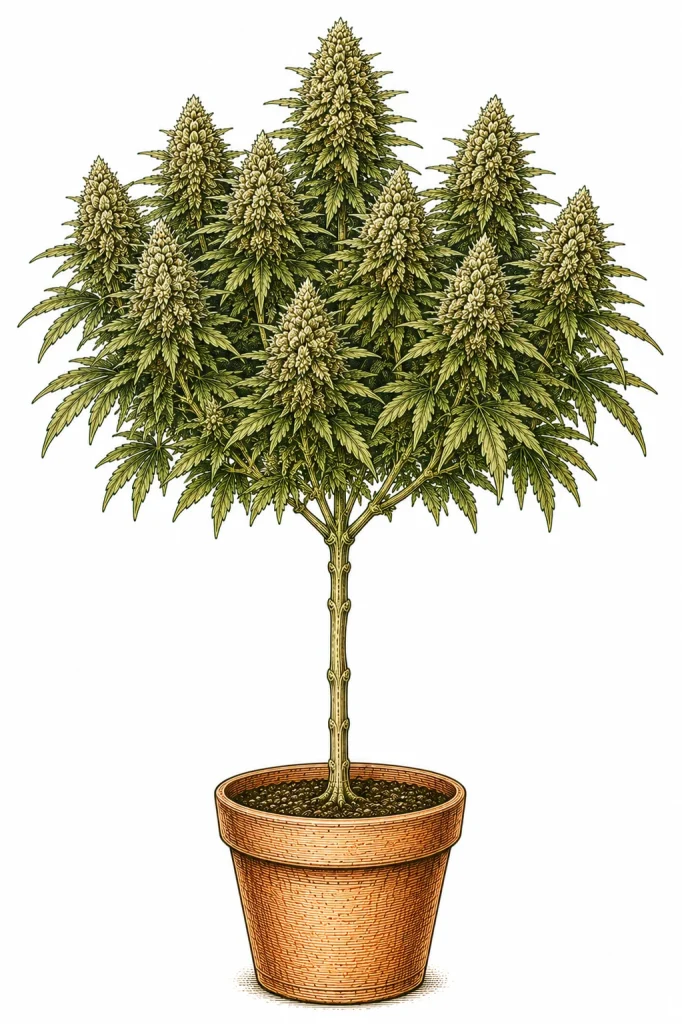
Doing cannabis lollipopping the right way is one of the most effective methods for noticeably increasing your plants’ yield – without expensive equipment. When lollipopping cannabis, you selectively remove the lower, poorly lit branches and leaves so the plant puts all its energy into the upper, well-lit colas. The technique gets its name from the way the plant looks afterward: a bare stem with a dense bush on top – like a lollipop. If you know the right timing and the correct technique, lollipopping can get you noticeably bigger and denser buds at harvest.
What is cannabis lollipopping and why does it work?
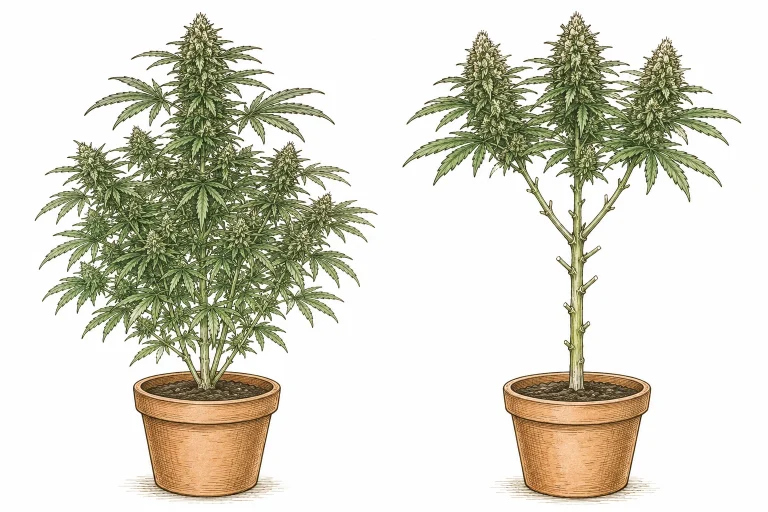
When lollipopping cannabis, you completely remove all branches, leaf nodes and small bud sites in the bottom third to half of the plant. The goal is simple: redirect energy — the plant controls this distribution through apical dominance (German source), a hormonal signaling network that gives the main shoot priority over the lower side shoots. The lower branches of a cannabis plant get much less light than the upper colas. Even with optimal lighting, the light can’t fully penetrate the dense layers of leaves. What forms down there are so-called popcorn buds – small, airy buds with little substance and low potency.
The plant’s energy balance is crucial. Cannabis produces a certain amount of photosynthates per day, depending on light, temperature and nutrients. If this energy is spread across dozens of small, shaded sites, less is left for the main colas. If you consistently remove the lower energy consumers, everything flows upward – the result is much more massive and resinous buds. Cannabis lollipopping isn’t a stress response of the plant, but a targeted way of steering its energy flow.
In addition, cannabis lollipopping greatly improves air circulation in the lower part of the plant. Dense, shady areas with little air movement are an ideal breeding ground for molds like bud rot (botrytis, gray mold). Keeping the stem clear reduces the moisture between the leaves and significantly lowers the risk of infection. Especially in humid grow tents with limited ventilation, this side effect is almost as valuable as the yield boost itself. You’ll find more on creating the ideal environment in your grow tent in our complete guide to growing cannabis indoors.
- Popcorn buds form because the lower branches get too little light
- Energy is redirected from the bottom to the top – more mass in the main colas
- Better air circulation significantly lowers the risk of mold
- The stem stays clear – the plant looks like a lollipop
- No expensive equipment needed – just a clean pair of scissors
The right time for cannabis lollipopping
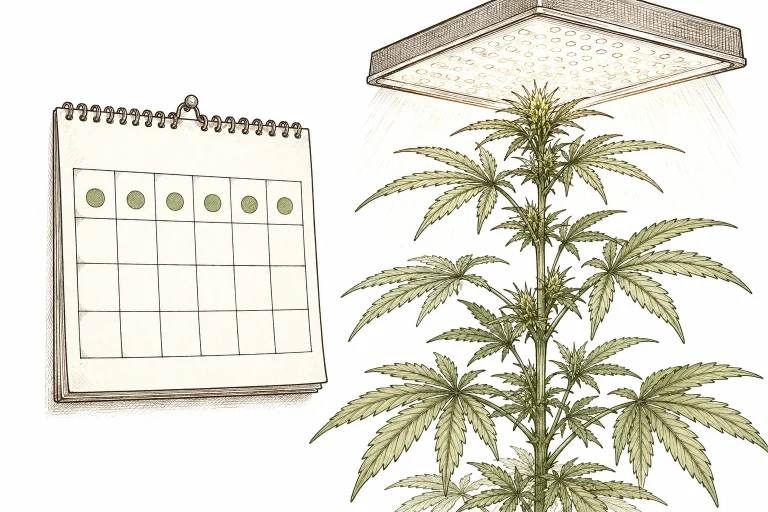
Timing is crucial for cannabis lollipopping – too early, and the plant loses important energy production in the vegetative stage; too late, and the stress slows bud development in a critical phase. As a rule of thumb, cannabis lollipopping happens at the transition to the flowering stage , meaning around the time you switch your lights to 12/12, or in the first one to two weeks of flowering.
The ideal window is between day 1 and day 14 of the flowering stage. During this period, the plant is still stretching a lot (the so-called flower stretch), and its energy is shifting from vegetative to generative development anyway. A targeted cut in this phase costs the plant little, because the lower buds haven’t built up any significant biomass yet. The plant recovers quickly and invests its resources directly into the growing upper buds.
After day 21 of flowering, you should skip any further cannabis lollipopping. From this point on, the bud sites are so far developed that any intervention does more harm than good. The plant is in the bud-building phase and responds to stress by slowing down bud growth. If you’ve waited until then, simply leave the remaining branches – popcorn buds are still usable, even if they’re smaller. For autoflowering strains, the window is even narrower: lollipopping cannabis is recommended no earlier than week 3 of the total life cycle and never later than weeks 4 to 5, because the flower stretch is very short.
A common mistake is combining cannabis lollipopping with other stressful interventions in the same period. If you’ve recently topped, supercropped or transplanted, give the plant at least seven to ten days to recover before you start lollipopping. Stacking stress in a short period can slow growth down considerably and, in the worst case, push the plant into hermaphroditism.
- Optimal window: day 1 to 14 of the flowering stage (flip to 12/12)
- At the flip: lollipopping is possible right when you switch to 12/12
- After day 21 of flowering: no more lollipopping – too much stress
- Autoflowers: only between weeks 3 and 5 of the total life cycle
- Don’t combine with fresh topping or transplanting – plan in recovery time
Cannabis lollipopping step by step: the guide
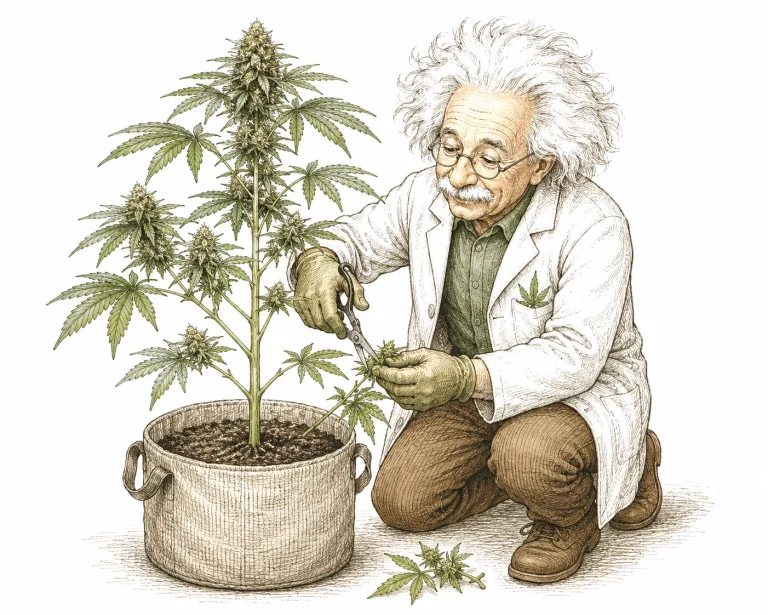
First, get your tools ready. You need sharp, clean scissors – ideally bonsai scissors or pruning shears (German) with fine blades. Disinfect the scissors thoroughly with isopropyl alcohol or another suitable disinfectant so you don’t transfer pathogens from plant to plant. It’s best to wear thin latex gloves so the resin from your plants doesn’t stick to your skin and you work hygienically at the same time.
Look at the plant from a distance first and define the lollipopping zone. As a rule, you remove everything in the bottom third of the plant’s height. With very bushy plants, the bottom half can also make sense. The line isn’t set in stone – what matters is whether a branch plausibly gets enough light to develop a usable cola. Branches you can cover with the flat of your hand without direct light falling on them can go.
Now work systematically: start at the bottom and work your way up. First remove all small, complete side branches in the lower zone. Next come individual leaves covering nodes, and finally all small bud sites (preflowers) sitting in the shade. Cut each branch as close to the main stem as possible without cutting into the stem. Don’t leave any stubs – they can become entry points for mold and bacteria.
After lollipopping, take it easy on the plant for 24 to 48 hours. Don’t water over the cuts right afterward, and avoid high temperatures or drafts blowing directly on the wounds. The plant now pulls its resources from the lower zone and redirects them upward. After just three to five days, you’ll see the upper bud sites put on noticeable size. Another light touch-up pass in week two of flowering is perfectly fine if new small branches have grown back after the stretch.
Finally: remove all cut plant material from the grow tent immediately. Plant debris left lying around rots quickly and can release mold spores. A clean grow space is a must after every intervention. We explain in detail how to keep your grow at the right humidity and clean in our overview of Cannabis Growing Techniques: LST, Topping, SCROG & More.
- Disinfect your scissors, put on gloves – hygiene is a must
- Define the lollipopping zone: bottom third to half of the plant
- Cut branches cleanly at the stem – don’t leave stubs
- Remove side branches, individual leaves and bud sites
- After cutting: 24–48 hours of rest, no extra stress
- Dispose of cut plant material immediately
Cannabis lollipopping done right: how much should you remove?
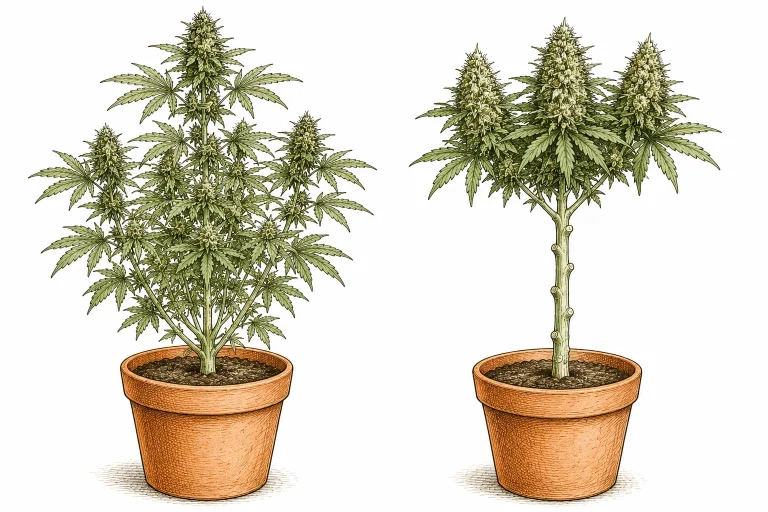
The most common question about lollipopping is: how aggressive can I be? The answer depends on the strain, growth pattern and lighting setup. As a basic rule: never remove more than 30 to 40 percent of the total leaf mass at once. Leaves are your plant’s photosynthesis factories – stripping too aggressively puts the plant under real stress that can take weeks to recover from.
Heavily branched, bushy indica phenotypes can be lollipopped more aggressively than slim, sativa-dominant plants. A vigorous indica bush can easily lose the entire bottom third without a noticeable setback, because it has extremely dense areas anyway. A slim sativa , on the other hand, has less surplus growth down low – here it’s often enough to remove small branches and shaded bud sites without cutting off all the leaves.
A common mistake is also taking off the large fan leaves at the top. When lollipopping, the large fan leaves in the upper canopy must stay – they produce most of the photosynthesis. Removing fan leaves is more a topic for cannabis defoliation, a separate technique with different goals that is used at a different time. Lollipopping and defoliation complement each other well, but they shouldn’t be done at the same time or confused with each other.
If you’re unsure how much to remove, start conservatively. It’s better to take less and do a touch-up seven days later than to cut too much at once. Your plant can forgive you for the first scenario – the second noticeably slows bud development. Stick to this formula: clear the bottom third completely, and in the middle zone only remove what clearly gets no direct light.
- Remove no more than 30–40% of the total leaf mass at once
- Indica bush: more aggressive lollipopping is possible
- Slim sativa: go more conservatively, only remove truly shaded branches
- Always keep the large fan leaves at the top
- Lollipopping ≠ defoliation – the two techniques have different goals
- When in doubt: take less and touch up later
Lollipopping and nutrients: what you need to keep in mind
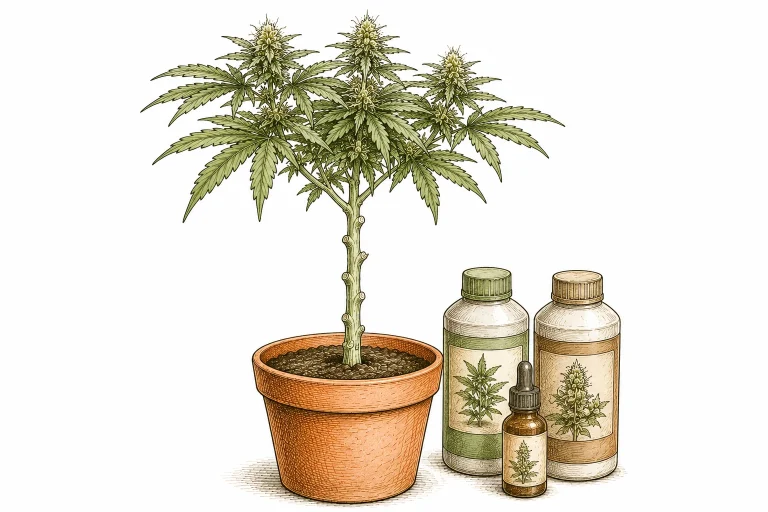
After lollipopping, your plant’s nutrient needs change for a short time. The stress wounds need an adequate supply of the secondary nutrients calcium and magnesium to close quickly. In the days after the intervention, pay special attention to a good baseline supply of micronutrients. At the same time, you should cut back nitrogen slightly if you’re working right at the transition to flowering – too much nitrogen in early flowering promotes vegetative growth and delays bud formation.
A common mistake after lollipopping is overreacting when watering. With less leaf mass, the plant transpires less water for a while. The growing medium dries out more slowly. If you keep watering on your usual schedule, you risk overwatering and, as a result, root problems. Check the growing medium with your finger or by lifting the pot, and give your plant more time between waterings. Our guide on how to water cannabis plants helps you find the right rhythm.
The pH of your water also deserves special attention after lollipopping. Stress can temporarily change nutrient uptake from the growing medium. If your plant shows signs of nutrient problems in the following days – such as slightly yellow lower leaves or slight necrosis on the leaf edges – check the pH first before you change your feeding. A wrong pH is more often the cause of such symptoms than a true nutrient deficiency. You’ll find everything you need to know in our article on cannabis pH levels.
- After lollipopping: make sure calcium and magnesium supply is adequate
- Cut back nitrogen slightly in early flowering
- Adjust your watering rhythm: the plant transpires less after cutting
- Check the pH before changing your feeding
- Yellow leaves after lollipopping: often a pH problem, not a true deficiency
Lollipopping indoors vs. outdoors: the differences
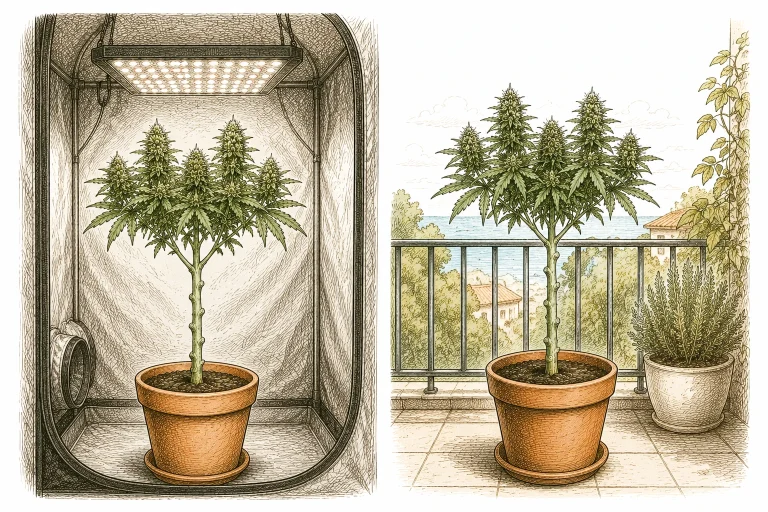
In an indoor grow, lollipopping is almost essential, because the light penetration of artificial lamps – whether LED or HPS – is physically limited. Even powerful lamps can only effectively penetrate 24 to 31 inches (60 to 80 cm) into a dense canopy of leaves. Everything below that lives in partial shade. So for indoor grows: consistent lollipopping isn’t optional, it’s good practice.
Outdoors, the situation is a bit different. The sun moves across the sky during the day and lights the plant from different angles. At certain times of day – especially in the morning and evening, when the sun is low – the lower branches do get direct sunlight. That makes aggressive lollipopping less urgent in an outdoor grow. Still, moderately clearing the bottom third makes sense here too, to improve air circulation and prevent mold, especially in humid climates or when several plants stand close together.
In SCROG setups (screen of green), lollipopping and the SCROG method complement each other perfectly. With SCROG, the plant is spread out horizontally anyway and all shoots are guided evenly through a net. Whatever develops below the net gets hardly any light and should be removed consistently. Lollipopping takes on the job of keeping the area under the net clean. Combining SCROG and lollipopping gets the most out of your grow space.
- Indoors: lollipopping is a standard technique because of limited light penetration
- Outdoors: moderate clearing makes sense for better air circulation
- SCROG + lollipopping: an ideal combination – remove everything under the net
- Outdoor grows: watch the mold risk in humid climates
- LED and HPS: both benefit equally from lollipopping
Frequently asked questions
When is the best time for lollipopping cannabis?
The best time is right when you flip to 12/12 or during the first one to two weeks of the flowering stage. You should be done by day 21 of flowering at the latest. For autoflowering strains, weeks 3 to 5 of the total life cycle are recommended.
How many branches should I remove when lollipopping?
Remove everything in the bottom third of the plant’s height, meaning all side branches, small bud sites and shaded leaves in that zone. Make sure you never remove more than 30 to 40 percent of the total leaf mass at once.
Can I combine lollipopping with topping?
Yes, but not at the same time. Both techniques cause stress. Wait at least seven to ten days after topping before you start lollipopping. Stacking stress in a short period can slow the plant down a lot.
Does lollipopping work on autoflowering strains too?
Yes, but you need to be much more careful. Autoflowering strains have little time to recover. Keep the intervention to the absolute minimum and do it early, ideally in weeks 3 to 5. Avoid aggressive lollipopping on autoflowers.
What’s the difference between lollipopping and defoliation?
Lollipopping removes entire branches and bud sites in the lower part of the plant and shapes it into a lollipop. Defoliation, on the other hand, selectively removes individual large fan leaves throughout the whole canopy to let light penetrate deeper. The two techniques complement each other but have different goals.
My plant shows yellow leaves after lollipopping – what should I do?
First check the pH of your water and growing medium. Stress-related pH drift is common after this kind of intervention. Also reduce the amount you water, because the plant transpires less water after lollipopping. Only once pH and watering rhythm are right should you look at the nutrient supply.
Conclusion
Doing cannabis lollipopping right is a simple but powerful technique that belongs in every serious grow routine. With the right preparation, the optimal window in the first two weeks of flowering and clean cuts, you can avoid popcorn buds and harvest much bigger main colas. Combined with an adjusted feeding and watering routine after the intervention, you get the full potential out of your plants. Once you’ve done lollipopping consistently, you’ll quickly understand why experienced growers use this technique in every grow.
