

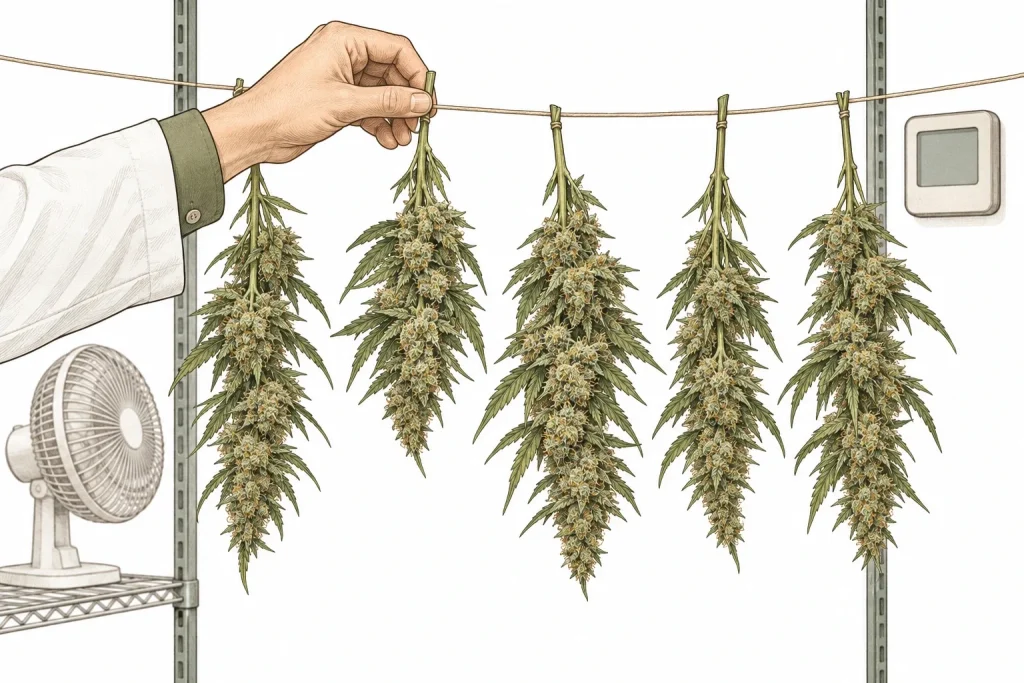
Drying cannabis is one of the most important stages of your whole grow, and the one beginners underestimate most often. Dry your buds too fast or under the wrong conditions and you risk losing aroma, getting harsh smoke and, worst case, mold. The right temperature, good airflow and the correct drying time largely decide whether your harvest reaches its full potential. In this guide, you’ll learn step by step how to dial in your drying process and avoid the most common mistakes.
Why Drying Cannabis the Right Way Matters So Much
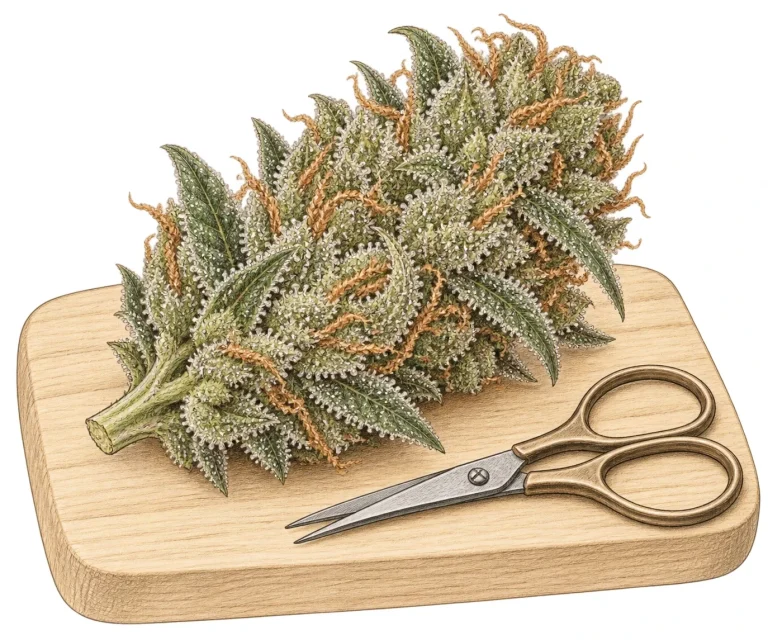
Right after harvest, a fresh cannabis plant still holds 70 to 80 percent water. That water needs to come out slowly and in a controlled way, so the plant material, including chlorophyll, terpenes and cannabinoids, can develop properly. Drying too fast at too high a temperature can destroy volatile terpenes, the compounds behind a strain’s signature flavor and aroma. Want to know which cannabis terpenes exist and what they do? We cover that in a separate guide.
Drying is also your first line of defense against mold. Buds that dry too slowly or sit in air that’s too humid create perfect conditions for bud rot (botrytis, gray mold) and other molds. So it’s all about balance: slow enough for top quality, but fast enough to give mold no chance.
Lots of growers think the hard work is done once the plant is chopped. In reality, drying kicks off an equally important stage that shapes the flavor, effect and shelf life of your final product. Take the same care with drying as you did with growing, and you’ll be rewarded with noticeably better bud.
- Drying too fast at high temperatures can wipe out valuable terpenes
- Drying too slowly in high humidity encourages mold
- Proper drying improves flavor, aroma and smoke quality
- Chlorophyll breaks down naturally during a slow dry, which makes the smoke smoother
- Drying is the direct lead-in to curing
The Best Temperature for Drying Cannabis
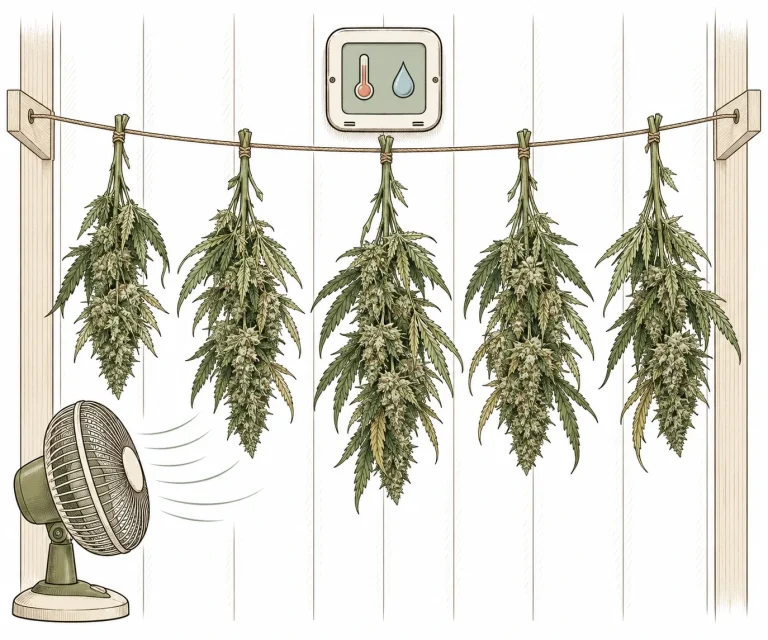
The ideal drying temperature for cannabis is between 59 and 70 °F (15–21 °C). The sweet spot most experienced growers recommend is around 64 to 68 °F (18–20 °C). At these temperatures, your buds dry slowly and evenly without losing valuable terpenes to evaporation. Stay below 77 °F (25 °C) at all costs. Higher temps do speed things up, but at the expense of aroma and quality.
Humidity (relative humidity, RH) matters at least as much as temperature. The ideal range is 45 to 55 percent RH. If the air is too dry, below 40 percent, the outer layers of your buds dry too fast while the inside stays moist, which can set you up for mold later in a sealed jar. Above 65 percent, you’re looking at a serious mold risk. To learn how to keep temperature and humidity in the target range around the clock, check out our guide on setting up a cannabis drying room (German).
That’s why a digital thermo-hygrometer (German) (German) isn’t an optional extra. It’s a must-have for any serious grower. Only when you know and control your environment can you consistently produce quality bud. Small swings within the normal range are no problem, but extreme spikes, especially upward, can put your entire harvest at risk.
- Ideal temperature: 64–68 °F (18–20 °C), with a minimum of 59 °F (15 °C) and a maximum of 70 °F (21 °C)
- Ideal humidity: 45–55% relative humidity (RH)
- Keep temperatures below 77 °F (25 °C)
- Below 40% humidity, buds can dry unevenly
- Above 65% humidity, mold becomes a serious risk
- Check your thermo-hygrometer every day
Drying Cannabis: Drying Time and Stages at a Glance
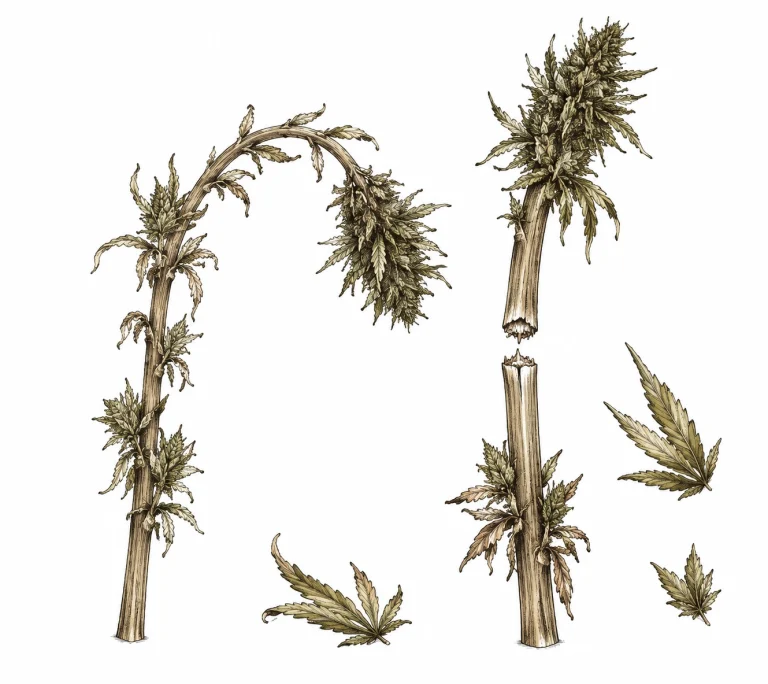
Under the right conditions, drying cannabis takes 7 to 14 days. Smaller, airier buds can be ready after 7 to 9 days, while big, dense colas may need up to two weeks. A good rule of thumb: dry a little longer rather than jar too early. If you jar too soon, you risk mold in your curing containers.
During the first three to four days, the buds lose most of their water. At this stage, they often smell grassy, like fresh-cut lawn. That’s normal and a sign that chlorophyll is still breaking down. From day 5 on, the typical cannabis aroma starts to come through. If you jarred your buds too early, that grassy smell can stick around and the smoke can turn harsh.
You can tell your buds are dry enough with the snap test: bend one of the small stems that hold the buds. If it breaks with a clean snap, your buds are ready for curing. If it bends without breaking, they need more time. If the stems already feel brittle like paper and the buds feel too crispy, they have dried too long.
- Ideal drying time: 7–14 days
- Days 1–4: most water loss, grassy smell is normal
- Days 5–7: the typical cannabis aroma develops
- Days 7–10: do the snap test
- Snap test: small stem breaks cleanly = ready for curing
- Stem bends = keep drying
The Right Method: Hang Dry or Use a Drying Rack?
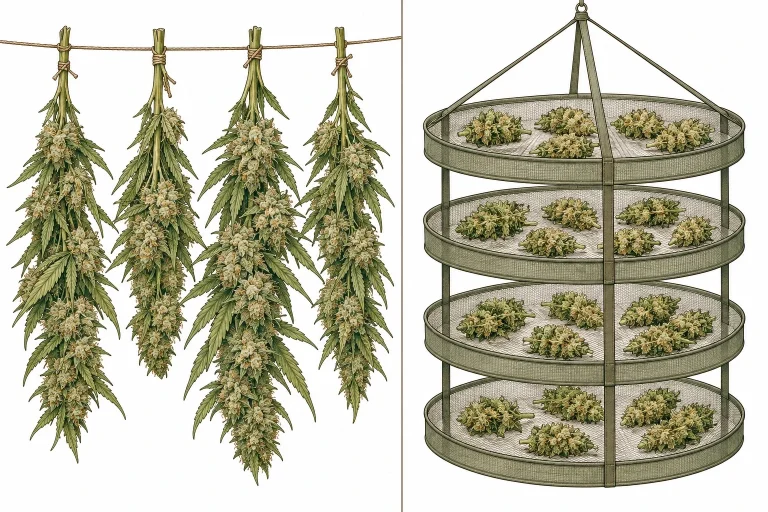
The classic method, and the one most growers prefer, is hanging whole branches or the entire plant upside down. This keeps the plant material intact, the buds dry evenly, and moisture can slowly escape through the stems. Give each branch enough space so air can circulate freely. A drying room or drying tent with a small fan that moves the air indirectly is ideal.
You can also dry buds on mesh drying racks. This method works especially well if you’re short on hanging space or only want to dry a few buds. Flip the buds regularly so they don’t get flat spots and every side dries evenly. Mesh drying racks are cheap and get the job done.
Whatever method you choose: keep direct light off your buds. UV light and heat from direct sunlight or strong lamps degrade THC and destroy terpenes. Always dry in a dark or blacked-out room. Also, keep strong odors out of your drying room, because cannabis easily picks up smells while it dries.
- Hanging upside down: best method for whole branches
- Drying rack: good for limited hanging space or single buds
- Enough space between branches for airflow
- Run a small fan indirectly, with no direct airflow on the buds
- Always dry in the dark, with no direct light
- No strong odors in the drying room
Avoid These Common Drying Mistakes
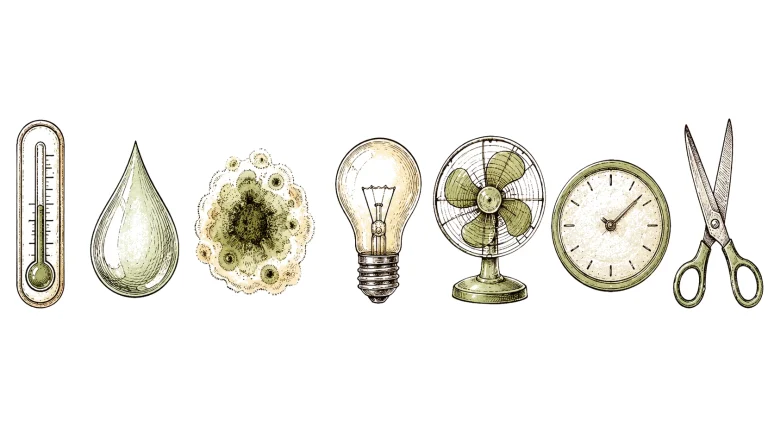
The most common mistake is too much heat, usually out of impatience. Plenty of growers reach for the oven, a heater or direct light from a lamp to speed things up. Sure, the buds dry fast. But the taste is often a real letdown. Terpenes evaporate quickly above 77 °F (25 °C), and what’s left can taste harsh and smell very little like the original strain.
Another classic mistake is jarring too early. If the stems still bend and the buds feel soft, there’s too much moisture left inside. In a sealed jar, that moisture condenses and can lead to mold within just a few days. When in doubt, give it another day or two. The snap test is your most reliable tool here. You’ll find more typical pitfalls and how to fix them in our article on cannabis drying mistakes (German).
Poor air circulation is another common problem. Without enough airflow, damp pockets can form in the dense parts of your buds, and that’s where mold likes to move in. A small USB fan or ceiling fan that gently moves the air around the room, without blowing straight at the buds, is all you need. If you want to play it safe, use a dedicated drying tent with a carbon filter and an exhaust fan.
How you prep at harvest also has a big impact on drying quality. Too much untrimmed leaf material slows down drying and can lead to uneven results. A rough trim right after harvest, known as wet trimming, shortens the drying time. Or you can go with dry trimming and cut after drying. Many growers prefer this, because it can preserve terpenes better. We compare the pros and cons of both methods in detail in our guide to wet vs. dry trimming (German).
- No heat to speed things up – terpenes evaporate above 77 °F (25 °C)
- Don’t jar too early – do the snap test
- Make sure you have enough air circulation
- Never point airflow directly at the buds
- Keep your drying room free of other odors
- Check for signs of mold every day
What Comes After Drying?
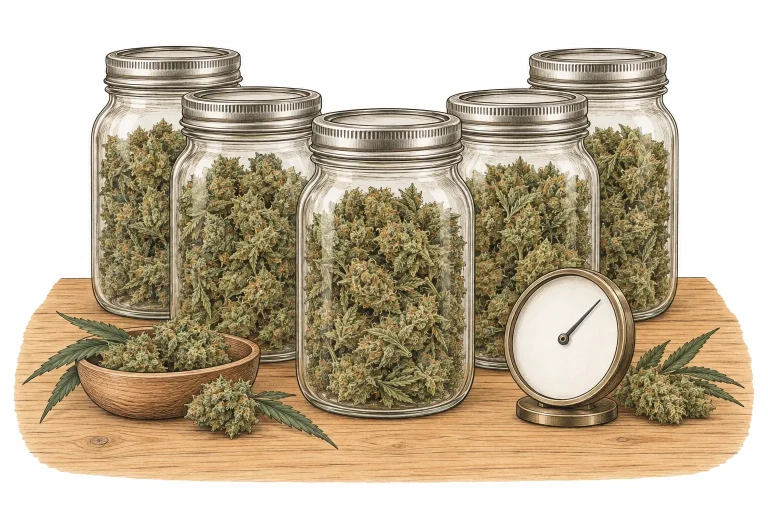
Once drying is done, curing begins – the fermentation phase in a sealed jar. For curing, you fill your buds into airtight glass jars and open them briefly every day. This lets moisture escape and brings in fresh air. The process takes at least two to four weeks, but for top-shelf quality you can keep it going for two to three months.
Curing has a huge impact on flavor, aroma and smoothness. During this process, leftover chlorophyll keeps breaking down, terpenes continue to develop and the smoke gets noticeably smoother. If you take the time to cure your buds properly, you’ll notice the difference on the very first hit. Proper drying plus careful curing is the foundation for top-quality bud.
For curing, glass mason jars with a rubber seal are your best bet. Plastic containers can give off odors and aren’t a great choice for long-term storage. Fill the jars to about 75% and put a small hygrometer in each one. Your target during curing is 58 to 62% relative humidity (RH). Boveda packs in the right size help you hold that level steady. You’ll find matching humidity packs and jars in our cannabis storage comparison (German) (German). For more on getting the cure just right, check out our in-depth curing guide (German).
Once you’ve got the whole chain under control, from successful indoor growing through harvest to curing, you’ll be rewarded with consistent, top-quality buds. Drying and curing aren’t optional extras. They’re a core part of your whole grow method. If your plants ran into problems during the grow that hurt leaf quality, check out our Plant Diagnosis overview for everything you need to know.
- Start curing right after drying
- Use glass jars with a rubber seal
- Open the jars for 10–15 minutes every day (this is called burping)
- Target humidity for curing: 58–62% RH
- Boveda packs help keep humidity in check
- Cure for at least 2–4 weeks to notice a real jump in quality
Frequently Asked Questions
How long does it take to dry cannabis?
Under ideal conditions, drying cannabis takes 7 to 14 days. Smaller buds are often done after 7–9 days, while big, dense colas can need up to 14 days. The snap test tells you when it’s time: if a small stem snaps cleanly, your buds are ready for curing.
What’s the ideal temperature for drying cannabis?
The ideal drying temperature is 64–68 °F (18–20 °C). The acceptable range runs from 59 °F (15 °C) up to a max of 70 °F (21 °C). Avoid anything above 77 °F (25 °C). At those temps, precious terpenes evaporate and the quality of your final product can take a serious hit.
What humidity should you aim for when drying?
The ideal relative humidity (RH) for drying cannabis is 45 to 55%. Below 40%, buds dry too fast on the outside but stay moist inside. Above 65%, mold becomes a real risk. That’s why a thermo-hygrometer is a must-have.
Can I dry cannabis in the oven?
No, that’s not a recommended method. Even on the lowest setting, an oven runs way too hot and destroys terpenes along with some of the cannabinoids. The result tastes harsh, barely smells like the original strain and is clearly lower quality than slow-dried buds.
What is the snap test when drying cannabis?
For the snap test, you bend one of the small stems that connect a bud to the main branch. If it breaks with a clean, crisp snap, your buds are dry enough for curing. If the stem bends without breaking, the buds need more time. If they already feel bone-dry and brittle, they’ve been drying too long.
Is wet trimming or dry trimming better?
Both methods have their place. Wet trimming – trimming right after harvest – shortens drying time and is easier to do. Dry trimming – trimming after drying – is the favorite of many growers, since the leftover leaves protect the buds while they dry and help preserve terpenes. Done right, the difference in flavor between the two is small.
How do I spot mold while drying?
You can spot mold during drying by fuzzy white, grayish, or brownish growth on the buds. Unlike white trichomes, it has an irregular, cotton-like texture. Affected spots often smell musty, like a damp basement. Remove affected buds right away to protect the rest of your harvest. We cover how to reliably identify bud rot (botrytis) in a separate article.
Why does my cannabis harvest barely smell at all?
Usually there’s no single cause – it’s a combination. Some strains are genetically low in terpenes and only smell mild, even when dried perfectly. There’s not much you can do about that as a grower. More often, though, it comes down to harvest timing: If you harvested too early, the terpene profile wasn’t fully developed yet, as we explain in Harvesting cannabis too early (German). Drying temperatures that run too high can also make terpenes evaporate early – see above. If your buds smell more like hay or grass instead of fruity and spicy, that points to curing mistakes. We walk you through them step by step in Cannabis smells like hay (German).
The Bottom Line
Drying cannabis isn’t rocket science – but it takes patience, the right conditions, and regular checks. The golden formula: 64–68 °F (18–20 °C), 45 to 55% humidity, 7 to 14 days, and a dark room with gentle air circulation. Stick to these numbers and use the snap test as your go-to indicator, and you’ll lay the best foundation for top-quality buds. Right after drying comes curing – the last crucial stage on the way to getting the most out of your harvest.
