

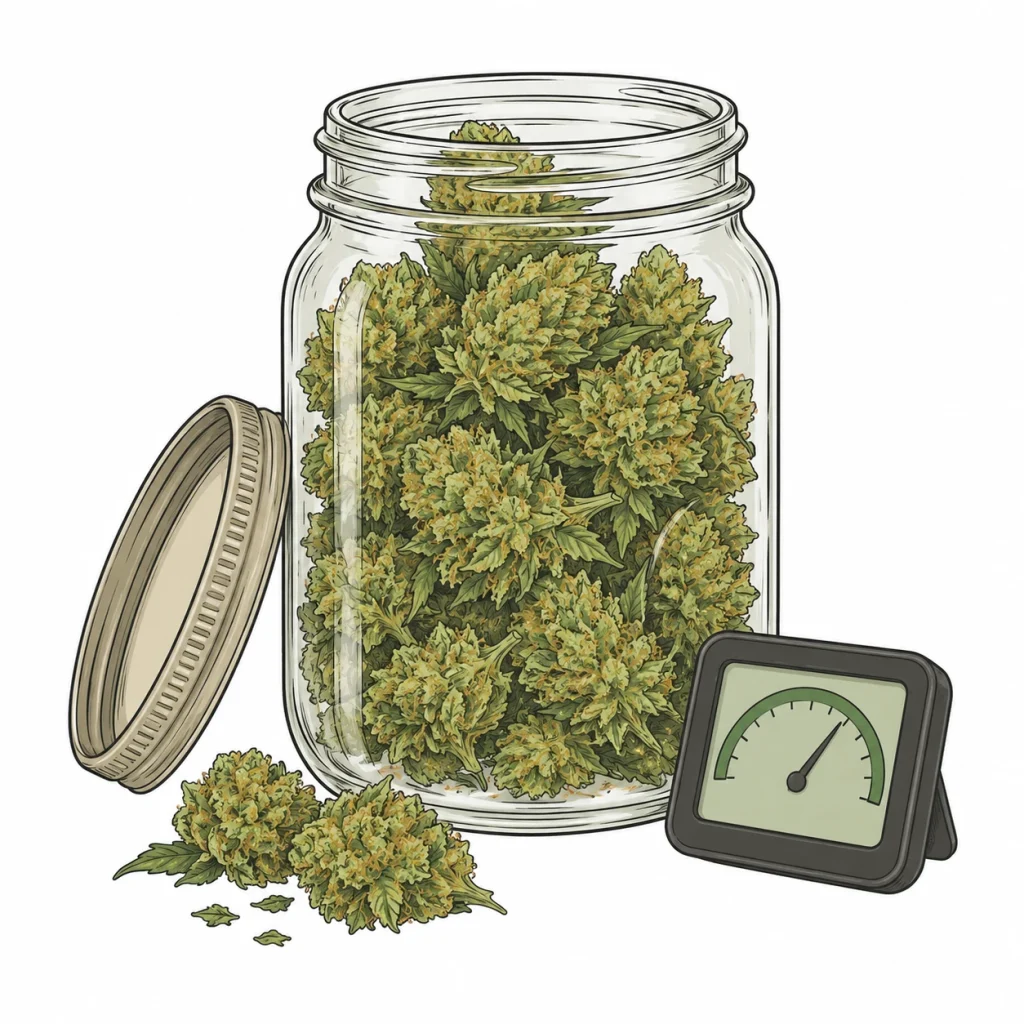
If your cannabis smells like hay, fresh-cut grass or sharp chlorophyll after harvest, that’s a sure sign something went wrong during drying or curing. The hay smell shows up when the chlorophyll in the plant doesn’t break down properly. Plenty of beginners run into this, and so do experienced growers. Weed usually smells like hay when the drying stage runs too fast, the humidity is off, or the curing jars don’t get opened often enough. The good news: in many cases you can still save the smell, as long as you take the right steps and understand what went wrong on a biochemical level.
Why Cannabis Smells Like Hay: The Biochemistry Behind the Problem
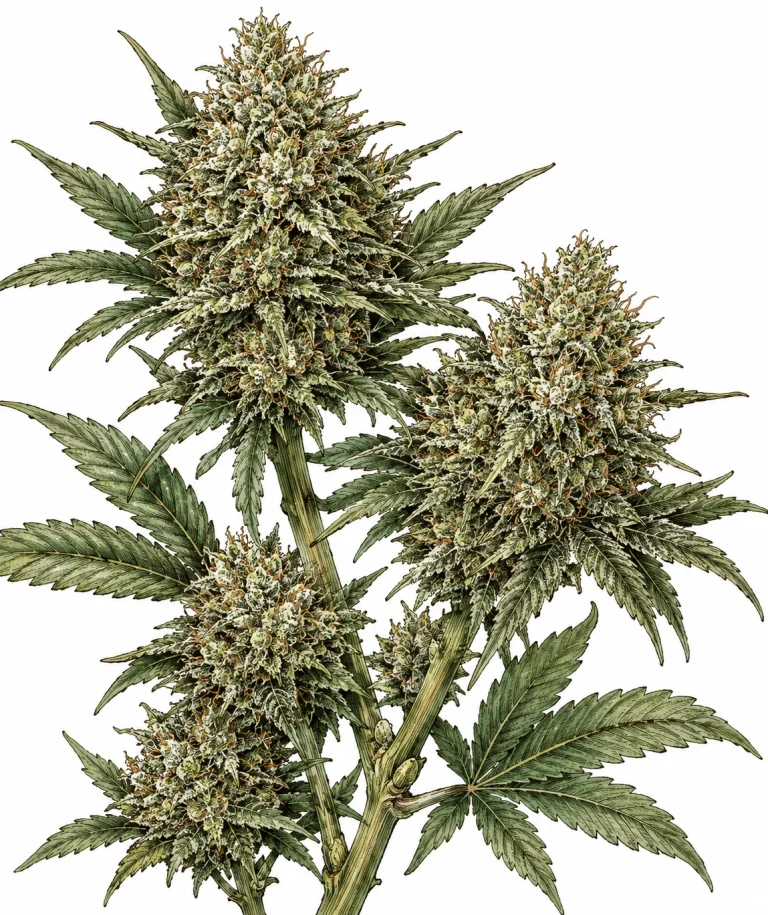
Freshly harvested cannabis contains huge amounts of chlorophyll, the green pigment that drives photosynthesis. The plant can’t live without it. For you as a home grower, though, it’s an enemy of quality. If you flush your cannabis in time before harvest, you lower the chlorophyll and nutrient levels in the plant material before drying even starts, and with them the risk of a hay smell. Chlorophyll gives your buds a sharp, grassy or hay-like smell that can completely cover up the delicate terpenes.
Here’s what happens when you dry and cure correctly: enzymes in the plant break down the chlorophyll slowly and in a controlled way. That takes time, a moderate amount of oxygen and a certain level of leftover moisture. If the process runs too fast, for example because of high temperatures or too much airflow, the chlorophyll gets “locked in” and can’t break down properly anymore. The result: cannabis that still smells like hay weeks later.
Terpenes play a key role, too. These volatile aromatic compounds give every strain its signature smell. You’ll find details on the most important cannabis terpenes and their effects in our terpene overview. When drying goes too fast, the terpenes evaporate before the chlorophyll is gone, and you’re left with a flat, grassy aroma. The balance between drying speed and chlorophyll breakdown is the key to high-quality, aromatic buds.
- Chlorophyll gives freshly harvested cannabis a grassy or hay-like smell
- Enzymes need time, moisture and oxygen to break down chlorophyll
- Drying too fast stops chlorophyll breakdown and “locks in” the hay smell
- With poor drying, terpenes evaporate before the chlorophyll is gone
- Proper drying takes 10–14 days at 59–70 °F (15–21 °C) and 45–60 % relative humidity (RH)
The Most Common Curing Mistakes That Make Cannabis Smell Like Hay
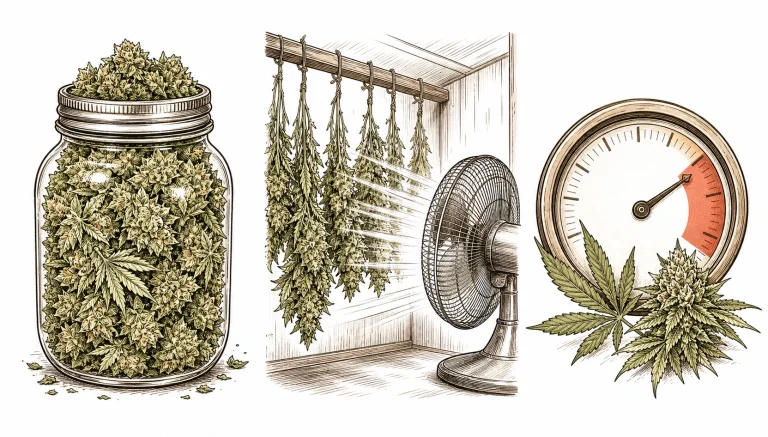
The most common mistake is simply a drying temperature that’s too high. Many growers dry at 77–86 °F (25–30 °C) or even warmer, sometimes because there’s no separate drying space and the buds just hang in the grow tent. At those temperatures, terpenes can evaporate within a few days while the chlorophyll stays behind. Aim for 59–70 °F (15–21 °C) at 45–55 % relative humidity. Low and slow is the way to go.
Another common mistake is too much airflow. A fan blowing straight at your hanging buds can dry the outside within hours while the inside is still wet. Bone-dry outside, damp inside: that’s a recipe for chlorophyll problems and even mold. Air circulation matters, but the airflow shouldn’t hit the buds directly. It should just keep the air in the room moving evenly.
Curing itself has its own classic pitfalls. Mason jars get packed too full, so no air can move between the buds. Or the jars get opened too rarely or not at all (that’s called “burping”). For the first 1–2 weeks, open your curing jars at least once a day for 15–30 minutes. After that, every 2–3 days is enough. Regular burping keeps the chlorophyll breakdown going and helps prevent mold from trapped moisture.
Jarring too early is another classic beginner mistake. If the stems still bend instead of snapping, and the outside of the buds still feels noticeably damp, your buds aren’t ready for the jar yet. Rule of thumb: stems should snap with an audible “crack” when you bend them, and the buds should feel dry on the outside but still hold some moisture inside. The hygrometer in the jar should read 60–65 % RH.
- Drying temps above 70 °F (21 °C) can evaporate terpenes and lock in chlorophyll
- Fans blowing directly on the buds can dry the surface out too fast
- Overfilled curing jars leave too little room for air to move between the buds
- Burping your jars too rarely, or not at all, can stall chlorophyll breakdown
- Jarring too early, while there’s still too much moisture left, invites mold and a grassy smell
- Skipping the trim before drying: leafy material holds more chlorophyll
Step by Step: How to Save Weed That Smells Like Hay
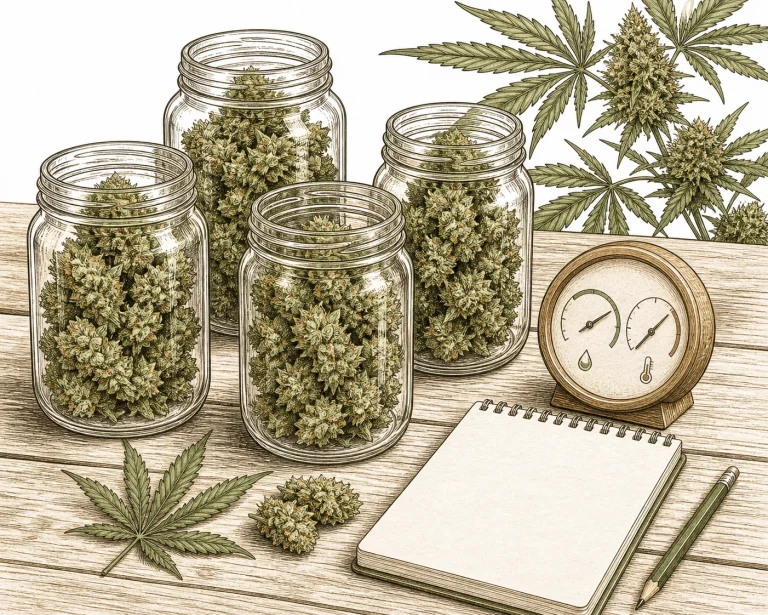
If your buds are already dry and smell like hay, don’t give up yet. Start with an honest check: How long have the buds been hanging, and how dry are they really? Measure the humidity inside the curing jar with a small hygrometer. Below 55 % usually means the buds are already too dry for full chlorophyll breakdown. Above 70 % means you’re at risk of mold.
If your buds are just a little too dry (the hygrometer reads 55–58 % in the jar), drop in a Boveda or Integra Boost pack rated for 62 %. These packs regulate the humidity in the jar on their own and bring back the right conditions for chlorophyll to keep breaking down. At the same time, start burping hard: open your jars two to three times a day for 30 minutes each. It takes several weeks, but the results can be surprisingly good.
If your buds are still softer and the jar reads 62–68 %, you’re in better shape. Consistent daily burping, the right temperature (64–68 °F / 18–20 °C) and darkness are usually enough. Light speeds up the breakdown of terpenes and cannabinoids, so keep your jars in a dark cabinet or box. After 2–4 weeks of steady curing, the hay smell should fade noticeably and the strain’s own terpene aroma should come through.
What you really can’t save: buds that have already grown mold from poor storage, or buds so dry and crumbly that there’s no moisture left at all. In those cases, the enzymatic breakdown of chlorophyll has basically stopped. You can still use the material for extracts or infusions, but for smoking it’s sadly a lost cause.
- Put a hygrometer in the curing jar and check the current humidity (target: 60–65 %)
- Buds too dry? Add a Boveda or Integra Boost pack (62 %) to the jar
- Burp hard: for the first few weeks, open the jars 2–3 times a day for 30 minutes each
- Drop your curing temperature to 64–68 °F (18–20 °C) and keep the jars in the dark
- Give it 4–8 weeks: chlorophyll breakdown is a slow biochemical process
- Heavily molded or bone-dry material can’t be saved
How to Keep Your Weed from Smelling Like Hay: The Ideal Drying and Curing Setup
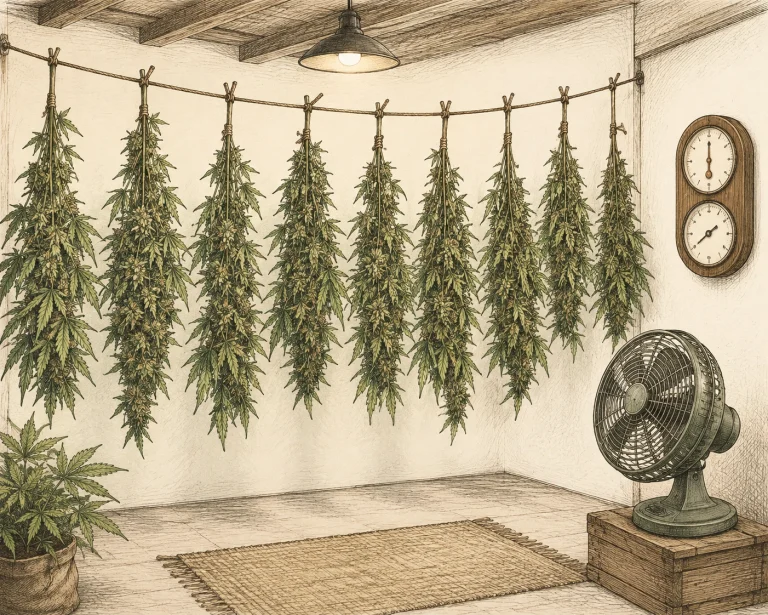
The best way to avoid the hay smell is to dry right from the start. Hang your buds or whole branches upside down in a dark room at 59–70 °F (15–21 °C) and 45–55 % relative humidity (RH). Our guide on setting up the perfect drying room walks you through it in detail. A small fan keeps the air moving in the room, but never point it straight at the buds. Under these conditions, drying takes 10–14 days, sometimes up to 3 weeks for especially big buds or dense colas.
Good drying actually starts before harvest: Many experienced growers give their plants a full dark period for the last 48 hours before the chop. The idea is to boost resin and lower chlorophyll. You should also trim carefully: the less leafy material left on your buds, the less chlorophyll has to break down later. Dry trimming (after drying) takes more work, but it’s gentler on the trichomes. For a rundown of all the common mistakes, check out our article on cannabis drying mistakes.
Once your buds pass the dry test (stems snap with an audible crack, buds feel dry on the outside), move them into airtight glass jars (German). Fill the jars about 75 % full, never to the top. Drop a small hygrometer in right away and check the reading after 12 hours. If it’s above 70 %, take the buds out and let them air-dry for another hour. Readings between 60–65 % are ideal for curing.
If you want to set up your grow like a pro, a dedicated drying room or drying box is one of the best investments you can make. An empty grow tent with controlled temperature and humidity works just as well. Read through a detailed cannabis indoor grow guide and you’ll see that post-harvest handling matters just as much as the grow itself. Your drying and curing setup deserves the same care as your lighting or your feeding plan.
- Drying room: 59–70 °F (15–21 °C), 45–55% RH, dark, gentle indirect airflow
- Drying time: at least 10–14 days, never less than 7 days
- Stem test: stems should snap audibly, not bend
- Fill curing jars no more than 75%. Never overpack them
- Hygrometer in the jar: target 60–65% RH
- Burping routine: daily in weeks 1–2, then every 2–3 days
- A 48-hour dark period before harvest may lower chlorophyll levels
- Trim before or after drying: the less leaf material, the less chlorophyll
Hay Smell vs. Normal Curing Smell: How to Tell the Difference
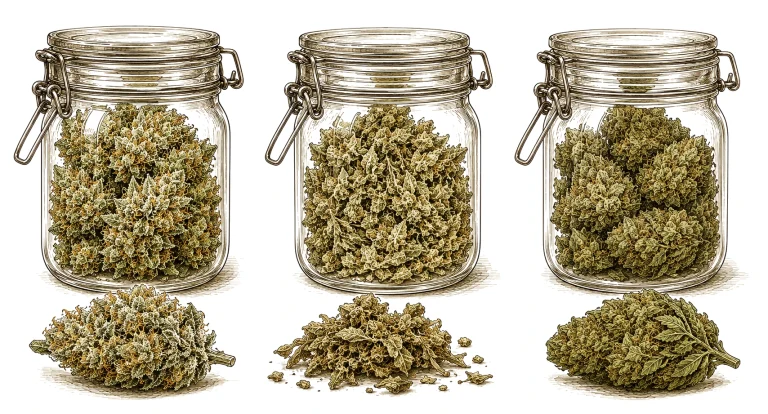
Freshly dried cannabis always smells a little grassy. That’s normal and no reason to panic. During the first 1–2 weeks of curing, a light hay smell mixed with the strain’s own aroma is completely normal. The chlorophyll is still breaking down and the terpenes are settling in. It only points to a real problem if the hay smell still dominates after 3–4 weeks of consistent curing and none of the strain’s character comes through.
You can spot a healthy cure when the smell gets a little more complex and pleasant every day you open the jars. Some growers call this the aroma “waking up.” Fruity, earthy, piney or floral notes get stronger and clearer. If grassy or hay notes stay dominant and nothing changes, something has likely gone wrong.
Another clear warning sign is an ammonia-like or fermented smell when you open the jars. It means the buds went into the jars too wet, and bacteria or mold may be starting to take hold. Act right away: open the jars, take the buds out and check them closely for any sign of mold. When in doubt, throw it out. That beats smoking moldy weed. For a more detailed overview of possible post-harvest problems, check out the cannabis Plant Diagnosis hub.
Good to know: bud color gives you clues too. Properly cured buds keep their rich green and purple hues, with visible clear to amber trichomes. Buds that dried too fast and smell like hay often look paler, more yellow or brownish, and the trichomes look duller. That’s because the same oxidation process that breaks down terpenes also destroys chlorophyll and carotenes.
- A light hay smell during the first 2 weeks of curing is normal
- Problem sign: after 3–4 weeks of curing, a hay or grass smell still dominates
- Good sign: the smell gets more complex and pleasant every time you burp the jars
- Warning sign: ammonia or fermented smell = buds stored too wet, risk of mold
- Pale, yellowish buds after drying point to a drying process that was too fast
- Clear to amber trichomes = proper curing; dull trichomes = loss of quality
Cannabis Smells Like Hay: Special Cases and Common Misconceptions
A common misconception: some growers believe that trimming leaves while the plant is still fresh (“wet trim”) automatically means less chlorophyll and a better smell. That’s only partly true. With fewer leaves acting as a natural moisture barrier, wet-trimmed material can dry too fast, which can actually backfire. Dry trimming, where you trim only after drying, gives your buds more time and protection for a slow, controlled process.
Another common question: “Can I quick-dry my buds in the oven on low heat?” The answer is a clear no. Fast drying with heat, whether in the oven, the microwave or any other way, stops the enzymatic breakdown of chlorophyll, destroys terpenes and cannabinoids, and leaves you with harsh, bad-smelling bud. These methods are only okay in a real pinch, when you just want a quick test hit. For storage and quality, they’re a no-go.
Some strains smell more earthy or spicy than fruity even after a proper cure. That comes down to the strain and isn’t a mistake. Still, the difference between a subtle, strain-typical aroma and a true hay smell is almost always easy to notice. If you’re not sure whether you’re dealing with a curing mistake or just a strain with a low-key aroma, compare your buds with dried flower from another source or ask the community.
One last word on patience: quality cannabis takes time. Many of the best results come after 6–8 weeks of curing, and some strains don’t reach their full potential until 3–4 months in. The urge to smoke early is understandable, but once you’ve tried a batch after a proper long cure, you’ll never want to crack the jars too soon again. And if you keep an eye on the causes of yellow cannabis leaves during the grow and keep stress to a minimum, you’ll bring healthier plant material to harvest, which can noticeably improve your cure.
- Wet trimming isn’t automatically better. Dry trimming protects buds from drying out too fast.
- Speed-drying in an oven or microwave destroys terpenes and stops chlorophyll from breaking down.
- Subtle, strain-typical aromas aren’t a flaw. A true hay smell is.
- Ideal curing time: 4–8 weeks minimum. Some strains benefit from 3–4 months.
- Stressed plant material holds more chlorophyll and tends to smell more like hay.
- Keep burping your jars now and then, even after months.
Frequently Asked Questions
Why does my cannabis smell like hay after drying?
The hay smell comes from chlorophyll in the plant that hasn’t fully broken down. Most of the time, that happens because the buds dried too fast, too hot, or with too much airflow blowing directly on them. This can interrupt the enzymatic processes that normally break down chlorophyll. Slow drying at 59–70 °F (15–21 °C) and 45–55% RH, followed by a proper cure in sealed glass jars that you burp daily, fixes the problem in most cases.
Can I still save cannabis that smells like hay?
Yes, in many cases you can. Put the buds in airtight glass jars with a hygrometer and bring the humidity up to 60–65% (use a Boveda 62% pack if you need to). Burp the jars for 15–30 minutes a day and store them in the dark at 64–68 °F (18–20 °C). After 3–6 weeks of consistent curing, the hay smell usually fades noticeably. Buds that are already moldy or completely dried out, however, can’t be saved.
How long do I need to cure cannabis so it stops smelling like hay?
The minimum is 4 weeks of proper curing after drying. Many growers get much better results at 6–8 weeks. Some strains, especially dense indicas or genetics high in chlorophyll, can need up to 3–4 months to develop their full aroma. The worse your drying conditions were, the longer you’ll need to cure.
What’s the difference between a hay smell and the normal smell of fresh cannabis?
Freshly harvested cannabis always smells a bit grassy or green, and that’s normal. A light hay smell is expected during the first 1–2 weeks of curing. It becomes a problem when no strain-specific aroma comes through after 3–4 weeks of curing and the hay smell still dominates. Properly cured buds smell more complex over time: fruity, earthy, piney or floral notes get stronger, while hay and grass fade into the background.
Is speed-drying in the oven an option if my cannabis smells like hay?
No, definitely not. Speed-drying with oven heat, a microwave or other heat sources destroys terpenes and cannabinoids and stops any further chlorophyll breakdown. That makes your buds worse, not better. The only exception: you want to run a quick test on a single bud and you knowingly accept the loss in quality. For actual storage and curing, speed-drying is off the table.
What humidity should I aim for in the curing jar?
The sweet spot is 60–65% relative humidity inside the sealed jar. Readings above 70% mean a risk of mold and call for immediate action (open the jars and let the buds dry a bit more). Readings below 55% mean the buds are too dry for an ideal cure. Boveda or Integra Boost packs with a 62% target can help here. A small digital hygrometer in the jar isn’t a luxury, it’s an essential tool for any serious grower.
Why does my cannabis still smell like chlorophyll after curing, even though I did everything right?
There are a few possible reasons. First, some strains simply produce more chlorophyll than others. Second, your plant may have been stressed during the grow. Stress factors like nutrient deficiencies or lighting problems can raise chlorophyll levels. Third, it may just need more time. Some genetics need 3–4 months. Keeping the whole grow under control, from nutrient burn to other stress factors, pays off in the quality of your harvested buds.
The Bottom Line
Cannabis that smells like hay or chlorophyll is a classic sign of mistakes during drying or curing. Most of the time, the cause is temperatures that are too high, too much airflow or not burping your curing jars enough. The good news: you can often still fix it. The right humidity of 60–65% in the jar, consistent daily burping and enough time (at least 4–8 weeks) can rescue even batches that seem hopeless. If you get drying right from the start (slow, cool, dark and patient), you’ll harvest cannabis that develops its full terpene profile and keeps its aroma for a long time. Remember: post-harvest care matters just as much as the entire grow before it.
