

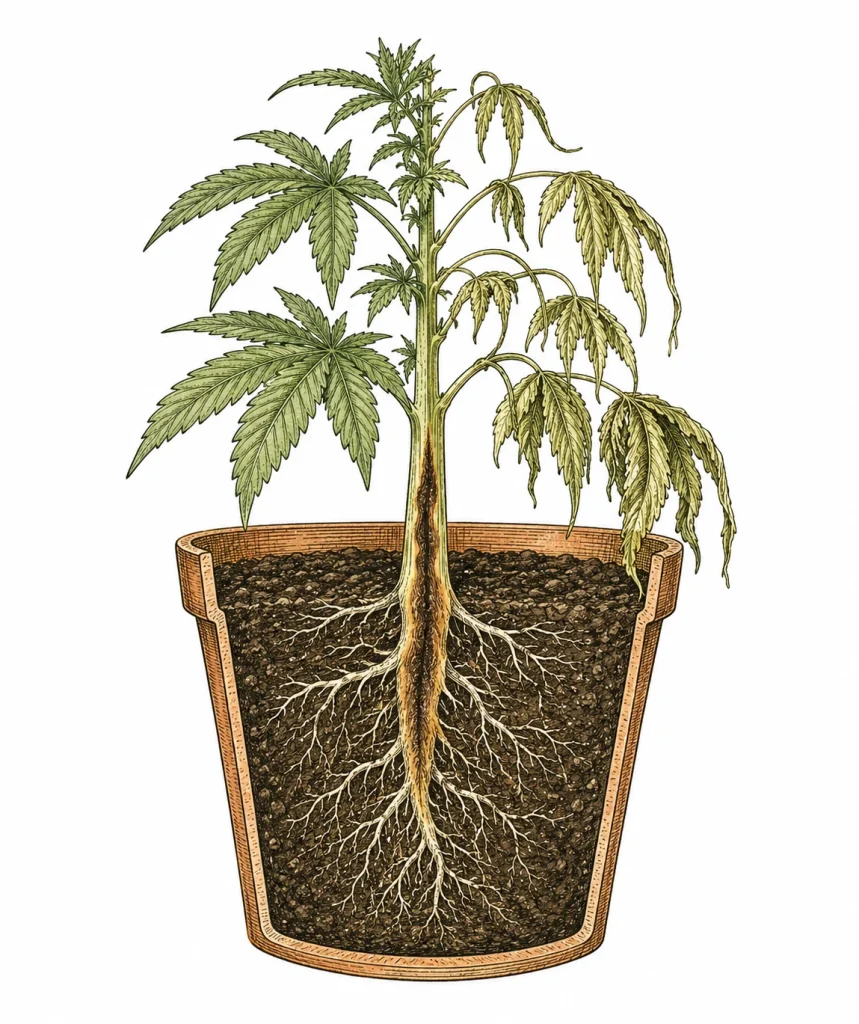
Knowing how to spot fusarium in cannabis is one of the most important skills you can build as a grower, because fusarium is among the most dangerous fungal diseases out there. The soil-borne fungus Fusarium oxysporum attacks your plant’s roots and stem from the inside, clogs its water-conducting vessels and can make even healthy-looking plants collapse within a few days. If you know the early warning signs and act fast, you have a real chance of saving at least part of your harvest or keeping it from spreading to other plants. This article covers everything you need to know about fusarium in cannabis, from the first symptoms to solid prevention.
What Is Fusarium and Why Is It So Dangerous for Cannabis?
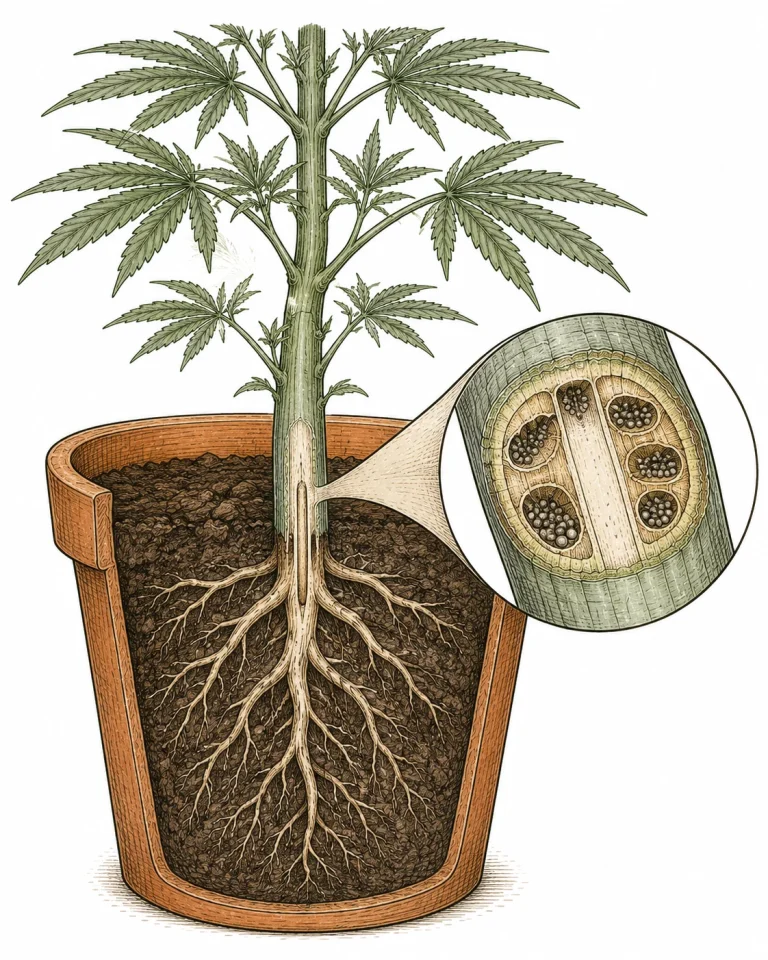
Fusarium is a soil-borne mold from the genus Fusarium. In cannabis, the main culprits are Fusarium oxysporum and Fusarium solani. These fungi live in almost every natural soil. When conditions turn rough, they form extremely tough resting spores called chlamydospores, which can survive in your growing medium for years. That makes fusarium a particularly sneaky enemy: once your medium is contaminated, it can stay infectious for a long time.
The real damage comes from a two-pronged attack. First, the fungus invades the root tissue directly and destroys it, which is known as fusarium root rot. Second, its mycelium grows into the xylem, the water-transport channels in the stem, and physically plugs them. On top of that, fusarium produces mycotoxins, toxic by-products that damage the plant tissue even further. The result is a classic wilt disease: your plant literally dies of thirst, even though there is plenty of water in the medium.
What makes it especially dangerous is how fast fusarium spreads. With warm temperatures between 75 and 90 °F (24–32 °C) and moist medium, an infection can go from a harmless early stage to a completely dead plant within 48 to 72 hours. On top of that, the fungus can travel to neighboring plants through contaminated soil, tools, water and even the air.
- Main pathogens in cannabis: Fusarium oxysporum and Fusarium solani
- Spores survive in the medium for years as chlamydospores
- Two-pronged attack: root rot and clogged water vessels
- Mycotoxins cause additional damage to plant tissue
- Ideal growing temperature for the fungus: 75–90 °F (24–32 °C)
- Spreads via soil, tools, water and air
How to Spot Fusarium in Cannabis: The Typical Symptoms at a Glance
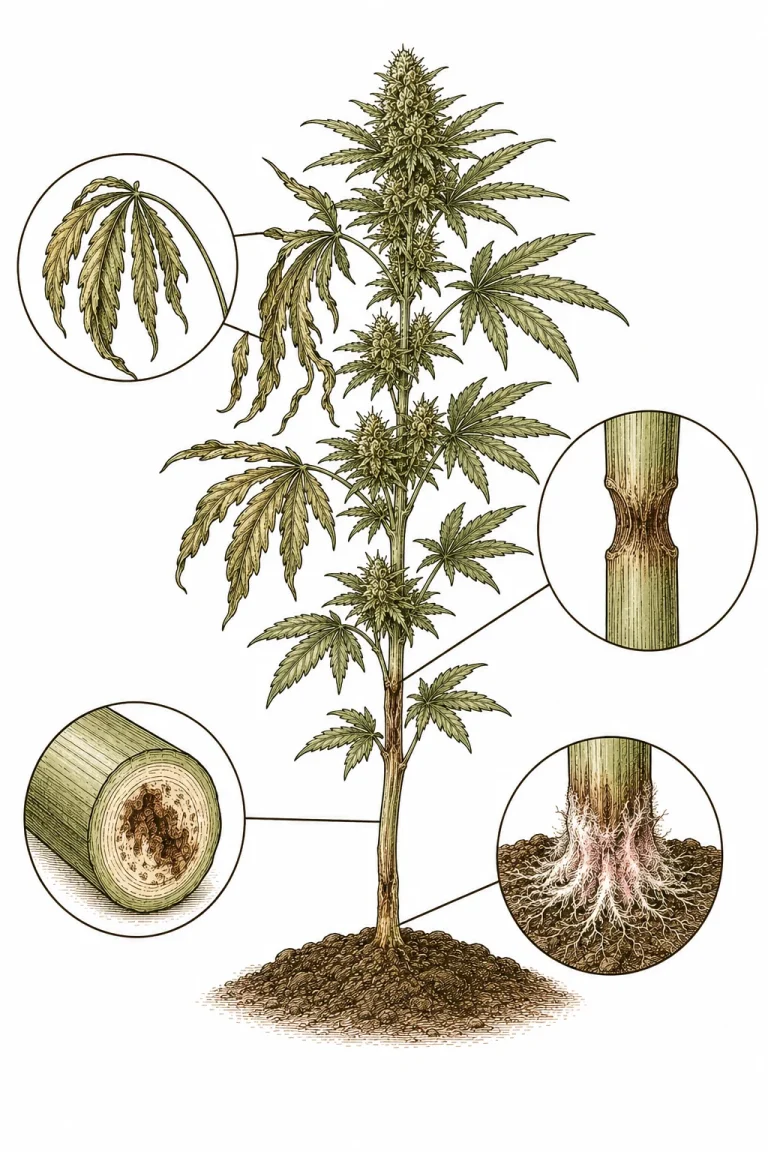
Fusarium symptoms in cannabis fall into different categories, depending on the stage of infection and the part of the plant affected. The key is learning to read the signs early, because once it’s advanced, saving the plant is rarely possible. A common mistake is confusing the first wilting symptoms with underwatering or a nutrient problem.
The first and often most obvious symptom is sudden wilting of individual branches or the whole plant, even though the medium is moist. If you water the plant and it doesn’t bounce back, that’s a strong hint pointing to fusarium. You’ll often also see yellow to brown leaves that progress from the bottom up, which is easy to mistake for a nutrient deficiency in cannabis. Unlike a true deficiency, though, the discoloration spreads unusually fast and is asymmetrical – often only one side of the plant is affected.
A clearer sign is stem rot, also called stem girdling. At the base of the stem, often right at the soil line, you’ll see a brownish, soft, pinched-in area. Look closely and you may spot whitish to slightly pink mycelium. If you cut the stem open, you’ll find brown to reddish-brown discoloration in the vessels, which is considered a reliable diagnostic sign. The roots also turn discolored and get mushy and slimy, much like other forms of root rot in cannabis.
- Sudden wilting even though the medium has enough water
- Yellow to brown leaves that spread quickly and asymmetrically
- Brown, soft girdling on the stem near the soil line
- Whitish to pinkish mycelium visible at the stem base
- A cut-open stem shows brown discoloration in the vessels
- Brown, mushy roots with an unpleasant, rotten smell
- Asymmetrical damage: often only one side of the plant is affected
- The plant doesn’t recover after watering
Causes and Risk Factors: Why Does Fusarium Break Out?
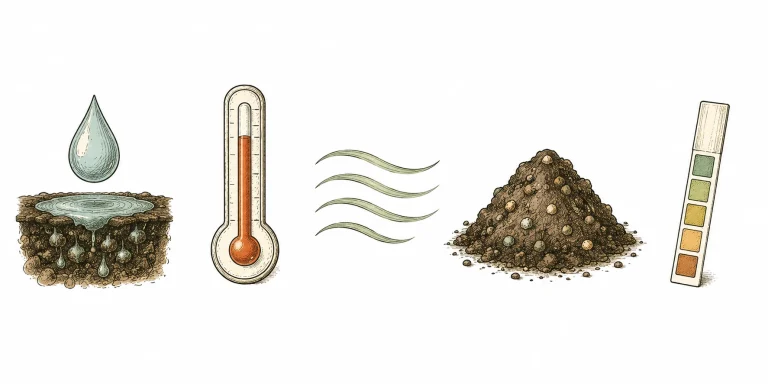
Fusarium is an opportunistic pathogen. It strikes when your plant is already weakened or when conditions give the fungus an easy ride. Once you know these triggers, preventing it gets much easier. The biggest risk factor is a growing medium that stays too wet while temperatures run high. If the root zone stays wet all the time and the temperature climbs above 75 °F (24 °C), the fusarium population can explode.
pH in the root zone matters just as much. If your pH drifts outside the ideal range of 6.0 to 7.0 in soil or 5.5 to 6.5 in hydro, the roots get weaker and more open to fungal attacks. So an off cannabis pH doesn’t just mess with nutrient uptake. It also opens the door to pathogens like fusarium. A growing medium that is packed too tight and drains poorly is another big help for the fungus: it holds water and keeps oxygen away from the roots.
Contaminated starting material is another common way in. Reused soil from a previous grow, unsterilized pots or dirty tools can bring fusarium spores into your grow. Clones from infected mother plants carry the fungus too. On top of that, stress from heavy pruning, nutrient burn or temperature extremes weakens your plant’s defenses and makes it an easy target.
Indoor grows are especially at risk when air circulation is poor. Still, warm, humid air around the base of the stem is the perfect breeding ground for fusarium. Outdoor growing has its risks too, mostly in regions with hot, humid summers or when plants sit in heavy clay soil that drains poorly.
- Constantly wet growing medium at temperatures above 75 °F (24 °C)
- pH outside the ideal range weakens the roots
- Compacted, poorly draining growing medium without enough oxygen
- Reused contaminated soil or unsterilized pots
- Clones from infected mother plants
- Nutrient burn and pruning stress weaken the plant
- Poor air circulation, especially around the base of the stem
- High humidity combined with heat
Telling Fusarium Apart from Other Problems: Getting the Diagnosis Right
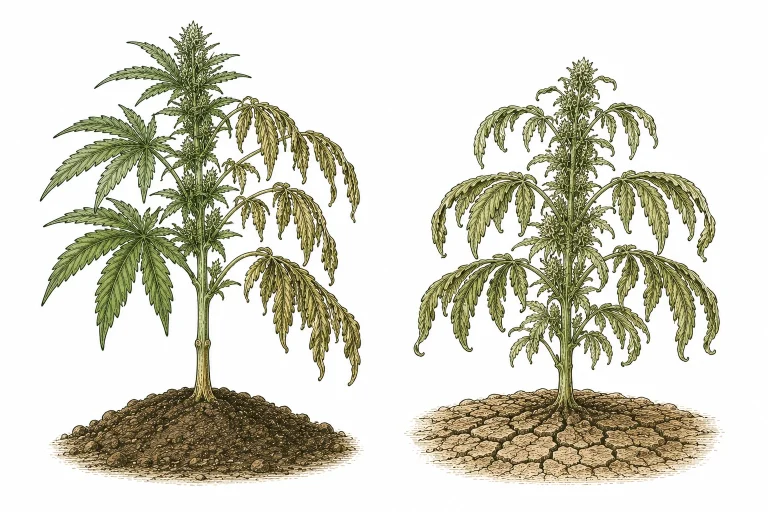
Spotting fusarium on cannabis with certainty isn’t always easy, because the symptoms can look like several other problems. The most common mix-up is with simple underwatering. The key difference: a thirsty plant droops evenly and bounces back quickly after watering. With fusarium, the plant stays wilted even after you water it, and the wilting is often lopsided, limited to one branch or one side.
Yellow leaves from fusarium can look like a nitrogen deficiency or a general nutrient deficiency. The difference is in how fast and in what pattern it spreads. Deficiencies usually develop slowly and evenly, while fusarium yellowing moves fast and patchy. A pinched, constricted stem and no response to watering or feeding also help you tell them apart.
For a clear diagnosis, cut open the stem at the affected spot with a clean, sharp knife. Brown to reddish-brown discoloration in the inner vascular tissue is a sure sign of fusarium. This discoloration inside the stem is what sets it apart from other root problems like pythium root rot. Pythium mainly attacks the outer roots and shows up as slimy, brown roots, but it doesn’t cause the typical discoloration inside the stem. Plant labs can run PCR tests for a 100% certain diagnosis, but home growers rarely need that.
Another disease that often gets confused with fusarium is verticillium wilt. It also attacks the vascular tissue and causes similar lopsided wilting. The most reliable difference shows up in a cross-section of the stem: fusarium turns the vascular tissue orange-brown to red, while verticillium tends to turn it dark brown to black. Fusarium also prefers warm temperatures, while verticillium shows up more in cooler conditions. Since both diseases call for the same first steps (remove infected parts, replace the growing medium, cut back on moisture), pinning down the exact species is secondary for treatment — what matters most is acting early.
Use the Plant Diagnosis overview on PlantClue as well to work through possible causes step by step and rule out other problems. Taking careful stock of every factor – moisture in the growing medium, pH, temperature, your watering habits – helps you see the big picture.
- Fusarium: wilting even though the growing medium is moist, no recovery after watering
- Underwatering: even wilting, quick recovery after watering
- Fusarium yellowing: fast and lopsided. Nutrient deficiency: slow and even
- A cut-open stem shows brown vascular tissue. This is the surest diagnostic sign
- Pythium root rot: slimy roots, no discolored vascular tissue in the stem
- Verticillium: similar to fusarium, but the vascular tissue tends to be dark brown to black instead of orange-brown to red, and it prefers cooler temperatures
- Disinfect your tools before cutting the stem so you don’t spread spores
How to Treat Fusarium in Cannabis: What You Can Do Right Now

Once you’ve diagnosed fusarium in your cannabis plant, you need to act fast and decisively. First things first: isolate the affected plant from all the others right away. Move it to a separate area so the spores can’t spread through the air, your watering water or direct contact. After that, don’t use any tool that touched the infected plant on another plant until you’ve disinfected it thoroughly. 70% isopropyl alcohol or a 10% bleach solution works best.
If you catch it early and only parts of the plant are affected, you can try to save it. Cut away all visibly infected plant parts generously with a sharp, disinfected tool, at least 1 in (2–3 cm) below the visible lesion. Repot the plant into fresh, sterile growing medium and make sure the new pot is disinfected too. Cut back the watering amount drastically and improve drainage so the root zone stays drier from now on. How you water your plants the right way plays a key role here.
As a biological remedy, products based on trichoderma fungi have a solid track record. Trichoderma is a natural antagonist of fusarium. It colonizes the rhizosphere, meaning the root zone, and crowds out harmful fungi. Products with Trichoderma harzianum are available at grow shops and can be used to treat the growing medium or as a watering solution. Mycorrhizal fungi (mycorrhizae) also strengthen the roots and help fend off fusarium infections.
Chemical fungicides usually don’t do much against fusarium in a home grow, because the fungus lives inside the plant’s vascular system where it’s hard to reach from the outside. Copper products can have some effect on surface infections, but they’re no cure-all. At an advanced stage, when the stem is badly constricted and the whole plant is wilting, saving it usually isn’t possible anymore. In that case, remove and dispose of the plant together with its growing medium, disinfect the pot thoroughly and treat your grow space with an antifungal cleaner.
- Isolate the infected plant right away and disinfect your tools
- Remove infected plant parts generously (1 in (2–3 cm) below the lesion)
- Repot into fresh, sterile growing medium in a disinfected pot
- Cut back the watering amount noticeably and improve drainage
- Use trichoderma products as a biological antagonist
- Use mycorrhizal fungi to boost the roots’ defenses
- Advanced infection: dispose of the plant and growing medium completely
- Disinfect your grow space thoroughly after an infection
How to Spot and Prevent Fusarium in Cannabis: The Best Prevention Strategies
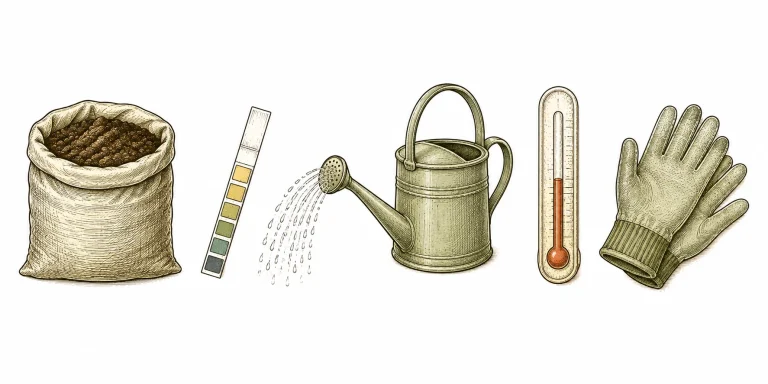
With fusarium, prevention works far better than any treatment. The most important step is using fresh, sterilized growing medium for every new grow cycle. Skip reused soil, even if the last plant looked healthy, because fusarium spores can survive in the soil without causing any visible symptoms. If you recycle soil, you have to heat-sterilize it thoroughly first, and that’s tough to pull off in a home grow.
Keeping an eye on the pH in your growing medium is one of the easiest and most effective ways to prevent problems. Keep the pH consistently in the optimal range and check it regularly. A stable, correct pH for cannabis means healthy roots, and healthy roots are much more resistant to fusarium and other fungal diseases. Back this up by using trichoderma products preventively from the very start of your grow, before any infection shows up.
Good watering habits are just as essential. Let the growing medium dry out enough between waterings so the top 1 in (2–3 cm) of soil is dry before you water again. Avoid waterlogged soil with good drainage in the pot and enough drainage holes. Try to keep the root zone temperature below 75 °F (24 °C), because fusarium grows exponentially faster in warm conditions. Good ventilation in your grow space, especially around the base of the stem, lowers the humidity and can cut the risk of an infection considerably.
Only buy clones and seeds from sources you trust, and check every new plant carefully for signs of disease before it goes into your grow room. Keep all tools, pots and surfaces in your grow space clean, every time. The complete guide to indoor cannabis growing has plenty more tips on good hygiene and on setting up your grow environment so a fusarium outbreak is less likely to happen at all.
- Use fresh, sterile growing medium for every new grow
- Check your pH regularly and keep it in the optimal range
- Add trichoderma and mycorrhizal fungi as prevention right from the start of your grow
- Let the growing medium dry out enough between waterings
- Prevent waterlogged soil with good drainage and drainage holes
- Keep root zone temperature below 75 °F (24 °C)
- Make sure you have good air circulation, especially around the base of the stem
- Fully disinfect tools and pots after every grow
- Only get clones from healthy, trustworthy sources
Fusarium in Your Grow Room: What’s Different in Hydro vs. Soil
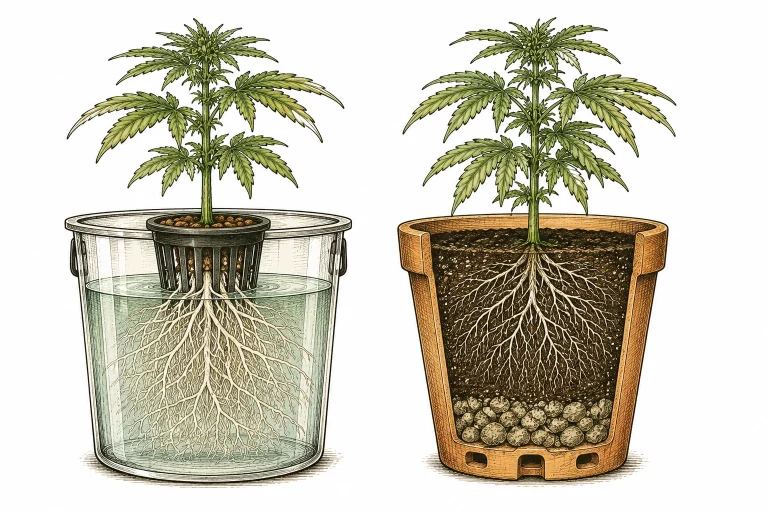
Fusarium can show up in both soil and hydroponic grows, but the way an infection plays out and how you prevent it can differ a lot. In soil, the measures above are what matter most. Soil buffers swings in temperature and pH better, which gives your plants some natural protection. At the same time, soil is an ideal reservoir for fusarium’s long-lasting resting spores.
In hydroponics, including deep water culture (DWC) and other water-based systems, fusarium can spread especially fast. The spores travel straight through the nutrient solution and can infect all the roots at once. Keep your water temperature below 72 °F (22 °C), no exceptions. Warmer water holds less oxygen and helps the fungus grow. Regular full reservoir changes and disinfecting the whole system between runs are especially important in hydro.
Whatever system you run: a good overview of all possible diagnoses helps you react quickly and with confidence. The Plant Diagnosis overview on PlantClue gives you a systematic starting point for tracking down the cause when your plant shows problems. Combine it with what you know about fusarium to get to a solid diagnosis fast.
- Hydroponics: fusarium can spread through the nutrient solution in no time
- Keep water temperature in hydro systems below 72 °F (22 °C)
- Regular full reservoir changes are a must
- Fully disinfect your hydro system after every run
- Soil: better buffering, but an ideal reservoir for resting spores
- In both systems: use trichoderma and mycorrhizal fungi as prevention
Wilting, brown plant parts can also be caused by bud rot (botrytis, gray mold) – but there the infection usually starts in the buds, not in the stem.
Frequently Asked Questions
Can I still save a plant with fusarium?
That depends on how far the infection has gone. In the early stage, when only a few branches are affected and the stem isn’t deeply constricted yet, you have a realistic chance. Cut away infected parts generously, transplant into fresh, sterile growing medium, add trichoderma and cut back on moisture a lot. In advanced cases, when the whole plant is wilting and the stem has turned deep brown, saving it usually isn’t possible anymore.
How do I tell fusarium from pythium?
Both attack the roots, but there are clear differences. Fusarium causes a typical reddish-brown discoloration in the inner vascular tissue of the stem, which you’ll see when you cut it open. The wilting is also often one-sided, with only one side of the plant drooping. Pythium root rot mainly attacks the outer roots and turns them slimy and brown, but it doesn’t cause obvious vascular discoloration in the stem. A constricted stem at the base also points more toward fusarium.
How do I tell fusarium from verticillium?
Both fungi cause similar, often one-sided wilting by attacking the plant’s vascular system. The clearest difference is the color inside a cut stem: fusarium shows orange-brown to red tones, while verticillium is dark brown to black. They also like different temperatures — fusarium shows up more often in warm conditions, verticillium prefers cooler ones. Since both diseases call for similar first steps (remove infected parts, replace the growing medium, reduce moisture), pinning down the exact one usually matters less for treatment.
Can I reuse contaminated growing medium after fusarium?
Generally, no. Fusarium forms long-lasting survival spores called chlamydospores, which can stay alive in the growing medium for years. It’s best to throw out contaminated medium completely. If you really want to reuse your soil, you’ll need professional heat sterilization at over 176 °F (80 °C) for at least 30 minutes. That’s tough to pull off at home, so we recommend always starting with fresh, sterile growing medium.
Can fusarium spread to humans?
Fusarium usually isn’t dangerous for healthy people. In very rare cases, though, it can cause opportunistic infections in people with severely weakened immune systems. When you handle infected plants, we still recommend wearing gloves and a mask so you don’t breathe in spores. It also helps keep you from carrying spores to other parts of your grow.
Do chemical fungicides work against fusarium?
Chemical fungicides have only limited effect against fusarium wilt in cannabis. The fungus sits inside the plant’s vascular system, where it’s hard to reach from the outside. Copper products may help a bit if the infection is very early and still on the surface. Biological methods work much better and last longer, for example trichoderma (Trichoderma harzianum), a natural antagonist that crowds out fusarium in the soil. Either way, prevention beats any chemical treatment.
How can I spot fusarium early enough to save my plant?
The earliest signs are slight, uneven drooping of individual branches or leaves, even though the growing medium is moist. Check the base of the stem regularly for discoloration or constriction, and look for faint white or pink fungal threads. Also check the medium for unusually wet spots or a moldy smell. The more often you take a close look at your plants, the sooner you’ll catch an infection.
For more in-depth background on soilborne fungal diseases, check out the Bavarian State Institute for Viticulture and Horticulture (LWG) (German).
Bottom Line
Spotting fusarium wilt in cannabis early and acting fast is key. This soilborne fungus is one of the most dangerous threats to your plants and can wipe out an entire grow within days. The main warning signs are lopsided wilting even though the medium is moist, a brownish constriction at the base of the stem and brown vascular staining inside a cut stem. Keep an eye on your pH, use fresh growing medium, water correctly and add trichoderma as a preventive. That’s the most effective way to protect your plants. If fusarium is confirmed, isolate the plant right away, remove infected parts, replace the growing medium and thoroughly disinfect your grow space. Every hour counts.
