

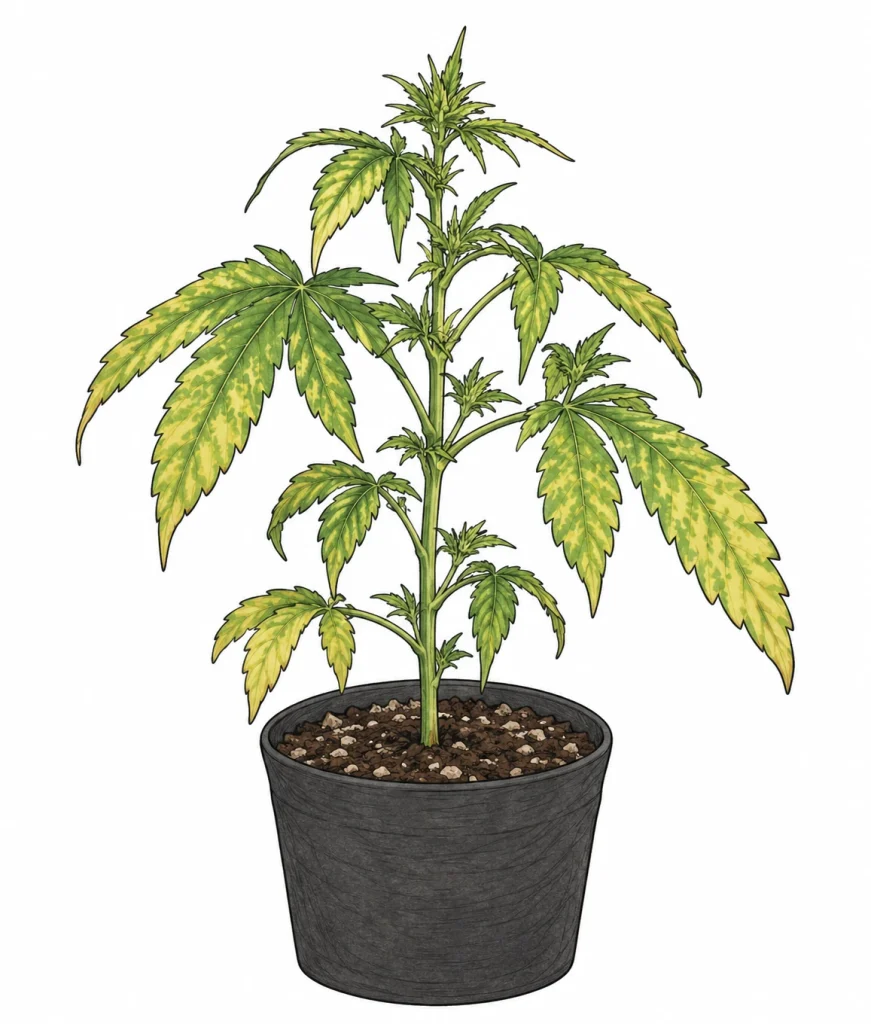
Knowing how to spot HLVd in cannabis is a must for every serious grower. Hop latent viroid is one of the most dangerous and sneakiest plant diseases threatening cannabis grows worldwide. It often infects plants without any obvious symptoms, yet it can still cut your yield by 30% to more than 50%. If you don’t know the early warning signs, you can lose whole harvests without ever figuring out why. In this article, you’ll learn about the symptoms, how it spreads, how to diagnose it, and the only measures that really work against HLVd.
What Is HLVd and Why Is It So Dangerous for Cannabis?
Hop latent viroid (HLVd) is a single-stranded, circular RNA molecule with no protein coat. That makes it not a virus in the classic sense, but an even more primitive pathogen. It was first found in hop plants, which is where the name comes from. In cannabis, it causes what growers call “dudding disease” or “duds”: plants grow stunted, flower poorly and produce buds with very little potency.
The long latent phase is what makes it so dangerous. An infected plant can look perfectly healthy for weeks or even months while the viroid quietly spreads through its tissue. Clear symptoms usually show up only in the flowering stage, when the plant is under stress. By then, it’s usually too late to save it – the damage is already done.
HLVd was first documented on a large scale in cannabis in 2019, and it has been spreading fast through commercial and home grow rooms ever since. The viroid is extremely tough and spreads through contaminated tools, hands, growing media and clones. A single infected clone can be enough to wreck your entire grow. Estimates suggest that 30% to 90% of plants in some commercial cannabis operations are already infected.
- HLVd is an RNA viroid, not a classic virus
- Causes “dudding disease” with major yield losses
- Latent phase: weeks to months with no visible symptoms
- First documented on a large scale in 2019, spreading fast since
- Infection rates of up to 90% in some operations
HLVd Symptoms in Cannabis: How to Spot an Infection
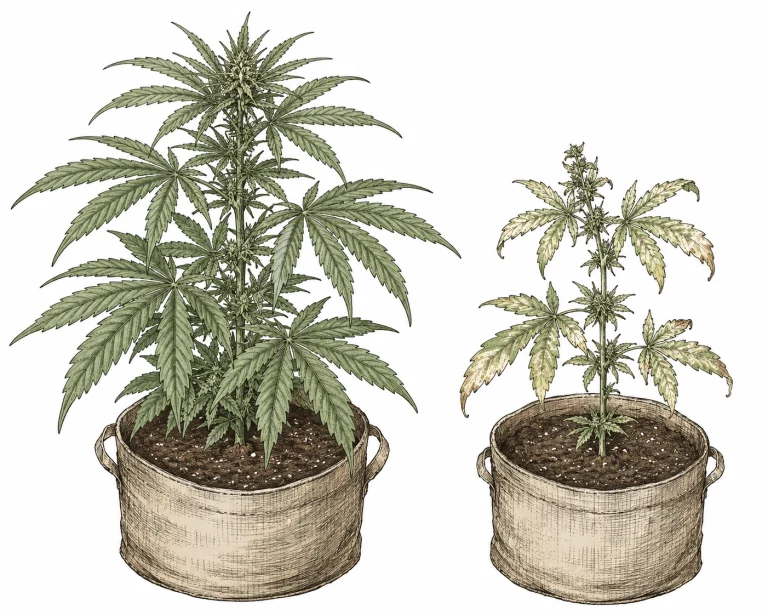
HLVd symptoms in cannabis fall roughly into two phases: the often symptom-free vegetative stage and the much more noticeable flowering stage. During veg, infected plants may grow a little slower, develop smaller leaves or look more compact and squat than expected. These subtle signs often get misdiagnosed, though – many growers suspect a nutrient deficiency or some other stress factor.
In the flowering stage, HLVd shows its full impact. The most typical symptoms are dramatically reduced bud growth, loose and airy bud structure and a strikingly low trichome count. Infected buds look “empty” and produce hardly any resin. The result is cannabis with very low potency, commonly known as “duds.” On top of that, you may see brittle, smaller leaves with irregular serrations and a generally weakened plant structure.
Another warning sign is a “stacking” problem: the spacing between internodes stays unusually short despite normal lighting, or the whole plant looks frozen in its development. Some growers also report deformed calyxes and abnormal leaf growth around the calyxes. Since these symptoms can be mistaken for nutrient problems, nutrient burn or other diseases, a clear diagnosis is hard without a lab test.
- Vegetative stage: stunted growth, smaller and brittle leaves
- Flowering stage: sparse, airy buds with very little resin
- Very low THC/CBD levels despite normal care
- Short internodes and squat growth with no clear cause
- Deformed calyxes and irregular leaf structure
- Total yield 30% to more than 50% below normal
Spotting HLVd in Cannabis: How Do You Tell It Apart from Other Problems?
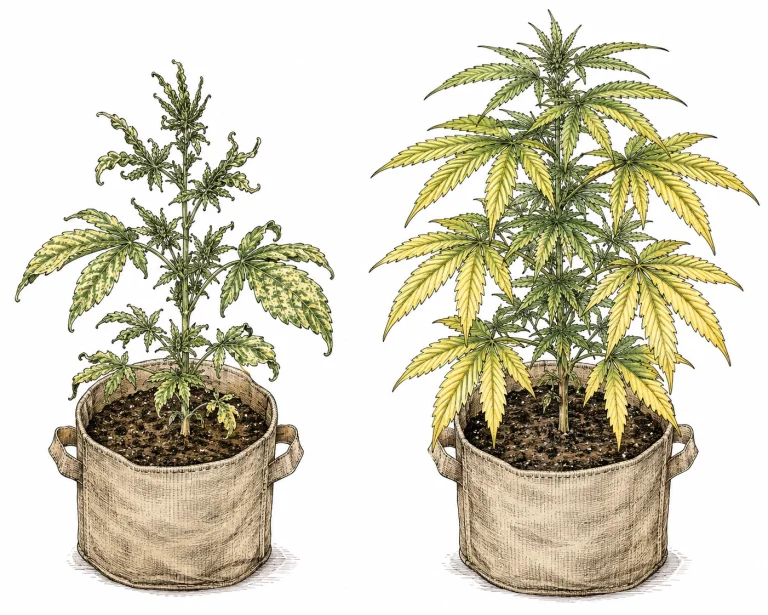
The biggest challenge in spotting HLVd is that its symptoms look a lot like other common problems. A calcium deficiency in cannabis also causes deformed leaves and slower growth. Low light, genetic stress or nutrient imbalances can look similar, too. The key difference: with HLVd, no fix helps. You can dial in your pH, adjust your feeding and create perfect conditions – and the plant barely responds, if at all.
Another clue is which plants are affected. With HLVd, several plants often show symptoms at the same time, especially if they come from the same mother plants or were handled with the same tools. A single problem plant that bounces back once you adjust conditions is more likely dealing with an environmental issue. With HLVd, the stunting doesn’t go away and tends to get worse over time.
The only reliable proof is a PCR (polymerase chain reaction) test. You can send samples to a specialized lab or use a commercial home test kit. There are now HLVd-specific rapid tests that work much like COVID home tests: you take a sample of fresh leaf tissue and get a result within minutes. If you keep clones or mother plants, regular PCR testing is now a must.
- No response to pH or nutrient fixes: the key difference from deficiencies
- Several plants affected at once, especially from the same mother plant
- PCR testing is the only reliable way to diagnose it
- Rapid tests for home growers are now available
- Regular testing of mother plants and clones is strongly recommended
How HLVd Spreads: Transmission Routes of the Viroid
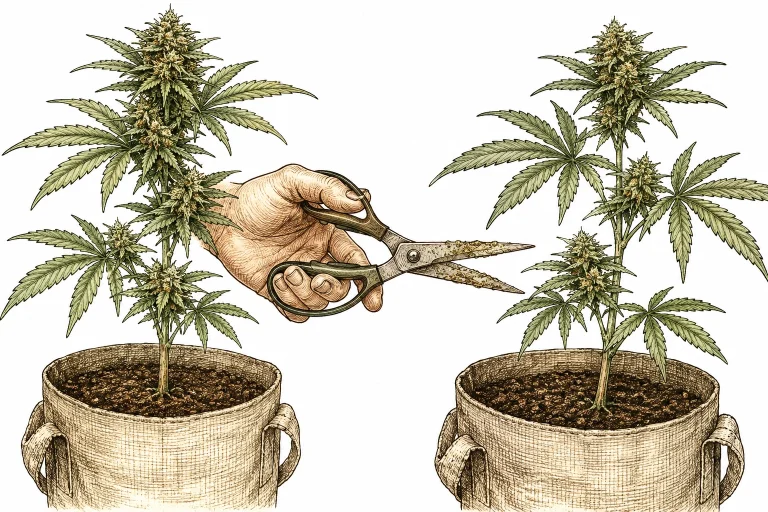
HLVd spreads alarmingly easily and through several routes. In both home and commercial grows, the most common one is contaminated cutting tools. Scissors, scalpels or blades used for taking clones or topping can carry the viroid from plant to plant. Even wiping your tools with alcohol may not be enough, because HLVd is resistant to many common disinfectants.
Infected clones and seeds are another major route. A single infected clone from an unknown source can contaminate your entire grow. Studies show that HLVd can also become seed-borne when an infected plant gets pollinated, although transmission through seeds is somewhat lower than through clones and other vegetative material. Still, be careful with clones you buy or trade.
Other possible routes include contaminated gloves or bare hands, shared pots and growing media, and possibly sap-sucking pests like aphids or spider mites. Contaminated water has also been discussed as a theoretical route. All of this makes HLVd especially hard to control: one small slip in hygiene can be enough to bring the viroid into your whole setup.
- Contaminated cutting tools: the most common route
- Infected clones from unknown sources
- Seeds from infected mother plants can carry HLVd
- Hands and gloves as mechanical carriers
- Possible spread by pests (aphids, spider mites)
- Shared pots and growing media
What to Do About HLVd: Immediate Steps and Consequences
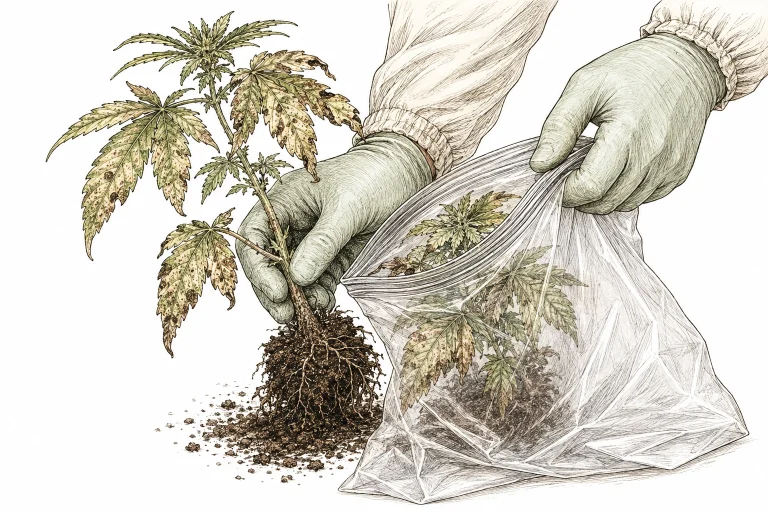
The hard truth: there is no cure for HLVd. Once a clone or mother plant is infected, it stays a carrier for good. So far, there are no treatments that can remove the viroid from plant tissue. The only effective step is to remove and destroy all infected plants right away to keep it from spreading.
As soon as you suspect HLVd or get a positive test, isolate the affected plants immediately. Stop all work on other plants until every tool, surface and piece of clothing has been fully disinfected. For tools, experts recommend sodium hypochlorite (bleach) at a 1:10 dilution or flame sterilization. Regular isopropyl alcohol isn’t enough to reliably kill HLVd.
After removing the infected plants, clean and disinfect your entire grow space thoroughly. Pots, saucers, trays, ventilation gear and all surfaces need to be treated. Then run a PCR test on every remaining plant before you start growing again. That’s the only way to make sure no hidden carriers are left behind.
- No cure: remove and destroy infected plants right away
- Isolate all suspected plants immediately
- Disinfect with sodium hypochlorite (1:10) or flame sterilization
- Alcohol alone isn’t enough to disinfect tools
- Clean your whole grow room after an infection
- PCR-test all remaining plants before you start growing again
Preventing HLVd in Cannabis: Hygiene and Prevention in Your Grow Room
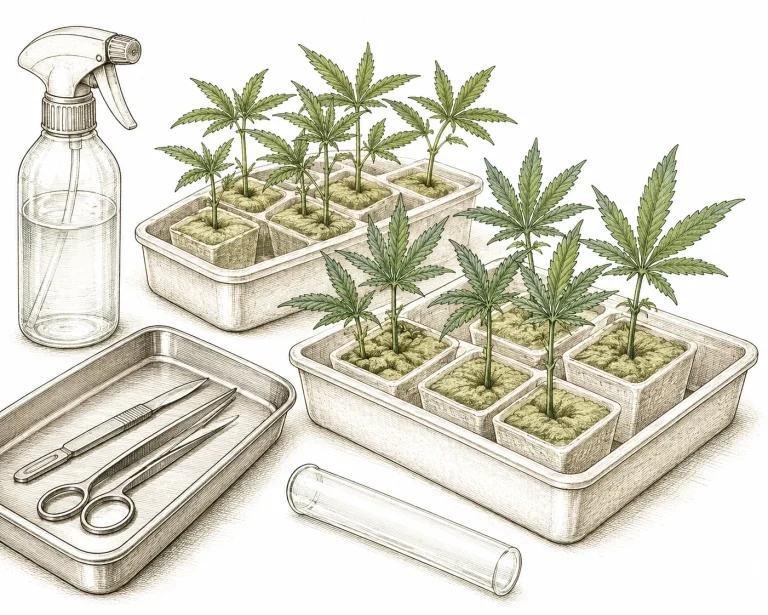
Since there is no treatment for HLVd, prevention is the only strategy that works. The most important step is a strict hygiene routine in your grow room. Disinfect every tool before each use and between plants. Keep at least two sets of scissors and scalpels on hand so you can swap them out while you work and fully sterilize the used set.
Only get clones from verified, HLVd-tested sources. Many reputable seed banks and clone suppliers now offer certificates showing regular viroid testing. Quarantine is a must: keep every new plant you bring into your grow isolated for at least two to four weeks. Ideally, have it PCR-tested for HLVd before it ever touches your other plants.
If you keep your own mother plants, testing every three to six months is recommended. Even plants you have kept for years can carry a latent infection. Pest control helps too: insects may be able to spread the viroid, so stay on top of aphids and spider mites. Change gloves between plants and wash your hands thoroughly. Also check out the indoor cannabis grow guide to build good hygiene habits from day one.
The Julius Kühn Institute also stresses that clean, certified propagation material is the most important way to prevent viroid diseases.
- Disinfect tools between every plant – use sodium hypochlorite (bleach)
- Only get clones from HLVd-tested, certified sources
- Quarantine: isolate new plants for 2 to 4 weeks
- PCR-test every new plant before adding it to your grow
- Have mother plants tested every 3 to 6 months
- Pest control as an indirect prevention step
- Change gloves between plants
How HLVd Affects Trichomes, Harvest and Potency
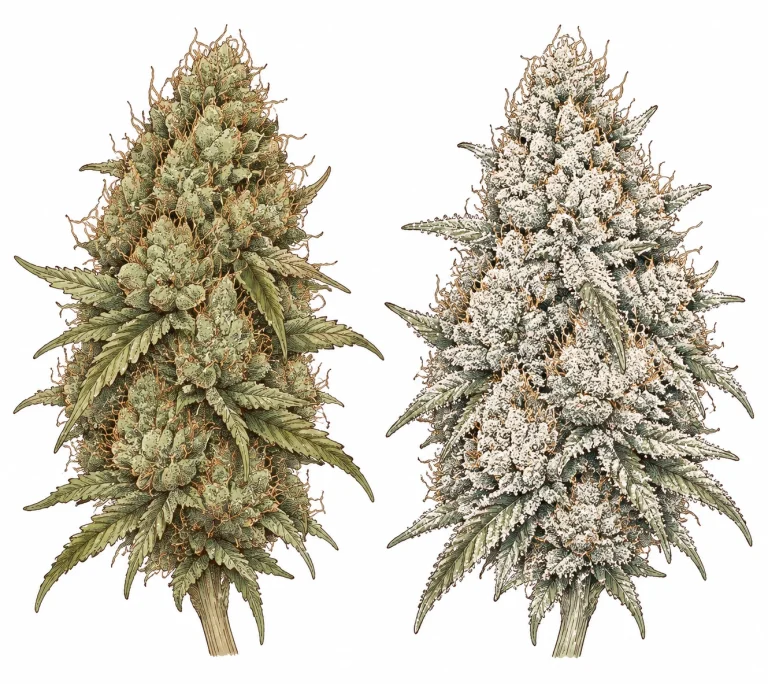
One of the most devastating things about HLVd in cannabis is its direct hit on trichome production – and with it, the potency of your harvest. Studies show that infected plants can produce up to 70 percent fewer terpenes and cannabinoids than healthy plants of the same genetics under identical conditions. In other words: cannabis that still looks more or less normal can test close to zero THC in the lab.
An HLVd-infected plant also yields much less overall. Buds turn out loose, small and dry, without the density and resin coat you expect from quality strains. Drying and curing won’t fix that – the core problem is the plant’s damaged biochemistry itself. Harvesting too early or too late doesn’t matter with HLVd, because the damage happens deep in the plant’s metabolism, long before harvest.
If you still harvest a plant that might be infected, you also risk spreading the viroid through contaminated plant material. Scissors and trimming tools that touch infected material need a thorough sterilization afterward – otherwise you can carry the viroid straight into your next grow cycle.
- Up to 70 percent fewer terpenes and cannabinoids in infected plants
- THC can be close to zero even when buds look normal
- Much lower yield due to loose, sparse buds
- Drying and curing won’t reverse HLVd damage
- Disinfect harvest tools after contact with infected material
Spotting HLVd in Cannabis: A Diagnosis Checklist for Growers
A systematic checklist helps you spot HLVd in cannabis reliably. Run through these points if you notice one or more suspicious symptoms on your plants. Keep in mind: any single symptom can have many causes. Only a combination of several warning signs – plus plants that don’t respond when you dial in your conditions – makes HLVd a real suspect.
Also keep a grow journal where you log growth progress, treatments and how your plants respond. That way you can look back and see when symptoms started and which plants were hit first. This helps you track down where a possible contamination came from. For a full overview of all cannabis diagnoses, check out the Cannabis Plant Diagnosis Hub, where you can sort symptoms step by step.
If you suspect HLVd, your most important next step is always a PCR test. Contact a plant pathology lab in your area or order a commercial HLVd test kit online. Depending on the provider, a test usually runs somewhere around $20 to $90 per sample. That is a small price compared to a completely ruined harvest.
- Growth well below what you expected, even under ideal conditions?
- Leaves smaller, more brittle or more deformed than on your other plants?
- Buds in flower noticeably small, airy and low on resin?
- No improvement after correcting pH, adjusting your feeding or fixing stress?
- Several plants affected at once, especially clones from the same mother plant?
- New genetics brought into your grow without quarantine?
- If you answered yes to several of these: get a PCR test done
Frequently Asked Questions
Can I cure a plant infected with HLVd?
No. Right now there is no treatment or product that can remove HLVd from plant tissue. Infected plants need to be removed and destroyed. Your only real strategy is prevention through strict hygiene and regular testing.
How reliable is a visual diagnosis without a PCR test?
Not very. HLVd symptoms overlap with lots of other problems like nutrient deficiencies, nutrient burn or light stress. Only a PCR test gives you a clear diagnosis. If you have a strong suspicion, always get your plants tested before you make any big decisions.
Can HLVd be passed on through seeds?
Yes, but the transmission rate through seeds is lower than through vegetative material like clones. Studies show that HLVd can be present in seeds from infected mother plants. If you don’t know where they came from, treat seeds from mother plants with caution too.
Is isopropyl alcohol enough to disinfect scissors?
No. HLVd is resistant to isopropyl alcohol. For reliable disinfection, experts recommend sodium hypochlorite at a 1:10 dilution (household bleach) or flame-sterilizing your metal tools.
How often should I test my mother plants for HLVd?
At least every three to six months. Because HLVd can stay latent for a long time without symptoms, a plant you have kept for years can be infected without you noticing. Regular testing matters most if you share clones or bring in new genetics.
Can I keep using my grow room after an HLVd infection?
Yes, but only after you have thoroughly cleaned and disinfected every surface, piece of equipment, pot and tool with sodium hypochlorite. After that, have all remaining plants PCR-tested before you start a new grow cycle.
Where can I find HLVd test kits for home use?
You can now buy commercial HLVd rapid tests made for home growers. Look for them online from specialized cannabis suppliers or plant pathology services. You can also send samples to a plant pathology lab. Depending on the provider, expect to pay roughly $20 to $90 per sample.
For an overview of other plant diseases, check out our article How to Identify Cannabis Diseases. Fungal infections like fusarium wilt can also cause symptoms that look a lot like a viral infection.
HLVd is just one of several cannabis symptoms that don’t fit into a classic category. You’ll find other special cases like foxtailing or hermaphrodites in the overview.
The Bottom Line
Knowing how to spot HLVd in cannabis is one of the most important skills a modern grower can have. Hop latent viroid spreads quietly and fast, and there is no cure. If you watch for early warning signs, stay strict about hygiene and run regular PCR tests, you can protect yourself and your grow. The moment you find an infection: act fast, remove affected plants and disinfect your entire grow room. Prevention is your only real protection, so be proactive before HLVd wrecks your harvest.
