

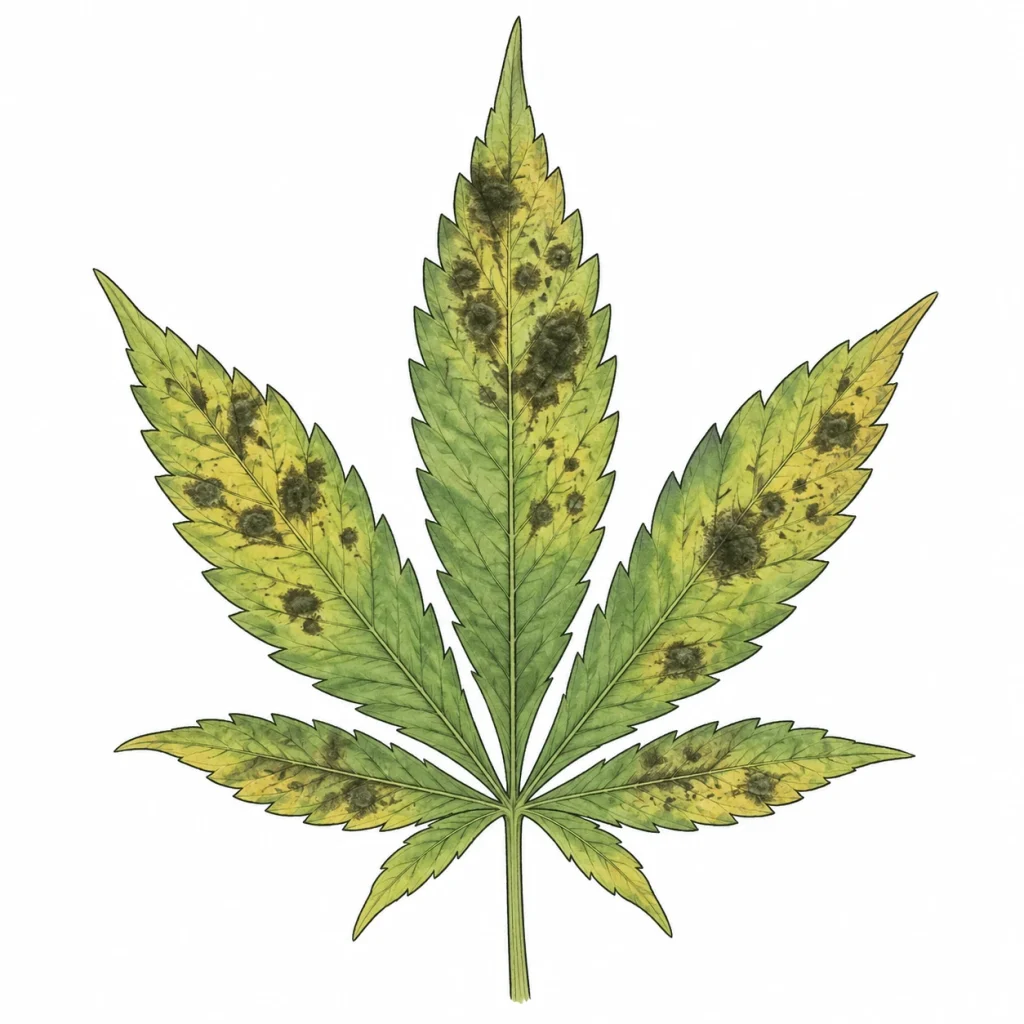
Cladosporium, the black mold on cannabis, is one of the most underrated fungal diseases in indoor and outdoor growing. It can put an entire harvest at risk in just a few days. This fungus from the genus Cladosporium attacks the leaves, stems and, in the worst case, the buds of your plants. It leaves behind distinctive olive-green to black spots with a velvety coating of spores. The tricky part: the first symptoms are easy to confuse with other problems like septoria or plain dirt. In this article, you’ll learn how to identify an infection with confidence, take the right action right away and protect your plants for the long haul.
What Is Cladosporium and Why Does It Attack Cannabis?
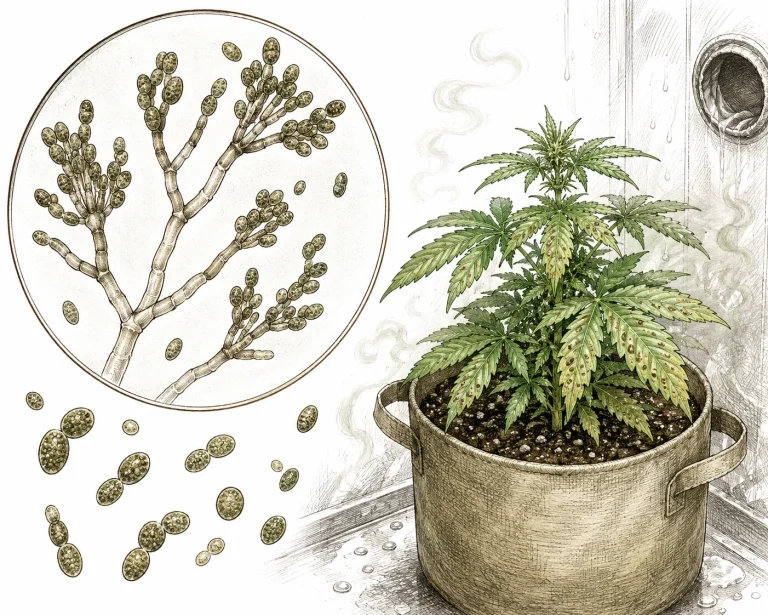
Cladosporium is one of the most widespread fungal genera in the world, with more than 700 known species. For cannabis growers, two matter most: Cladosporium herbarum and Cladosporium cladosporioides. Both thrive in damp, poorly ventilated conditions and release huge numbers of airborne spores. These spores are almost everywhere: in the air around you, in your growing medium and on leftover plant debris. As soon as conditions are right, they germinate on your plants.
This fungus is an opportunist. It prefers plant tissue that is already stressed, weakened or damaged. A plant weakened by a nutrient deficiency, poor watering or physical injury gives Cladosporium the perfect way in. Unlike bud rot (botrytis), which can invade healthy tissue directly, Cladosporium usually takes advantage of existing weak spots. That makes prevention twice as important: keep your plants healthy and you cut the risk a lot.
In practice, Cladosporium tends to show up when humidity (relative humidity, RH) stays above 60% for long stretches, when airflow is poor or when condensation forms on the leaves. Indoor grows with plants packed too tightly and undersized fans are especially at risk. Outdoor growers mostly deal with it late in the season, when temperature and humidity swing hard and the nights turn cool.
- Cladosporium is one of the most common fungal genera worldwide, and its spores are everywhere
- It prefers to attack weakened or damaged plant tissue
- The fungus thrives at humidity above 60%
- Poor airflow and condensation can speed up an infection dramatically
- More than 700 species are known; in cannabis growing, C. herbarum and C. cladosporioides matter most
Cladosporium Black Mold on Cannabis: How to Spot the Symptoms
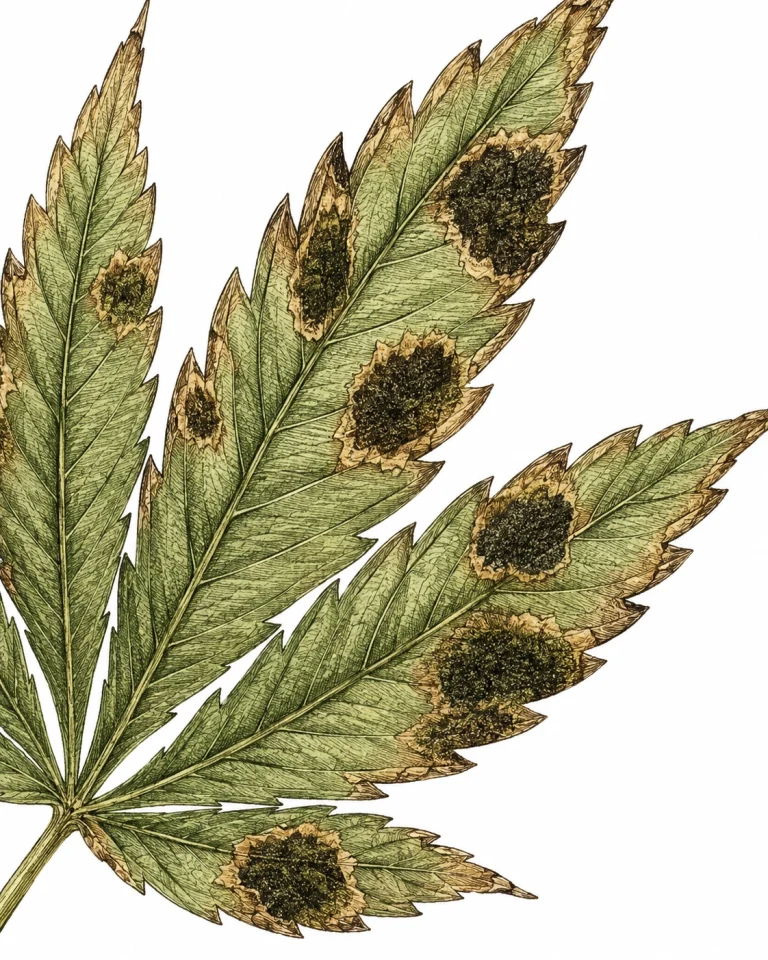
The most obvious sign of Cladosporium on cannabis is its distinctive olive-green to blackish-gray spots on the leaves, with a slightly velvety or powdery coating. This coating is made up of the fungus’s spore-bearing structures (conidiophores) and spores. It’s the key feature that sets it apart from other leaf spot diseases. The spots usually start small and round, but within a few days they can merge and cover large parts of the leaf. Over time, the infected tissue turns brown, then black, and dies.
Early on, the spots often look like slightly discolored, yellowish-brown patches, similar to an early nitrogen deficiency or a water spot. The key difference shows up when you look closely: within just a few days, a clearly visible dark layer of spores forms on the underside of the spots or on the leaf surface. Use a magnifying loupe or your phone’s macro camera to check for this coating. A single spot without a spore layer is not yet a sure sign of Cladosporium.
On stems, Cladosporium shows up as dark brown to black, sunken areas that can weaken the plant’s structure. In advanced stages or at very high humidity, it can also attack the buds. You’ll notice black discoloration and a musty smell. Compared to the notorious bud rot (botrytis, gray mold), the Cladosporium coating is darker and less fluffy. It can also be mistaken for septoria, but septoria lacks the typical dark spore coating.
Another symptom is infected leaves yellowing and dropping early. The plant sheds them to try to isolate the fungus. If you find more and more fallen leaves with dark spots in your grow tent or outdoor bed, check all remaining plants for infection right away. Pay special attention to the lower and inner leaves. They get less airflow, so they’re your early warning sign.
- Olive-green to blackish-gray spots with a velvety spore coating on the leaves
- Spots start small and round, then quickly merge into larger patches
- Dark, fuzzy spore growth on the underside or top of the leaf – the key sign
- Sunken, blackish-brown areas on stems are possible
- In late stages, buds show black discoloration and a musty smell
- Infected leaves can yellow early and drop
- Inner and lower leaves usually show symptoms first
Easy to Confuse: How to Tell Cladosporium Apart from Other Diseases
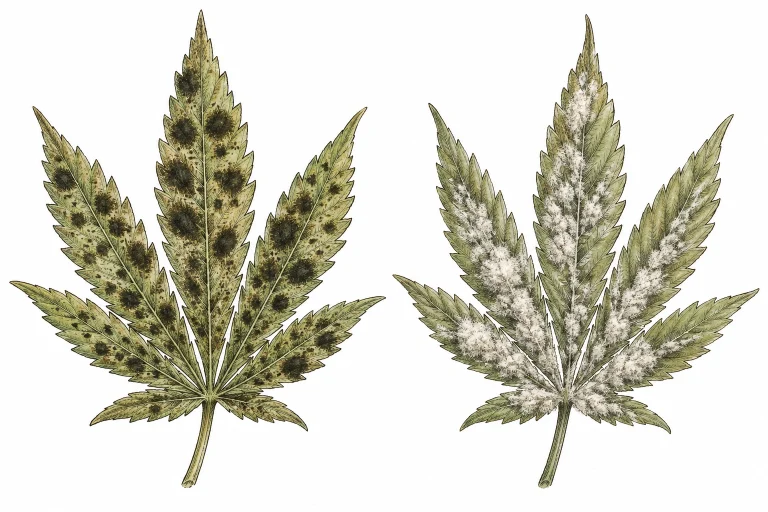
Telling Cladosporium apart from other fungal diseases and deficiencies is key to picking the right treatment. The most common mix-up is Botrytis cinerea, the notorious bud rot (gray mold). Botrytis forms a light gray, fluffy, loose spore layer that rises in little clouds when you bump the plant. Cladosporium, on the other hand, forms a more compact, dark green to black, velvety coating. Botrytis also tends to hit buds and stems at wound sites, while Cladosporium more often starts on the leaves.
Powdery mildew (Oidium) shows a white, powdery coating and is much lighter in color than Cladosporium. Septoria causes round, light brown to cream-colored spots with a dark edge, without the telltale spore coating on the surface. A calcium deficiency in cannabis can also cause necrosis and brownish spots, but with no fungal coating at all and usually in a more even pattern on younger leaves. When in doubt, grab a magnifying glass: if you see a textured layer of spore-bearing structures, it’s most likely a fungus.
Light burn or chemical burns from feeding mistakes can also cause similar-looking spots. Light burn, however, usually shows up as even patches on the upper leaf surfaces facing the light, with no spore coating. Nutrient burn typically starts at the leaf tips and edges and follows a different pattern. For more on look-alike symptoms, check out the Cannabis Plant Diagnosis hub, where you can compare different conditions side by side.
- Botrytis: light gray, fluffy coating – Cladosporium: dark, velvety, compact
- Powdery mildew: white, powdery coating – clearly lighter than Cladosporium
- Septoria: light spots with a dark edge, no spore coating on the surface
- Calcium deficiency: necrosis with no fungal coating, even pattern on new growth
- Light burn: even bleaching on light-exposed areas, no coating
- Use a magnifier: a textured spore coating is the surest sign of a fungal infection
Causes and Risk Factors for Cladosporium (Black Mold) on Cannabis
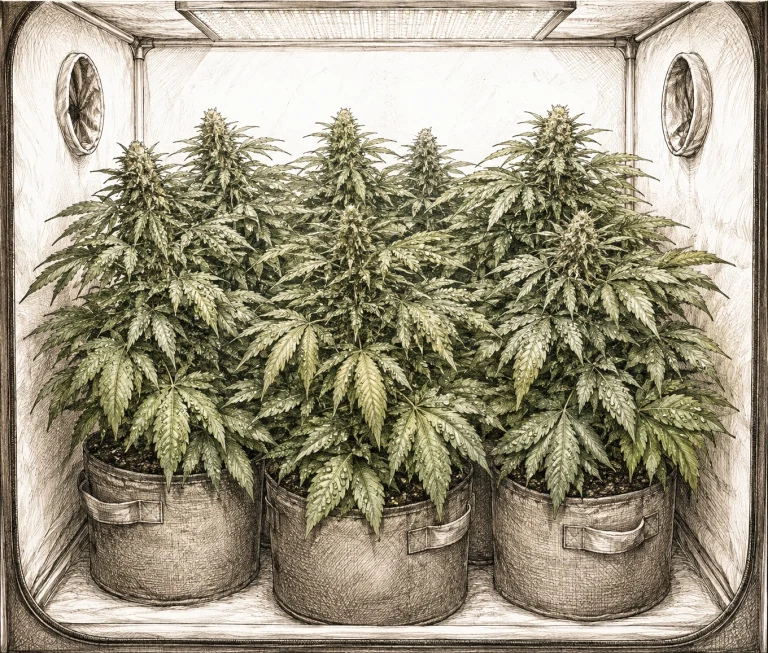
The biggest trigger for Cladosporium is constantly high humidity combined with poor air movement. If the relative humidity (RH) in your grow sits above 65% for several hours a day – especially in the flowering stage – conditions are close to perfect for the fungus. During flowering, aim for 40 to 50% RH to keep both Cladosporium and botrytis away. Cooler temperatures raise the risk even more, because cold air holds less water vapor and condensation can form on cool surfaces like leaves.
A second major risk factor is poor air circulation inside the canopy. Dense foliage creates damp microclimates where Cladosporium spores can germinate easily. Plants spaced too close together, skipped leaf thinning (defoliation) and poorly placed circulation fans all create these problem zones. Older, senescing leaves on the lower part of the plant are especially vulnerable, since they’re physiologically weakened and get little light.
Contaminated tools, gloves or reused growing medium can carry Cladosporium spores straight into your grow. Plants brought in from elsewhere, clones from unknown sources and garden soil are also common entry points. In outdoor growing, damp, still weather, dew and heavy rain play the biggest role. If you grow outside, keep a close eye on the forecast in the second half of the season and take preventive action when wet weather drags on. For more on proper watering and moisture control, check out the article How to Water Cannabis the Right Way.
- Humidity (relative humidity, RH) that stays above 65 % – the biggest risk factor
- Poor air circulation and damp microclimates inside the canopy
- Plants spaced too tightly without enough defoliation
- Contaminated tools, clones or reused growing medium
- Older, weakened leaves are the fungus’s favorite target
- Cool temperatures that cause condensation on the leaves
- Damp, windless stretches of weather in outdoor growing
How to Fight Cladosporium Black Mold on Cannabis: Immediate Steps
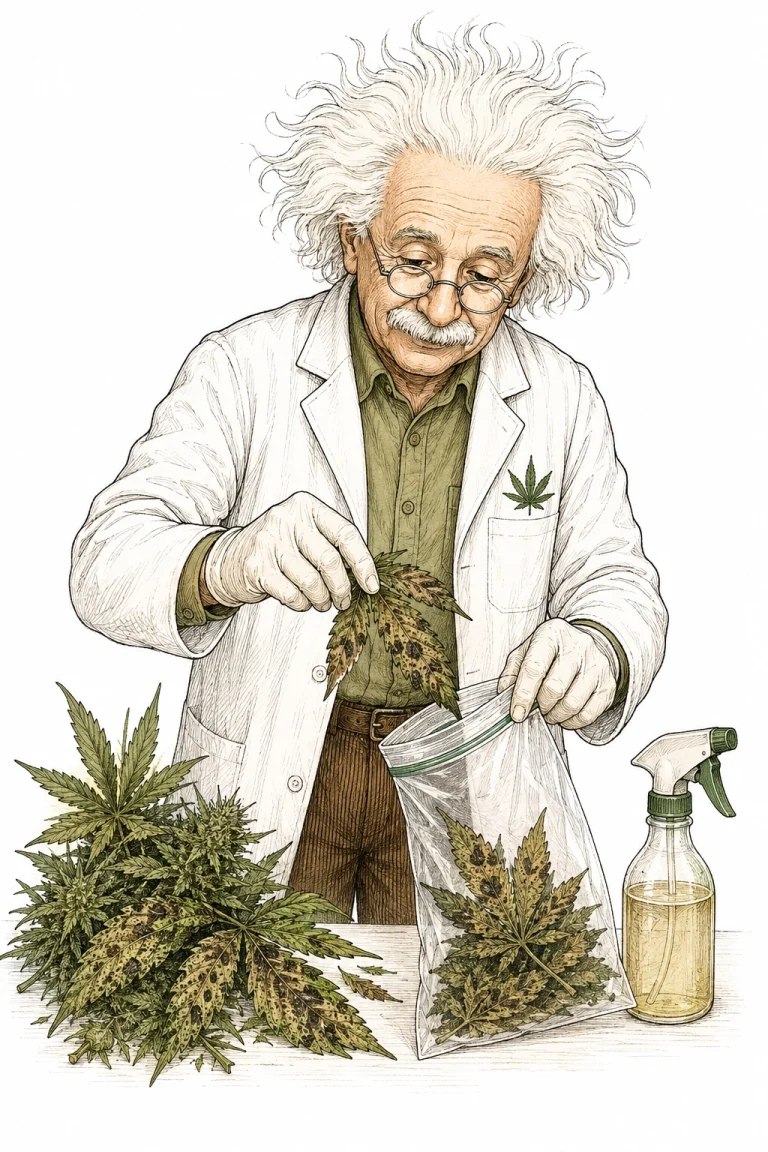
Once you’ve clearly identified Cladosporium, act fast to stop it from spreading. Remove all infected leaves and plant parts right away. Make clean cuts and bag them immediately in sealed plastic bags – don’t carry them through the rest of your grow. Never compost infected material; throw it in the regular trash. Try not to shake the plants, since that can stir up spores. Wear gloves and, if you can, a face mask.
Bring the humidity in your grow down right away. Turn up your exhaust, switch on any dehumidifier you have and make sure your circulation fans keep air moving between the plants. Aim for humidity below 50 % – during an active outbreak, even below 45 % for a short time. Also check for condensation on walls, the bottoms of pots or pipes, and get rid of those moisture sources.
Several products have proven useful for treating the plant directly. Potassium bicarbonate solutions (1–2 % in water) change the pH on the leaf surface and slow fungal growth. Neem oil mixed with an emulsifier also works as a fungicide and can be sprayed on affected areas – ideally during the dark period to avoid light burn. Copper-based fungicides are another option, but use them carefully, because copper can build up in the growing medium. Never spray shortly before harvest, and always test a new product on a small area first.
After treatment, disinfect every surface, tool and container in your grow with a suitable disinfectant. Change your clothes before you touch other plants. If the infection is very advanced and covers more than 30–40 % of the plant, take an honest look. Ask yourself: Can this plant still be saved, or should you remove it so it doesn’t keep infecting your healthy plants?
- Remove infected plant parts right away and dispose of them in sealed bags
- Drop humidity below 50 % immediately – turn up the dehumidifier and exhaust
- Spray potassium bicarbonate solution (1–2 %) directly on infected leaves
- Spray neem oil with an emulsifier during the dark period
- Copper fungicides are an option – use sparingly and never shortly before harvest
- Thoroughly disinfect all tools, surfaces and containers after treatment
- Remove heavily infected plants if needed to protect the healthy ones
Long-Term Prevention: Keep Cladosporium Out of Your Cannabis for Good
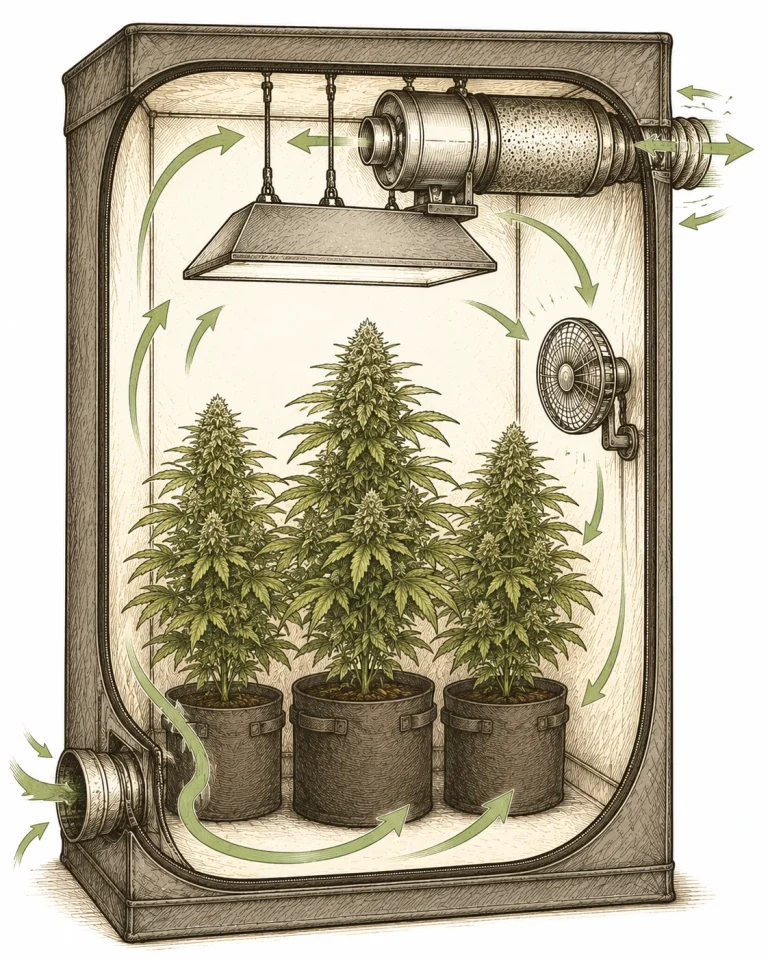
The most effective strategy against Cladosporium is consistent prevention through a well-dialed climate. Keep humidity steady between 40 and 50 % during the flowering stage. Invest in a reliable hygrometer and, if needed, a dehumidifier for your grow tent. Plan your ventilation so the entire air volume of your grow gets exchanged at least once a minute. Position your circulation fans so a gentle breeze reaches every part of the canopy.
Regular defoliation – selectively removing unnecessary leaves from the lower plant and inside the canopy – improves air circulation a lot and takes away spots where the fungus could settle. Pay special attention to older, dying leaves and remove them early, before they become an entry point. Never leave dead plant material lying in the growing medium or on the floor of your grow. Fungal spores can survive there for a long time and start new infections when conditions are right.
How important a balanced microclimate is for preventing fungal diseases in plant growing in general is also shown by the practical guidance from the Bavarian State Institute for Viticulture and Horticulture (German) on humidity control and fungus prevention in enclosed growing.
Hygiene is the second pillar of prevention. Clean and disinfect your grow thoroughly between every cycle. Don’t use garden soil or unsterilized growing medium. Watch clones and mother plants from outside sources in quarantine for at least a week before they join your main grow. Clean your tools with isopropyl alcohol after every use. A properly dialed-in cannabis pH between 6.0 and 7.0 in the medium also helps your plants take up all the nutrients they need, so they stay tough enough to fight off fungal attacks.
For outdoor growing, pick mold-resistant strains, choose a breezy, sunny spot, and time your planting so the sensitive late flowering stage falls into drier weather. A rain cover over your plants can make all the difference in a wet fall. Want to understand how your growing medium affects susceptibility? The article Indoor Cannabis Grow Guide covers the basics of ideal growing conditions.
- Keep humidity during flowering steady between 40 and 50 %
- Position circulation fans so air reaches the entire canopy
- Defoliate regularly – especially older and lower leaves
- Don’t leave dead plant material lying around your grow
- Clean and disinfect your grow thoroughly between cycles
- Quarantine new clones for at least one week
- Dial in your pH for healthy, resilient plants
- Outdoors: choose mold-resistant strains and consider a rain cover
Similar leaf spots can also show up with anthracnose or bacterial leaf spot. If you also see distorted, yellow-green mottled leaves with no visible fungus, check for HLVd too.
Frequently Asked Questions
Is Cladosporium dangerous to humans?
Cladosporium spores can trigger allergies and respiratory problems in sensitive people. For people with a healthy immune system, contact with a few spores is usually harmless. Still, don’t smoke heavily infected material – the spores and fungal metabolites can be harmful to your health. Dispose of heavily infected plants safely and wear gloves while you work.
Can I save buds infected with Cladosporium?
Lightly infected buds can sometimes be saved by generously cutting away the affected parts. Heavily infected buds, however, shouldn’t be consumed. When in doubt, play it safe. Remove all infected areas with a wide margin into the healthy tissue and throw them away.
How fast does Cladosporium spread on cannabis?
Under ideal conditions – high humidity, poor airflow, temperatures around 68–77 °F (20–25 °C) – Cladosporium can spread from the first visible spots to an entire plant within 3–7 days. That’s why early detection and fast action are key. Checking your plants daily is especially important during the flowering stage.
What’s the difference between Cladosporium and botrytis?
Cladosporium forms an olive-green to black, velvety, compact layer of spores, while botrytis (bud rot) produces a light gray, fluffy mold that puffs up in a cloud of spores when touched. Cladosporium more often starts on leaves; botrytis prefers buds and stems. Both call for lower humidity, but the direct treatment can differ.
Can Cladosporium survive in the growing medium?
Yes, Cladosporium spores can survive for several months in leftover medium, on pots and on surfaces in your grow. That’s why thoroughly cleaning and disinfecting your entire grow space after an outbreak and between cycles is a must. After an outbreak, throw out any reused, unsterilized medium.
Which parts of the plant does Cladosporium prefer to attack?
Cladosporium prefers older, weakened leaves, especially in the lower and inner parts of the plant, where airflow is weakest. In advanced stages, it can also spread to stems and buds. Healthy tissue with good light and airflow holds up much better.
It’s most easily confused with Alternaria and septoria leaf spot — both also cause small, dot-like leaf spots on cannabis.
The Bottom Line
Cladosporium, the black mold on cannabis, is a serious fungal disease that can get out of hand fast when your climate is off. Your most important levers are humidity, airflow and strict grow hygiene. Keep those three under control, and you can keep Cladosporium out of your grow. If you spot the typical symptoms, like the telltale olive-green to black spore layer, act right away: remove infected material, dial in your climate and treat the problem directly. With what you’ve learned in this article, you can identify the fungus with confidence and tell it apart from look-alike diseases. That way, you can take the right steps, both short term and long term.
