


Cannabis hydroponics sounds complicated to a lot of new growers. But with a simple Deep Water Culture (DWC) setup, it’s very doable, even for beginners. Instead of growing in soil, the roots sit directly in an oxygen-rich nutrient solution. That can mean noticeably faster growth and bigger yields. In this guide, we’ll walk you through building your first hydro system step by step. You’ll learn what really matters with pH and EC (electrical conductivity), and which mistakes to avoid from day one.
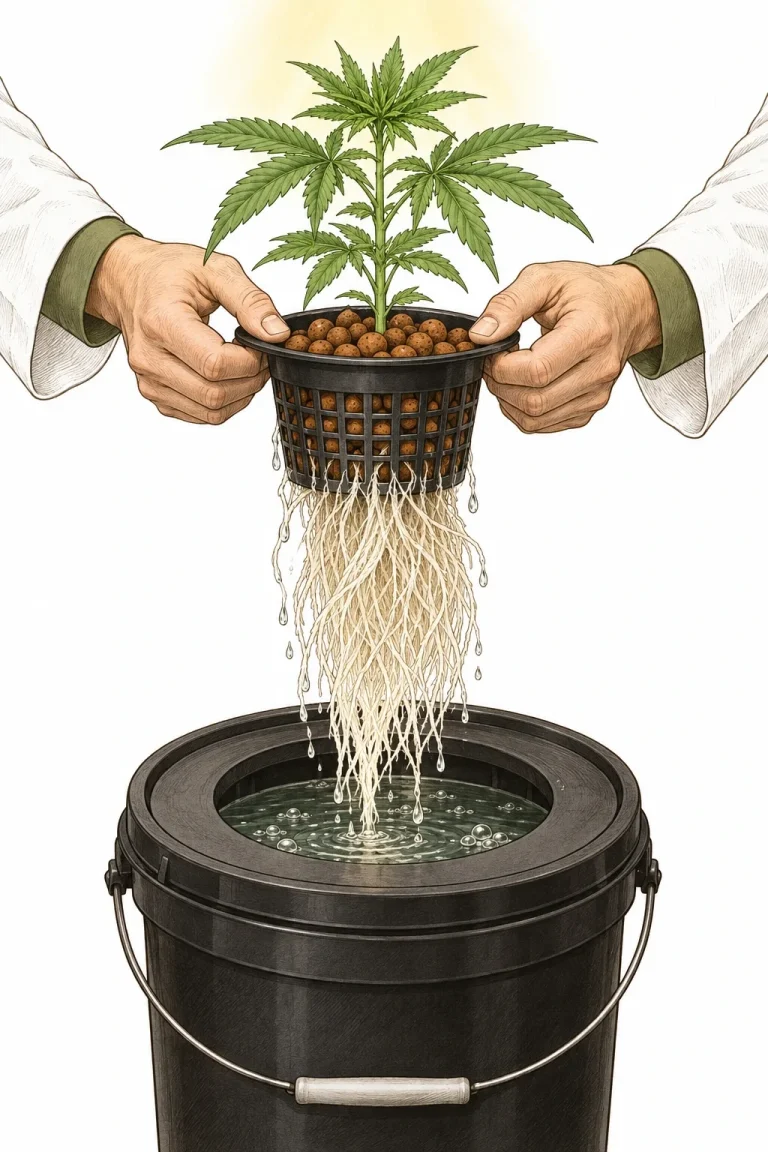
What Is Cannabis Hydroponics and How Does DWC Work?
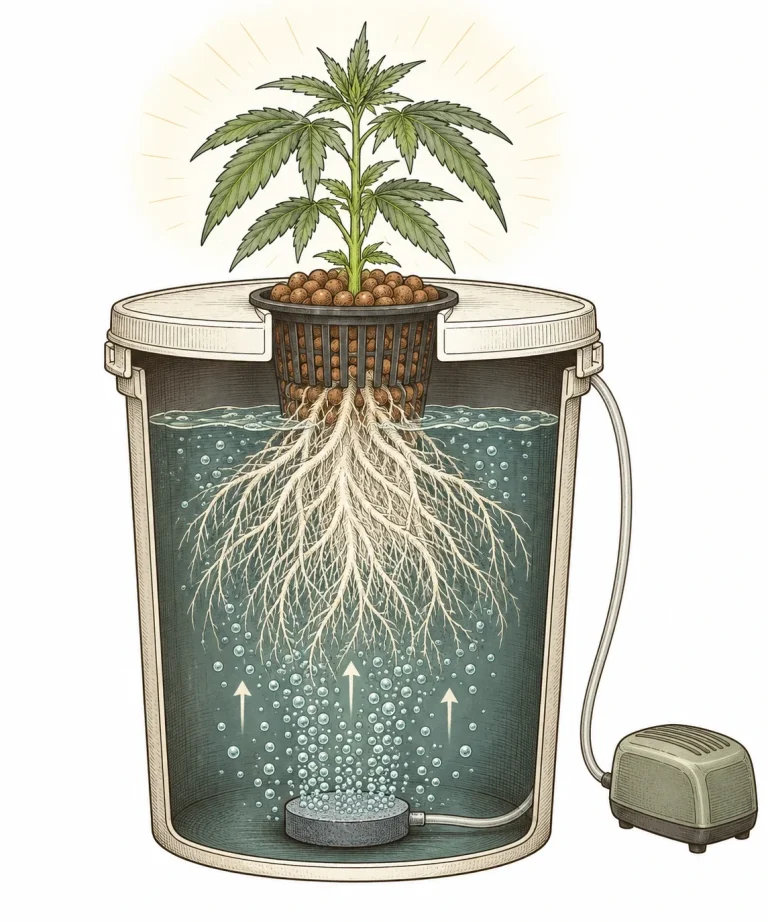
In cannabis hydroponics, your plants don’t grow in soil or another growing medium. Instead, the roots sit directly in a nutrient-enriched water solution. Deep Water Culture, or DWC for short, is the simplest and cheapest option for beginners. You fill a bucket with nutrient solution, the plant sits in a net pot that fits snugly into a hole in the lid, and an air pump with an air stone keeps a steady supply of oxygen flowing into the water.
The big advantage over growing in soil is that nutrients and oxygen are available right at the roots. With no soil in the way, the roots can take up nutrients almost freely, and that can speed up growth noticeably. The flip side: there’s less room for error. Swings in pH, temperature or oxygen levels hit much faster and harder in water than in a buffered soil mix. For a technical overview of soilless growing methods, check out the hydroponics fact sheet from the Bavarian State Institute for Viticulture and Horticulture (LWG, in German).
If you’ve already grown in soil, you know these challenges from the cannabis growing basics, just in a milder form. In a hydro system, the same principles hit a lot harder. That’s why solid prep work really pays off.
Setting Up a Cannabis Hydroponics System: The Gear
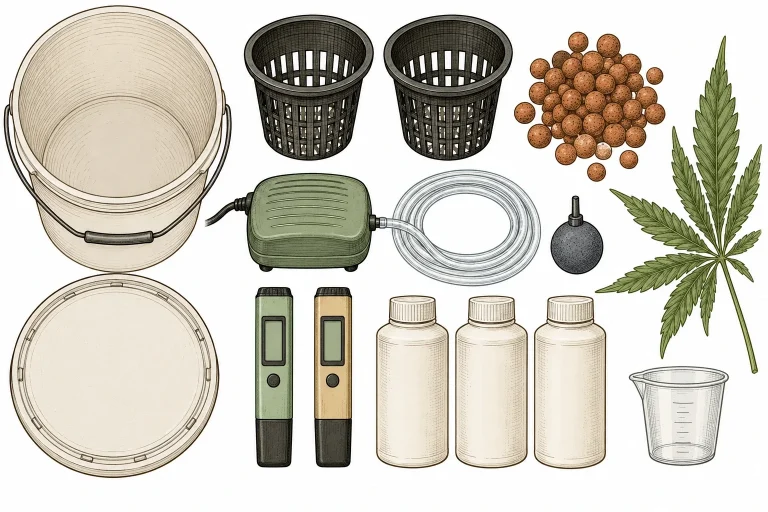
Before you start growing cannabis in hydro, you need a small but important set of basic gear. We compare the right clay pebbles (LECA) for your net pots (German) on a separate page. The good news: a simple DWC system for one or a few plants can be put together for under $100. That doesn’t include lighting, though. To find out which grow light tech is worth it for your indoor grow, check out our LED vs HPS comparison.
What matters most is the quality of your meters. Without accurate pH and EC readings, hydro can go wrong fast. It’s worth spending a little more here: a reliable cannabis pH meter and EC meter set can save you a lot of headaches and misdiagnoses down the road.
- Light-proof bucket (2.6–5.3 gal / 10–20 L) with a lid that holds the net pot
- Net pot sized to fit the lid opening
- Clay pebbles (LECA) or rockwool (German) to anchor the roots in the net pot
- Air pump with an air stone to oxygenate the water
- Waterproof thermometer for the nutrient solution
- pH meter and EC meter (digital, calibratable)
- Hydroponic nutrients (2-part or 3-part system)
- pH Down and pH Up solution for adjustments
Step by Step: Growing Cannabis in DWC
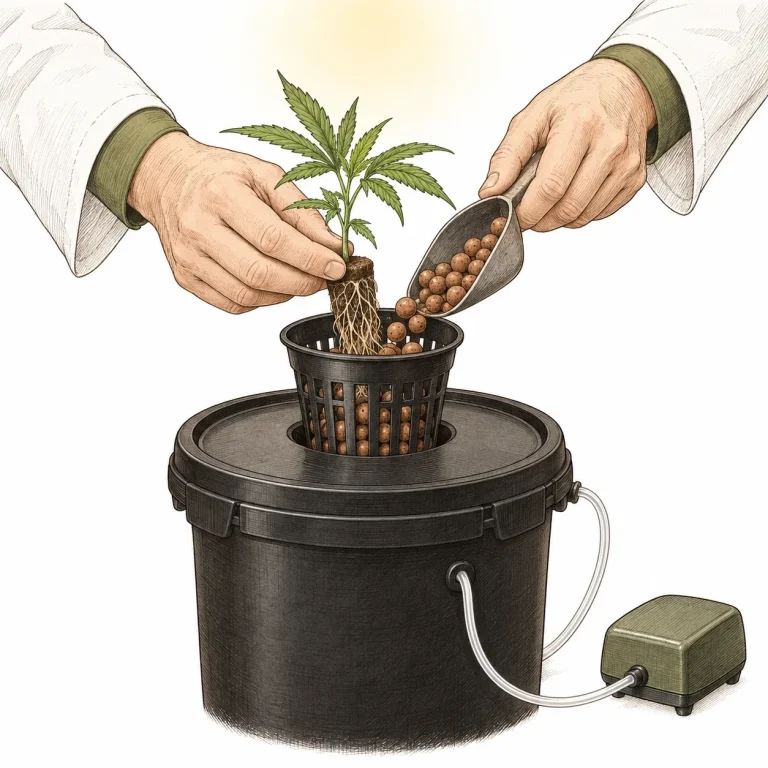
The easiest way to get started with cannabis hydroponics is a rooted clone or a germinated seed that already shows its first roots. Not sure which starting point suits you better? Our comparison Cannabis Clone or Seed helps you decide.
Fill the bucket with water and adjust the pH to about 5.8 to 6.2 before adding any nutrients. Then add your hydro nutrients at a low dose (about a quarter of the recommended strength for seedlings) and check the pH again, since nutrients shift it.
Set the plant into the net pot, steadied with a few clay pebbles, so the lowest roots just touch the water without being fully submerged. This air root zone is key: it gives the roots direct access to oxygen while the lower roots take up the nutrient solution. Switch on the air pump right away so the water is constantly stirred by fine bubbles.
- Clean and sanitize the bucket and net pot thoroughly
- Mix the nutrient solution and adjust the pH to 5.8–6.2
- Secure the clone or seedling in the net pot with clay pebbles
- Set the water level so an air root zone forms
- Keep the air pump running 24/7, including at night
- Change the nutrient solution completely every week
Dialing In pH and EC in Hydroponics
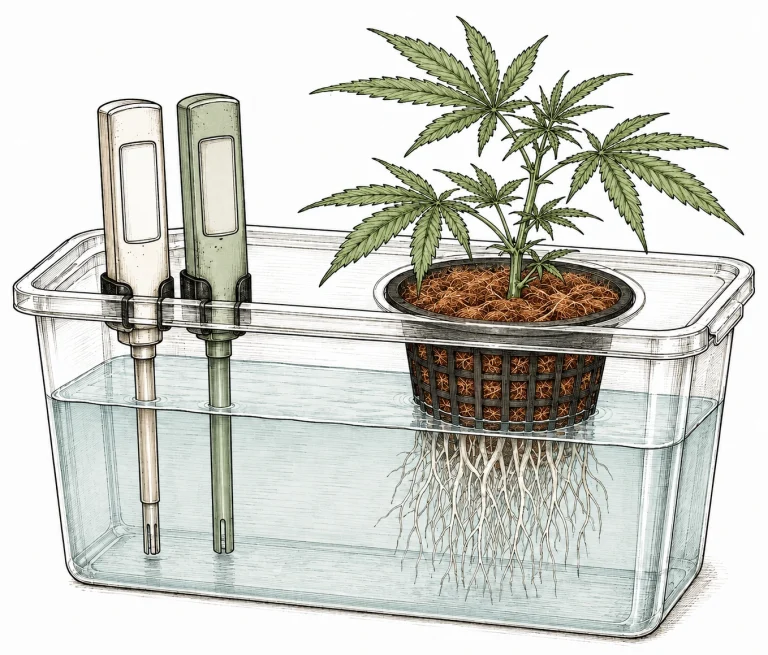
In cannabis hydroponics, there’s no buffer like in soil to cushion feeding mistakes. Check the pH of your nutrient solution daily, because root activity and nutrient uptake keep shifting it. The sweet spot for cannabis in hydro systems is between 5.5 and 6.2, and many growers get the best results right in the middle, around 5.8. If you want to sanity-check your readings or work out corrections, our pH Calculator can help.
EC (electrical conductivity) tells you the nutrient concentration in your solution and is your most important control tool in hydro. Seedlings start at about 200 to 400 ppm (0.4–0.8 mS/cm), rooted clones at around 400 to 600 ppm (0.8–1.2 mS/cm), while vigorous plants in the flowering stage can handle 900 to 1,100 ppm (1.8–2.2 mS/cm). For a handy NPK overview of each growth stage, check out the Cannabis NPK Chart.
If your EC climbs unexpectedly, it usually means the plant is drinking more water than it’s eating nutrients – for example in hot conditions with heavy evaporation, or when the solution is too strong for the current stage. If your EC drops fast, the plant is actively using up nutrients, and it’s time to change the solution or top up the nutrients.
- Check pH daily, ideally between 5.5 and 6.2
- Match EC to the growth stage and raise it gradually
- Keep the nutrient solution between 64 and 72 °F (18–22 °C)
- If readings swing wildly, track down the cause right away instead of just correcting the numbers
Common Mistakes and Problems in Cannabis Hydroponics
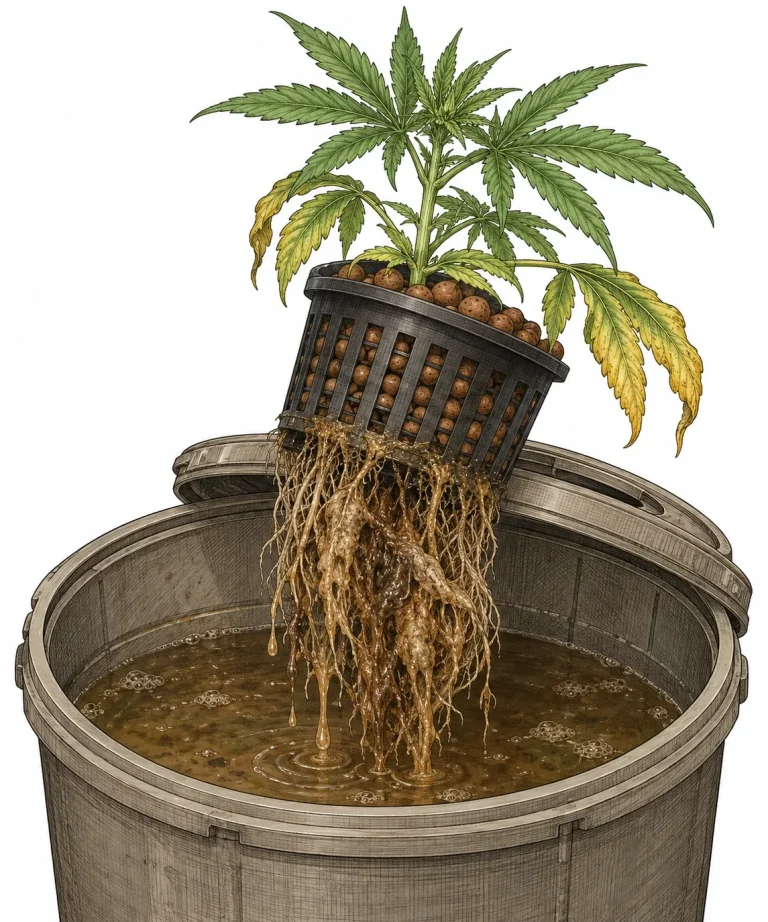
The most common rookie mistake in cannabis hydroponics is a nutrient solution that runs too warm. Above 75 °F (24 °C), dissolved oxygen in the water drops fast, while the pathogens that cause rot multiply much quicker. The result is often root rot, which shows up as brown, slimy roots and a nasty smell. Want to spot signs of low oxygen in the root zone? You’ll find detailed tips in the article Cannabis Root Oxygen Deficiency.
Another classic mistake is running your nutrients too strong right from the start. Hydro systems have no soil to buffer anything, so overfeeding can cause nutrient burn and stalled growth much faster than in a soil grow. Learn to catch the signs of too many nutrients early, like dark green leaves that curl downward, a typical symptom of nitrogen toxicity in cannabis.
Equipment failure is another risk that hits harder in hydro than in soil. If your air pump goes down for several hours, say during a power outage, your plant can take serious damage in no time, because the oxygen supply to the roots stops abruptly.
- Check your nutrient solution temperature regularly, ideally below 72 °F (22 °C)
- Check the water level and air pump every day
- Always start with a low ppm/EC and raise it slowly
- Swap the solution right away if the roots change color or start to smell
- Plan for a backup air pump or a battery backup
Pros and Cons of Hydroponics vs. Soil
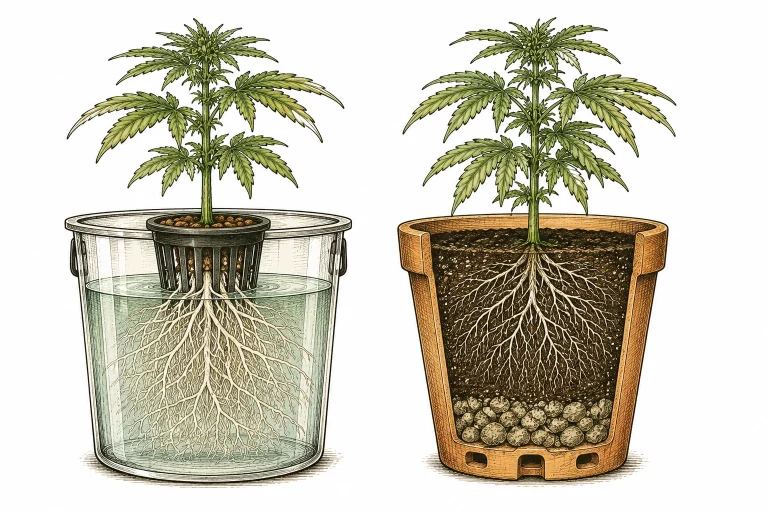
Cannabis hydroponics has some real advantages over a classic soil grow. Because nutrients are available directly, plants in DWC systems often grow 20 to 30% faster, and with good care your yields can be bigger too. On top of that, you skip the hassle of transplanting, since the plant sits in its final system from day one.
The downside is a much smaller margin for error. Soil acts as a natural buffer and can often cushion small feeding or pH mistakes for days. In water, problems can show up within hours. If you’re a total beginner with no experience in basics like pH and feeding, starting with a classic growing medium may make more sense. To find out which medium suits you, check out the Cannabis Growing Medium Comparison.
If you go with hydro, keep in mind that your gear, like air pumps, timers and meters, has to work reliably. A stable power supply and regular checks aren’t a nice extra here. They’re an absolute must for success. Prefer soil but don’t want to water every day? Automatic watering with Autopot and Blumat is an easy alternative.
- Faster growth thanks to direct nutrient uptake
- No transplanting, which saves you time and spares the plant stress
- Better control over feeding
- More vulnerable to equipment failure
- Needs more daily checks than a soil grow
Frequently Asked Questions
Is cannabis hydroponics good for beginners?
Yes. With a simple DWC system and regular pH and ppm/EC checks, hydro is doable for beginners too. Just get familiar with the basics first, because mistakes hit faster in water than in soil.
How often should you change the nutrient solution in DWC?
As a rule of thumb, swap out the entire nutrient solution once a week. In between, check the water level every day and top it off with plain, pH-adjusted water as needed.
What’s the best water temperature for hydroponics?
The ideal nutrient solution temperature is 64–72 °F (18–22 °C). Above 75 °F (24 °C), the oxygen content of the water can drop significantly, and your risk of root rot climbs sharply.
Can I use regular soil nutrients for hydroponics?
No. Regular soil nutrients usually aren’t a good fit for hydro systems. They’re often not fully water-soluble, and they tend to lack the chelated forms your roots need for direct uptake. Stick with nutrients made specifically for hydroponics.
How can I spot root rot early in a DWC system?
Healthy roots are white and firm. With root rot, they turn brown or grayish, feel slimy, and your nutrient solution starts to smell foul. At the first sign, change the solution right away.
Want to know which air pumps, meters and hydro nutrients have proven themselves in real grows? You’ll find them all on our Recommended Gear page. That way you can put together your first DWC system with confidence – without cutting corners on your meters.
Bottom Line: Is Cannabis Hydroponics Right for You?
Growing cannabis hydroponically in a DWC system can give you faster growth and potentially bigger yields – but it takes consistent monitoring of pH, EC and water temperature. If you set up your basic gear carefully and make daily checks part of your routine, you can get great results even as a beginner. Hydro is less forgiving than growing in soil, so it takes some discipline. The payoff: faster growth and full control over what your plants are being fed.
