

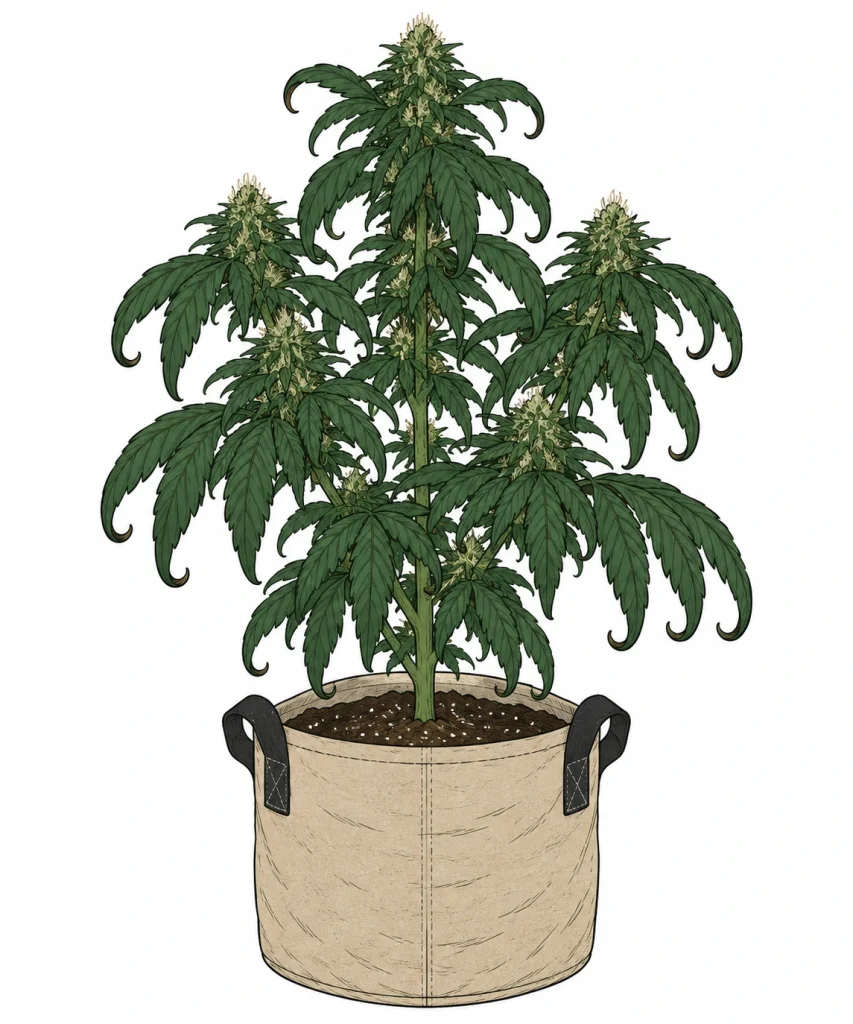
Most growers only spot nitrogen toxicity in cannabis once the plant is already clearly struggling. Yet the warning signs are clear and easy to read. Dark green, glossy leaves with tips curling down like claws are the classic picture of N toxicity. It usually comes from overfeeding or getting the dose wrong. If you catch it early, you can correct course fast and protect your harvest from lasting damage. In this article, you’ll learn everything about the symptoms, the causes and the best ways to fix too much nitrogen in your cannabis plant.
What Is Nitrogen Toxicity in Cannabis?
Nitrogen (N) is one of the three most important macronutrients for cannabis. It drives leaf growth, chlorophyll production and the plant’s entire metabolism. During the vegetative stage, cannabis needs quite a lot of nitrogen to build strong shoots and lush foliage. But like with every nutrient, too much hurts just as much as too little.
Nitrogen toxicity, also called N toxicity or nitrogen excess, happens when your plant takes up more nitrogen than it can process. Common causes are heavy feeding, a miscalculated EC (electrical conductivity), or a growing medium that’s already loaded with nutrients right out of the bag. The result is a plant that looks lush on the outside but is out of balance on the inside.
The tricky part: many growers mistake the first signs of nitrogen toxicity for a healthy, well-fed plant. That deep dark green looks like a good growth signal at first. In reality, it’s a red flag, and you should act quickly.
How to Spot Nitrogen Toxicity in Cannabis: The Typical Symptoms
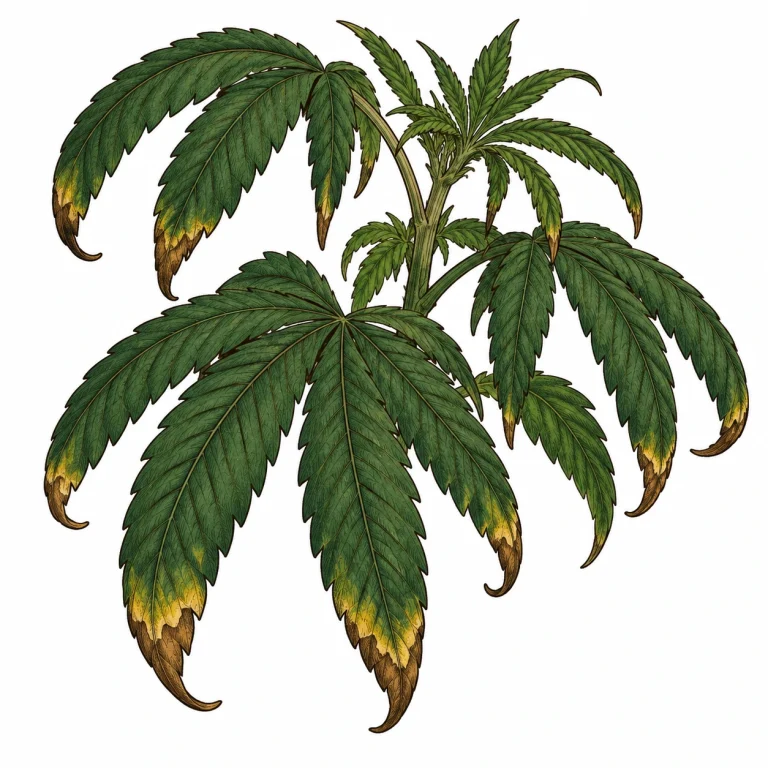
The symptoms of nitrogen toxicity in cannabis are distinctive. Once you know what to look for, you can tell them apart from other problems pretty easily. The most obvious sign is an unnaturally intense, almost blackish dark green leaf color. It shows up because excess nitrogen pushes chlorophyll production into overdrive.
The second classic symptom is the so-called “claw”: leaf tips and edges bend downward, like talons. This is very typical of N toxicity and rarely shows up with other nutrient problems. It often starts on the lower or middle leaves and spreads upward if the excess continues.
In later stages, the leaf tips can die off (necrosis), and leaves turn brittle and lose their firmness. Many growers also notice an especially greasy or waxy shine on the leaves. During the flowering stage, nitrogen toxicity is a bigger problem. Your plant actually needs less N at this point, and too much can hold back bud development.
- Unnaturally dark green to almost black-green leaf color
- Leaf tips and edges curl downward (clawing)
- Glossy, waxy-looking leaf surface
- Leaves look overly plump and stiff
- Dead, burnt leaf tips with severe toxicity
- Slower growth despite a lush appearance
- Stunted bud development in the flowering stage
Nitrogen Toxicity vs. Other Problems: How to Tell Them Apart
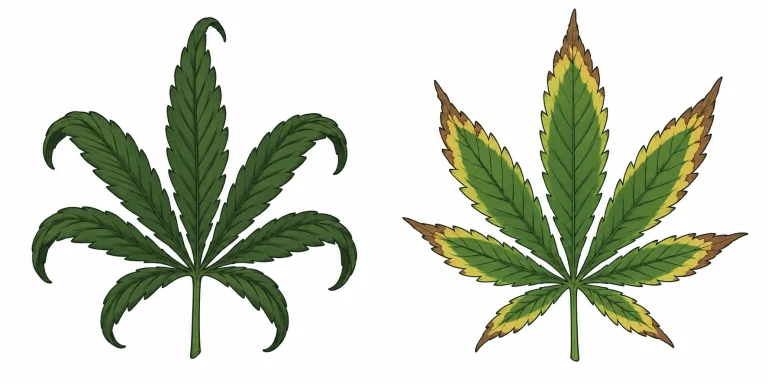
Not every curled leaf means nitrogen toxicity. Clawing in particular can have other triggers, like heat stress, overwatering or wind burn from fans that blow too hard. The key difference is leaf color: with nitrogen toxicity, that intense dark green is always there at the same time.
A potassium or calcium deficiency also damages leaves, but it usually starts with yellowing or spots, not that typical darkening. If you’re not sure you’re dealing with a nutrient problem, check your cannabis pH. A pH that’s off can throw nutrient uptake out of whack across the board and cause similar symptoms.
Another important distinction is general nutrient burn in cannabis. With general overfeeding, several nutrients are often too high at once and you see a mix of symptoms. N toxicity, on the other hand, stands out through the combination of dark green and clawing. Always measure the EC of your nutrient solution and check the pH first, before you start any treatment.
Not sure yet whether nitrogen is really behind the clawing? Start with our overview article on cannabis leaf clawing. It compares the four most common causes side by side: nitrogen toxicity, heat stress, root problems and poor watering habits. This article goes deeper instead. It covers EC diagnosis, a step-by-step flushing guide and stage-specific details for when nitrogen is the confirmed cause.
- Dark green + clawing = classic nitrogen toxicity
- Clawing on its own can also mean heat stress or wind stress
- Yellowing and spots point more to a deficiency than a toxicity
- Always measure pH and EC before you treat anything
- If symptoms show up across all nutrients, check for nutrient burn
Most Common Causes of Nitrogen Toxicity in Cannabis
By far the most common cause of nitrogen toxicity in cannabis is the grower simply feeding too much. Many beginners follow the feeding charts on nutrient bottles too closely. Those charts are often built for maximum growth, not for what your plant actually needs. The flowering stage is where this hits hardest: the plant’s nitrogen demand drops sharply, and a lot of growers miss that shift.
Another frequent trigger is using pre-fertilized soil (German) and adding nutrients on top. Quality cannabis mixes like Biobizz Light-Mix or Canna Terra Professional Plus already carry enough food for several weeks. If you start feeding extra from day one, nitrogen can quickly build up to toxic levels.
A pH that’s too low can also cause a functional excess indirectly. When soil pH drops below 5.5, other nutrients get locked out while the plant keeps taking up nitrogen. The result looks like a toxicity, but it’s really a pH-driven imbalance. That’s why checking pH should always be your first diagnostic step. On top of that, poor watering can let nutrient salts build up in the growing medium. Take a look at how to water cannabis the right way to rule out watering mistakes.
- Feeding too heavily during the vegetative stage
- Keeping up high-nitrogen feeding into the flowering stage
- Pre-fertilized soil combined with extra nutrients
- Low pH throwing off nutrient uptake
- Salt buildup from poor watering habits
- Using an overly rich growing medium (e.g. compost that isn’t fully mature)
- Miscalculated EC of your nutrient solution
How to Fix Nitrogen Toxicity in Cannabis: Immediate Steps
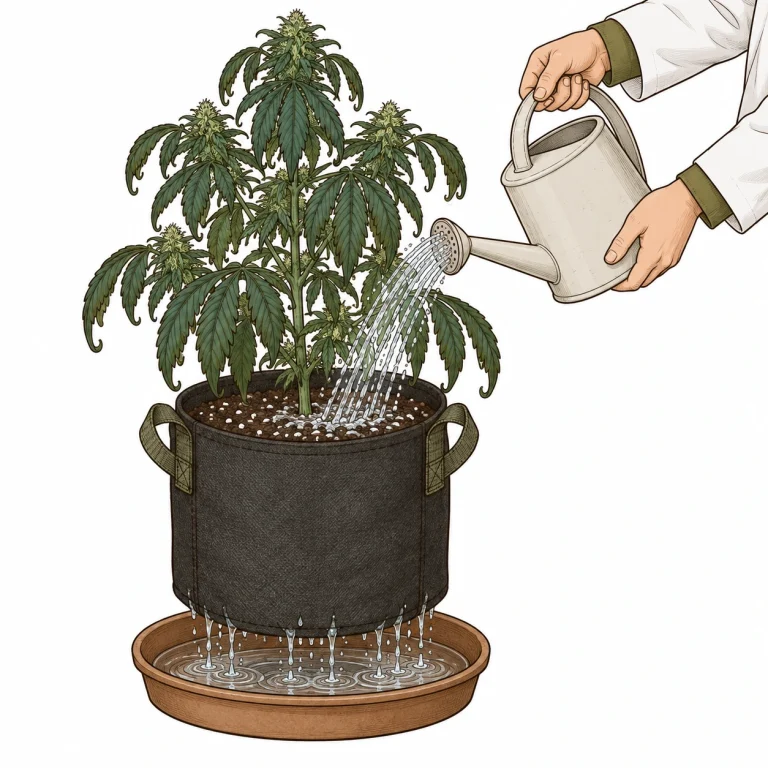
Once you’ve diagnosed nitrogen toxicity in your plant, act fast. The first and most important step is flushing: run two to three times the pot’s volume of clean, pH-adjusted water through the medium (pH 6.2–6.8 for soil). The water dissolves built-up nutrient salts and carries them out with the runoff. Do at least one complete flush.
After flushing, give your plant only a very light feed or plain water for at least seven to ten days. Check the EC of your runoff regularly. Once it drops below 500 ppm (1.0 mS/cm), the medium is largely clear of excess salts. Don’t keep the medium soaked after flushing, though. Let it dry out properly before you water again.
Check the pH of your water and your medium right away, too. A pH outside the ideal range of 6.2 to 6.8 (soil) can make things a lot worse. Remove badly damaged, necrotic leaves by hand to take the load off your plant. They won’t recover, and they just drain resources.
- Flush right away with 2–3 times the pot volume of pH-adjusted water
- Stop feeding immediately or cut back drastically
- Set the pH of your water to 6.2–6.8 (soil)
- Check the EC of your runoff after the flush
- Remove badly damaged, necrotic leaves
- Let the medium dry out well between waterings
- Use only a very light feed or plain water for 7–10 days
How to Fix Nitrogen Toxicity in Cannabis: Long-Term Fixes and Prevention
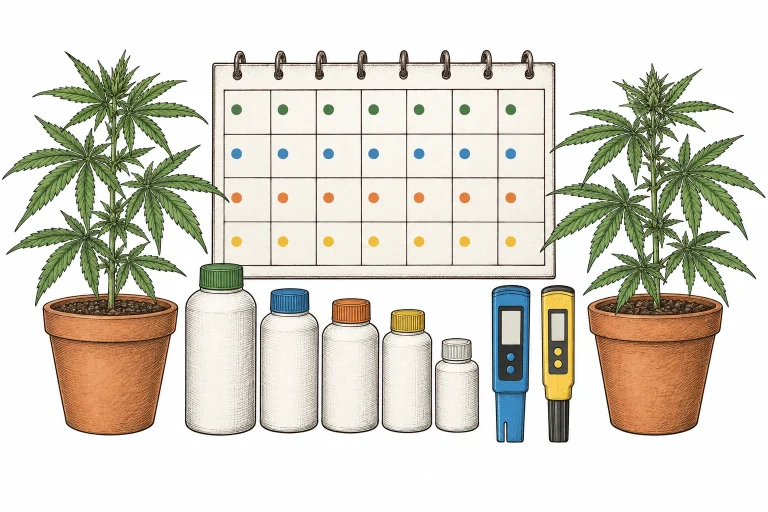
Once the acute nitrogen toxicity is under control, the goal is to keep it from coming back and to dial in your feeding for the long run. The most important step is matching your feeding schedule to the growth stage. In the vegetative stage, a higher nitrogen share is fine. But by the switch to the flowering stage at the latest, you need to cut nitrogen back clearly. Many cannabis bloom nutrients are built with low N and higher P and K. Use them consistently.
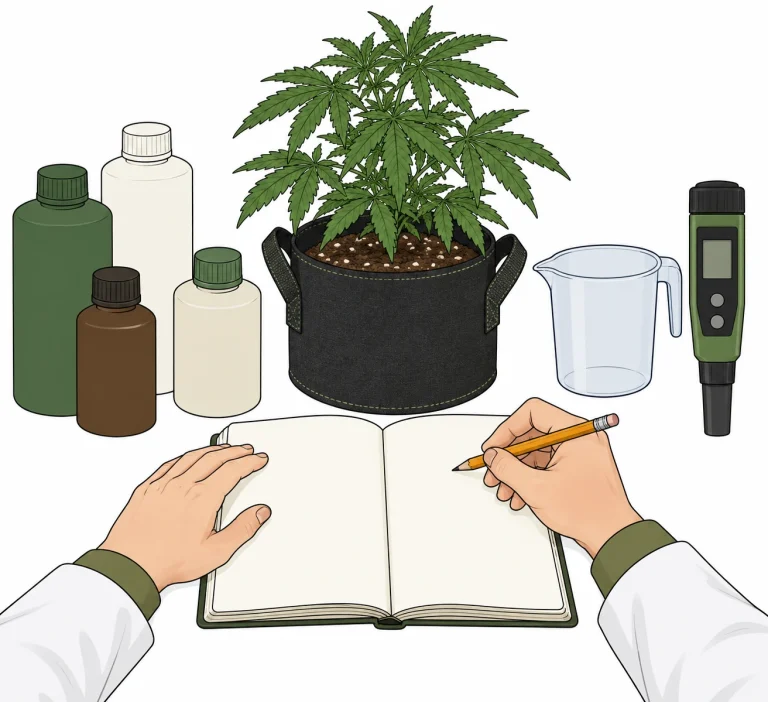
Make checking EC and pH a regular habit. An affordable EC meter and a pH meter are the most important tools for any serious grower. They help you catch problems before they show up on the leaves. Keep a simple grow journal where you log feedings, EC readings, pH readings and observations. That way you can spot patterns and fine-tune with purpose.
Choose your growing medium carefully. If you use pre-fertilized soil, wait at least three to four weeks before adding any extra nutrients. Measure the EC of your runoff first to see how many nutrients are actually still in the soil. For everything you need to know about the right grow setup, check out our in-depth indoor cannabis grow guide. It walks you through all the basics step by step.
In our Cannabis Plant Diagnosis hub, you’ll also find an overview of all common plant problems. It’s ideal for quickly narrowing down similar symptoms and taking targeted action.
- Match your feeding schedule to the growth stage (less N in flower)
- Use your EC meter and pH meter regularly
- Keep a grow journal to spot patterns
- Check your growing medium’s nutrient content before adding extra nutrients
- Switch to bloom nutrients with low N
- Flush at regular intervals as a preventive step
- Mix nutrient solutions fresh, don’t reuse old leftovers
Nitrogen Toxicity in Cannabis During the Flowering Stage: What’s Different
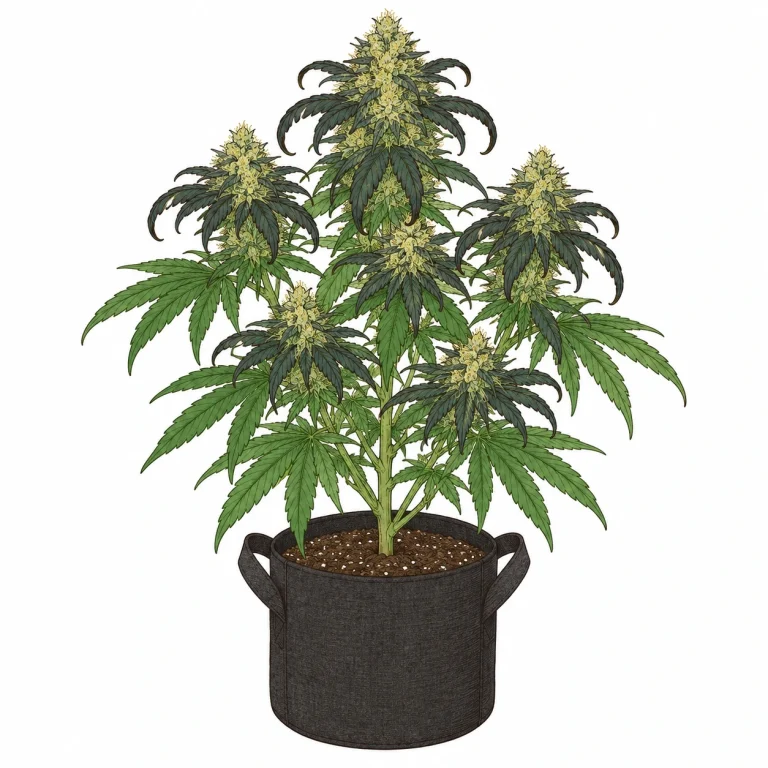
Nitrogen toxicity in the flowering stage is especially critical, and many growers underestimate it. In the vegetative stage, your plant needs a lot of nitrogen for leaf growth. In flower, its priorities shift to phosphorus and potassium for bud development. Too much nitrogen at this point can actively slow down bud development, because the plant keeps pushing vegetative growth instead of putting its energy into reproduction.
In practice, excess nitrogen in flower can mean smaller, less dense buds and lower resin content. Trichome production can drop, which directly affects potency and aroma. Some growers also report delayed ripening and a longer flowering stage. The plant basically “forgets” to finish up.
If you spot nitrogen toxicity in the flowering stage, the fix is the same as described above: flush, cut feeding way back and switch to a bloom nutrient with very low or zero nitrogen. In the last two weeks before harvest, it’s a good idea to skip nutrients completely anyway and water with plain water only.
- In flower, the plant needs much less N than in veg
- Too much N in flower can actively hold back bud formation
- Trichome production and resin content can drop
- Buds stay smaller and less dense
- Harvest time can get pushed back
- Skip nutrients completely in the last 2 weeks before harvest
How to Spot Nitrogen Toxicity in Cannabis: A Step-by-Step Checklist for Growers
A structured checklist helps you catch nitrogen toxicity early and fix it systematically. Work through the following points in order before you start treatment.
Always start by measuring. Check the pH of your water (6.2–6.8 in soil, 5.7–6.0 in hydro). Measure the strength of your nutrient solution (veg: 500–800 ppm (1.0–1.6 mS/cm), flower: 800–1,100 ppm (1.6–2.2 mS/cm)). Then measure the EC of your runoff and compare it with your input. Next comes the visual check: Are the leaves unusually dark green? Are the leaf tips clawing downward? Do the leaves have a greasy shine? Ideally, you answer these three questions every day when you check on your plants.
If at least two of the three visual symptoms apply and your EC is high, nitrogen toxicity is very likely the culprit. Also review your current feeding schedule and where your growing medium came from. That often points straight to the cause. Yellow cannabis leaves, on the other hand, usually point to a deficiency, not a toxicity.
- 1. Measure pH (soil: 6.2–6.8 | hydro: 5.7–6.0)
- 2. Measure the EC of your nutrient solution
- 3. Measure the EC of your runoff
- 4. Check leaves for dark green color, clawing and shine
- 5. Review your feeding schedule and growing medium
- 6. If confirmed: flush right away and pause feeding
- 7. Watch for 7–10 days, then carefully start a new feeding schedule
How much nitrogen your plant actually needs at each stage is shown in our Cannabis NPK chart.
Frequently Asked Questions
How fast does a cannabis plant recover from nitrogen toxicity?
After a flush and a cutback in feeding, cannabis plants usually show the first signs of improvement within 5 to 10 days. Leaves that already have necrotic spots won’t recover, but new shoots and leaves can grow back healthy. The sooner you act, the less yield you’re likely to lose.
Can I just stop feeding when my plant has nitrogen toxicity?
Pausing your nutrients is the right move, but often it isn’t enough on its own. If a lot of nutrient salts have already built up in the growing medium, a thorough flush with 2 to 3 times the pot volume of pH-adjusted water is the way to fix nitrogen toxicity fast. After that, you can carefully start feeding again with a light, phosphorus-heavy nutrient.
Can nitrogen toxicity ruin my harvest?
Severe nitrogen toxicity that drags on during the flowering stage can noticeably cut your harvest: buds stay smaller, trichome production drops and ripening gets delayed. If you spot it early and act, though, you can still soften most of the damage. In the vegetative stage, excess nitrogen is less critical for your harvest, but you should still fix it quickly.
Are dark green leaves always a sign of nitrogen toxicity?
Not necessarily. Some strains simply have darker foliage. True nitrogen toxicity shows up as a combination of unnaturally deep dark green AND leaf tips bending downward (the “claw”). If you only see one of these symptoms, check further with pH and EC readings.
Should I flush for nitrogen toxicity during the flowering stage too?
Yes, flushing works against nitrogen toxicity in flower as well. Just make sure you flush with pH-adjusted water (soil: 6.2–6.8) and afterward feed only very lightly or not at all. Ideally, you skip nutrients completely in the last two weeks before harvest anyway.
What’s the difference between nitrogen toxicity and nitrogen deficiency?
Nitrogen deficiency shows up as yellowing that starts on the lower, older leaves and works its way up – the plant turns light green to yellow. Nitrogen toxicity, on the other hand, shows up as an intense dark green color and leaf tips that claw downward. Color is the key giveaway.
To keep an eye on your feeding strength from now on, an EC meter from our Recommended Gear can help.
The Bottom Line
Nitrogen toxicity in cannabis is one of the most common nutrient problems, but with some experience and the right tools you can spot it early. Dark green leaves combined with leaf tips curling downward (the classic “claw”) are a clear signal to act right away. With a thorough flush, adjusted feeding and consistent pH and EC checks, you can usually get your plants back on track within a few days. In the long run, a feeding schedule matched to each growth stage and regular measuring are your best protection against nitrogen toxicity.
