

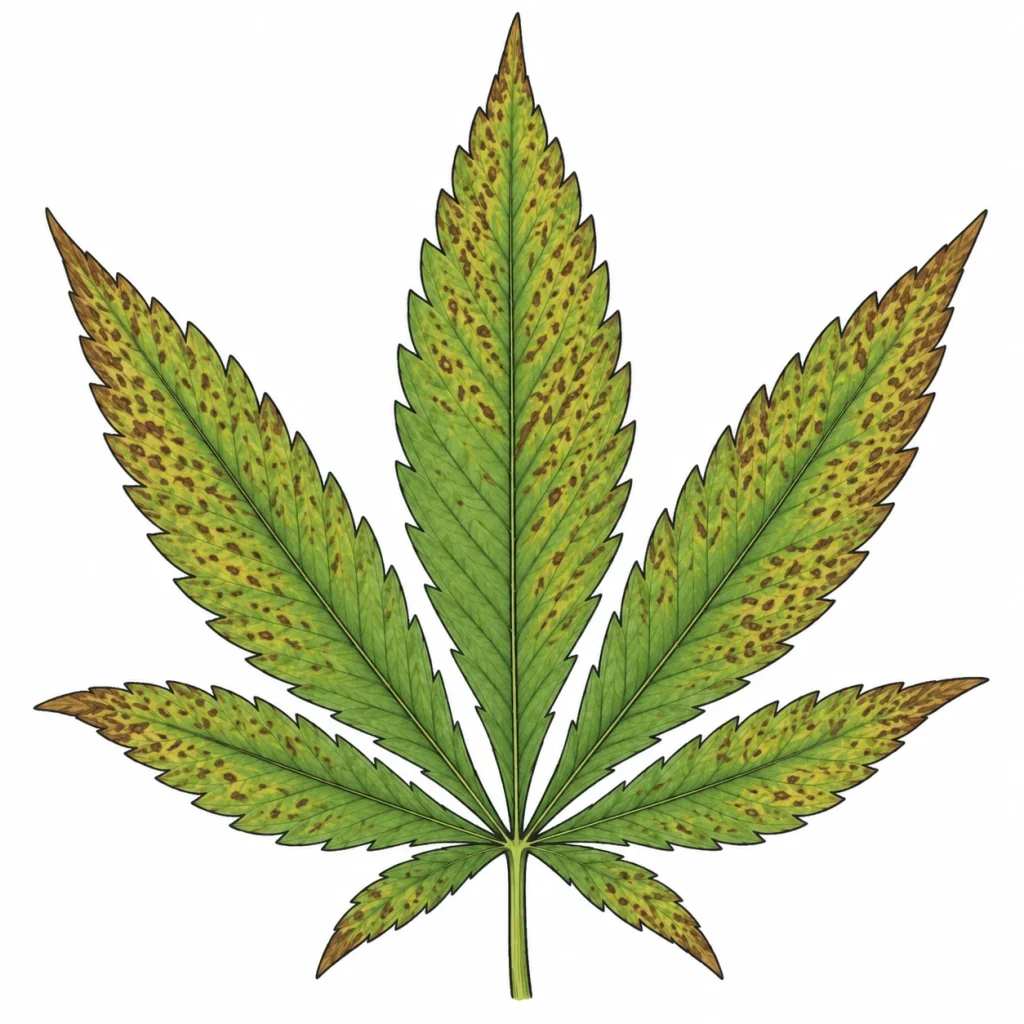
Iron toxicity is one of those nutrient problems that a lot of growers misread at first. At a glance, the symptoms can look like a deficiency or even a disease. But iron toxicity in cannabis is its own problem with clear warning signs. It shows up when your plant takes too much iron into its tissue, or when the pH in your growing medium drifts into the wrong range. If you spot the signs early, you can correct course fast and protect your buds from lasting damage. In this guide, you’ll learn the symptoms, the most common causes and the treatment steps that work for iron toxicity in cannabis.
What Is Iron Toxicity in Cannabis and What Causes It?
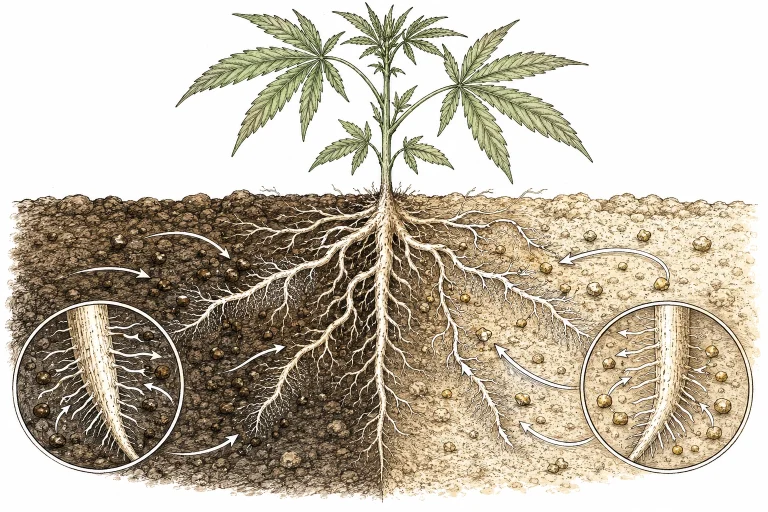
Iron is an essential micronutrient for cannabis. It plays a role in chlorophyll production, supports electron transport inside the plant cell and drives key enzyme reactions. But cannabis only needs iron in very small amounts. That means even a slight oversupply can be enough to cause toxic effects. And true iron toxicity doesn’t always mean you fed too much iron. Often the real problem is the pH of your growing medium or your water.
When pH is too low – in other words, too acidic – iron becomes overly available in the medium or nutrient solution. Your plant then takes up more iron than it can handle. At the same time, iron toxicity can block the uptake of other key nutrients like phosphorus, manganese and calcium. So one problem can quickly snowball into a complex nutrient imbalance. This happens especially often in hydroponic grows and when you use tap water that’s high in iron.
Another common trigger is careless use of chelated iron nutrients or iron-based boosters on top of a medium that’s already rich in iron. If you keep adding iron to fix what looks like an iron deficiency, you can end up doing the opposite and creating a real toxicity. That’s why a careful diagnosis before any feeding change is a must.
- Iron is a micronutrient – your plant needs very little, and the margin for error is narrow
- Low pH (below 5.5 in soil, below 5.0 in hydro) makes iron overly available
- Too much iron in your nutrients or iron-rich tap water as a direct source
- Iron toxicity can also block phosphorus, manganese and calcium
- Mistaking it for iron deficiency can lead you to make the wrong fix
How to Spot Iron Toxicity Symptoms in Cannabis
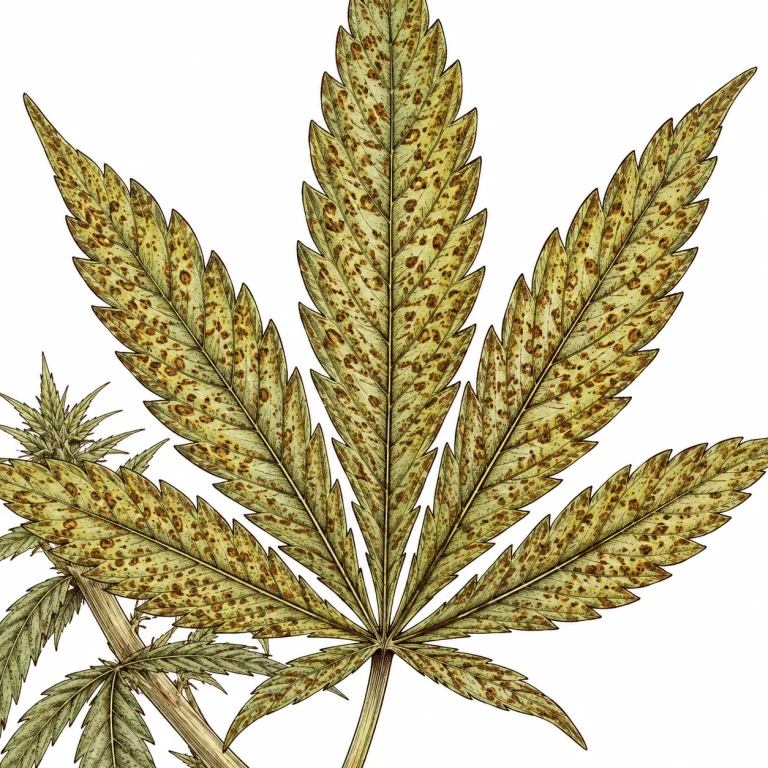
Iron toxicity symptoms usually start on the older, lower leaves and work their way up over time. That sets it apart from a classic iron deficiency, which always shows up first on the young growth at the top. The key visual sign is a bronze to dark brown discoloration of the leaves, often with small necrotic spots. In places, the leaf surface can look burned or dirty.
As it progresses, the affected leaves develop brown edges and tips, the chloroplasts take visible damage and overall photosynthesis drops. In severe cases, leaves can drop early as the plant tries to shed damaged tissue. With heavy iron toxicity, the roots can be affected too. They may turn dark brown to orange – something you’ll notice when checking a hydro system or transplanting.
One symptom that often gets overlooked is slower growth. That happens because excess iron also blocks phosphorus uptake. Phosphorus deficiency signs like dark green to purple leaves and delayed bud development can show up at the same time. If you’re dealing with yellow cannabis leaves along with brownish spots on the lower leaves, don’t rule out iron as a possible cause.
- Bronze to dark brown discoloration of the lower leaves
- Small, necrotic brown spots on the leaf blade
- Brown leaf edges and tips
- Visible orange-brown discoloration of the roots
- Stalled growth from a secondary phosphorus lockout
- Manganese or calcium deficiency symptoms can appear at the same time
Iron Toxicity in Cannabis: The Most Common Causes at a Glance
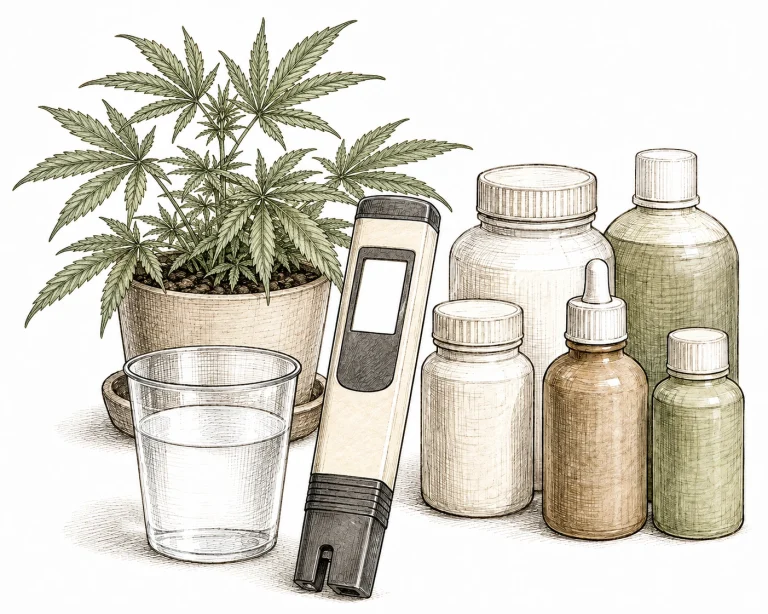
By far the most common cause of iron toxicity in cannabis is a pH that’s too low in your growing medium or nutrient solution. In acidic conditions, iron dissolves out of the medium and becomes far too available to the roots. The ideal pH for cannabis in soil is 6.0 to 7.0. In hydro, it’s 5.5 to 6.5. Even a drop of 0.3 to 0.5 points below that range can cause your plant to take up iron at toxic levels. That’s why checking and correcting your pH regularly is the single most important way to prevent it.
Another common cause is simply overdoing iron-containing nutrients. Many liquid nutrients already include iron in their micronutrient blend. If you add iron boosters or chelated iron products on top of that, maybe because you suspected a deficiency, the iron level in your nutrient solution can climb into toxic territory fast. It gets especially risky when you combine iron-rich tap water with iron-heavy nutrients without testing your water first.
In hydro, iron buildup in the nutrient solution is its own issue. If you don’t fully drain and refresh your reservoir on a regular schedule, minerals can build up and individual elements can drift into problem ranges. Outdoors, growing in naturally iron-rich native soil can also lead to an excess. A soil test before planting can catch that ahead of time.
- pH too low: too much iron dissolves out of the growing medium
- Iron supplements added when the base nutrients already cover it
- Iron-rich tap water used without a water test
- Hydro nutrient solution not changed regularly
- Outdoor grow in naturally iron-rich soil without a soil test
- Misdiagnosed iron deficiency leads to unnecessary iron doses
How to Fix Iron Toxicity in Cannabis: Quick Fixes and Long-Term Solutions
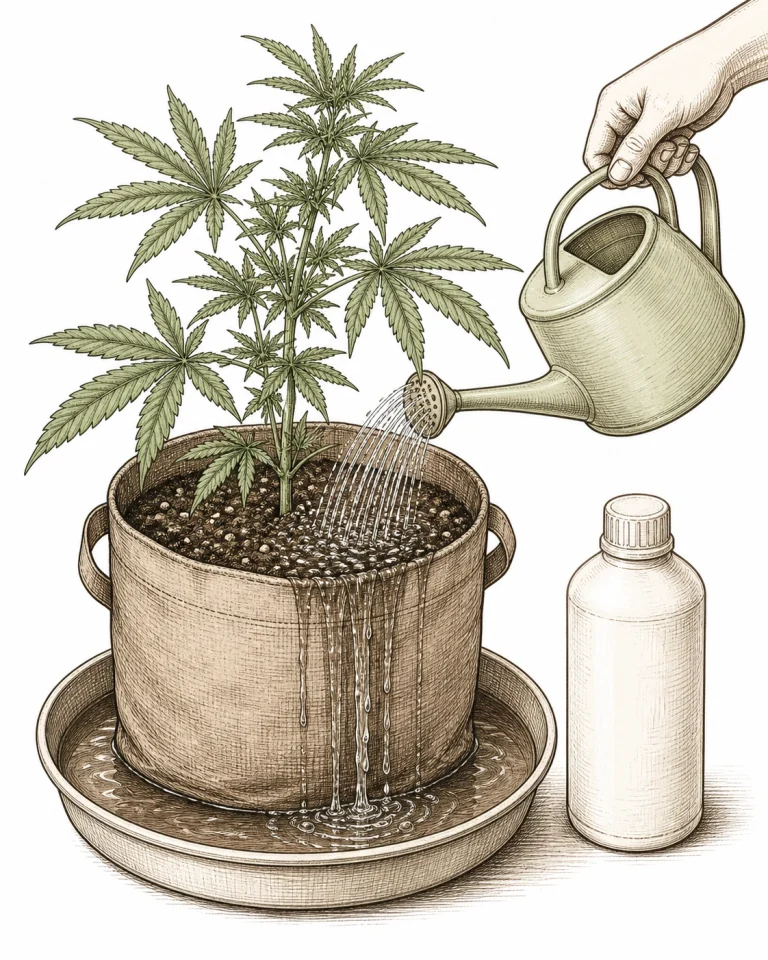
Once you’ve spotted iron toxicity, your first and most important step is to check and correct your pH right away. If it’s below 6.0 in soil or below 5.5 in hydro, raise it gradually with a pH Up solution. Don’t make big jumps. Adjust in small steps of no more than 0.2 to 0.3 points per watering so you don’t stress your plant even more. You’ll find everything about dialing in your pH in the article pH for Cannabis: Ideal Ranges & How to Correct Them.
While you correct the pH, stop all iron feeding immediately. Pull every iron-containing supplement, booster and chelate product from your feeding schedule until your plant has recovered. Next, a moderate flush is a good idea: run two to three times the pot volume of clean, pH-adjusted plain water through the medium. This flush washes excess nutrient salts out of the medium and gives your plant a clean slate. For a full walkthrough, check out the guide to watering cannabis the right way on PlantClue.
After the flush, once your pH is stable, you can restart with a reduced, balanced base feed. Pick nutrients that contain only small amounts of iron, or skip iron supplements entirely for the first two or three feedings. Keep an eye on the new leaves over the next few days: healthy new growth is the most reliable sign that you’ve got things under control. Leaves that are already damaged usually won’t fully recover. That’s not a problem, as long as growth picks back up.
- Measure pH right away and gradually bring it to 6.0 to 7.0 (soil)
- Pause all iron-containing nutrients and boosters immediately
- Flush the medium with 2 to 3 times the pot volume of pH-adjusted water
- After the flush, restart with a reduced base feed without added iron
- Watch the new growth: healthy green leaves mean your plant is recovering
- Have your tap water tested for iron content
Iron Toxicity in Cannabis: How It Differs From Iron Deficiency and Other Problems
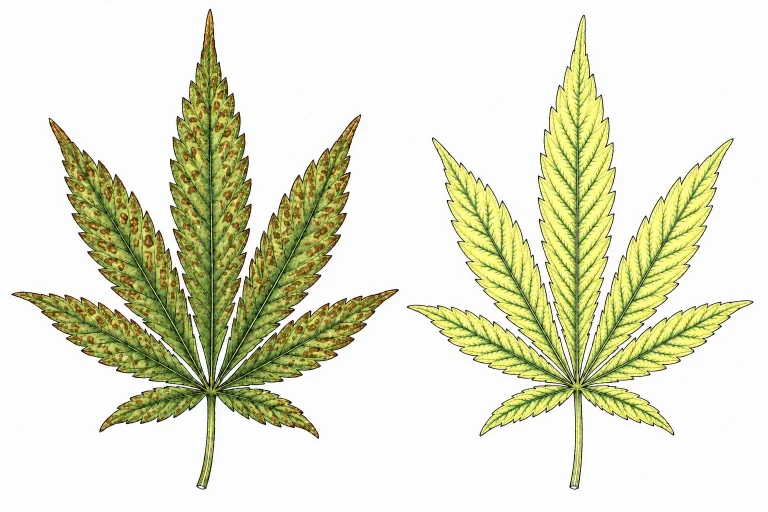
The biggest diagnostic challenge with iron toxicity in cannabis is telling it apart from iron deficiency. At first glance, both look alike: yellow-brown discoloration, leaf damage and slower growth. The key difference is where the symptoms show up. Iron deficiency always appears first on the young, upper leaves and new shoots. That’s because iron is an immobile nutrient, so the plant can’t move it from old tissue to new growth. Iron toxicity, on the other hand, mainly damages the older, lower leaves.
You also need to tell it apart from fungal diseases and bacterial leaf spot. Fungal infections often show spore masses, slimy layers or a distinct smell, and they spread unevenly across the whole plant. Iron toxicity causes evenly spread, dry spots with a bronze tint that start on the lower leaves. If you suspect an infection or infestation alongside these symptoms, check out the Cannabis Plant Diagnosis Hub.
Another common mix-up is general cannabis nutrient burn, where several nutrients build up to toxic levels at the same time. Overall nutrient burn tends to be more widespread and hits many leaves at once. Iron toxicity starts with a more distinct pattern and that typical bronze color. When in doubt, measure the EC (electrical conductivity) or ppm of your nutrient solution or runoff to gauge the total level of dissolved salts.
- Iron deficiency: symptoms on young upper leaves – toxicity: symptoms on old lower leaves
- Fungal diseases: spore masses, smell, uneven spread – toxicity: dry bronze spots in a regular pattern
- Overall nutrient burn: widespread symptoms – iron toxicity: distinct bronze color in limited areas
- Measuring EC/ppm helps you judge total salt levels and how much you’ve overfed
- Measuring pH is your key diagnostic tool for iron availability
Preventing Iron Toxicity in Cannabis: Make Sure It Doesn’t Happen Again
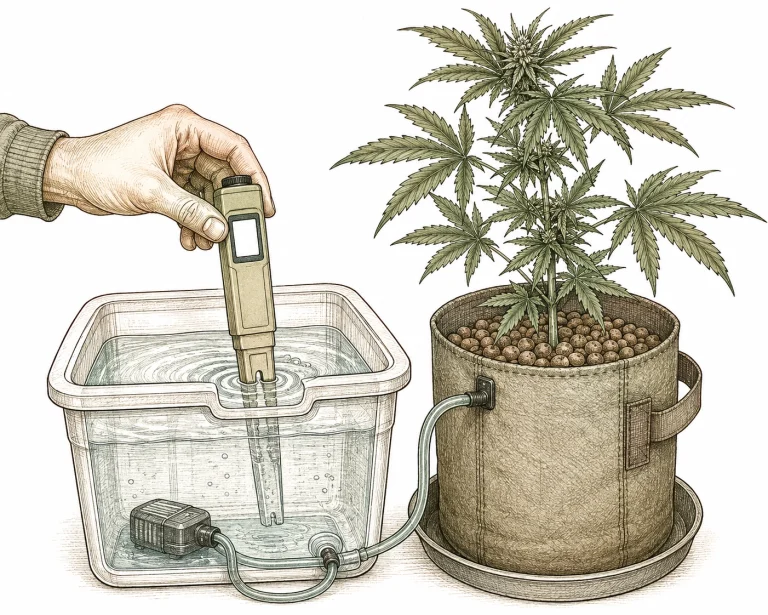
When it comes to iron toxicity, prevention is everything. Your best protection is consistent pH control throughout the entire grow. Measure the pH of your water and nutrient solution before every watering, and check the pH of your runoff regularly too. That way you catch problems early, before they turn into real trouble. A good pH meter is one of the smartest investments you can make as a grower.
With nutrients, less is more. Always start at the lowest dose the manufacturer recommends, and only go higher if you see clear signs of a deficiency. Only use iron supplements once you’ve confirmed an iron deficiency by checking the symptoms and your pH. Ideally, keep a feeding log where you write down every product, amount and pH reading. That keeps you organized and helps you trace problems back fast.
If you use tap water, it’s worth getting it tested once, either through your local water utility or with a test kit. Iron-rich tap water can be pre-treated with reverse osmosis, or you can let it sit and then pour it off, leaving the sediment behind. In hydroponics, swap out your nutrient solution completely every 7 to 14 days at the latest so single elements can’t build up. For the full walkthrough on growing cannabis indoors, check out Indoor Cannabis Growing: The Complete Guide.
The Chamber of Agriculture of North Rhine-Westphalia (Germany) also recommends increasing nutrients step by step, based on what the plant actually needs, instead of feeding a full dose across the board. It calls this the most effective way to prevent nutrient toxicity.
- Measure pH at every watering and keep it in the target range
- Always start nutrients at the lowest dose and only increase when needed
- Only use iron supplements after a confirmed deficiency diagnosis
- Keep a feeding log so you can troubleshoot fast
- Get your tap water tested for iron
- Replace your hydro nutrient solution completely every 7 to 14 days
Calcium excess or manganese toxicity can also be caused by hard water or overfeeding and can trigger similar lockout effects.
Frequently Asked Questions
How can I tell if my cannabis plant has too much iron?
The clearest sign of iron toxicity in cannabis is a bronze to dark brown discoloration on the older, lower leaves, along with small necrotic spots. Unlike iron deficiency, which shows up on young leaves, iron toxicity always starts at the bottom of the plant. You can also check your pH: if it’s below 6.0 in soil, there’s likely too much available iron in your growing medium.
Can I reverse iron toxicity in cannabis?
Yes. With the right steps, your plant can usually bounce back well. Stop all iron-containing nutrients right away, bring your pH back into the optimal range step by step, and flush with two to three times the pot volume in pH-adjusted water. Leaves that are already damaged usually won’t fully recover, but fresh, healthy new growth shows your plant is back on track.
What pH causes iron toxicity in cannabis?
In soil, the danger zone is a pH below 6.0. In hydro systems, it’s below 5.5. In these acidic conditions, the growing medium releases too much iron, and it becomes too easy for the roots to take up. The optimal pH range for cannabis is 6.0 to 7.0 in soil and 5.5 to 6.5 in hydro.
Is iron toxicity common in cannabis?
Iron toxicity is less common than iron deficiency. Still, it shows up regularly when the pH runs too low or when iron supplements are used carelessly. It hits hydro grows and growers with iron-rich tap water more often than classic soil grows with a balanced, pre-fertilized mix.
Can iron toxicity cause other nutrient deficiencies?
Yes, and that’s one of the sneaky side effects of iron toxicity. Excess iron blocks the uptake of phosphorus, manganese and, to some extent, calcium. That can lead to secondary deficiencies of these nutrients. The result is a nutrient imbalance that looks like several separate problems at first glance, but it all comes from one cause.
How long does it take to recover from iron toxicity in cannabis?
Recovery time depends on how severe the toxicity is and which stage your plant is in. After a proper flush and pH correction, you’ll typically see the first signs of recovery on new growth within 5 to 10 days. During the flowering stage, recovery can be a bit slower. Badly damaged leaves will drop off or stay discolored for good – that’s normal and nothing to worry about.
To keep your feeding strength in check going forward, an EC (electrical conductivity) meter from our recommended gear makes life a lot easier.
The Bottom Line
Iron toxicity in cannabis is an often underestimated problem, but you can get it under control with the right steps. The key moves: correct your pH right away, stop all iron-containing nutrients completely, and give your growing medium a thorough flush. With consistent pH monitoring and a well-planned feeding schedule, you can reliably prevent iron toxicity in the future. Remember: preventing problems by measuring regularly is always easier and cheaper than fixing a toxicity after it shows up.
