

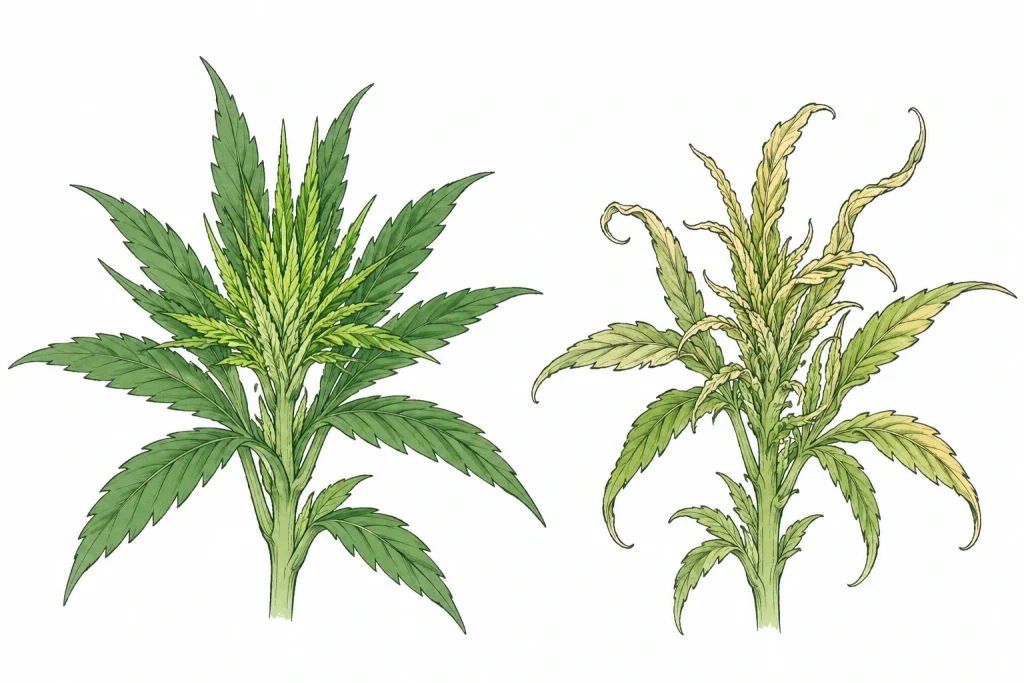
Spotting a boron deficiency in cannabis isn’t easy. The first symptoms are subtle and you can easily mistake them for other problems. Boron is a micronutrient, and cannabis only needs tiny amounts of it. Still, a deficiency can hit growth and bud development hard. Young growing tips, new leaves and early bud sites usually suffer first when your plant doesn’t get enough boron. In this article, you’ll learn how to identify a boron deficiency, why it happens and how to fix it fast.
What Is Boron and Why Does Cannabis Need This Micronutrient?
Boron is one of the essential micronutrients cannabis needs for several basic metabolic processes. Your plant only takes up trace amounts, but the impact is huge. Boron plays a key role in cell division, cell wall formation and the transport of sugars through plant tissue. Without boron, new cells can’t form properly. You’ll notice this first in the parts of the plant that are actively growing.
Boron also helps your plant take up and use other nutrients, especially calcium. The two work closely together: without enough boron, calcium can’t be built into the cell walls properly. So an untreated boron deficiency often triggers secondary deficiencies, which makes the picture even more confusing. Once you understand how these nutrients connect, you can react faster, target the real problem and save your harvest.
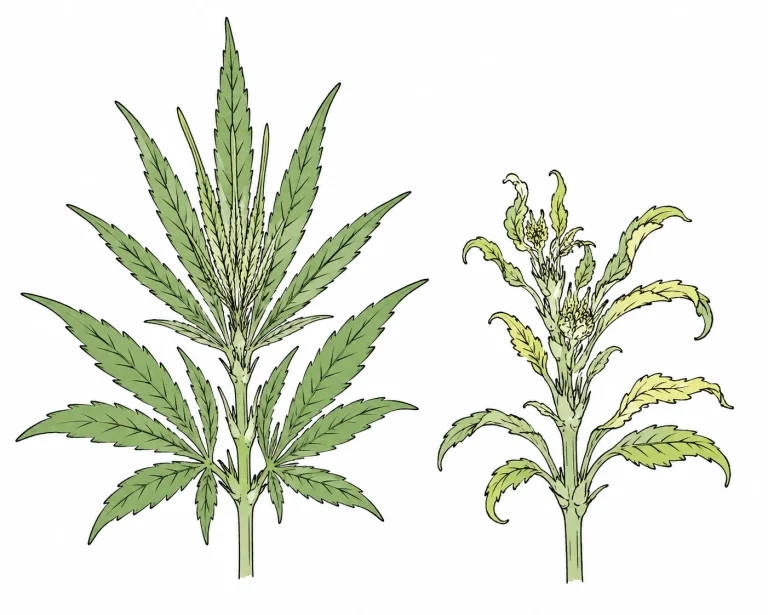
Unlike mobile nutrients such as nitrogen, boron can barely move around inside the plant. Once boron is built into a tissue, it stays there. That’s why new growth always shows a deficiency first: the plant can’t pull boron out of older leaves and send it to new ones. This makes boron deficiency in cannabis a classic “immobile nutrient deficiency” – a key detail for your diagnosis.
- Boron is essential for cell division and cell wall formation
- It moves sugars through plant tissue
- It works closely with calcium
- It’s immobile: new growth suffers first
- Your plant only needs trace amounts, but it has a big effect
How to Spot a Boron Deficiency in Cannabis: Typical Symptoms at a Glance
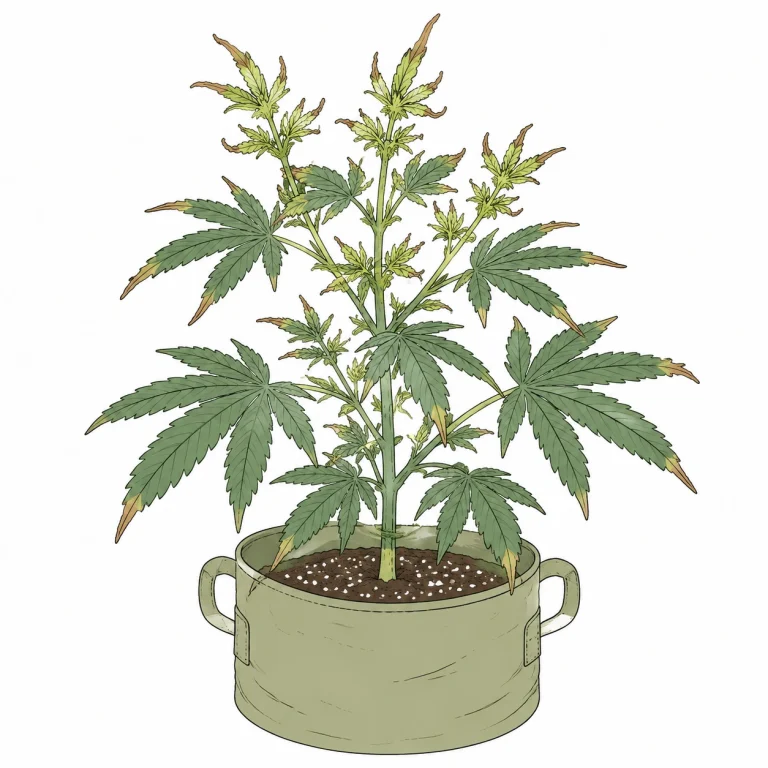
If you suspect a boron deficiency, always check the youngest leaves and the growing tips first. That’s where the first signs show up, because the plant can’t move boron from old growth to new growth. New leaves often look unusually small, deformed and wrinkled. The leaf blade may cup inward or outward, the edges turn irregular and the leaves lose their typical shape.
As the deficiency progresses, the growing tips start to die back. This tip dieback shows up as the growing points change color – from light green to yellow to brown and finally to necrotic black. The affected areas often feel brittle and dry, even though the rest of the plant gets enough water. Stems near the growing points can also thicken or look hollow.
Another telltale sign: buds don’t form, or they develop abnormally. A boron deficiency in the flowering stage can be especially damaging, because bud sites can’t develop properly. Calyxes become deformed, and colas stay small or turn necrotic early. Older leaves look completely normal at first. That’s the most important difference from deficiencies of mobile nutrients, which always show up first on the lower, older leaves.
To sum it up, the symptoms come in three stages. Stage one: subtle deformation of new leaves. Stage two: the growing tips die back and stems thicken. Stage three: bud sites fail and growth stops completely. The earlier you step in, the better your chances of saving your plant.
- New leaves look small, deformed and wrinkled
- Growing tips turn yellow to brown and die back
- Stems near the growing points thicken
- Bud sites don’t develop or turn necrotic
- Older leaves look normal at first
- Key sign: damage always starts on the youngest parts of the plant
Common Causes of Boron Deficiency in Cannabis Plants
The most common cause of boron deficiency in cannabis isn’t a real lack of boron in the growing medium. It’s usually a pH that’s off and blocks uptake. Cannabis takes up boron best in the slightly acidic to neutral range, while the rarer molybdenum deficiency tends to show up at low pH, because molybdenum is less available in acidic media. In soil, the ideal pH sits between 6.0 and 7.0. In hydro, aim for 5.5 to 6.5. When pH drifts outside these ranges, especially above 7.0, boron gets bound in the medium and your roots can’t reach it. That makes pH for cannabis the first thing to check if you suspect boron deficiency.
Another common cause is overwatering or waterlogged soil. When roots sit in a soggy medium for too long, they run short on oxygen and can’t do their job, so nutrient uptake drops across the board. The opposite can cause trouble too: if the medium gets bone dry, boron barely moves in the root zone. Boron is water-soluble and needs moisture to be taken up. That’s why watering cannabis the right way plays a key role in keeping your plants’ nutrient supply steady.
Calcium excess can also trigger boron deficiency. Calcium and boron interact, so too much calcium can compete with boron and cut its availability. A medium that has built up salts from heavy feeding can block uptake as well. Quality all-in-one nutrients usually contain enough boron. But if you use basic base nutrients without trace elements, you can end up with a true boron deficiency simply because there’s none on offer. So when you pick your nutrients, make sure they include micronutrients, boron among them.
- Wrong pH: boron isn’t taken up (especially above pH 7.0)
- Overwatering and waterlogged soil hold back root function
- A medium that’s too dry blocks boron mobility
- Calcium excess can compete with boron uptake
- Missing micronutrients in your nutrients
- Salt buildup in the medium from overfeeding
How to Fix Boron Deficiency in Cannabis: Step by Step
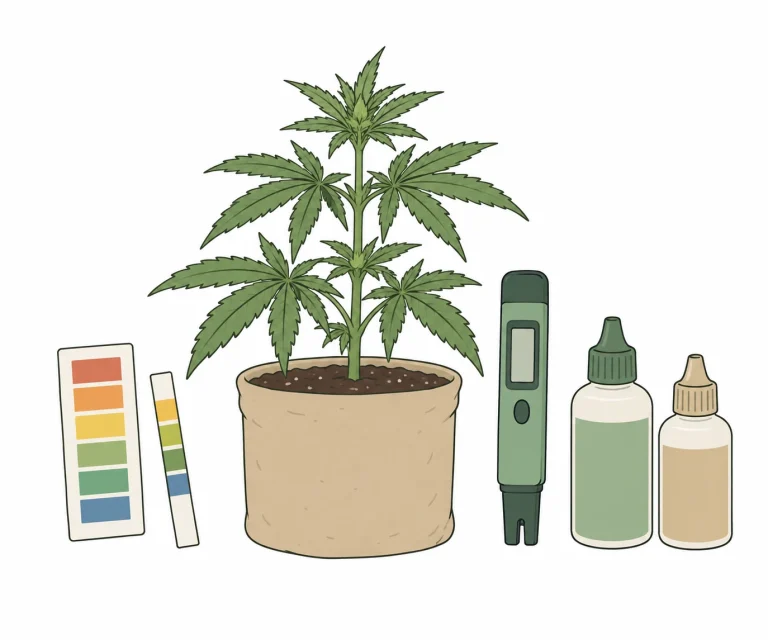
Before you start any treatment, check the pH of your water and your growing medium first. Measure the pH of your runoff after watering to get a realistic reading from the root zone. If it’s outside the ideal range, bring it back step by step with pH Up or pH Down. Often a boron deficiency clears up on its own within a few days of fixing pH, with no extra boron needed.
If your pH is dialed in and the deficiency sticks around, you can add boron directly. Borax (sodium tetraborate) is a cheap and widely available source: dissolve about 0.4 to 0.75 g of borax per gallon of water (0.1 to 0.2 g per liter) and water your plant with it. Another option is a foliar spray with a low boron concentration. It works especially fast because the leaves absorb boron right through their surface. Important: dose very carefully. Boron is one of the few micronutrients where the gap between deficiency and toxicity is really narrow.
Besides adding boron, take a hard look at your watering routine and fine-tune it. Make sure you have good drainage and let the medium dry out a little between waterings. If you feed a complete nutrient line with trace elements and keep your pH on point, a true boron deficiency is rare over the long run. Want a refresher on the basics of keeping plants healthy? Our beginner’s guide to indoor growing sums up everything you need to know.
Growing tips that have already died back and necrotic tissue won’t recover. You’ll have to accept that. But if you act quickly and correctly, new growth can come in healthy. Cut off badly affected dead areas with sterile tools to help prevent secondary fungal infections. Snap photos every day to track recovery and adjust your treatment if needed.
- Step 1: Measure pH and bring it back into the ideal range
- Step 2: Check your watering – not too wet, not too dry
- Step 3: If needed, add 0.4–0.75 g of borax per gallon of water (0.1–0.2 g per liter)
- Step 4: Or use a boron foliar spray for fast results
- Step 5: Remove dead areas with sterile tools
- Step 6: Watch and document progress daily
Spotting Boron Deficiency in Cannabis and Telling It Apart from Similar Problems
Boron deficiency often gets mixed up with calcium deficiency, since both show up on new leaves and can cause similar deformities. The key difference is in the details. Calcium deficiency typically shows brown spots with a darker edge on new leaves. With boron deficiency, the whole growing tip dies back and the leaves cup and fold in a telltale way. Leaves curling upward, often called “tacoing,” is also a classic calcium deficiency symptom. Want to dig deeper into calcium deficiency? Check out our detailed article on calcium deficiency in cannabis.
Nutrient burn can also cause confusing symptoms that look a bit like boron deficiency at first glance. But when you overfeed, brown leaf tips and edges show up first on the older, lower leaves. Boron deficiency is the opposite: it always starts at the growing tips. Heat damage from lights that are too strong or temps that run too high can also deform new leaves. With heat damage, though, the whole plant tends to be affected evenly. Boron deficiency stays focused on the shoot tips.
Viral infections and genetic mutations can sometimes look a lot like boron deficiency. Your pH, watering and feeding are all dialed in, but the symptoms don’t improve after a boron treatment? Then a virus could be behind it. That’s fairly rare in home grows, though. A step-by-step diagnosis, like the one in the PlantClue plant diagnosis overview, helps you pin down the real cause.
- Calcium deficiency: brown spots with a defined edge and cupped leaves. Boron deficiency: the whole shoot tip dies back
- Nutrient burn starts on old, lower leaves. Boron deficiency always starts on new growth
- Heat damage shows up evenly across the plant. Boron deficiency stays focused on the growing tips
- Viral infections don’t respond to boron treatment
- A step-by-step diagnosis helps when the symptoms are unclear
Boron Deficiency in the Flowering Stage: Special Risks and What You Can Do Now
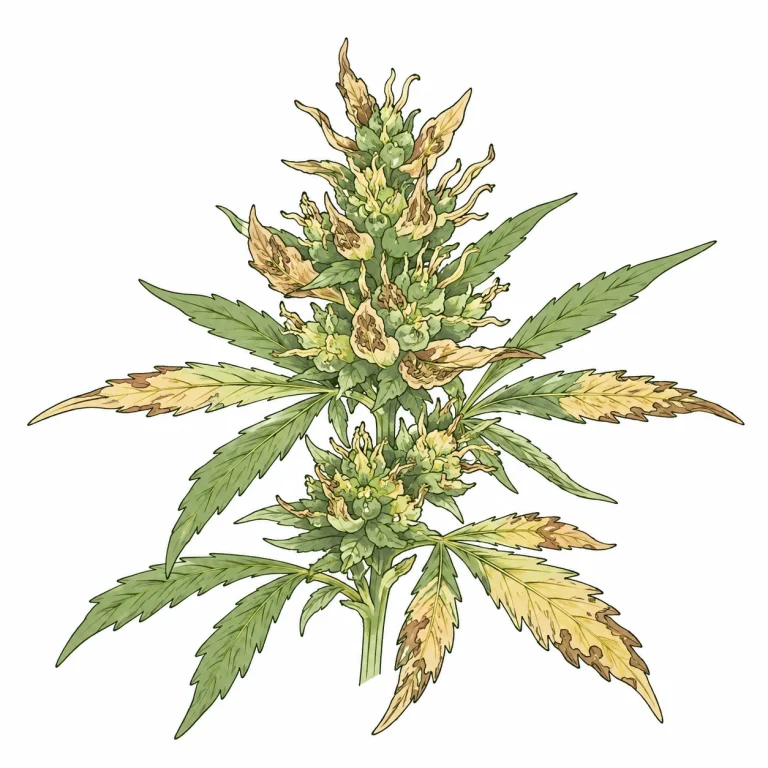
Boron deficiency in the flowering stage is especially serious. Boron plays a direct role in bud formation and seed set. Do your buds suddenly stop developing in the first weeks of flower? Are the calyxes deforming, or are bud sites turning necrotic? Then boron deficiency is a prime suspect. If you don’t act fast, it can take a big bite out of your final yield.
During flower, a foliar spray is your best first-aid move. Plants take up boron through the leaves much faster than through the roots. Use a very low concentration: less than 0.2 g of borax per gallon (0.05 g per liter). Spray only the affected areas, early in the morning, so the solution can dry before your lights hit full power. Avoid spraying buds directly once they’re maturing. Otherwise you can create moisture problems and raise the risk of mold.
At the same time, make sure to check your pH and use a quality bloom nutrient that contains micronutrients, including boron. Many hobby growers neglect micronutrients during flower and focus only on the NPK ratio. But trace elements are key to both the quality and the size of your harvest, especially in flower. Check out our tips on dosing cannabis nutrients the right way to avoid the usual mistakes.
- Boron deficiency in flower: deformed calyxes, necrotic bud sites
- In the flowering stage, a foliar spray works faster than feeding through the roots
- Use a very low concentration in your foliar spray
- Never spray buds directly, because of the mold risk
- Choose a bloom nutrient with trace elements
- Checking pH stays your most important basic step
Preventing Boron Deficiency in Cannabis: How to Protect Your Plants Long Term
With boron deficiency, prevention is much easier than treatment. Your best protection is a stable, correctly set pH in both your growing medium and your water. Measure pH regularly, ideally every time you water, and correct it right away if needed. A steady pH between 6.0 and 6.8 in soil keeps all micronutrients, including boron, available to your plants.
Stick with complete nutrients that contain all the important trace elements on top of NPK. Many well-known cannabis nutrient brands tailor their products to what the plant actually needs and add boron and other micronutrients in the right amounts. Cheap starter nutrients without trace elements are often behind slow-building micronutrient deficiencies that only show up weeks later.
Also keep your watering balanced. Neither constantly soggy soil nor bone-dry soil is good for your plants. Moist but not waterlogged soil with good drainage is ideal. Use a quality growing medium with a good balance of air and water, and make sure your pots have enough drainage holes. Get these basics right, and you’ll rarely, if ever, see boron deficiency in your cannabis.
- Measure pH regularly and keep it in the optimal range
- Use complete nutrients with trace elements
- Keep watering balanced: not too wet, not too dry
- Choose a quality growing medium with good drainage
- Make sure your pots have enough drainage holes
- Always check the pH of your water before watering
Copper deficiency can also cause similar growth problems at the shoot tips. The opposite, boron toxicity, is much more dangerous and hard to reverse. So always dose boron carefully.
Frequently Asked Questions
How fast does boron deficiency show up in cannabis?
Boron deficiency usually shows up within a few days to a week after the shortage starts, because new growth reacts very quickly to missing micronutrients. Symptoms can appear especially fast during the vegetative stage, when your plant is growing hard.
Can I fix boron deficiency with household products?
Yes. Plain borax from the laundry aisle works well. Mix 0.4 to 0.8 g of borax per gallon of water (0.1 to 0.2 g per liter) and use it as a feeding solution, or dilute it further for a foliar spray. Keep the dose very low, because boron can turn toxic quickly.
Do dead growing tips recover from boron deficiency?
No, dead tissue won’t come back. But once you fix the deficiency, new, healthy shoots will grow in. Remove the necrotic areas with sterile tools to help prevent fungal infections.
Can too much boron hurt my plant?
Yes. Boron has one of the narrowest safe ranges of all micronutrients. Overdoing it leads to boron toxicity, which you can spot by brown, burnt leaf edges that work their way up from the bottom of the plant. Always dose carefully and start with the lowest concentration.
Why does my cannabis show boron deficiency even though I feed regularly?
Most of the time, the pH is off and blocks boron uptake, even though there’s enough boron in the growing medium. Check the pH of your water and your medium first. If it’s above 7.0 or below 5.5, correcting the pH is the most effective fix.
Is boron deficiency different in autoflowering cannabis than in photoperiod plants?
The symptoms are the same, but with autoflowering strains, acting fast matters even more. Autos have a fixed, short life cycle, so there’s less time to recover. A boron deficiency in the first two weeks of flowering can cut the final yield of autoflowers significantly.
Looking for the right nutrients to correct the deficiency? Check out our recommended gear.
The Bottom Line
Spotting boron deficiency in cannabis is pretty easy once you know what to look for, thanks to the telltale symptoms at the growing tips. The fix almost always comes down to correcting your pH and keeping your watering balanced. With a quality complete nutrient line and regular pH checks, you can keep boron deficiency away for good. Act fast at the first signs: the sooner you step in, the better your plant can bounce back and the less harvest you’ll lose.
