

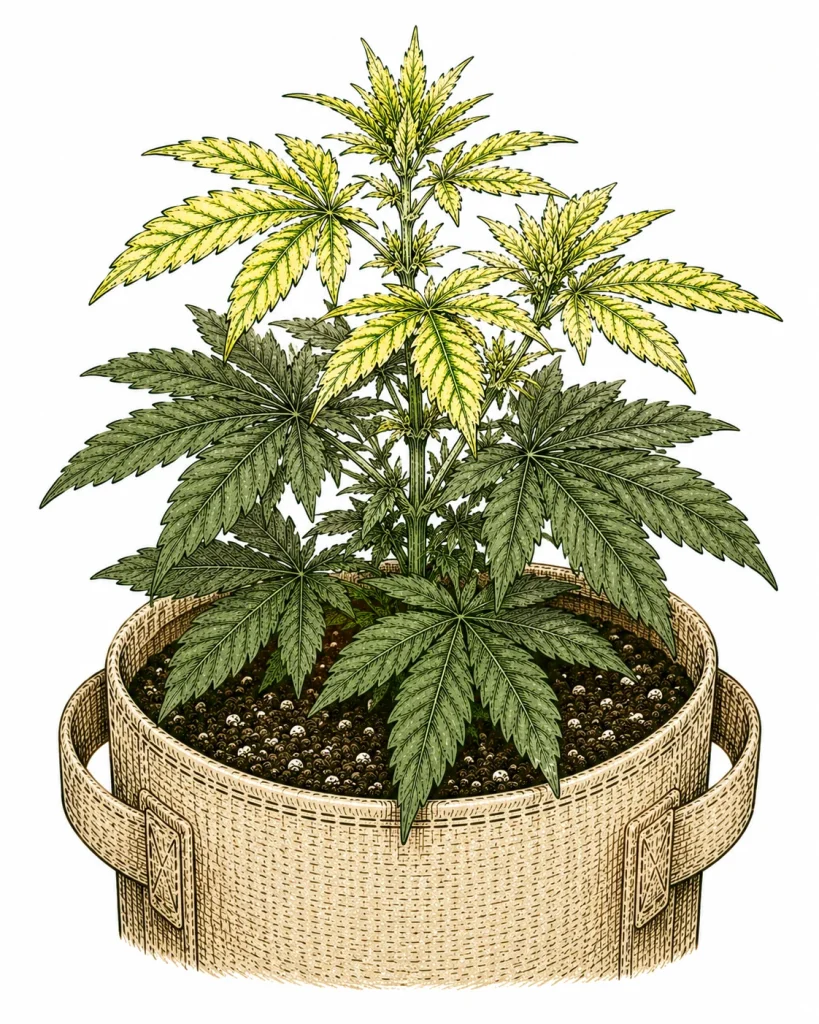
Cannabis iron deficiency chlorosis is one of the most common nutrient problems in home grows, and many growers misread it at first. The telltale sign: your youngest leaves and new shoots turn noticeably yellow, while the leaf veins stay clearly green. That’s textbook interveinal chlorosis. Spot this pattern early and you can step in fast and save your harvest. In this article, you’ll learn the symptoms, the most common causes and how to fix iron deficiency the right way.
Cannabis Iron Deficiency Chlorosis: How to Spot the Symptoms
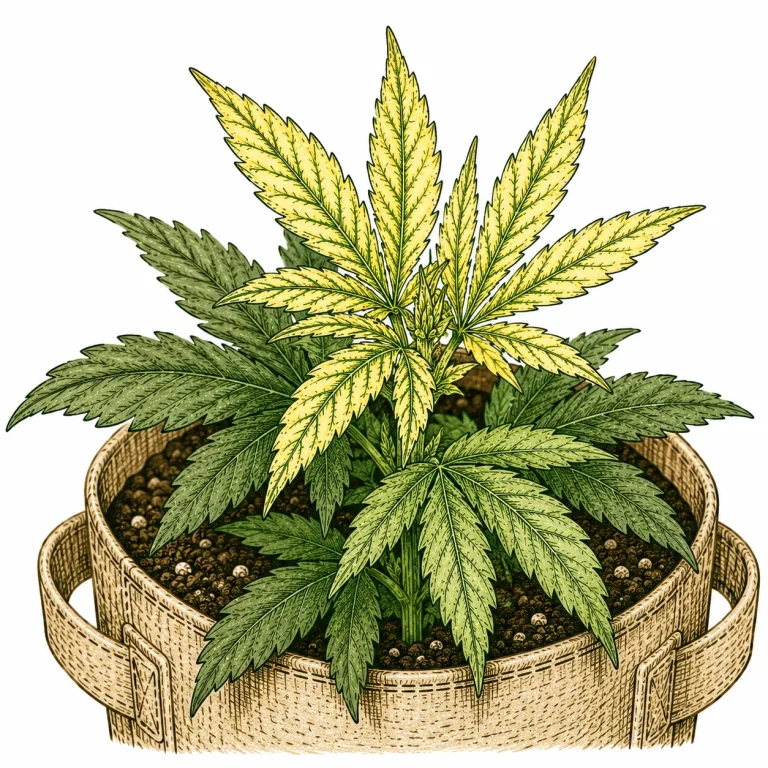
The key difference with iron deficiency is where the discoloration starts. Nitrogen deficiency hits the old, lower leaves first. Cannabis iron deficiency chlorosis, on the other hand, always shows up on the youngest leaves and fresh shoot tips. According to the Julius Kühn-Institut, iron is an immobile nutrient — the plant can’t move it from older leaves into new ones. That’s why the deficiency always hits new growth first.
Here’s what it typically looks like: the leaf tissue between the veins turns pale yellow to almost white, while the veins themselves stay clearly green. This contrast — green veins on a yellow background — is called interveinal chlorosis, and it’s the clearest sign of iron deficiency. If the deficiency gets severe, the veins can fade too, and the whole leaf may look nearly white.
If you don’t fix the deficiency, the chlorosis can spread to slightly older leaves over time. Affected leaves often stay smaller, and your plant’s growth can slow down noticeably. During the flowering stage, untreated iron deficiency can seriously hurt both the quality and the size of your harvest.
- Yellowing always starts on the youngest leaves and shoot tips
- Leaf veins stay green – classic interveinal chlorosis
- Severe deficiency: veins fade, whole leaf turns nearly white
- Older, lower leaves stay healthy and dark green at first
- Slower growth and smaller new leaves as side effects
Cannabis Iron Deficiency: The Most Common Causes
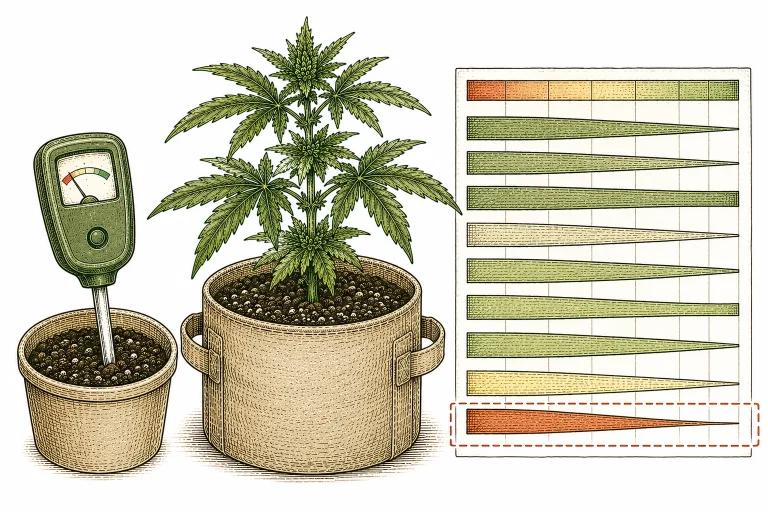
A true iron deficiency, where there’s actually too little iron in the growing medium, is fairly rare in cannabis grows. Much more often, it’s an induced deficiency – the iron is there, but your plant can’t absorb it. By far the most common trigger is the wrong pH in the root zone. Iron is only available to plants within a narrow pH window: ideally 6.0–7.0 in soil and 5.5–6.5 in hydroponics. If your pH runs higher, iron becomes insoluble and out of reach for the plant – even if your nutrients contain more than enough of it.
Another common trigger is overfeeding. If you give too much of other nutrients, especially phosphorus, manganese, zinc or copper, these elements can block iron uptake – this is called nutrient antagonism. Too much calcium or magnesium can also reduce iron availability. Whenever you suspect a problem, check your current feeding schedule first.
Cold root zones play an underrated role, too. When your growing medium or nutrient solution drops below 59 °F (15 °C), root activity slows down a lot and iron uptake can crash – even with perfect pH and plenty of iron in the medium. This is a common cause of temporary chlorosis in outdoor growing during spring or fall and in poorly heated grow rooms. Waterlogged, poorly aerated soil also limits root function — our watering guide shows you how to water your cannabis the right way and avoid overwatering.
- pH too high (above 7.0 in soil / above 6.5 in hydro): the most common cause
- Nutrient antagonism from too much phosphorus, manganese, zinc or copper
- Overfeeding blocks iron uptake through antagonism
- Cold medium or water temperatures below 59 °F (15 °C)
- Overwatering and poor root aeration slow down nutrient uptake
- Too little iron in the medium (less common, but possible with pure water that has no added minerals)
How to Fix Cannabis Iron Deficiency: Step-by-Step Guide
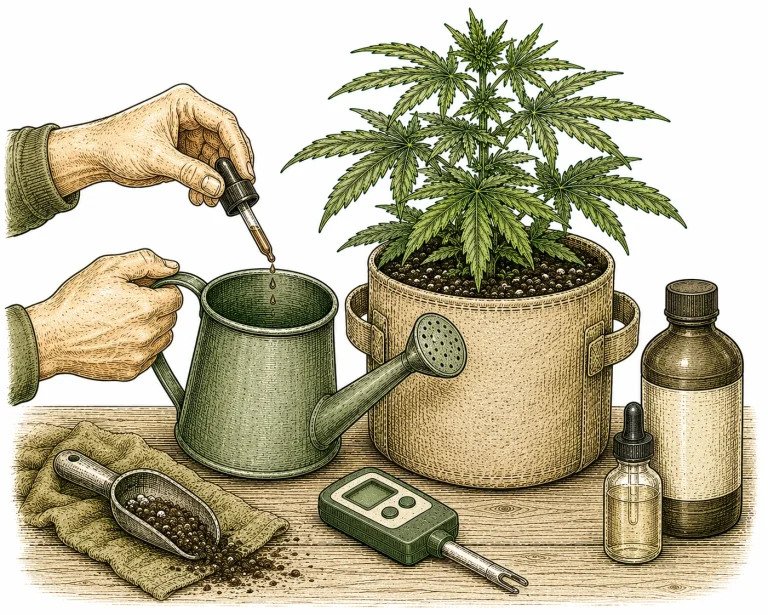
Don’t just add more iron nutrients right away. Find the cause first. Always start by measuring the pH of your runoff (after watering) or directly in the growing medium. Is your pH outside the ideal range of 6.0–6.8 (soil) or 5.5–6.2 (hydro/coco)? Then that’s most likely your problem. Adding more iron without fixing the pH won’t help. Bring your pH into the target range step by step with pH Down or pH Up. Our article How to Adjust pH for Cannabis walks you through it. Then watch whether the new growth recovers within 3–5 days.
If your pH is dialed in and you suspect a true iron deficiency, the fastest fix is a foliar spray with chelated iron (Fe-EDTA or Fe-EDDHA). Chelated iron can be absorbed straight through the leaf surface, so it gets around the problem of blocked uptake at the roots. Dilute the product according to the label. Foliar doses are usually much weaker than root-feeding doses. Spray the affected leaves early in the morning or in the evening to avoid light burn. You’ll often see results within 24–48 hours.
While you’re foliar feeding, fix the supply at the roots too: water with a chelated iron solution at the right pH. Make sure your base nutrients contain enough iron and that nothing is out of balance. If you’ve been feeding a lot of phosphorus, cut back on it for a week or two. If your medium is cold, bring the root zone up to at least 64–68 °F (18–20 °C). Leaves that are already damaged won’t turn green again. You can tell the treatment is working when new growth comes in a healthy, vibrant green.
- Step 1: Measure your pH and bring it into the ideal range
- Step 2: Foliar feed with chelated iron (Fe-EDTA) for a fast effect
- Step 3: Water with a chelated iron nutrient solution
- Step 4: Temporarily cut back on phosphorus and manganese
- Step 5: Keep medium and water temperature above 64 °F (18 °C)
- Step 6: Watch for recovery – new growth should come in green again
Cannabis Iron Deficiency in Hydroponics and Coco: Keep Your pH Even Tighter
If you’re dealing with iron deficiency in hydroponics (NFT, DWC, ebb and flow) or coco coir, you need to watch your pH even more closely than in soil. In these media, iron availability peaks at pH 5.8–6.2. A pH above 6.5 can already cause noticeable iron deficiency here, while soil growers would still be in the safe zone. The reason: coco and hydro media have very little buffering capacity, so the pH swings more and reacts faster to nutrient additions.
In hydro and coco setups, check your pH daily or at least every other day – ideally right in the nutrient solution. Only use chelated iron sources (Fe-EDTA or Fe-EDDHA), because unchelated iron quickly drops out of solution in water. If you notice iron deficiency symptoms in a hydro system, check your EC (electrical conductivity) too. A high EC from nutrient buildup can block uptake even when your pH is right.
- Hydroponics and coco: ideal pH 5.8–6.2 (tighter than soil)
- Check pH daily or every other day
- Use only chelated iron (Fe-EDTA, Fe-EDDHA)
- Check EC as well – high salt levels can block iron too
How to Tell Cannabis Iron Deficiency Apart from Similar Problems
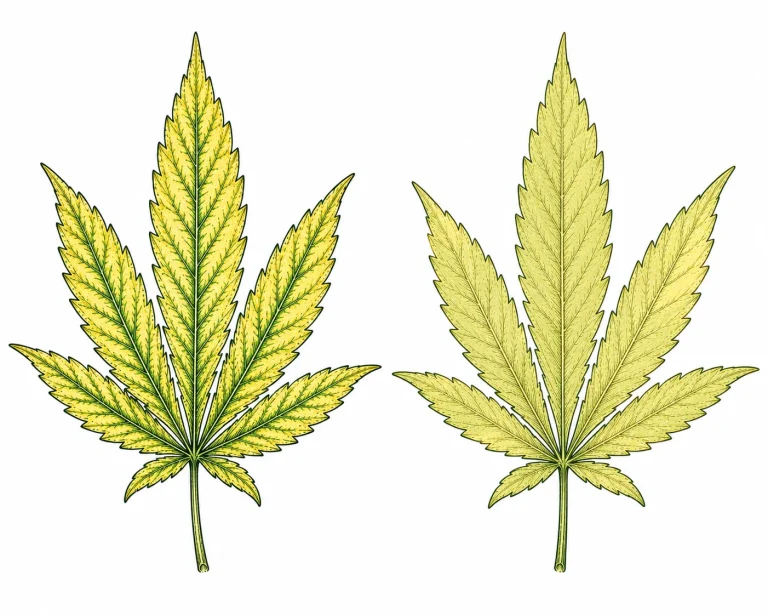
Interveinal chlorosis on new leaves is a fairly clear sign, but you can still mix it up with other problems. Manganese deficiency looks a lot like iron deficiency – young leaves also turn yellow between the veins. The difference: with manganese deficiency, the vein network stays finer and more visible, and the discoloration often looks more brownish and spotty. With iron deficiency, the yellowing is usually more even and a brighter yellow. Both deficiencies can show up at the same time if your pH stays too high, because both elements become insoluble under those conditions.
Nitrogen deficiency is another common mix-up, but it always hits the oldest, lowest leaves first. They yellow evenly without a distinct vein pattern and eventually drop off. Magnesium deficiency also causes interveinal chlorosis, but it typically shows up on middle-aged leaves – not on the newest growth. Not sure which deficiency you’re looking at? The PlantClue Plant Diagnosis overview gives you a full rundown with step-by-step decision guides for all common deficiency patterns.
Nutrient burn can also cause chlorosis-like symptoms, because excess nutrients can block the uptake of other elements. If your plant looks stressed overall, the leaf edges turn brown and several symptoms show up at once, read our article Cannabis Nutrient Burn: How to Spot It Fast and Fix It Right first, before you add more iron.
Cannabis Iron Deficiency vs. Magnesium Deficiency: How to Tell Them Apart
Iron deficiency often gets mistaken for cannabis magnesium deficiency. Both show interveinal chlorosis: green veins on a yellow leaf. The key difference is the age of the affected leaves. Iron deficiency hits only the youngest leaves and the growing tips. Magnesium deficiency starts on the middle to older leaves, usually on the leaf fingers in the middle of the plant. The leaf blade turns yellow while the edges stay green at first.
Another difference: with magnesium deficiency, the yellowing often moves from the outside in. With iron deficiency, the whole leaf turns evenly yellow between the veins. Rule of thumb: Yellow new growth tips → iron. Middle leaves with a yellow center and green edges → magnesium. Sometimes both deficiencies show up together, especially if the pH has gone unchecked for a long time.
- Manganese deficiency: similar, but with brownish spots and on slightly older young leaves
- Nitrogen deficiency: even yellowing, but on old, lower leaves
- Magnesium deficiency: interveinal chlorosis on middle-aged leaves, not on the growing tips
- Nutrient burn: several symptoms at once, brown leaf edges, general stress
- Sulfur deficiency: chlorosis on young leaves, but without a clear vein pattern
Preventing Cannabis Iron Deficiency: Tips for Healthy Growth
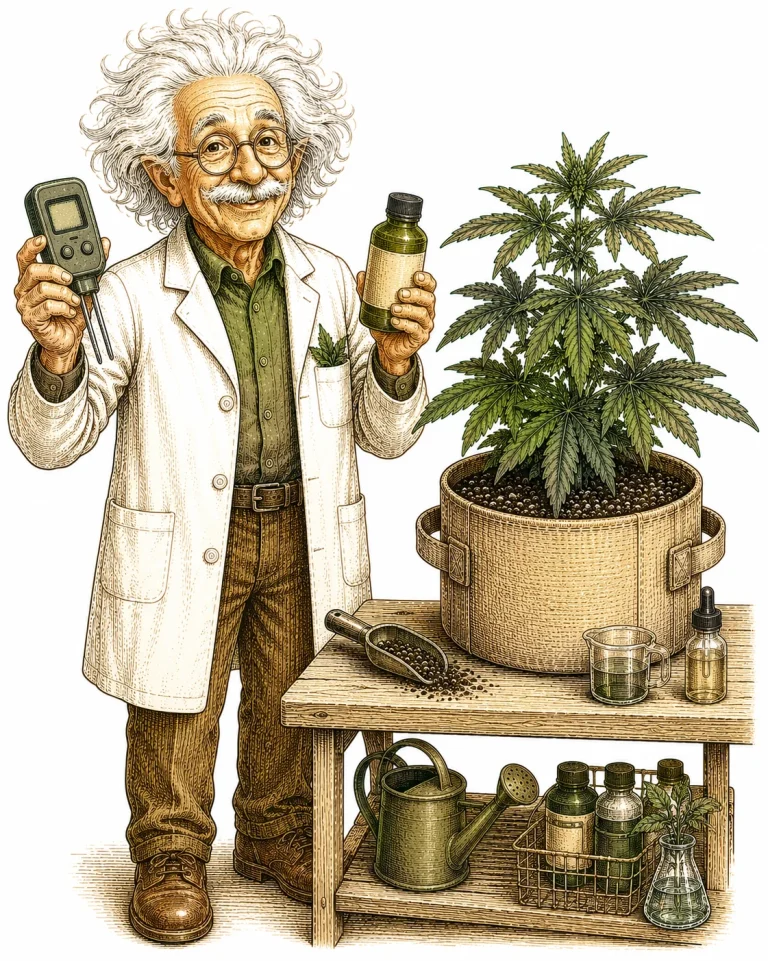
Prevention is easier than treatment. Your best protection against cannabis iron deficiency is keeping a close eye on your pH. Don’t just measure the pH of your water. Check your runoff regularly too, because that tells you what’s really going on in your growing medium. Ideally, check the pH once a week. Good nutrients with chelated iron (Fe-EDTA or Fe-DTPA) give you a much wider pH buffer than non-chelated iron sulfate.
Avoid big jumps in feeding. If you suddenly add a lot of phosphate or other elements, you risk nutrient antagonism. It’s better to feed regularly at a lower strength than rarely at high doses. A balanced NPK ratio with trace elements from a reliable source usually covers your plant’s iron needs completely, as long as the pH is right. Also keep your root zone at a steady 64–72 °F (18–22 °C). That helps prevent cold-related uptake problems and supports healthy root growth in general.
For outdoor growers: soil with lots of lime (high pH) is a common trigger for iron deficiency. Test your garden soil before you plant and adjust the pH with sulfur or peat moss if needed. If you grow in a low-nutrient medium or water only with RO (reverse osmosis) water, use a complete nutrient with chelated trace elements right from the start. Want to dial in the best conditions for indoor growing? Check out our detailed beginner’s guide.
- Measure the runoff pH every week and keep it in the target range
- Use chelated nutrients (Fe-EDTA/Fe-DTPA) instead of non-chelated iron sulfate
- No big jumps in feeding: feed regularly at a lower dose
- Keep your root zone at 64–72 °F (18–22 °C)
- Outdoors in soil with lots of lime: adjust the pH before you plant
- Using RO water? Always use a complete nutrient with chelated trace elements
Other micronutrient deficiencies like boron deficiency, copper deficiency or zinc deficiency can cause similar chlorosis patterns. The opposite, iron toxicity, is less common but just as possible. It’s usually caused by a pH that’s too low.
FAQ: Cannabis Iron Deficiency
Why does my cannabis plant show iron deficiency even though I’m feeding iron?
That’s the classic sign of an induced deficiency. The most common cause is a pH that’s too high in your growing medium. Iron then becomes insoluble and your plant can’t take it up, no matter how much you feed. Measure your runoff pH right away. If it’s above 7.0 (soil) or above 6.5 (hydro), fix that first. Other triggers include nutrient antagonism from too much phosphorus or manganese, and a root zone that’s too cold.
How fast does a cannabis plant recover after you fix iron deficiency?
After a foliar spray with iron chelate, you can often see the first improvements within 24–48 hours. The affected leaves start to recover a little. New growth should come in a healthy, vibrant green within 3–7 days. Leaves that have already turned very yellow usually won’t turn fully green again, though. The new growth is always your proof that the treatment worked.
What’s the difference between iron deficiency and manganese deficiency in cannabis?
Both show interveinal chlorosis on young leaves, but you can tell them apart. Iron deficiency causes even, intense yellowing across the whole leaf surface between the veins. Manganese deficiency tends to show small, brownish-yellow spots with a finer vein pattern. Both deficiencies can show up at the same time if your pH stays too high for too long. When in doubt, correct the pH and add chelated micronutrients.
Can I fix iron deficiency in cannabis with home remedies?
Real home remedies for iron deficiency are limited. Ferrous sulfate (iron sulfate) from the garden store can be used at a very low dose as a foliar spray or soil feed. But it depends heavily on pH and can burn your plants if you get the dose wrong. Chelated iron products (Fe-EDTA) are much more reliable and safer, and you can find them cheap at most garden and grow stores. Still, the most effective first step is always to correct your pH.
At what pH is iron most available to cannabis?
In soil and soil-like growing media, iron is most available at a pH of 6.0–6.8. In hydroponics and coco coir, the sweet spot is a bit lower at 5.5–6.2. Outside these ranges, especially from pH 7.0 and up, iron forms insoluble compounds and becomes practically unavailable to your plant.
Can too much phosphorus cause iron deficiency?
Yes, absolutely. Phosphorus and iron are antagonists. A very high phosphate level in the growing medium can block iron uptake at the roots. This happens a lot when growers push hard with phosphorus-heavy bloom nutrients during the flowering stage. If that’s you, cut back on phosphorus for a while and add chelated iron. Keep an eye on your pH too, since heavy phosphate feeding can shift it as well.
Can cannabis get iron deficiency during the flowering stage?
Yes, and that’s when it can hurt the most. Nutrient demand goes up in the flowering stage, and many growers feed heavily with phosphorus-rich bloom nutrients. That’s exactly what can raise the risk of induced iron deficiency through phosphorus-iron antagonism. New growth and developing buds can turn chlorotic, which can directly cut into your harvest. During flowering, pay extra attention to your pH and reduce phosphorus if needed. A foliar spray with iron chelate works in flower too. Just apply it in the evening and keep it off the buds.
Can I use iron fertilizer from the garden center on cannabis?
Generally yes, but carefully. Garden center iron products often contain iron sulfate (FeSO4). It works, but it’s pH-sensitive and can push your nutrient solution too acidic if you overdo it. A much better fit is chelated iron from a grow shop (Fe-EDTA or Fe-EDDHA). It stays available to the plant across the whole relevant pH range and carries less risk of damage. If you do use a garden center product, always dose lower than the label says and check your pH afterward.
Looking for the right nutrients to fix the deficiency? Check out our recommended gear.
The Bottom Line
Iron deficiency in cannabis shows up as chlorosis that’s easy to spot, and in most cases you can fix it fast once you know where to look. Your most important tool is your pH meter. The cause is almost always a pH that’s too high, not an actual lack of iron in the growing medium. Correct the pH first. For fast results, use a chelated iron fertilizer as a foliar spray, and keep your root zone temperature in the ideal range. With a little attention and the right steps, your plants can bounce back quickly and grow vigorously again. It’s just as important to catch potassium deficiency and calcium deficiency early, since both can also cause chlorosis-like symptoms.
