

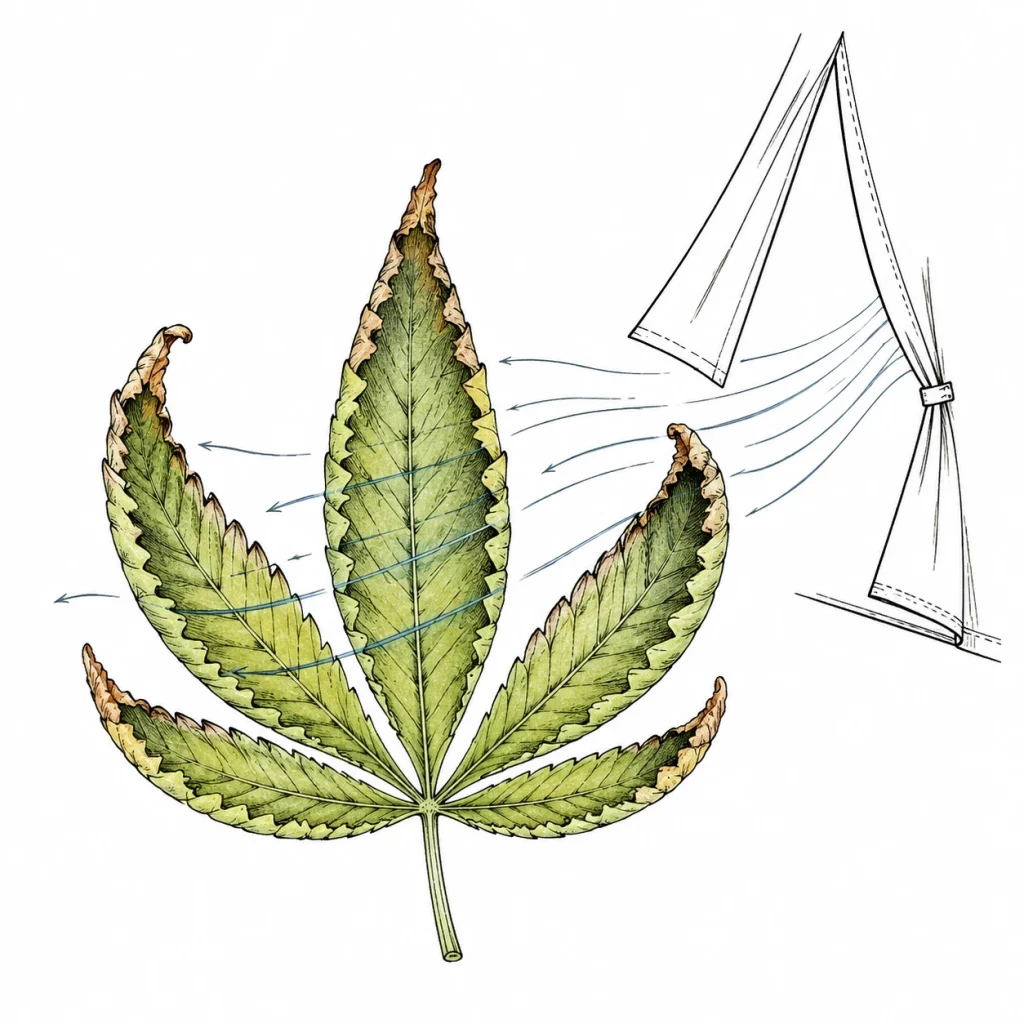
Drafts in your grow room are an often underestimated problem that can seriously harm your cannabis plants. Cold or overly strong airflow hitting the leaves directly stresses the plant on several levels. It dries out the tissue, slows nutrient uptake and can even stunt growth for good. If you want to dial in your grow, you need to know where drafts come from, how to spot them and which simple fixes reliably get rid of them.
What Is a Cannabis Draft and Why Is It So Harmful?
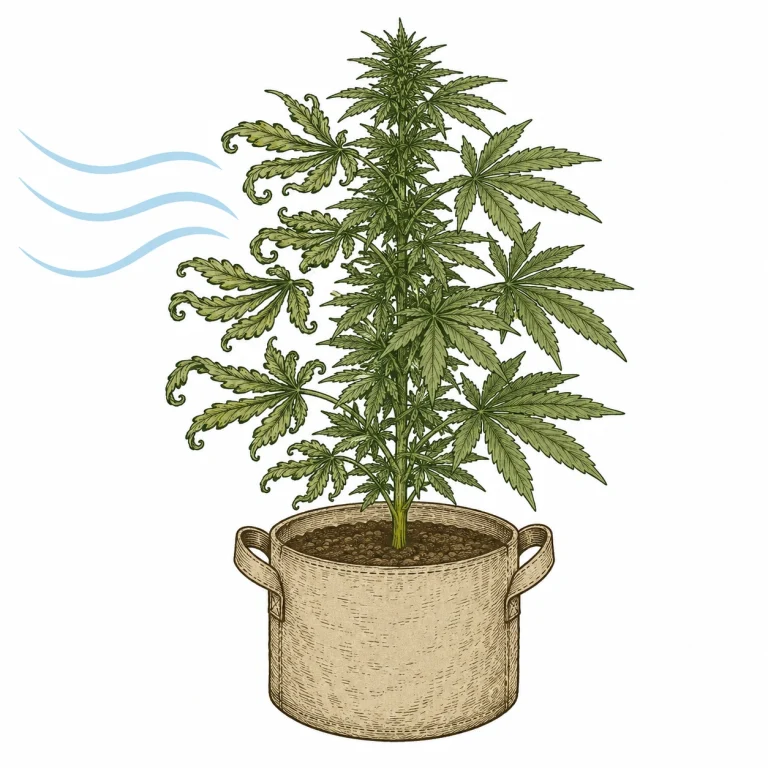
A draft is a directed, uncontrolled airflow that hits your cannabis plant or parts of it directly and constantly. Gentle, even air circulation is actually good for a healthy plant. A draft is different: it puts stress on specific spots. The culprit can be a poorly placed fan, a gap in the tent fabric, an intake opening pointed right at the plants or a duct outlet that sits too close to the canopy.
The tricky part: drafts are hard to see at first, and their symptoms are easy to mistake for other problems. Growers then hunt for deficiencies, wrong pH or pests, while the real cause is the airflow in the room. Keep in mind that even a slightly stronger breeze can cost you a noticeable part of your yield over days and weeks if you don’t fix it.
- A fan blowing straight at the plant
- Cold intake air from openings or ducts close to the plants
- Leaks in the grow tent letting in uncontrolled bursts of cold air
- Poorly placed exhaust openings causing turbulence
- Temperature differences between outside and inside air making drafts worse
Symptoms: How to Spot Draft Damage on Your Cannabis Plants

The most common sign of drafts in a cannabis grow room is “tacoing”: the leaves curl up at the sides and fold into a taco shape. The plant does this to protect itself by shrinking the surface that loses water. Wind speed is one of the key factors that affect a plant’s transpiration, so constant airflow noticeably speeds up water loss through the leaves’ stomata. At the same time, leaf edges can dry out, turn brown and get brittle. These symptoms usually show up where the airflow hits hardest, often on one side of the plant or on the top shoots.
Another clue is slow growth without any obvious nutrient or pH issue. The plant puts its energy into fighting stress instead of building biomass and buds. In severe cases, leaves can turn yellow in a way that looks like nitrogen deficiency, because constant drought stress gets in the way of nutrient uptake. If you’ve already checked your nutrients and pH and found nothing, take a close look at your airflow. Not sure what your leaf changes mean? Our overview Yellow Cannabis Leaves – All Causes at a Glance can help.
Drafts can also set the stage for root problems. When constant airflow dries out the soil surface too fast, you can end up watering on a schedule that doesn’t match what the plant actually needs. The growing medium dries unevenly, the roots get stressed and nutrient uptake suffers. Learn how to water cannabis the right way and keep an eye on moisture in our article How to Water Cannabis Properly.
- Tacoing: leaves curl up at the sides
- Brown, dried-out leaf edges and tips
- One-sided damage – only the side facing the airflow is affected
- Slow growth with no other clear cause
- Topsoil drying out fast even at normal temperatures
- Symptoms similar to deficiencies or heat stress
Drafts in Your Cannabis Grow Room: The Most Common Causes in Detail
The number one cause of drafts in a grow room is a badly placed oscillating or floor fan. Many beginners put the fan right in front of the plant to get “enough air movement.” The result is a focused blast of air that stresses the foliage nonstop. A better approach: set the fan to the side or slightly offset and run it on oscillate, so no steady stream hits one spot.
Leaks in your grow tent are another common cause. Small tears, zippers that aren’t fully closed, or poorly fitting ports for cables and ducting can let cold outside air flow straight into the tent. These cold drafts often hit the lower parts of the plant or the root zone. They’re especially tricky in cooler spots like a basement or garage in winter.
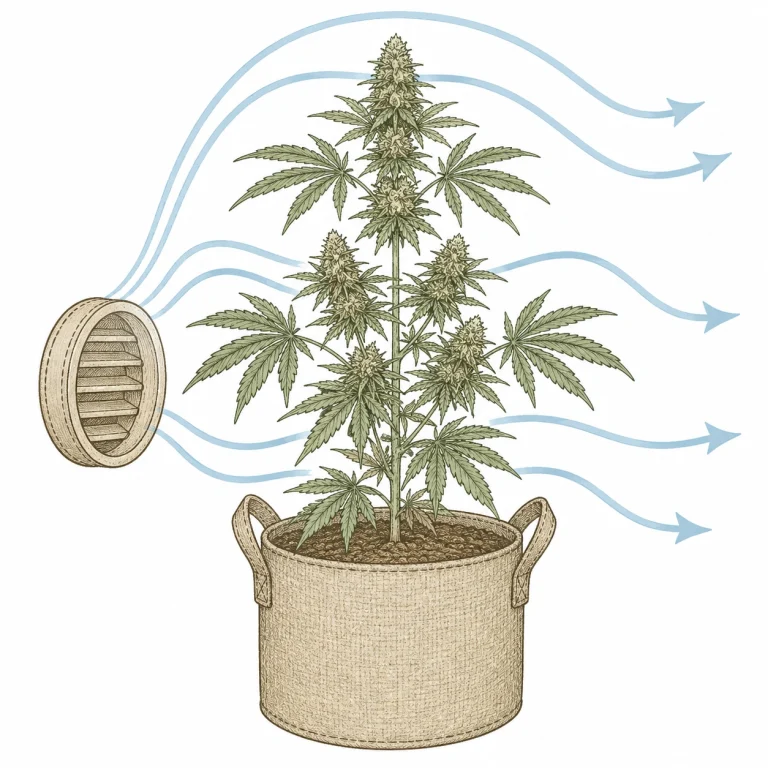
Where you place your intake matters a lot, too. If the intake duct points straight at your plants, it creates a stream of cold air. That works against whatever heating your grow setup has and stresses your plants at the same time. Ideally, bring the intake air in so it can spread out near the bottom of the tent before it reaches the canopy.
Your exhaust can also cause drafts if the negative pressure in the tent gets too strong. A powerful exhaust fan with too little intake air pulls air in through every gap it can find. That air comes in uncontrolled and is often cold.
- Fan aimed straight at the plants without oscillation
- Leaks in the grow tent or around the ports
- Intake duct pointing straight at the canopy
- Too much negative pressure from an oversized exhaust fan
- No buffer zone between the air intake and the plants
- Temperature gap between the room outside and the tent without any thermal buffer
How to Prevent Drafts on Cannabis: Step by Step to Better Airflow
The first step to stopping drafts in your grow room is a careful check of your whole setup. Go about it systematically: close the tent completely and switch off all fans. Then hold something light, like a strip of toilet paper or a thin thread, near different spots on the tent and watch for air moving through. This way you’ll reliably find leaks, even ones you can barely see.
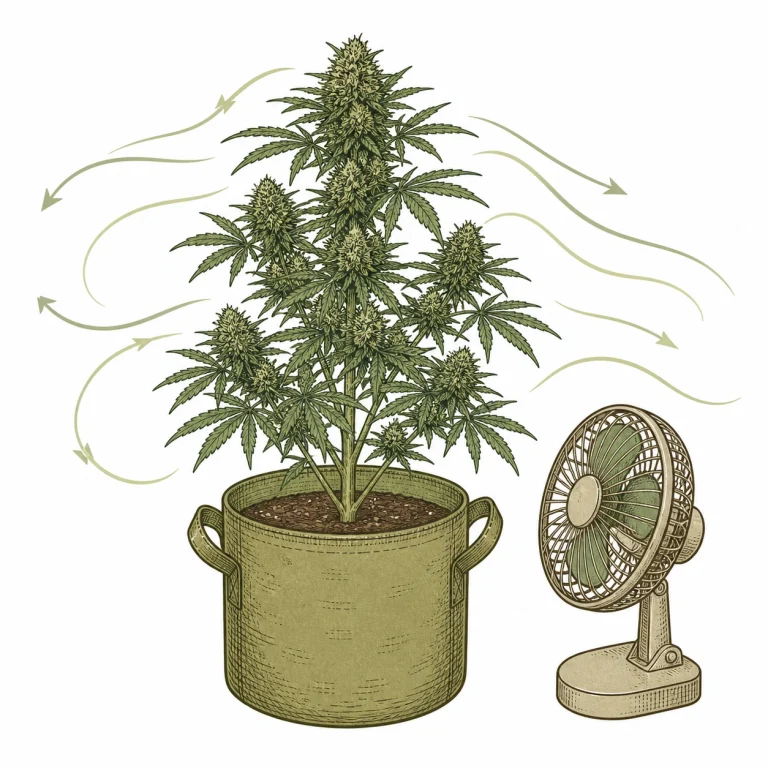
Never set up a fan so it blows rigidly at one plant or group of plants. Use oscillating fans only, or position the fan so the air sweeps over the plants instead of blasting them head-on. Ideally, run several small fans that create even circulation without strong hot spots of airflow. A good rule of thumb: the leaves should move gently, but they shouldn’t flutter nonstop.
For intake air, bring it in near the bottom of the tent, ideally through a short diffuser or a downward-facing outlet. That way, the incoming air barely cools the floor and root zone and mixes with the warmer air in the tent before it reaches your plants. If you want more control, add temperature sensors so you can catch cold drafts early. For the full picture on ventilating your grow tent, check out our article on grow tent ventilation for cannabis.
Last but not least: keep your intake and exhaust in balance. Slight negative pressure in the tent is what you want, because it keeps odors in and helps air circulate. Too much negative pressure, though, sucks cold air in through every gap. Adjust your fan power to match, and if you can, use a speed controller to dial in your exhaust fan smoothly.
- Check the tent for leaks and seal them
- Use oscillating fans only and never aim them rigidly at plants
- Bring intake air in low and through a diffuser
- Balance intake and exhaust
- Use a temperature sensor to catch cold drafts
- Several small fans instead of one big one for even circulation
Good Air Circulation Instead of Harmful Drafts: How to Support Healthy Growth
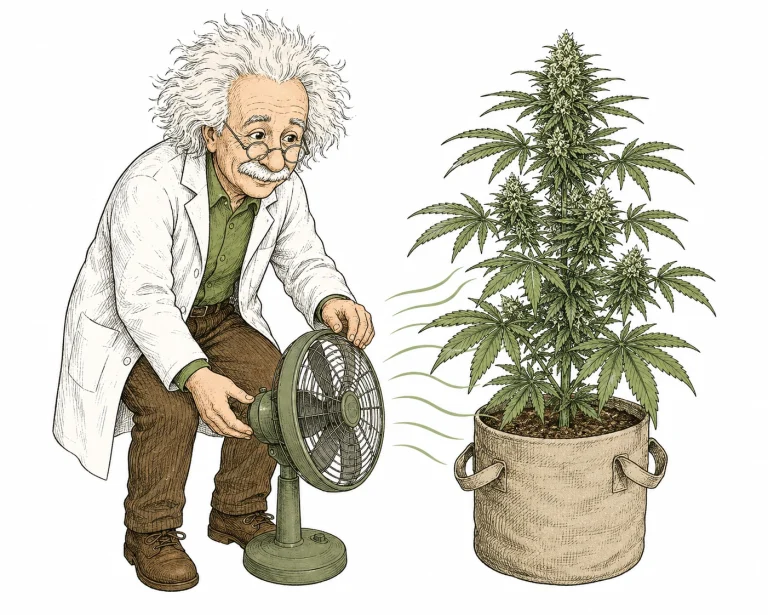
It’s important to understand the difference between harmful drafts and the air movement you actually want. Cannabis needs moving air: it strengthens stems through mechanical stimulation (thigmomorphogenesis), prevents damp dead zones in the canopy, lowers the risk of mold and powdery mildew, and improves CO₂ exchange at the stomata. So the goal isn’t still air in your grow room. It’s controlled, even movement.
One proven method is the “fan placement triangle”: place three fans in a triangle around your plants, all angled slightly upward so they move air across the canopy. This setup doesn’t blast individual plants with direct airflow, but it still gives you plenty of ventilation. Paired with a well-tuned exhaust fan, you get a loop that spreads temperature, humidity and CO₂ evenly.
If you grow autoflowering strains, controlling airflow matters even more. Autoflowers have a shorter life cycle, so they have less time to bounce back from stress. The same goes for running several plants at once, for example in a SOG (sea of green) setup. Poor airflow can quickly lead to uneven growth when some plants catch more draft than others. Want to set up your grow the right way from day one? Our complete guide to indoor cannabis growing covers all the basics you need.
- Gently moving leaves are good. Constant flapping is bad.
- Use the fan placement triangle for even circulation
- Air movement strengthens stems and helps prevent mold
- Gentle circulation improves CO₂ exchange
- Take extra care with airflow for autoflowers and SOG setups
- Always balance exhaust and intake
Drafts in Winter: Extra Challenges When It’s Cold Outside
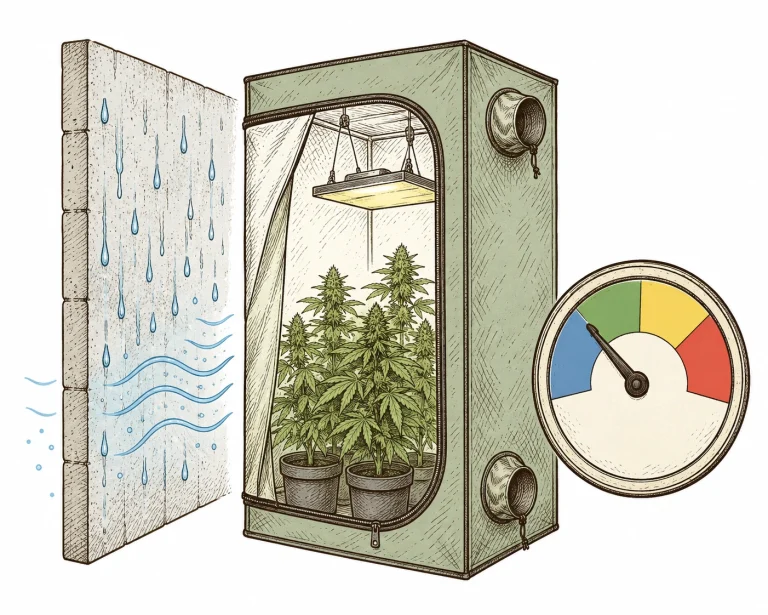
In winter, drafts in your grow room can become a serious problem. Outdoor temperatures drop, your intake air gets colder, and the gap between incoming outside air and your target grow room temperature (usually 72–82 °F (22–28 °C)) gets big. Every leak in the tent and every poorly insulated intake duct can now let in noticeable blasts of cold air.
One fix is a heater in the grow room that warms the intake air before it reaches the tent. You can also insulate the intake duct or run it through a longer hose coiled up in the room, which works as a simple heat exchanger. Turning down your exhaust fan speed at night, when it’s coldest outside, can also cut down on cold drafts. Just make sure your plants still get enough fresh air.
In winter, keep a close eye on condensation on the inside walls of your tent or on plants standing close to the walls. It’s a clear sign that cold air is hitting warmer indoor air. If you don’t act, you risk more than draft damage: you also invite bud rot (botrytis), the most dangerous fungal threat during the flowering stage. On top of that, an off feeding schedule combined with drafts and high humidity can cause symptoms that look a lot like calcium deficiency in cannabis.
- Colder outside air raises the risk of drafts a lot in winter
- Insulate or pre-warm your intake ducts
- Turn down exhaust power at night when temperatures drop
- Treat condensation on tent walls as a warning sign
- Cold plus moisture is a recipe for botrytis
- Use heaters with a thermostat to keep temperatures in check
Frequently Asked Questions
How can I tell if my cannabis plant is suffering from drafts?
Typical signs are leaves curling upward (tacoing), brown or dried-out leaf edges, and damage on just one side, the side facing the airflow. Slow growth with no other obvious cause can also point to drafts. First, check whether a fan is blowing straight at your plants or whether leaks in the tent are letting cold air in.
What’s the difference between a draft and normal air circulation?
Good air circulation is even and gentle, and it never hits one plant directly all the time. Cannabis needs air movement to build strong stems, prevent mold and exchange CO₂. A draft, on the other hand, is a focused, concentrated stream of air that keeps hitting one spot and causes drying and cold stress there.
How far should the fan be from my plants?
It depends on how strong the fan is, but a good rule of thumb is at least 20–30 in (50–80 cm). The fan should oscillate rather than point straight at your plants. Leaves should sway gently, not flap nonstop. If in doubt, place it a bit farther away and turn up the power step by step.
Can drafts permanently hurt my harvest?
Yes. Over time, drafts can noticeably cut your yield. The plant puts its energy into fighting stress instead of building buds, nutrient uptake gets disrupted, and the growing medium dries out unevenly. During flowering, ongoing stress from drafts can also reduce trichome production.
What can I do about drafts from leaks in my grow tent?
Use tape or tent repair patches for tears and seams. Zip zippers all the way closed and make sure they run straight. Seal cable and duct ports with Velcro or tape. Check all openings regularly, especially after moving gear around.
Are autoflowering plants more sensitive to drafts?
Yes. Autoflower strains have a much shorter life cycle and less time to recover from stress. A photoperiod plant can make up for setbacks with a longer vegetative stage, but with an autoflower, the same stress can cut straight into your yield. That’s why you should dial in the airflow for autoflowers carefully right from the start.
We’ve put together exhaust kits and fans that help you avoid drafts in our recommended gear.
Bottom Line
Drafts in your grow room are an underrated but serious cause of growth problems and lost yield. The good news: with a systematic check of your setup, the right fan placement and sealing up any gaps, you can usually fix the problem quickly and cheaply. Keep in mind that the goal isn’t to stop air from moving. It’s to create even, controlled circulation. Get this part of your grow environment under control, and you lay a solid foundation for healthy plants, strong nutrient uptake and, in the end, a rich harvest.
