

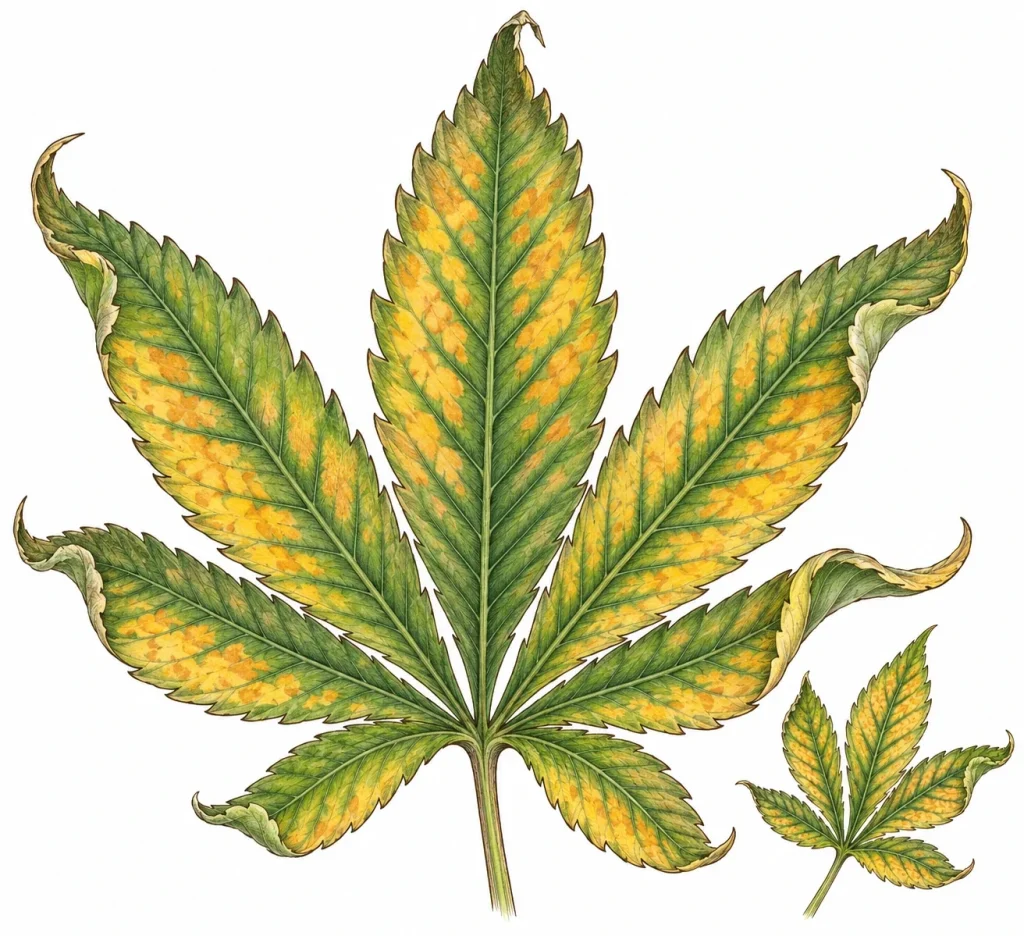
Molybdenum deficiency in cannabis is rare, but it can be tricky because it often gets mistaken for other problems. Your plant needs only tiny amounts of molybdenum, so a deficiency usually shows up late, as blotchy leaves with yellow-orange discoloration. In this article, you’ll learn how to spot a molybdenum deficiency reliably, what usually causes it, and how to get your plant back on track fast.
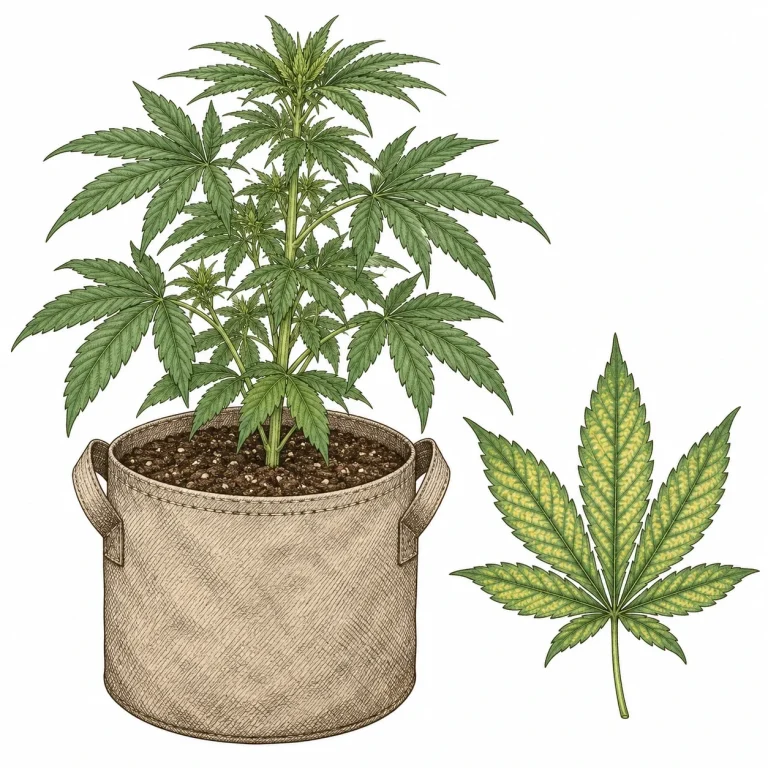
What Is Molybdenum Deficiency in Cannabis and Why Does It Happen?
Molybdenum is an essential micronutrient. Cannabis plants need only trace amounts of it, but key metabolic processes can’t run without it. As a building block of the enzyme nitrate reductase, molybdenum plays a central role in turning nitrate into usable nitrogen (the Julius Kühn Institute offers background on nutrient supply and feeding strategies, in German). If it’s missing, your plant can’t properly process the nitrogen it takes up, even when there’s plenty of it in the growing medium.
A true molybdenum deficiency is rare in real-world cannabis grows, because most base nutrient mixes already contain enough of it. More often, the problem shows up indirectly through the wrong pH, which blocks molybdenum uptake even though there’s enough of it in the medium or nutrient solution. Especially in acidic growing media with a pH below 5.5, molybdenum becomes almost unavailable to the roots.
- Molybdenum is part of nitrate reductase, which converts nitrate to nitrite – the first step on the way to usable ammonium
- Your plant needs only a tiny amount, but it’s essential for nitrogen metabolism
- A deficiency is usually caused by pH problems, not by missing molybdenum in your nutrients
- It shows up more often in coco coir or hydro setups with unstable pH
How to Spot Molybdenum Deficiency Symptoms in Cannabis
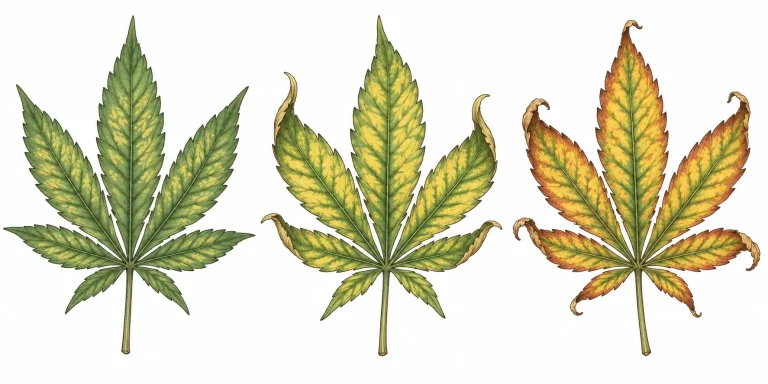
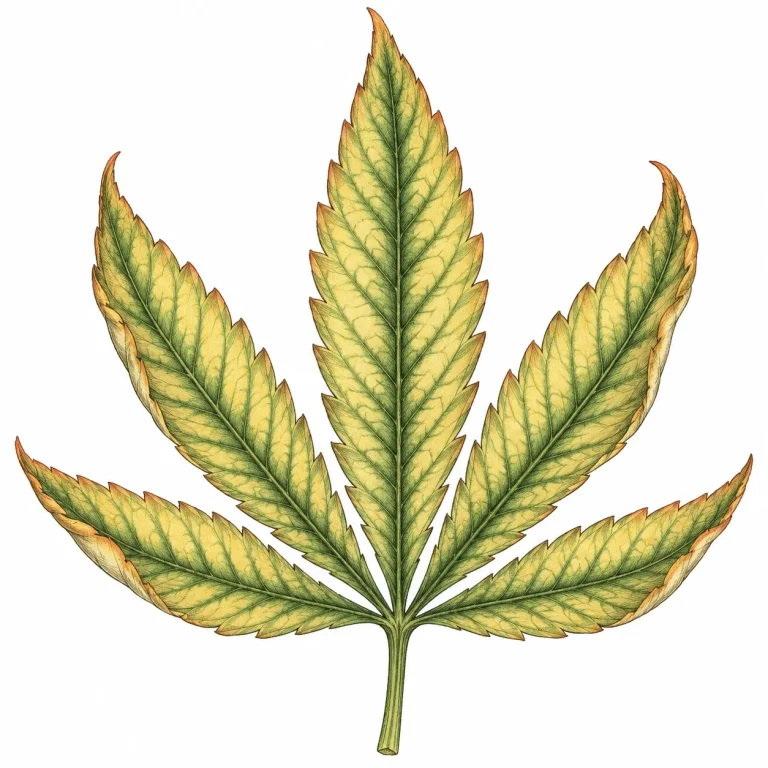
Molybdenum deficiency symptoms in cannabis usually show up first on older and middle leaves, because the plant pulls the micronutrient out of existing tissue to feed new growth. Watch for yellowish, blotchy discoloration between the leaf veins that can later turn orange or brownish. Unlike a classic nitrogen deficiency, the veins themselves often stay green longer – a key way to tell the two apart.
In later stages, the leaf edges can curl slightly upward or turn wavy, and overall growth may slow down. Because the symptoms look a lot like a nitrogen deficiency, molybdenum deficiency often gets misdiagnosed and treated the wrong way, which can make the problem even worse.
- Yellow to orange blotchy discoloration between the leaf veins
- Older and middle leaves are hit first
- Leaf veins stay green longer than the surrounding tissue at first
- Slight curling or waviness along the leaf edges
- Slower growth even though you’re feeding enough
What Causes Molybdenum Deficiency in Cannabis
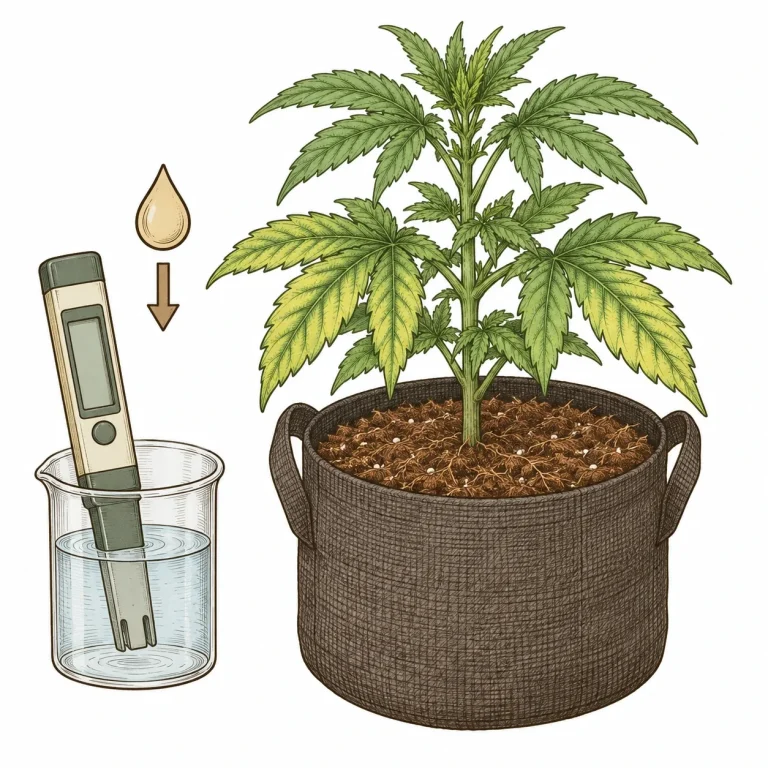
The most common cause of molybdenum deficiency in cannabis is a pH that’s too low in the root zone. In acidic conditions, molybdenum gets chemically bound and your roots can’t take it up anymore, even if there’s plenty of it in the growing medium. This is called nutrient lockout, and it doesn’t just affect molybdenum but other micronutrients too.
Another trigger is using cheap or incomplete nutrients that contain little or no trace elements like molybdenum. In purely organic grows with immature compost, you can also see a temporary deficiency until the microbes in the soil release the molybdenum.
- pH too low in the growing medium or nutrient solution (below 5.5)
- Low-quality nutrients without a full range of trace elements
- Disrupted soil microbe life in organic grows
- Overfeeding with antagonistic elements like sulfur (sulfate) or copper
How to Fix Molybdenum Deficiency in Cannabis Fast
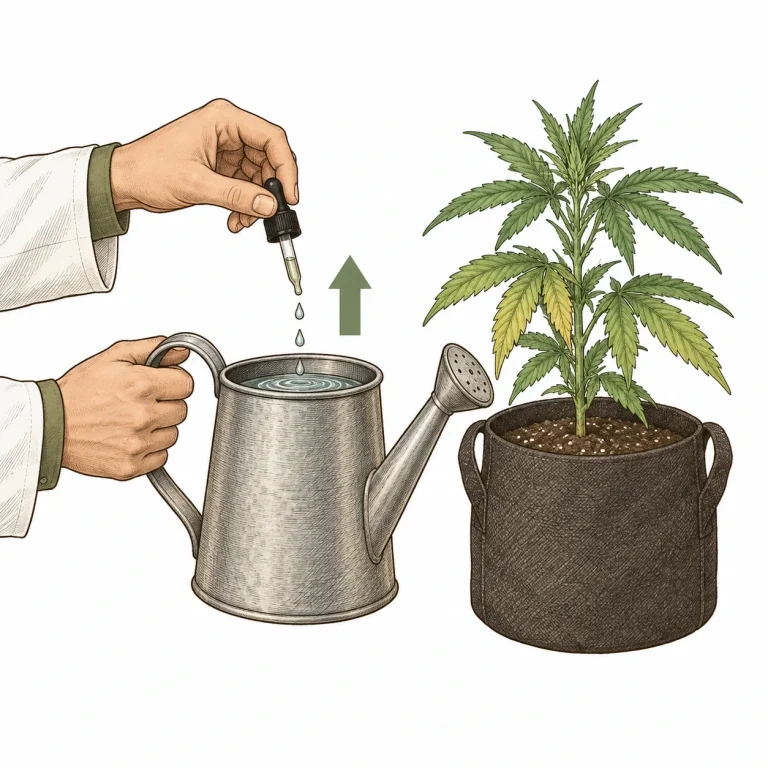
The first and most important step in fixing molybdenum deficiency in cannabis is checking and correcting your pH. In soil, aim for a pH between 6.0 and 6.8. In coco and hydro systems, aim for 5.5 to 6.5 – our pH Calculator can help you work out the correction. Measure the pH of your nutrient solution and growing medium with a reliable pH meter, and adjust it step by step so you don’t stress the roots.
If your pH is already on point, a targeted dose of a trace element mix with molybdenum can help correct the deficiency quickly. Stick closely to the manufacturer’s dosing instructions, because a heavy overdose of molybdenum can lead to toxicity. For an acute deficiency, a light foliar spray with a highly diluted molybdenum solution can give extra support.
- Measure and correct the pH of your nutrient solution and growing medium right away
- In soil: aim for pH 6.0 to 6.8
- In coco or hydro: aim for pH 5.5 to 6.5
- Add a trace element nutrient with molybdenum, targeted and at a low dose
- Keep an eye on affected leaves, but don’t remove them too early
How to Prevent Molybdenum Deficiency in Cannabis Long-Term
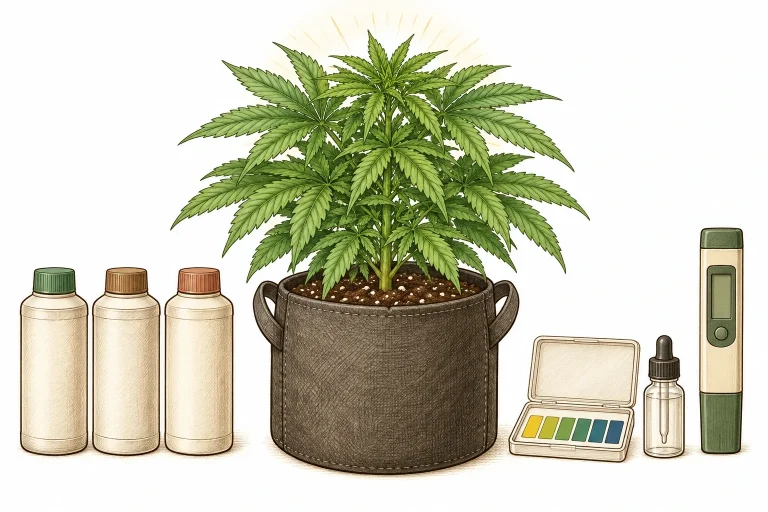
To prevent molybdenum deficiency in cannabis for good, use a complete, high-quality base nutrient that contains all macronutrients and micronutrients, including molybdenum, in a balanced ratio. Use a solid cannabis NPK chart to match your feeding to each growth stage and head off nutrient imbalances before they start.
Checking pH every time you water is the most important prevention step. Most cases of molybdenum deficiency in cannabis aren’t caused by a lack of molybdenum. They’re caused by molybdenum being locked out. It also helps to keep a simple grow journal. Log your pH, EC (electrical conductivity) readings and feedings so you can spot patterns early, before visible symptoms show up.
- Use a complete base nutrient with all trace elements
- Check and log pH every time you water
- Inspect your growing medium regularly for salt buildup and compaction
- In organic grows, only use well-aged compost
- Rule out other nutrient deficiencies step by step before you add molybdenum
Frequently Asked Questions
How is molybdenum deficiency in cannabis different from nitrogen deficiency?
With a nitrogen deficiency, whole older leaves turn yellow evenly, veins included. With molybdenum deficiency in cannabis, the veins usually stay green at first, and only blotchy patches between them turn yellow. Molybdenum deficiency also often causes the leaf edges to curl slightly, which you typically don’t see with nitrogen deficiency.
How fast does a plant recover after you fix the pH?
Once you’ve corrected the pH, and added a targeted dose of molybdenum if needed, you’ll usually see the first improvements in new growth within 5 to 10 days. Older leaves that are already badly damaged usually won’t fully recover, but new leaves should grow in healthy.
Can too much molybdenum hurt cannabis?
Yes. Overdosing molybdenum can lead to toxicity symptoms that look a lot like copper deficiency, because high molybdenum levels can block the uptake of other trace elements. Always dose trace element supplements exactly as the manufacturer recommends.
Which growing media are most prone to molybdenum deficiency in cannabis?
Molybdenum deficiency in cannabis shows up most often in coco coir and hydro setups, because pH can swing faster there than in buffered soil. The risk also goes up with very acidic soil or when you use unfinished compost in an organic grow.
Bottom Line
Molybdenum deficiency in cannabis is rare, but the wrong pH can trigger it quickly and noticeably slow down growth. If you know the subtle differences from other nutrient deficiencies and check your pH regularly, you can usually get the problem visibly under control within one to two weeks. With a complete base nutrient and consistent pH management, you can reliably prevent molybdenum deficiency in cannabis for the long haul.
